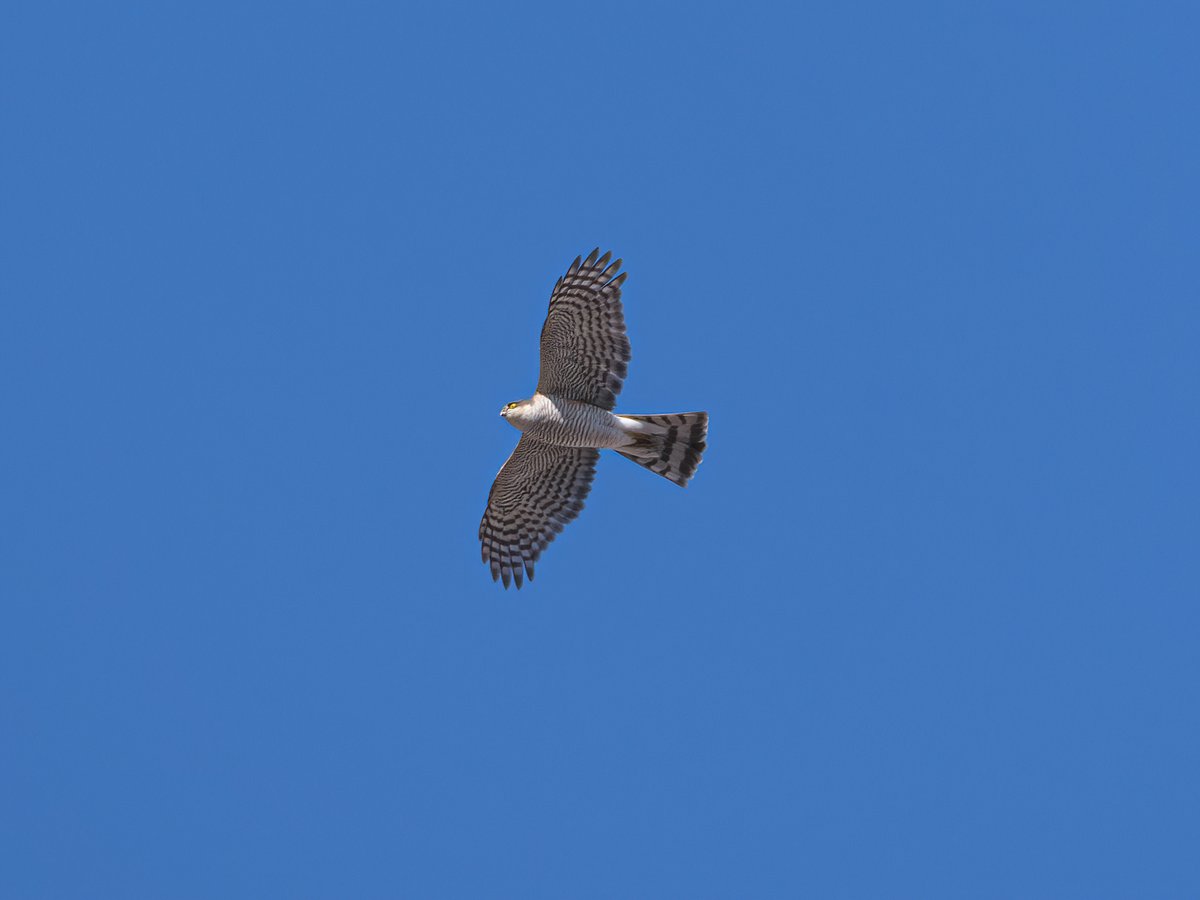
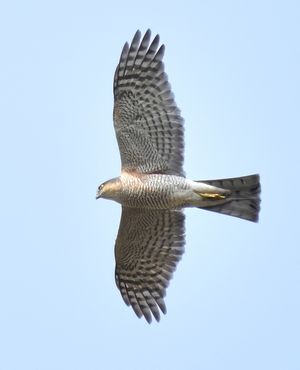
Accipitriformes / Accipitridae / Accipiter
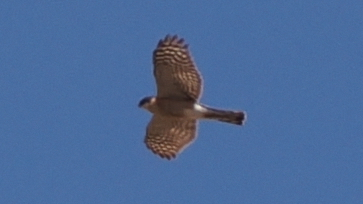
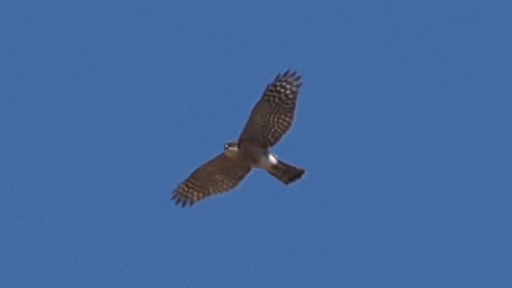
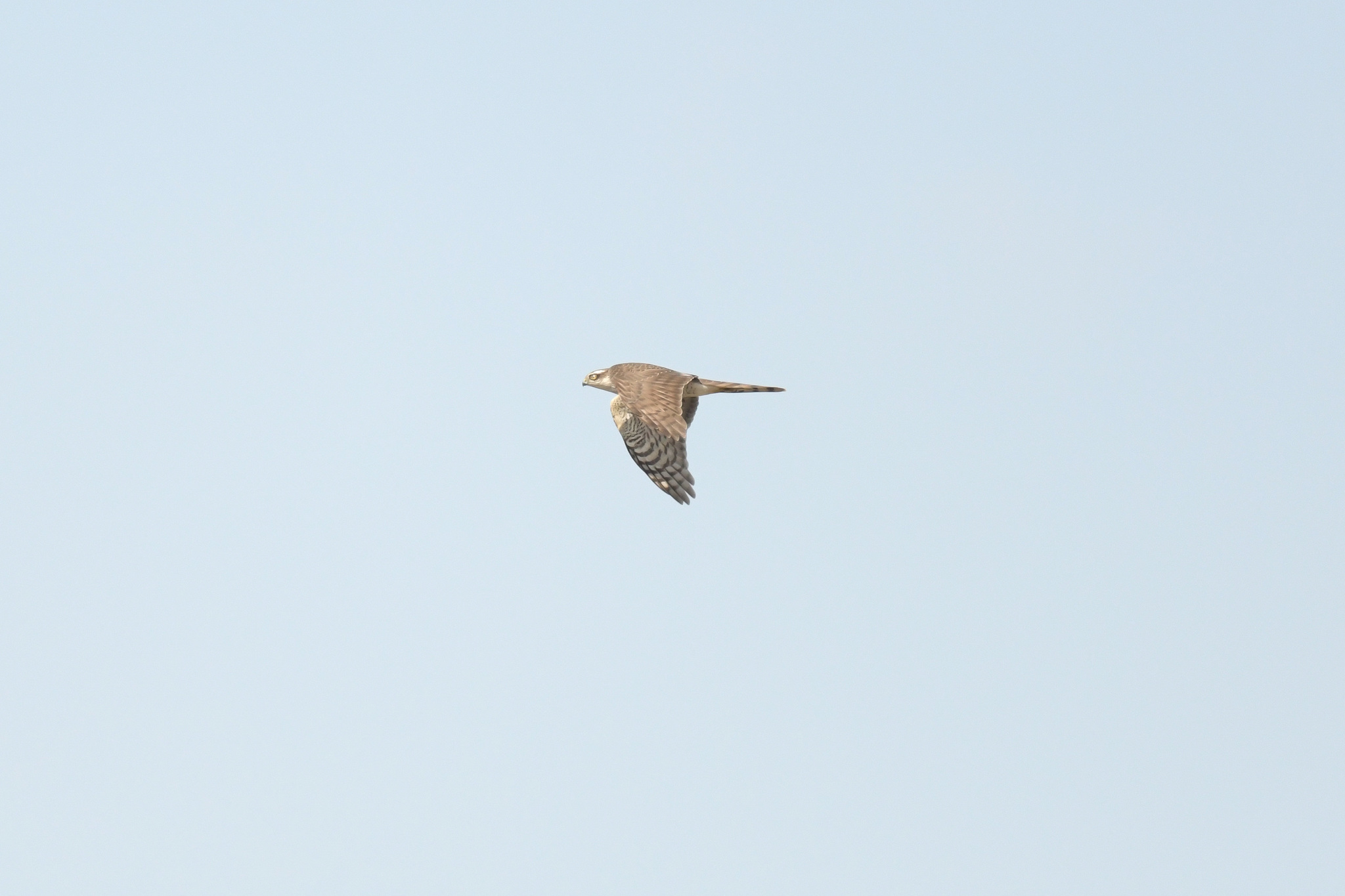
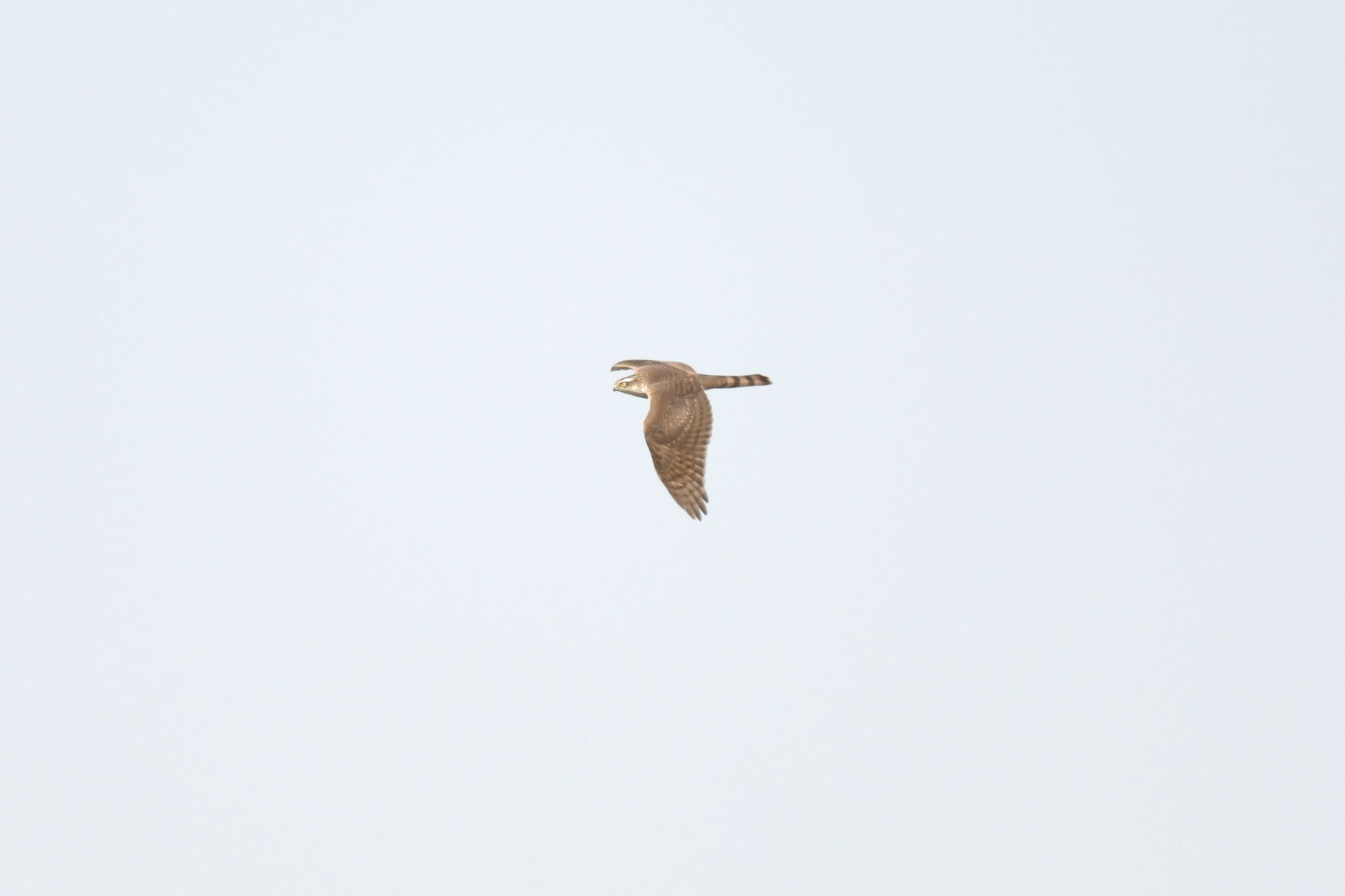
Eurasian Sparrowhawk
Accipiter nisus · 雀鹰
Introduction
A small bird of prey in the family Accipitridae, found throughout temperate and subtropical parts of the Old World. It specializes in catching woodland birds but adapts to various habitats, including urban gardens. The female is up to 25% larger than the male. Classified as Least Concern by BirdLife International.
Description
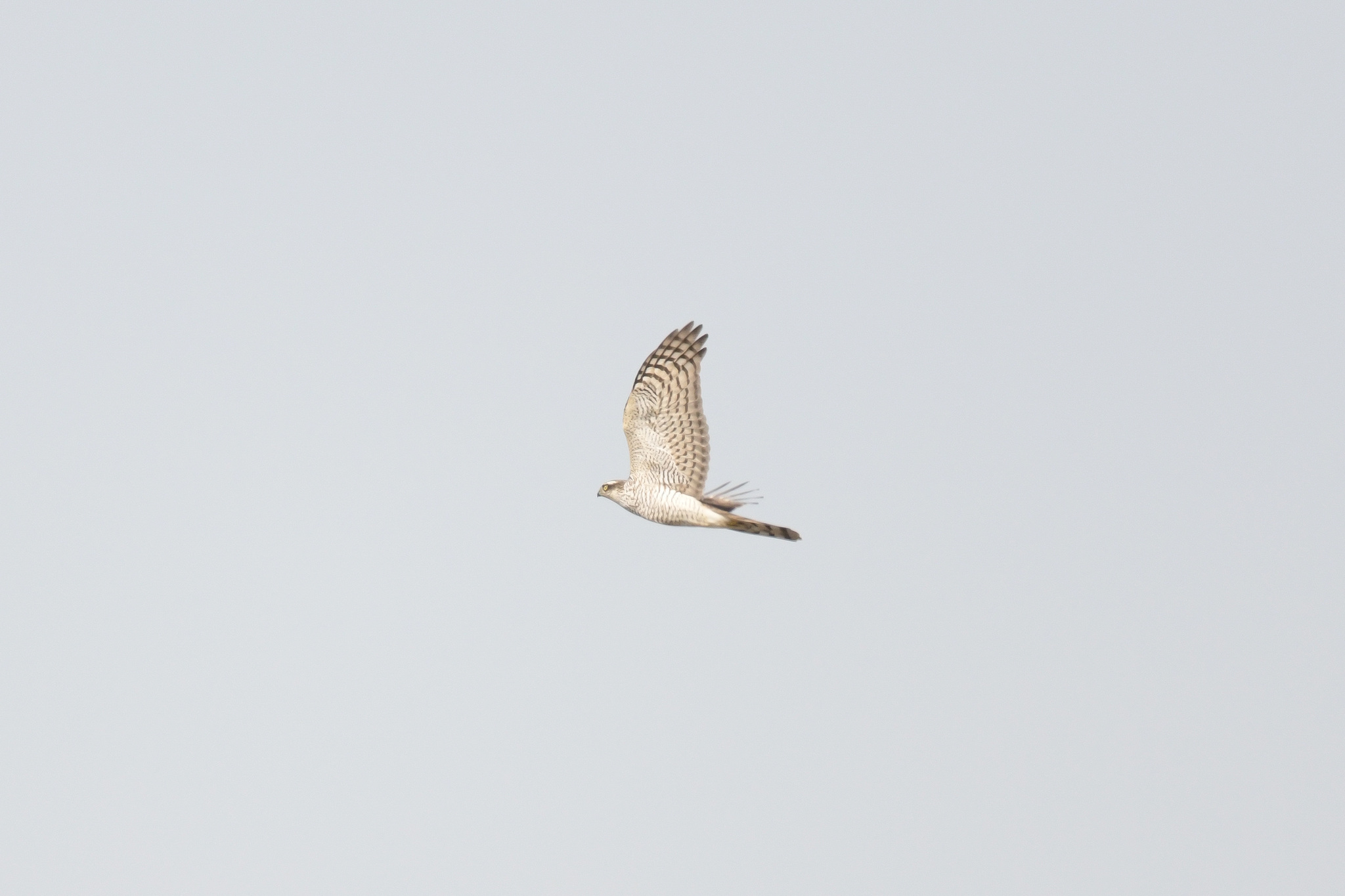
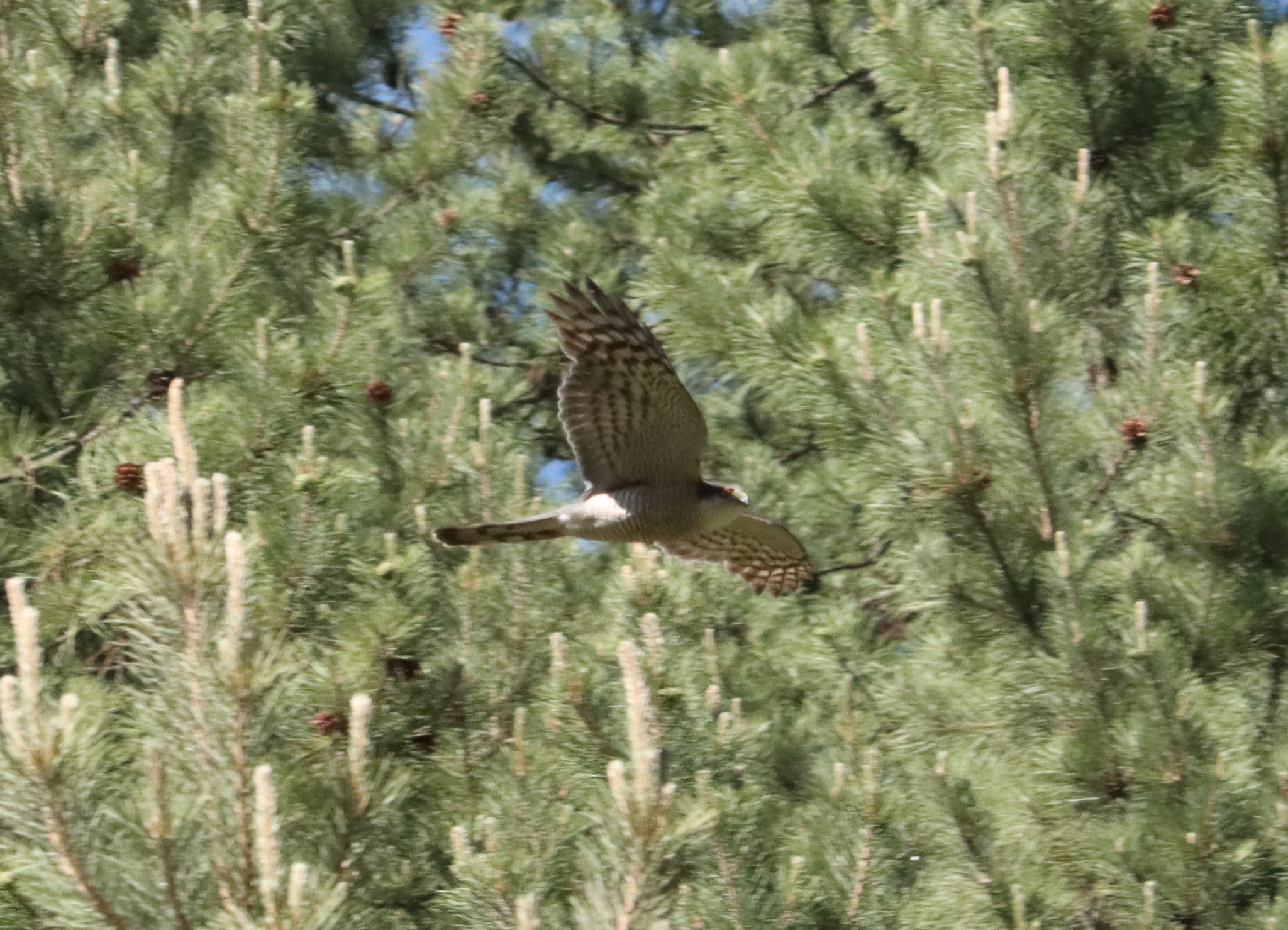
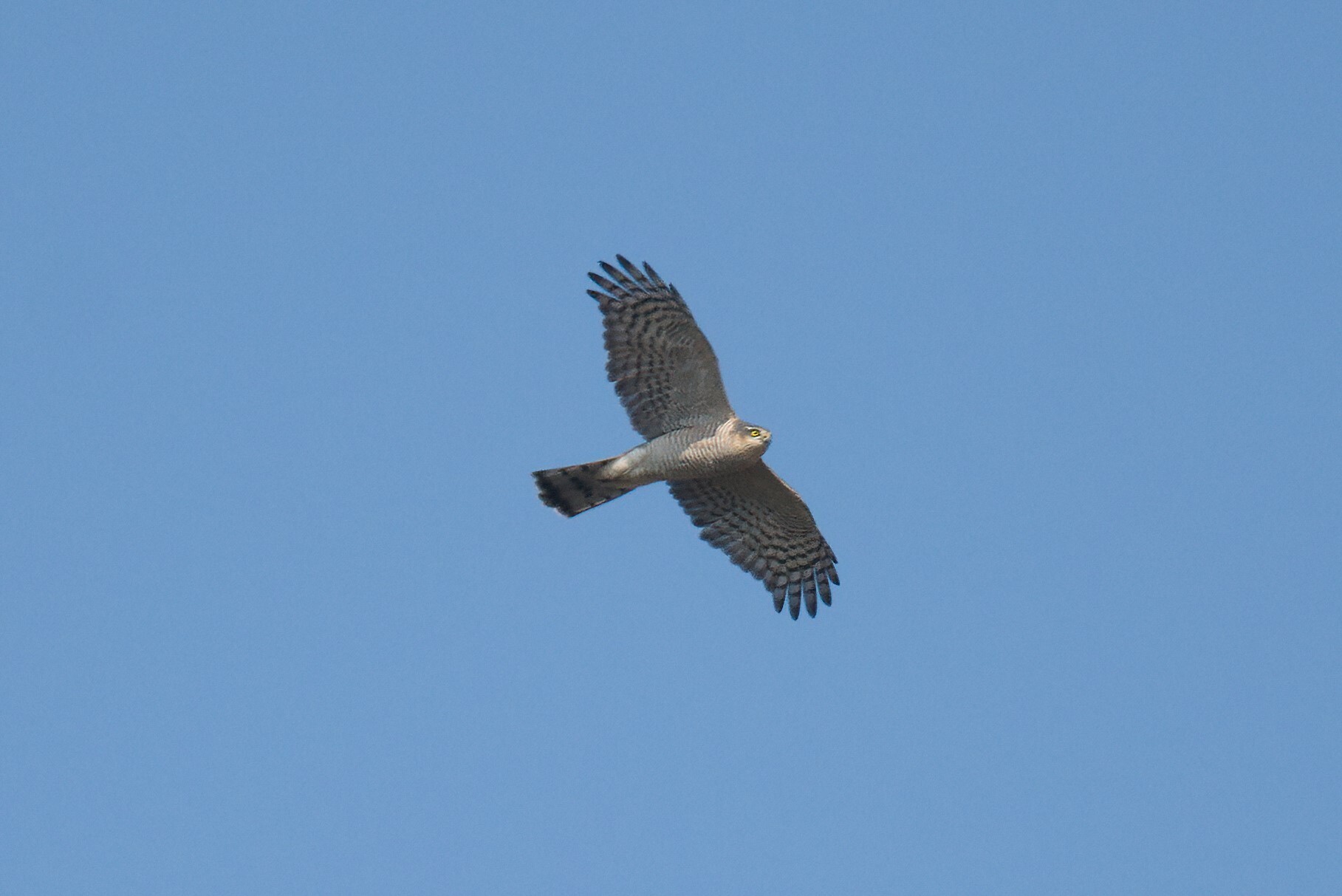
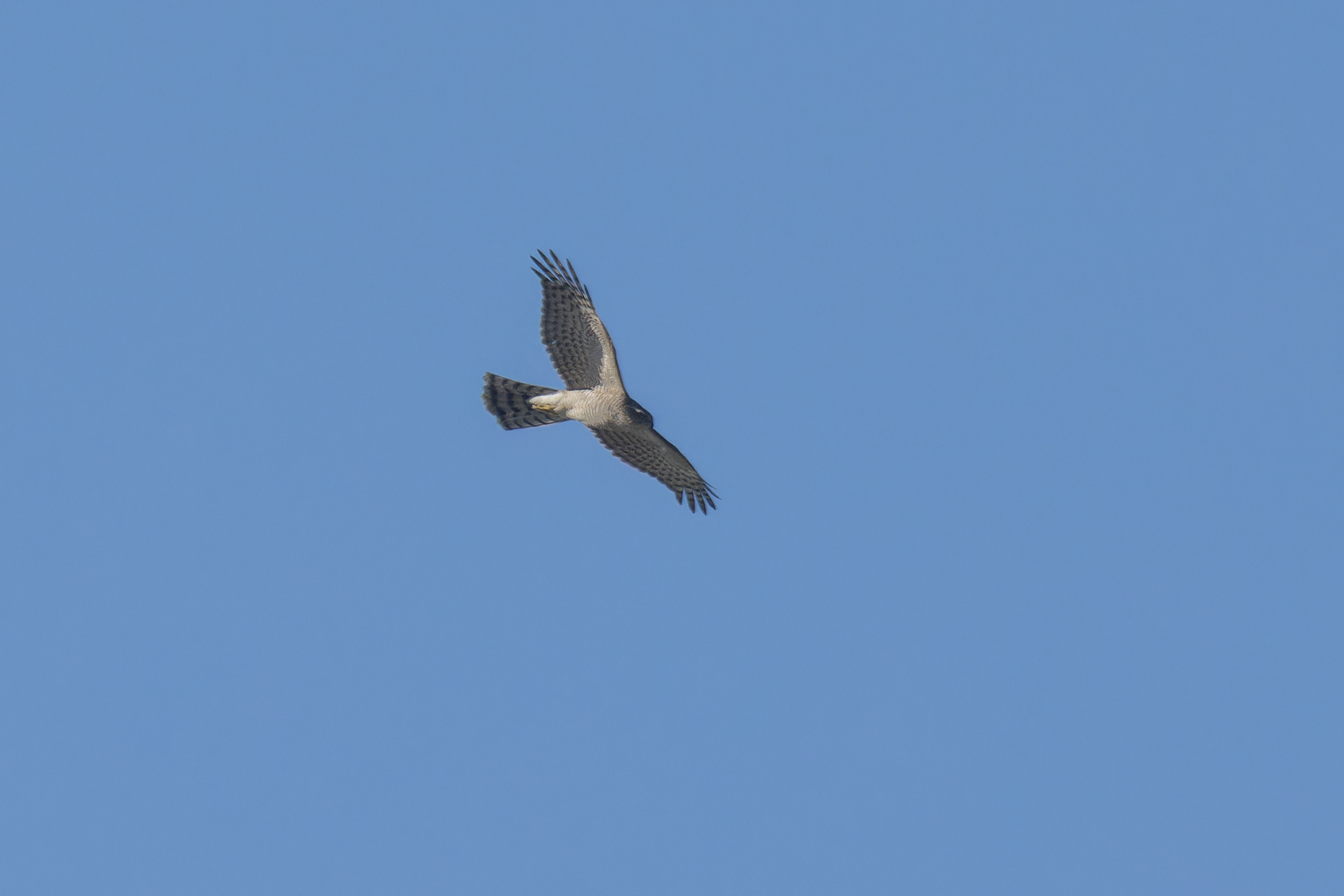
Adult males are 29–34 cm long with a 59–64 cm wingspan and mass of 110–196 g. They have slate-grey upperparts and finely red-barred underparts that appear orange from a distance, with orange-yellow or orange-red irides. Females are larger, 35–41 cm long with a 67–80 cm wingspan and mass of 185–342 g. They feature dark brown or greyish-brown upperparts, brown-barred underparts, and bright yellow to orange irides. Juveniles are warm brown above with rusty fringes, coarsely barred or spotted brown below, and pale yellow eyes. The throat has dark streaks and lacks a mesial stripe.
Identification
Flight is characterized by a flap-flap-glide pattern creating an undulating motion. Distinguished from the Levant sparrowhawk by size similarity but different calls; larger than the shikra. Males are slightly larger than merlins. Females can be confused with male Eurasian Goshawks but lack bulk, having shorter wings, a square-ended tail, and faster wingbeats. In China, distinguished from the besra, though subspecies A. n. melaschistos is considerably larger.
Distribution & Habitat
Widespread across temperate and subtropical Old World regions, breeding in an estimated global range of 23,600,000 km². Six subspecies are recognized: A. n. nisus (Europe to western Siberia), A. n. nisosimilis (central/eastern Siberia to Japan), A. n. melaschistos (Afghanistan to western China), A. n. wolterstorffi (Sardinia and Corsica), A. n. granti (Madeira and Canary Islands), and A. n. punicus (Northwest Africa). Northern populations migrate south for winter to North Africa, Arabia, Pakistan, India, and Southeast Asia; southern populations are resident or dispersive.
Behavior & Ecology
Hunts by surprise attack using cover such as hedges and tree-belts, with only 10% of attacks successful. Males take smaller birds like tits and finches; females catch thrushes and starlings, capable of killing prey weighing 500 g or more. Breeding occurs in woodland nests built of twigs, up to 60 cm across. Clutches of four or five pale blue, brown-spotted eggs are laid. Chicks hatch after 33 days and fledge after 24 to 28 days. Juvenile first-year survival is 34%, with adult annual survival at 69%. Typical lifespan is four years.
Conservation
Classified as Least Concern by IUCN with an estimated population of 1.5 million birds in 2009. Populations crashed in the mid-20th century due to organochlorine insecticides causing eggshell thinning and direct poisoning, but recovered after bans were implemented. The subspecies A. n. granti is threatened by habitat loss, egg-collecting, and illegal hunting, and is listed on Annex I of the European Commission Birds Directive. Norwegian and Albanian populations are declining.
Culture
Used in falconry since at least the 16th century, favored by Emperor Akbar the Great and historically by ladies of noble status in the Middle Ages. Features in Teutonic and Slavic mythology, where it is associated with omens. Mentioned in works by William Shakespeare, Alfred Lord Tennyson, and Ted Hughes. The surname Sparrowhawk derives from the bird. In England, folklore held that the common cuckoo transformed into this species in winter.
Source: Wikipedia · CC BY-SA 3.0
Taxonomy
- Order
- Accipitriformes
- Family
- Accipitridae
- Genus
- Accipiter
Vocalizations
Subspecies (7)
-
Accipiter nisus dementjevi
breeds Pamir-Alai to Tien Shan Mountains (central Asia); winter range requires elucidation
Data Sources
Species description from Wikipedia, licensed under CC BY-SA 3.0.
Bird images and sounds sourced from GBIF, contributed by citizen scientists worldwide under Creative Commons licenses.
Taxonomy data from AviList 2025.