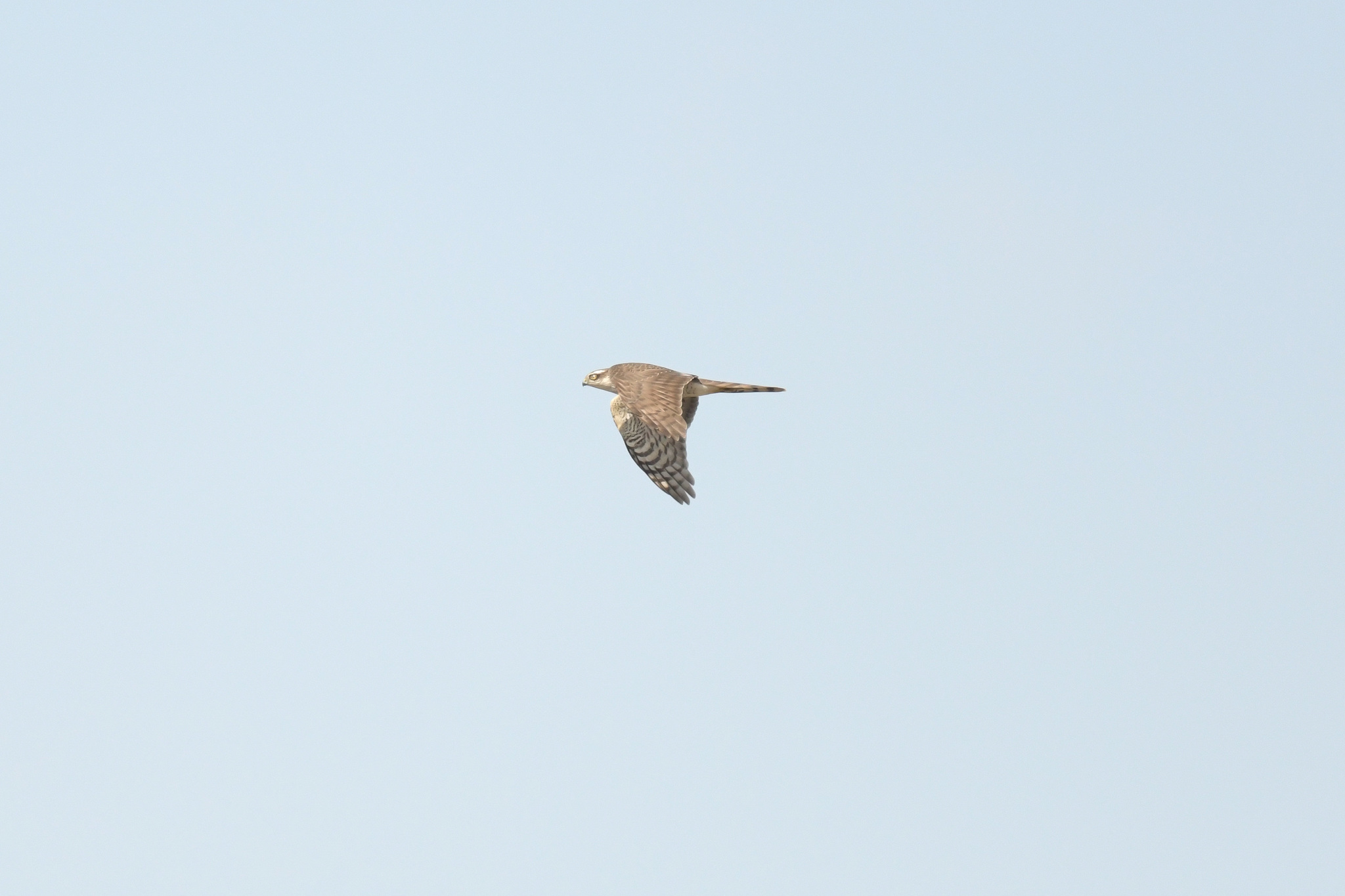
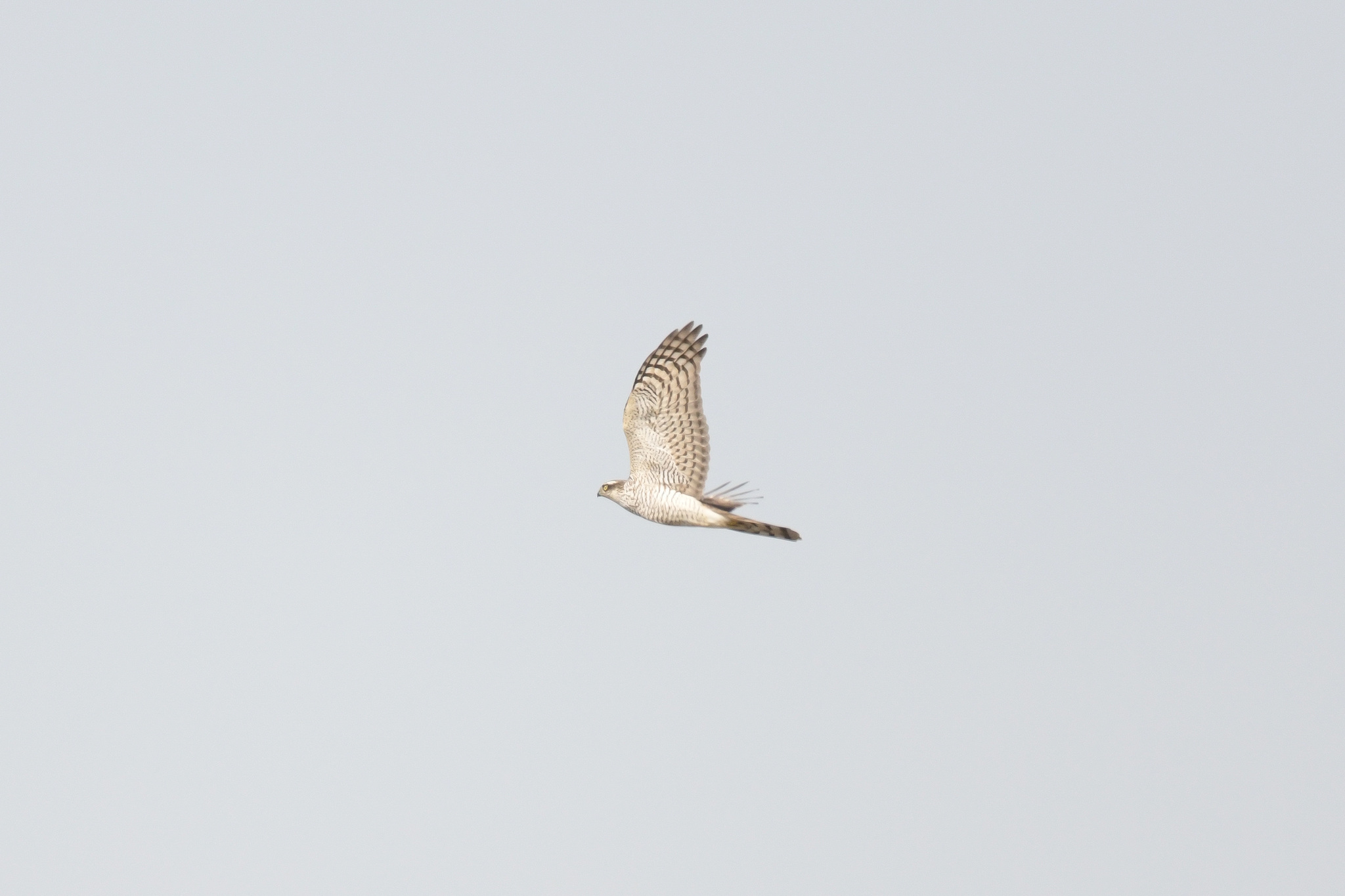
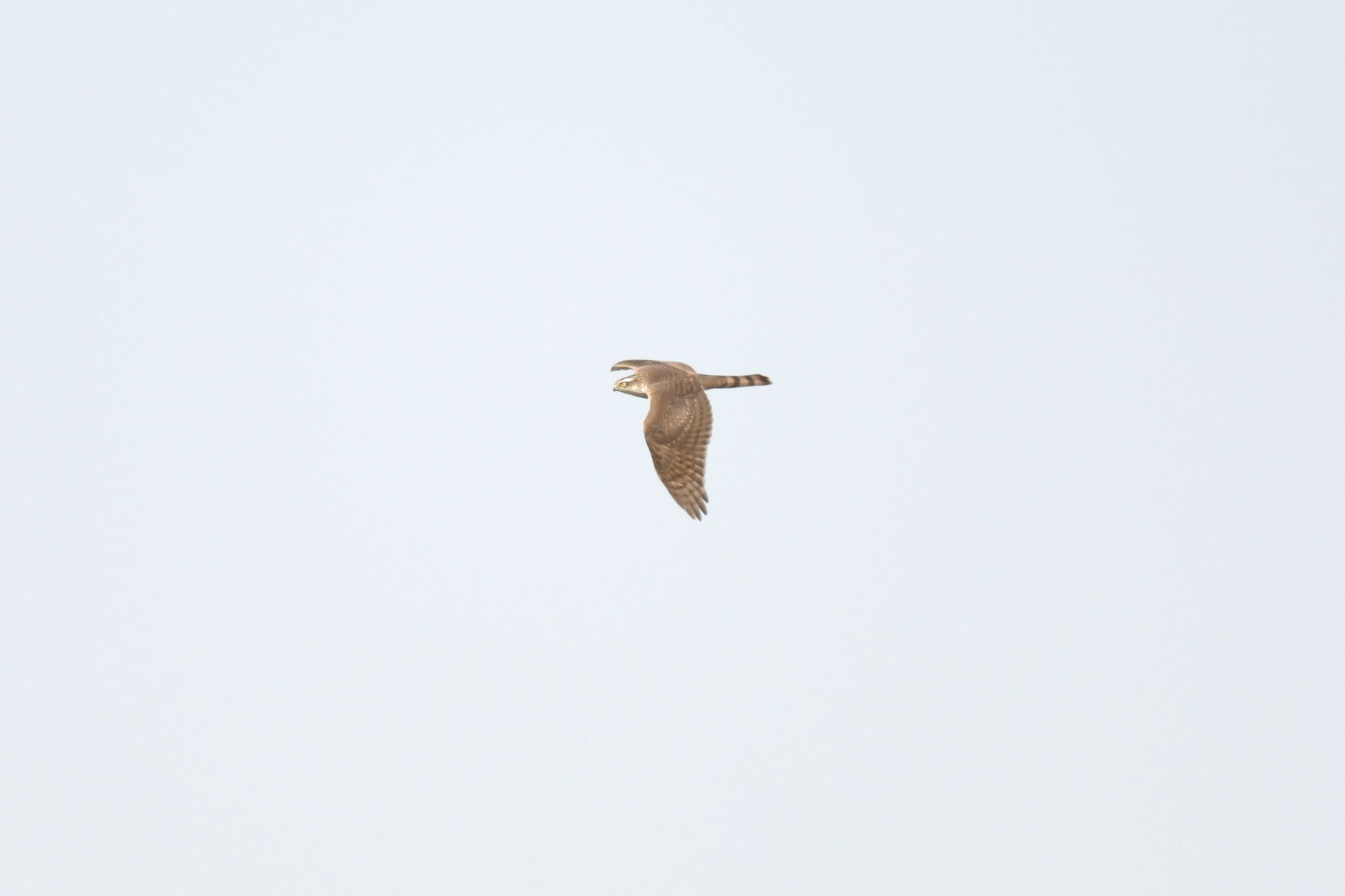
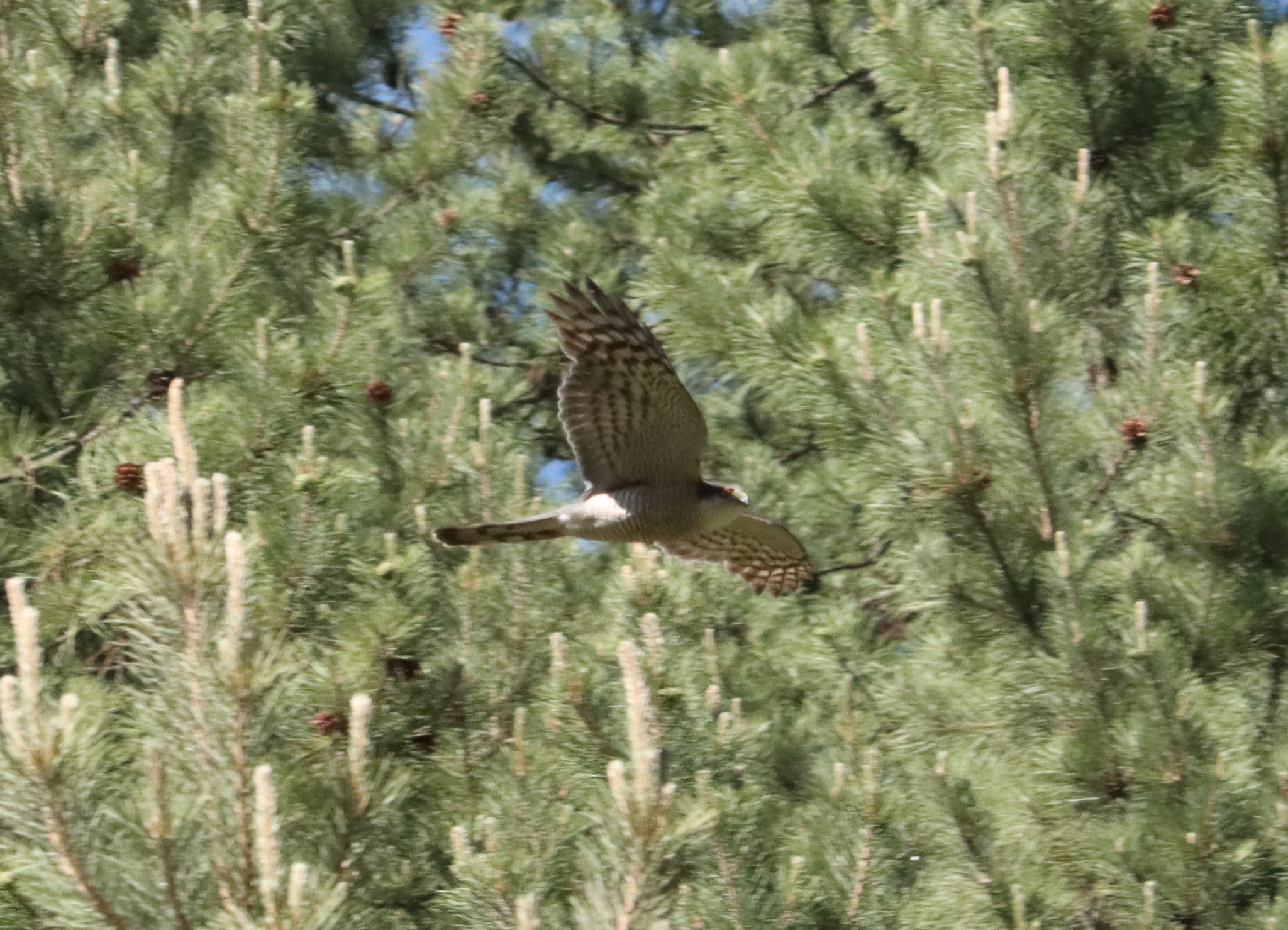
Eurasian Sparrowhawk
Accipiter nisus
雀鹰
Introduction
This small raptor occurs throughout temperate and subtropical regions of the Old World. It occupies diverse habitats including woodlands, urban gardens, and city centers. Females are up to 25% larger than males, resulting in differences in prey selection; males typically prey on smaller songbirds such as tits and sparrows, while females take larger quarry including thrushes and starlings. An ambush predator, it uses vegetation cover such as hedges and tree belts to launch attacks. Breeding pairs construct stick nests in trees. The species is among the most common birds of prey in Europe. Northern populations are migratory, while southern populations are resident. Historical population declines due to pesticides have been reversed. The typical lifespan is approximately four years, though individuals can live longer.
Description
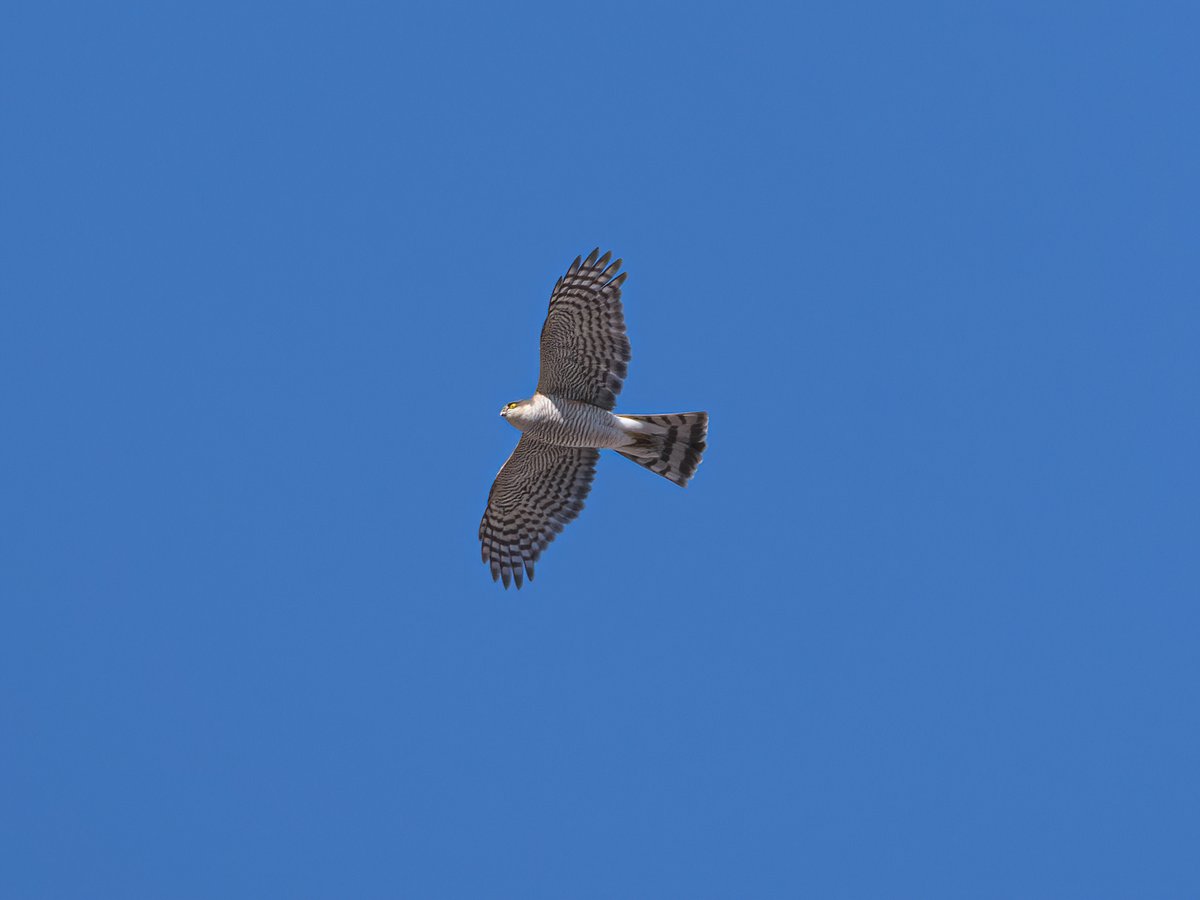
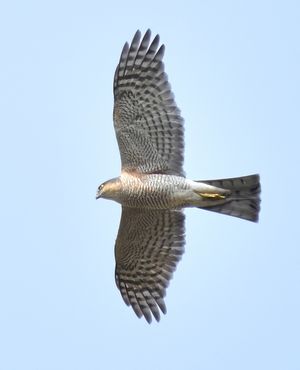
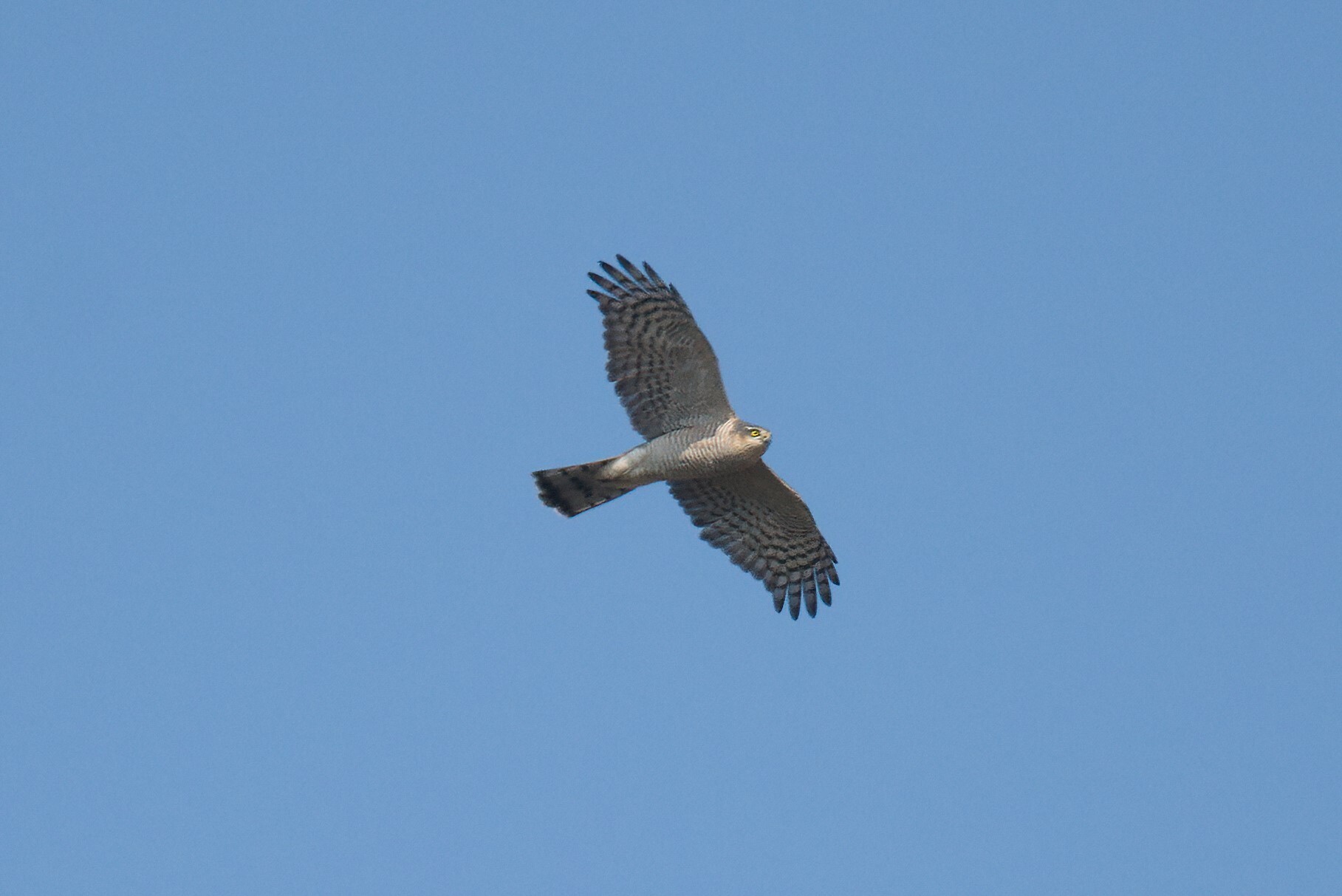
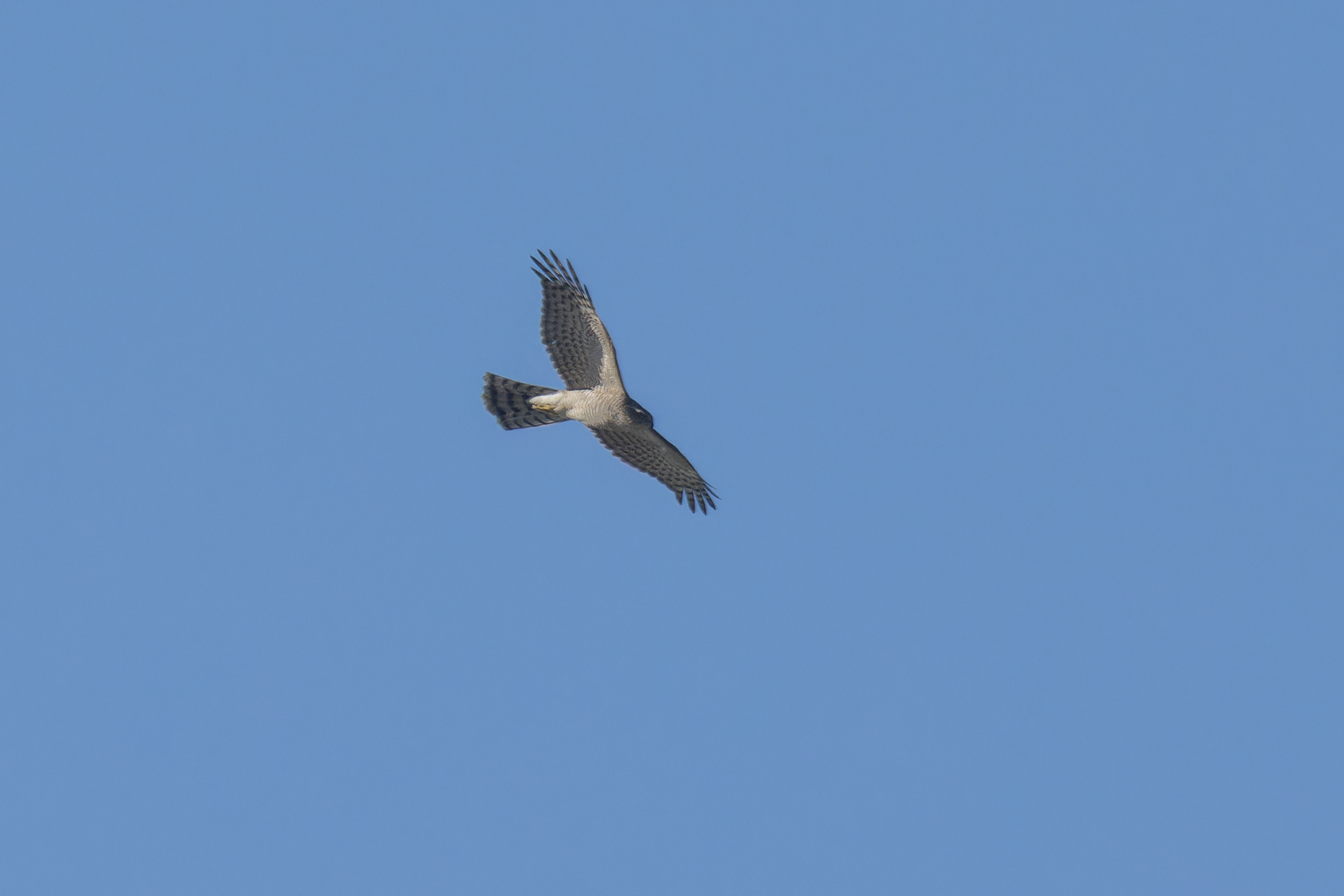
Adults display distinct plumage variations based on sex. The male features slate-grey or bluish upperparts with finely barred underparts that appear orange from a distance, accompanied by orange-yellow or orange-red irides. He measures 29–34 cm long with a wingspan of 59–64 cm. The female is substantially larger, measuring 35–41 cm with a wingspan of 67–80 cm, and can weigh twice as much as the male. She has dark brown or greyish-brown upperparts with brown barring below and bright yellow to orange eyes. Juveniles are warm brown above with rusty fringes and coarsely barred underparts, possessing pale yellow eyes. The species has short, broad wings and a long tail, adaptations for maneuvering through trees. The pale underparts and darker upperparts exhibit countershading to break up the bird's outline. The bill is small and used for plucking feathers, while long legs and toes aid in grasping prey.
Identification
Look for the characteristic flap-flap-glide flight that creates an undulating pattern. In flight, note the short, broad wings and a long, square-ended tail used for tight turns. The male is only slightly larger than a merlin. The female can be confused with the similarly sized male Goshawk, but she lacks the bulk and has a more slender build with shorter wings. In China, the Besra is a confusion species, though the local subspecies is considerably larger. The adult male's bluish-grey upperparts and orange underparts are distinctive, while females and juveniles are browner. The horizontal barring on the underparts is typical of woodland raptors. Small birds often mob this raptor, recognizing its barred underparts as a threat.
Distribution & Habitat
This raptor is widespread throughout the temperate and subtropical Old World, occupying a global range estimated at over 23 million square kilometers. It is prevalent in most woodland types, including coniferous and mixed forests, as well as open country with scattered trees. It prefers hunting along wooded edges but is found in any habitat during migration. Unlike larger relatives, it frequently inhabits gardens and urban areas, breeding in city parks if tall trees are present. Northern populations migrate south to winter in North Africa, Arabia, and India, while southern residents are mostly sedentary. Juveniles migrate earlier than adults. It is one of the most common birds of prey in Europe, with stable global populations classified as Least Concern.
Behavior & Ecology
Diet consists almost exclusively of birds, with males taking smaller species and females capturing larger prey. It hunts by surprise attack from cover, flying fast and low, sometimes flipping upside-down to grab prey. A pair can consume vast numbers of songbirds annually. Breeding occurs in extensive woodland where a stick nest is built in a tree. The female lays four or five pale blue, brown-spotted eggs and incubates them for 33 days while the male provides food. Chicks fledge after 24 to 28 days. The female maintains high weight during breeding for success. Vocalizations include loud cries from fledglings. The species is solitary outside of breeding, though high densities of non-breeding birds exist to fill vacant territories.
Conservation
Currently classified as Least Concern by the IUCN, the global population is stable and estimated at around 1.5 million birds. However, the population crashed in the mid-20th century due to organochlorine insecticides used as seed dressings. These chemicals caused eggshell thinning and direct poisoning. Following bans on these pesticides in the 1970s, the population recovered significantly. Local threats include habitat loss, illegal hunting, and persecution by pigeon fanciers and gamekeepers. In some regions, like Norway and Albania, populations are declining. Collisions with man-made structures in urban areas also pose a risk.
Culture
This bird has a long history in falconry, dating back to at least the 16th century. It was favored by ladies of noble status in the Middle Ages and by Emperor Akbar the Great. While considered difficult to train, it is praised for its courage and agility. In Slavic mythology, it is a sacred bird associated with groves of the gods and omens of doom. It features in Teutonic mythology and works by Shakespeare, Tennyson, and Ted Hughes. The term 'musket' for a small cannon is derived from the male bird's name. Folk beliefs once suggested that the common cuckoo transformed into this hawk during winter.
Source: Wikipedia · CC BY-SA 3.0
Taxonomy
- Order
- Accipitriformes
- Family
- Accipitridae
- Genus
- Accipiter
- eBird Code
- eurspa1
Vocalizations
Subspecies (7)
-
Accipiter nisus dementjevi
breeds Pamir-Alai to Tien Shan Mountains (central Asia); winter range requires elucidation
-
Accipiter nisus granti
Madeira and Canary Islands
-
Accipiter nisus melaschistos
Himalayas and mountains of central Asia
-
Accipiter nisus nisosimilis
breeds northwestern Siberia to northern China and Japan; winters to southwestern, central, eastern Asia
-
Accipiter nisus nisus
breeds Europe to Türkiye and Siberia; winters to Africa
-
Accipiter nisus punicus
northwestern Africa (Morocco to Tunisia)
-
Accipiter nisus wolterstorffi
Corsica and Sardinia
Data Sources
Species description from Wikipedia, licensed under CC BY-SA 3.0.
Bird images and sounds sourced from GBIF, contributed by citizen scientists worldwide under Creative Commons licenses.
Taxonomy data from AviList 2025.