
Warbling White-eye
Zosterops japonicus
日本绣眼鸟
Introduction
This species is native to Japan, Korea, Taiwan, eastern China, and the northern Philippines. It was introduced to Hawaii in 1929 and subsequently spread to every Hawaiian island, becoming the most abundant land bird there by 1987. The species forms flocks and joins mixed-species foraging flocks outside the breeding season. In introduced ranges, it competes with native Hawaiian honeycreepers for food resources and serves as a vector for avian parasites that affect endemic species. Sightings in Southern California began in 2018, though these populations have since been reassigned to a related species.
Description
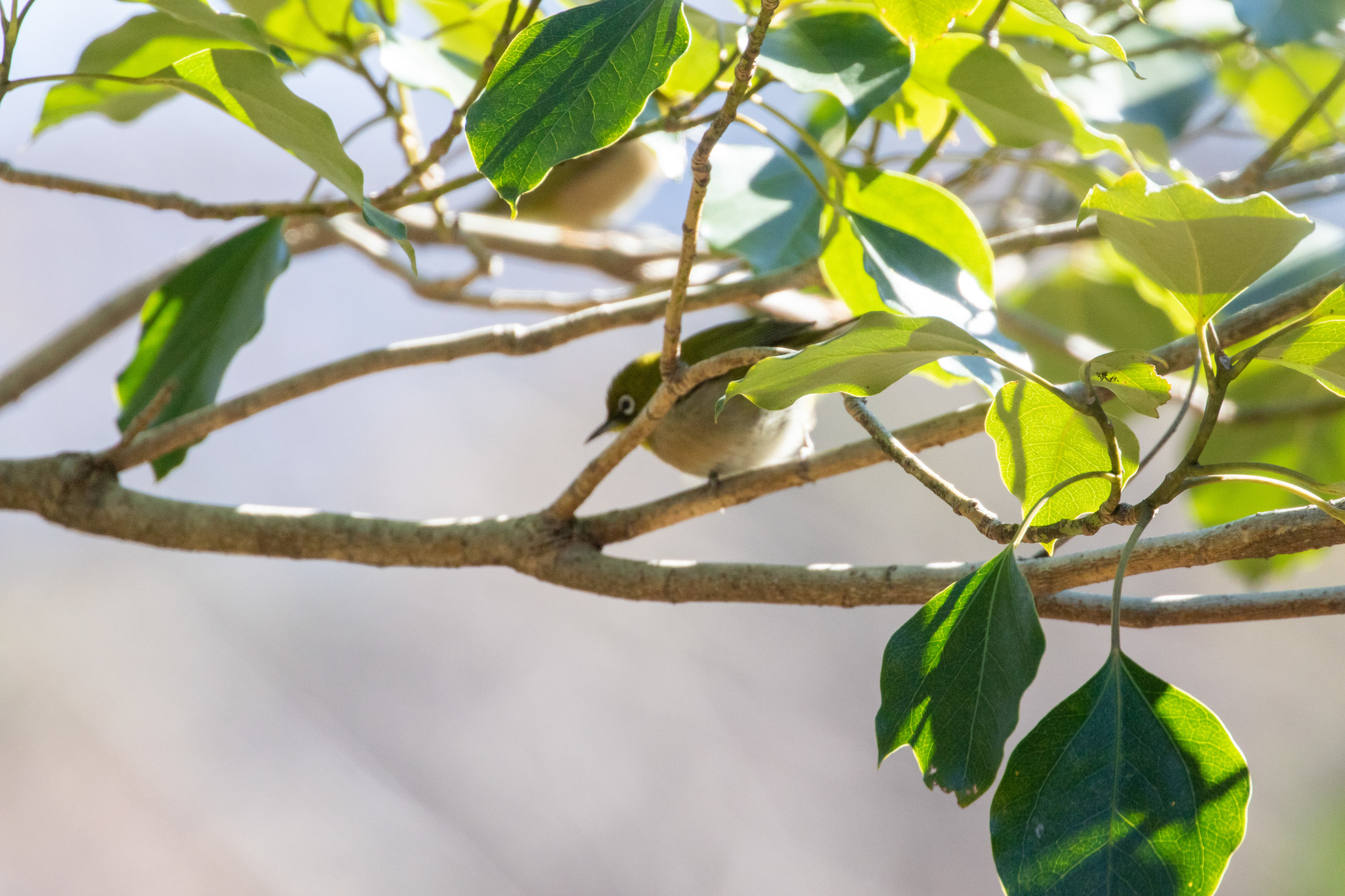
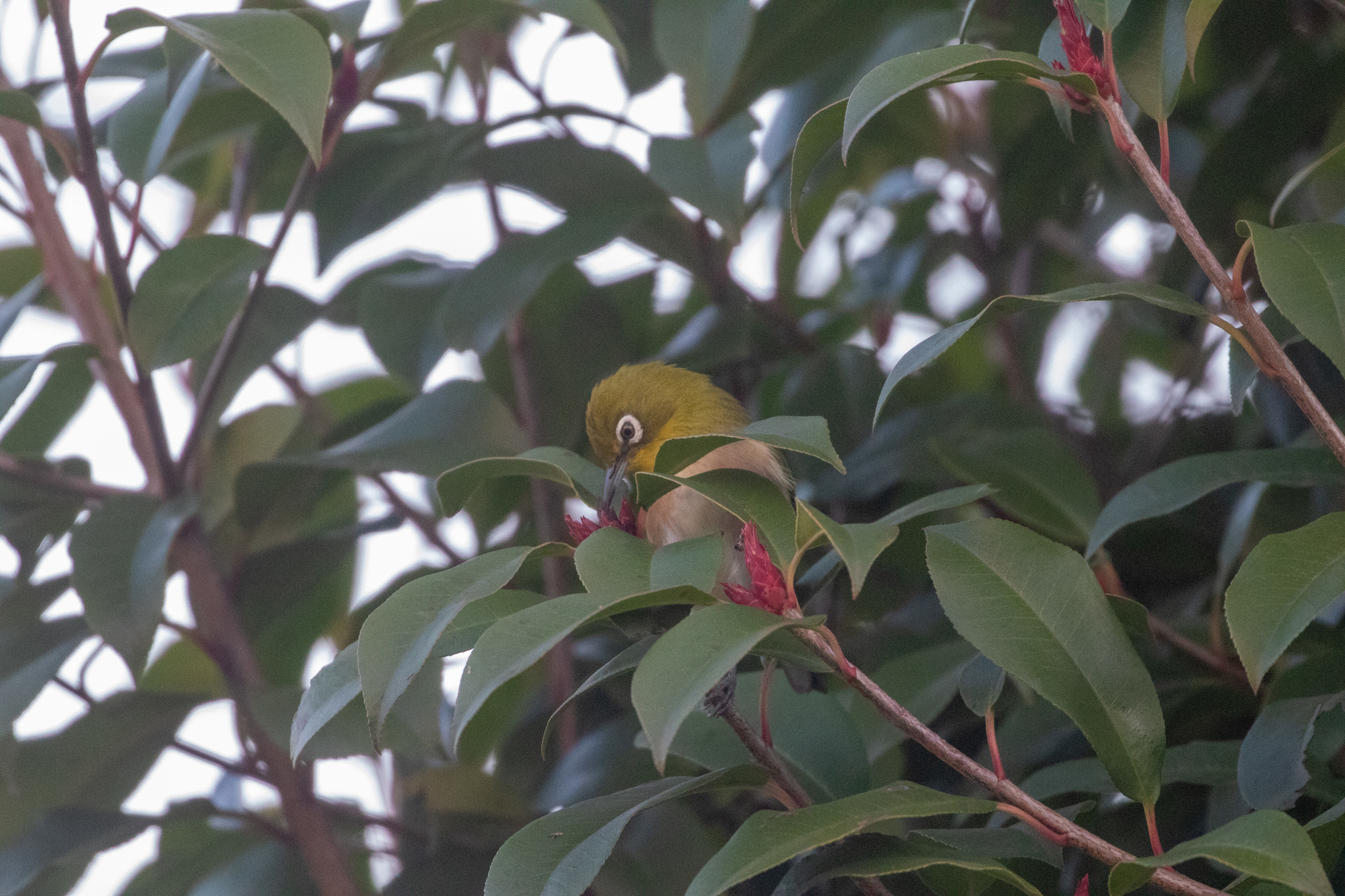
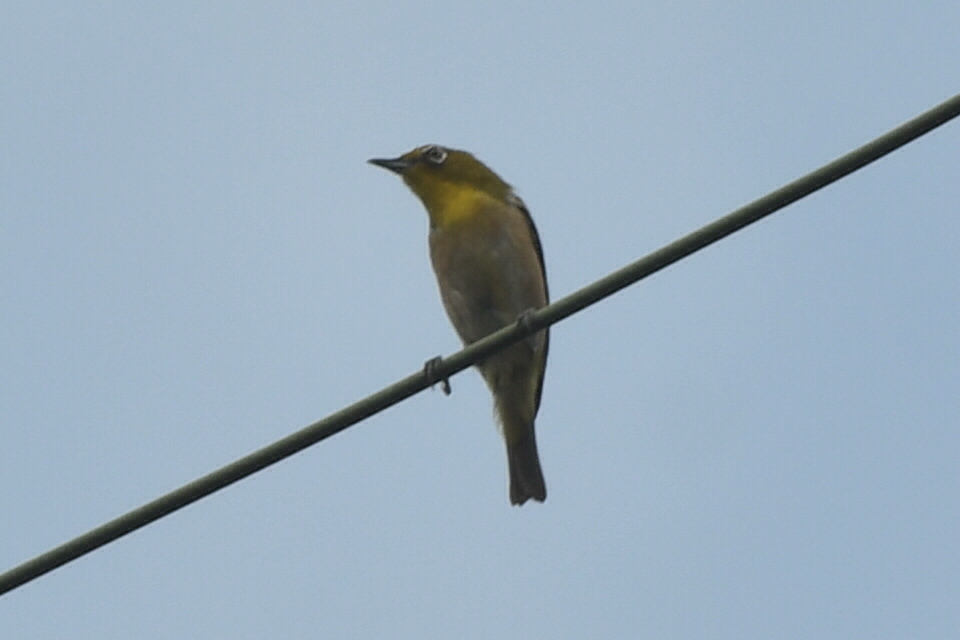
This compact bird displays overall olive-green plumage, darker and more saturated on the upperparts and transitioning to pale green on the underparts. The forehead carries a green wash, while the throat brightens to a warm yellow. The defining feature is the narrow white eye-ring that encircles each eye, giving the species its common name. The bill is long, slender, and slightly decurved—an adaptation for extracting nectar and picking insects from foliage. Legs and feet range from black to brown. The rounded wings are dark brown but bordered with green feathering, creating a scalloped appearance in flight. Adults measure 10-11 centimeters in length and weigh just 9.75-12.75 grams, making them among the smaller passerines in their range.
Identification
The combination of overall olive-green plumage, bright yellow throat, and prominent white eye-ring readily distinguishes this species from most other small passerines within its range. The long, slender bill and acrobatic flight style add further identification clues. In areas where Swinhoe's white-eye occurs, careful attention to plumage tone and geographic location becomes important, as these related species can appear very similar. The Hawaiian population is notably abundant and conspicuous, often seen actively foraging in mixed flocks through forest canopy and garden vegetation.
Distribution & Habitat
The native range encompasses Japan, Korea, Taiwan, eastern China, and the northern Philippines. Migratory populations relocate south for the winter, reaching Burma, Thailand, Hainan Island, and Vietnam. The species has become naturalized throughout the Hawaiian archipelago after introduction on O'ahu in 1929, now occurring on every island from tropical rainforests to deciduous forests. In Japan, it ranks among the dominant bird species and remains widespread and common. The species prefers forest edges, gardens, and wooded areas, adapting readily to human-modified landscapes.
Behavior & Ecology
These birds are rarely observed on the ground, instead remaining active in the foliage canopy where they forage acrobatically. Their omnivorous diet includes fruit, insects, and nectar obtained at all levels of the vegetation layer. They search flower leaves and bark systematically for insect prey. Highly gregarious outside the breeding season, they form mixed-species flocks that move together through feeding territories. Allopreening—mutual preening between individuals—occurs commonly, even between different species in captivity. Pairs form monogamous bonds and build cup-shaped nests 1-30 meters above ground over 7-10 days using spider webs, moss, lichens, and mammal hair. Nests measure approximately 56 mm in diameter and 42 mm deep. Males establish territories through loud singing and defend them aggressively against same-species intruders while permitting other species to nest within their boundaries.
Conservation
While the species' conservation status has not been formally assessed by the IUCN, its extensive range and large populations indicate it is not currently threatened in its native habitat. However, in Hawaii, it has become a significant conservation concern as an invasive species. By outcompeting native honeycreepers for nectar and fruit resources and serving as a vector for harmful avian parasites, it impedes the recovery of endangered native bird populations. Control efforts have been considered, though the species' ecological roles as pollinator and seed disperser complicate management decisions. In California, eradication programs targeting related white-eye species have demonstrated that mist-netting and targeted removal can be effective capture methods.
Culture
As one of the native bird species of Japan, this bird has appeared frequently in traditional Japanese art throughout history. The Japanese name 'mejiro,' meaning 'white eye,' reflects the species' most distinctive feature. Historically, these lively little birds were commonly kept as cage pets in Japan, appreciated for their active behavior and melodic songs. This cultural appreciation for the species as an ornamental bird contributed to its initial spread beyond its native range.
Source: Wikipedia · CC BY-SA 3.0
Taxonomy
- Order
- Passeriformes
- Family
- Zosteropidae
- Genus
- Zosterops
- eBird Code
- warwhe1
Vocalizations
Subspecies (15)
-
Zosterops japonicus alani
Volcano Islands (Iwo Jima and Minami-iwo-Jima)
-
Zosterops japonicus daitoensis
Daito Islands (Philippine Sea)
-
Zosterops japonicus difficilis
southern Sumatra
-
Zosterops japonicus diuatae
southern Philippines (northern Mindanao)
-
Zosterops japonicus halconensis
Philippines (Mindoro)
-
Zosterops japonicus insularis
Ryukyu Islands (Tanegashima and Yakushima, southern Japan)
-
Zosterops japonicus japonicus
breeds southern Sakhalin, Japan, and the southern Korean Peninsula; partially migratory, withdrawing from Sakhalin and northern Japan in the nonbreeding season
-
Zosterops japonicus loochooensis
Iriomote (Ryukyu Islands, southern Japan)
-
Zosterops japonicus montanus
montane Sumatra, Java, Bali, Lesser Sundas, Sulawesi, and southern Moluccas
-
Zosterops japonicus obstinatus
montane Ternate, Tidore, and Bacan (west of Halmahera), and Obi (northern Moluccas) and Seram (southern Moluccas)
-
Zosterops japonicus parkesi
southwestern Philippines (Palawan)
-
Zosterops japonicus pectoralis
Philippines (northern Negros)
-
Zosterops japonicus stejnegeri
Izu Islands (southern Japan); introduced to Bonin Islands
-
Zosterops japonicus vulcani
southern Philippines (Mount Apo and Mount Katanglad on Mindanao)
-
Zosterops japonicus whiteheadi
northern Philippines (northern Luzon)
Data Sources
Species description from Wikipedia, licensed under CC BY-SA 3.0.
Bird images and sounds sourced from GBIF, contributed by citizen scientists worldwide under Creative Commons licenses.
Taxonomy data from AviList 2025.