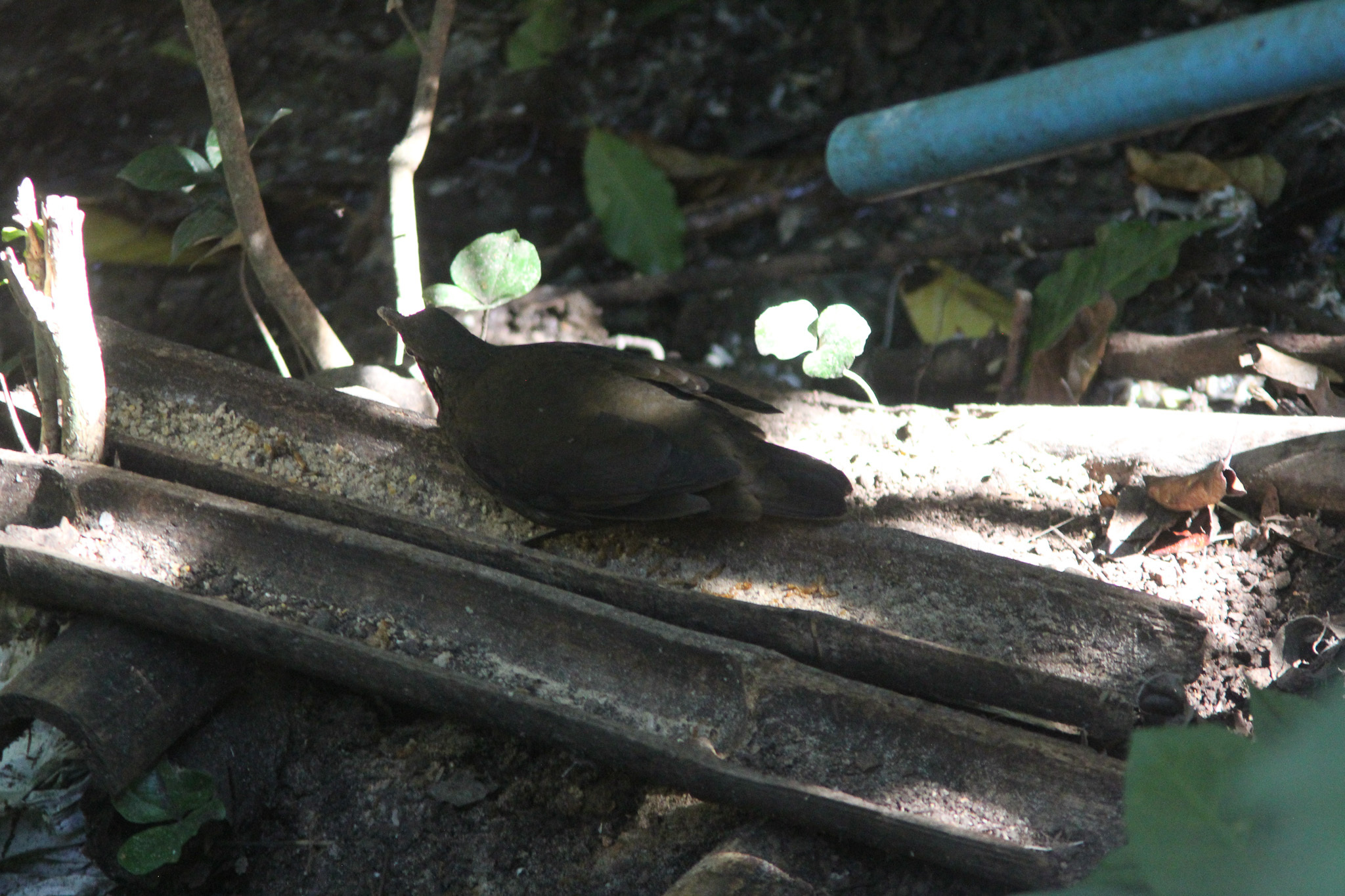
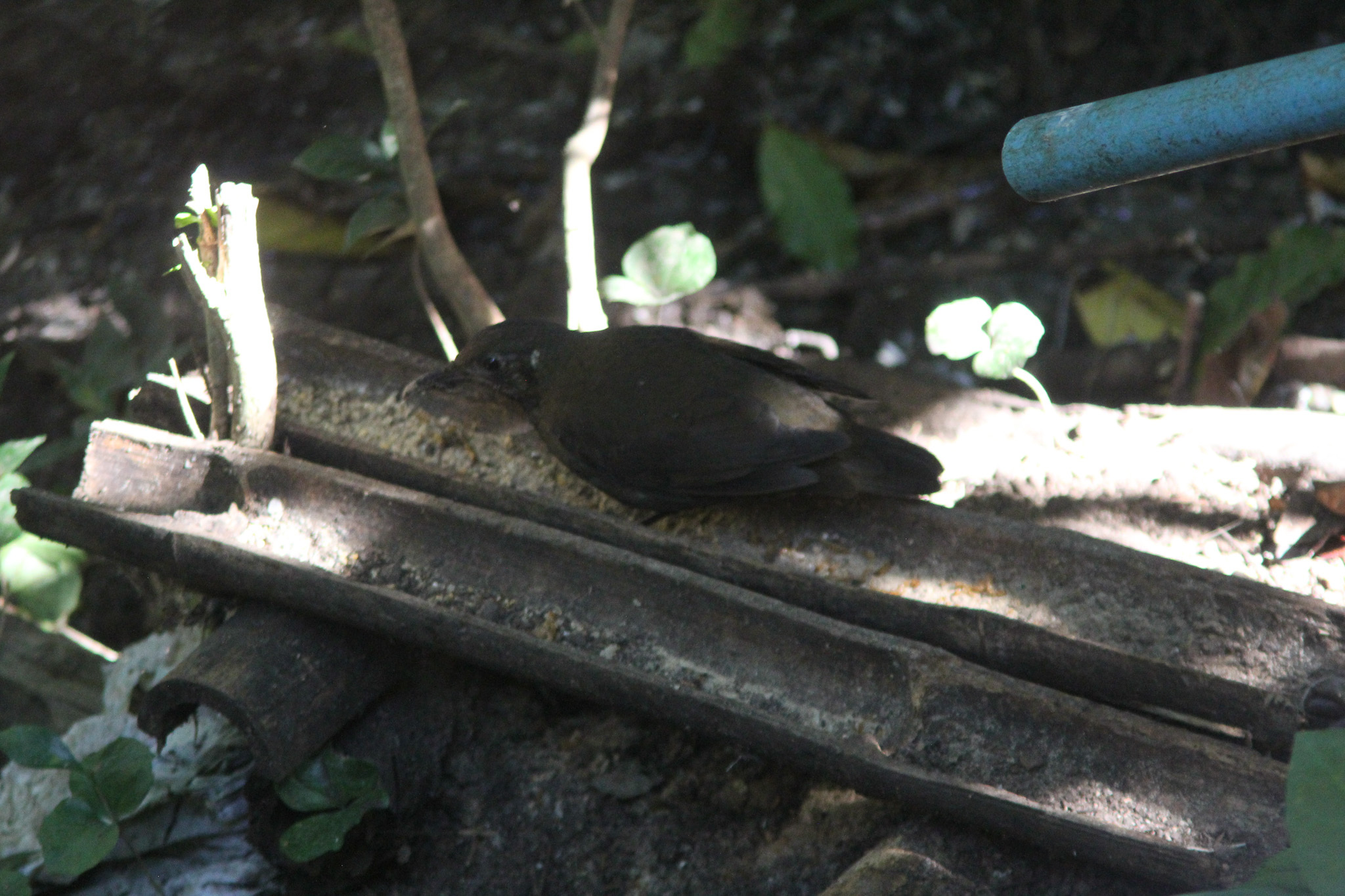
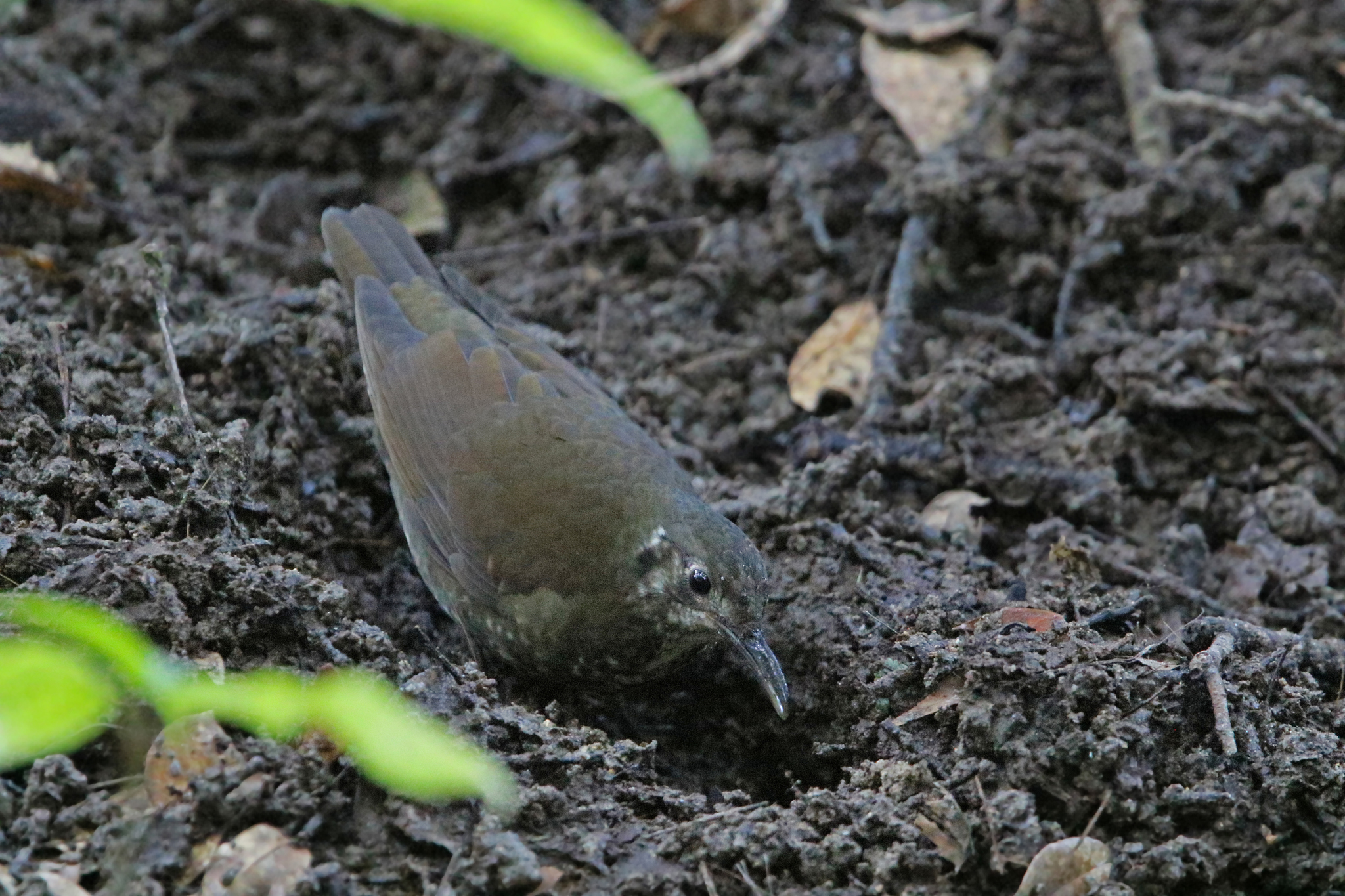
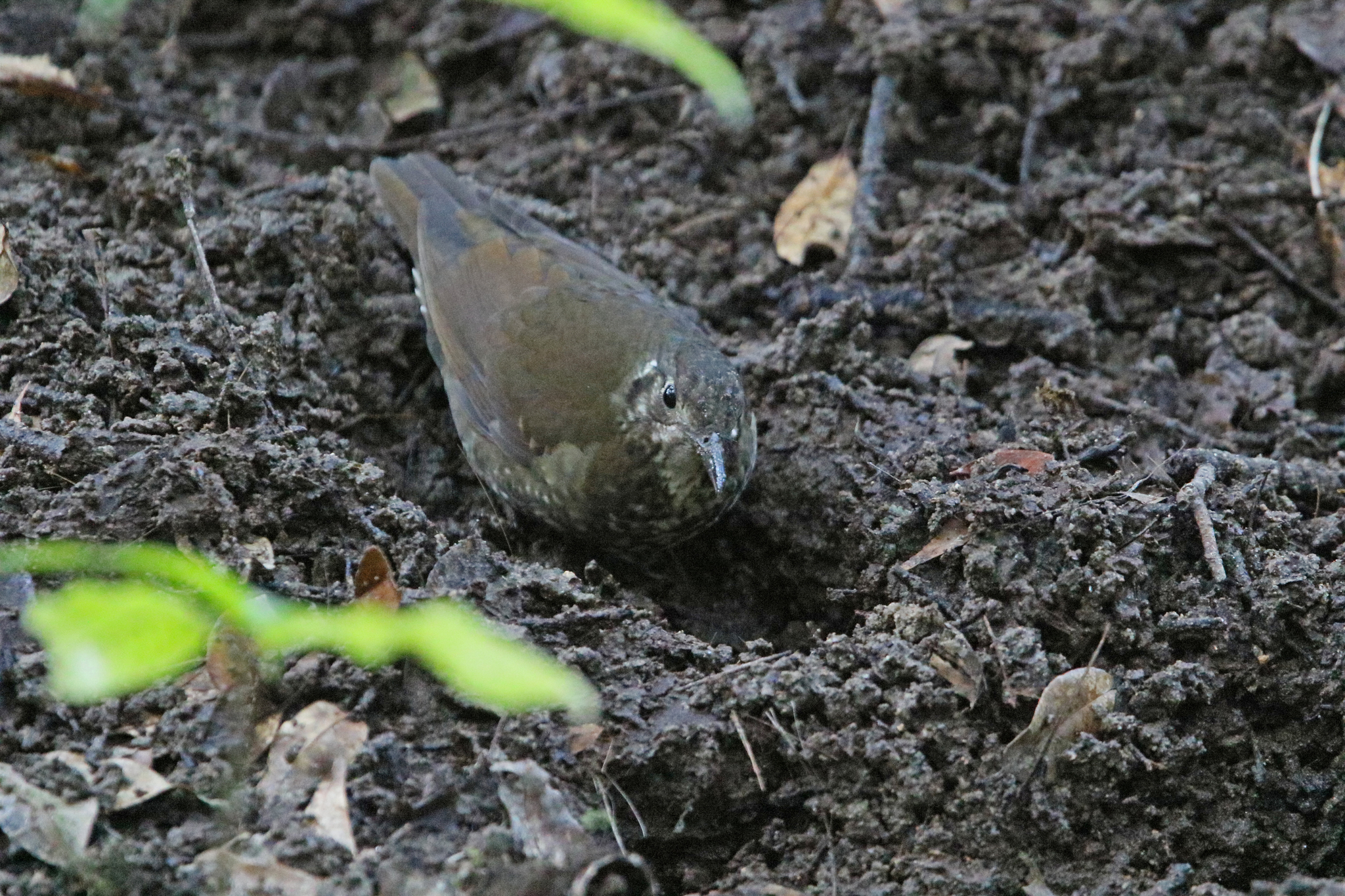
Dark-sided Thrush
Zoothera marginata
长嘴地鸫
Introduction
Species in the thrush family Turdidae, genus Zoothera. Closely related to long-billed thrush and scaly thrush. Monotypic species described by Edward Blyth in 1847 from Rakhine, Burma. Discontinuous range across eastern Himalayas and Southeast Asia highlands. Inhabits broadleaf forests at 750-2,100 m elevation, favoring damp areas and rocky streams. Non-migratory but makes altitudinal movements seasonally. Cryptic plumage and secretive behavior may result in it being frequently overlooked.
Description
Medium-sized thrush, 24-25 cm in length and weighing approximately 80 g. Characterized by a notably long blackish bill. Plumage features a dark brown head contrasting with rufous-brown wings. Face displays a white loral stripe and white eyering, while throat and chin are whitish. Call consists of a series of monotone thin whistles.
Distribution & Habitat
Discontinuous distribution across the eastern Himalayas, with populations in higher elevations of Burma, northern Thailand, Laos, Vietnam, and extreme southern China. Has occurred as a vagrant in Bangladesh. Non-migratory but descends to lower altitudes in winter. Inhabits broadleaf forests from 750-2,100 m elevation, particularly favoring damp areas and rocky streams, also found in reed and bamboo stands within these forests. Potentially overlooked due to cryptic plumage and retiring behavior.
Source: Wikipedia · CC BY-SA 3.0
Taxonomy
- Order
- Passeriformes
- Family
- Turdidae
- Genus
- Zoothera
- eBird Code
- dasthr1
Distribution
Nepal to northern India, southwestern China, Myanmar, Thailand, and northern Indochina
Data Sources
Species description from Wikipedia, licensed under CC BY-SA 3.0.
Bird images and sounds sourced from GBIF, contributed by citizen scientists worldwide under Creative Commons licenses.
Taxonomy data from AviList 2025.