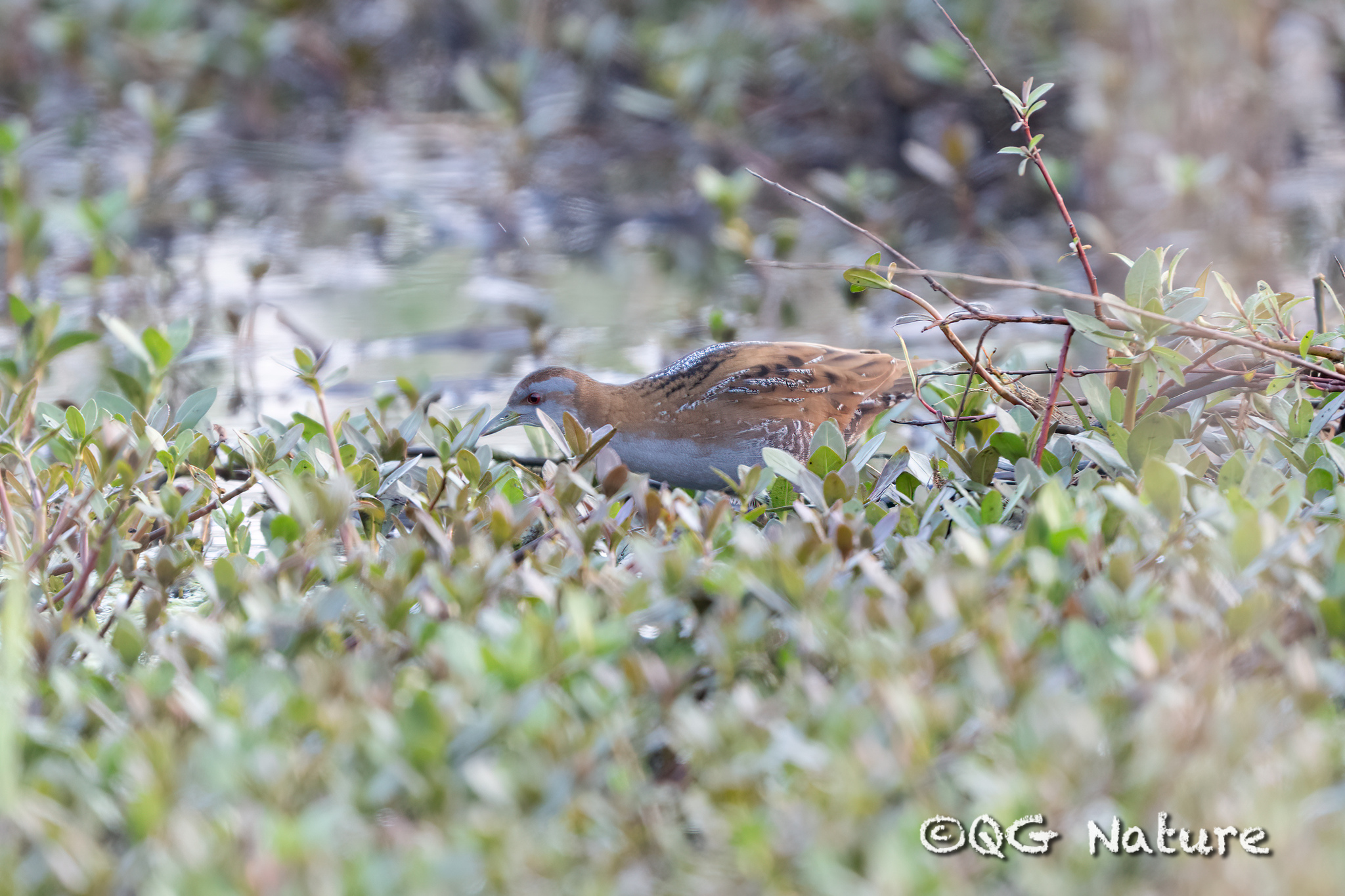
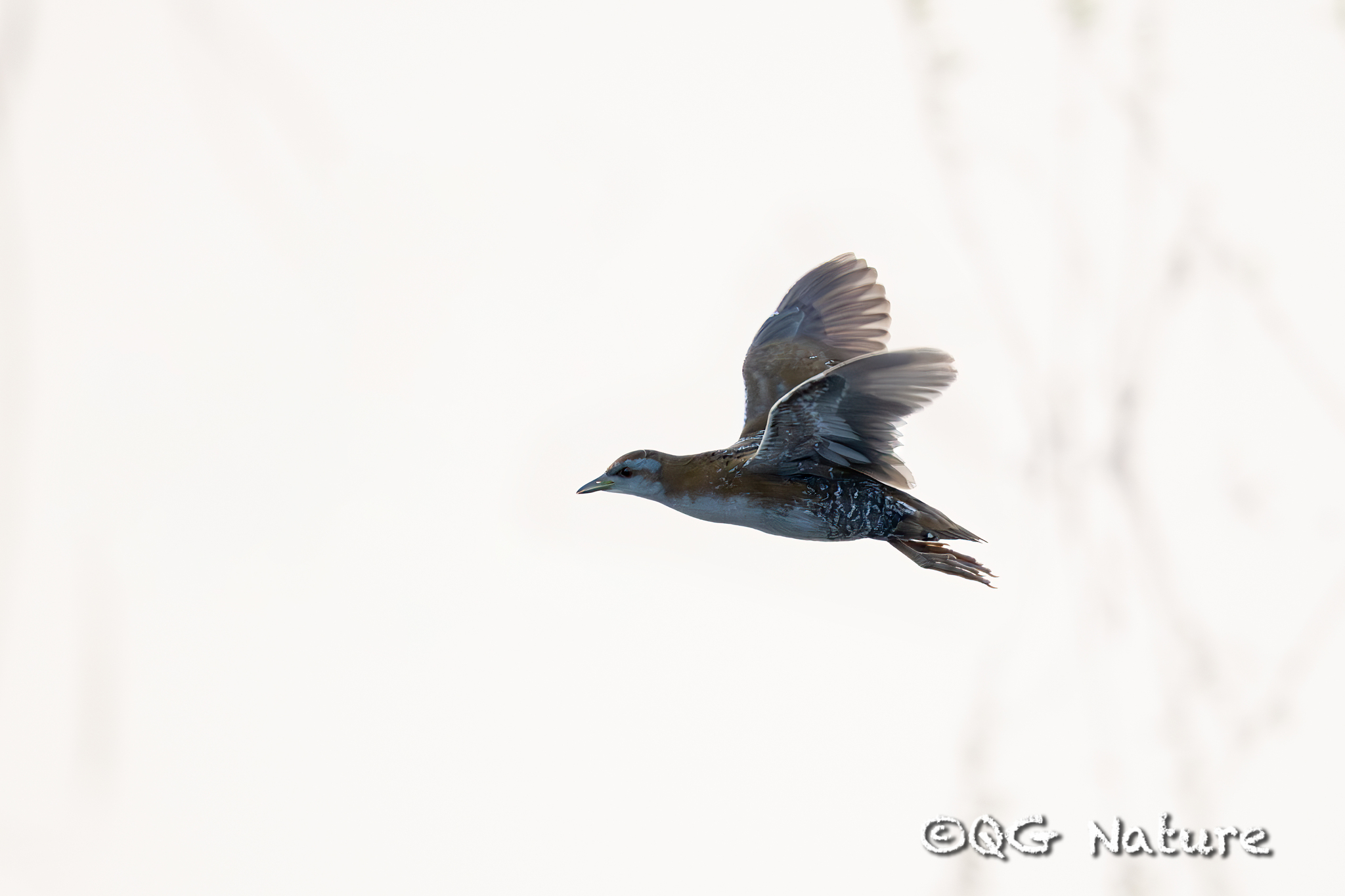
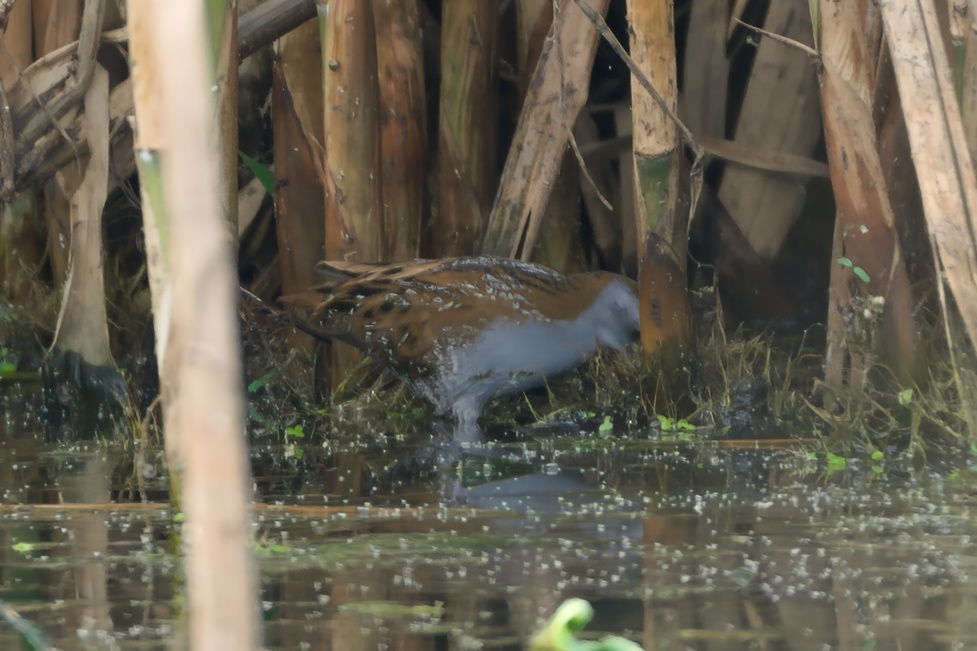
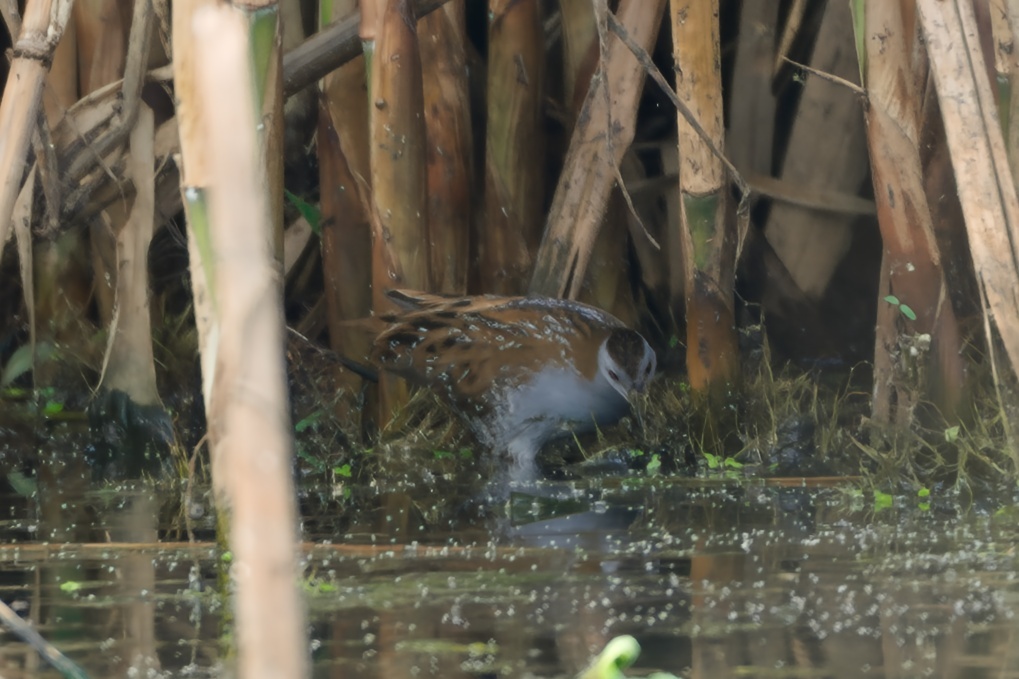
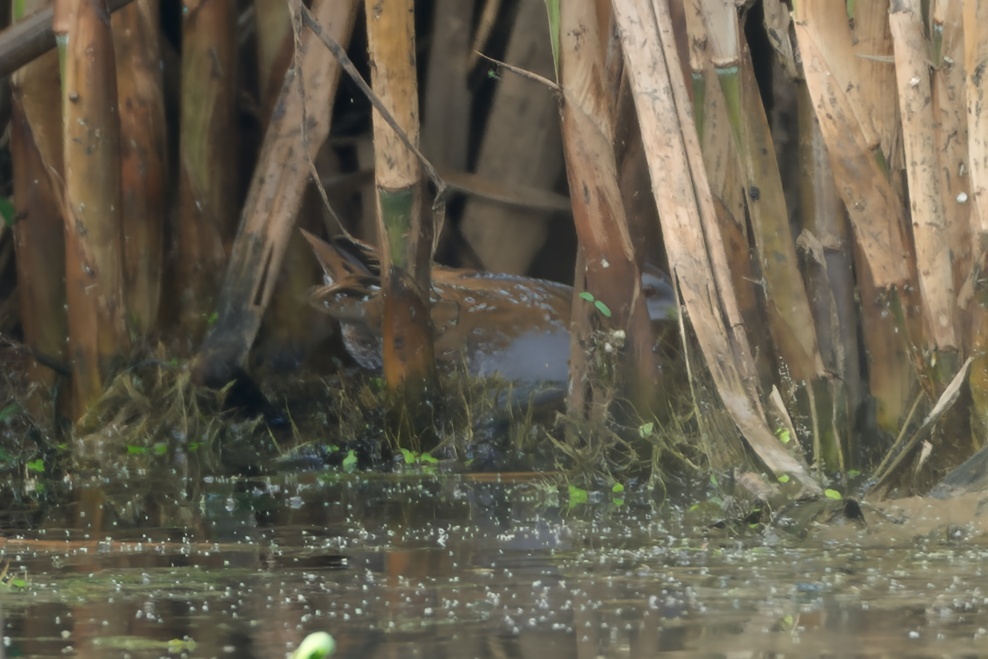
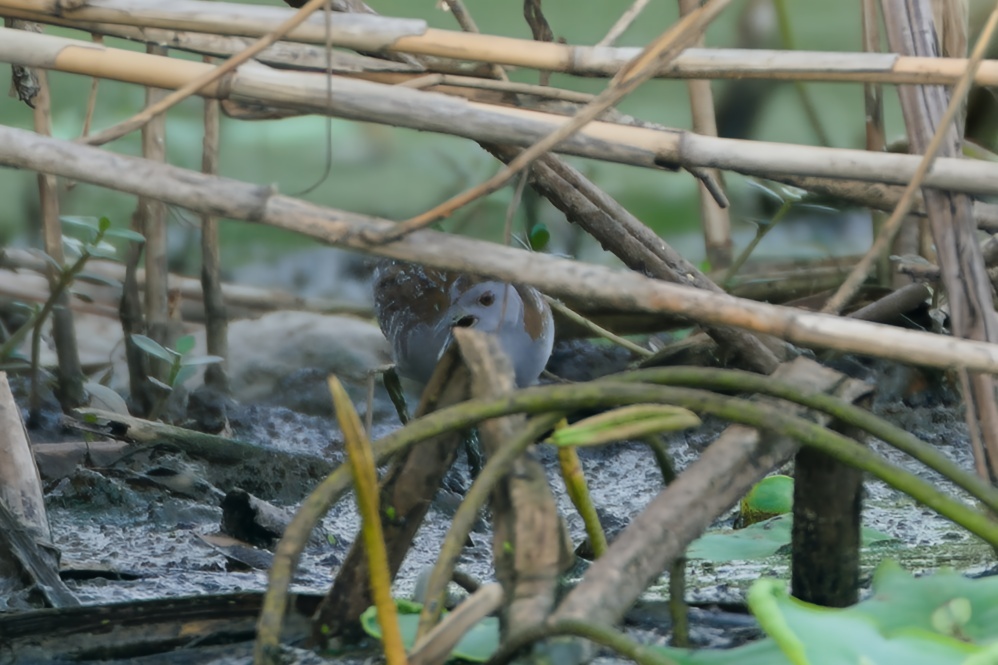
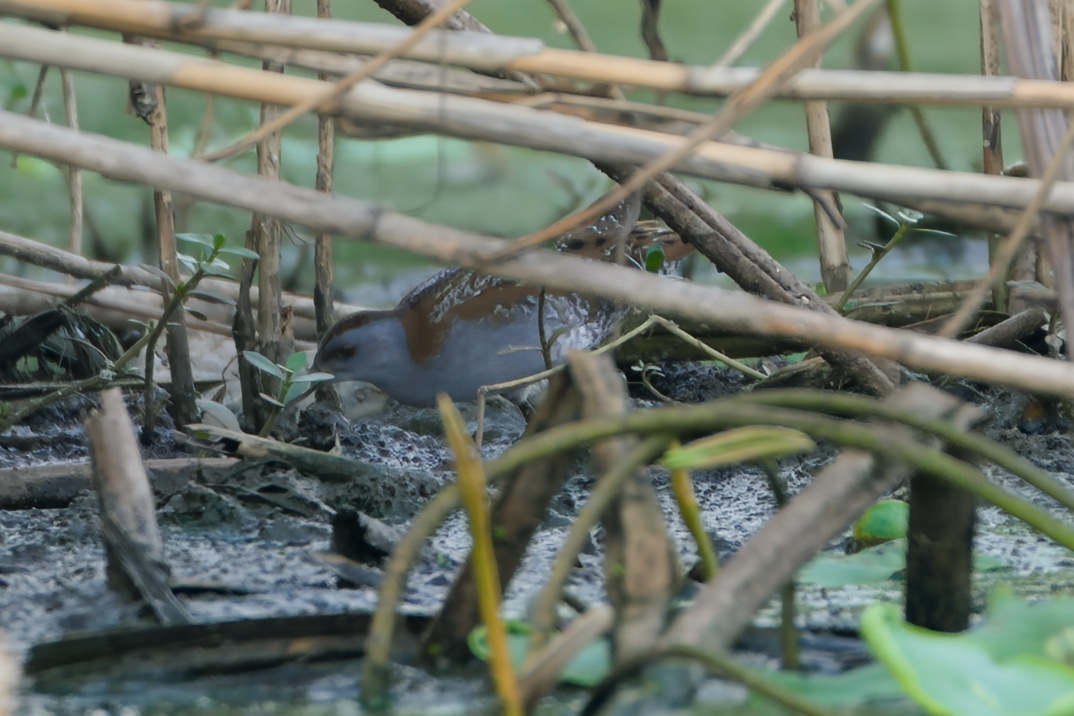
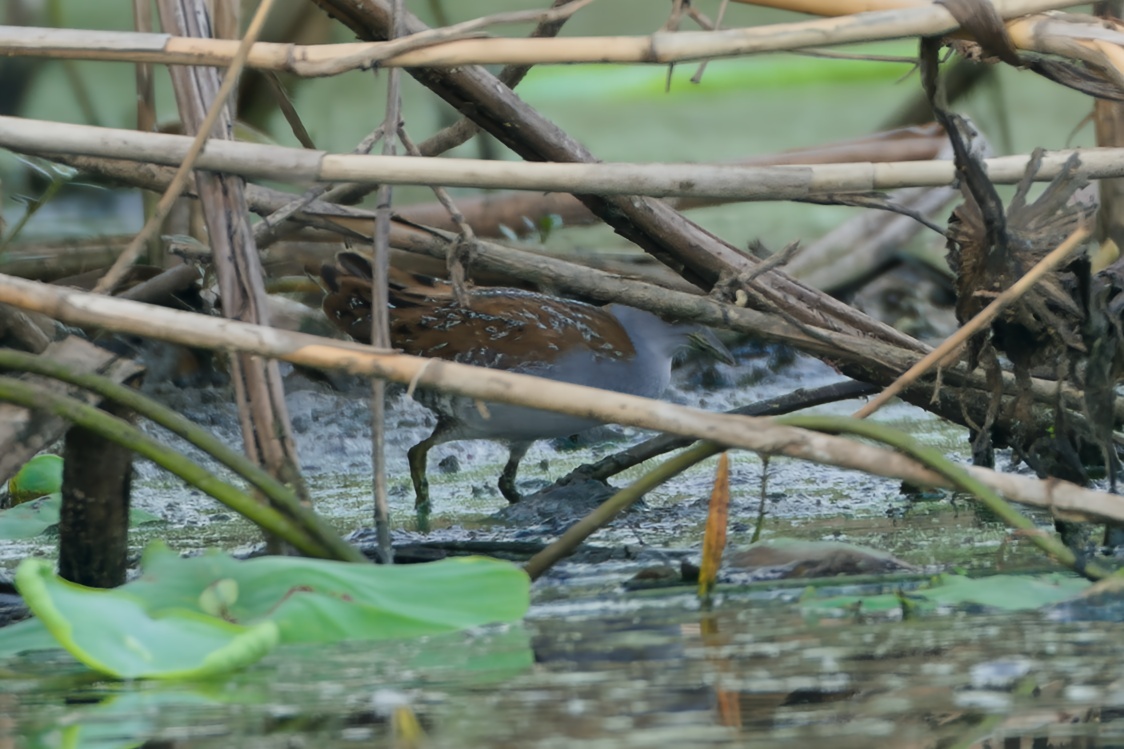
Baillon's Crake
Zapornia pusilla
小田鸡
Introduction
Small waterbird of the family Rallidae. Breeding habitat consists of sedge beds across Europe (mainly eastern regions) and the Palearctic. Formerly bred in Great Britain until the mid-19th century, with western European populations declining due to drainage; recent recovery in north-western Europe includes recolonisation of Germany and the Netherlands. Also a resident breeder in Africa and Australasia. Migratory populations winter in east Africa and south Asia. Highly secretive during breeding season when typically heard rather than seen. Classified as not threatened nationally in Australia under the EPBC Act, though conservation status varies by state, with vulnerable status in Victoria.
Description
Length 16–18 cm (6.3–7.1 in). Adults have mainly brown upperparts with white markings, blue-grey face and underparts, and black-and-white barred rear flanks. Bill is short, straight, and yellow or green without a red base. Legs are green with long toes; tail is short and barred underneath. Immatures resemble adults but have extensively barred underparts. Downy chicks are black, as with all rails.
Identification
Similar to the only slightly larger little crake. Key distinguishing features include the yellow or green bill without a red base, and the distinctive black-and-white barring on the rear flanks. The bird is very secretive and elusive during breeding season, when it is more often heard than seen. May be easier to observe during migration or on wintering grounds.
Distribution & Habitat
Breeds across Europe (primarily eastern regions) and throughout the Palearctic. Former range included Great Britain; western European populations declined after drainage, though recent recolonisation has occurred in Germany and the Netherlands. Breeding suspected in Britain; Irish record in 2012 was first since 1850s. Migratory populations winter in east Africa and south Asia. Resident populations exist in Africa and Australasia. Single North American record on Attu Island in September 2000. Five subspecies recognised across different regions including New Zealand, Australia and New Guinea, Borneo, Africa, and Asia.
Behavior & Ecology
Feeds by probing bill in mud or shallow water and by picking up food visually. Diet consists mainly of insects and aquatic animals. Very secretive during breeding season, when birds are mostly detected by voice. Vocalization is a rattling call similar to that of the edible frog or garganey. Nest is placed in a dry location within wet sedge bogs, with clutch size of 4–8 eggs. Easier to observe on migration or during winter.
Conservation
International: covered under the Agreement on the Conservation of African-Eurasian Migratory Waterbirds (AEWA). Australia: not listed as threatened nationally under the EPBC Act 1999. However, state-level protection varies; listed as threatened under Victoria's Flora and Fauna Guarantee Act (1988) and as vulnerable on the 2007 advisory list of threatened vertebrate fauna in Victoria. An Action Statement for recovery and future management has not yet been prepared for Victoria.
Source: Wikipedia · CC BY-SA 3.0
Taxonomy
- Order
- Gruiformes
- Family
- Rallidae
- Genus
- Zapornia
- eBird Code
- baicra1
Subspecies (6)
-
Zapornia pusilla affinis
North and South islands, New Zealand
-
Zapornia pusilla intermedia
breeds Europe eastward to Asia Minor, and southward locally in northern, eastern, and southern Africa and Madagascar; European birds winter to southern Africa
-
Zapornia pusilla mayri
known from 4 specimens from New Guinea
-
Zapornia pusilla mira
known from a 1912 specimen from Borneo
-
Zapornia pusilla palustris
eastern New Guinea, Australia including Tasmania
-
Zapornia pusilla pusilla
breeds central Asia eastward to southeastern Russia and northern Japan; winters to southern India, Indonesian Archipelago, and northern and central Philippines
Data Sources
Species description from Wikipedia, licensed under CC BY-SA 3.0.
Bird images and sounds sourced from GBIF, contributed by citizen scientists worldwide under Creative Commons licenses.
Taxonomy data from AviList 2025.