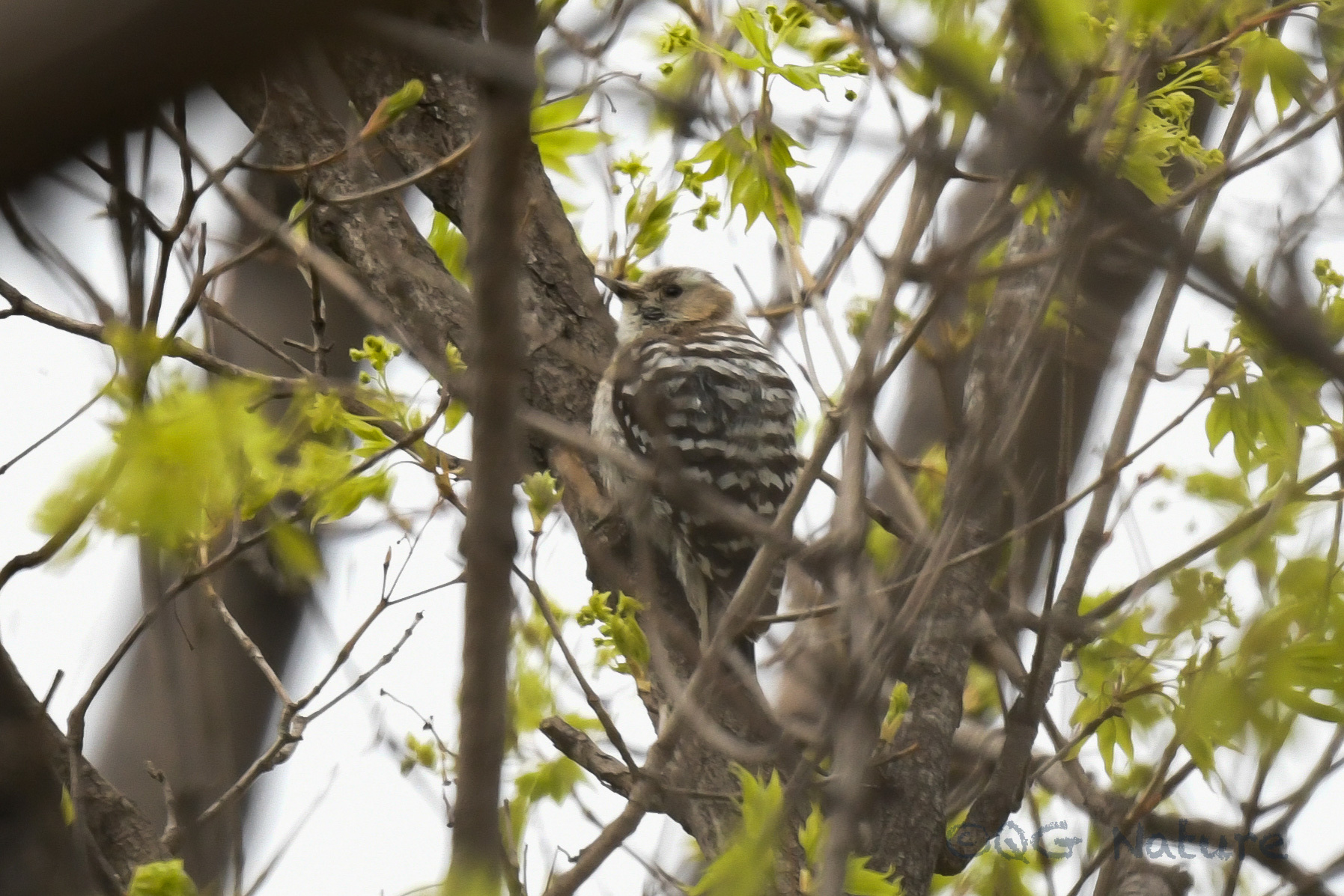
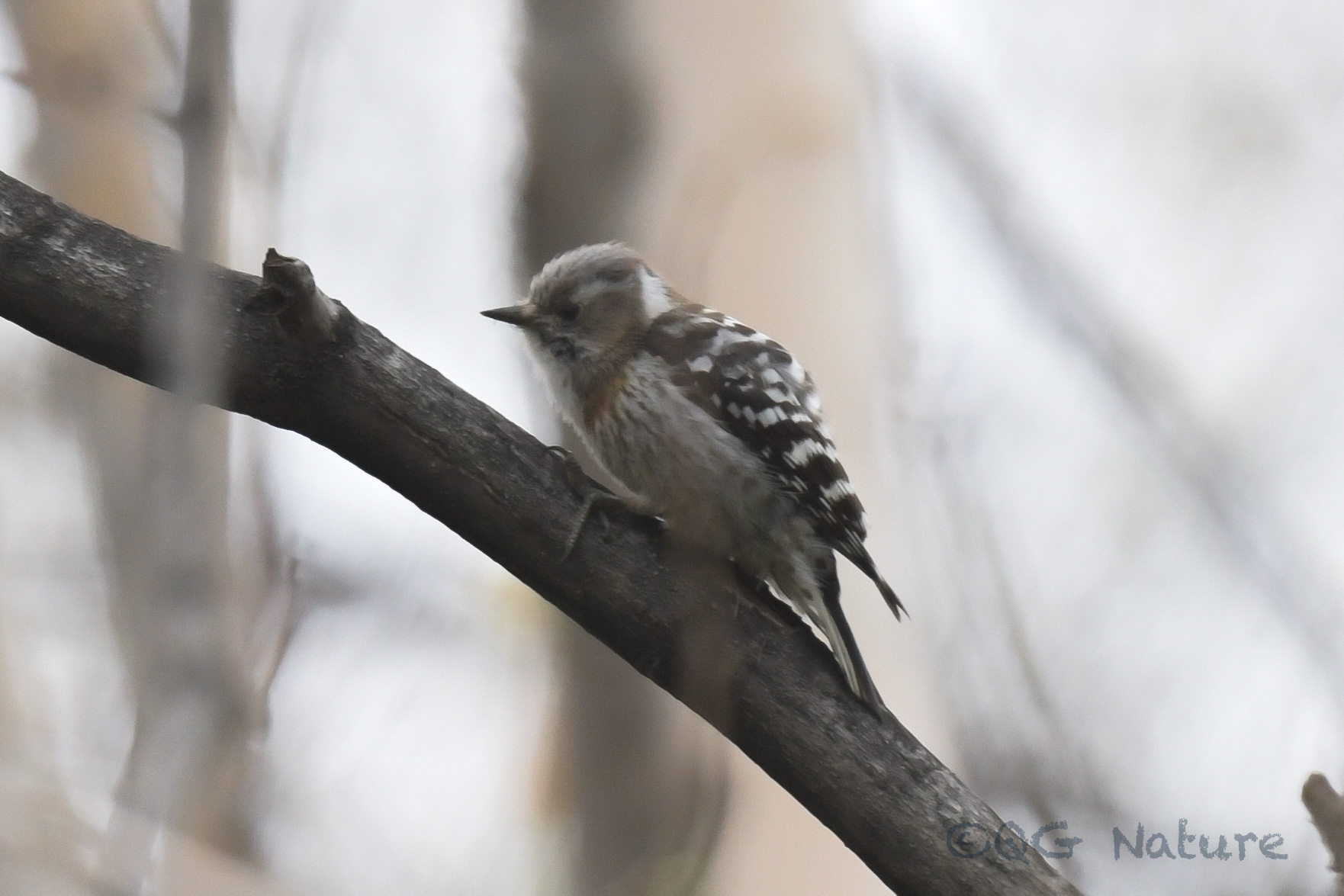
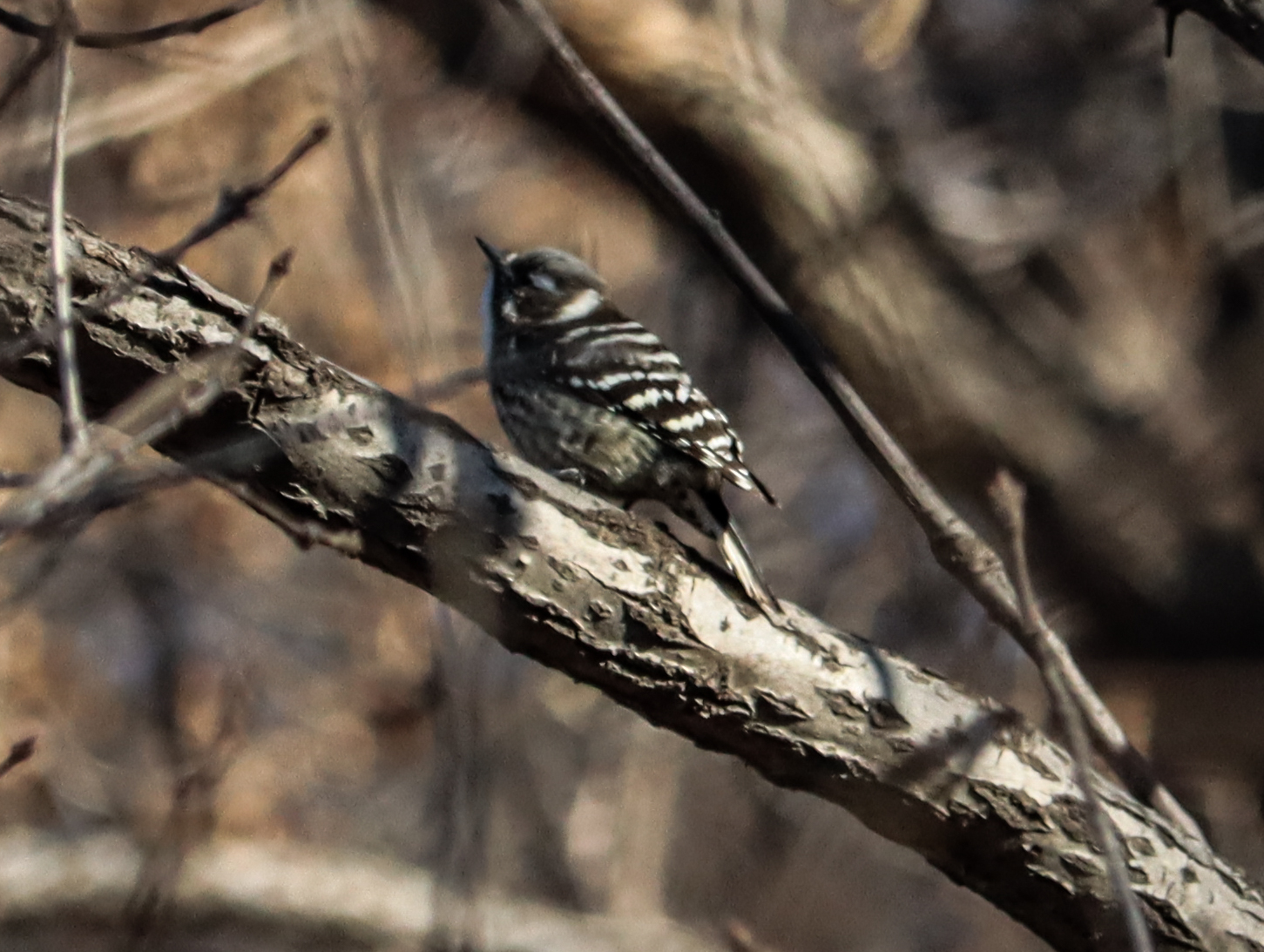
Japanese Pygmy Woodpecker
Yungipicus kizuki
小星头啄木鸟
Introduction
Small woodpecker species (genus Yungipicus) with previous placements in Dendrocopos and Picoides genera. Inhabits coniferous and deciduous forests across northeastern Asia including Russia, China, Korea and Japan. Characterized by small body size and distinctive white supercilium extending from above eye to breast. Sexually dimorphic with males showing red nape marking. IUCN least-concern status due to stable population and extensive range.
Description
Small woodpecker measuring 13–15 cm (5.1–5.9 in) in length. Grey-brown crown with white supercilium extending from above eye to neck and breast. Brown ear coverts, white moustachial stripe and grey-brown malar stripe. Chin and throat white. Mantle and back dark brown with white barring. Brownish-black upperwing coverts and flight feathers with white bars. Breast shows brownish suffusion with variable streaking on breast, flank and belly. Blackish tail with white bars on outer feathers. Iris chestnut, beak blackish, legs grey. Males display small red mark on side of nape; females lack this marking but have longer beak, wings and tail. Juvenile throat typically streaked. Geographic gradient of decreasing size and darkening plumage from north to south.
Identification
Small size (13–15 cm) combined with white supercilium and moustachial stripe are distinctive. Sexes separable by male's red nape marking; females lack this but show longer wings, tail and beak. Differs from similar small woodpeckers by combination of grey-brown crown, white supercilium extending to breast, and white-barred upperparts. Geographic variation across range produces clinal size and color differences.
Distribution & Habitat
Range includes Korea, northeastern China, southeastern Siberia, Sakhalin, Japan and the Ryukyu Islands. Inhabits various coniferous and deciduous forest types including lowland, upland and riverine forests, from sea level to 2,100 m (6,900 ft) elevation. Also occurs in parks and gardens. Ten subspecies recognized across the range.
Behavior & Ecology
Forages in pairs and mixed-species flocks, searching tree surfaces for invertebrates including spiders, caterpillars, ants and aphids, plus berries. Vocalizations include 'khit' and 'kzz' notes, with weak, short drumming bursts. Breeding March–May depending on latitude: starts March in southern Japan, late May in northern Japan. Excavates nest hole in dead branch. Lays 5–7 white eggs measuring approximately 19 × 15 mm. Incubation period 12–14 days; fledging occurs after three weeks.
Conservation
IUCN Red List category: Least Concern. Large geographic range with stable population trend. No significant threats identified at species level. Population considered secure across its extensive East Asian distribution.
Culture
No documented cultural significance or folklore information available.
Source: Wikipedia · CC BY-SA 3.0
Taxonomy
- Order
- Piciformes
- Family
- Picidae
- Genus
- Yungipicus
- eBird Code
- pygwoo1
Vocalizations
Subspecies (10)
-
Yungipicus kizuki amamii
northern Ryukyu Islands (Amami Ōshima and Tokuno-Shima, southern Japan)
-
Yungipicus kizuki kizuki
Kyushu (southern Japan)
-
Yungipicus kizuki kotataki
Tsushima Island and Oki Island (western Japan)
-
Yungipicus kizuki matsudairai
Yakushima Island (off southern Kyushu) and the Izu Islands
-
Yungipicus kizuki nigrescens
Okinawa (south-central Ryukyu Islands, southern Japan)
-
Yungipicus kizuki nippon
east-central China, South Korea, and Honshu (central Japan)
-
Yungipicus kizuki orii
Iriomote (southern Ryukyu Islands, southern Japan)
-
Yungipicus kizuki permutatus
southeastern Siberia (Ussuriland), northern Korea, and adjacent northeastern China (Liaoning)
-
Yungipicus kizuki seebohmi
northern Japan (Hokkaido)
-
Yungipicus kizuki shikokuensis
southern Japan (southwestern Honshu and Shikoku)
Data Sources
Species description from Wikipedia, licensed under CC BY-SA 3.0.
Bird images and sounds sourced from GBIF, contributed by citizen scientists worldwide under Creative Commons licenses.
Taxonomy data from AviList 2025.