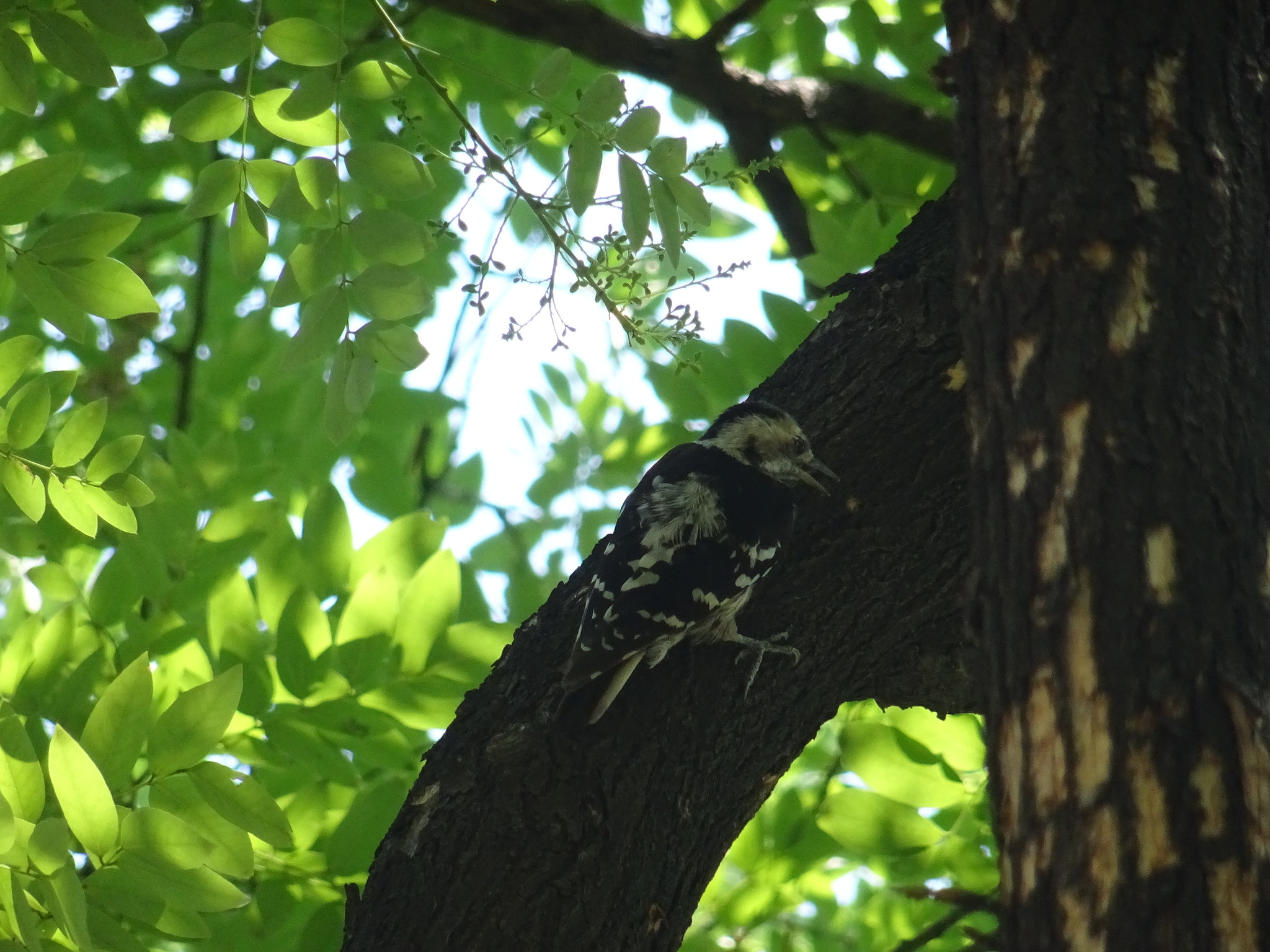
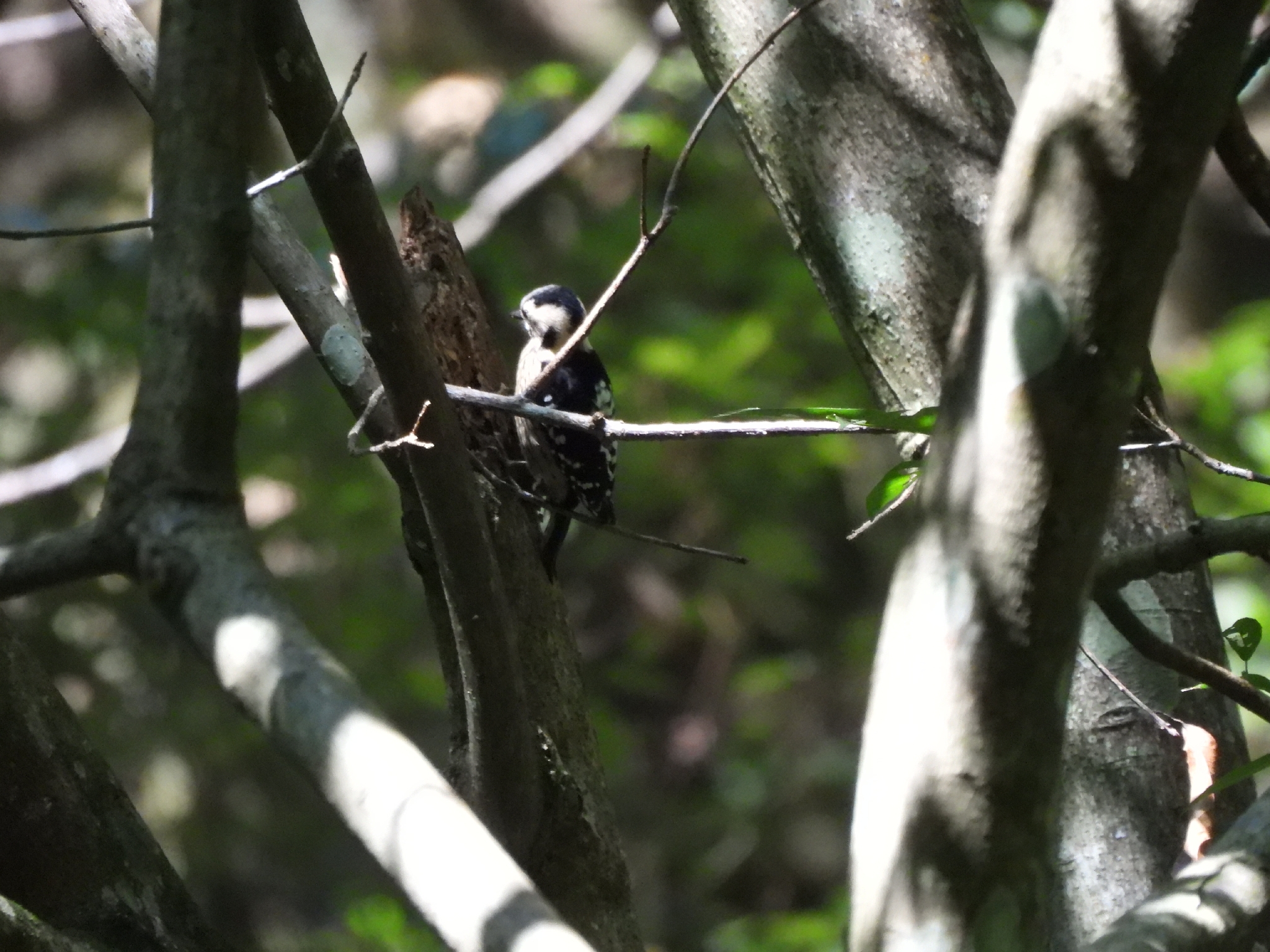
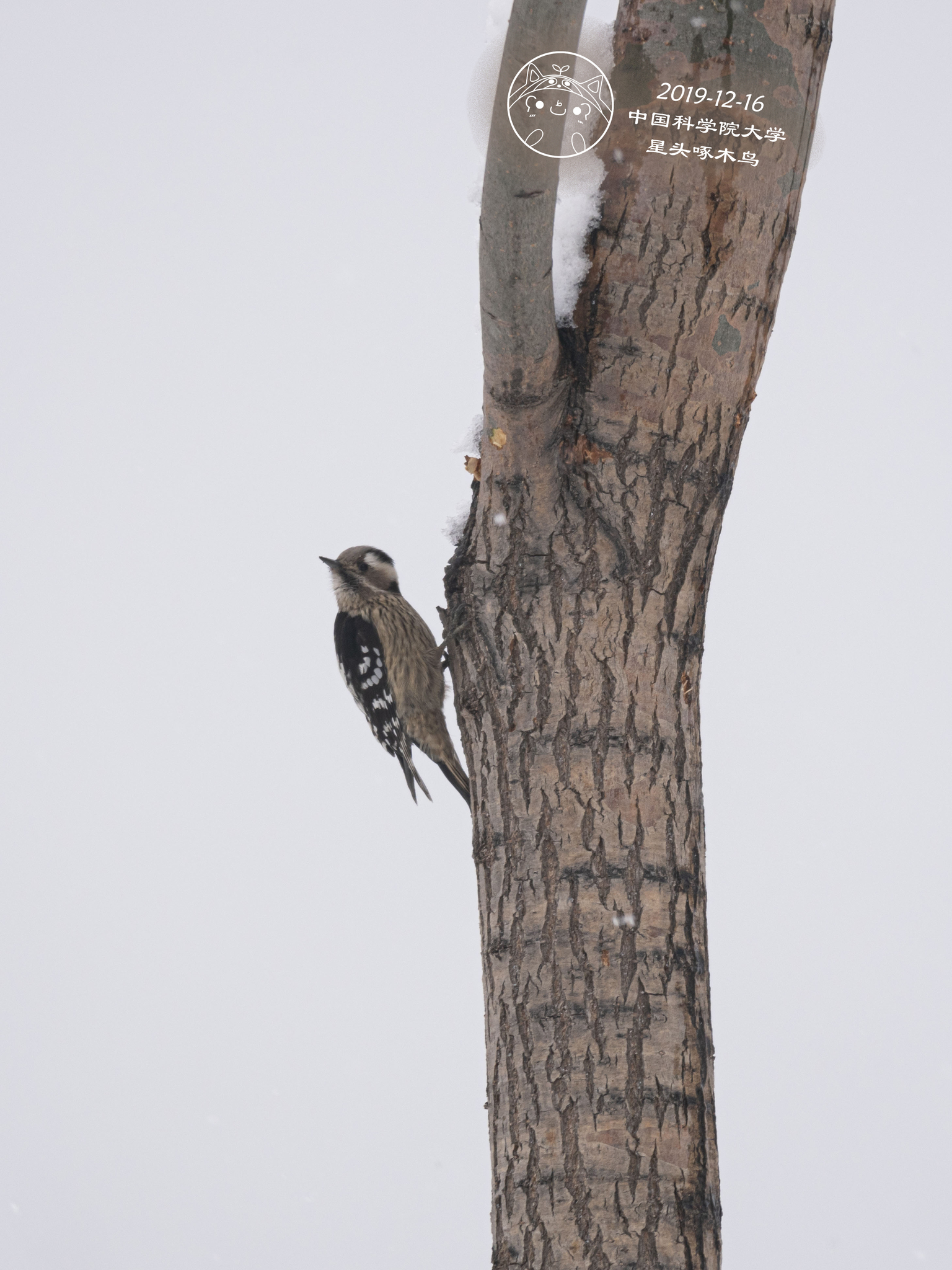
Grey-capped Pygmy Woodpecker
Yungipicus canicapillus
星头啄木鸟
Introduction
This species occurs from the Himalayas through Southeast Asia. It inhabits lowland evergreen forests, mangroves, and montane woodland. The species forages methodically on bark for insects. Males display a red nape patch. Taxonomic classification has varied among authorities.
Description
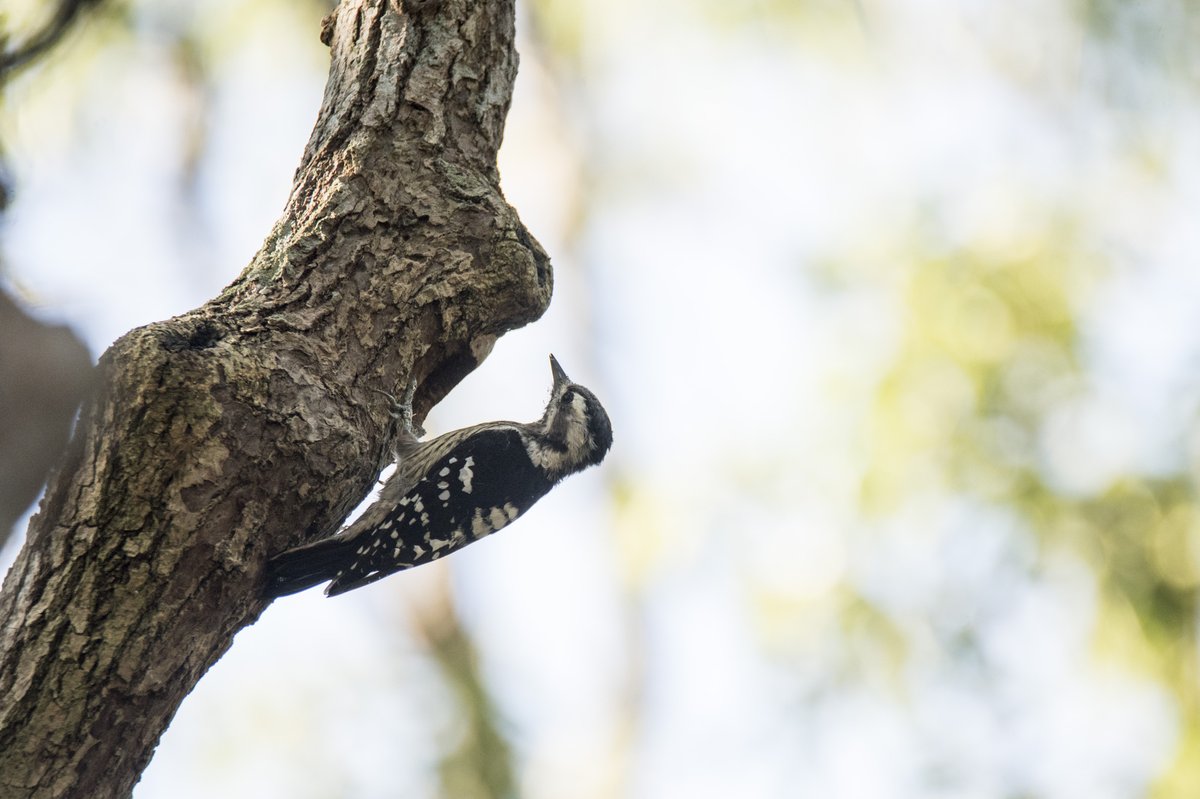
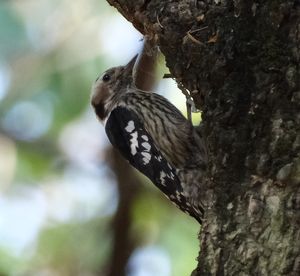
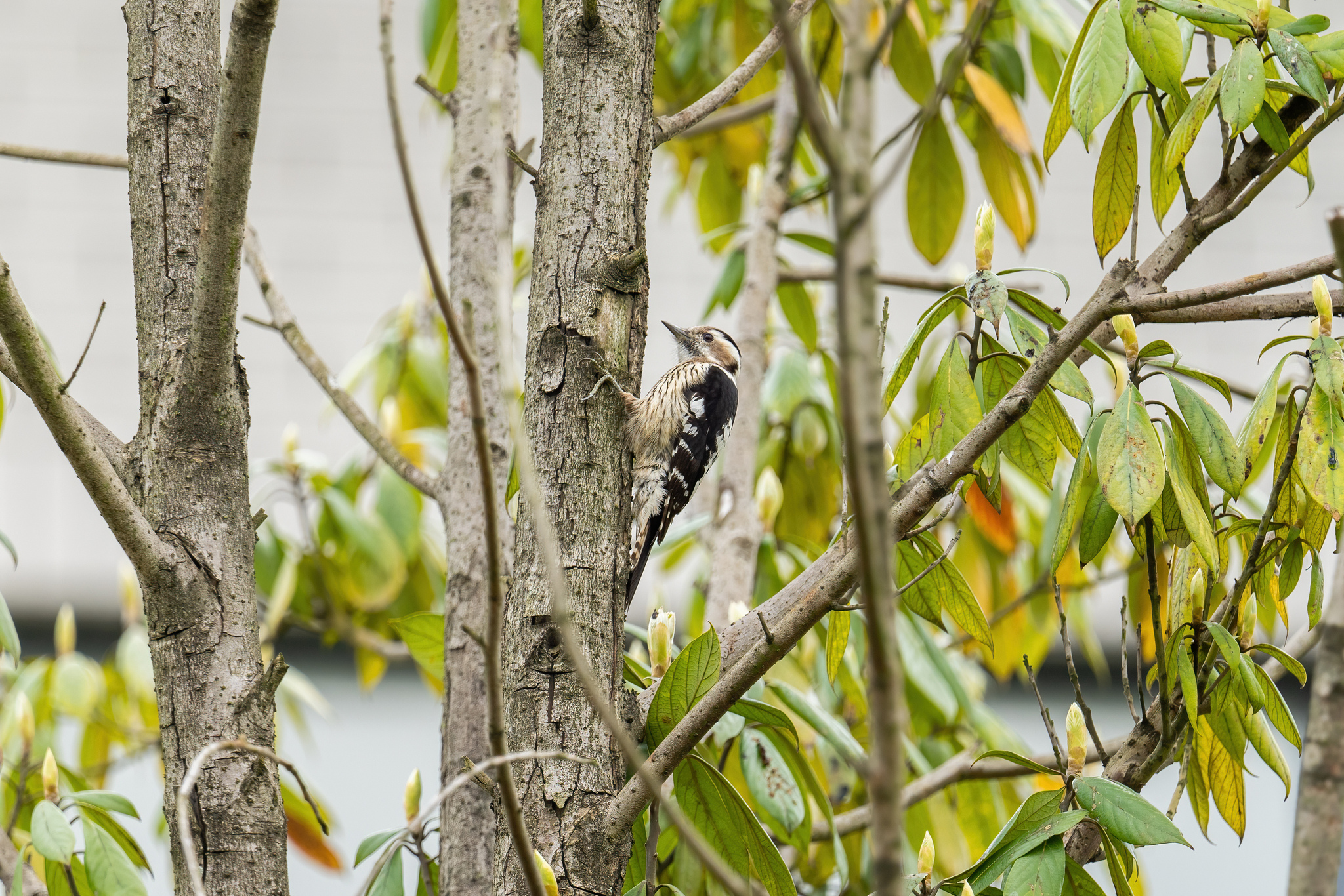
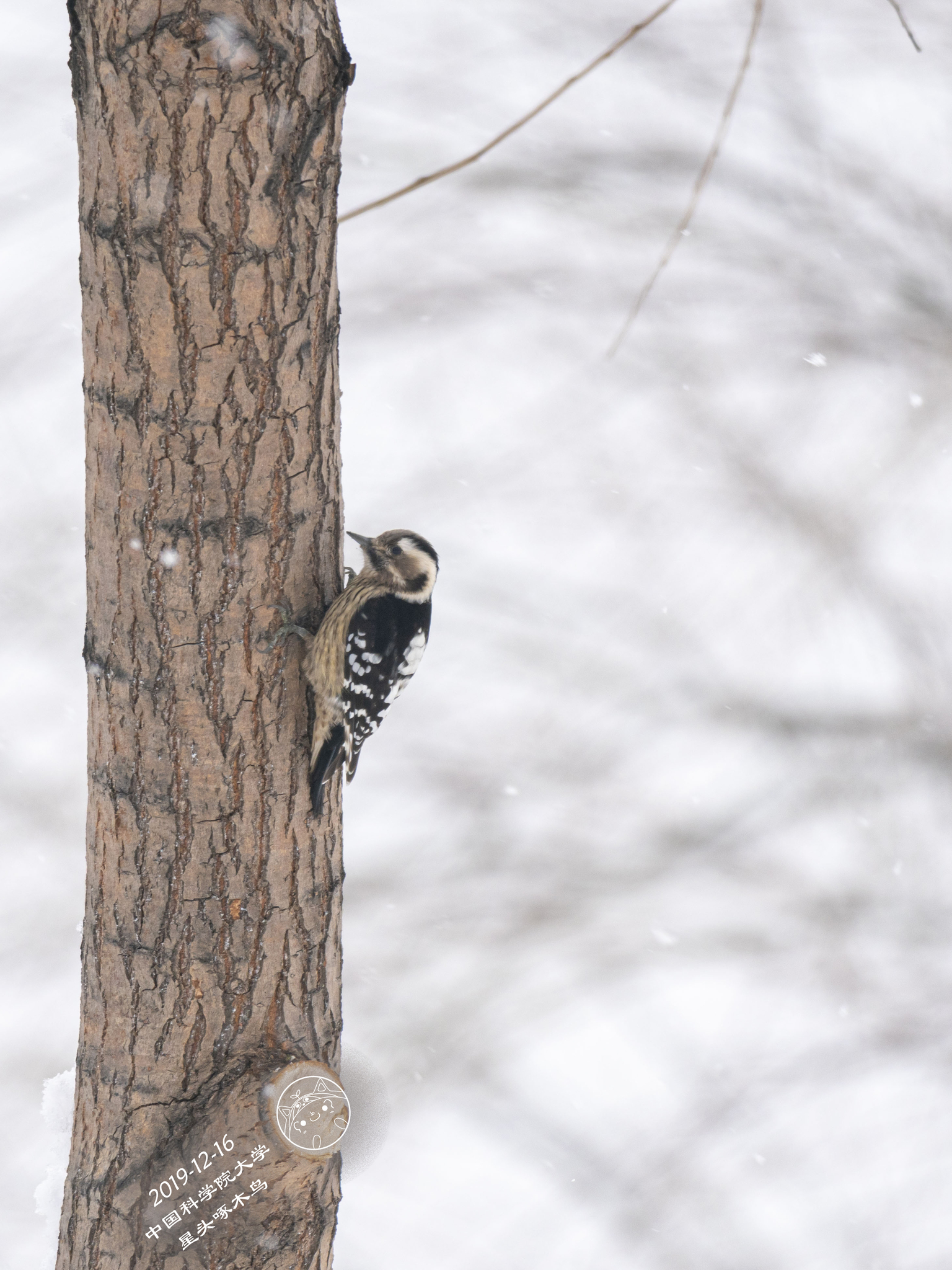
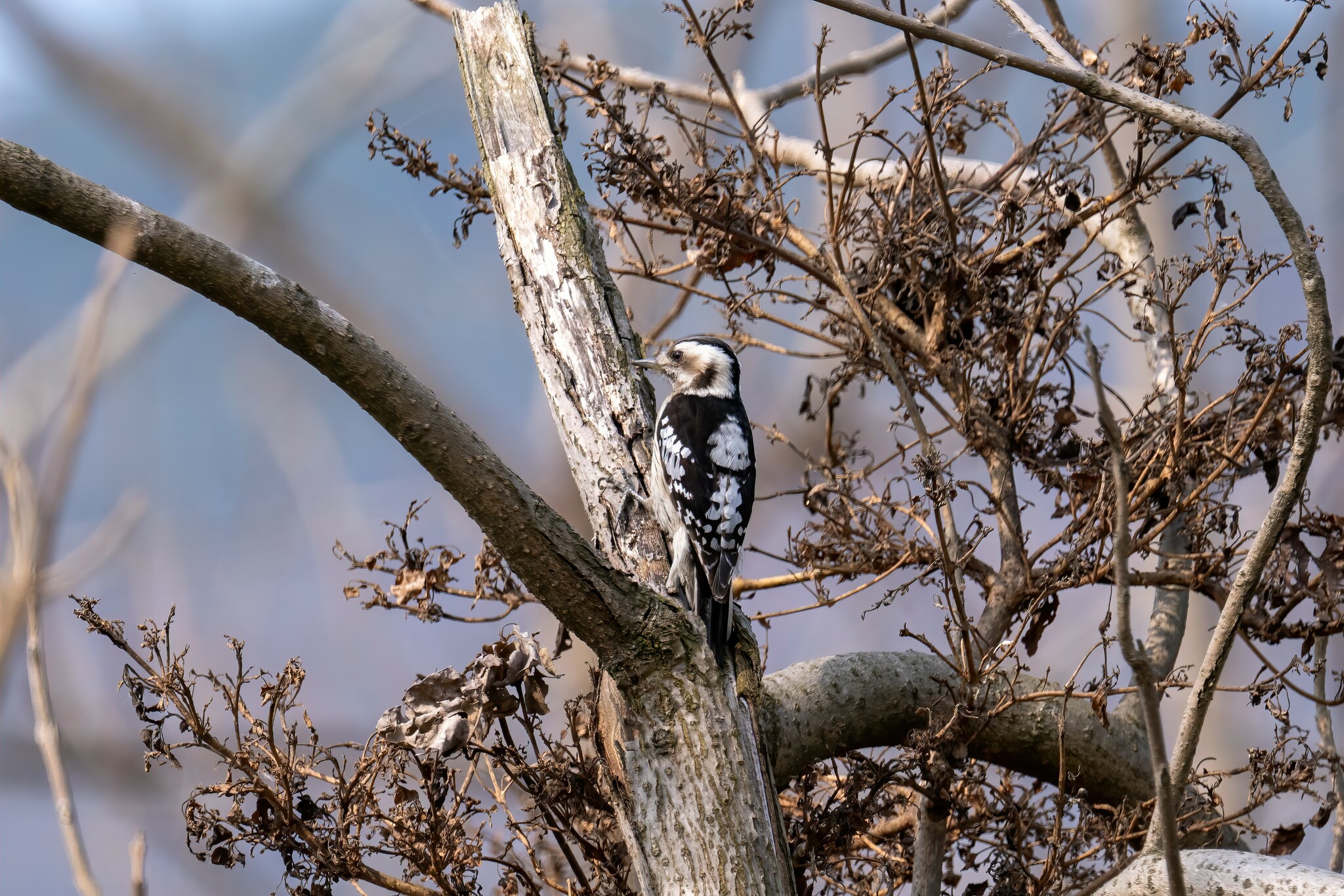
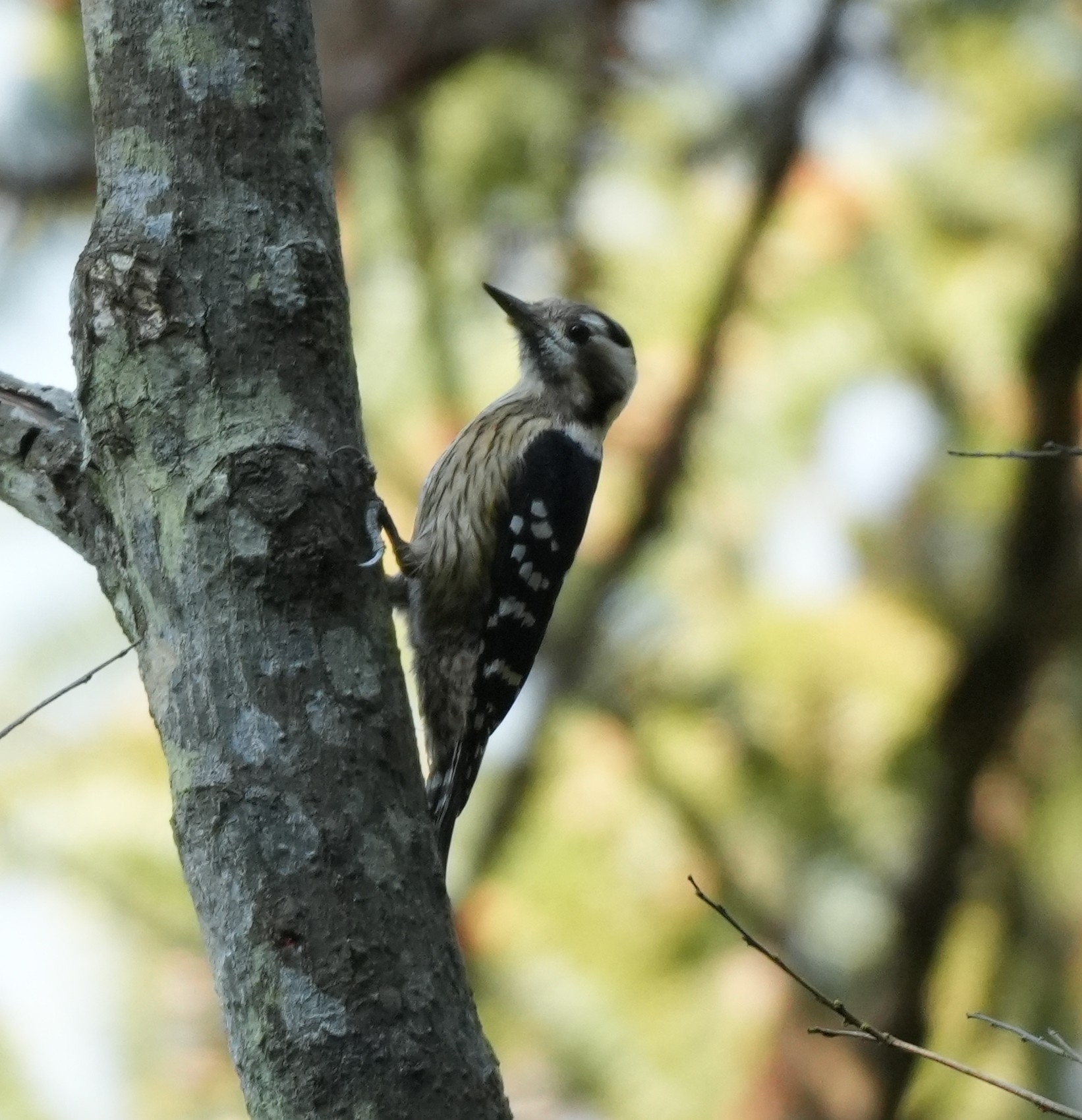
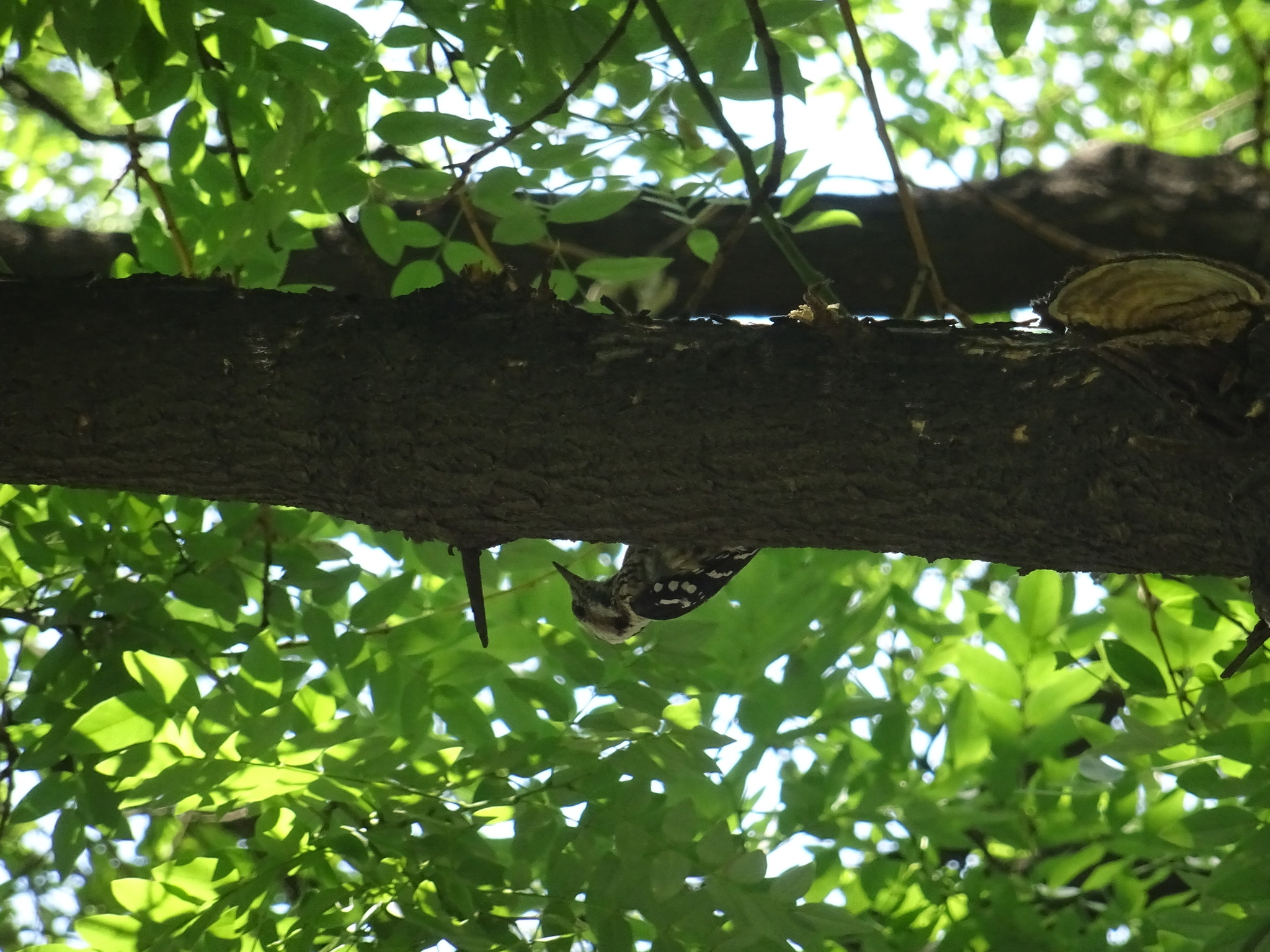
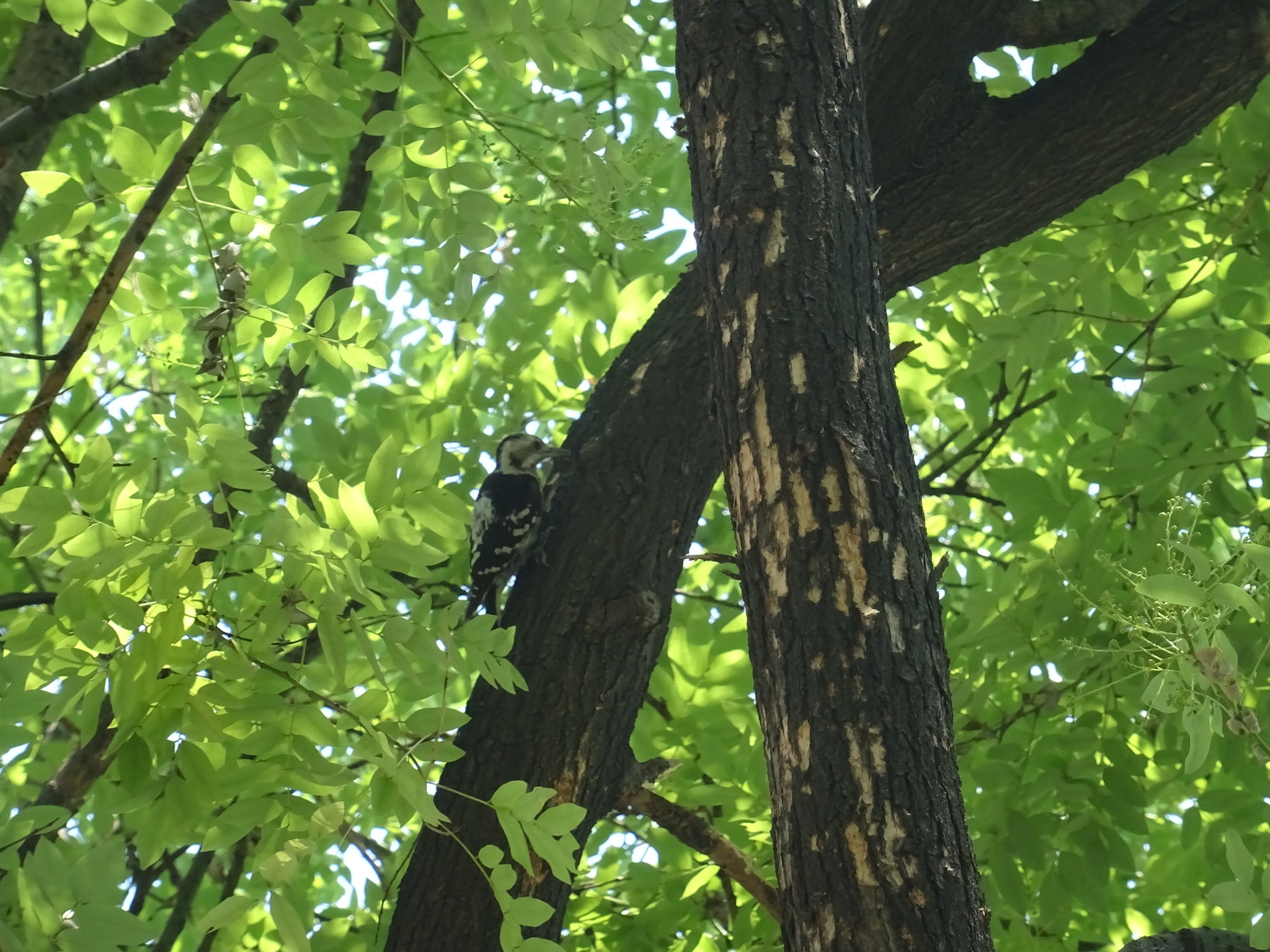
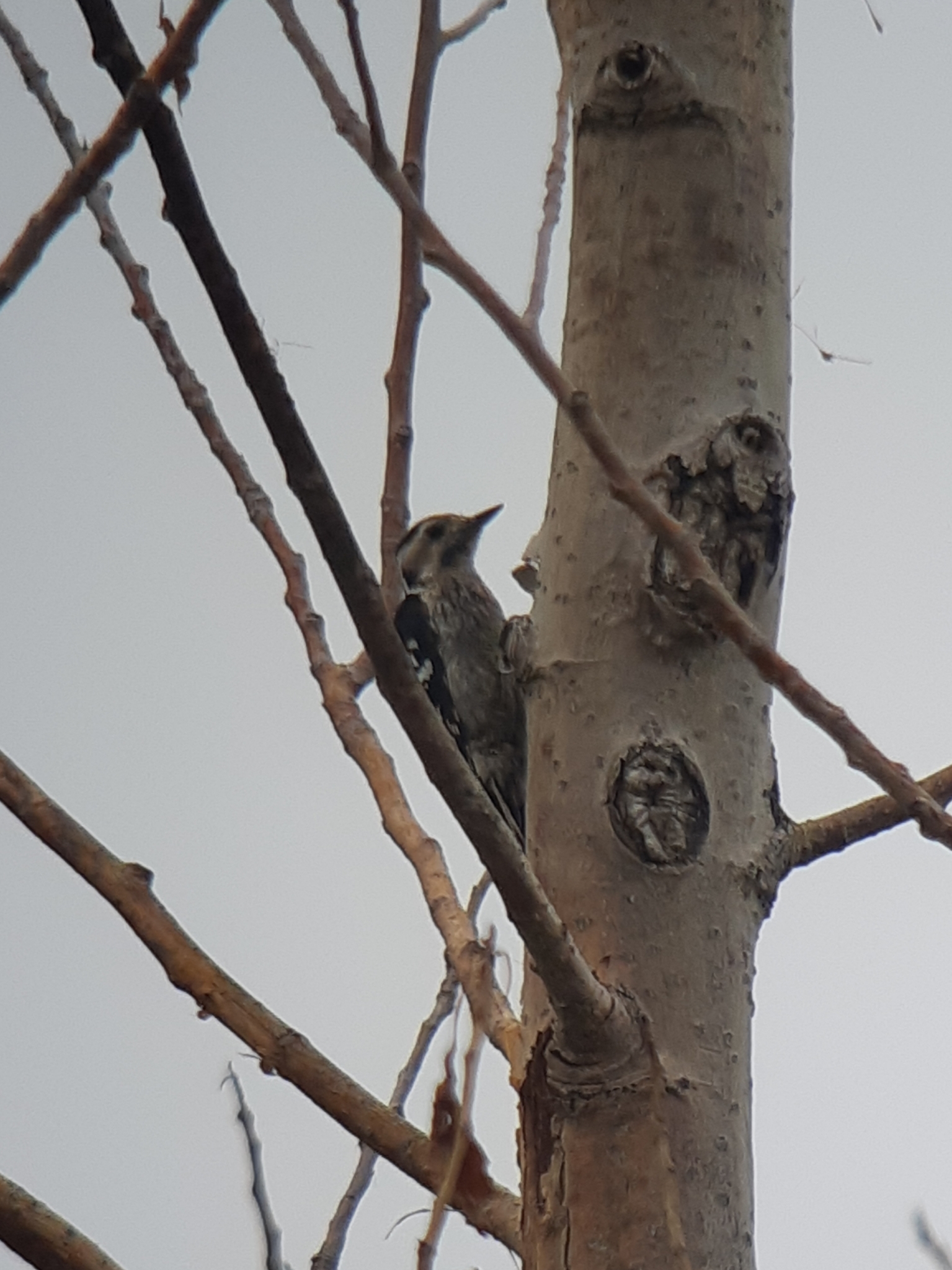
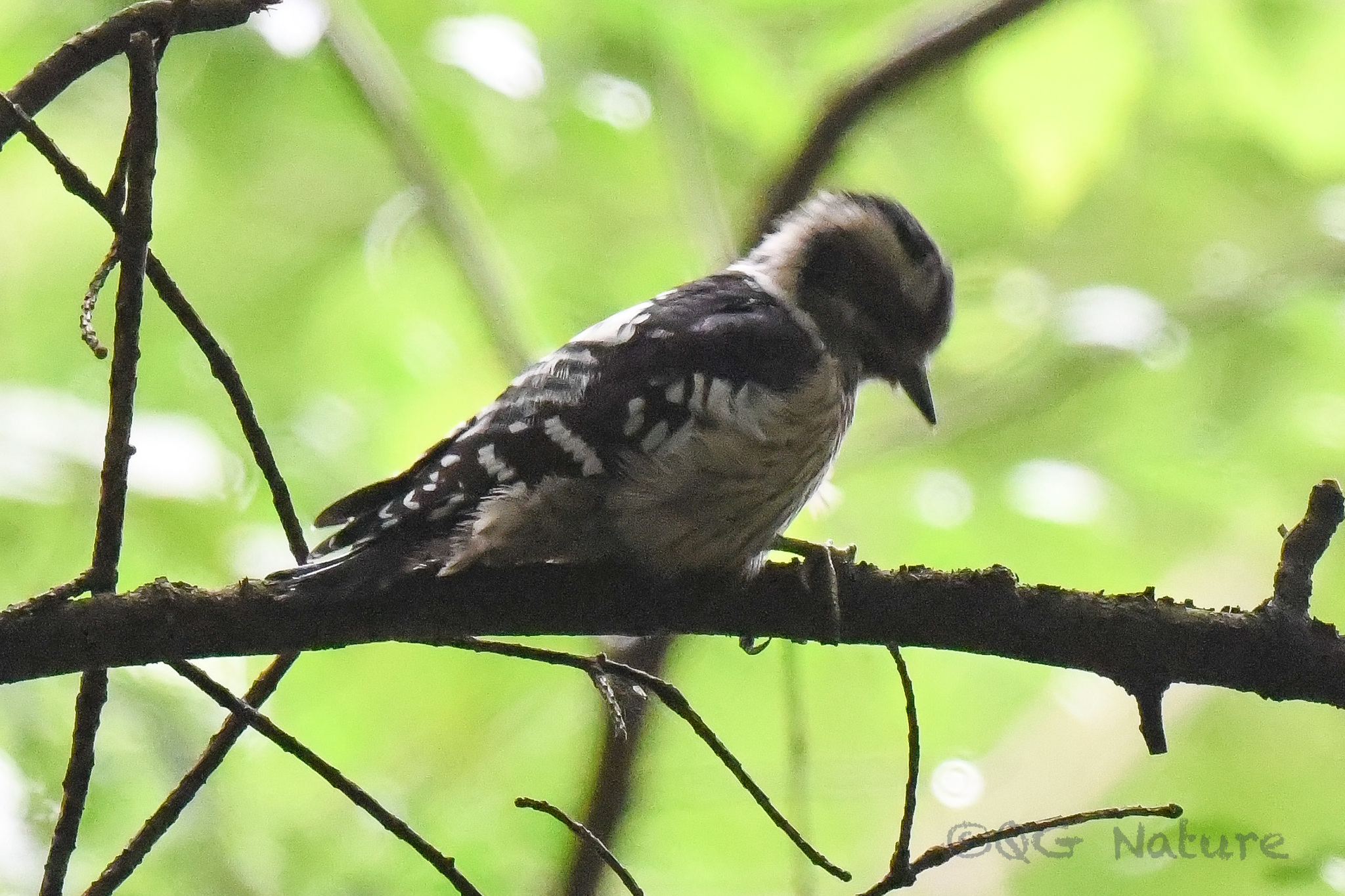
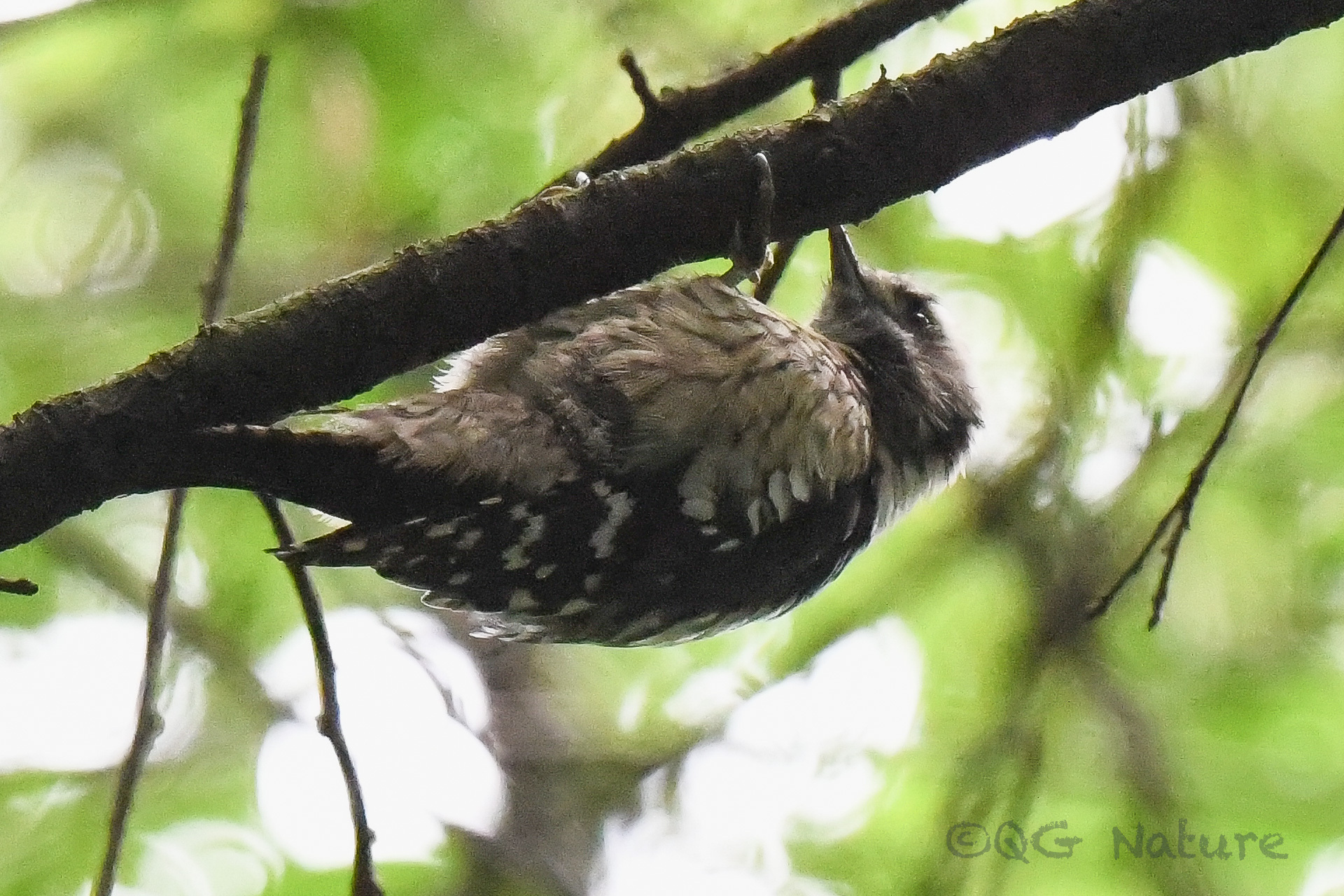
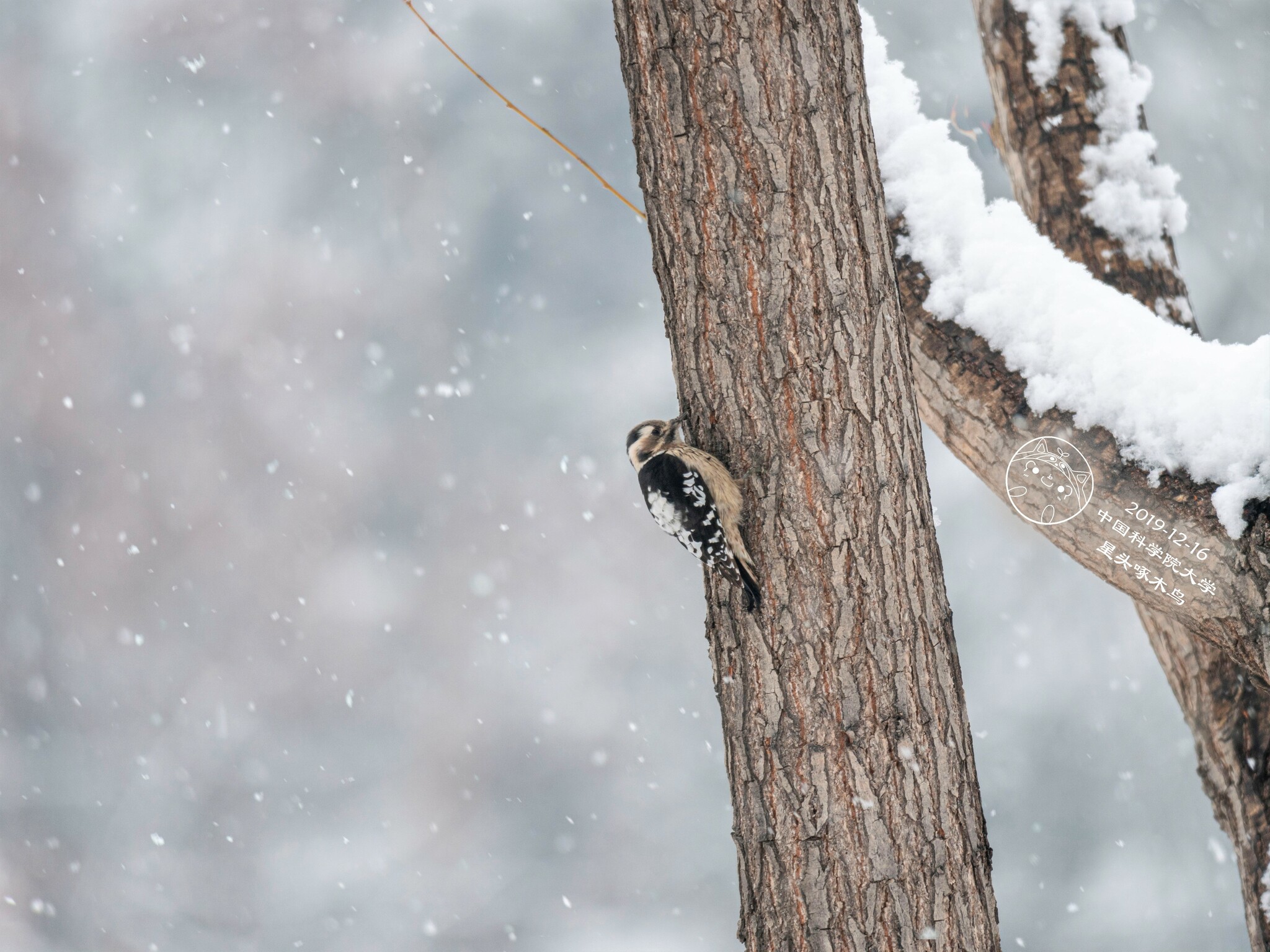
A small, compact woodpecker with predominantly dark plumage. The upperparts display characteristic black and white barring, while the central tail feathers are typically unmarked. Underparts show dark buff coloring with prominent dark streaking. The head features a dark grey crown, strong black eyestripes extending back from the eye, and thin dark malar stripes running along the cheeks. Broad white supercilia and white cheek patches create a vivid facial contrast. Males possess a red patch on the nape, absent in females. The species has dark irides.
Identification
The combination of the dark grey crown, prominent white supercilia, and black eyestripes creates a distinctive facial profile useful for identification. The barred black and white upperparts distinguish it from larger, less patterned woodpeckers in its range. Focus on the unbarred central tail feathers and heavily streaked underparts to separate this species from similar small woodpeckers. Males can be identified by the red nape patch. The strong facial patterning, particularly the white supercilia contrasting with the dark eyestripe, provides the most reliable field marks.
Distribution & Habitat
Occurs from the Himalayas and Manchuria through Southeast Asia. The subspecies Y. c. doerriesi is found in Manchuria, eastern Siberia, and Korea. Inhabits subtropical and tropical moist lowland forests, mangrove forests, and subtropical or tropical moist montane forests.
Source: Wikipedia · CC BY-SA 3.0
Taxonomy
- Order
- Piciformes
- Family
- Picidae
- Genus
- Yungipicus
- eBird Code
- gycwoo1
Vocalizations
Subspecies (11)
-
Yungipicus canicapillus aurantiiventris
Borneo
-
Yungipicus canicapillus auritus
southern Thailand and Malay Peninsula
-
Yungipicus canicapillus canicapillus
eastern Assam, Bangladesh to central and southern Myanmar, Thailand, and Laos
-
Yungipicus canicapillus delacouri
southeastern Thailand, Cambodia, and Cochinchina
-
Yungipicus canicapillus doerriesi
eastern Siberia (Ussuriland) to Korea and eastern Manchuria
-
Yungipicus canicapillus kaleensis
southwestern China (Sichuan to Fujian) to northern Myanmar and northern Indochina; Taiwan
-
Yungipicus canicapillus mitchellii
western Nepal to northwestern India and northern Pakistan
-
Yungipicus canicapillus scintilliceps
eastern and central China (Liaoning to Sichuan and Zhejiang)
-
Yungipicus canicapillus semicoronatus
far eastern Nepal to western Assam
-
Yungipicus canicapillus swinhoei
Hainan (southern China)
-
Yungipicus canicapillus volzi
Sumatra, Riau Archipelago, and Nias Island
Data Sources
Species description from Wikipedia, licensed under CC BY-SA 3.0.
Bird images and sounds sourced from GBIF, contributed by citizen scientists worldwide under Creative Commons licenses.
Taxonomy data from AviList 2025.