River Lapwing
Vanellus duvaucelii
距翅麦鸡
Introduction
A lapwing species (Vanellus duvaucelii) native to the Indian subcontinent and Southeast Asia. Range encompasses northern and northeastern India, extending through Southeast Asia to Vietnam. This entirely sedentary species inhabits riverbanks and adjacent wet grasslands. Closely resembles the African spur-winged lapwing (Vanellus spinosus), with which it has sometimes been considered conspecific.
Description
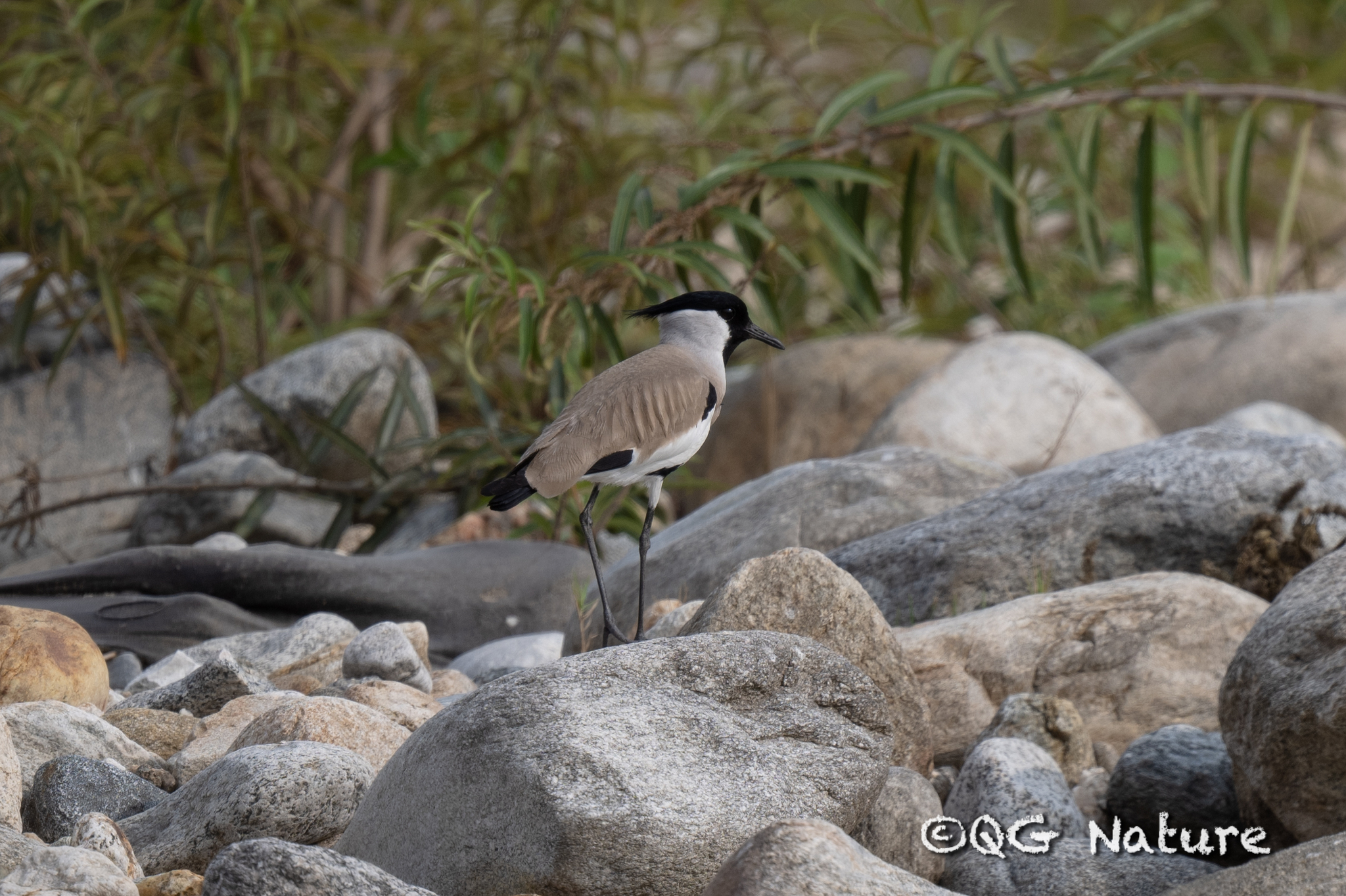
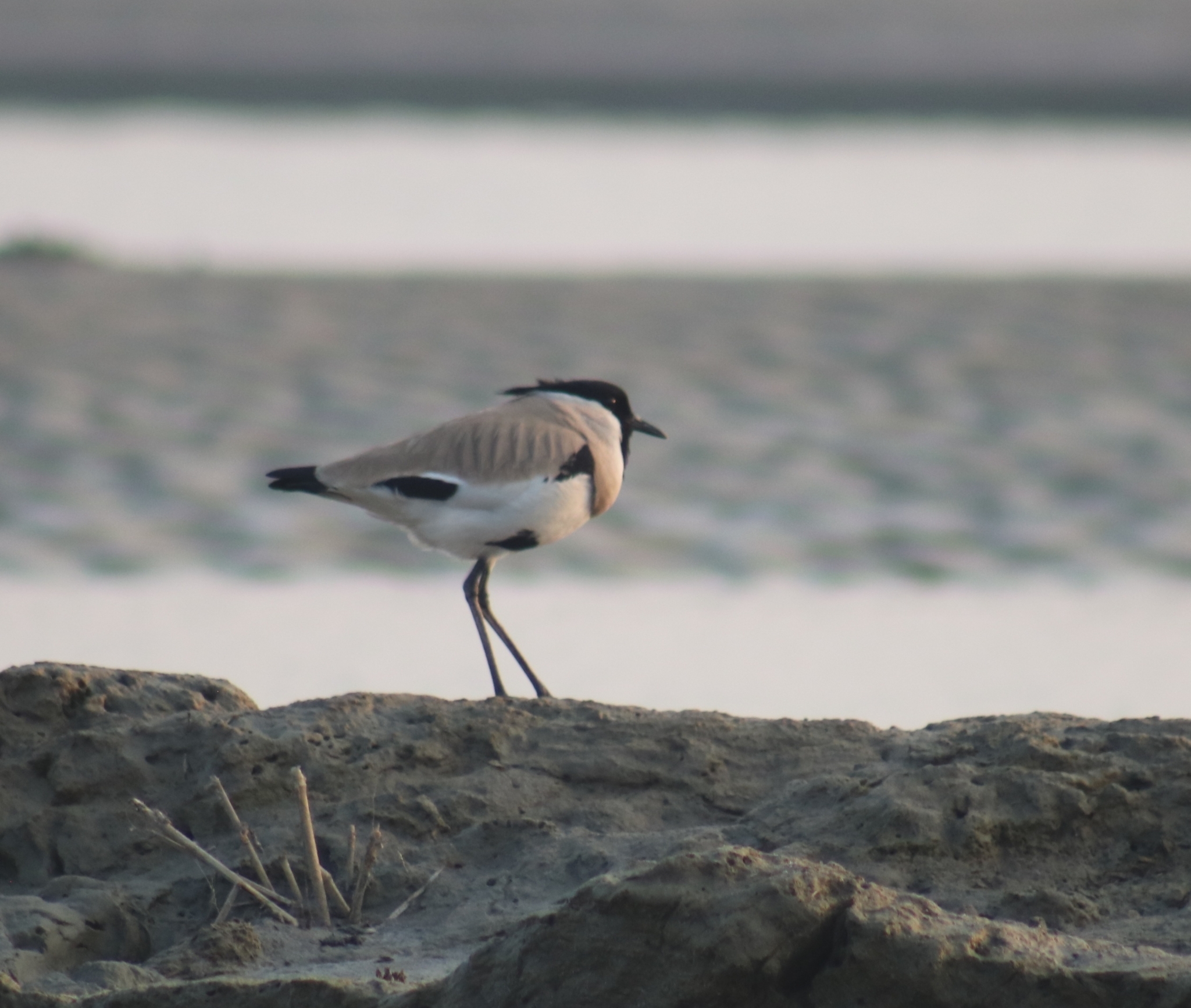
A medium-sized lapwing measuring 29-32 cm in length. Characterized by a black crest, crown, face, and central throat, contrasting with grey-white neck sides and nape. The breast is grey-brown, while underparts are white with a distinctive black belly patch. Upperparts are brown with a white rump and black tail. In flight, shows black primaries, white underwings and upper wing secondaries, and brown upper wing coverts. Sexes are similarly plumaged, though males average slightly larger. Juveniles display brown-tipped head feathers, a sandier brown back, and pale-fringed upperpart and wing covert feathers.
Identification
Readily identified by its striking facial pattern combining black head and face with grey-white neck. The combination of black belly patch, white rump, and distinctive wing pattern in flight distinguishes it from similar lapwing species. Compare carefully with the African spur-winged lapwing, which it closely resembles.
Distribution & Habitat
Breeds across the Indian subcontinent eastwards through Southeast Asia to Vietnam. Occupies northern and northeastern India throughout this range. Completely sedentary with no documented migratory movements. Inhabits shingle and sand banks of rivers, alongside adjacent wet grassland and farmland habitats.
Behavior & Ecology
Breeding display performed on the ground includes stooping, spinning, stretching, and crest-raising behaviors. Nests from March to June on ground scrapes in shingle and sand riverbanks, laying two eggs. Diet consists of insects, worms, crustaceans, and molluscs foraging in nearby wet grassland and farmland. Typically encountered singly or in pairs rather than flocks; not gregarious. Vocalization is a sharp tip-tip or did-did-did call.
Conservation
Not assessed in the provided source material.
Culture
No cultural significance documented in the provided source material.
Source: Wikipedia · CC BY-SA 3.0
Taxonomy
- Order
- Charadriiformes
- Family
- Charadriidae
- Genus
- Vanellus
- eBird Code
- rivlap1
Distribution
rivers of India and Nepal to southwestern China and Indochina
Data Sources
Species description from Wikipedia, licensed under CC BY-SA 3.0.
Bird images and sounds sourced from GBIF, contributed by citizen scientists worldwide under Creative Commons licenses.
Taxonomy data from AviList 2025.