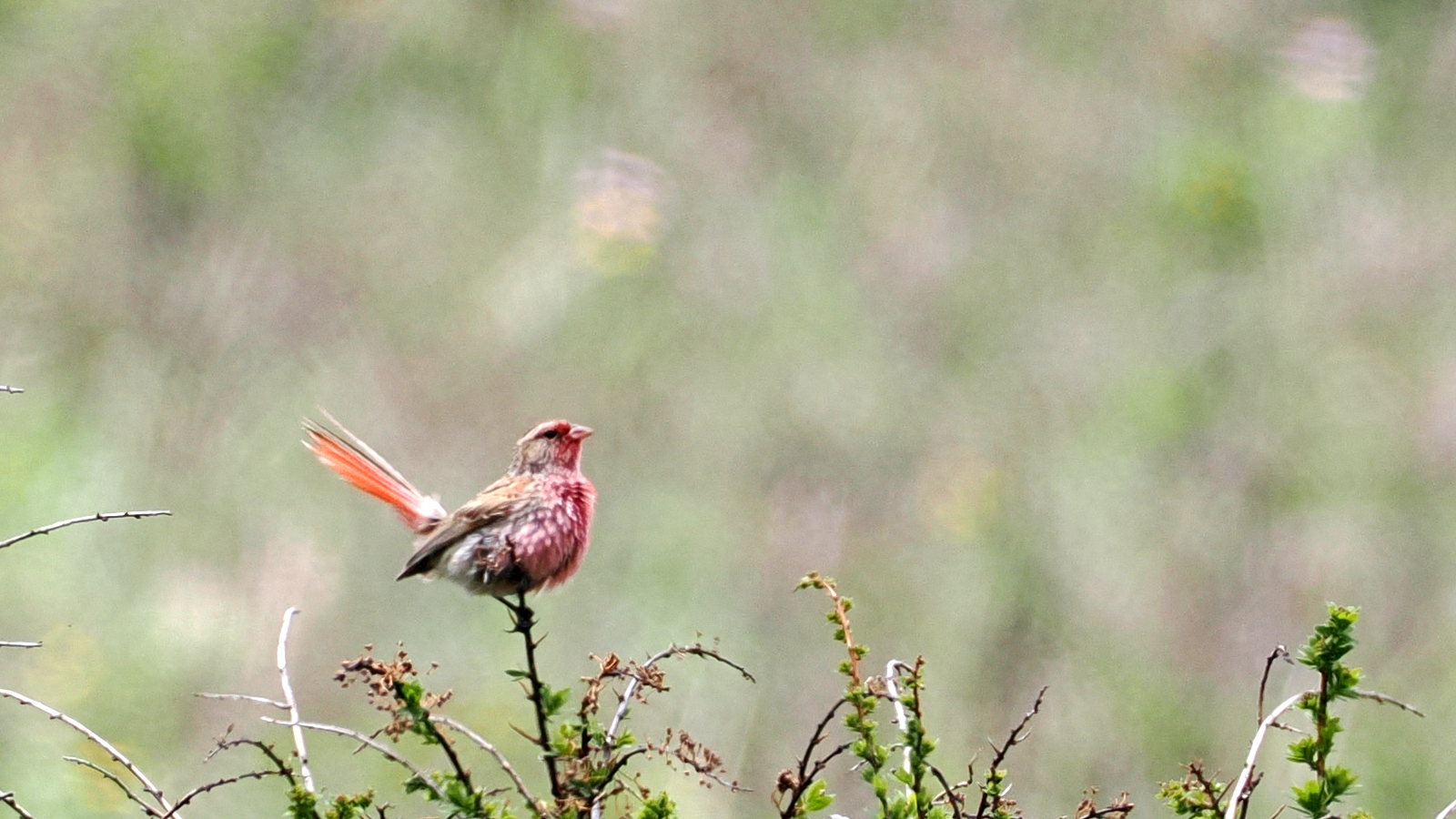
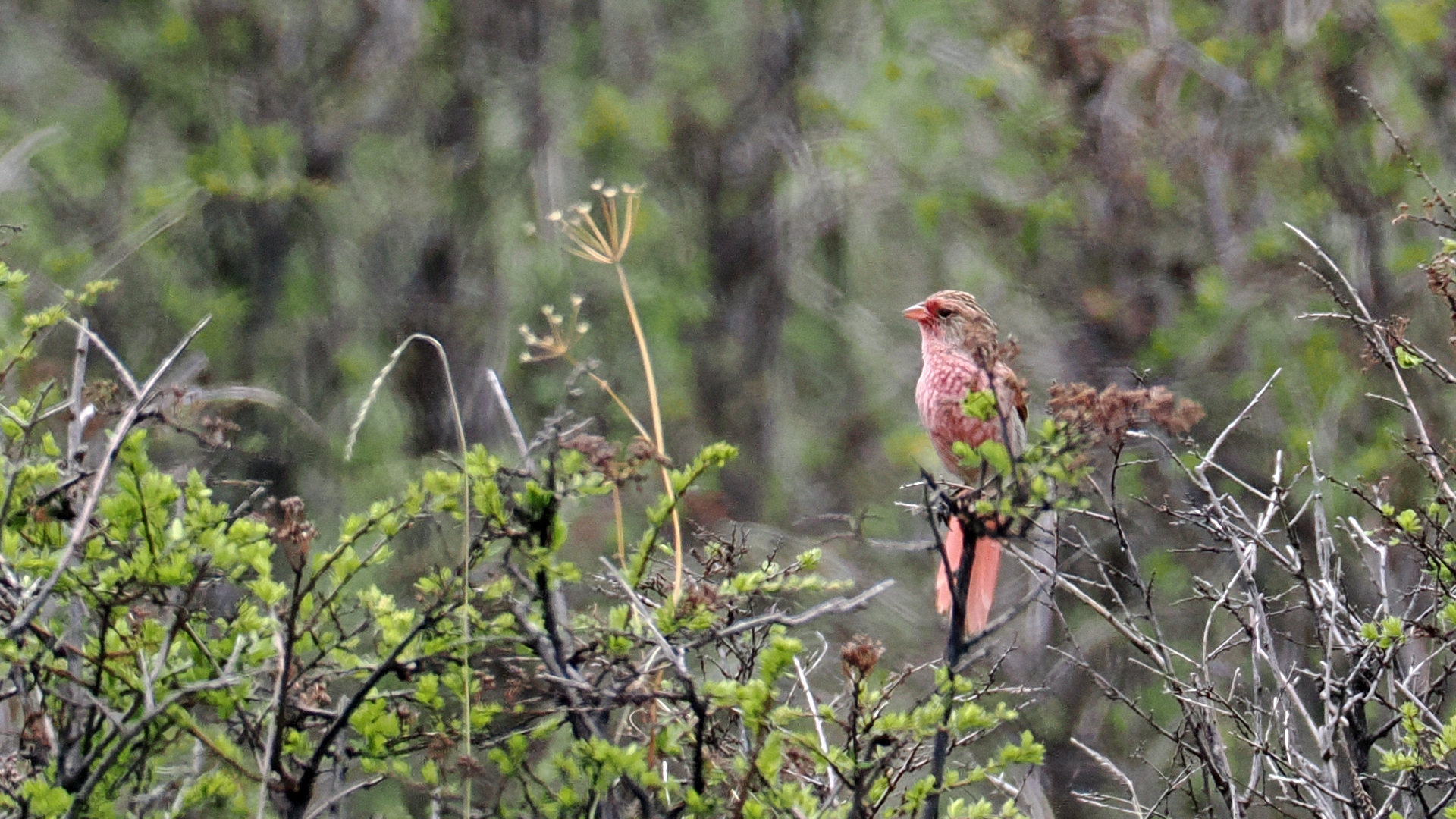

Przevalski's Finch
Urocynchramus pylzowi
朱鹀
Introduction
A monotypic species in family Urocynchramidae, endemic to the mountains of central-west China. Inhabits high-altitude terrain between 3,050 and 5,000 metres (10,010 and 16,400 ft). Distinguished by an outer primary feather that is two-thirds the length of the next primary—a diagnostic feature separating it from true finches and buntings where this feather is vestigial. Lives in pairs during the breeding season and in small flocks during winter. Listed as Least Concern on the IUCN Red List.
Description
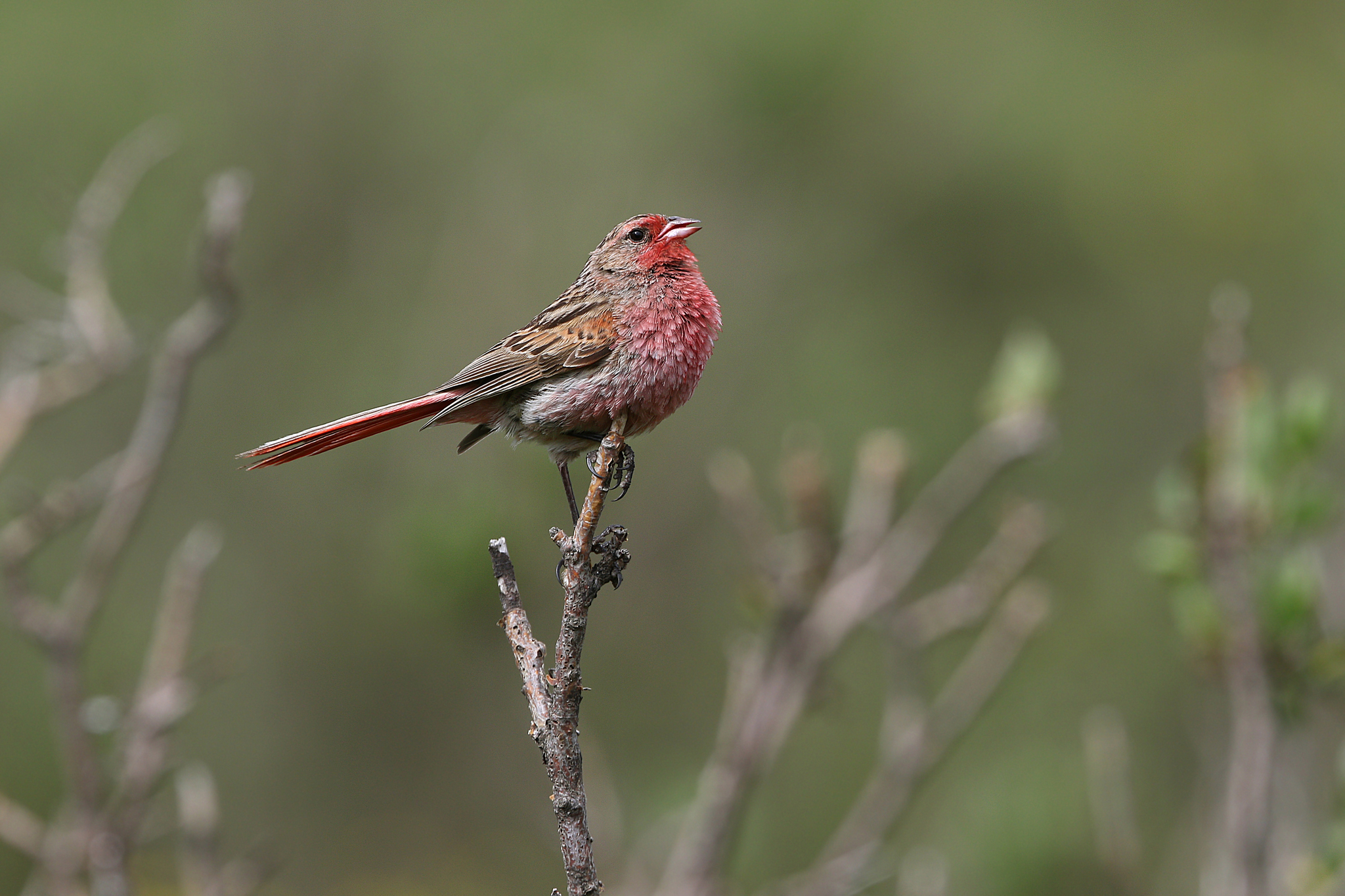
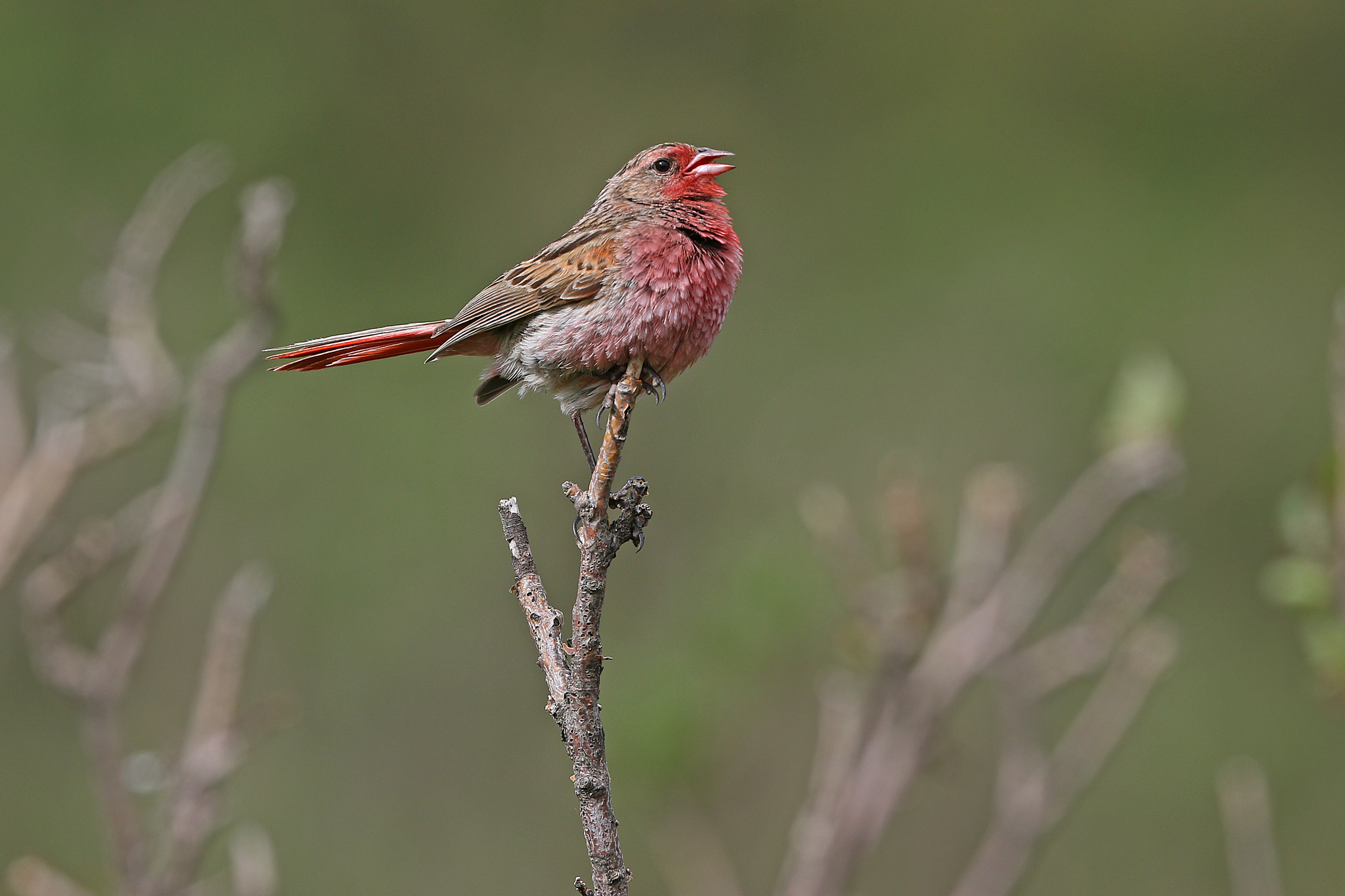
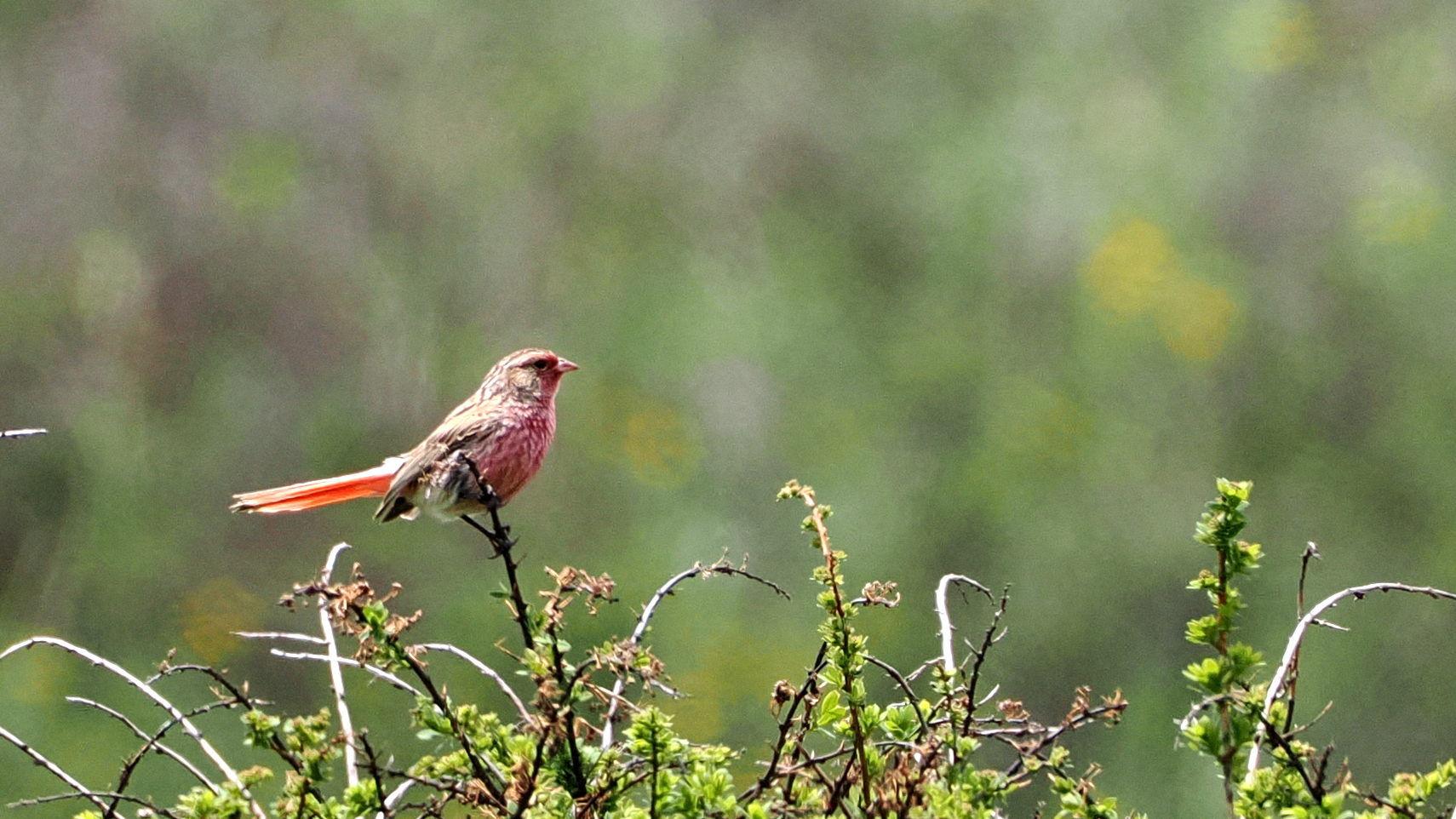
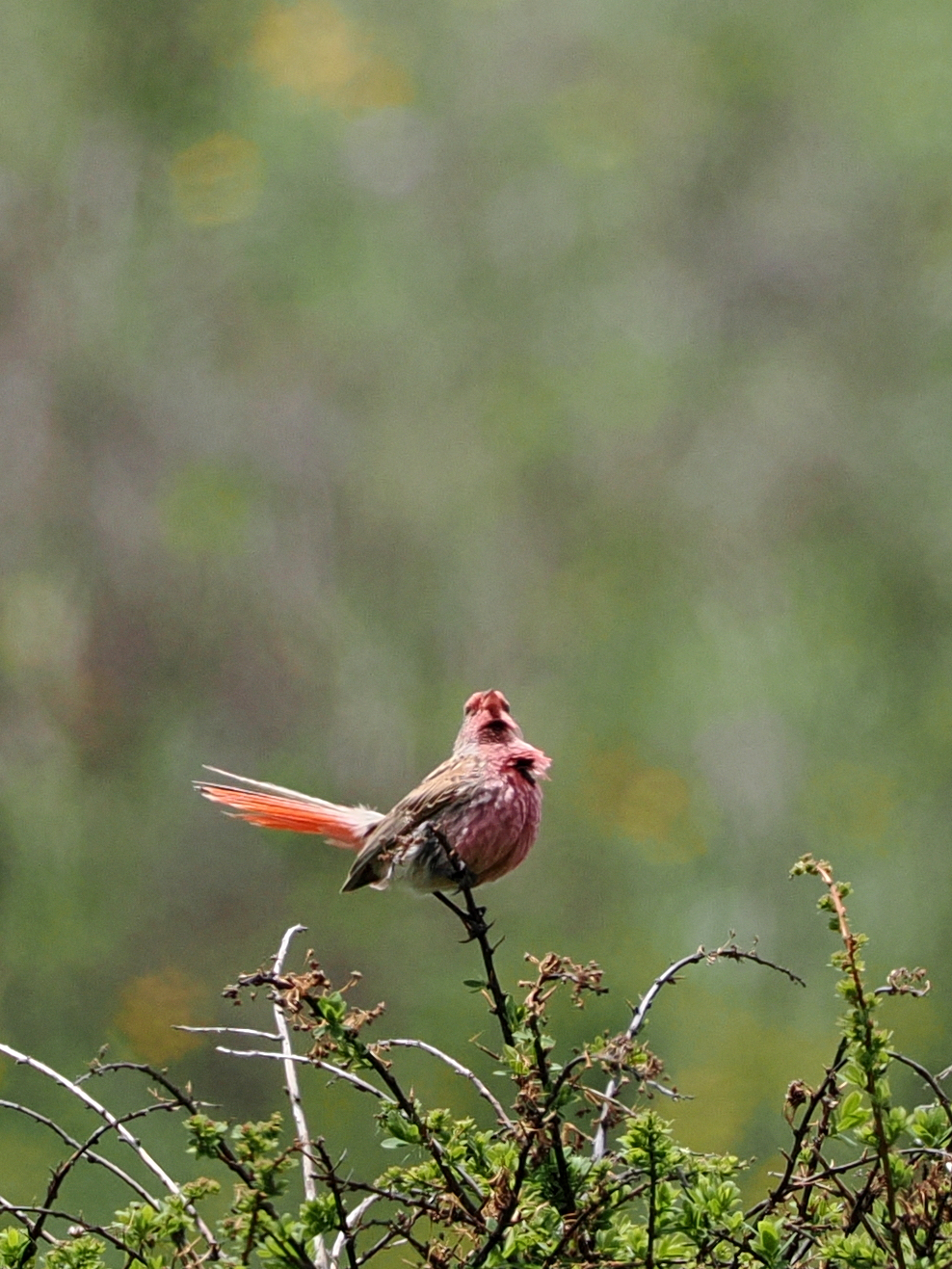
A small passerine with a long, graduated tail, unlike typical finches where outer tail feathers are equal in length to central ones. Males display bright pink coloration on the throat, breast, and belly. Both sexes have brown streaked plumage on the back and wings. The bill is notably thinner than that of rosefinches. The species bears a strong resemblance to the long-tailed rosefinch.
Identification
Similar in appearance to the long-tailed rosefinch, but distinguished by the graduated tail structure and thinner bill. The diagnostic feature is the outer primary feather, which is two-thirds the length of the next primary, whereas finches and buntings have a vestigial outer primary. Males are readily identified by their pink underparts.
Distribution & Habitat
Endemic to the mountains of central-west China. Restricted to high-altitude habitat between 3,050 and 5,000 metres (10,010 and 16,400 ft). No information provided on migration patterns.
Behavior & Ecology
Occurs in pairs during the breeding season and forms small flocks in winter. The song was described by Przhevalsky as similar to that of buntings. The species remains poorly studied in the wild, and details of diet and breeding behavior are not well documented.
Conservation
Classified as Least Concern on the IUCN Red List. Not thought to be threatened by human activities, likely due to its remote high-altitude habitat being relatively inaccessible to human disturbance.
Culture
Named after Mikhail Pyltsov, the Russian explorer who accompanied Nikolai Przhevalsky on the expedition during which specimens were collected. Formerly classified under multiple family assignments, reflecting longstanding taxonomic uncertainty.
Source: Wikipedia · CC BY-SA 3.0
Taxonomy
- Order
- Passeriformes
- Family
- Urocynchramidae
- Genus
- Urocynchramus
- eBird Code
- przros1
Distribution
mountains of western China and eastern Tibet
Data Sources
Species description from Wikipedia, licensed under CC BY-SA 3.0.
Bird images and sounds sourced from GBIF, contributed by citizen scientists worldwide under Creative Commons licenses.
Taxonomy data from AviList 2025.