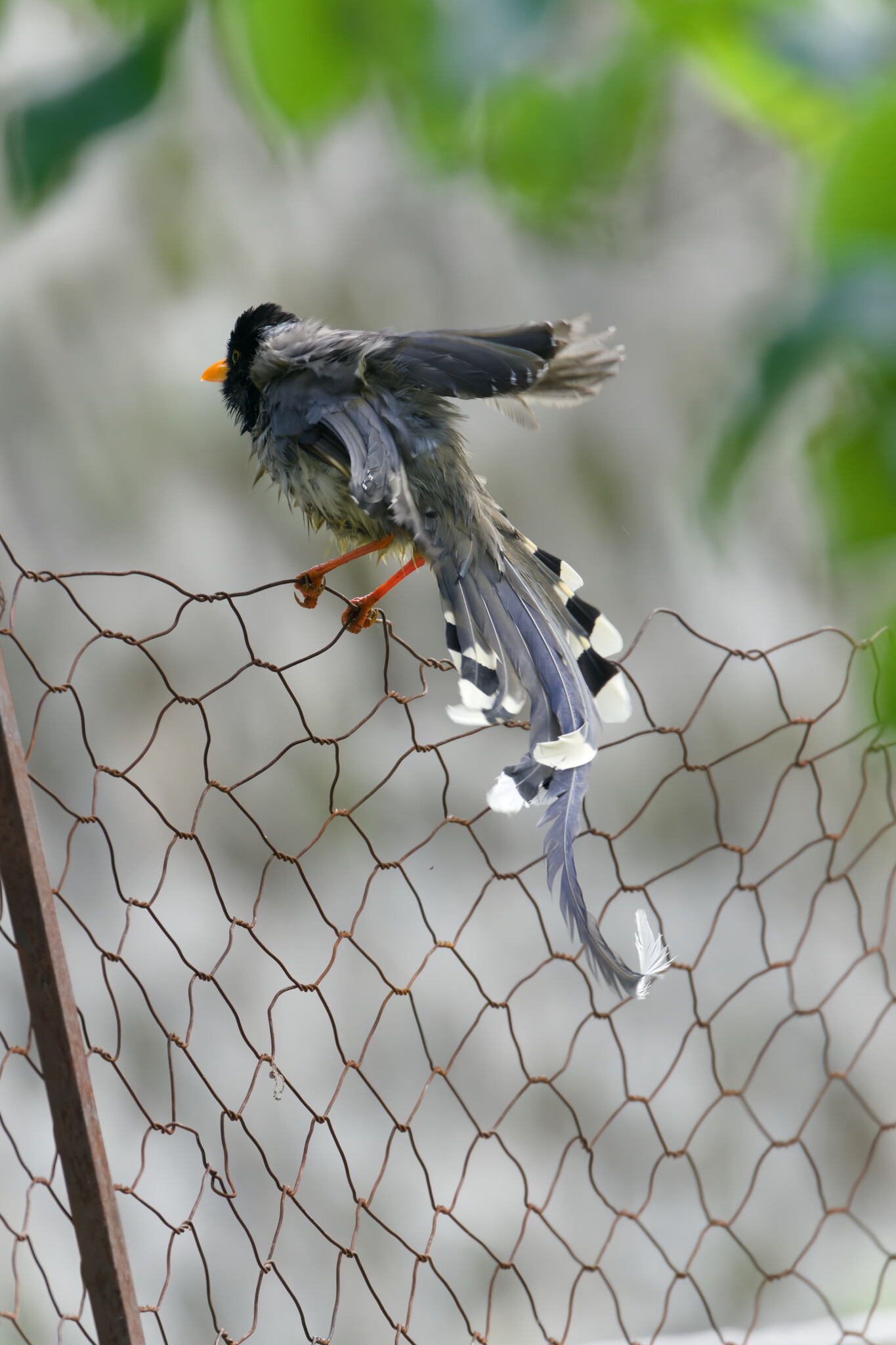
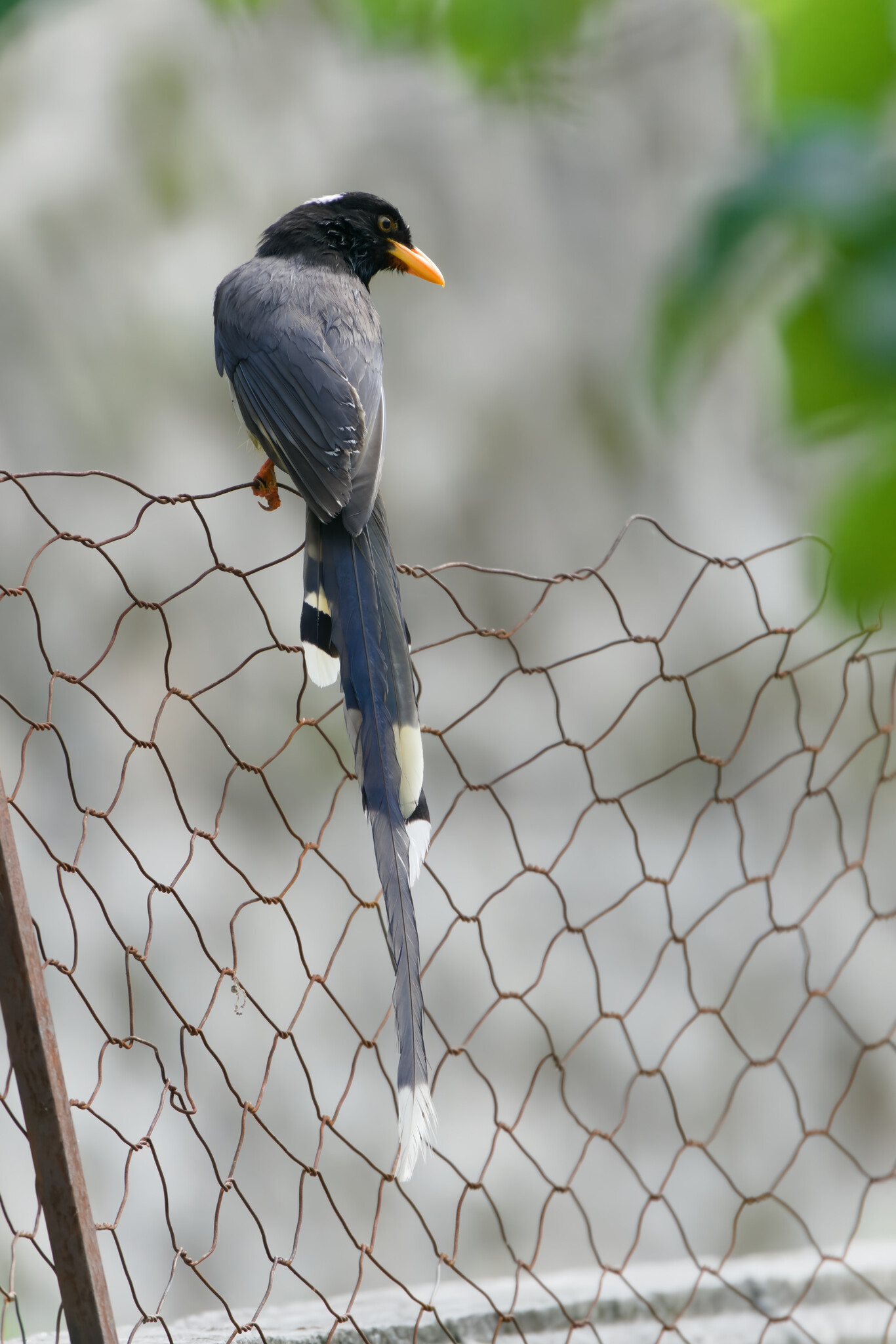
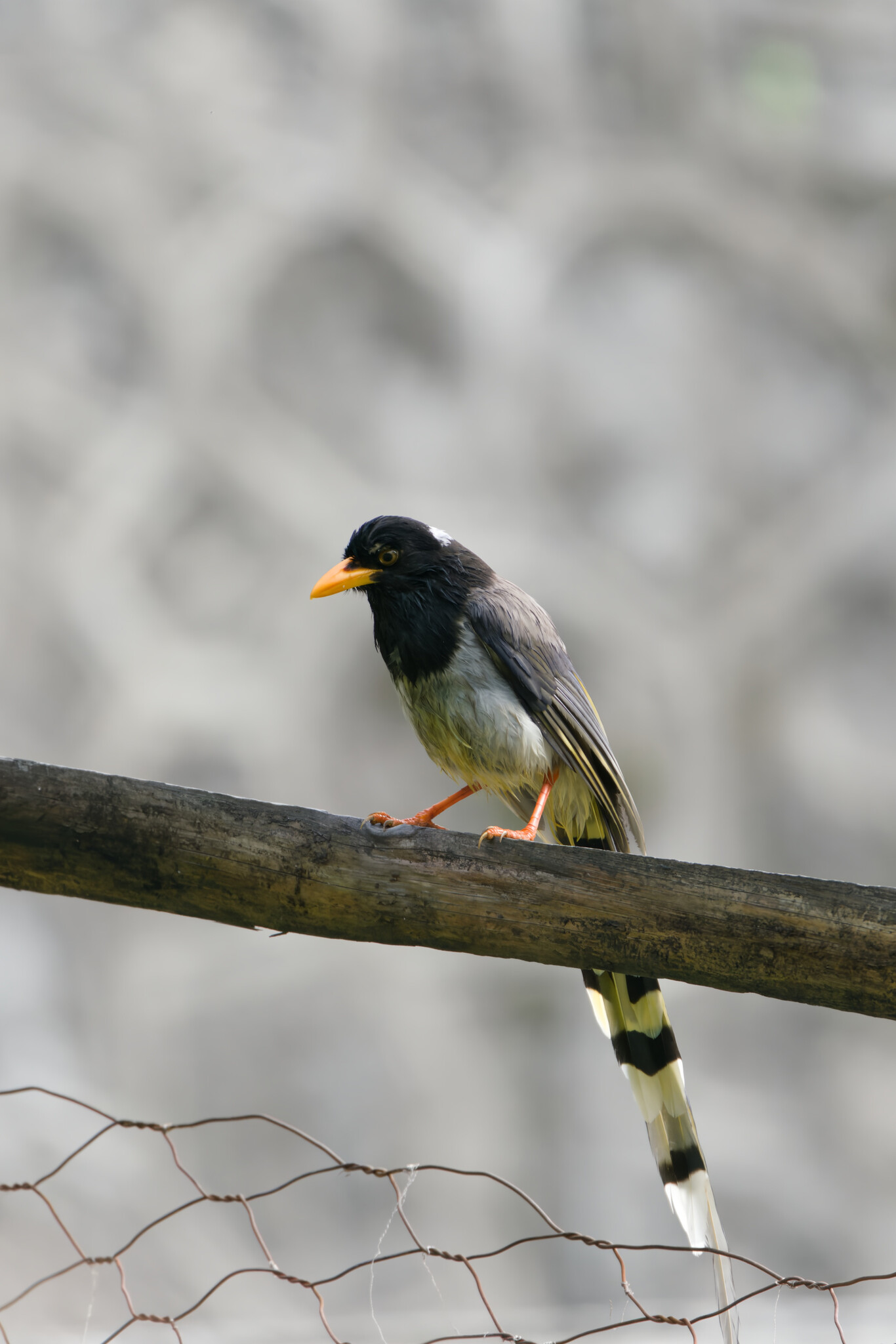
Yellow-billed Blue Magpie
Urocissa flavirostris
黄嘴蓝鹊
Introduction
A passerine bird in the family Corvidae. Forms a superspecies with the Taiwan blue magpie and the red-billed blue magpie. Range covers the northern Indian subcontinent, including the lower Himalayan foothills, with a disjunct population in Vietnam. Primarily arboreal and highly vocal with a variety of vocalizations.
Description
Length 66 cm (26 in), including tail of about 46 cm (18 in). Sexes alike. Head, neck, and breast are black with a white patch on the nape. Remainder of lower plumage white, faintly tinged with lilac. Whole upper plumage purplish-blue, brighter on wings and tail. Flight feathers tipped with white, along with white outermost wing feathers. Tail is long and graduated, with blue feathers tipped with white; the very long central pair have a band of black in front of the white.
Identification
From Simla eastwards, the closely related red-billed blue magpie often occurs in the same areas. It is particularly common about Mussoorie, Tehri-Garhwal, Kumaon, and in Nepal. Distinguished from the red-billed species by its yellow (not red) beak and smaller extent of the white nape-patch.
Distribution & Habitat
Found throughout the Himalayas from Hazara to the Brahmaputra. Two subspecies occur: U. f. cucullata ranges from the western boundary to western Nepal, breeding from 1,500 to 3,000 m (4,900 to 9,800 ft). The eastern form occurs from eastern Nepal eastwards and has darker lilac underparts; its range extends slightly higher and it seldom occurs below 1,830 m (6,000 ft). A resident species that moves to lower elevations during winter months.
Behavior & Ecology
Primarily arboreal, most common in dense jungle but also found in agricultural areas and bare mountain sides at higher elevations. Feeds on the ground with a hopping gait, holding the tail high. Lives in parties of seven or eight birds and is highly territorial. Flight is slow and undulating when the bird comes into the open. Diet consists of small mammals, eggs and young of other birds, insects, and wild fruits and berries. Very vocal with a variety of vocalizations.
Source: Wikipedia · CC BY-SA 3.0
Taxonomy
- Order
- Passeriformes
- Family
- Corvidae
- Genus
- Urocissa
- eBird Code
- gobmag1
Subspecies (4)
-
Urocissa flavirostris cucullata
western Himalayas (Hazara to eastern Nepal)
-
Urocissa flavirostris flavirostris
eastern Himalayas to Assam, southern Tibet, and northern Myanmar
-
Urocissa flavirostris robini
northern Vietnam (northwestern Tonkin)
-
Urocissa flavirostris schaeferi
western Myanmar (Chin Hills)
Data Sources
Species description from Wikipedia, licensed under CC BY-SA 3.0.
Bird images and sounds sourced from GBIF, contributed by citizen scientists worldwide under Creative Commons licenses.
Taxonomy data from AviList 2025.