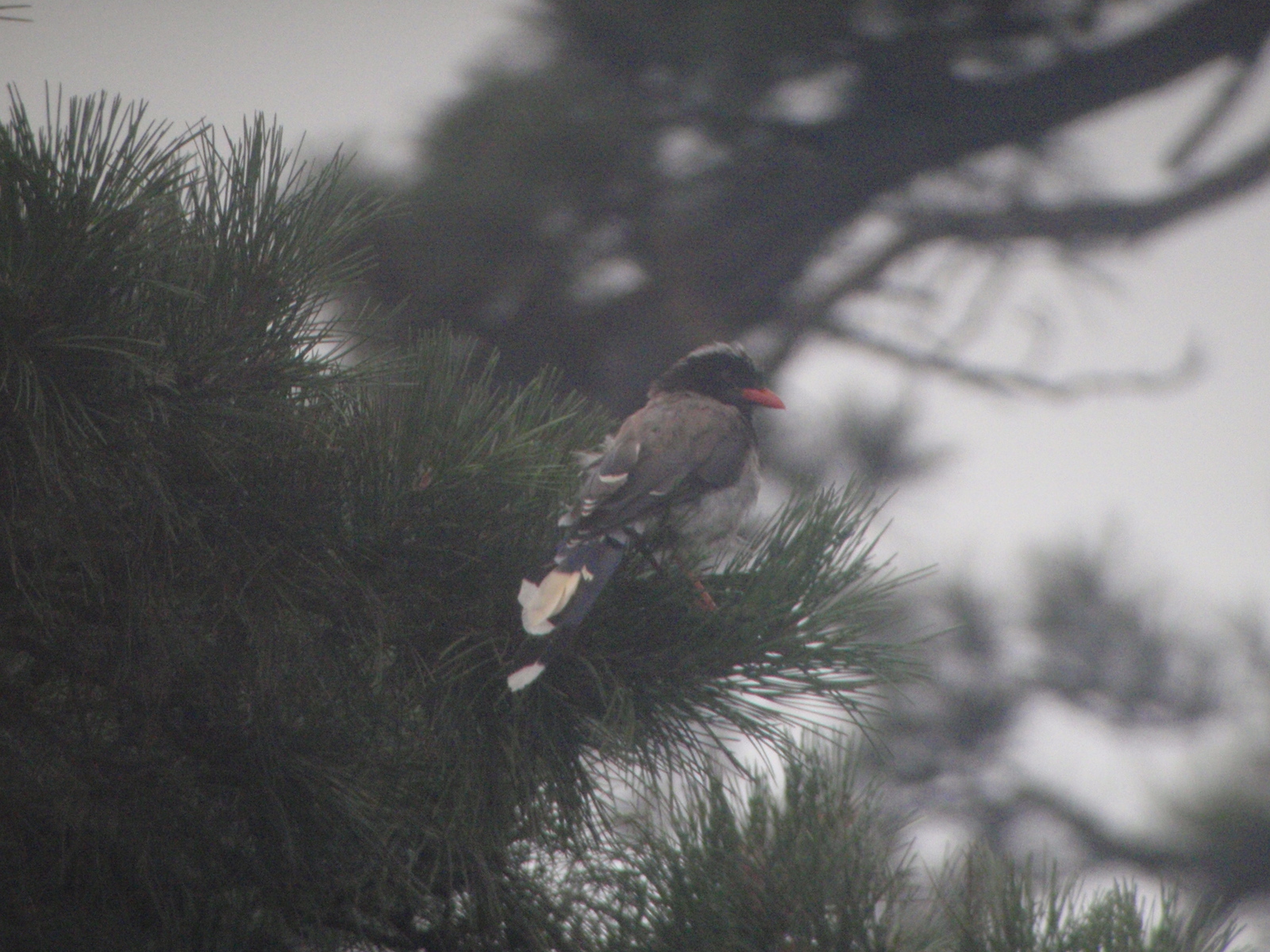
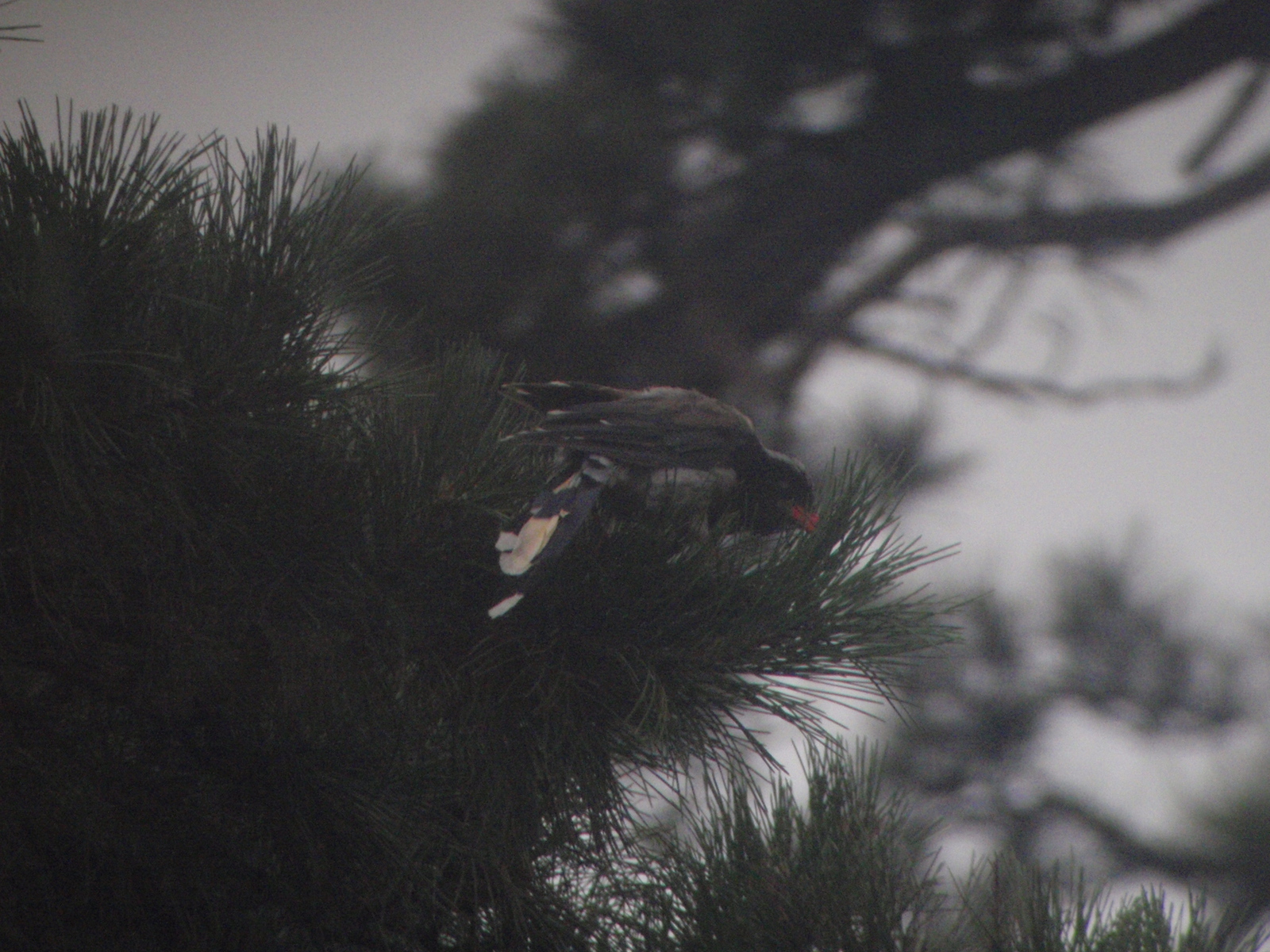
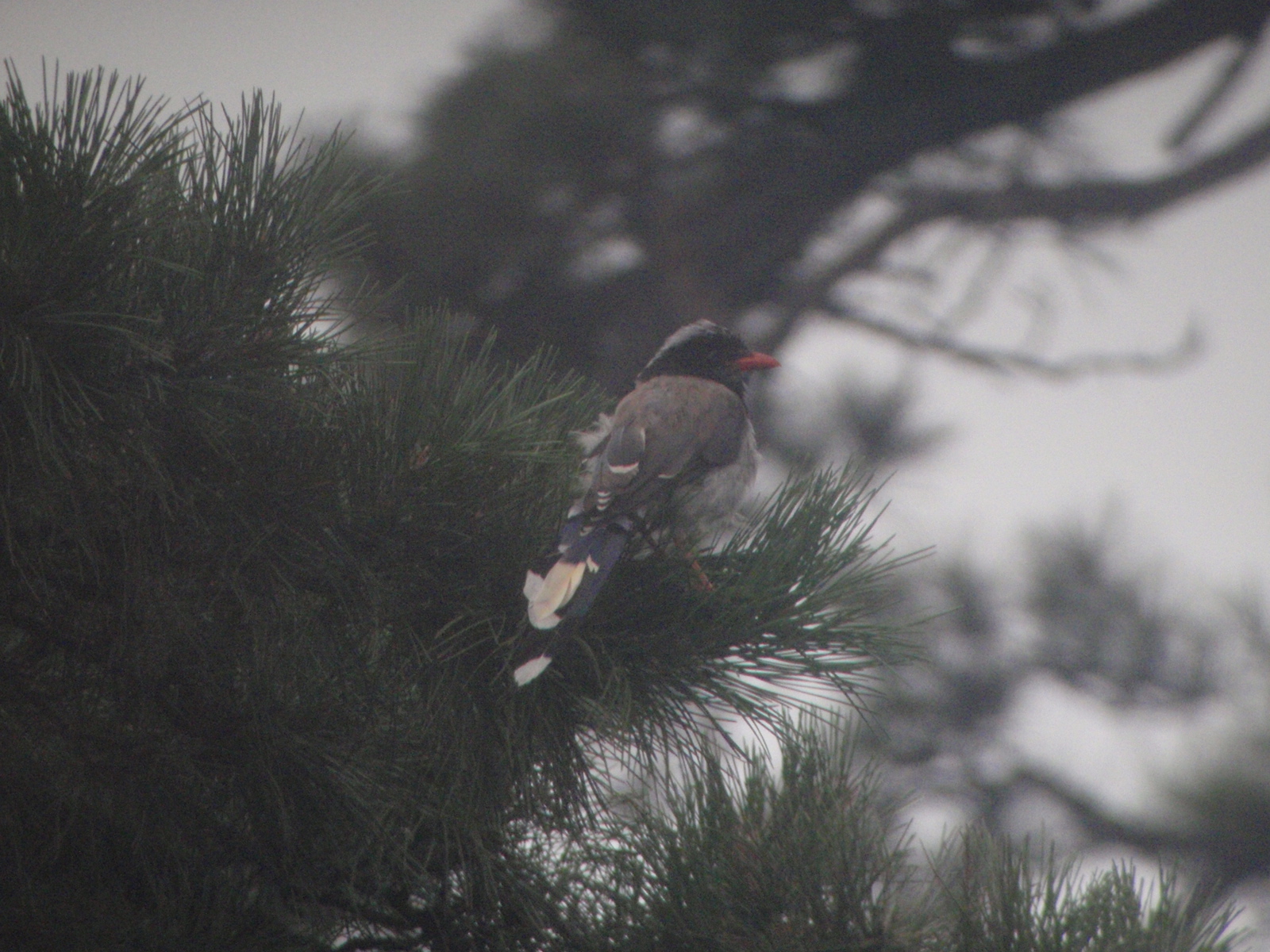
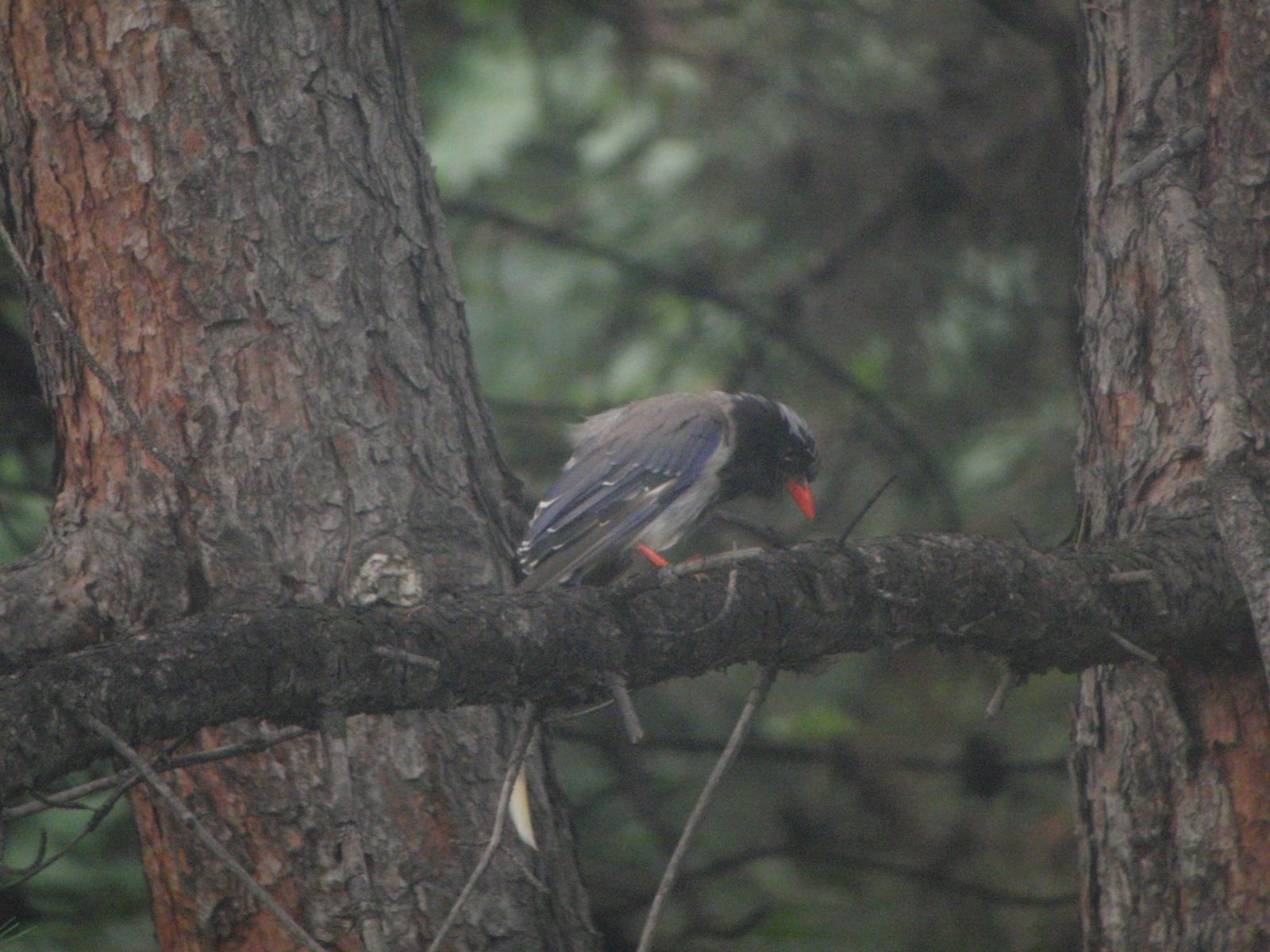
Red-billed Blue Magpie
Urocissa erythroryncha
红嘴蓝鹊
Introduction
A species of magpie in the crow family, Corvidae. Found across a broad swath from the northern Indian subcontinent eastwards through the Himalayas, Myanmar, Thailand, Cambodia, Laos, and Vietnam, extending through central and eastern China to southwest Manchuria. Inhabits evergreen forest and scrub in predominantly hilly or mountainous country, though it has adapted to urban habitats and can be seen in large Chinese cities including Beijing and Hong Kong. Among the most distinctive traits are its exceptionally long tail—one of the longest of any corvid species—and its highly developed vocal mimicry abilities.
Description
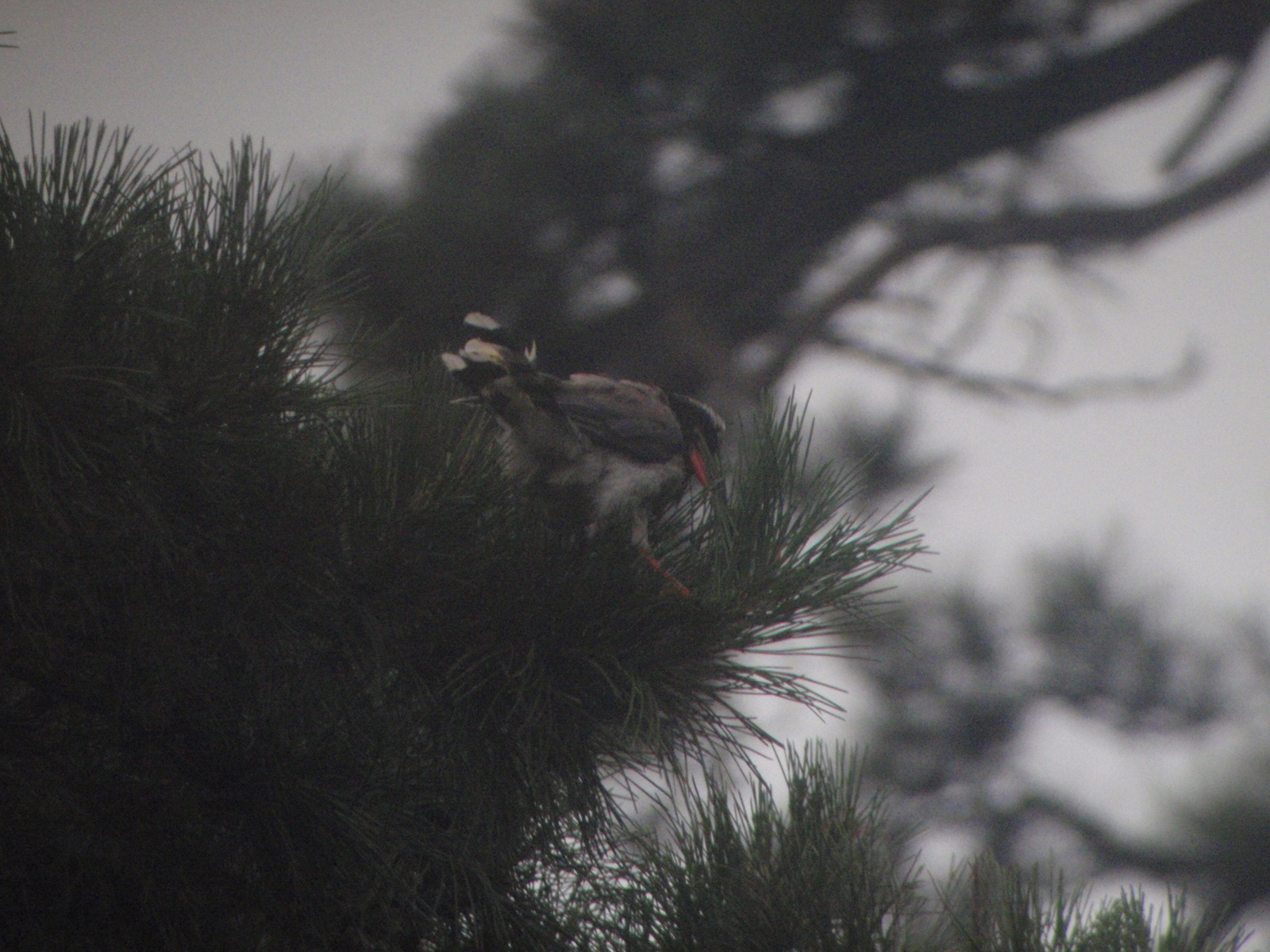
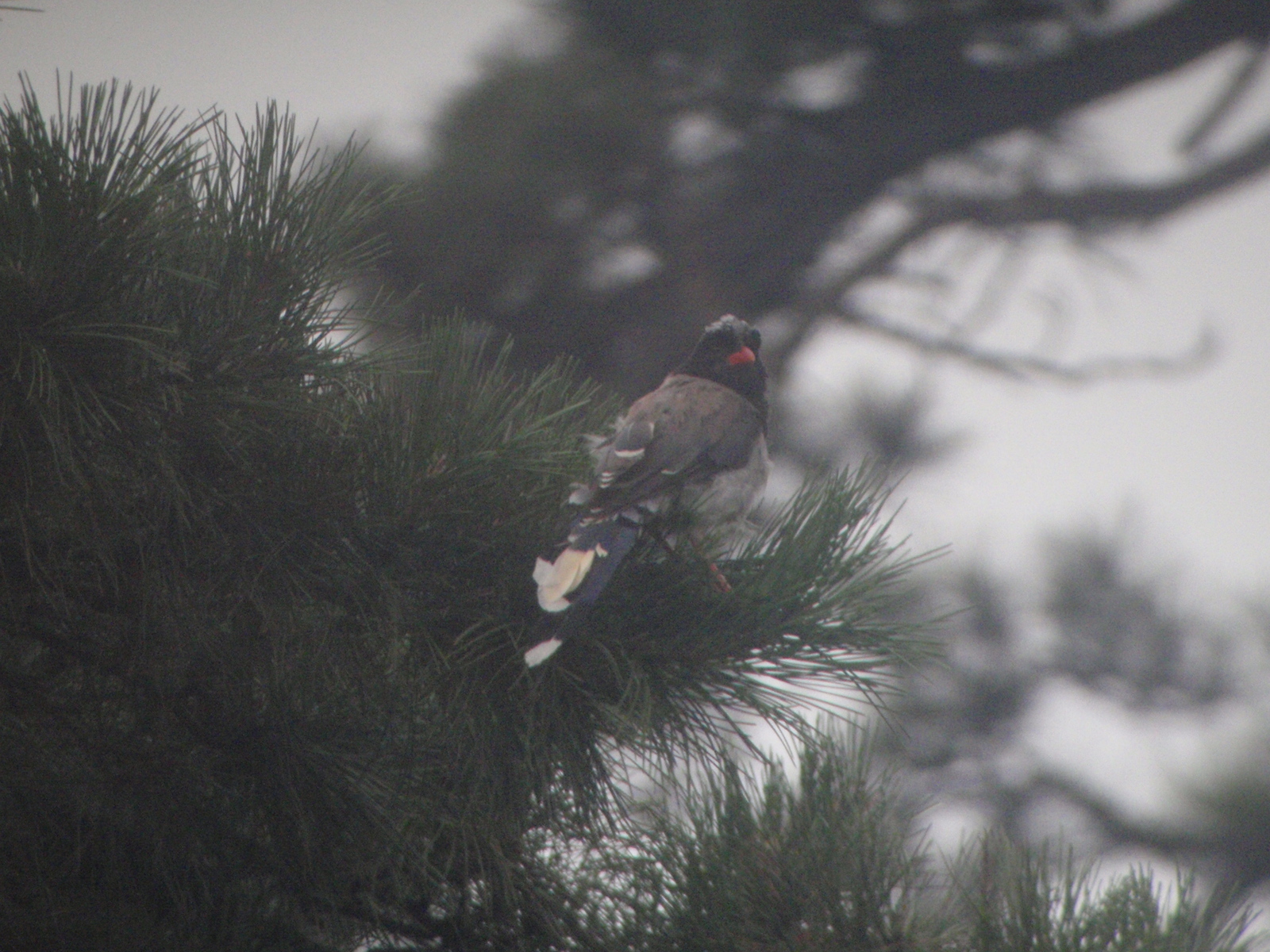
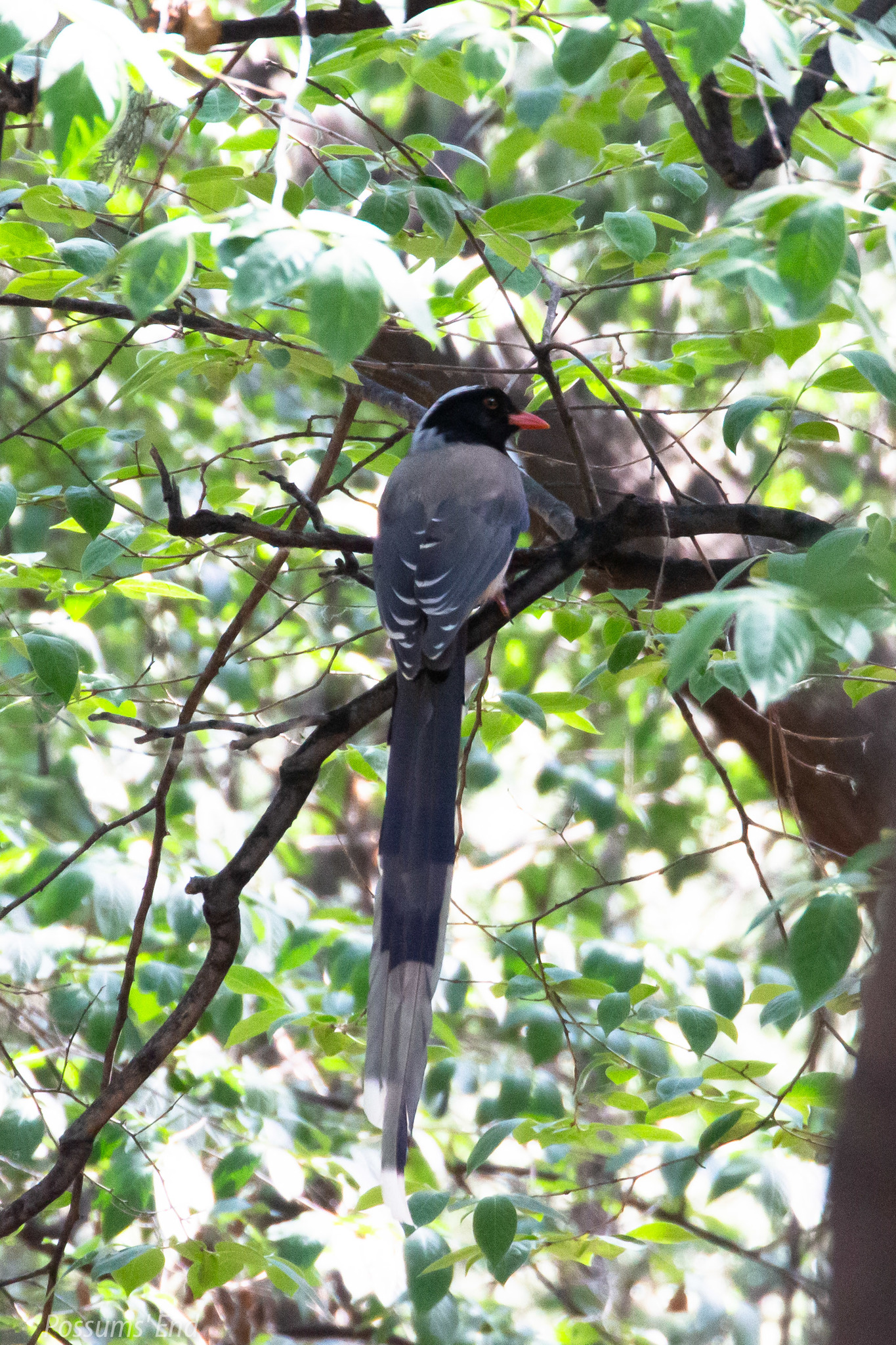
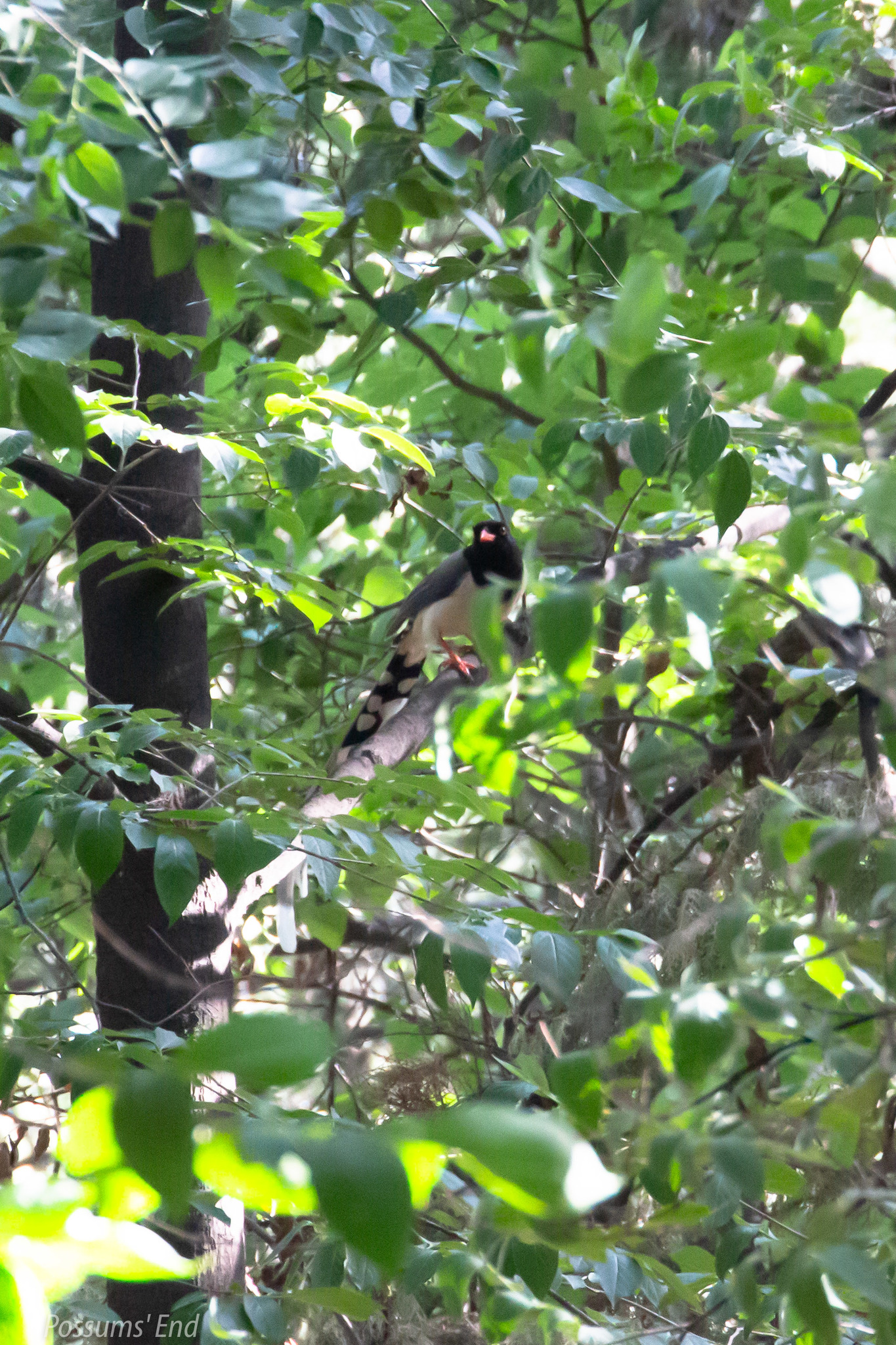
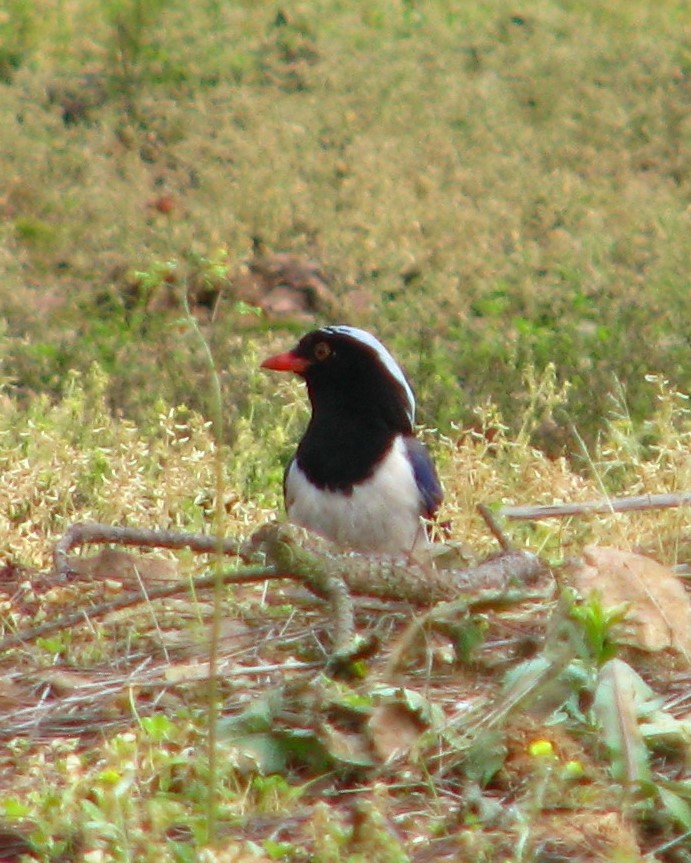
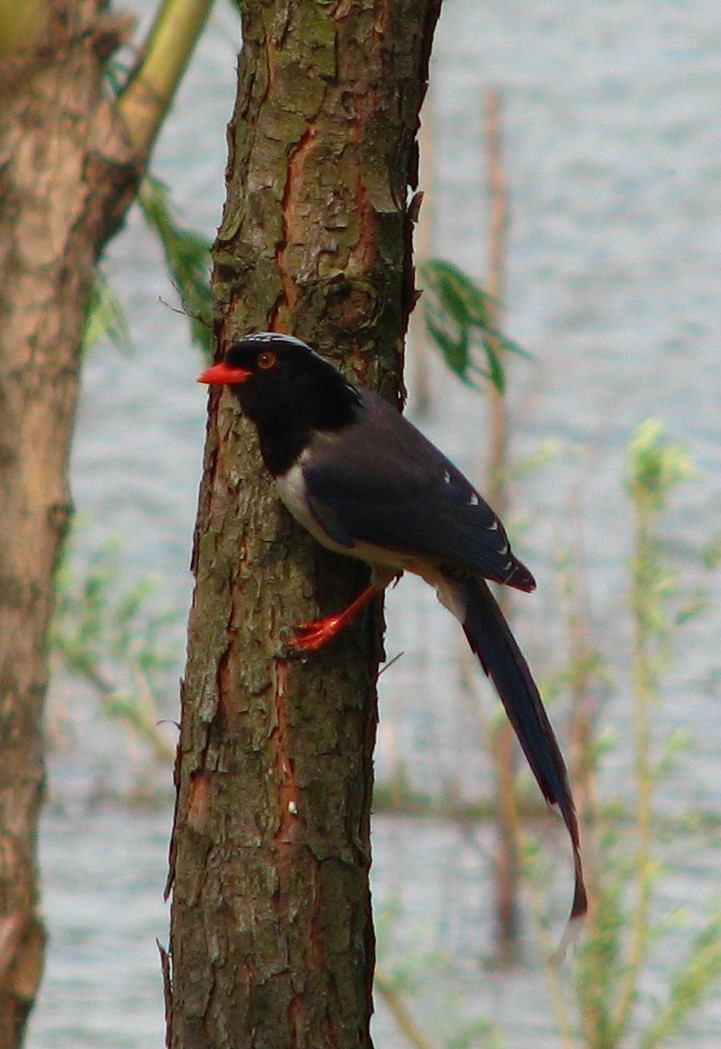
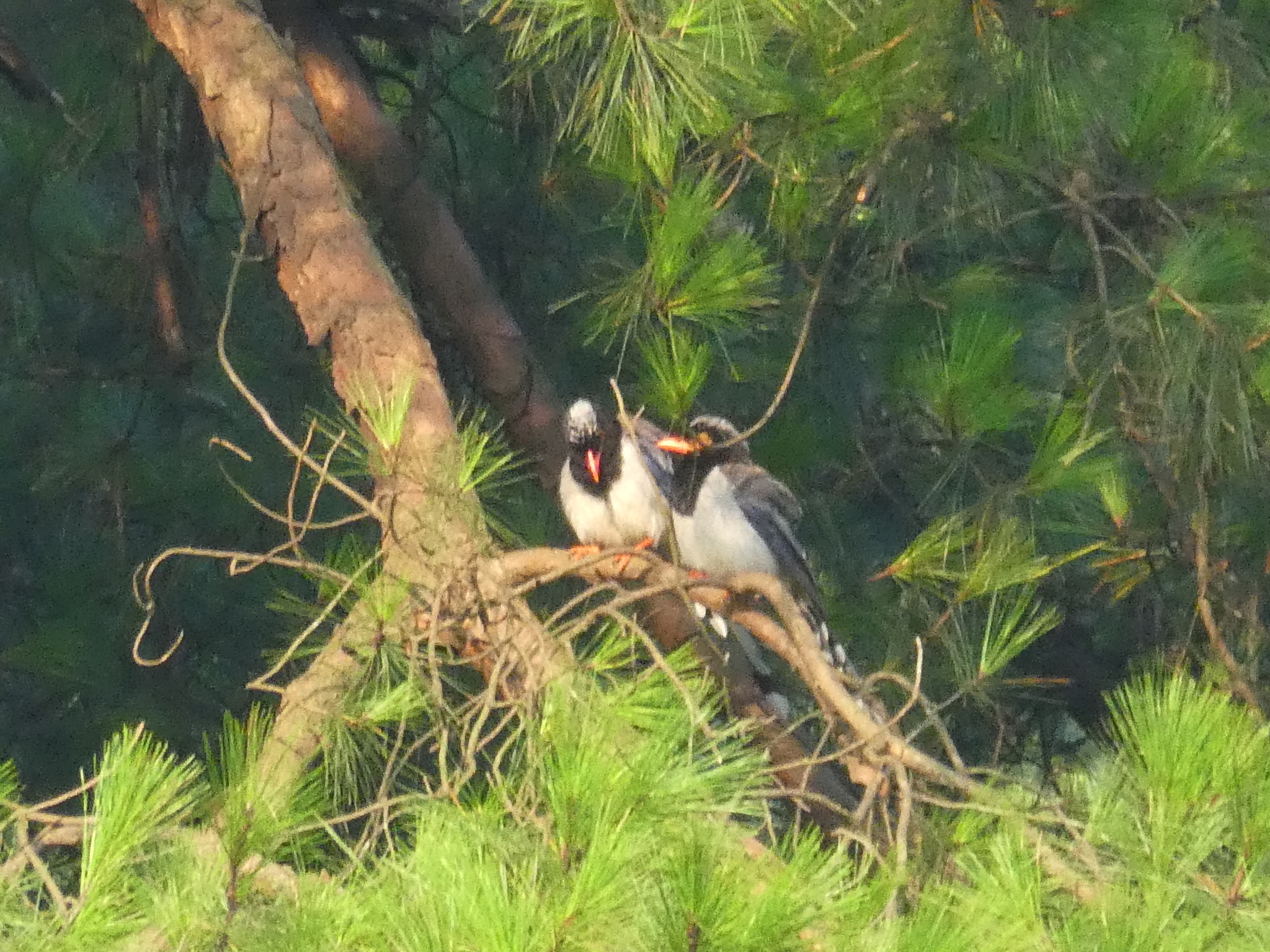
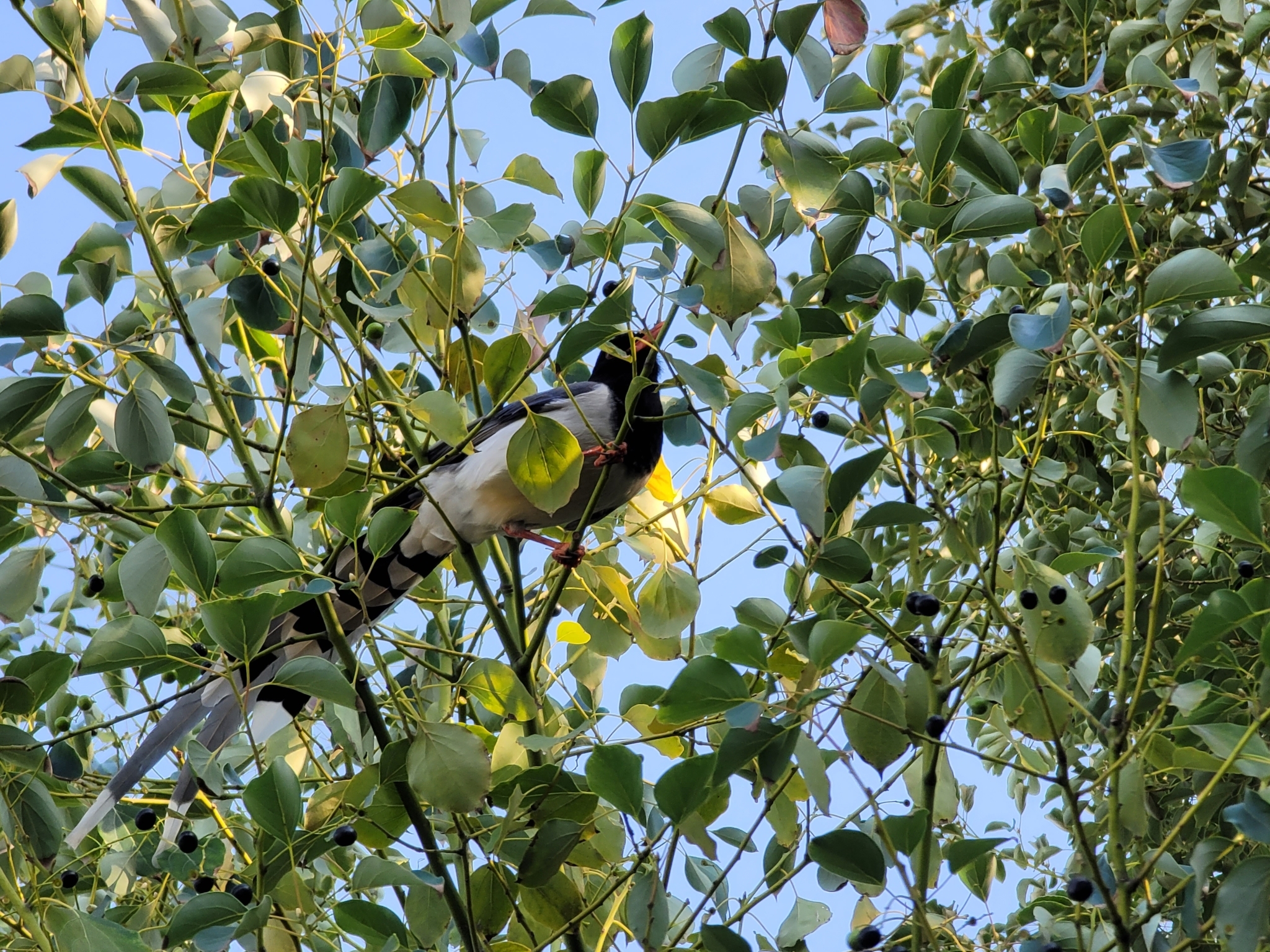
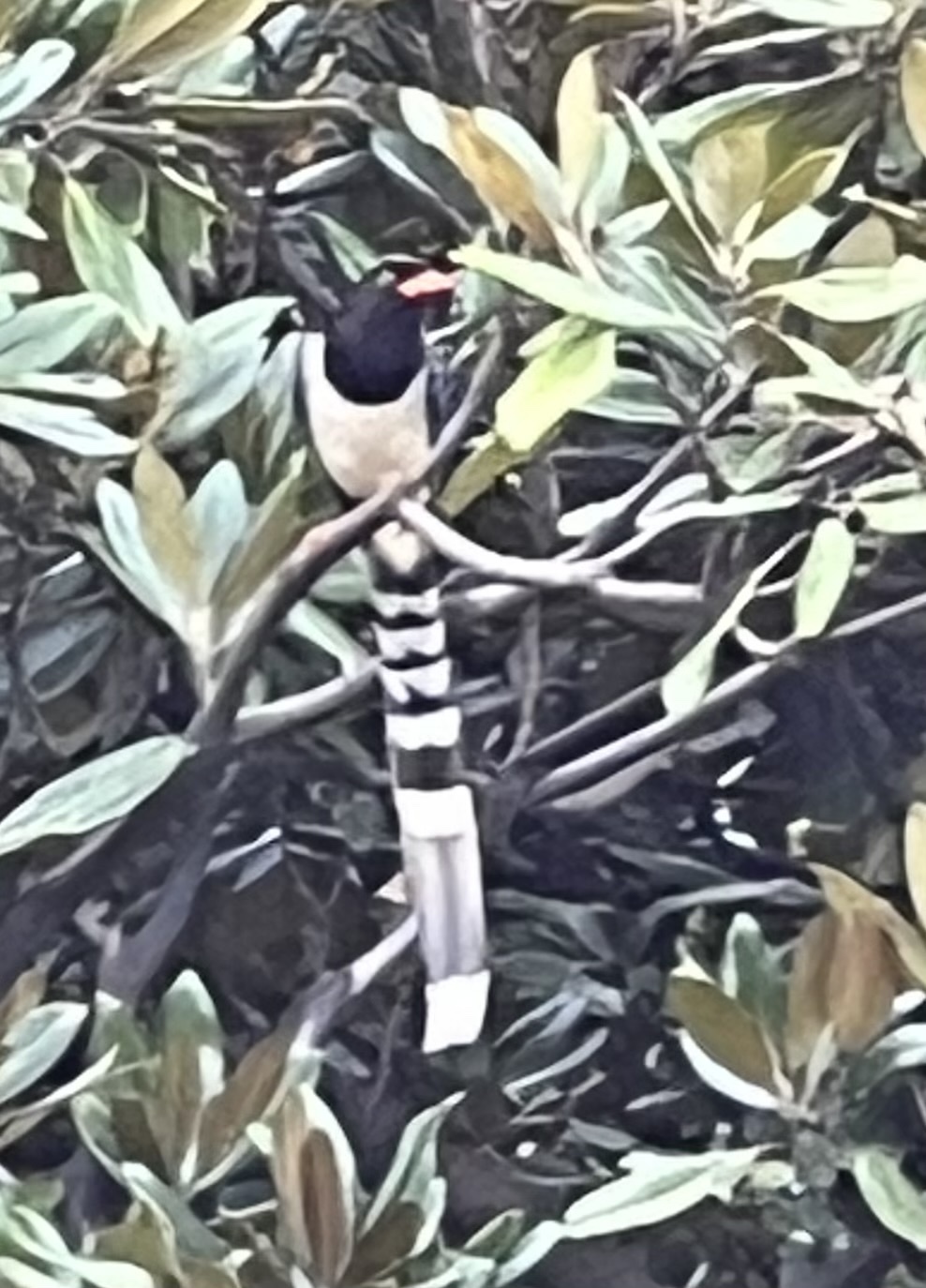
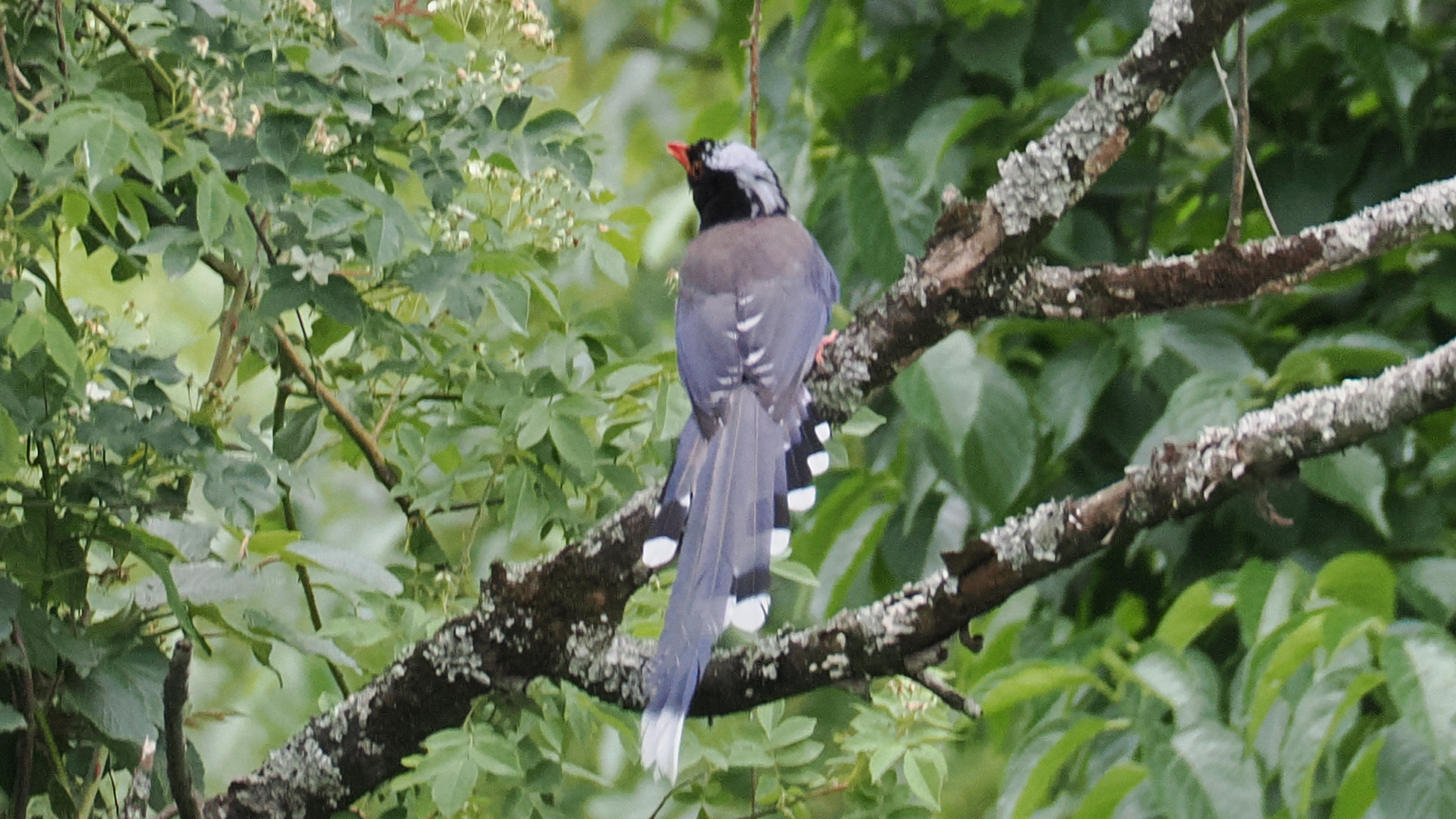
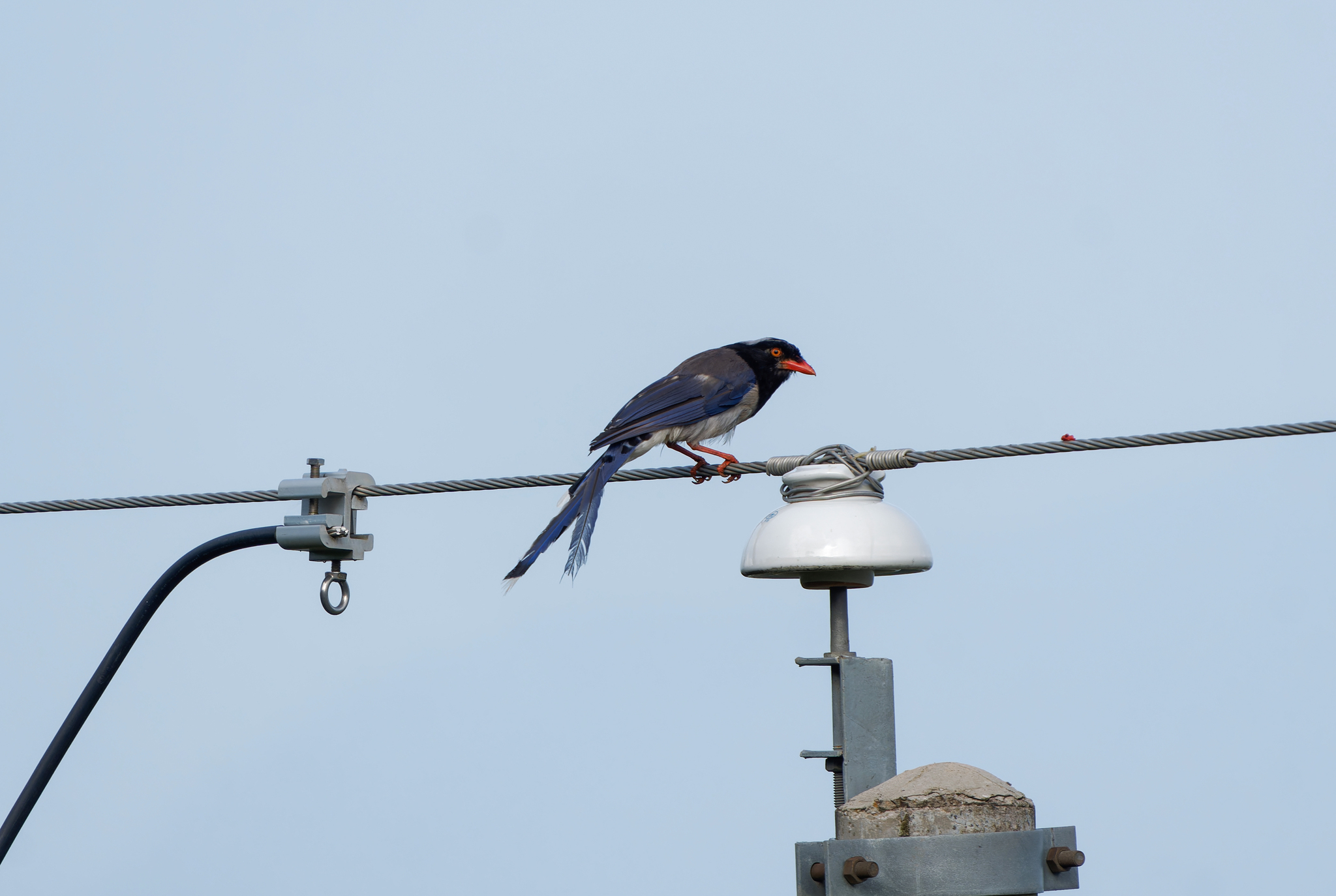
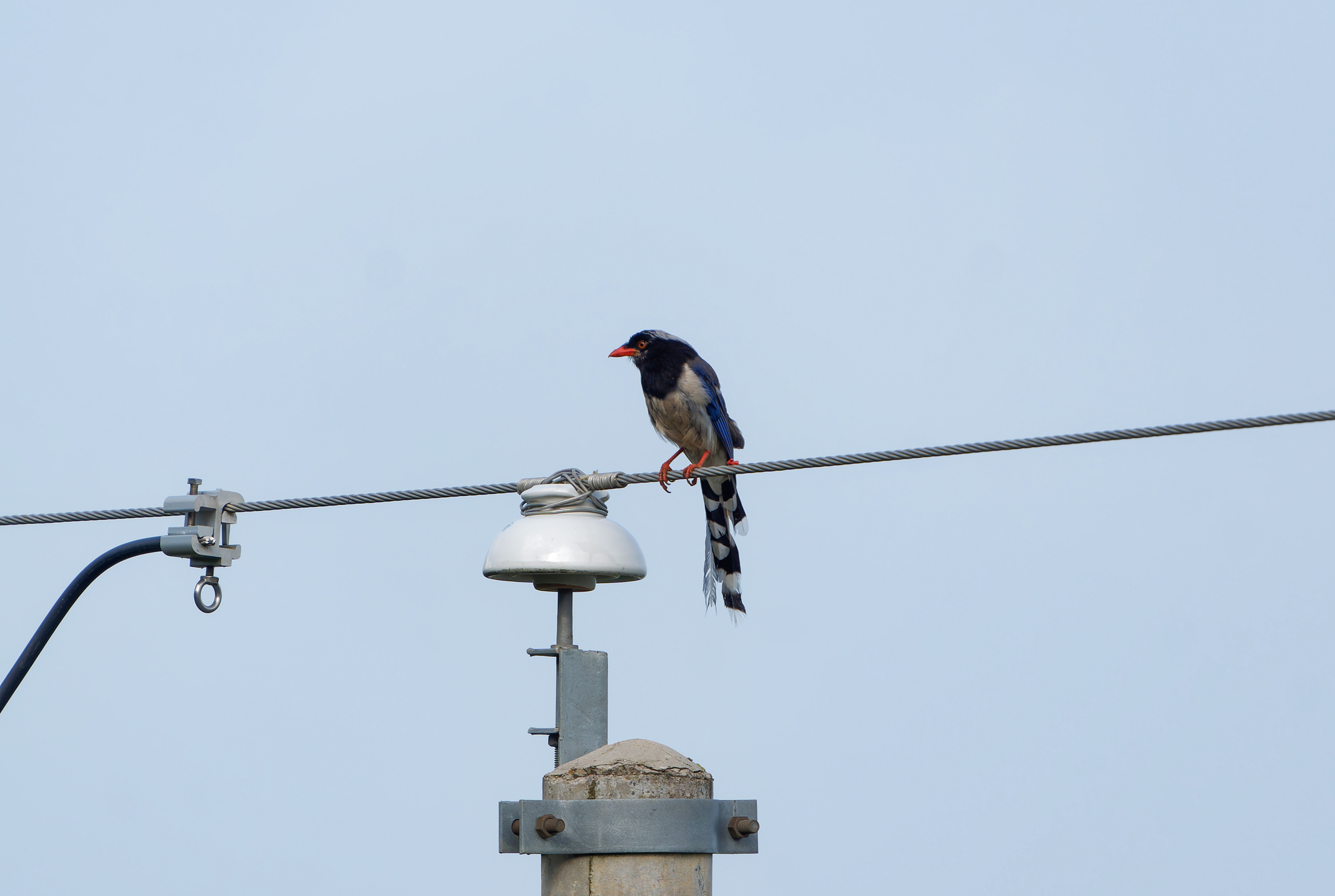
A medium-sized corvid approximately 65-68 cm in length and weighing 196-232 g, similar in body size to the Eurasian magpie but distinguished by its notably longer tail. The head, neck, and breast are black with bluish spotting on the crown. The shoulders and rump display a duller violet-blue coloration, while the underparts are greyish cream. The elongated tail and wing primaries are a brighter violet-blue, with the tail featuring a broad white tip. The bill, legs, feet, and a ring around each eye are bright orange-red, though this coloration can vary across the range to almost yellow in some populations.
Distribution & Habitat
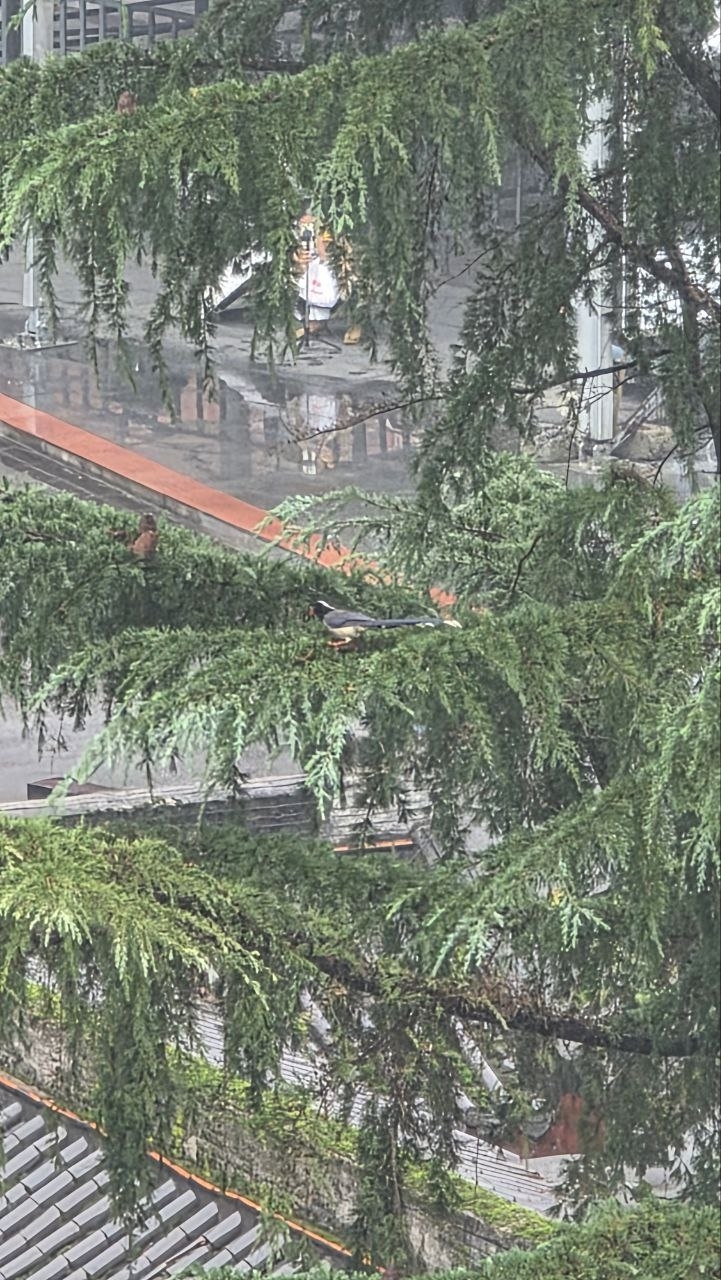
Range extends from the northern Indian subcontinent and western Himalayas eastwards through Myanmar, Thailand, Cambodia, Laos, and Vietnam, continuing across central and eastern China to southwest Manchuria. Inhabits evergreen forest and scrub in predominantly hilly or mountainous terrain. Has successfully adapted to urban environments and is regularly observed in large cities including Beijing and Hong Kong.
Behavior & Ecology
Forages both in trees and on the ground, consuming a varied diet of invertebrates, small animals, fruit, seeds, and nest contents including eggs and chicks. Nests are constructed in trees and large shrubs in relatively shallow structures, with clutch sizes typically ranging from three to five eggs. Highly developed vocal mimicry is a notable characteristic, with calls being very varied; the most common vocalizations are a grating rattle and a high-pitched whistle reminiscent of a flute.
Conservation
No conservation status assessment or population data provided in source material.
Culture
No cultural significance, folklore, or mythological references provided in source material.
Source: Wikipedia · CC BY-SA 3.0
Taxonomy
- Order
- Passeriformes
- Family
- Corvidae
- Genus
- Urocissa
- eBird Code
- rbbmag
Subspecies (5)
-
Urocissa erythroryncha alticola
southwestern China (northern Yunnan) and northeastern Myanmar
-
Urocissa erythroryncha brevivexilla
southwestern Manchuria and northern China
-
Urocissa erythroryncha erythroryncha
central China to southern Yunnan, northern Laos, and northern Vietnam
-
Urocissa erythroryncha magnirostris
hills of Assam to Indochina
-
Urocissa erythroryncha occipitalis
Himalayas (Punjab to Sikkim)
Data Sources
Species description from Wikipedia, licensed under CC BY-SA 3.0.
Bird images and sounds sourced from GBIF, contributed by citizen scientists worldwide under Creative Commons licenses.
Taxonomy data from AviList 2025.