Taiwan Blue Magpie
Urocissa caerulea
台湾蓝鹊
Introduction
A bird species in the crow family endemic to Taiwan. Inhabits broadleaf forests at elevations of 300–1,200 m (980–3,940 ft). Known for being unafraid of humans and often found near mountain residences and newly cultivated lands. Gregarious by nature, typically observed in groups of 3-12 individuals that often fly in a line formation known as 'long-tailed formation.' Classified as Least Concern on the IUCN Red List; however, it is protected under Taiwan's Wildlife Conservation Act as 'other conservation-deserving wildlife' due to its endemic status.
Description
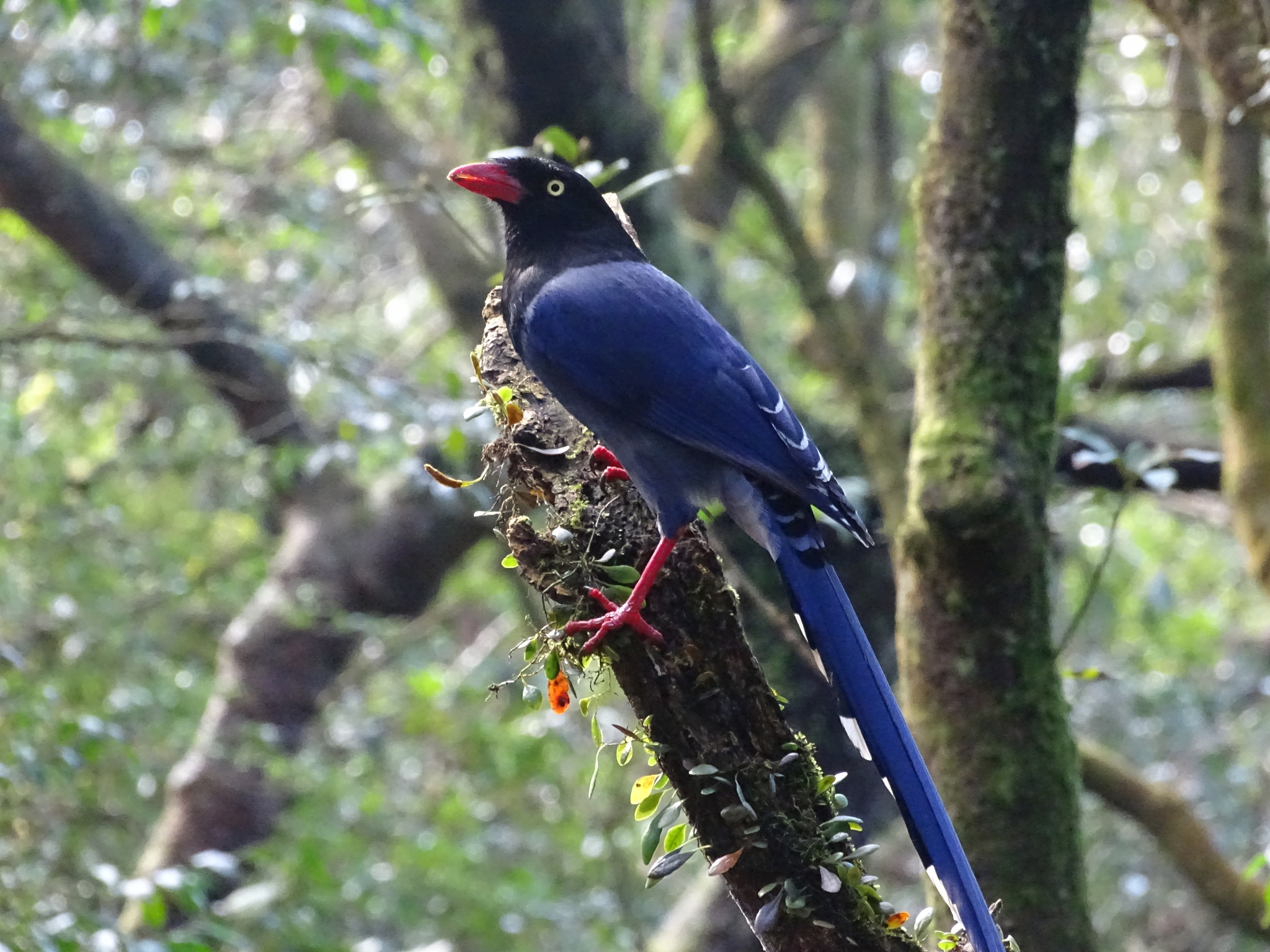
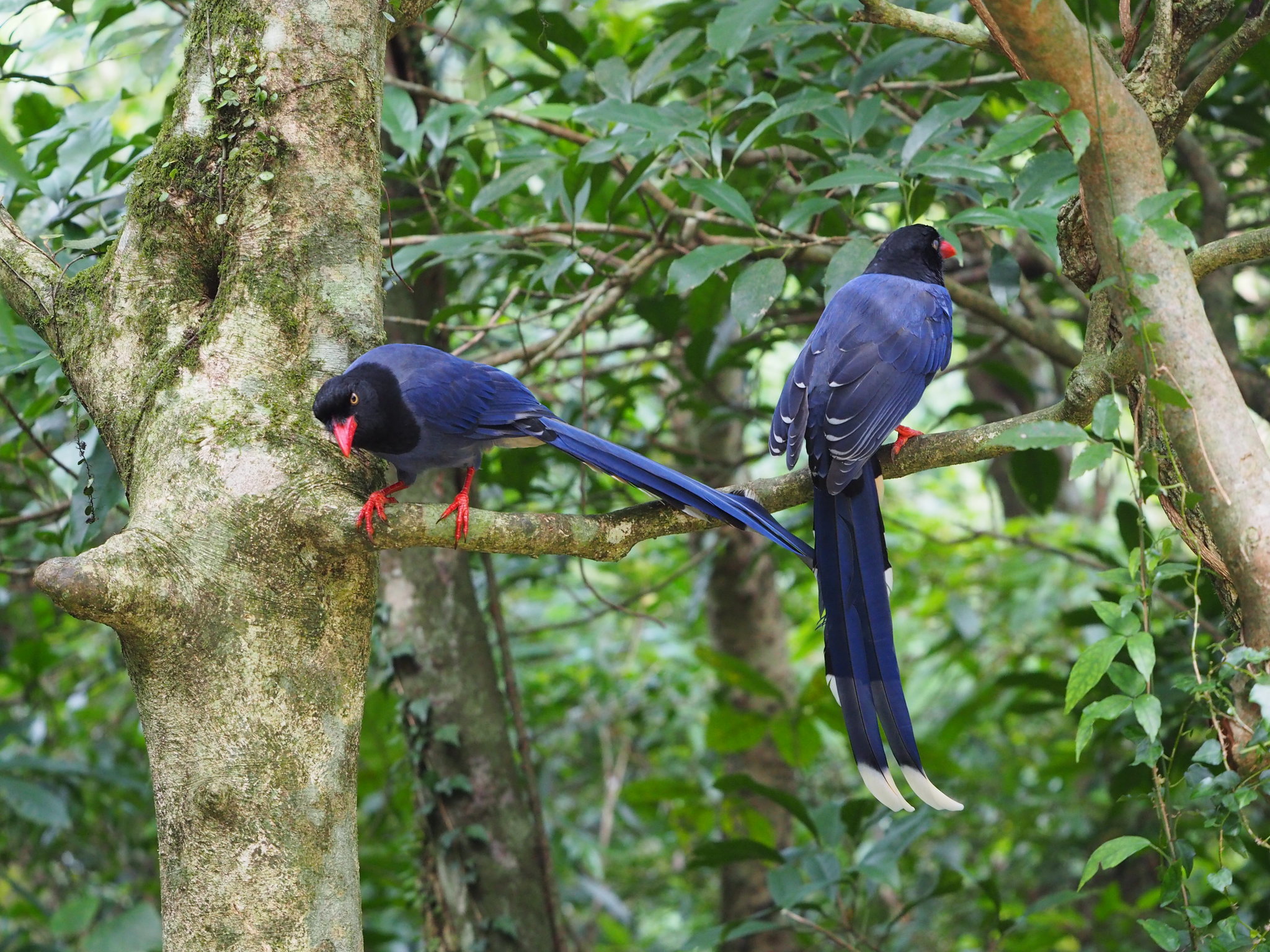
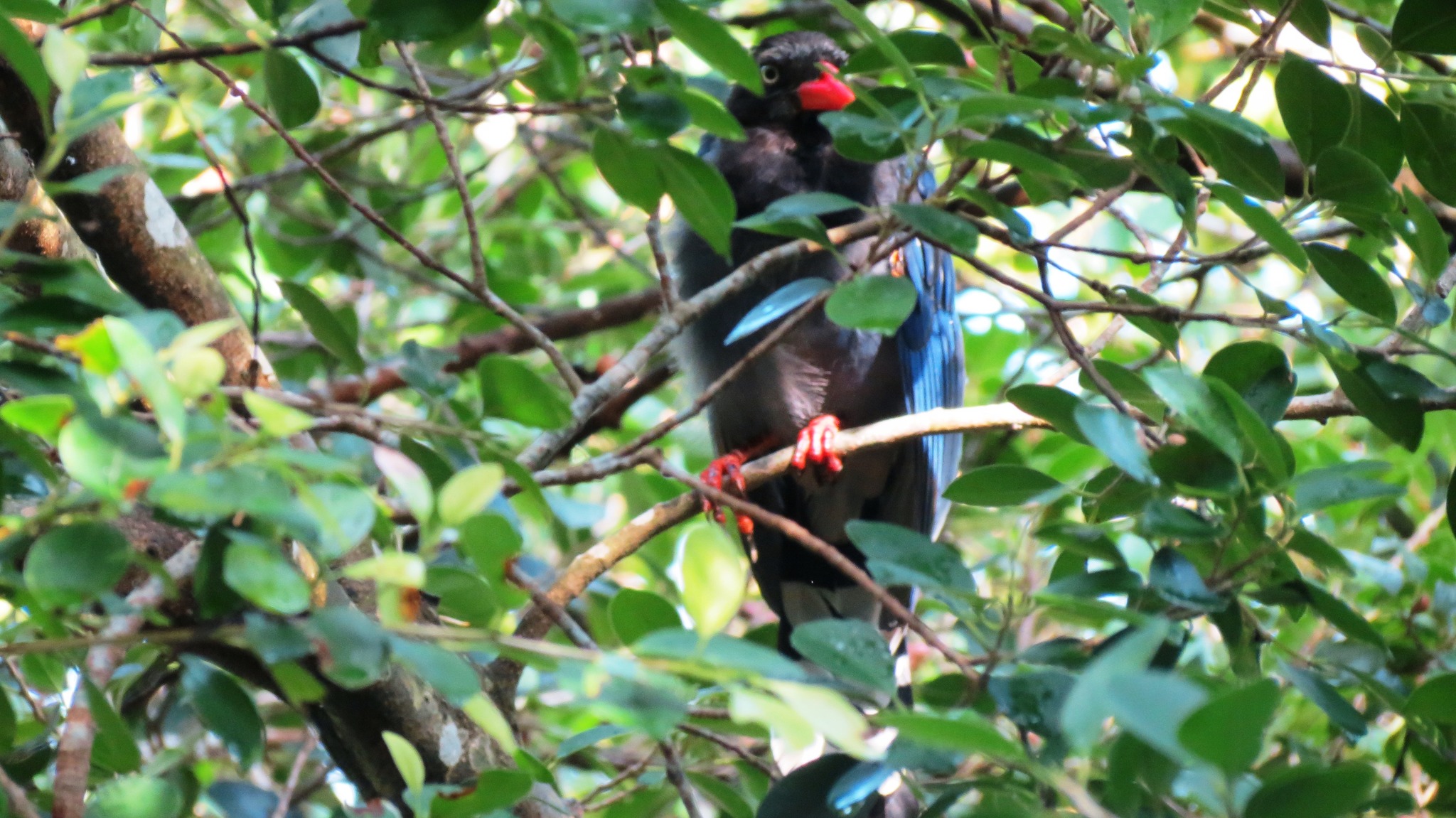
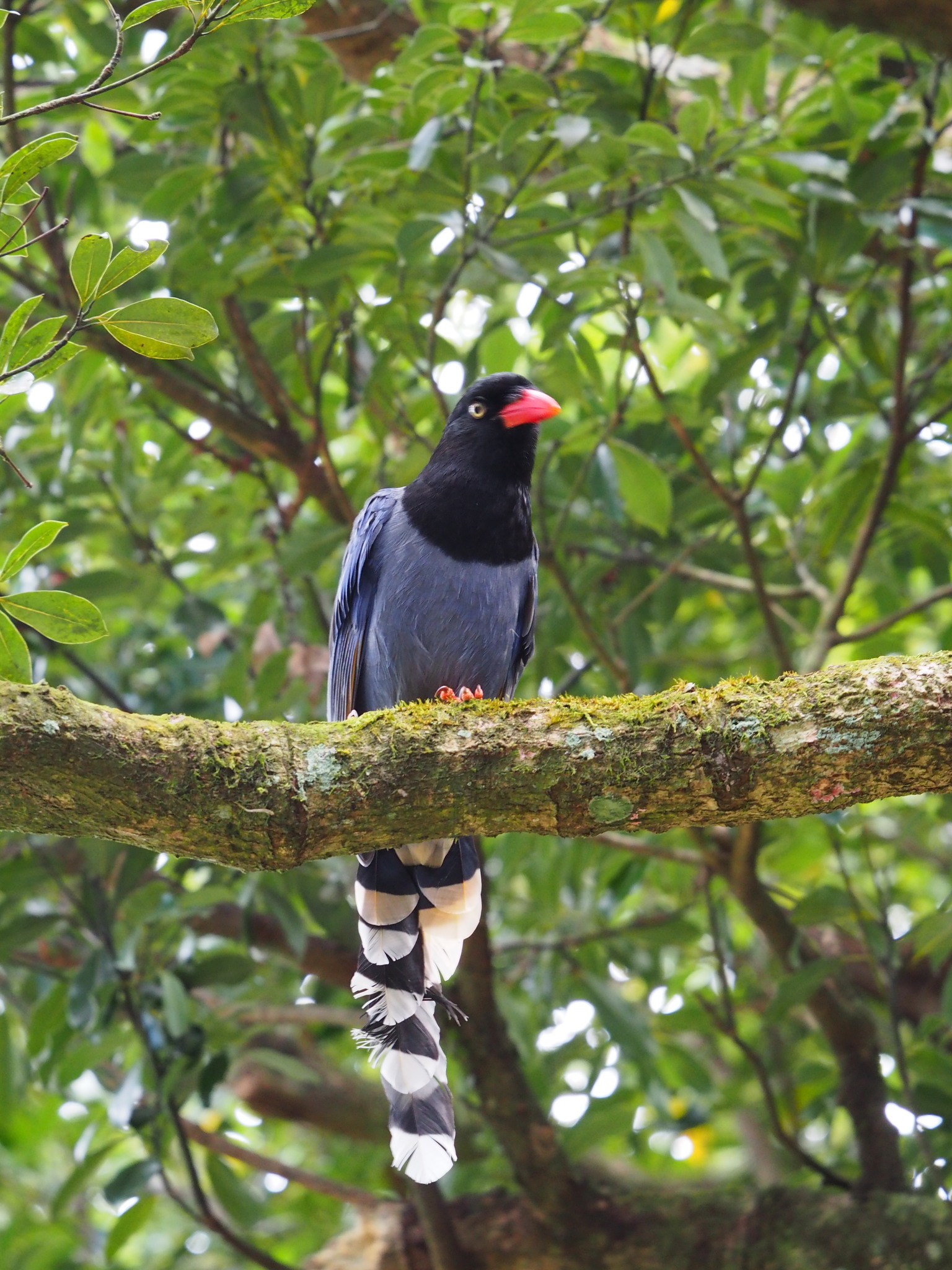
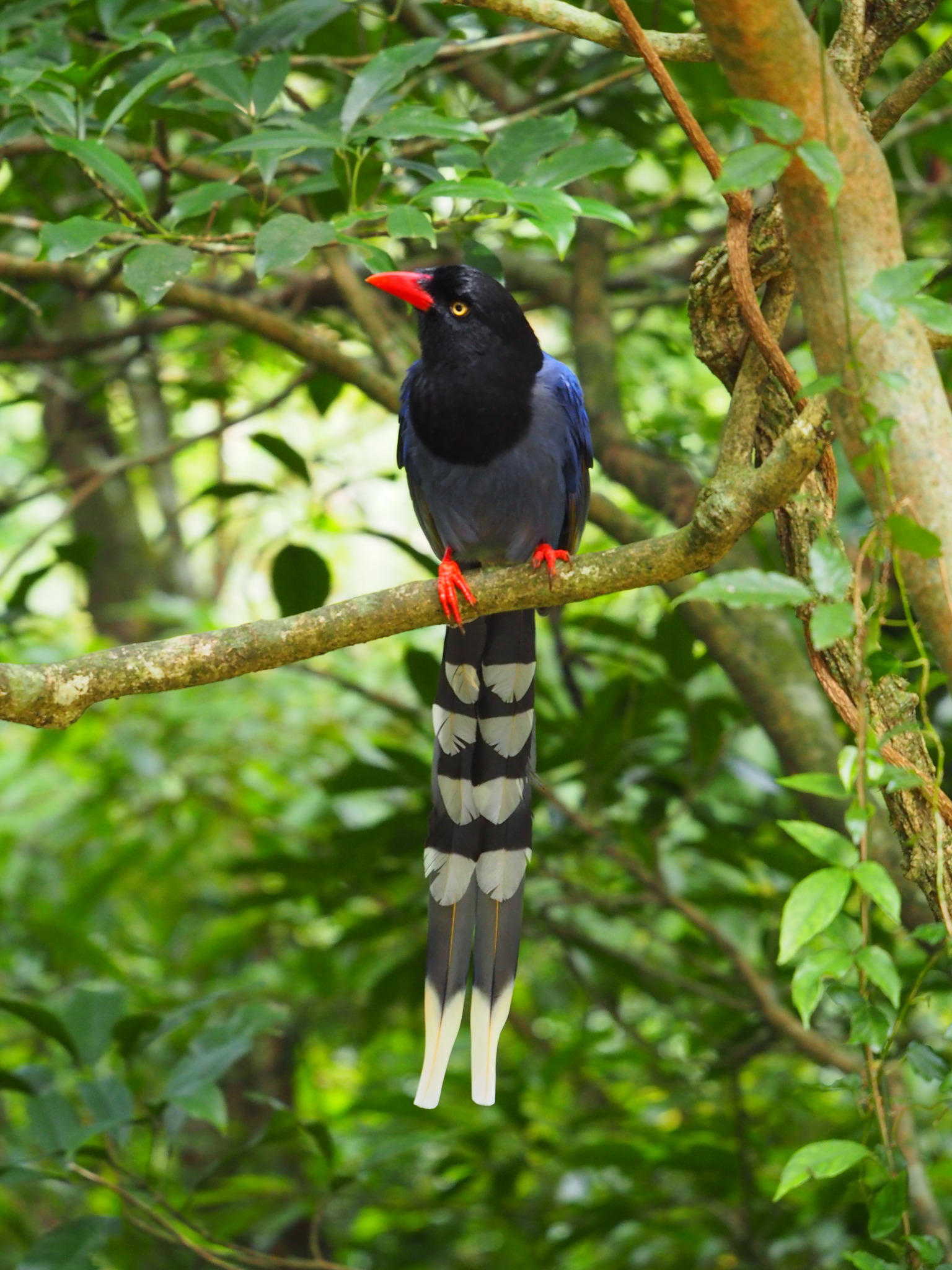
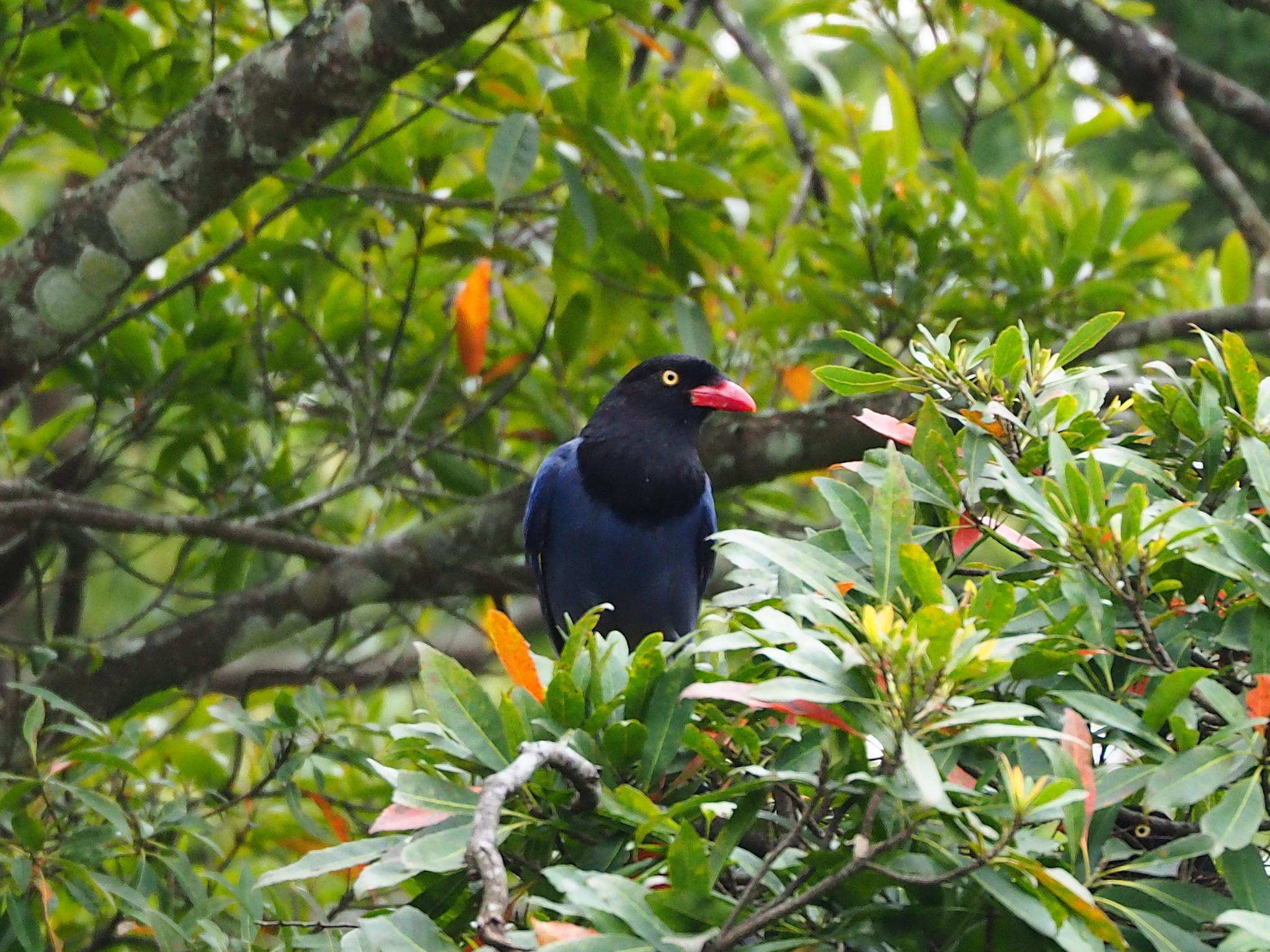
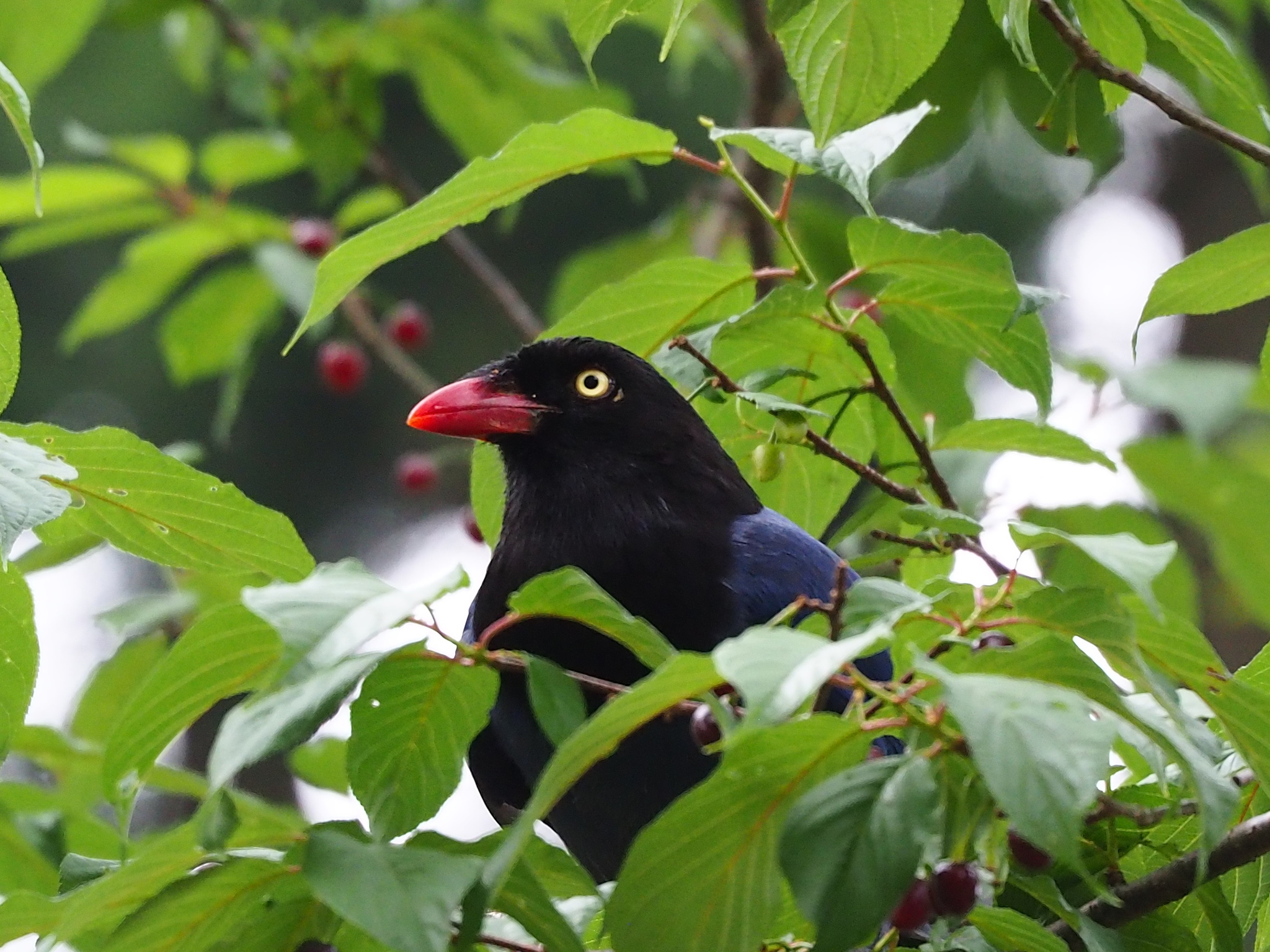
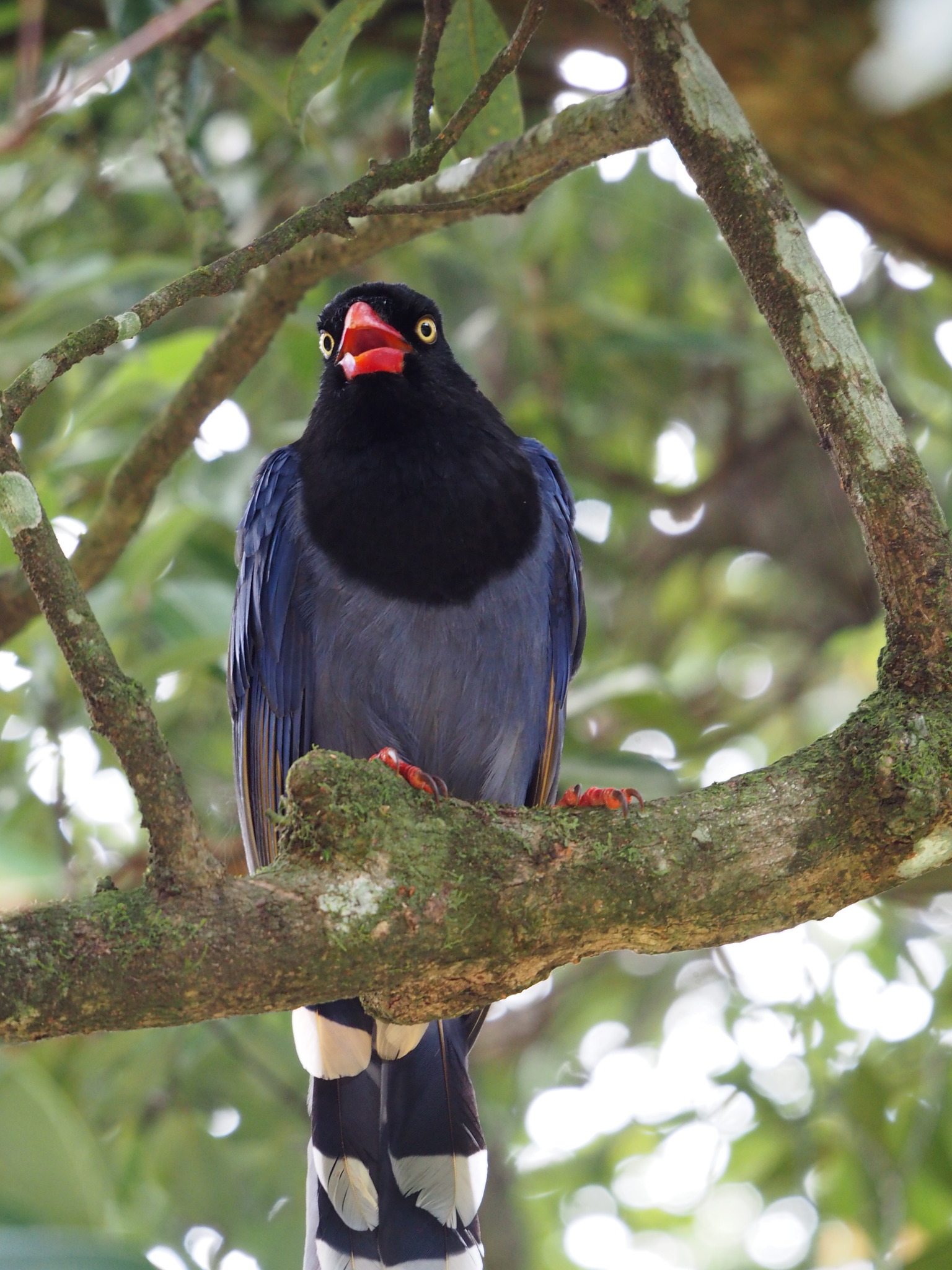
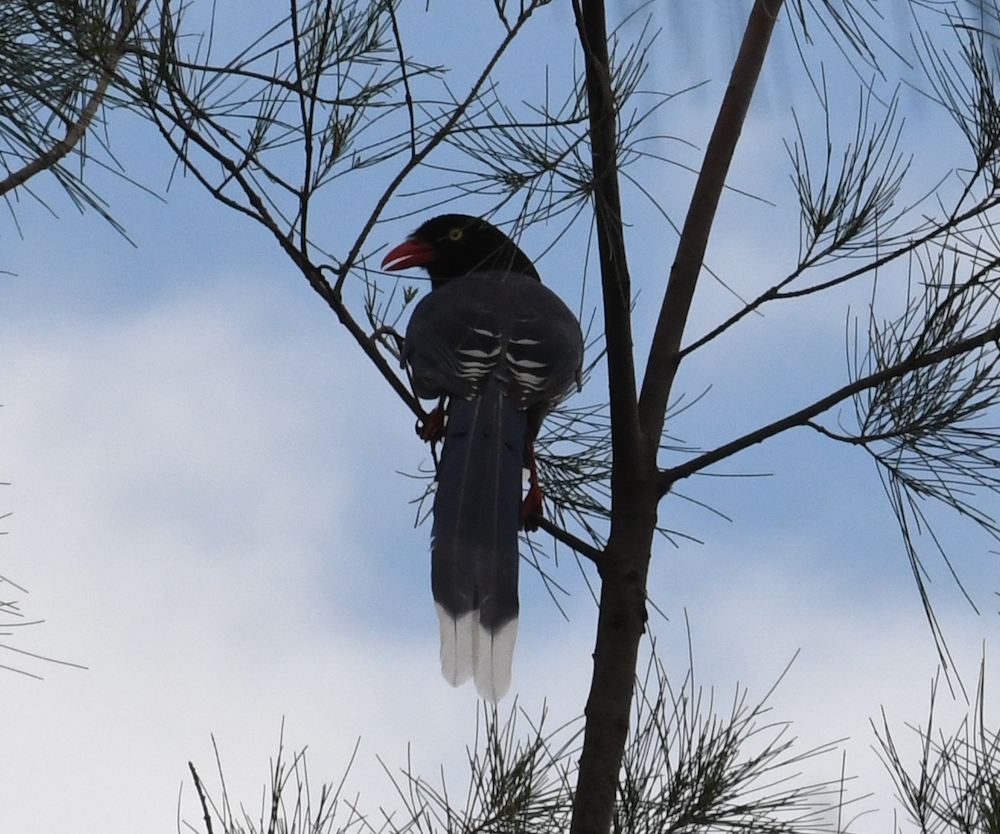
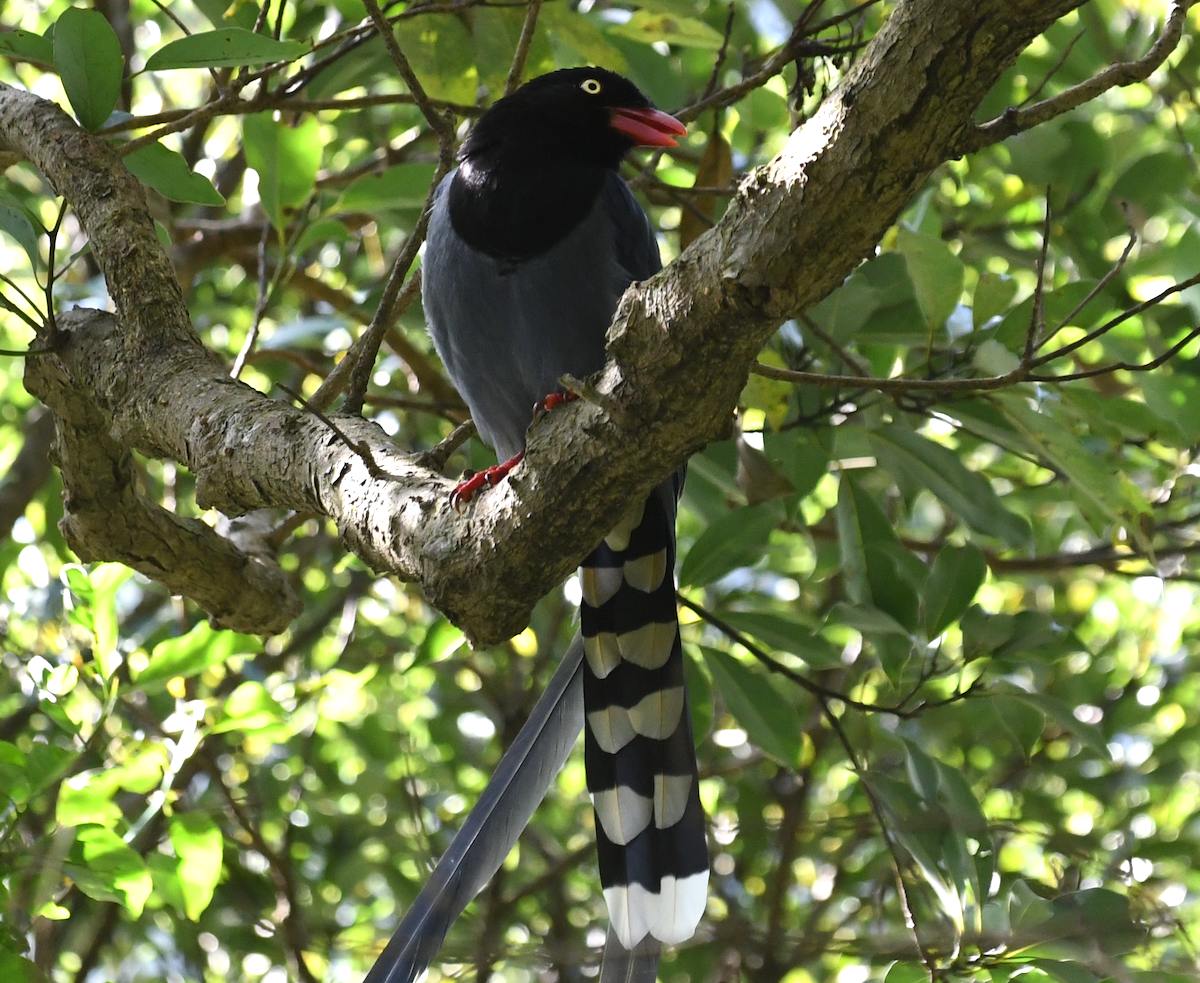
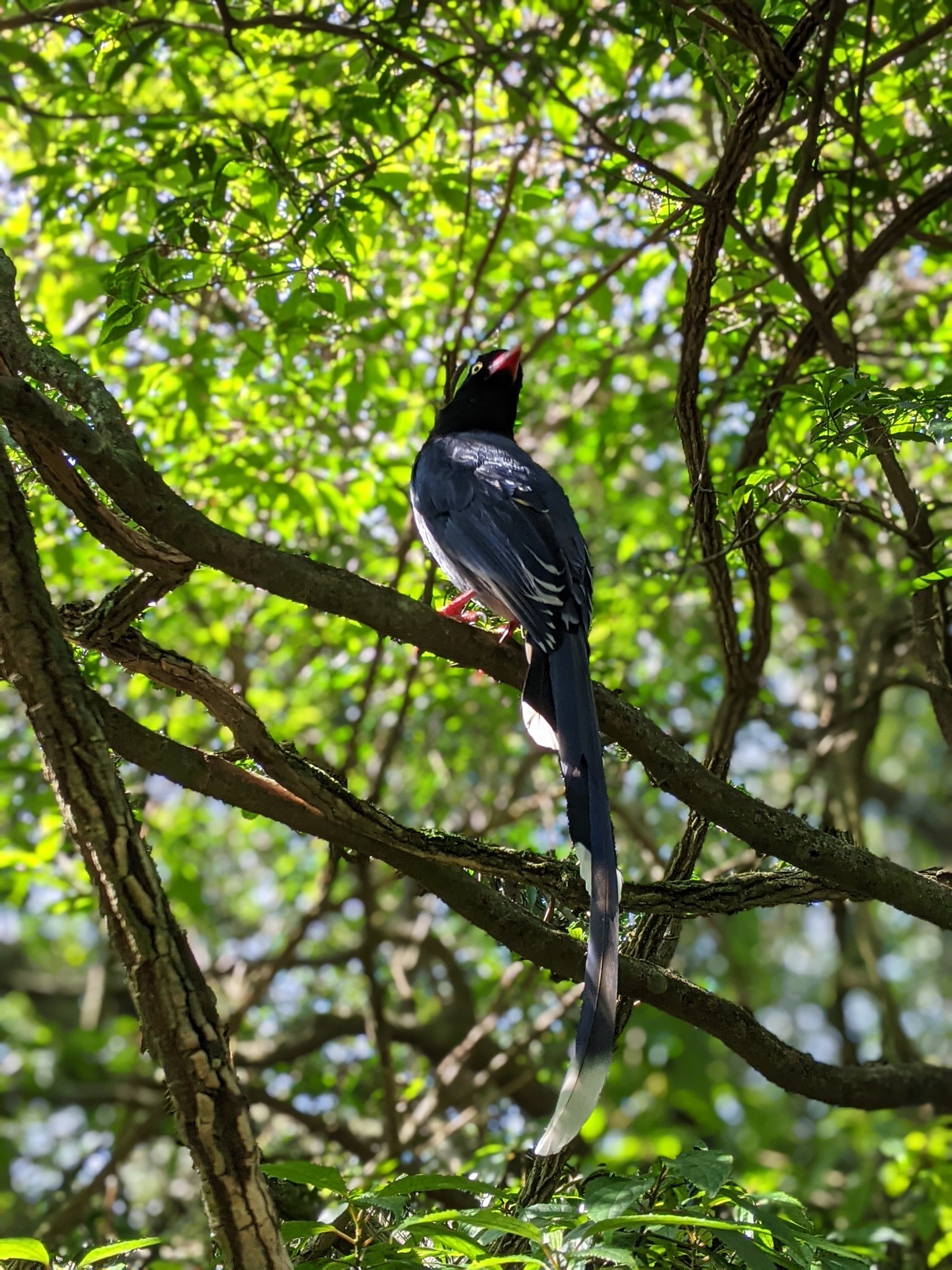
Length 63–68 cm (25–27 in) with a tail measuring 34–42 cm (13–17 in); wings are 20 cm (7.9 in) long. Weight 254–260 g (9.0–9.2 oz). Males and females have similar plumage. The head, neck, and breast are black. Eyes are yellow, while the bill and feet are red. The remainder of the plumage is predominantly blue with white-tipped wings and tail feathers. Underwing-coverts are dark grey, flight feathers are light grey, and uppertail-coverts have black tips. The central pair of tail feathers are the longest, while other tail feathers display black bands. Chicks are greyish with a short tail and greyish-blue eyes.
Identification
The combination of black head, neck, and breast with yellow eyes, red bill and feet, and predominantly blue plumage makes this species distinctive. The long tail with black bands and white tips, along with the white-tipped wings, are key field marks. The largely blue coloration separated from similar species by its endemic range to Taiwan.
Distribution & Habitat
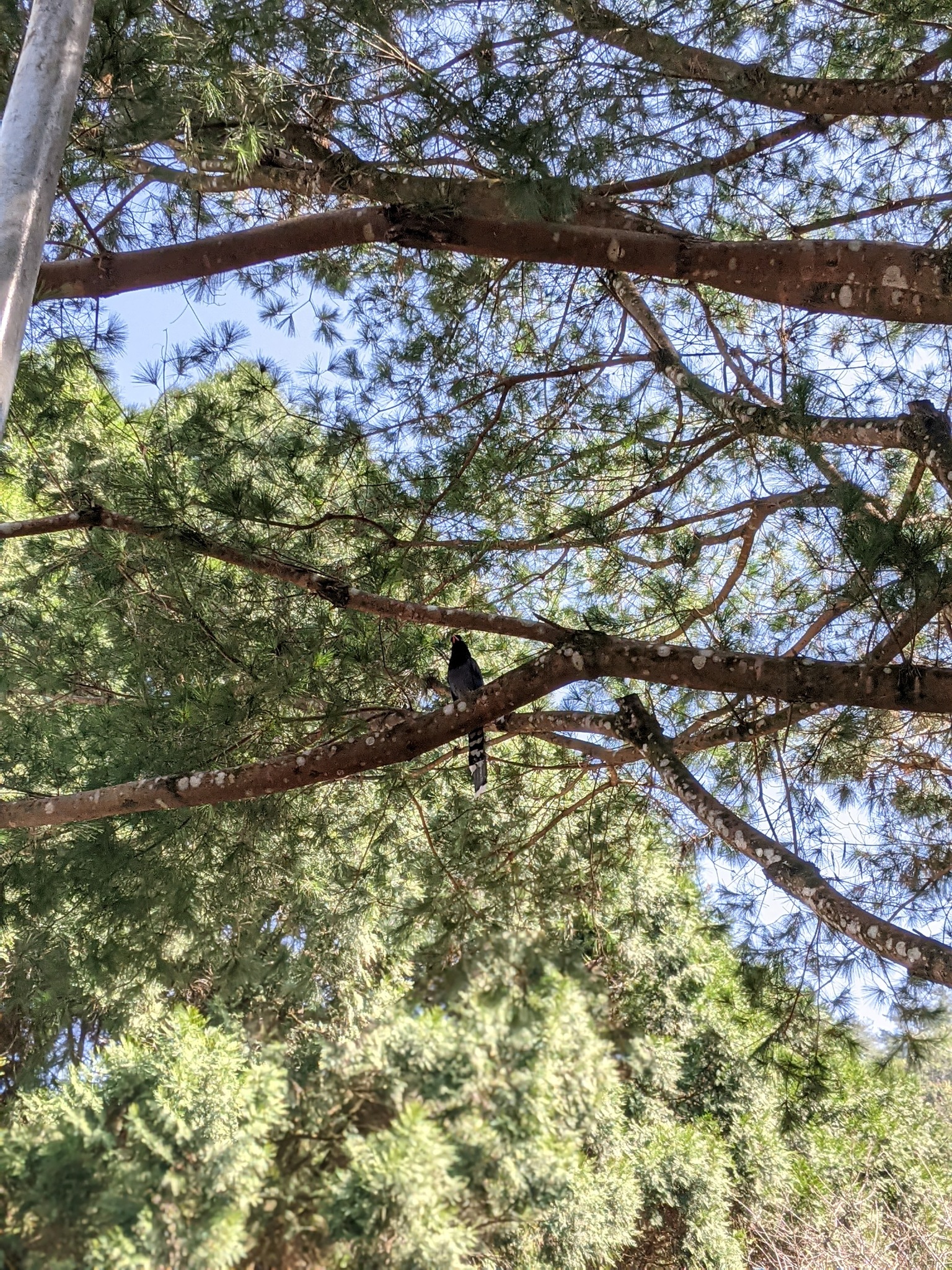
Endemic to Taiwan. Inhabits broadleaf forests at elevations of 300–1,200 m (980–3,940 ft). Also found near human residences in mountainous areas and newly cultivated lands. A small introduced population of red-billed blue magpies exists at Wuling Farm in Taichung, with hybrid offspring documented in 2007.
Behavior & Ecology
Omnivorous and opportunistic scavenger; diet includes snakes, rodents, small insects, carrion, eggs and chicks of other birds, plants, fruits, seeds, and human food waste. Stores food by covering it with leaves or placing it in vegetation for later retrieval. Breeding season runs from March to July. Monogamous pairs build bowl-shaped nests of twigs on high tree branches. Clutches contain 3-8 light green eggs with brown marks; incubation lasts 17-19 days. Chicks leave the nest after 21-24 days. Cooperative breeding occurs with juveniles from previous seasons assisting as helpers. Exhibits strong nest defense, attacking intruders. Vocalizations include high-pitched cackling chatter (kyak-kyak-kyak-kyak), ga-kang calls, kwee-eep, and gar-suee.
Conservation
IUCN Red List status: Least Concern. Population suspected to be stable. Protected under Taiwan's Wildlife Conservation Act. Threats include vehicle collisions, human capture, and predation by crested goshawk, white-bellied sea eagle, spot-bellied eagle owl, and Gurney's eagle. Conservation concern exists regarding hybridization with introduced red-billed blue magpies; the Endemic Species Research Institute has implemented population control through capture and nest relocation.
Culture
Considered a sacred bird by Taiwan's indigenous Tsou, Thao, and Bunun peoples, known as Teofsi'za (Tsou), Fitfit (Thao), and Haipis/Kaipis (Bunun). Features prominently in great flood myths where the bird sacrificed itself to carry the last fire tinder from Yu Shan summit to survivors on mountain peaks. Named after the species are China Airlines' Airbus A350 aircraft with a special paint scheme (unveiled 2017) and the AIDC XAT-5 Blue Magpie advanced jet trainer. In 2007, over one million votes from 53 countries selected it as the preferred national bird of Taiwan, defeating the Mikado pheasant, though the vote was not formally adopted.
Source: Wikipedia · CC BY-SA 3.0
Taxonomy
- Order
- Passeriformes
- Family
- Corvidae
- Genus
- Urocissa
- eBird Code
- formag1
Distribution
montane forest of Taiwan
Vocalizations
Data Sources
Species description from Wikipedia, licensed under CC BY-SA 3.0.
Bird images and sounds sourced from GBIF, contributed by citizen scientists worldwide under Creative Commons licenses.
Taxonomy data from AviList 2025.