


Eastern Barn Owl
Tyto javanica
仓鸮
Introduction
The eastern barn owl (Tyto javanica) is a medium-sized owl placed in the genus Tyto alongside 16 other owl species. Native to southeastern Asia, New Zealand, and Australasia, its range encompasses the Indian subcontinent, Southeast Asia, Australia, and many Pacific Islands. This owl is nocturnal across most of its range but also hunts by day on various Pacific Islands. Its most distinctive trait is exceptional hearing used to locate small mammal prey in complete darkness; ears positioned asymmetrically allow precise sound localization. It is a cavity nester using tree hollows, old buildings, or cliff fissures, and typically mates for life. The eastern barn owl was formally described in 1788 by Johann Friedrich Gmelin.
Description
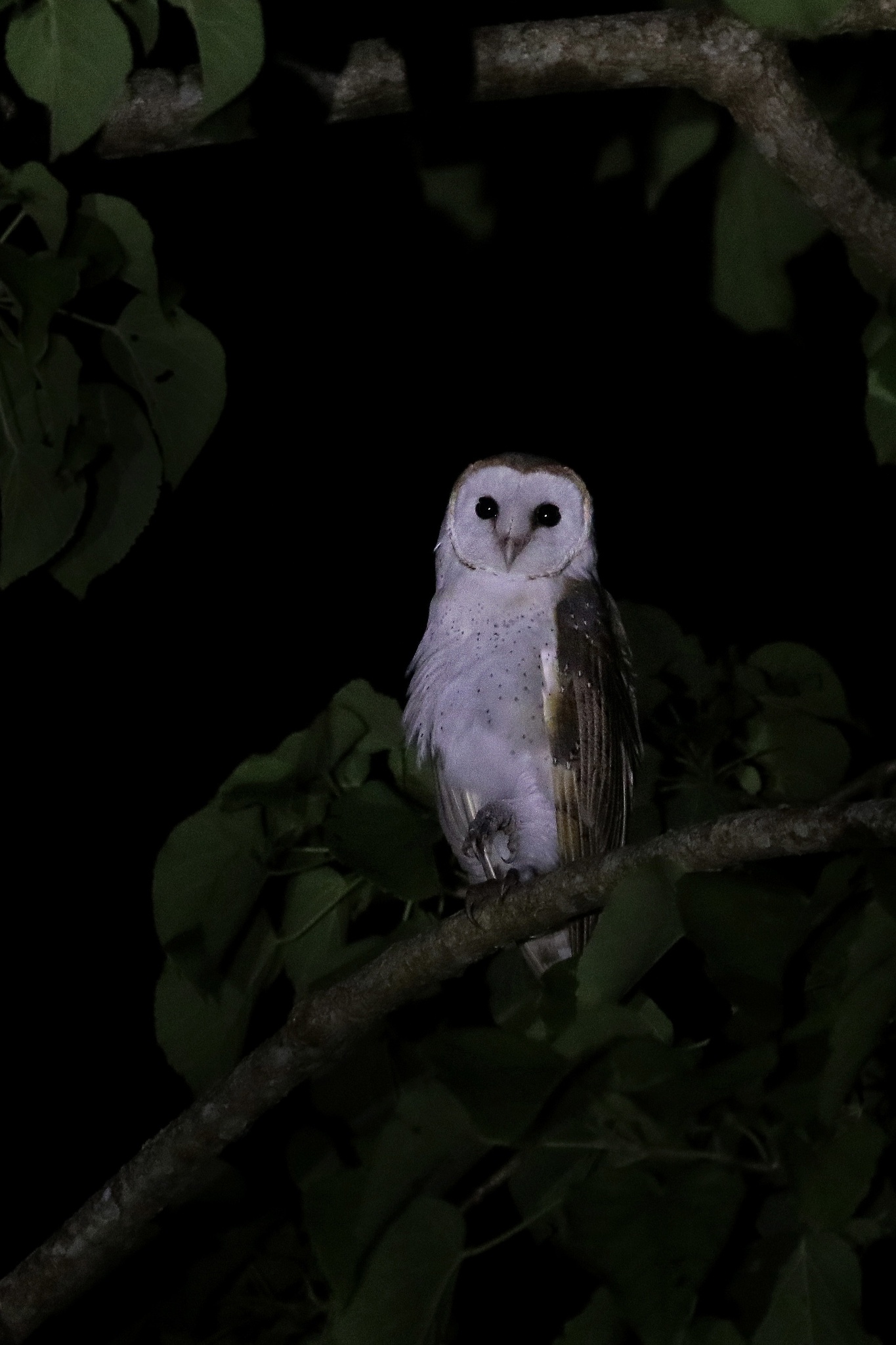
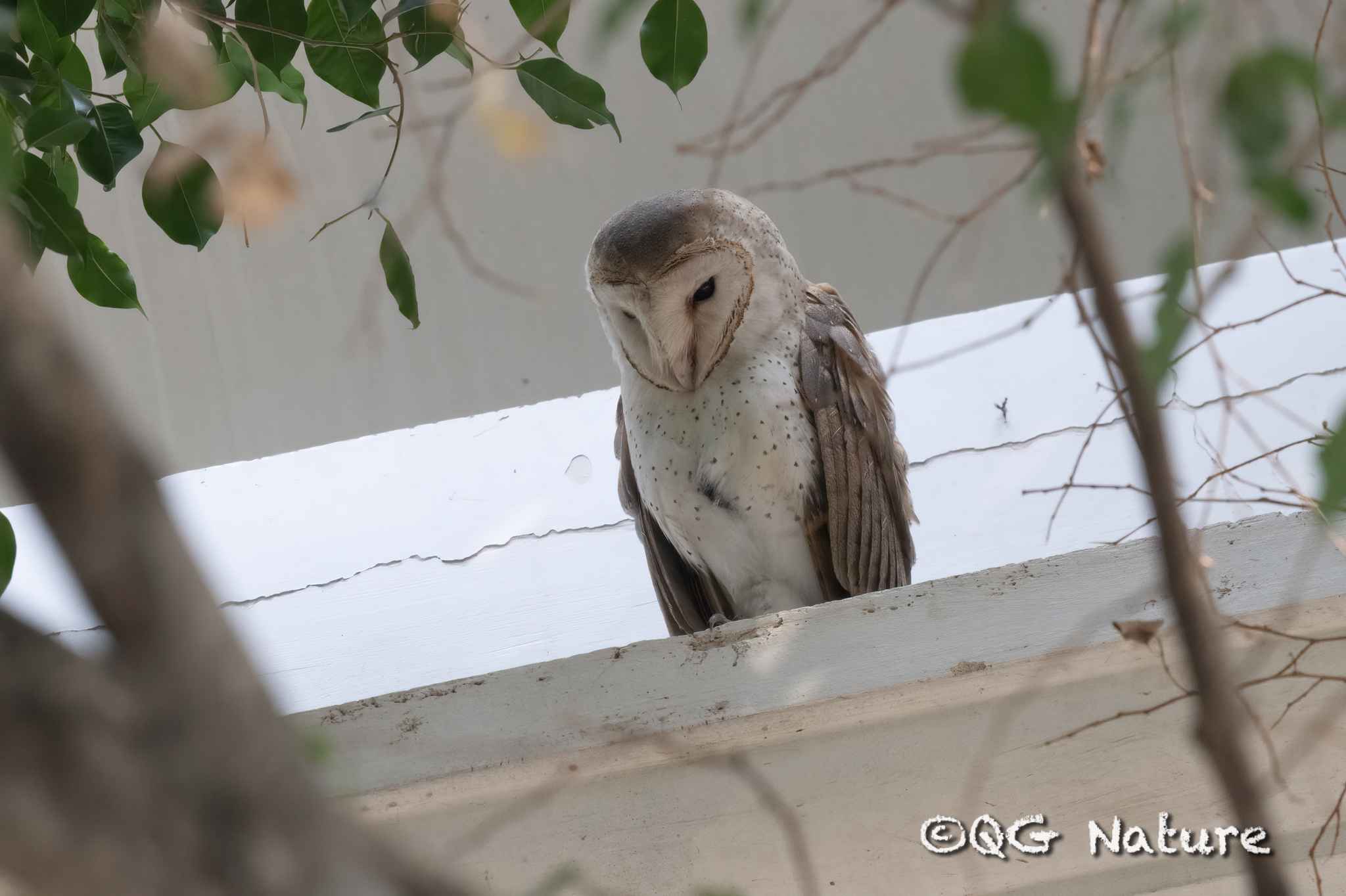
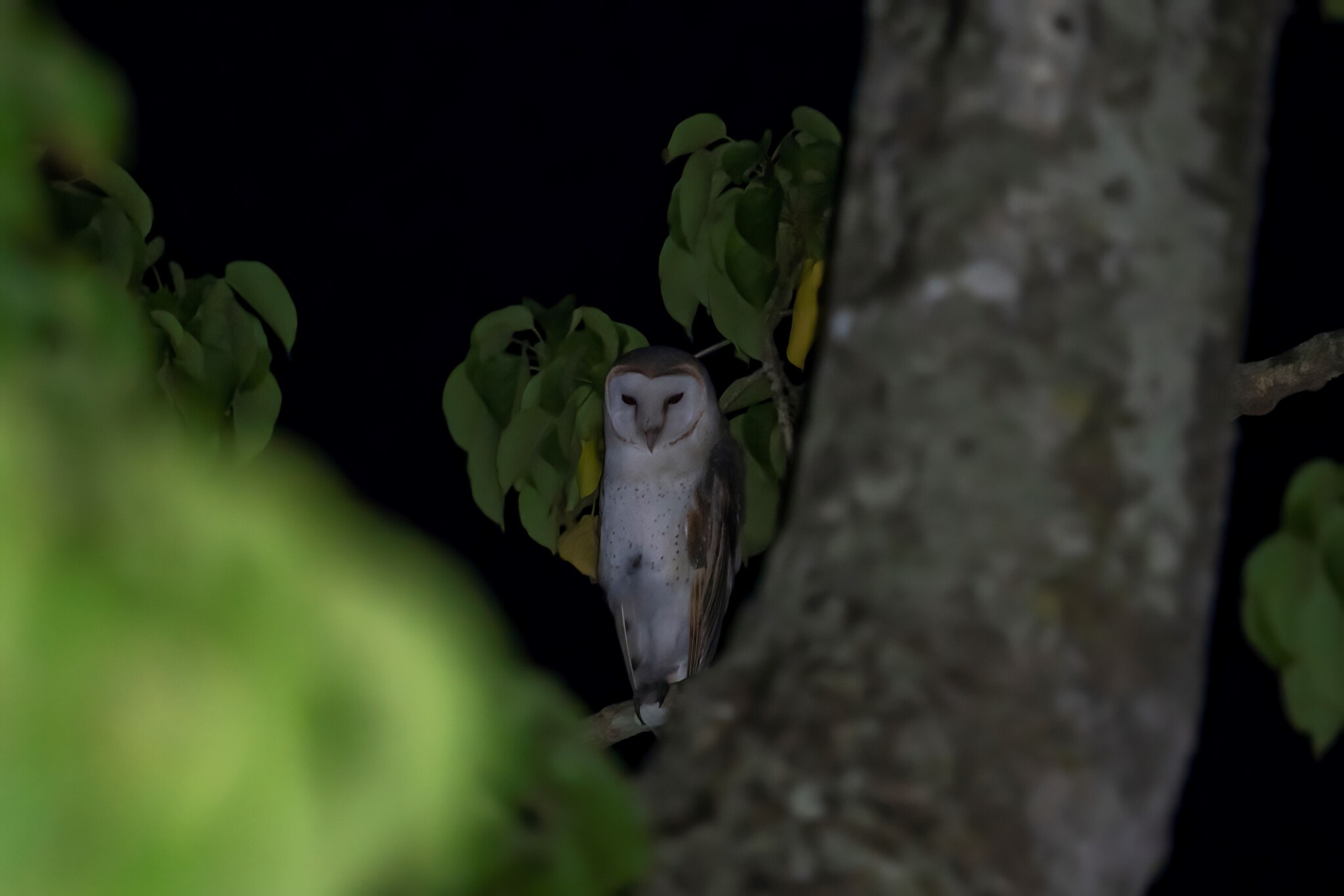
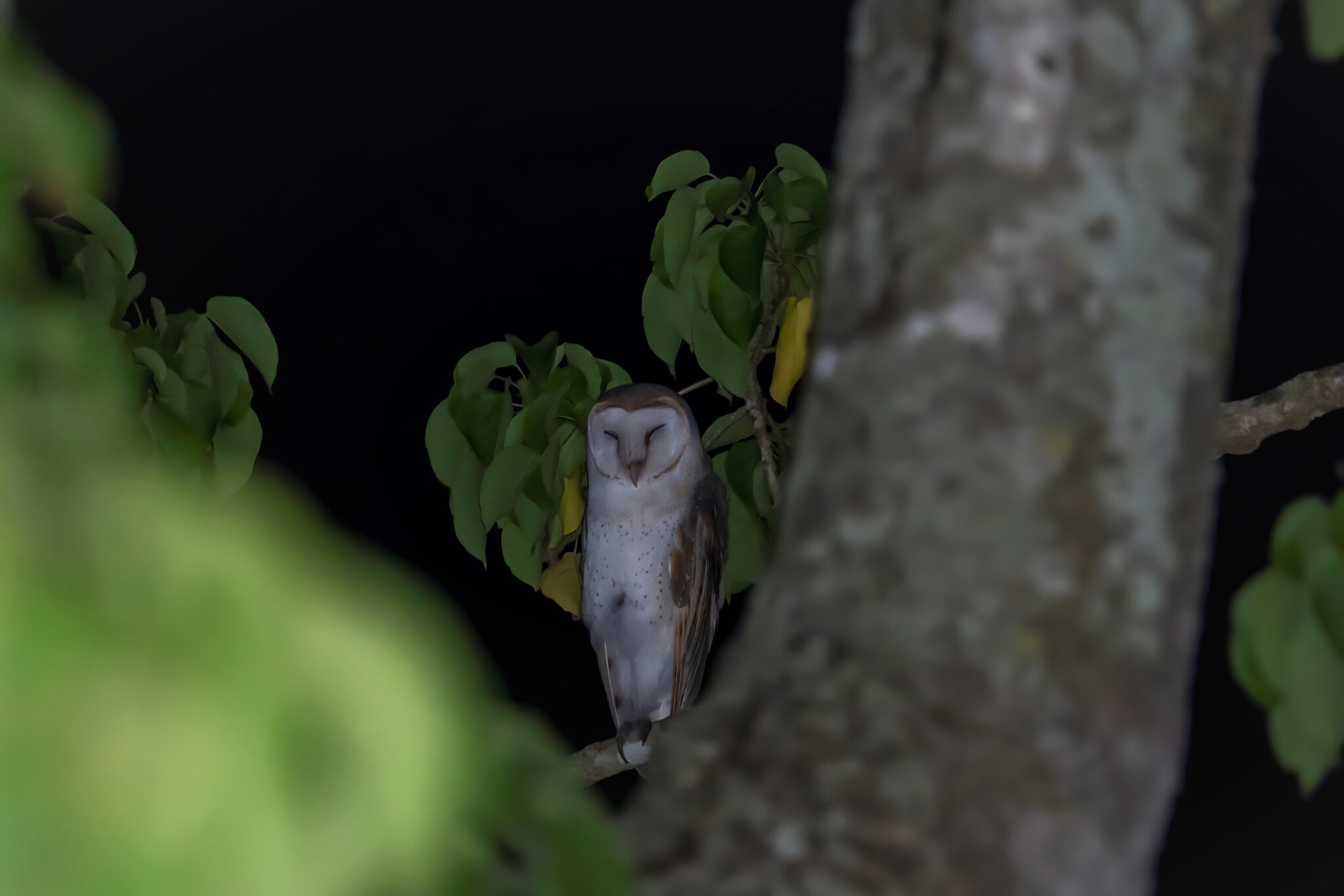
The eastern barn owl is a medium-sized owl with long, broad wings and long, slender legs and toes. It has a characteristic heart-shaped facial disc and white to pale buff underparts. The back and upper wings are greyish-brown with black and white spots and bars. The species exhibits the silent flight typical of barn owls, achieved through tiny serrations on leading wing edges and hairlike fringes on trailing edges that reduce turbulence. The plumage has a soft feel due to hairlike extensions to feather barbules. Eggs are chalky white, somewhat elliptical, and similar in size to bantam eggs.
Identification
Field identification requires distinguishing this owl from other Tyto species within its range. The pale underparts and heart-shaped facial disc distinguish it from darker masked owl species. Compared to the western barn owl (Tyto alba), the eastern form shows subtle differences in plumage coloration and markings. Its silent, wavering flight when quartering the ground is characteristic. The combination of pale coloration, medium size, and long wings helps distinguish it from other owls such as grass owls and bay owls found in the same regions.
Distribution & Habitat
The eastern barn owl occurs across the Indian subcontinent, Southeast Asia, Australia, and numerous Pacific Islands. It inhabits open country including farmland and grassland with some interspersed woodland, typically below 2,000 meters altitude but occasionally up to 3,000 meters in the tropics. Most populations are sedentary, with individuals remaining in established territories. However, Australian birds migrate northward to coastal areas in the dry season and southward in the wet, with nomadic movements following rodent population explosions. Vagrants occasionally reach Norfolk Island, Lord Howe Island, and New Zealand, demonstrating oceanic crossing capability. First breeding recorded in New Zealand in 2008.
Behavior & Ecology
This owl is nocturnal or crepuscular, relying on acute hearing to hunt in darkness. It specializes in hunting terrestrial small mammals, particularly mice and rats, which comprise most of its diet across tropical, subtropical, and Australian regions. Prey is detected by sound and captured with deadly accuracy; the asymmetrically positioned ears allow precise localization of sounds in both azimuth and elevation. Hunting involves slow, quartering flight or watching from elevated perches. The facial disc is essential for sound collection during hunting. Breeding occurs year-round in tropics with seasonality tied to dry periods where prey availability increases. Clutch size averages five eggs (range two to nine), laid on alternate days. The female incubates for about thirty days while the male provides all food. Chicks fledge by nine weeks but remain dependent until approximately thirteen weeks. Vocalizations include screeches, with males having higher-pitched tremulous calls and females lower, harsher calls. Chicks make chittering sounds changing to snoring food demands.
Conservation
While specific IUCN assessment details for the eastern barn owl are not provided, barn owl populations face threats from habitat loss, pesticide use, and reduced nesting site availability. In Malaysia, deforestation for oil palm plantations eliminated tree cavities, reducing populations until nest box programs proved successful with near 100% occupancy. Nest box provision under building eaves and in agricultural areas has successfully boosted local populations in rice-growing and oil palm regions, supporting some of the world's densest barn owl populations. Pesticide use historically caused significant mortality and remains a concern in some areas. Collision with road vehicles is another documented mortality factor.
Culture
The eastern barn owl holds economic rather than cultural significance as a natural pest controller. Its role in consuming large quantities of rodents regarded as agricultural pests makes it one of the most economically valuable wildlife animals for farming. No specific folklore or cultural traditions associated with this subspecies are documented.
Source: Wikipedia · CC BY-SA 3.0
Taxonomy
- Order
- Strigiformes
- Family
- Tytonidae
- Genus
- Tyto
Vocalizations
Subspecies (7)
-
Tyto javanica crassirostris
Tanga Island, off New Ireland (northeastern Bismarck Archipelago)
-
Tyto javanica delicatula
eastern Lesser Sundas eastward to Australia (except Tasmania), Solomon Islands, southern Grande Terre and Loyalty Islands (New Caledonia), Fiji, Tonga, and Samoa
-
Tyto javanica interposita
Reef, Nendö, and Vanikoro (Temotu, southeastern Solomon Islands), and Banks Islands to Efate (northern to central Vanuatu)
-
Tyto javanica javanica
Malay Peninsula to Greater Sundas
-
Tyto javanica meeki
eastern New Guinea, including Manam and Karkar islands
-
Tyto javanica stertens
Indian subcontinent to northern Sri Lanka, southwestern China, and southern Thailand
-
Tyto javanica sumbaensis
Sumba (Lesser Sundas)
Data Sources
Species description from Wikipedia, licensed under CC BY-SA 3.0.
Bird images and sounds sourced from GBIF, contributed by citizen scientists worldwide under Creative Commons licenses.
Taxonomy data from AviList 2025.