Yellow-legged Buttonquail
Turnix tanki
黄脚三趾鹑
Introduction
This small, ground-dwelling bird belongs to a family that superficially resembles true quails but is taxonomically unrelated. The species exhibits reversed sexual dimorphism, with females larger and more colorful than males, and females compete for multiple male mates during each breeding season. It occurs across the Indian subcontinent, East Asia, and Southeast Asia, inhabiting grasslands, scrublands, and cultivated areas. It is typically encountered singly or in pairs. When flushed, it makes short flights before dropping back into cover. The species is considered relatively common throughout its range and is not currently threatened, though local populations may face pressure from agricultural intensification and habitat degradation.
Description
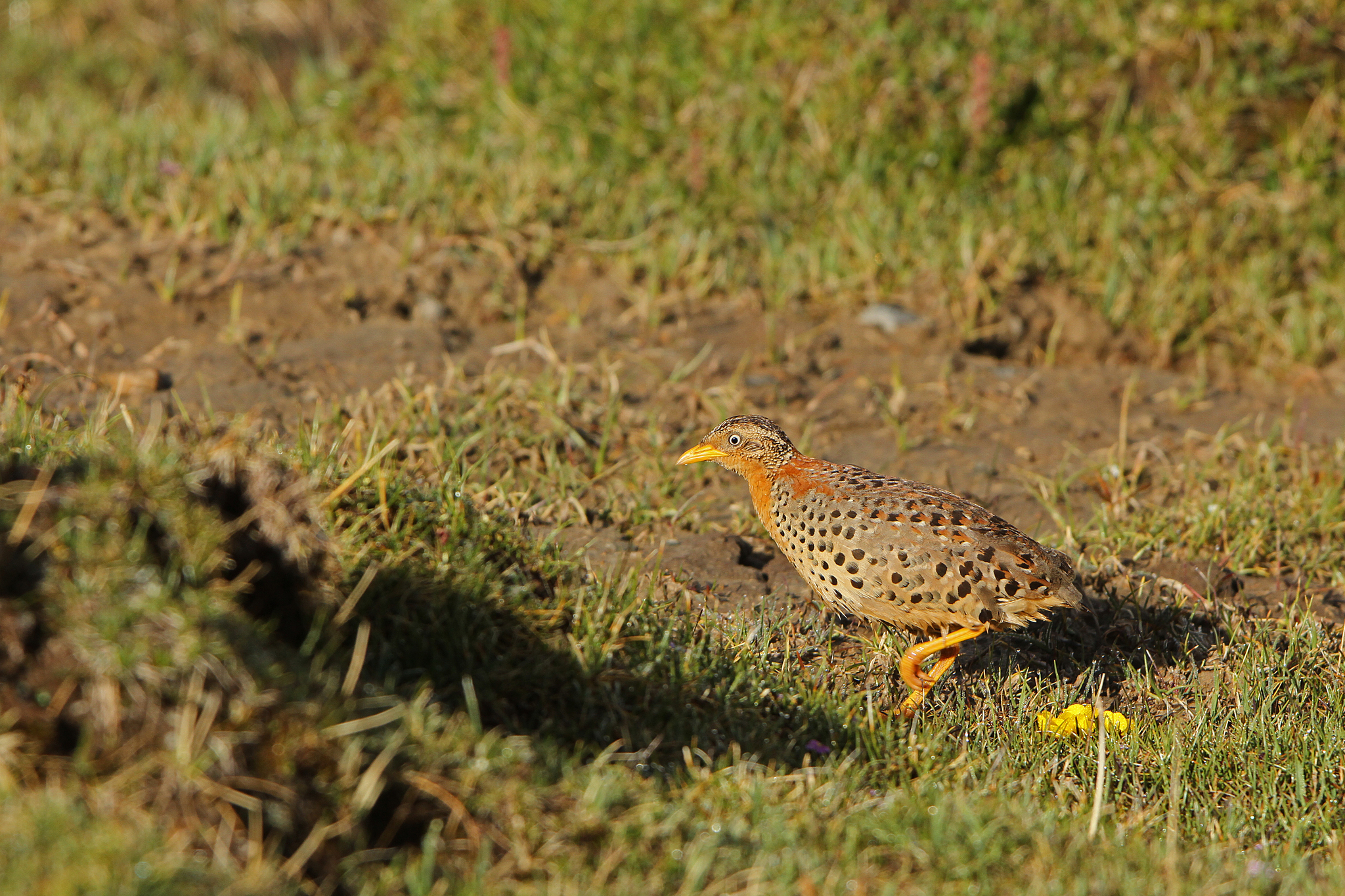
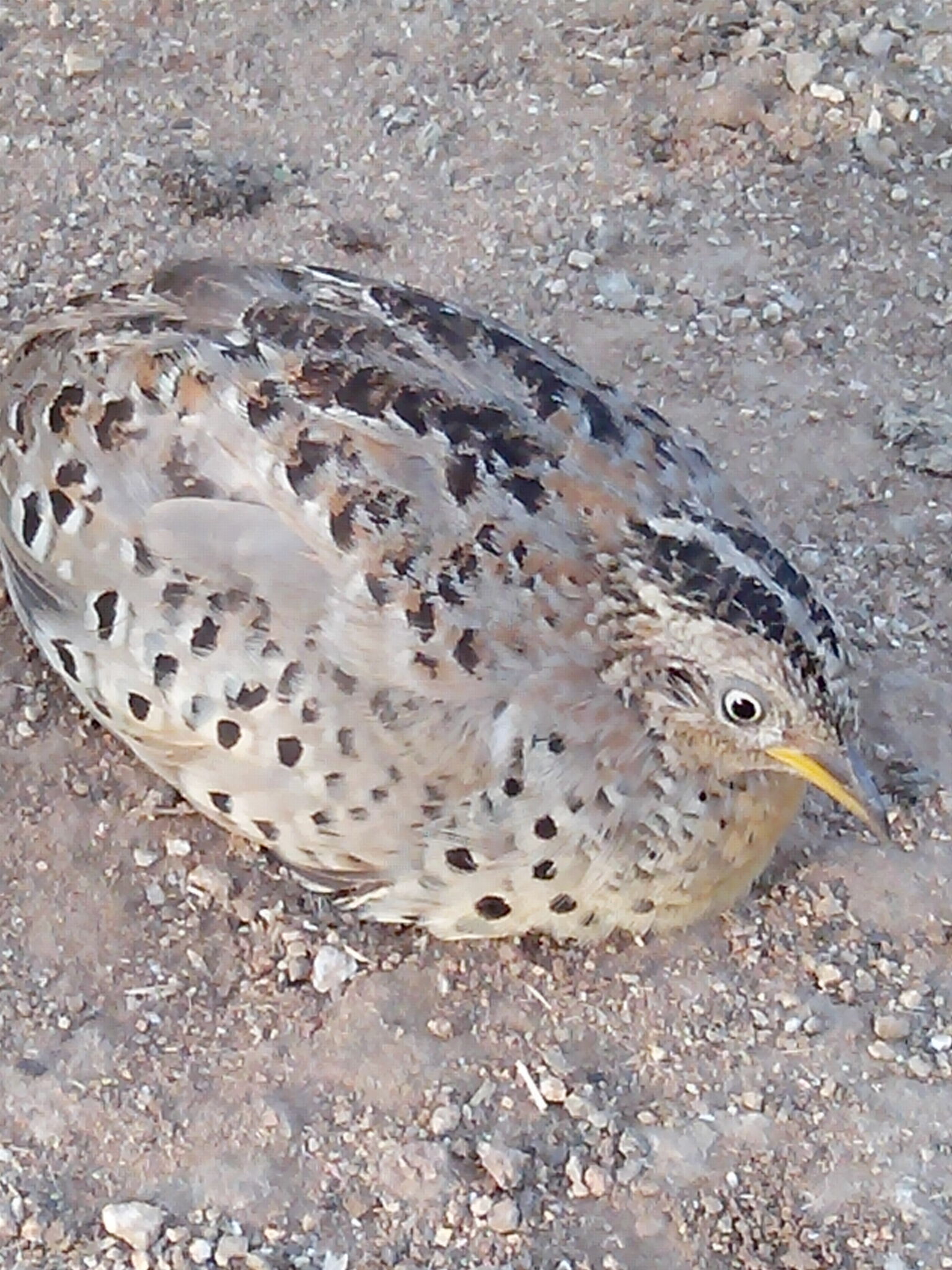
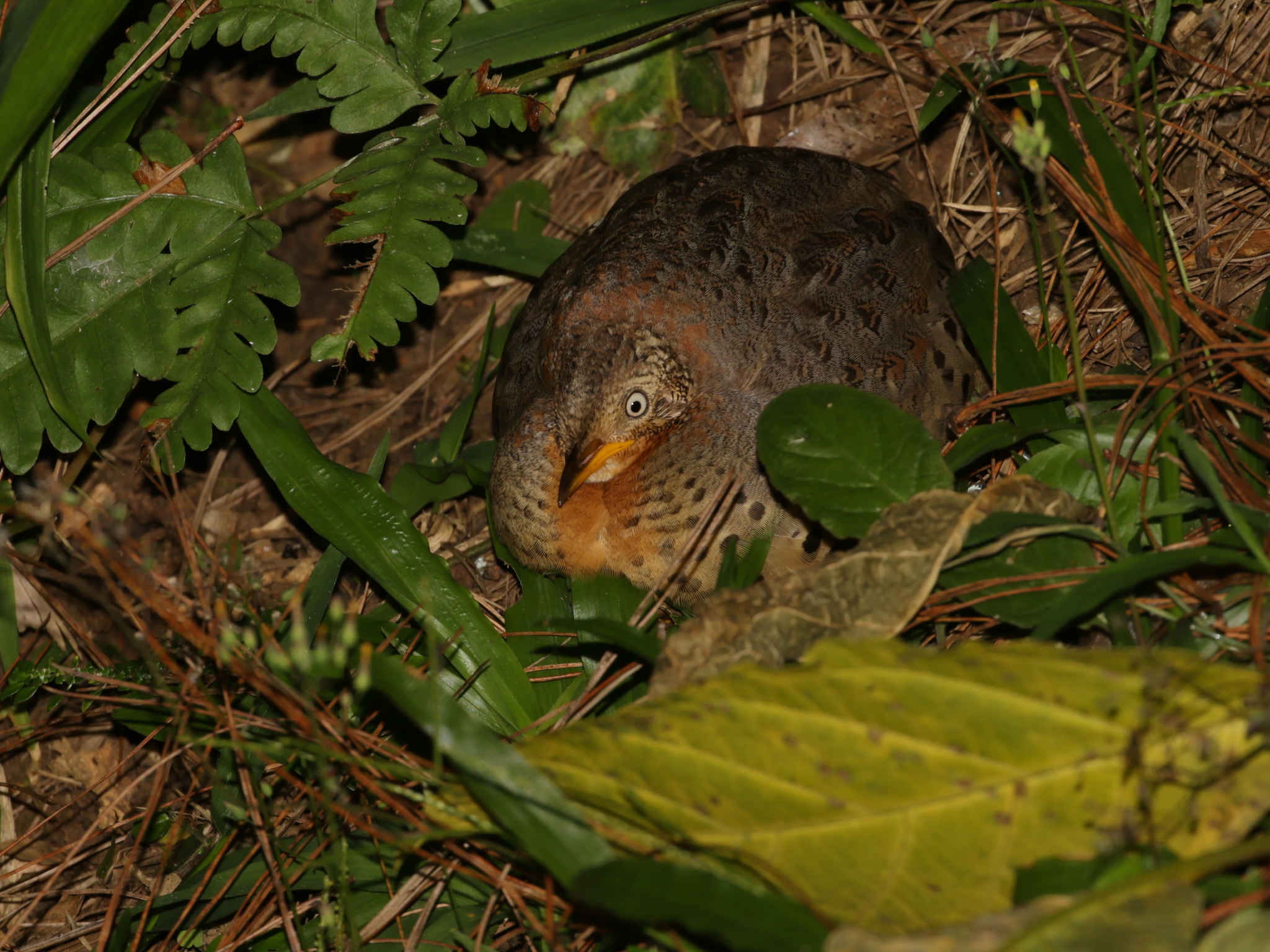
This is a compact, small quail-like bird measuring 15-18 cm in length with a notably short tail and rounded wingtips. The species exhibits pronounced sexual dimorphism: females are larger and display richer overall coloration than the males. Males have a black crown edged in buff, with buff-colored head feathers tipped in black. Their throat is pale buff, transitioning to reddish-buff on the breast and white beneath the tail. The upperparts are greyish-brown with intricate reddish and dark brown vermiculations and spotting, while the underparts show scattered round black spots on the breast sides. The beak is dull yellow and the legs and feet are a distinctive deep yellow. Females are distinguished by a broad reddish-brown collar at the back of the neck, brighter yellow bare parts, and overall richer plumage. Non-breeding females lose the rufous collar, which becomes mixed with grey.
Identification
Field identification centers on the distinctive deep yellow legs and feet, which separate this species from other buttonquails in its range. The male's black crown with buff margins and the female's broad reddish-brown nape collar are key distinguishing features. The round black spots on the breast sides help distinguish it from similar buttonquail species. In flight, the combination of rounded wings and short tail is characteristic. The species is best identified by its preference for grassland and scrub habitats and its distinctive running gait when disturbed. The call, typically given by females during the breeding season, is a low, resonant note quite unlike the calls of true quails.
Distribution & Habitat
The species has an extensive range across the Indian subcontinent, East Asia, and Southeast Asia. The nominate subspecies inhabits Pakistan, India, Nepal, and the Andaman and Nicobar Islands, while the subspecies blanfordii occurs in Myanmar, Indochina, and eastern China. Breeding populations extend to the Korean peninsula and the southernmost regions of southeastern Russia. While primarily resident throughout most of its range, the species undertakes seasonal movements, migrating to drier areas of India during the wet season and similarly to southeastern Russia. These migrations occur at night. The species occupies grasslands, scrublands, cultivated fields, and other open country with sufficient ground cover.
Behavior & Ecology
This strictly terrestrial bird moves through dense vegetation on foot, preferring to run from perceived threats rather than taking flight. It is typically encountered alone or in pairs. The diet encompasses green plant material, seeds, and various insects including beetles, ants, and grasshoppers, which the bird forages by gleaning from the ground and low vegetation. Breeding occurs between March and November, predominantly during the wet season. The species exhibits classic polyandry, with females competing for multiple mates and leaving incubation duties entirely to males. During courtship, females present food to males. The male constructs a shallow ground nest lined with grasses, often roofed with bent-down vegetation. After laying a clutch of four blotched eggs, the female departs to find another mate while the male incubates alone for 12-16 days and raises the chicks independently.
Conservation
The species holds a conservation status of Least Concern according to the International Union for Conservation of Nature, reflecting its very wide range and apparently stable total population. No specific threats to the species have been identified, and it is described as relatively common throughout its extensive geographic range. However, like many grassland specialists, it may face localized pressure from habitat loss due to agricultural expansion and intensification, though current populations remain robust enough that no immediate conservation concern exists at the species level.
Culture
The article contains no information regarding cultural significance, folklore, or traditional uses of this species.
Source: Wikipedia · CC BY-SA 3.0
Taxonomy
- Order
- Charadriiformes
- Family
- Turnicidae
- Genus
- Turnix
- eBird Code
- yelbut1
Subspecies (2)
-
Turnix tanki blanfordii
southeastern Siberia, Korean Peninsula, and northeastern China to Myanmar and Indochina
-
Turnix tanki tanki
central Pakistan, sub-Himalayan India, and Andaman and Nicobar islands
Data Sources
Species description from Wikipedia, licensed under CC BY-SA 3.0.
Bird images and sounds sourced from GBIF, contributed by citizen scientists worldwide under Creative Commons licenses.
Taxonomy data from AviList 2025.