Common Buttonquail
Turnix sylvaticus
林三趾鹑
Introduction
A buttonquail (family Turnicidae), a small family of birds that resemble but are not closely related to true quails. Ranges from southern Spain and Africa through India and tropical Asia to Indonesia. Inhabits warm grasslands, scrub jungle, cornfields, and grassy plains, avoiding thick forest and hilly country. Notoriously difficult to see due to skulking behavior; flushes with difficulty and flies low over the ground. Female initiates courtship with deep hoo-hoo-hoom calls while male replies kek-kek-kek. Widespread throughout large range and evaluated as Least Concern globally, though the nominate subspecies (Mediterranean population) is critically endangered and extinct in Europe since 2021—the first bird species extinct in Europe since the great auk in 1852.
Description
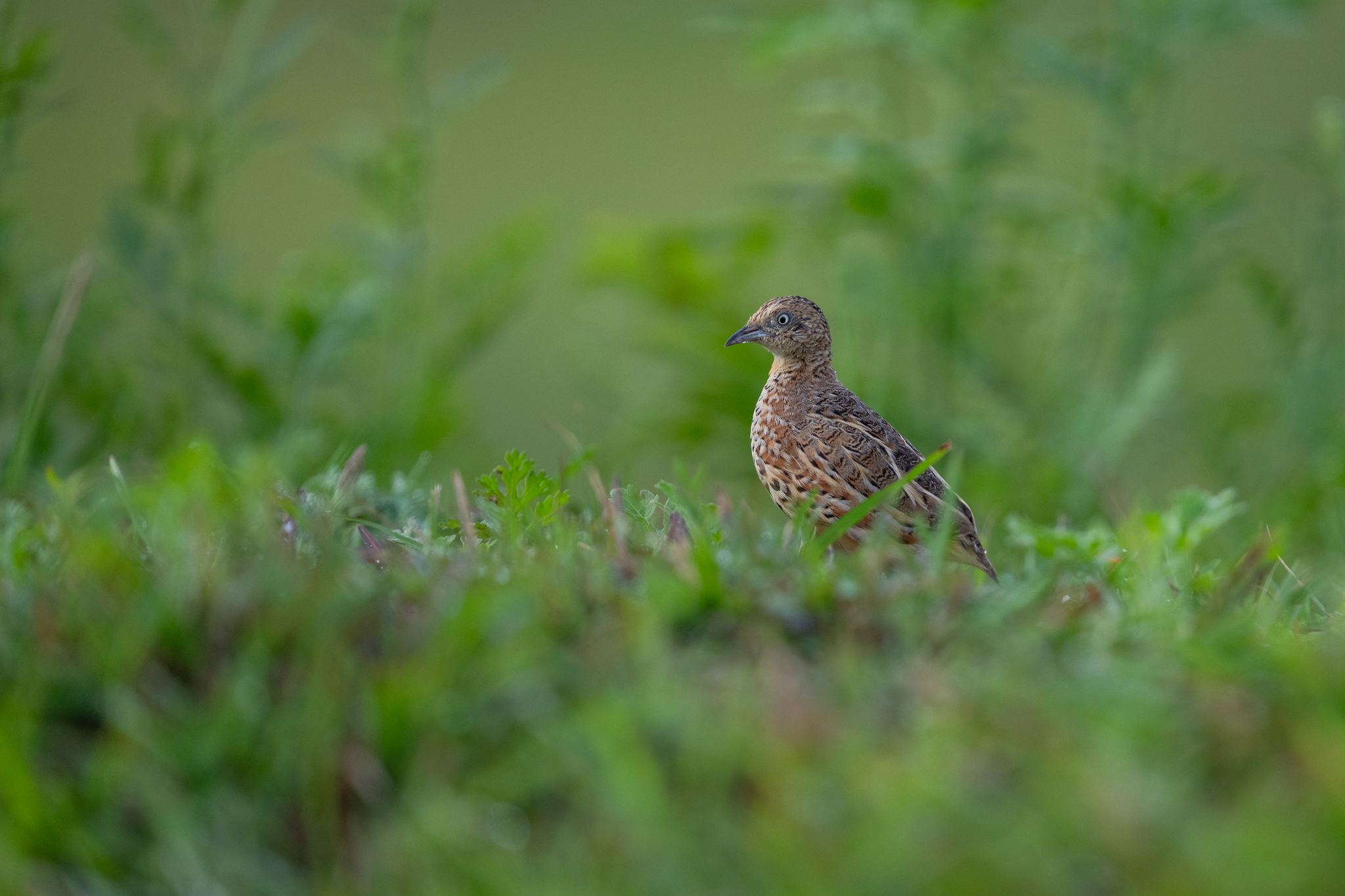
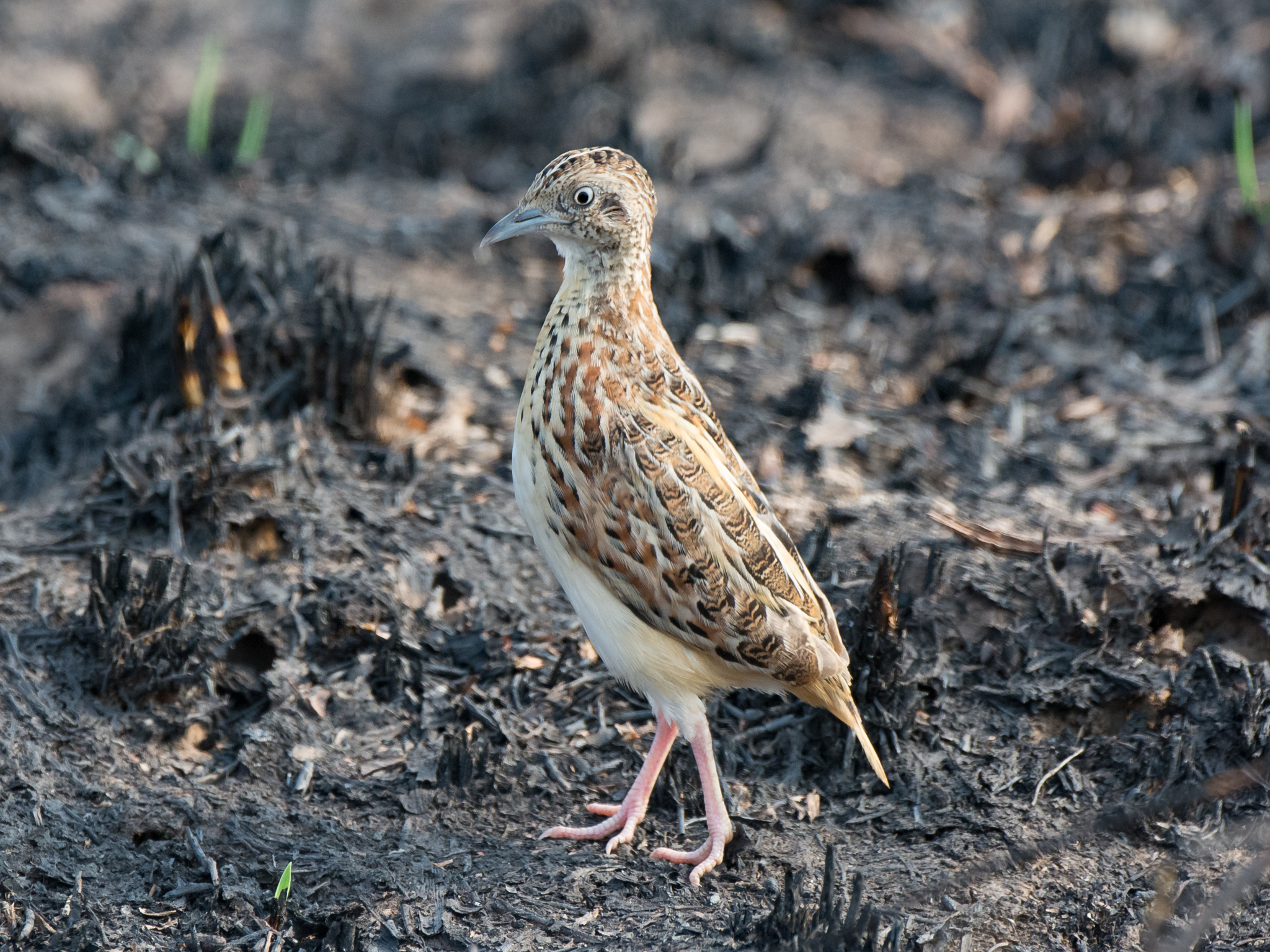
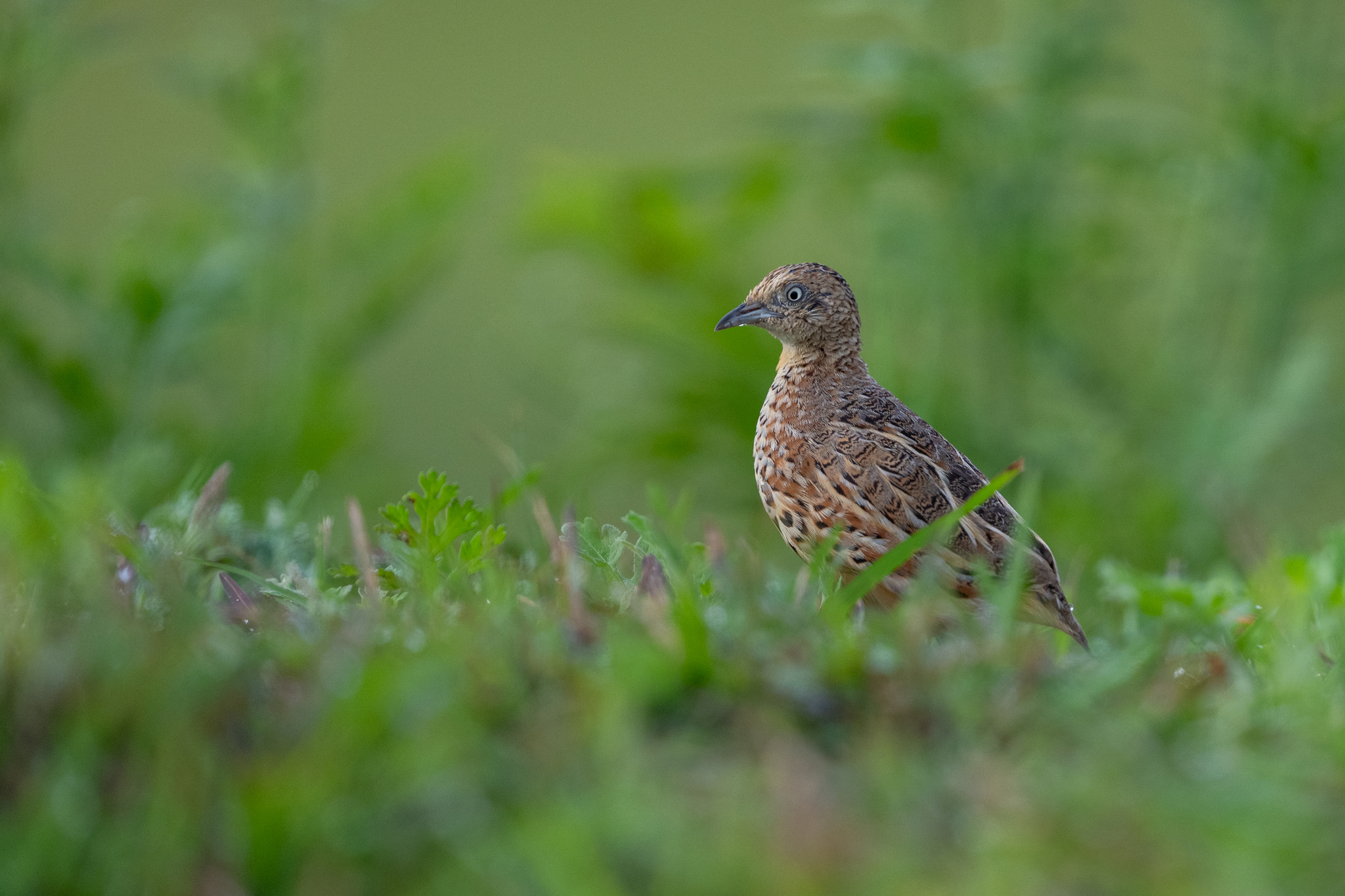
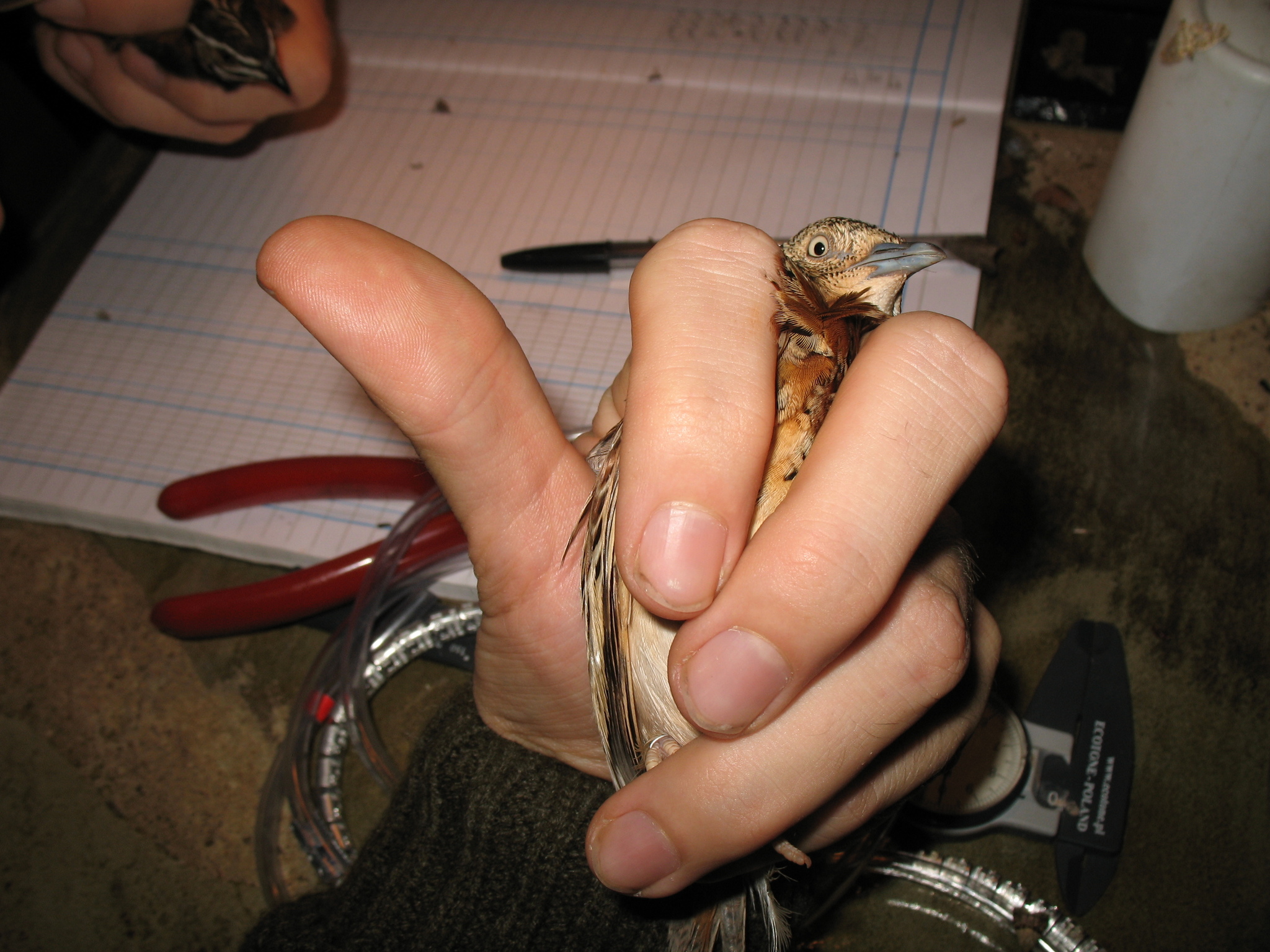
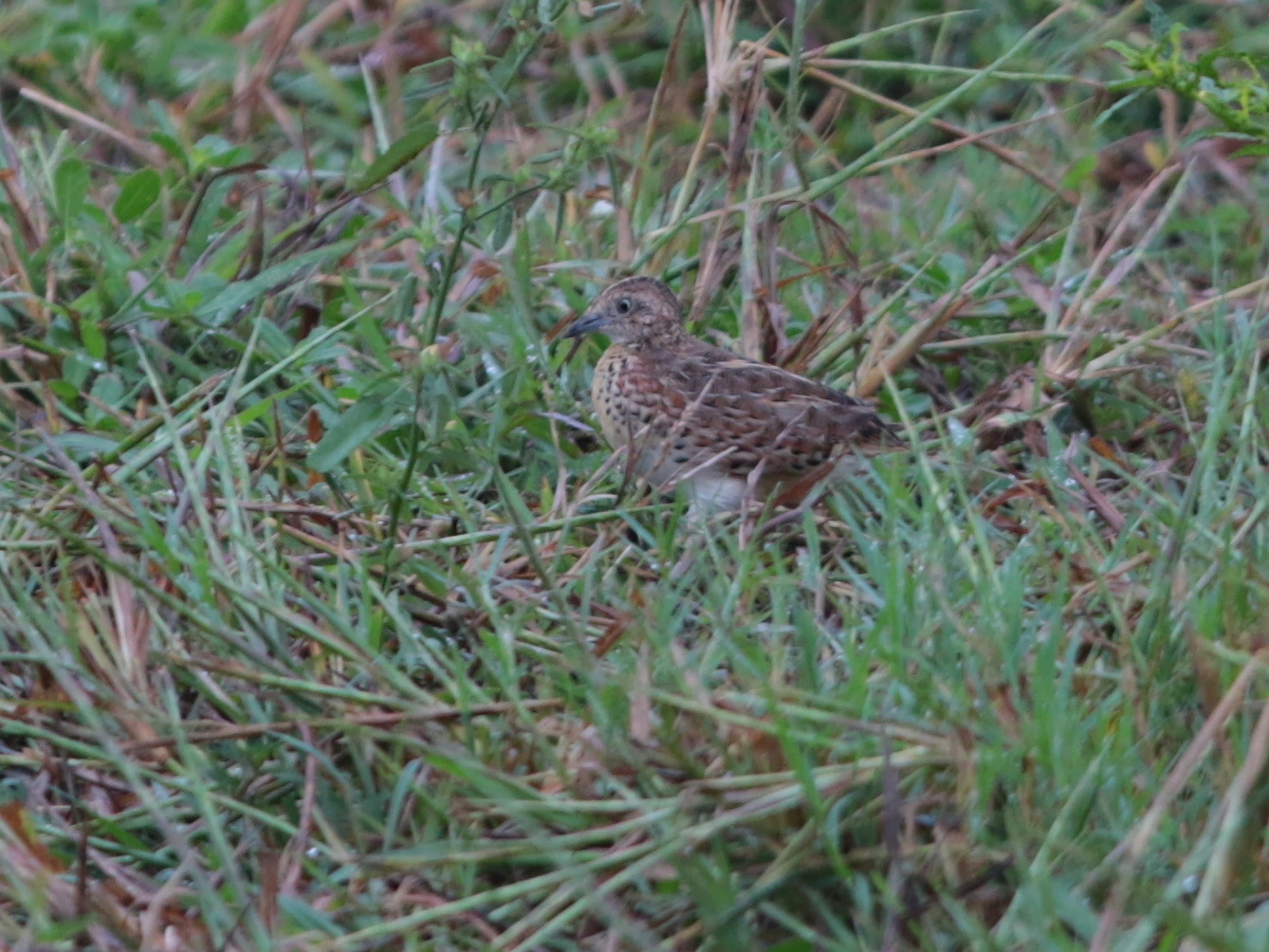
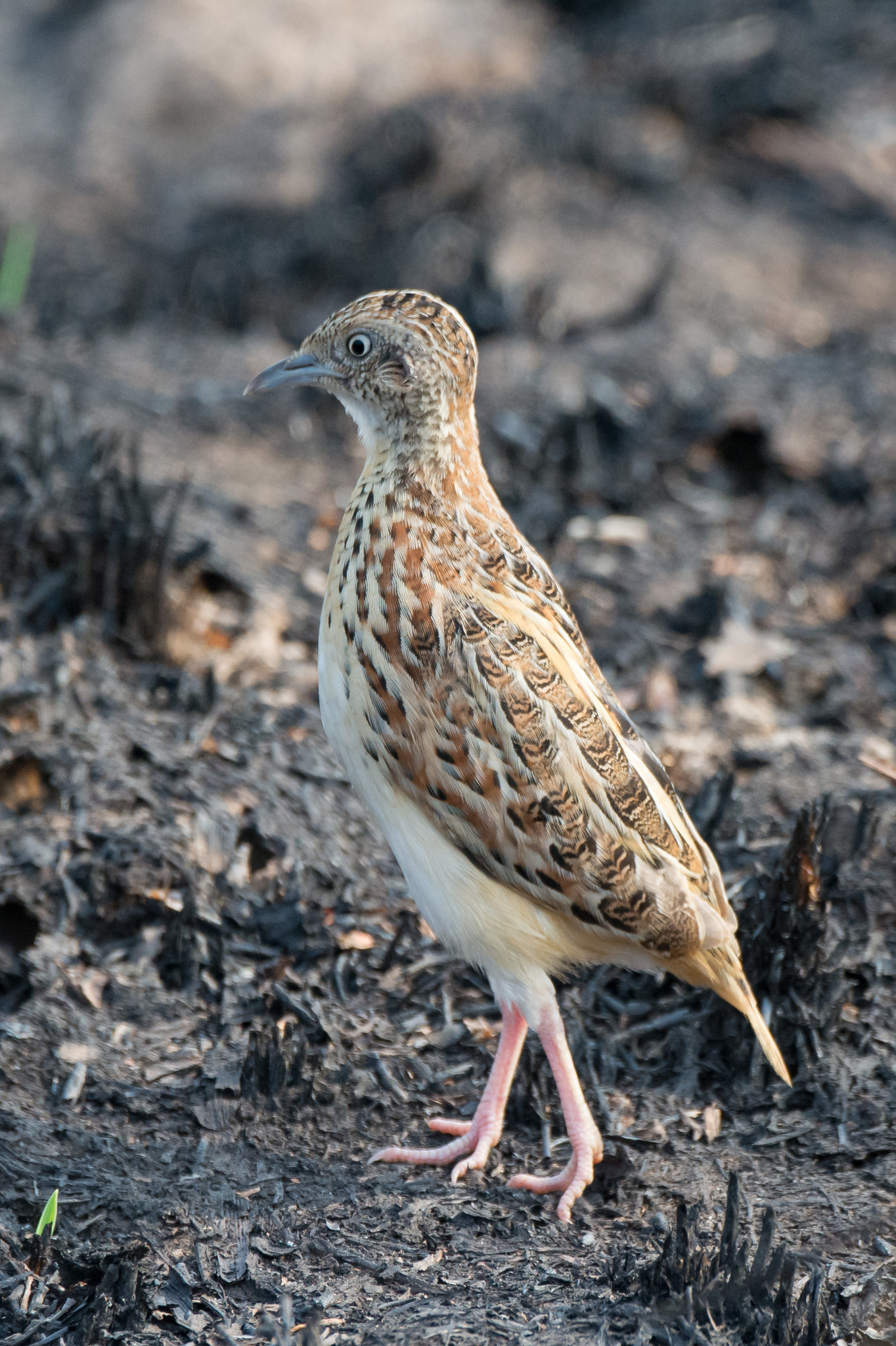
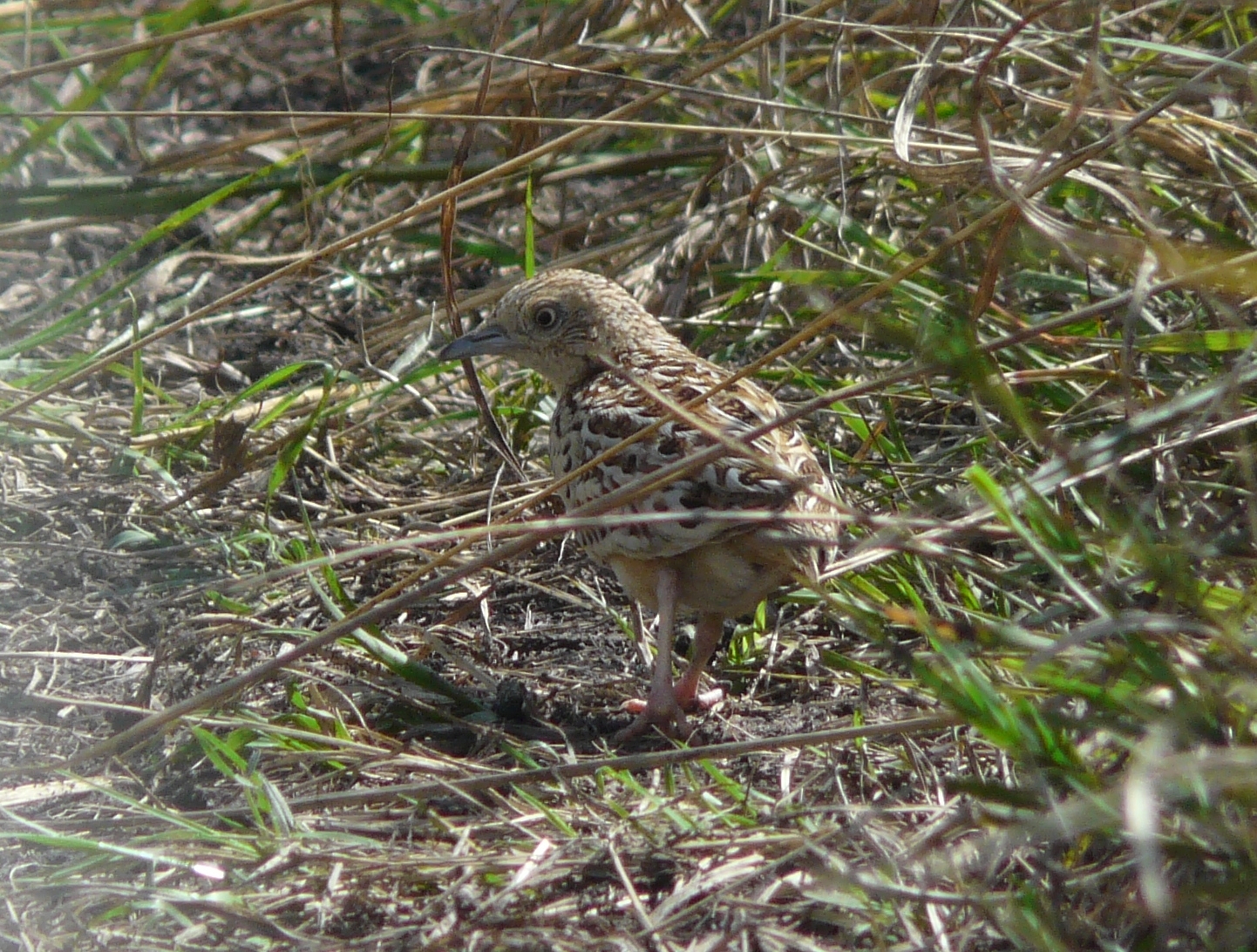
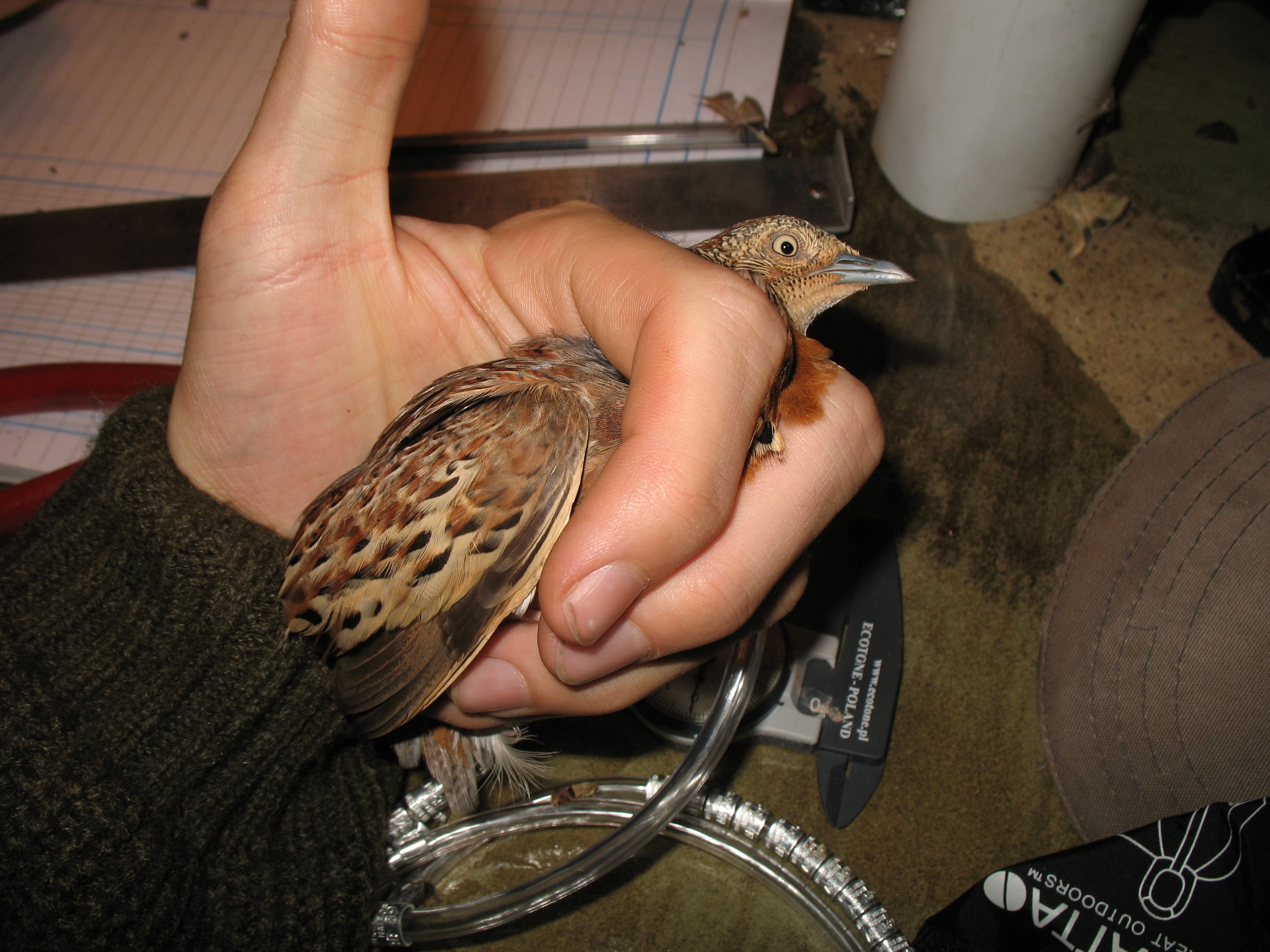
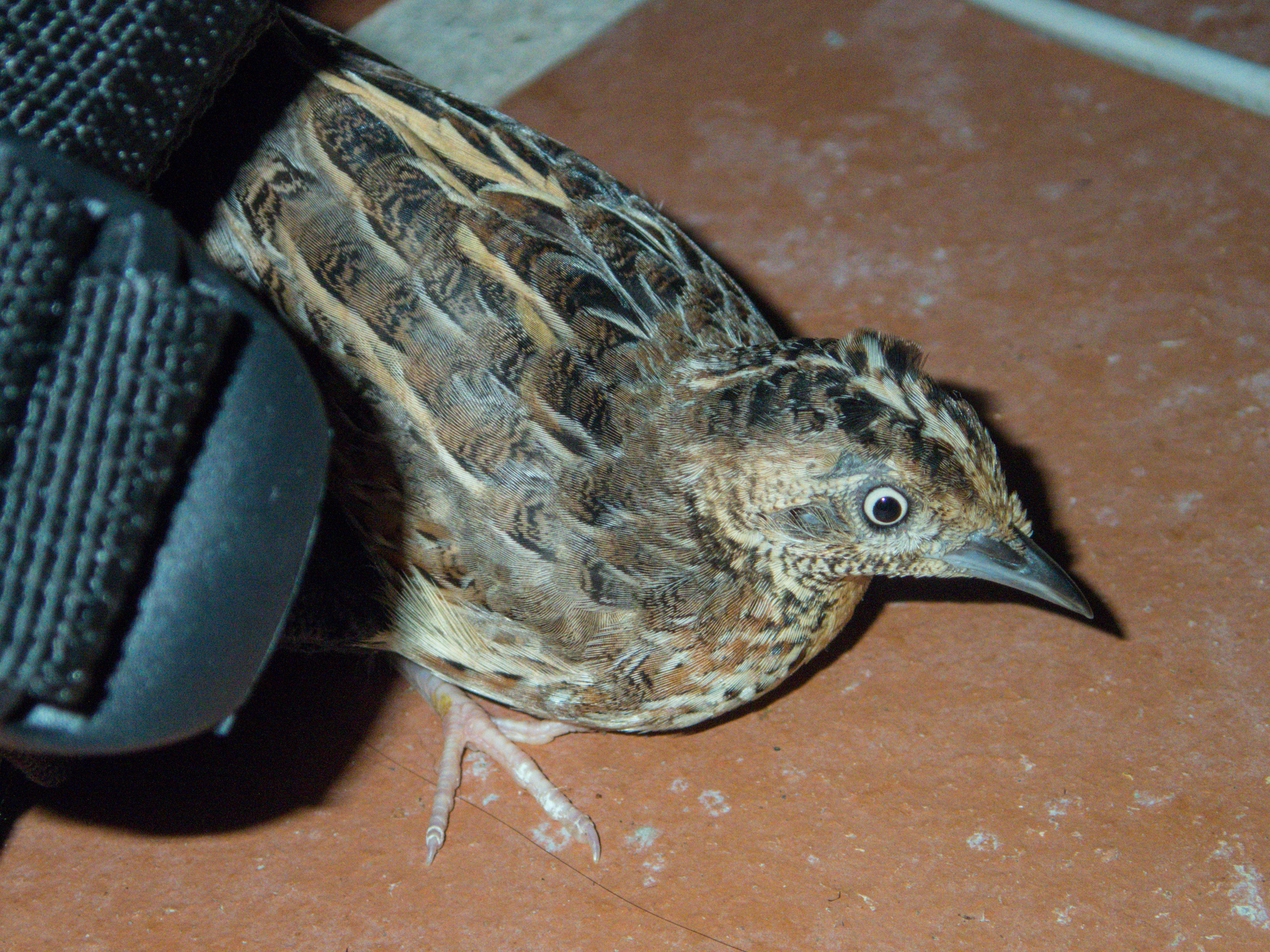
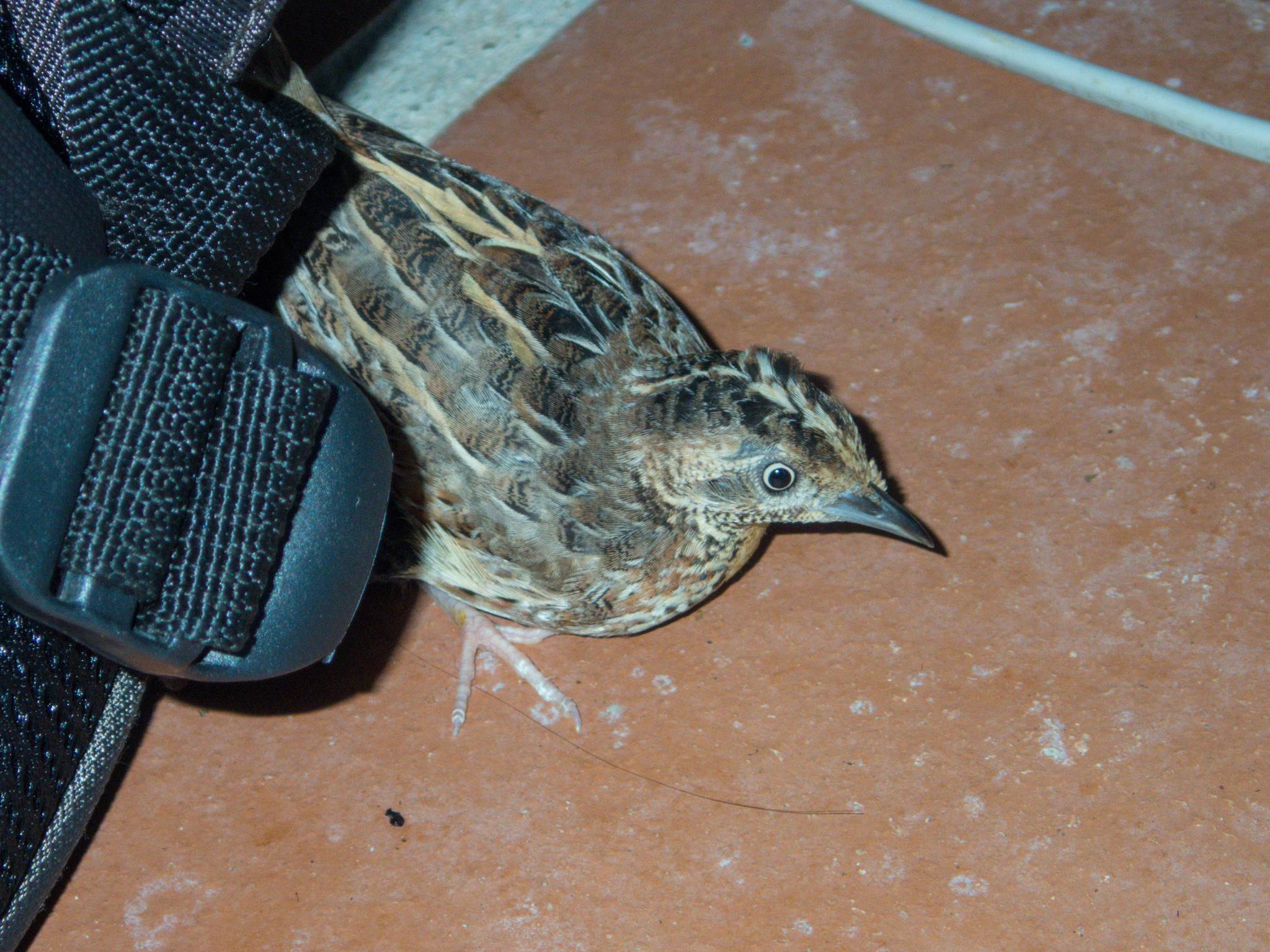
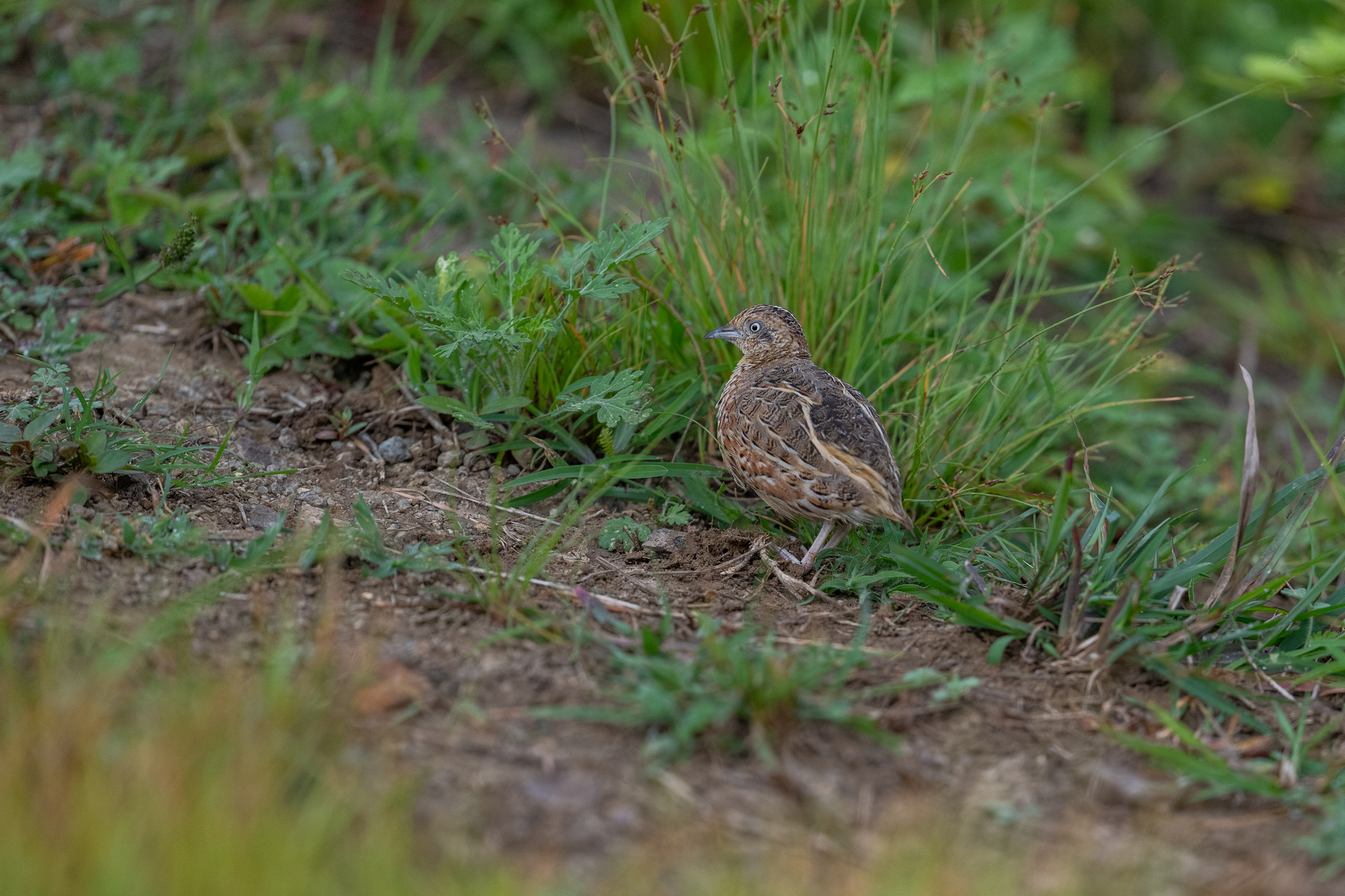
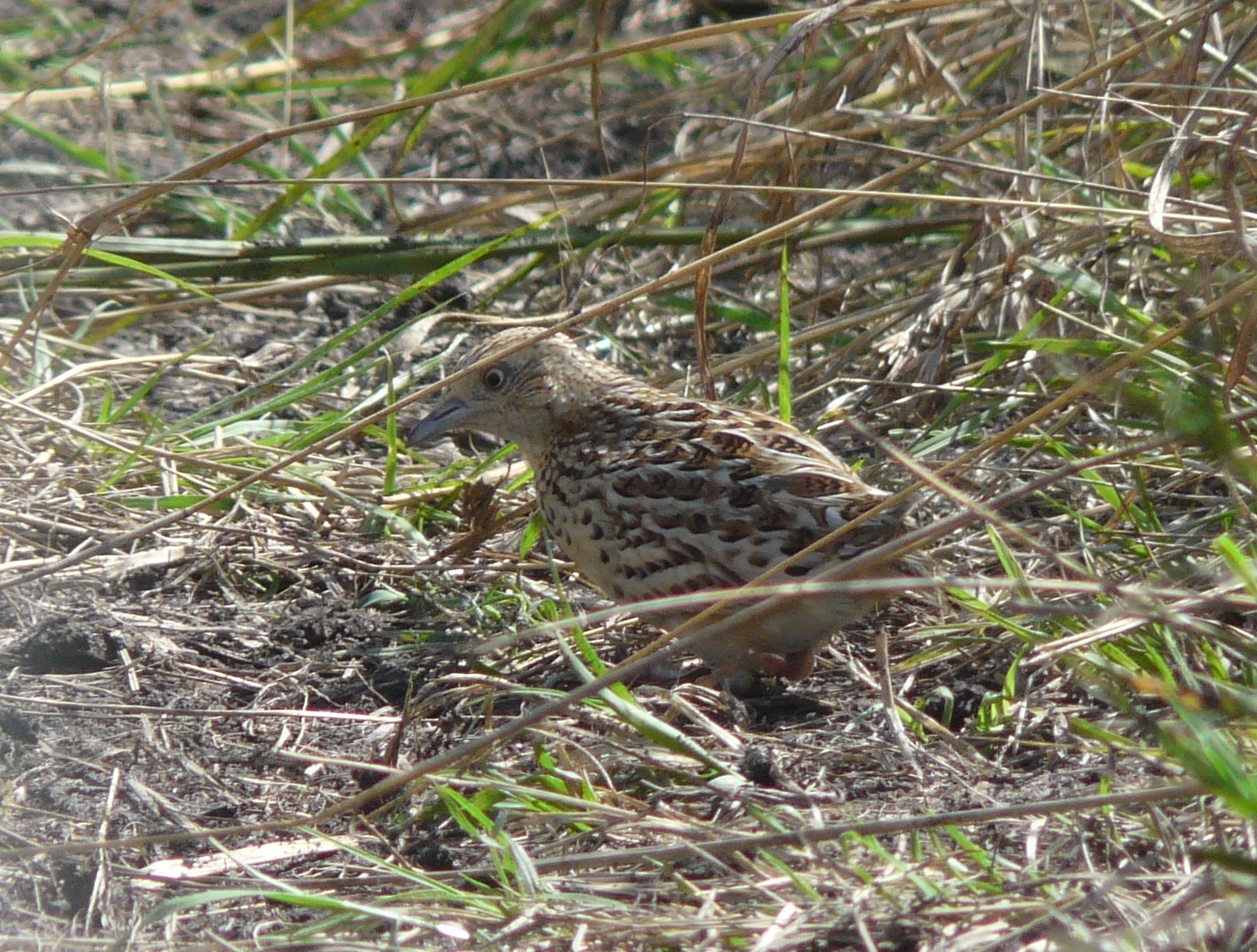
A tiny, drab bird resembling the common quail, measuring 15 cm (5.9 in) in length. Upperparts are streaked sandy brown; underparts are buff with black flank markings. The face is plain. In flight, a whitish wingbar contrasts against grey wing feathers. Sexes appear similar, though immature birds show more spotting on the underparts. This running bird avoids flying when possible, making it notoriously difficult to observe.
Identification
Similar in appearance to common quail but distinguished by streaked sandy brown upperparts and buff underparts with black flank markings. The plain face and whitish wingbar visible in flight help separate it from true quails. Its extremely skulking behavior and preference for running rather than flying are characteristic. Sexes are alike, with immature birds showing more spotted underparts.
Distribution & Habitat
Resident across an extensive range from southern Spain and northwestern Africa, through India and tropical Asia, to Indonesia. Nine subspecies are recognized, distributed across southern Iberia, sub-Saharan Africa, eastern Iran to Myanmar, central Thailand to southern China and Taiwan, Java and Bali, and various Philippine islands including Luzon, Bohol, Mindanao, Negros, and the Sulu Archipelago. Inhabits warm grasslands, scrub jungle, cornfields, and stretches of grassy plain, preferring low herbage and open scrub. Avoids thick forest and hilly terrain.
Behavior & Ecology
Diet consists of insects and seeds. Highly skulking; flushed with difficulty, often rising close to one's feet. When flushed, flies low over the ground and quickly settles again, making it very difficult to put up a second time. Female initiates courtship and builds the ground nest—a slight pad of grass placed in a natural hollow amongst grass stems, occasionally with a grass canopy. Male incubates the typical clutch of four speckled greyish eggs and tends the young, which can run immediately after hatching. Nesting season spans June to September. Female calls with deep hoo-hoo-hoom; male replies kek-kek-kek.
Conservation
Evaluated as Least Concern on the IUCN Red List due to its large range and presumably stable global population. However, the nominate subspecies (T. s. sylvaticus) in the Mediterranean region is critically endangered. It disappeared from most of its range during the 20th century and is now confined to Morocco after Spain officially declared the species extinct in 2018. In 2021, the IUCN declared the common buttonquail extinct in Europe—the first bird species to become extinct on the continent since the great auk in 1852.
Source: Wikipedia · CC BY-SA 3.0
Taxonomy
- Order
- Charadriiformes
- Family
- Turnicidae
- Genus
- Turnix
- eBird Code
- smabut2
Subspecies (9)
-
Turnix sylvaticus bartelsorum
Java and Bali
-
Turnix sylvaticus celestinoi
southern Philippines (Bohol and Mindanao)
-
Turnix sylvaticus davidi
peninsular Thailand to southern China, northern Indochina, and Taiwan (where rare)
-
Turnix sylvaticus dussumier
far eastern Iran to India and Myanmar
-
Turnix sylvaticus lepurana
sub-Saharan Africa and far southern Arabian Peninsula
-
Turnix sylvaticus nigrorum
Negros Island (Philippines)
-
Turnix sylvaticus suluensis
Sulu Archipelago
-
Turnix sylvaticus sylvaticus
southern Iberian Peninsula, northern Morocco, Algeria, and Tunisia
-
Turnix sylvaticus whiteheadi
Luzon (northern Philippines)
Data Sources
Species description from Wikipedia, licensed under CC BY-SA 3.0.
Bird images and sounds sourced from GBIF, contributed by citizen scientists worldwide under Creative Commons licenses.
Taxonomy data from AviList 2025.