Fieldfare
Turdus pilaris
田鸫
Introduction
A medium-large thrush (Turdidae) breeding across northern Europe and the Palearctic from Norway to Siberia and northwest China. Inhabits mixed woodland, open tundra, and hillsides above the tree line. Strongly migratory, moving south in winter to the UK, Southern Europe, North Africa, and the Middle East. Nests colonially in trees, sometimes aggressively defending nests by dropping faeces on predators. Omnivorous diet switching seasonally from invertebrates to berries, grain, and seeds. Global population estimated at 44-96 million individuals, evaluated as Least Concern by IUCN, though classified as Red List in the UK due to extremely limited breeding there.
Description
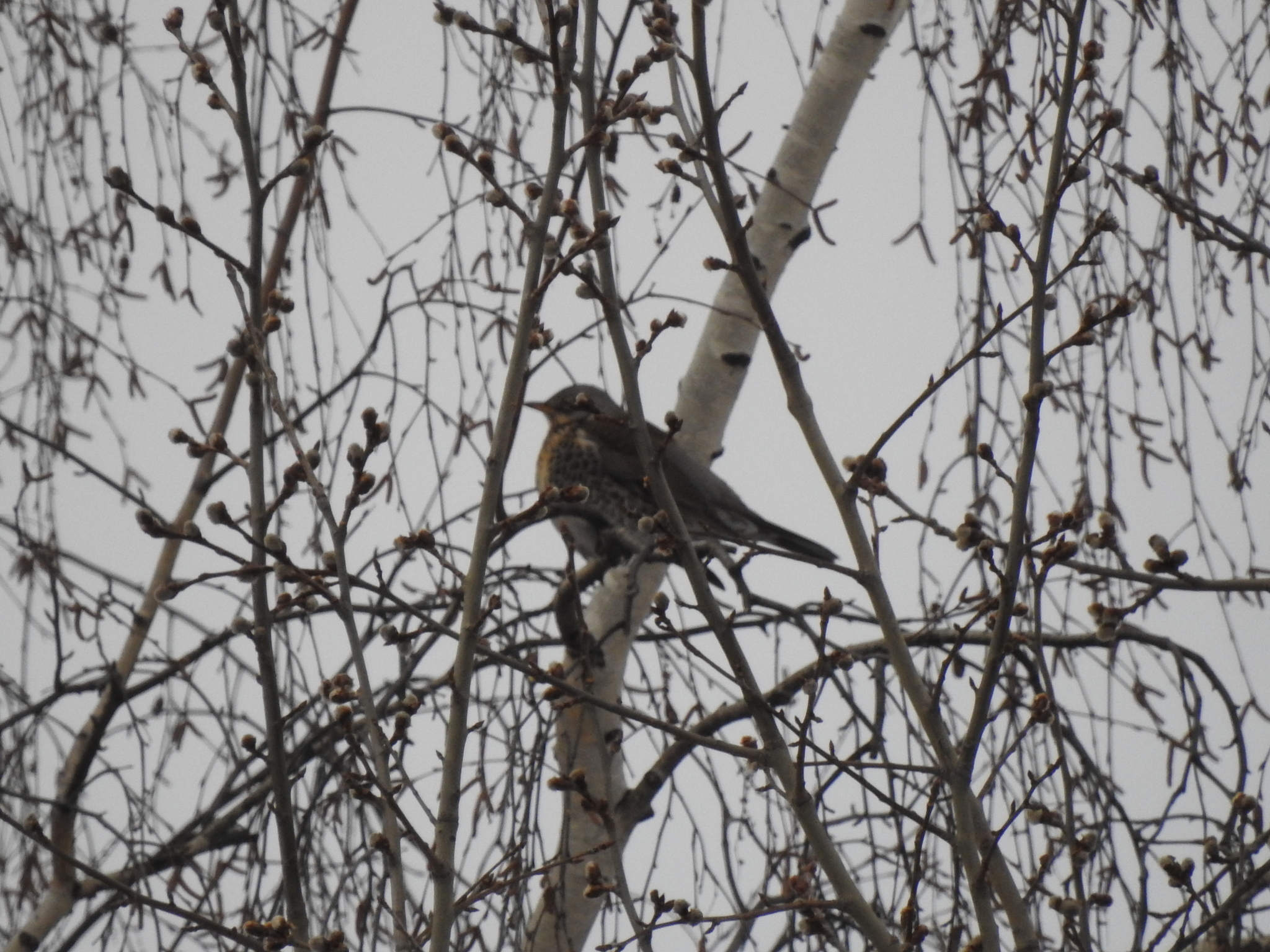
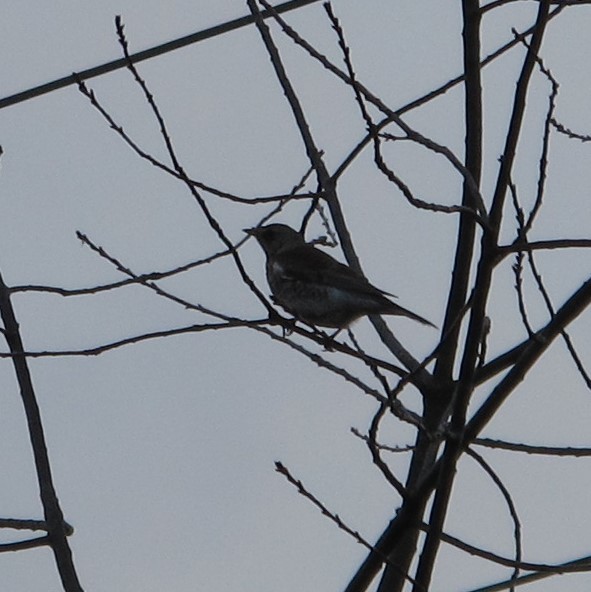
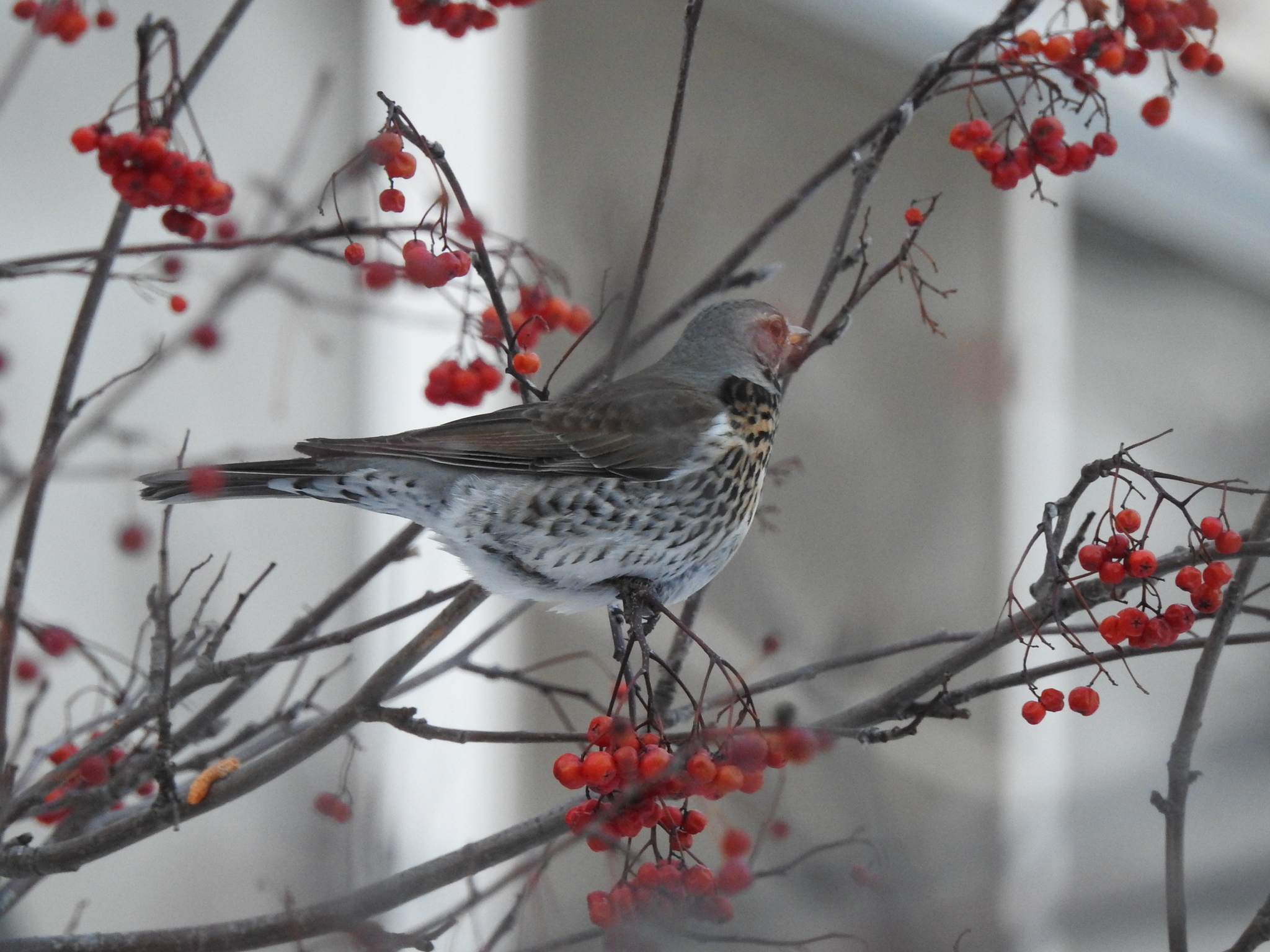
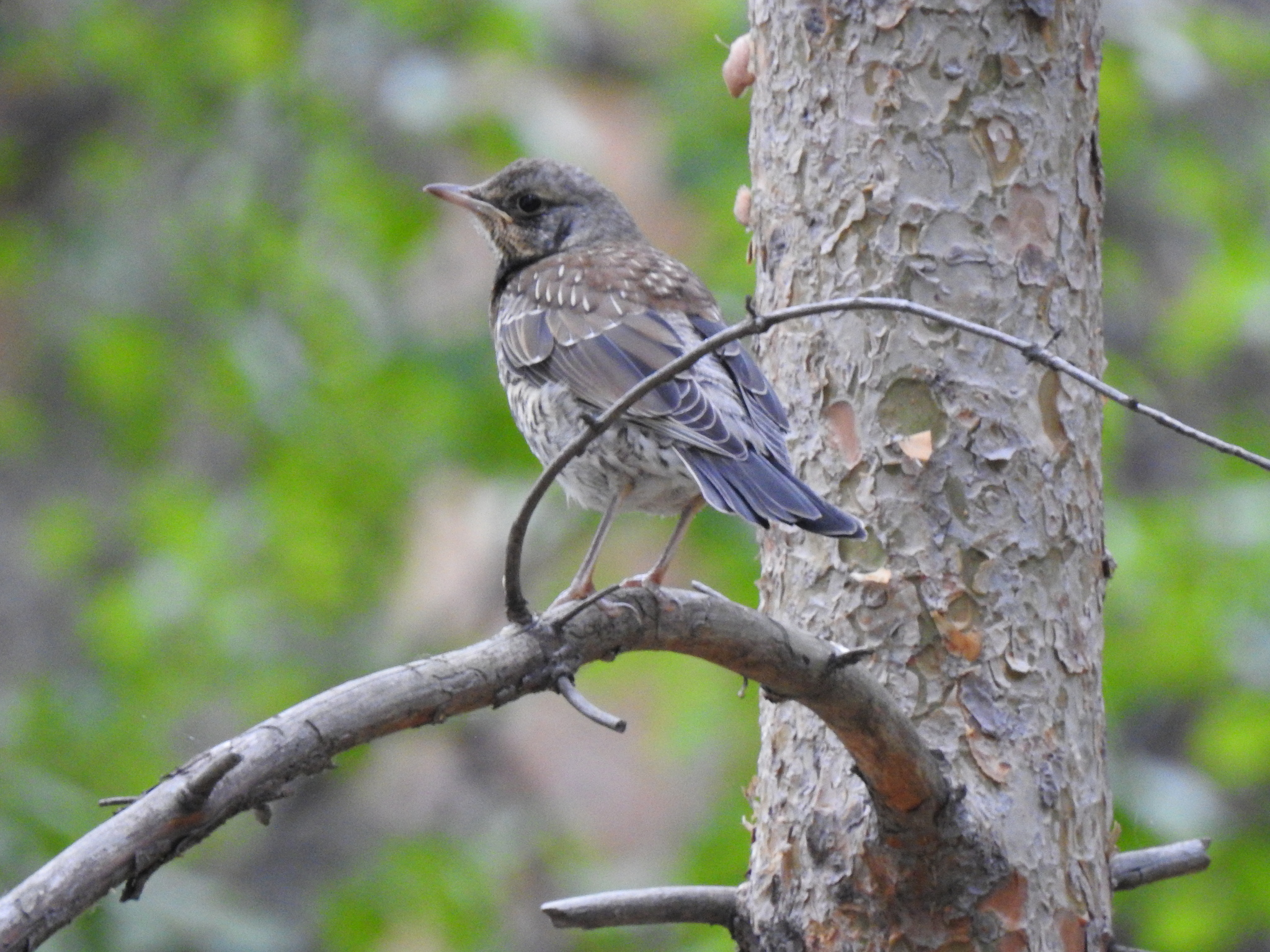
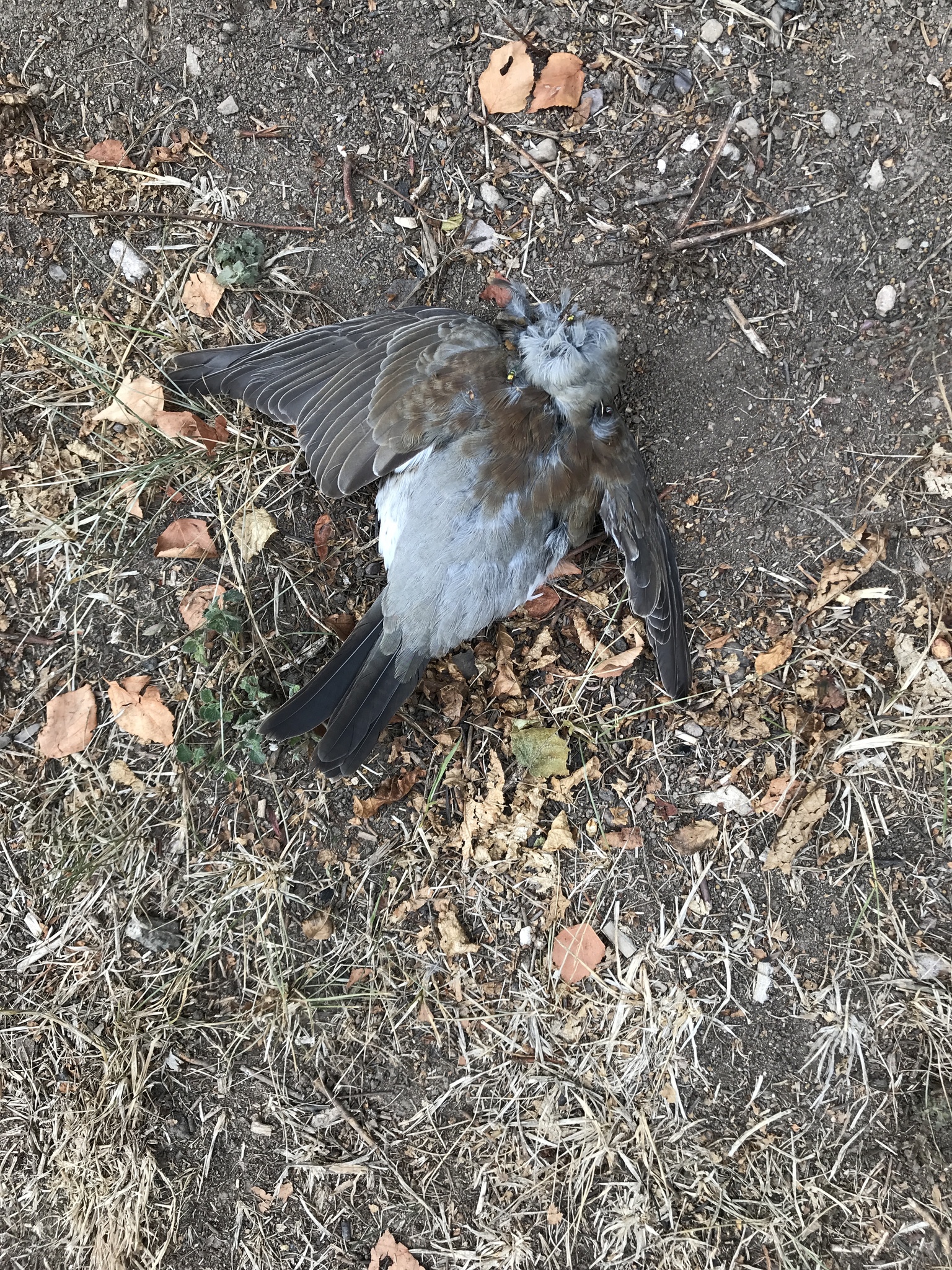
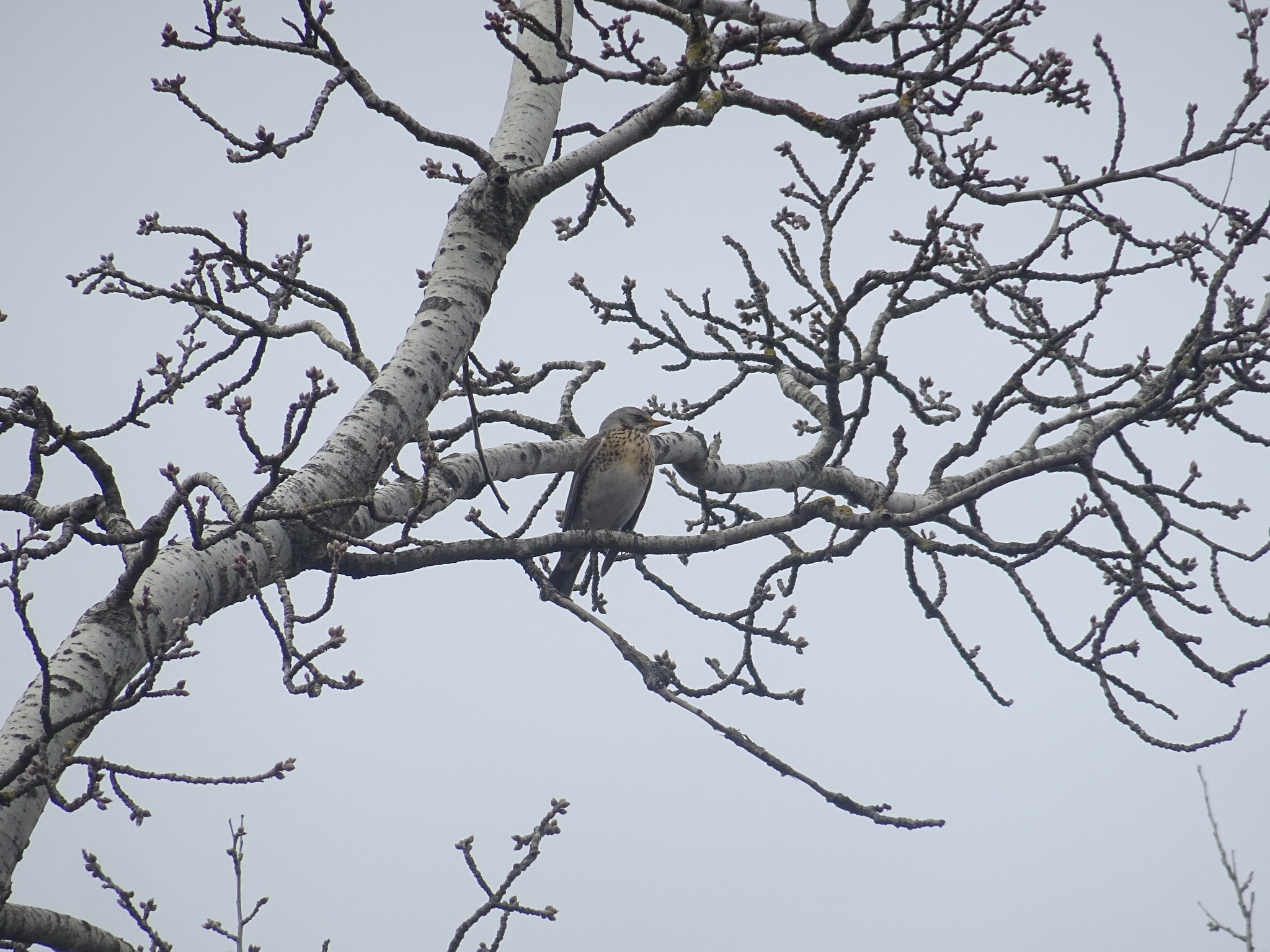
A robust thrush 25 cm long with a slate-grey head, nape, and rump contrasting with a plain dark brown back and blackish tail. The underwings are conspicuously white, visible in flight. The breast and flanks are heavily bold-spotted with brownish-black markings on a creamy-buff background; the lower breast and belly are creamy-white with reduced spotting. The sexes appear similar, though females are slightly browner with paler throat and breast markings. Wingspan 39-42 cm, weight 80-140 g. Juveniles are duller with pale streaks on otherwise dark feathers.
Identification
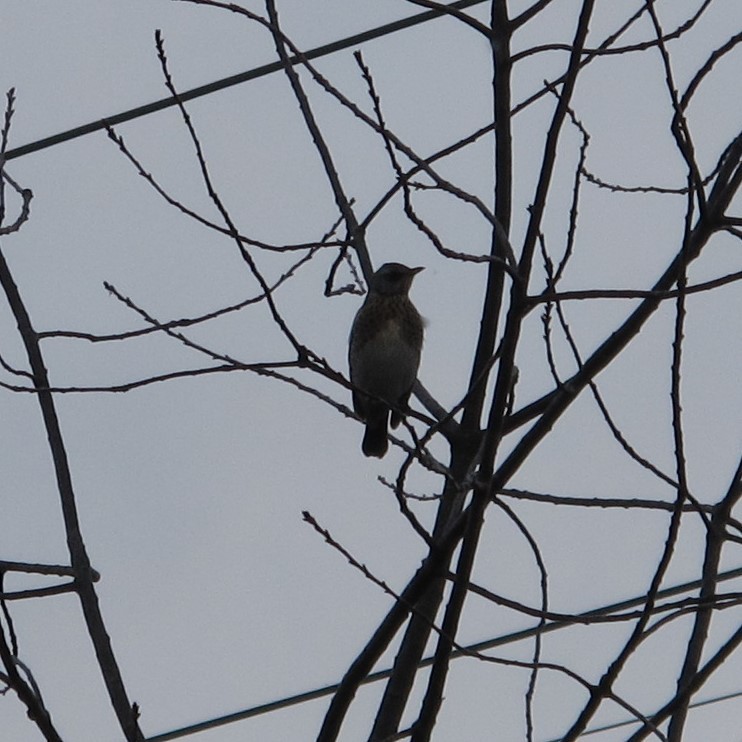
The combination of slate-grey head and rump with a plain brown back is distinctive among European thrushes. In flight, the white under wing-coverts and axillaries are conspicuous field marks. The harsh, repetitive 'tsak tsak' flight call is diagnostic. Often found associating with redwings on winter foraging grounds, but distinguished from them by larger size, grey rather than reddish rump, and bolder breast spotting. Unlike blackbirds or song thrushes, this species perches openly in trees rather than skulking in undergrowth.
Distribution & Habitat
Breeds from northern Norway, Sweden, and Finland across northern and central Europe to Siberia, reaching the Aldan River and Tian Shan mountains in northwest China. Winter range extends through western and southern Europe to North Africa, with eastern populations moving to Anatolia, Lebanon, Iran, and northwest India. Rare vagrant to Iceland, Greenland, the Canary Islands, the US, and other peripheral areas. Migration begins in October, with peak UK arrival in November; return passage occurs in April and early May. Habitat includes mixed birch, alder, pine, spruce, and fir woodland in summer, and agricultural land, orchards, and open woodland in winter.
Behavior & Ecology
Omnivorous diet includes snails, earthworms, spiders, beetles, flies, and grasshoppers in summer; switches to hawthorn, holly, rowan, yew, juniper, dog rose, Cotoneaster, Pyracantha, Berberis berries, windfall apples, swedes, grain, and seeds in winter. Nests colonially in trees, building cup-shaped nests with five to six eggs (occasionally three to eight). Eggs are pale blue or bright blue with brown speckling or splotches, measuring 28.8-33.5 mm by 20.9-23.4 mm. Incubation lasts 13-14 days by the female; chicks fledge after 14-16 days. Two broods possible in southern breeding areas. Vocalizations include a harsh 'tsak tsak' flight call, guttural alarm notes, and a weak chattering song mixing blackbird-like phrases with whistles and squeaks.
Conservation
Global population estimated at 44-96 million individuals (42-72 million in Europe, up to 20 million in Russia). Range covers approximately 10 million square kilometres. Population trend is stable and does not approach IUCN Red List decline thresholds. Evaluated as Least Concern. However, at the extreme edge of its breeding range in the United Kingdom, only a handful of pairs breed, resulting in classification as a Red List species by the RSPB as of 2013.
Culture
The English common name 'fieldfare' dates back to at least the 11th century. The Old English word 'feldefare' may mean 'traveller through fields', though an alternative etymology suggests derivation from 'fealu fearh' meaning 'grey piglet', related to the Welsh name 'socen lwyd' with the same meaning.
Source: Wikipedia · CC BY-SA 3.0
Taxonomy
- Order
- Passeriformes
- Family
- Turdidae
- Genus
- Turdus
- eBird Code
- fieldf
Distribution
breeds northern Palearctic; winters to northern Africa, Mediterranean, and Near East
Data Sources
Species description from Wikipedia, licensed under CC BY-SA 3.0.
Bird images and sounds sourced from GBIF, contributed by citizen scientists worldwide under Creative Commons licenses.
Taxonomy data from AviList 2025.