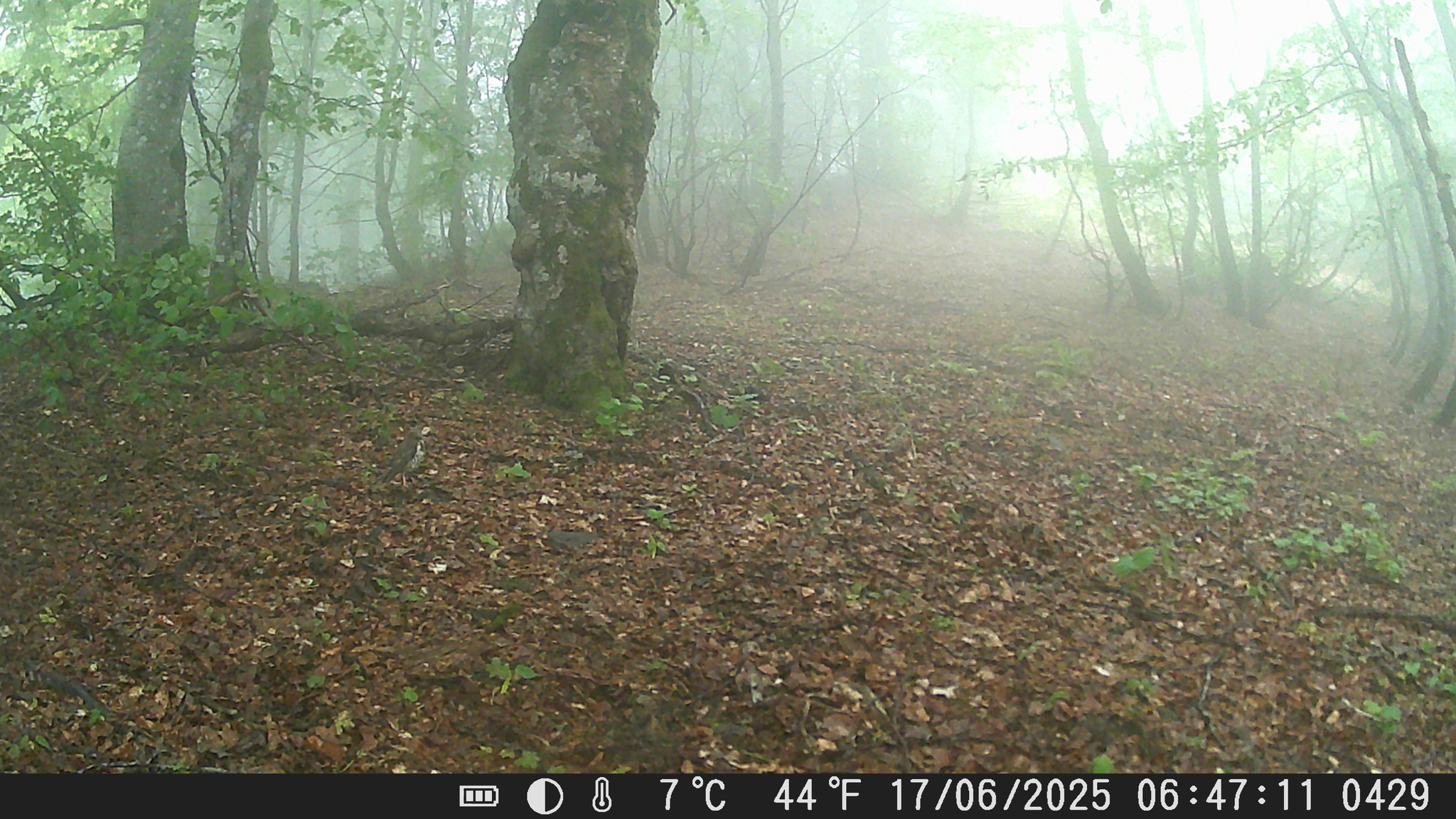

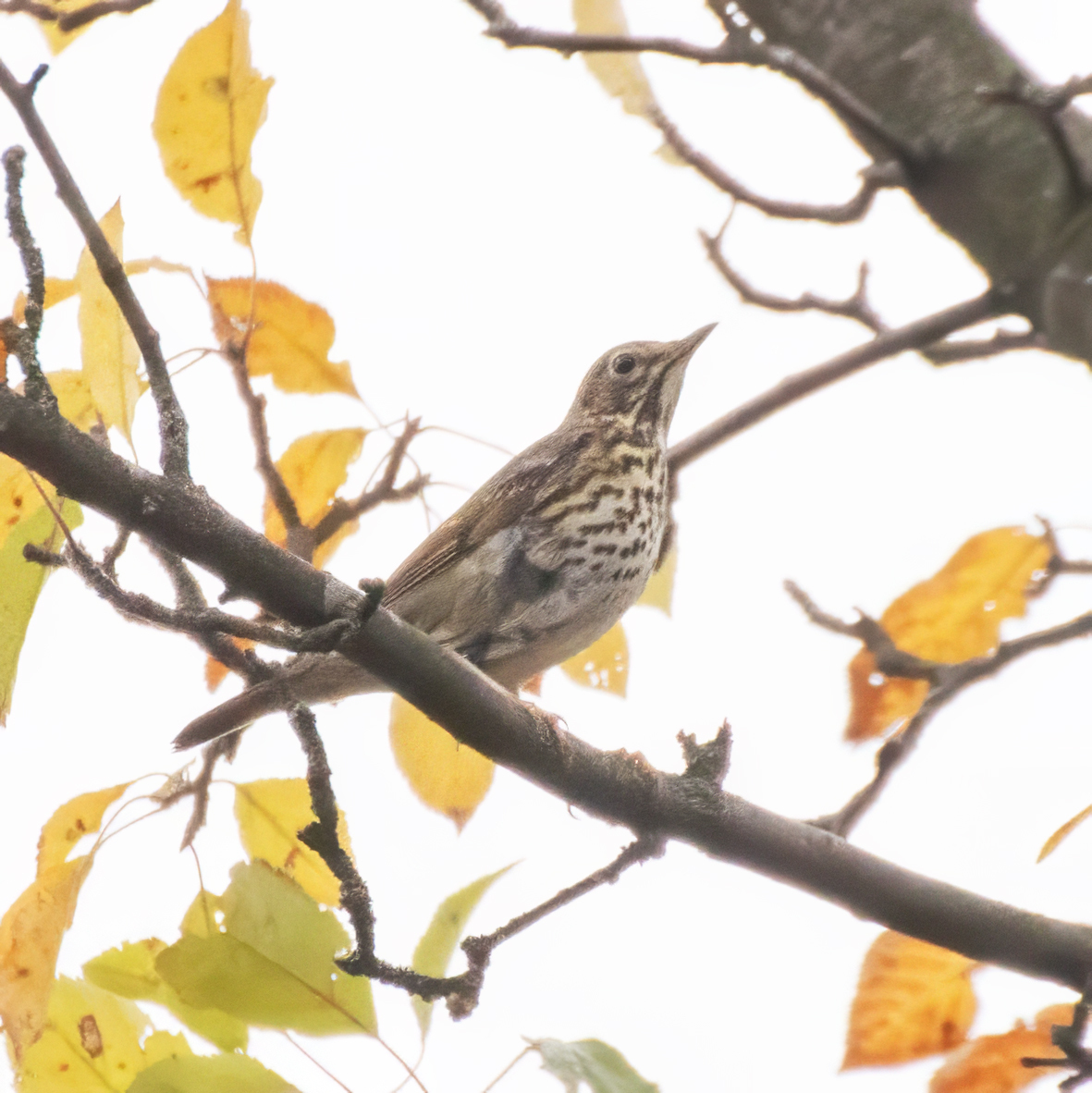
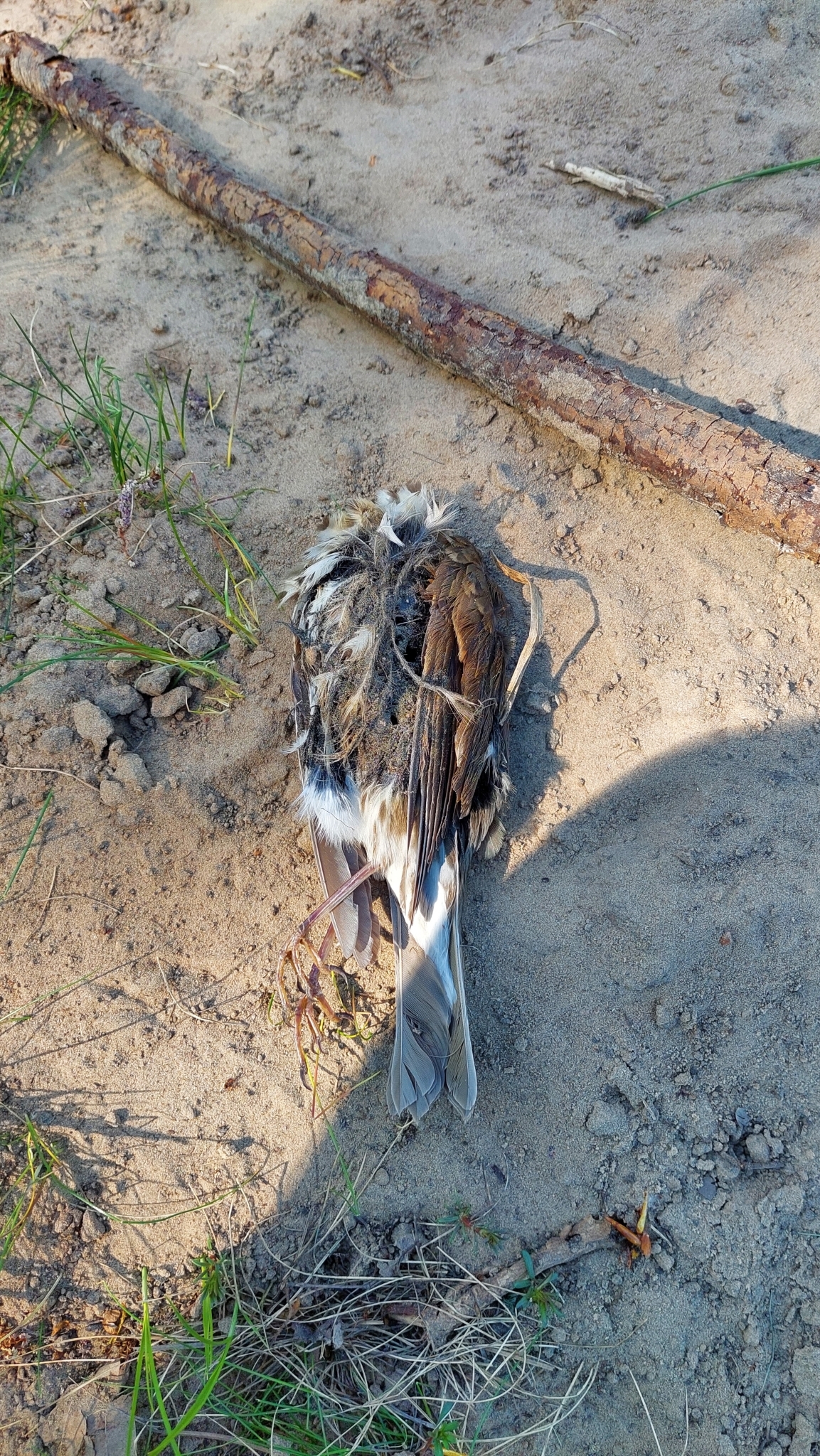
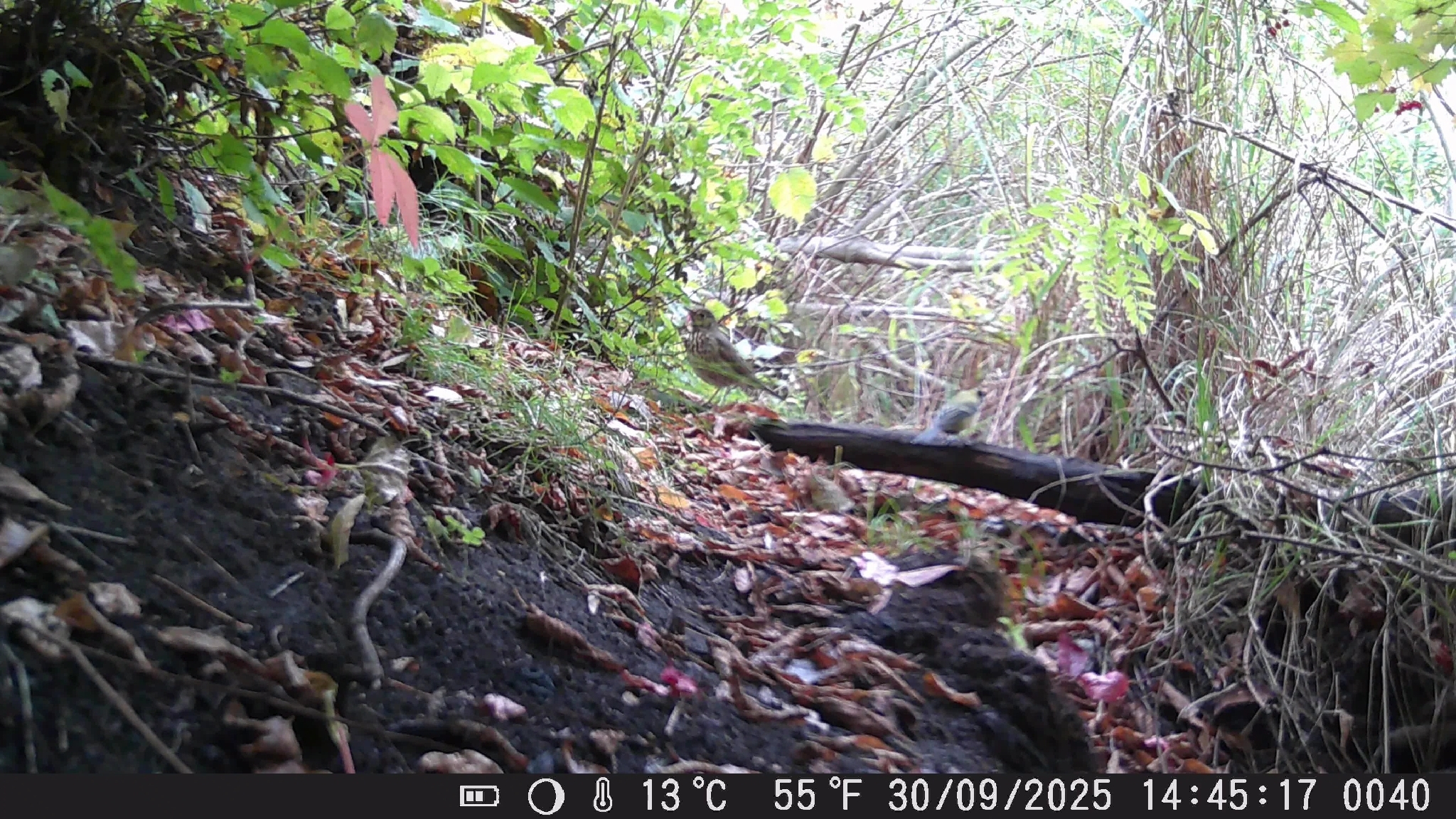
Song Thrush
Turdus philomelos
欧歌鸫
Introduction
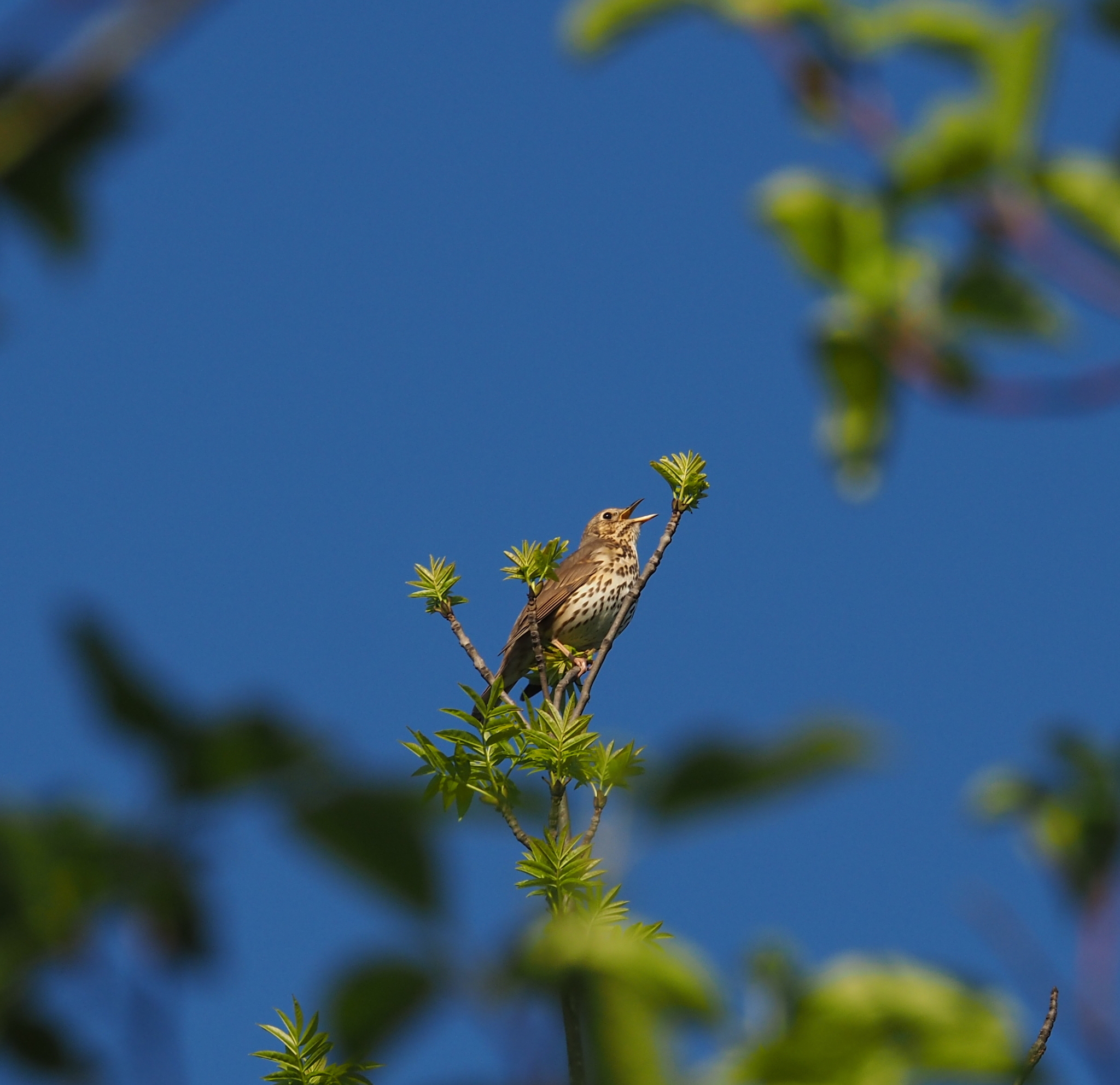
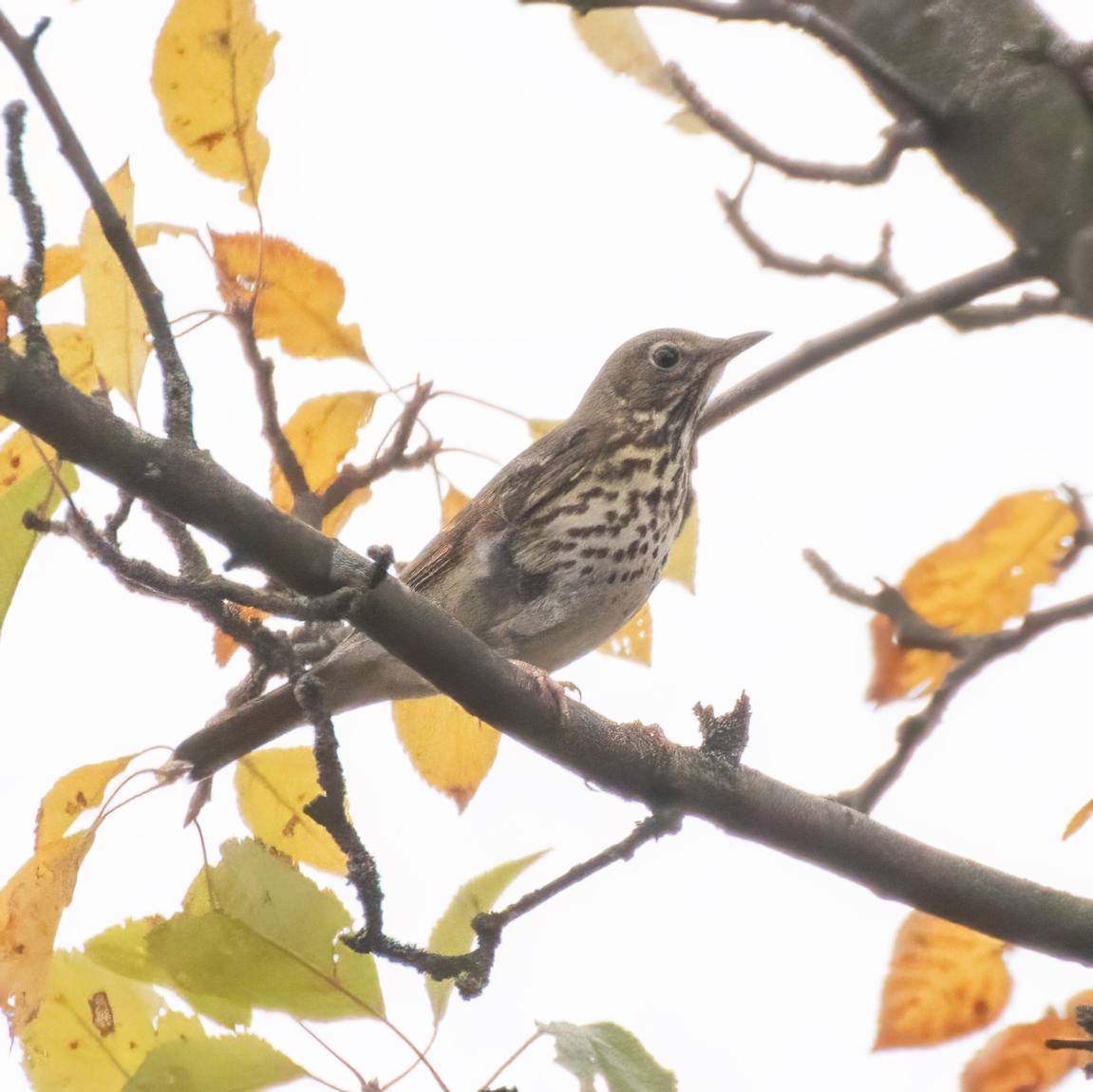
A thrush species (Turdus philomelos) breeding across the West Palearctic with brown upperparts and black-spotted cream or buff underparts. Four subspecies are recognized. The species breeds in forests, gardens and parks, and is partially migratory, with many birds wintering in southern Europe, North Africa and the Middle East. It has been introduced into New Zealand and Australia. While not globally threatened, serious population declines have been observed in some European regions, potentially due to changes in farming practices. The species has a distinctive song featuring repeated musical phrases.
Description
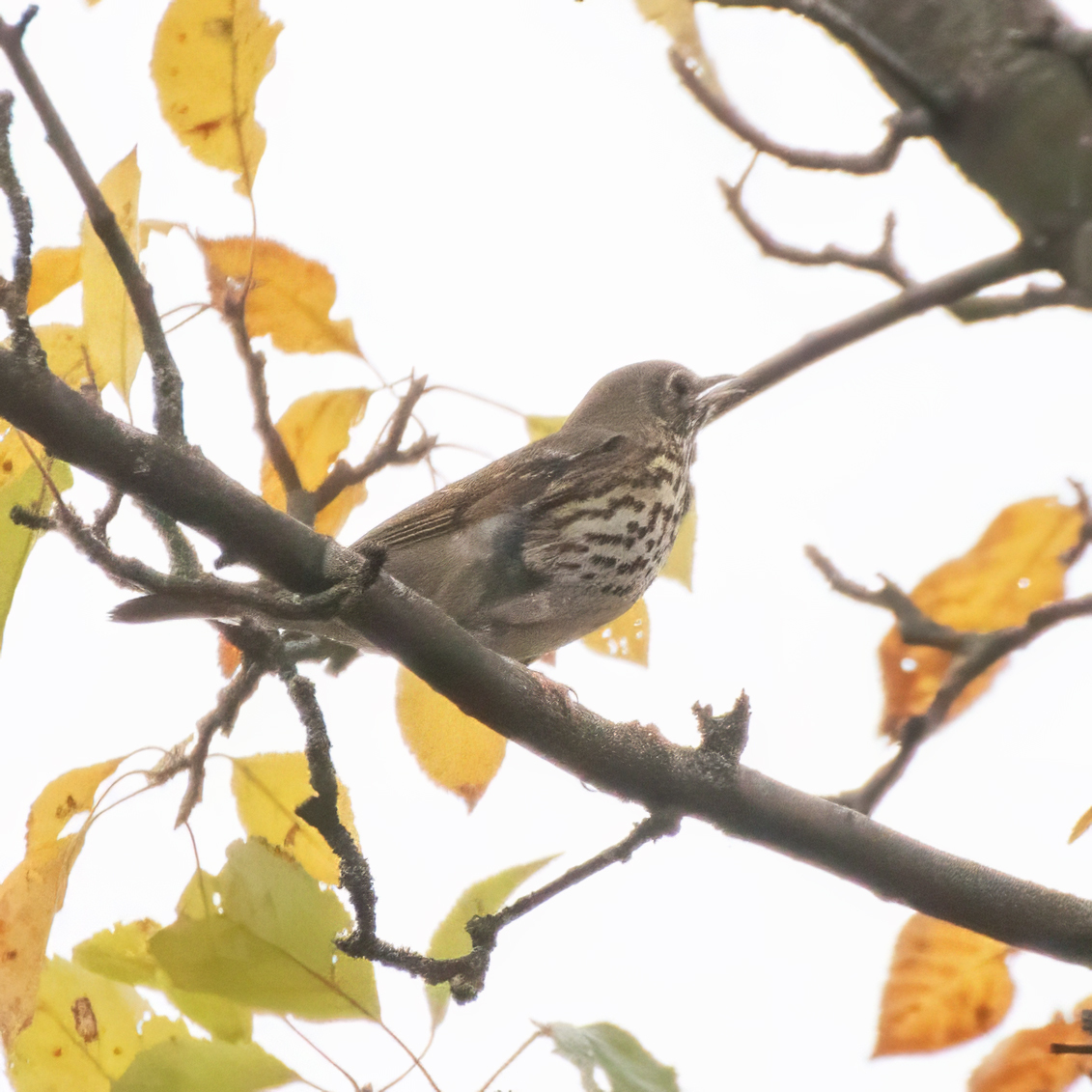
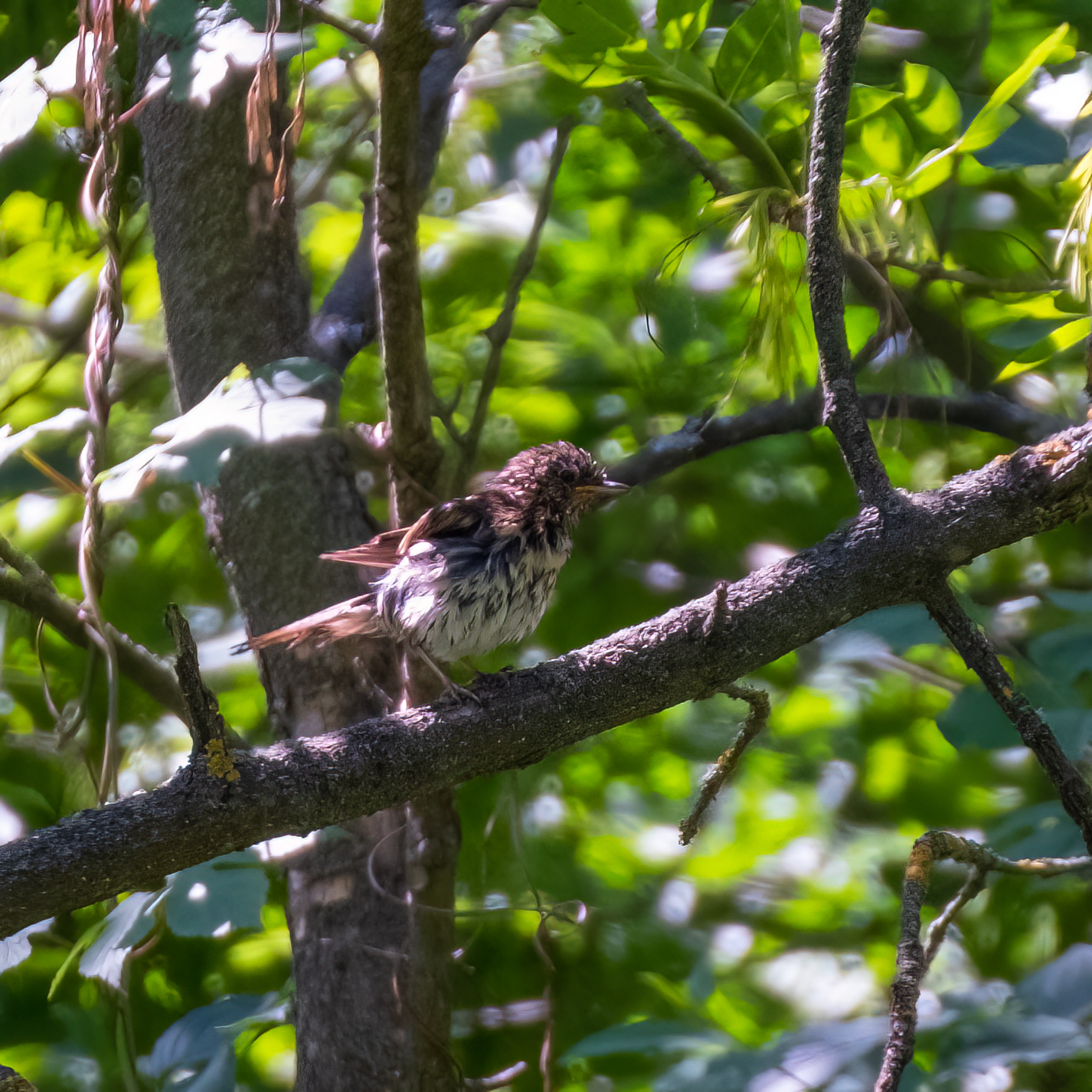
Length 20 to 23.5 centimeters and weighing 50 to 107 grams. Sexes are similar with plain brown backs and neatly black-spotted cream or yellow-buff underparts, becoming paler on the belly. The underwing is warm yellow, the bill is yellowish, and the legs and feet are pink. The upperparts become colder in tone from west to east across the breeding range from Sweden to Siberia. Juveniles resemble adults but have buff or orange streaks on the back and wing coverts.
Identification
Most similar to the redwing, but the redwing has a strong white supercilium, red flanks and shows a red underwing in flight. The mistle thrush is much larger with white tail corners. The Chinese thrush has black face markings and does not overlap in range. Calls include a short sharp tsip, a thin high seep during migration, and a chook-chook alarm call. The song is a loud clear run of musical phrases repeated two to four times.
Distribution & Habitat
Breeds across most of Europe (excluding most of Iberia, lowland Italy and southern Greece), Ukraine and Russia to Lake Baikal. Reaches 75°N in Norway and about 60°N in Siberia. Scandinavian, Eastern European and Russian birds winter around the Mediterranean, North Africa and the Middle East. A rare vagrant to North America (Quebec, Greenland, Alaska, California, Washington), Atlantic islands, West Africa and Colombia. Introduced to New Zealand and Australia, where small populations survive around Melbourne. Habitat includes parks, gardens, woodland and hedgerows, breeding up to 2,200 meters in Switzerland.
Behavior & Ecology
Not usually gregarious but may roost together in winter. Monogamous and territorial. Migrates mainly at night in loose flocks from September to mid-December, returning February to May. Female builds a mud-lined cup nest in a bush, tree or on the ground (Hebridean subspecies). Lays four to five glossy blue eggs spotted with black or purple, measuring 2.7 centimeters by 2.0 centimeters and weighing 6.0 grams. Incubation by female alone lasts 10 to 17 days. Two to three broods per year is normal. Juvenile survival in Britain is 54.6% in the first year, with adult annual survival at 62.2%. Maximum recorded age is 10 years 8 months. Diet includes invertebrates, especially earthworms and snails, with the habit of using a favorite stone as an anvil to break snail shells.
Conservation
IUCN Red List category of Least Concern. Extensive range of 10 million square kilometers with a large European population of 40 to 71 million individuals. However, population declines exceeding 50% have occurred in Great Britain and the Netherlands, with farmland populations declining 73% since the mid-1970s. Threats include changes in agricultural practices, loss of hedgerows, pesticide use, slug poison bait and road mortality. As an introduced species in New Zealand, it has no legal protection.
Culture
Mentioned in poetry by Robert Browning, Thomas Hardy, Ted Hughes, Edward Thomas and William Wordsworth. The species is the emblem of West Bromwich Albion Football Club, giving rise to the nickname 'The Throstles'. Several English pubs and hotels are named 'Throstles Nest'. The species has been hunted for food since ancient times, referenced in the Odyssey, and hunting continues around the Mediterranean, particularly in Spain where birdlime is used despite EU prohibition. Previously kept as a cage bird for its melodious song up to the nineteenth century.
Source: Wikipedia · CC BY-SA 3.0
Taxonomy
- Order
- Passeriformes
- Family
- Turdidae
- Genus
- Turdus
- eBird Code
- sonthr1
Subspecies (4)
-
Turdus philomelos clarkei
breeds British Isles and western Europe; winters to northern Mediterranean basin; introduced southeastern Australia (southern Victoria), Lord Howe and Norfolk Islands (east of Australia), and New Zealand
-
Turdus philomelos hebridensis
Outer Hebrides and Isle of Skye
-
Turdus philomelos nataliae
breeds Sayan Mountains to Lake Baikal and northern Iran; winters to southern Iran
-
Turdus philomelos philomelos
breeds northern and eastern Europe to central Asia; winters to North Africa and Iran
Data Sources
Species description from Wikipedia, licensed under CC BY-SA 3.0.
Bird images and sounds sourced from GBIF, contributed by citizen scientists worldwide under Creative Commons licenses.
Taxonomy data from AviList 2025.