Eyebrowed Thrush
Turdus obscurus
白眉鸫
Introduction
This thrush breeds in the boreal forests and taiga of northeastern Asia, from Siberia and Mongolia east to Japan. It is a long-distance migrant, traveling south each autumn to winter in China and Southeast Asia, and returning north in spring. The species occasionally appears as a rare vagrant in western Europe. During the breeding season, it inhabits dense coniferous forest cover. In migration and winter, it uses more open habitats and typically occurs in small flocks.
Description
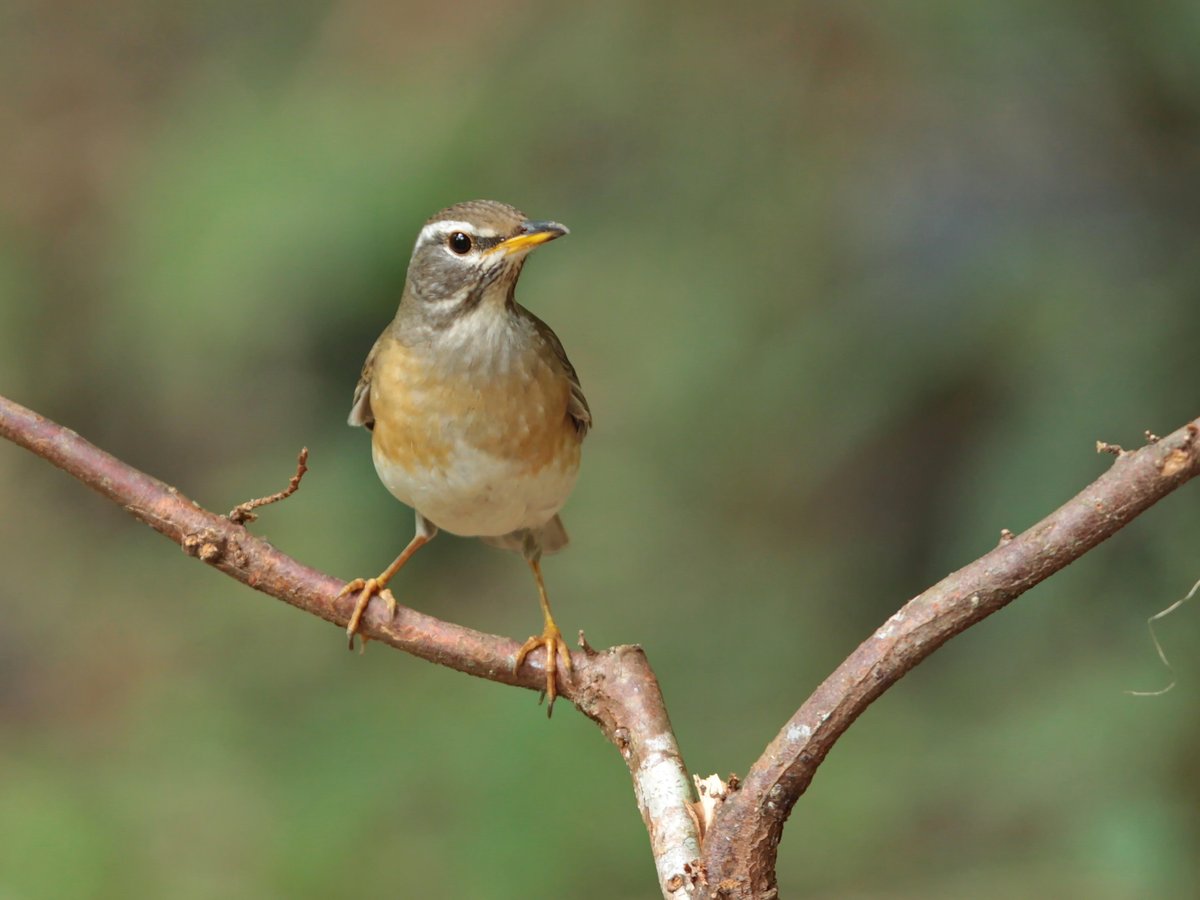
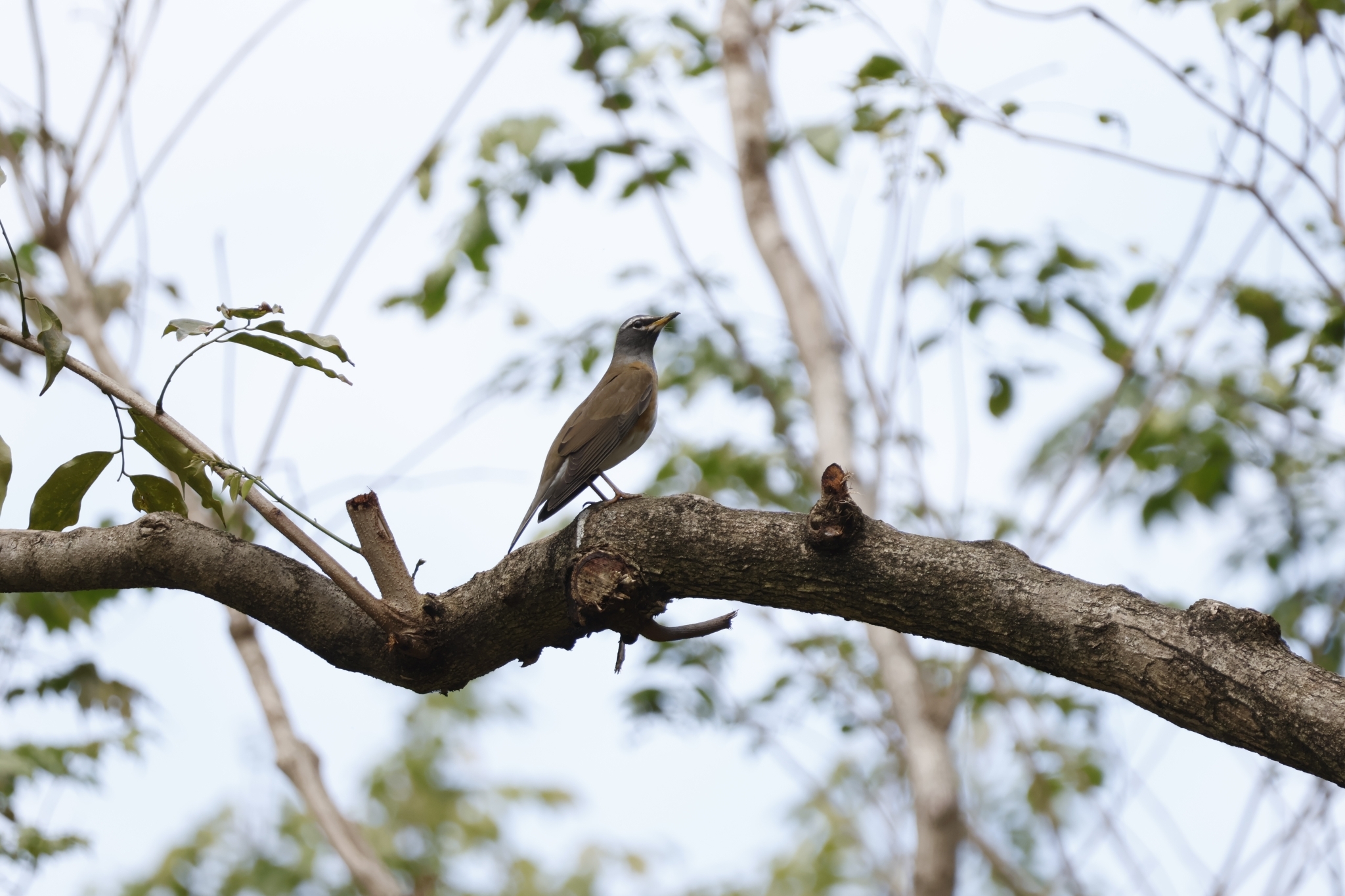
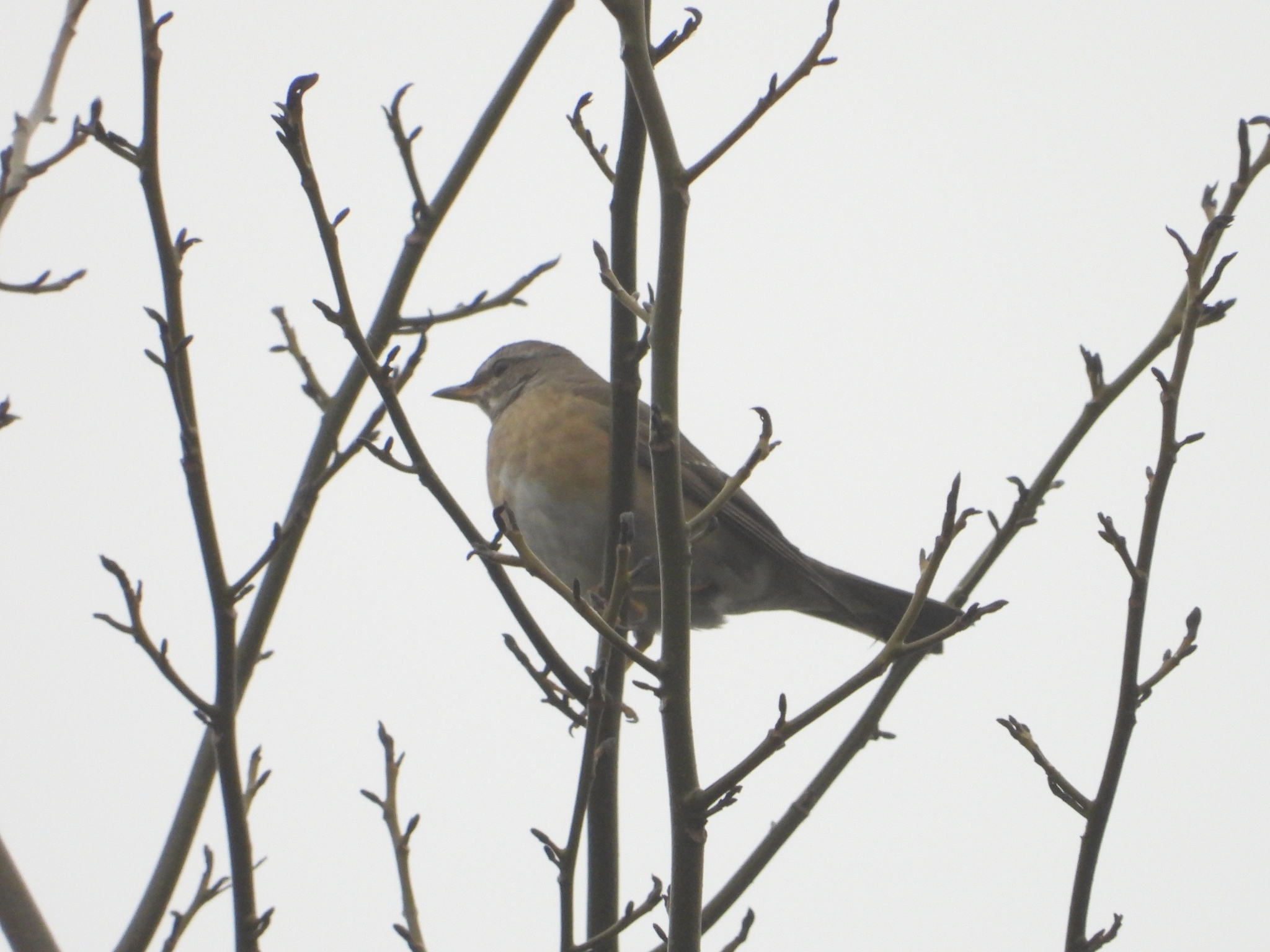
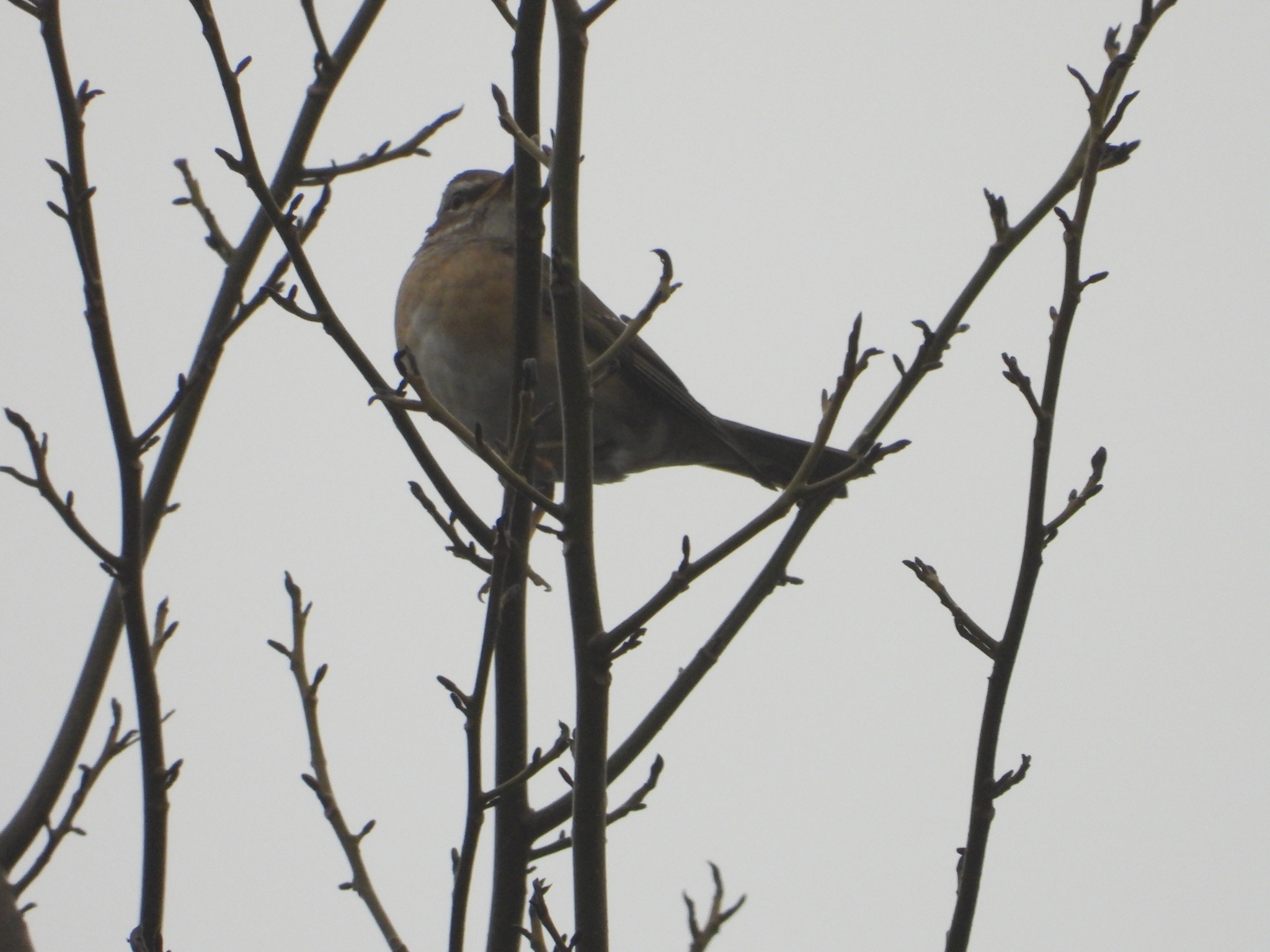
A medium-sized thrush with distinctive facial markings that give it an alert expression. The head and back are grey, while the breast and flanks show a warm orange color contrasting with a white belly. The most striking feature is the black eyeline, boldly bordered above and below by white stripes, creating a distinct facial pattern. Males and females are similar in appearance, though females may show slightly muted colors. Immature birds have a browner back and less pronounced facial markings compared to adults. The overall impression is of an elegant, well-proportioned thrush with subtle but distinctive coloring.
Identification
The bold white stripes surrounding the black eyeline are the most reliable field mark, creating an unmistakable facial pattern unlike most other thrushes. The combination of grey upperparts, orange breast and flanks, and white belly helps distinguish it from similar species. The orange coloration is more restricted than in many related thrushes and contrasts sharply with the grey head. During flight, the orange underparts flash noticeably. The species is often detected first by voice: males deliver a simple, clear whistling song from prominent perches during the breeding season.
Distribution & Habitat
Breeds across the boreal zone of northeastern Asia, from Siberia and Mongolia eastward through northern China to Japan, typically in dense coniferous forest and taiga habitats. Strongly migratory, it winters in southern China and Southeast Asia, where it occupies forests, woodlands, and sometimes cultivated areas with trees. A rare but regular vagrant to western Europe, with most records in autumn and spring. Occasional sightings in Israel and a confirmed record from Queensland, Australia, demonstrate the species' capacity for long-distance vagrancy.
Behavior & Ecology
Breeding pairs construct neat cup-shaped nests in trees, typically laying 4-6 eggs that hatch after an incubation period of around two weeks. Migrating and wintering birds form loose flocks, sometimes gathering in numbers at fruiting trees where they feed on berries. Forages on the ground and in vegetation, consuming a varied diet of insects, earthworms, and berries depending on season and location. The male delivers a simple whistling song from a high perch during the breeding season, somewhat reminiscent of the mistle thrush but less complex. Contact calls are sharp and deliberate.
Conservation
The species is not currently considered threatened. Its extensive breeding range across the vast forests of northeastern Asia and large wintering area in Southeast Asia supports what appears to be a stable population. No specific population estimates are available, but the species is described as fairly common throughout its core range. Habitat loss in parts of its range may be a localized concern, though the boreal forests it depends on remain largely intact.
Culture
No significant cultural or folklore traditions associated with this species have been documented.
Source: Wikipedia · CC BY-SA 3.0
Taxonomy
- Order
- Passeriformes
- Family
- Turdidae
- Genus
- Turdus
- eBird Code
- eyethr
Distribution
breeds Siberia, Mongolia, and Japan; winters to Indonesia and Philippines
Data Sources
Species description from Wikipedia, licensed under CC BY-SA 3.0.
Bird images and sounds sourced from GBIF, contributed by citizen scientists worldwide under Creative Commons licenses.
Taxonomy data from AviList 2025.