American Robin
Turdus migratorius
旅鸫
Introduction
A true thrush (genus Turdus, family Turdidae) native to North America. It breeds from Alaska and Canada to northern Florida and Mexico, wintering from southern Canada through Florida and the Gulf Coast to central Mexico, and along the Pacific Coast. Among the most distinctive traits are its status as North America's most abundant landbird (370 million individuals according to Partners in Flight, 2019) and its role as one of the earliest bird species to breed and sing each spring. It is also a known reservoir for West Nile virus. The species is evaluated as Least Concern due to its extensive range and stable population.
Description
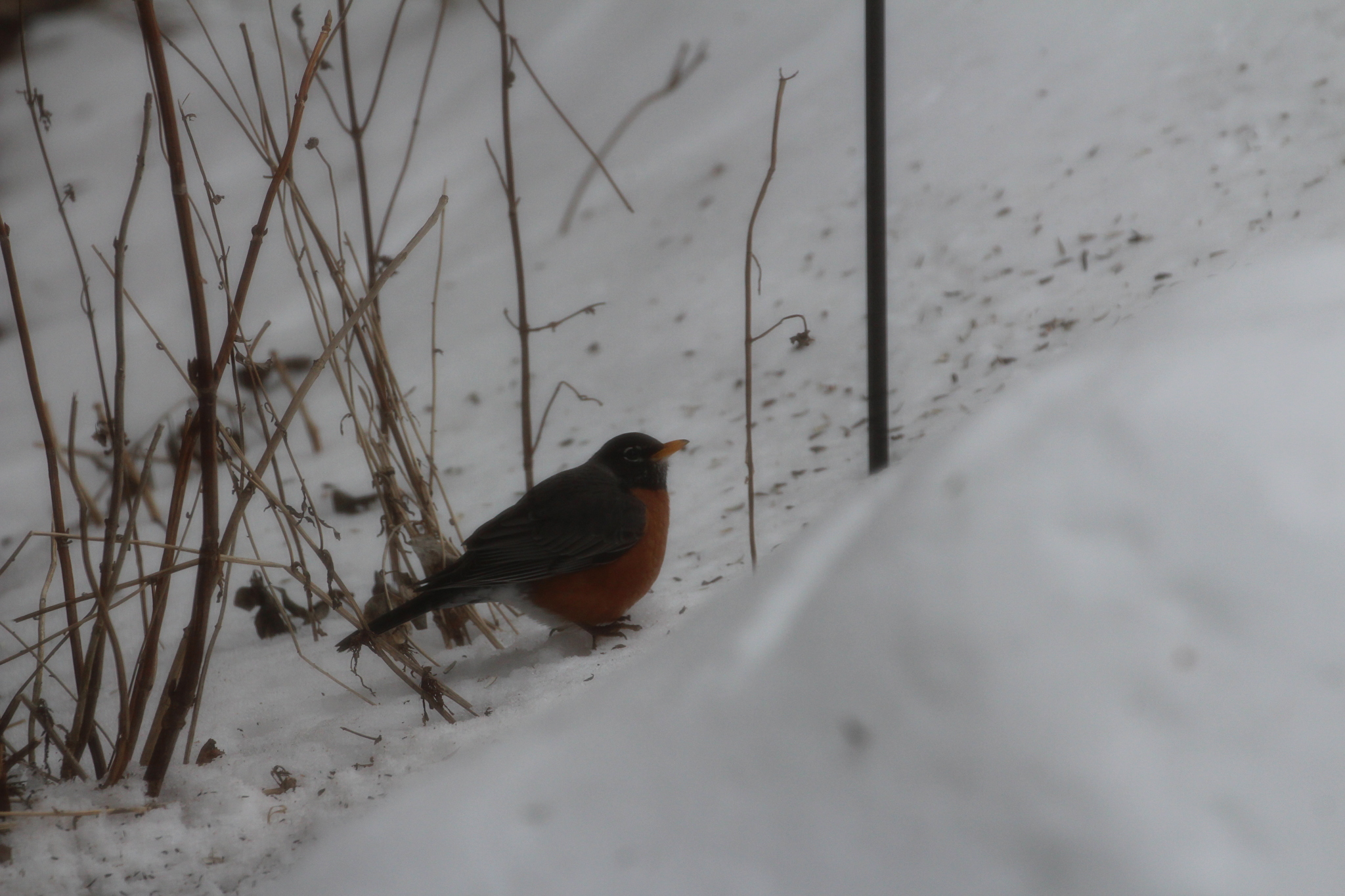
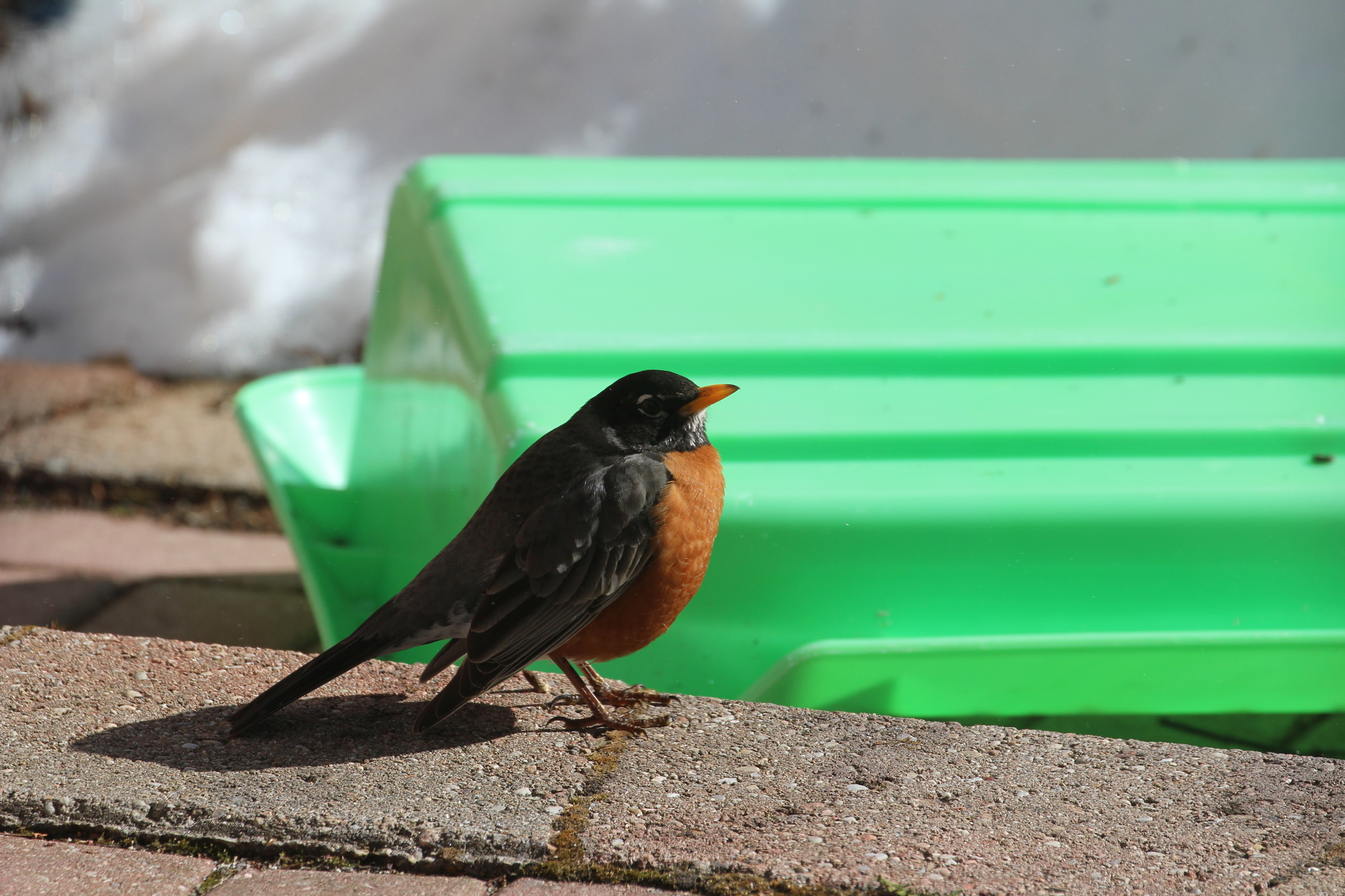
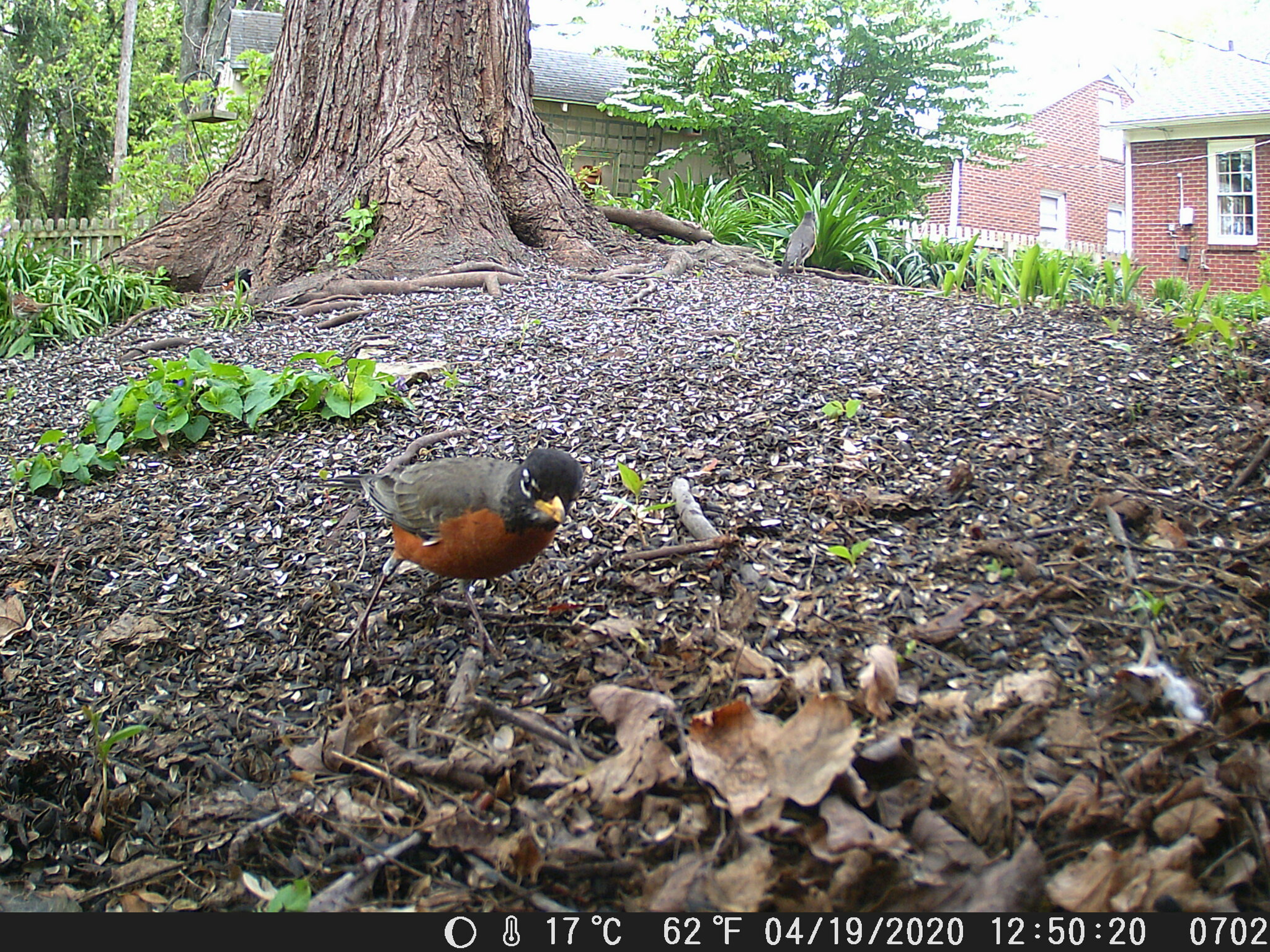
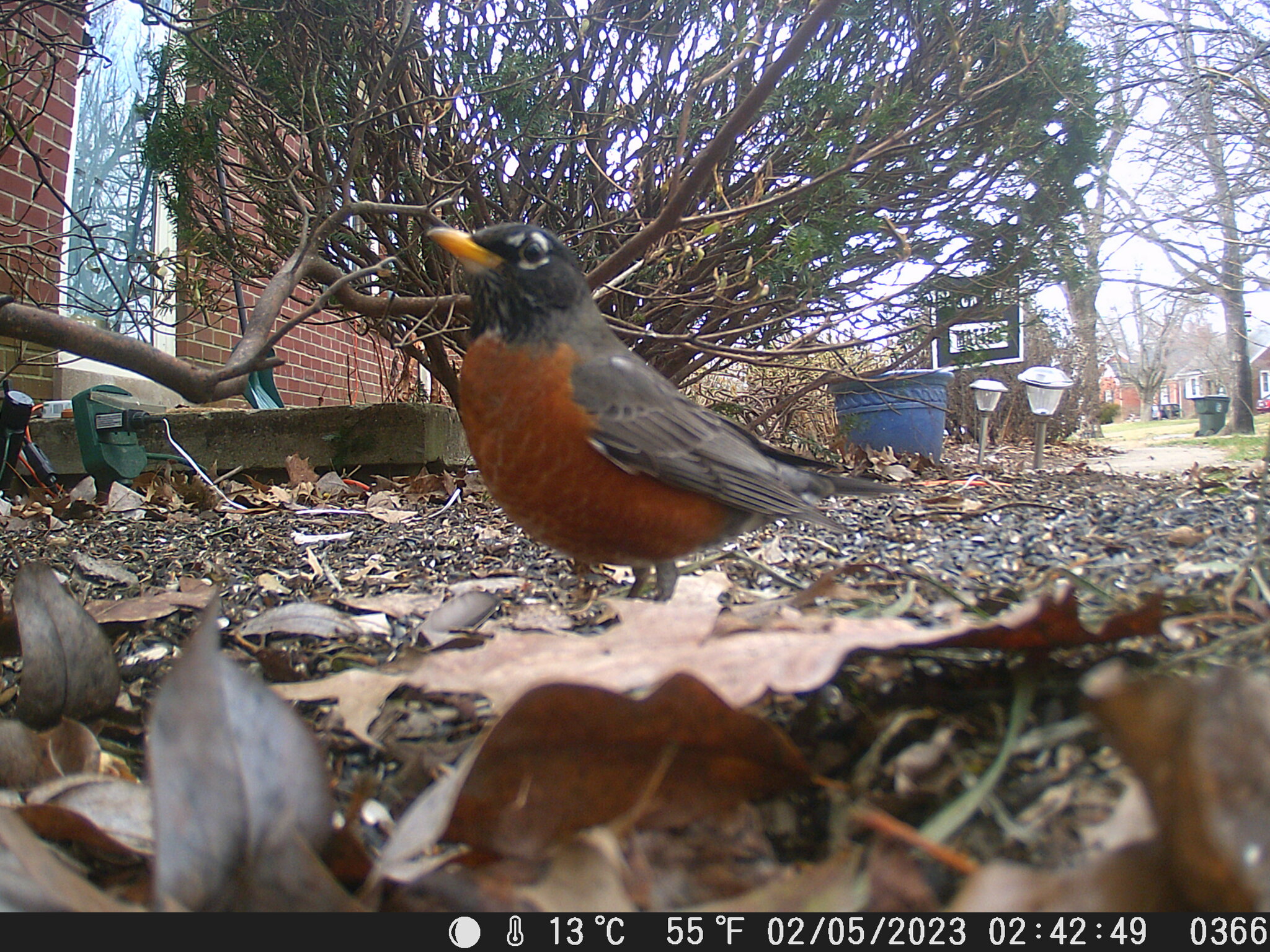
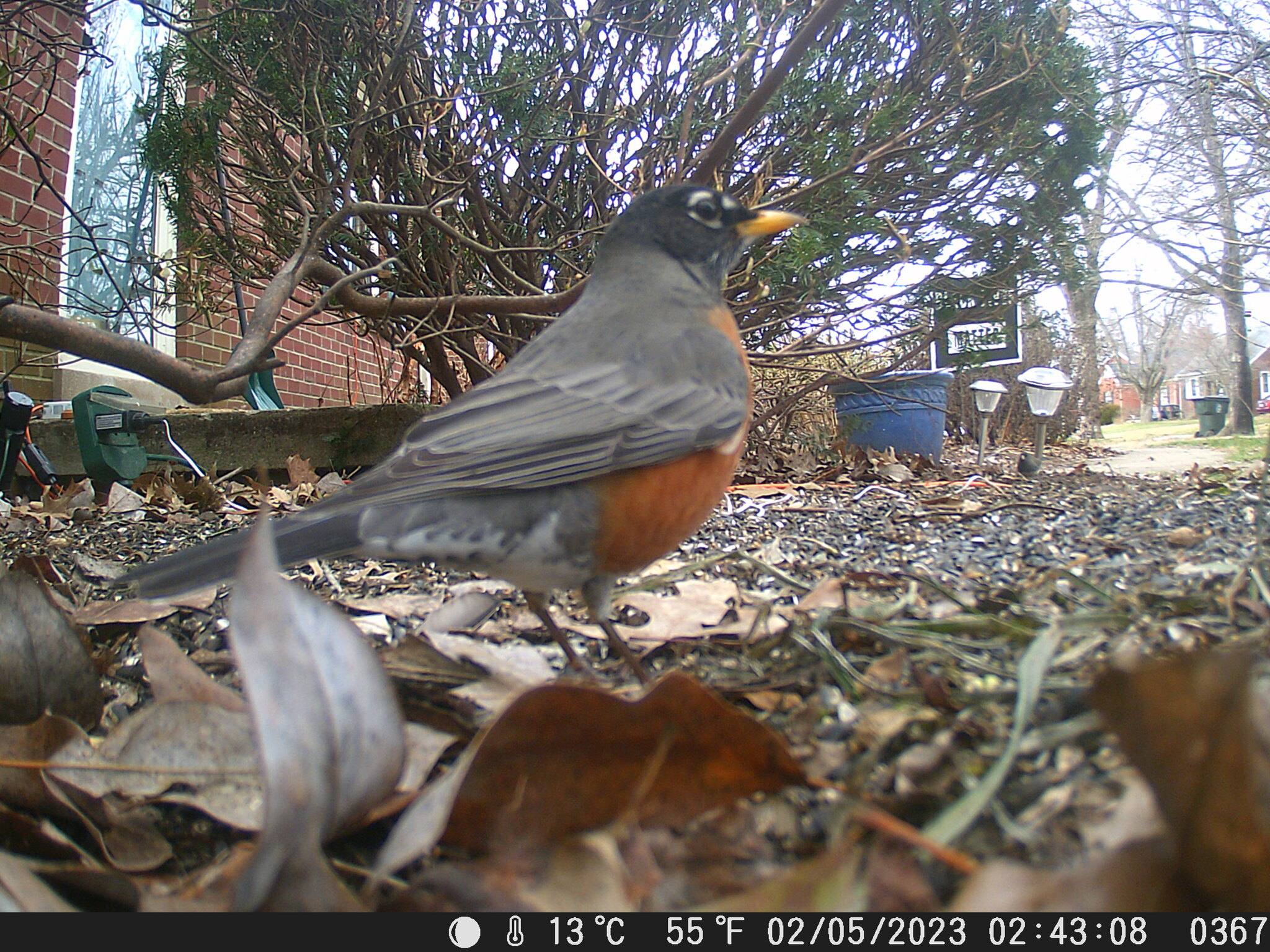
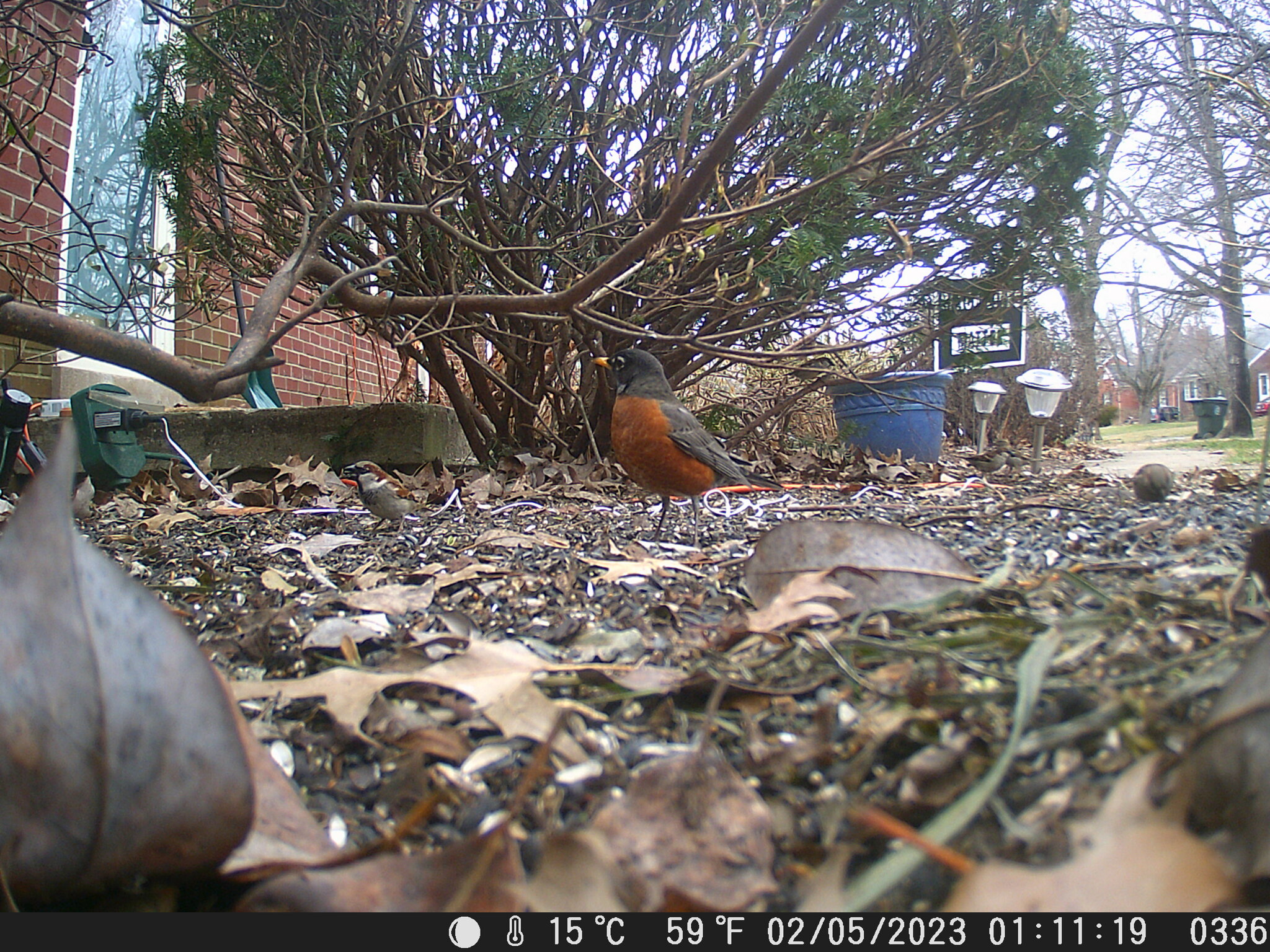
A medium-sized thrush measuring 23-28 cm in length with a wingspan of 31-41 cm. Adults average 77 g in weight, with males ranging 72-94 g and females 59-91 g. The upperparts are brown, while the breast ranges from rich red maroon to peachy orange. The belly and undertail coverts are white. The head varies from jet black to gray with distinctive white eye arcs and supercilia. The throat is white with black streaks. The bill is mainly yellow with a variably dark tip, and the legs and feet are brown. Sexes appear similar, though females are generally duller with brown-tinted heads and less vibrant underparts. Juveniles are paler with dark breast spots and whitish wing coverts.
Identification
The combination of medium thrush size, reddish-orange breast, yellow bill with dark tip, and distinctive white eye arcs identifies this species. The running-and-stopping foraging behavior—several short hops followed by head cocking to detect earthworms—is a characteristic field mark. Unlike the European robin (an Old World flycatcher), this species lacks the red face and is much larger. The eastern subspecies is larger and redder-breasted than western populations.
Distribution & Habitat
Breeds throughout most of North America from Alaska and Canada's tundra edge south to northern Florida and Mexico. Winter range extends from southern coastal Alaska and Canada through most of the U.S. to central Mexico, along the Pacific Coast, and into Bermuda and the Bahamas. Most migrate south by late August and return north in February-March, though some overwinter in northern U.S. and southern Canada. Birds tagged in Alaska travel 3.5 times farther than those from Massachusetts. A rare vagrant to western Europe (29 records in Britain through 2022), Greenland, and the Caribbean.
Behavior & Ecology
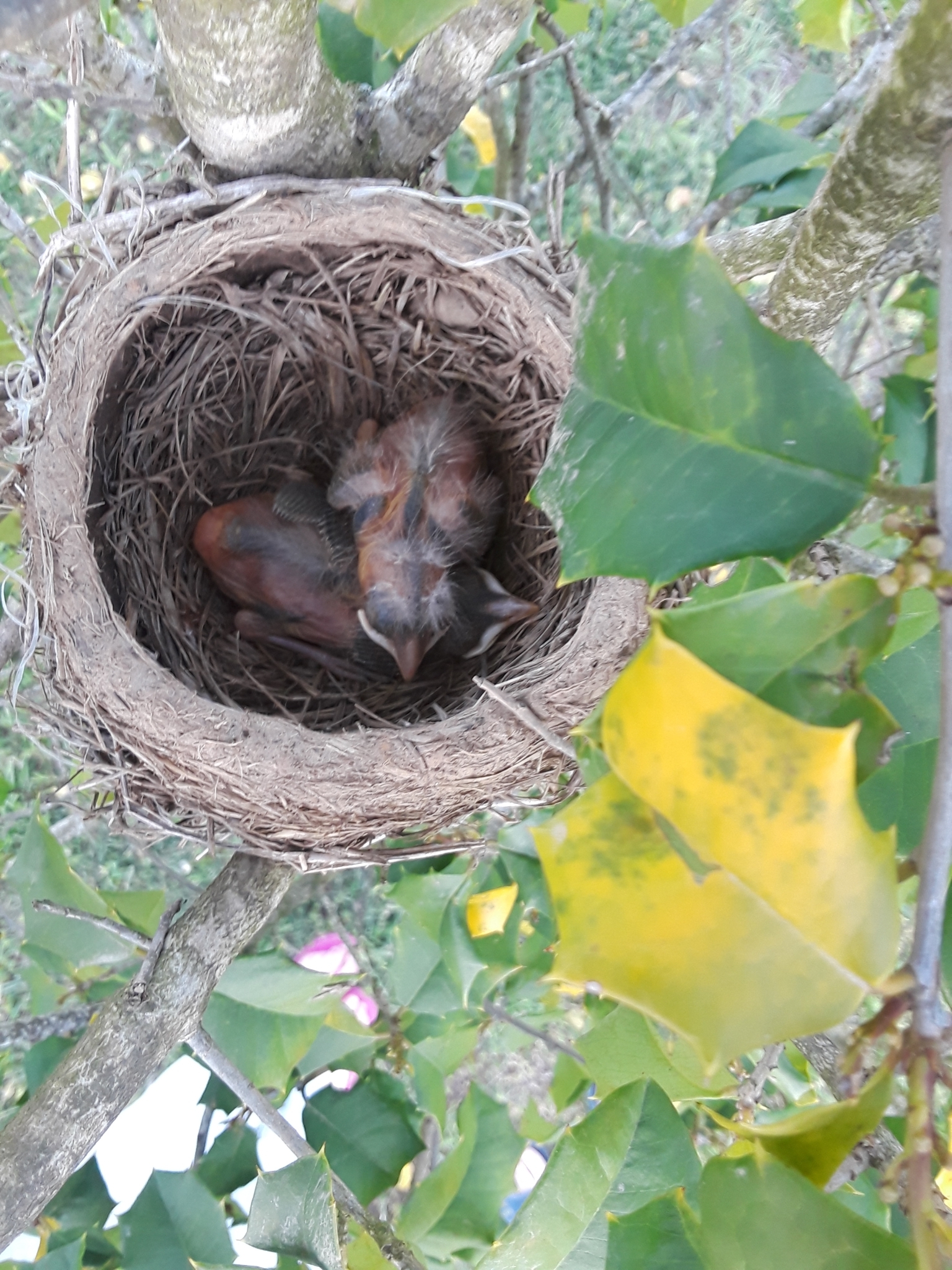
Diurnal species that forms large nocturnal winter flocks in secluded swamps or dense vegetation. The diet comprises approximately 40% invertebrates (earthworms, beetle grubs, caterpillars) and 60% fruits and berries. Forages primarily on the ground, locating earthworms visually and by hearing. One of the earliest breeders, beginning shortly after spring return with 2-3 broods per season. The female builds the nest (1.5-4.5 m high) using grass, twigs, paper, and feathers, lined with mud and soft materials. Clutches of 3-5 cyan eggs are incubated 14 days; chicks fledge after another 14 days. The male's song is a complex carol of discrete repeated units, sung from high perches, typically beginning before dawn and continuing until evening.
Conservation
Rated Least Concern by the IUCN. The species has an enormous range of 16,000,000 km² and a population of approximately 370 million individuals. Population trends appear stable and do not approach vulnerable species thresholds (>30% decline over ten years). Threats include climate change, severe weather, and predation by raptors, cats, and snakes. Formerly hunted for meat, it is now protected throughout the U.S. by the Migratory Bird Treaty Act.
Culture
The state bird of Connecticut, Michigan, and Wisconsin. Depicted on the 1986 Canadian $2 note (Birds of Canada series). It appears in Native American mythology, including a Tlingit story of Raven creating the robin as a culture hero to please people with its song. A widespread superstition holds that seeing the first robin of spring brings good luck, inspiring poems by Emily Dickinson and William Henry Drummond. The species' egg color gave its name to 'robin egg blue.' Featured in Harry Woods' song 'When the Red, Red Robin (Comes Bob, Bob, Bobbin' Along)' and referenced in Calvin and Hobbes comics.
Source: Wikipedia · CC BY-SA 3.0
Taxonomy
- Order
- Passeriformes
- Family
- Turdidae
- Genus
- Turdus
- eBird Code
- amerob
Subspecies (7)
-
Turdus migratorius achrusterus
breeds south-central USA; winters to southeastern Mexico
-
Turdus migratorius caurinus
breeds southeastern Alaska and western Canada to northwestern Oregon; winters to California
-
Turdus migratorius confinis
mountains of southern Baja California (Sierra de la Laguna)
-
Turdus migratorius migratorius
breeds northern Alaska and northern Canada to central USA; winters eastern Mexico and Cuba
-
Turdus migratorius nigrideus
breeds eastern Canada (northern Quebec and Labrador) to Gulf Coast of USA; winters Maritime Provinces westward to Great Lakes and southward to northern Florida and Mississippi
-
Turdus migratorius phillipsi
eastern Mexico (southwestern Tamaulipas to Puebla, Guerrero, and Oaxaca)
-
Turdus migratorius propinquus
breeds eastern British Columbia to southwestern USA and southwestern Mexico; winters to Guatemala
Data Sources
CBR Notes: 2024年10月30日,黑龙江哈尔滨,哈尔滨鸟友
Species description from Wikipedia, licensed under CC BY-SA 3.0.
Bird images and sounds sourced from GBIF, contributed by citizen scientists worldwide under Creative Commons licenses.
Taxonomy data from AviList 2025.