Tibetan Blackbird
Turdus maximus
藏乌鸫
Introduction
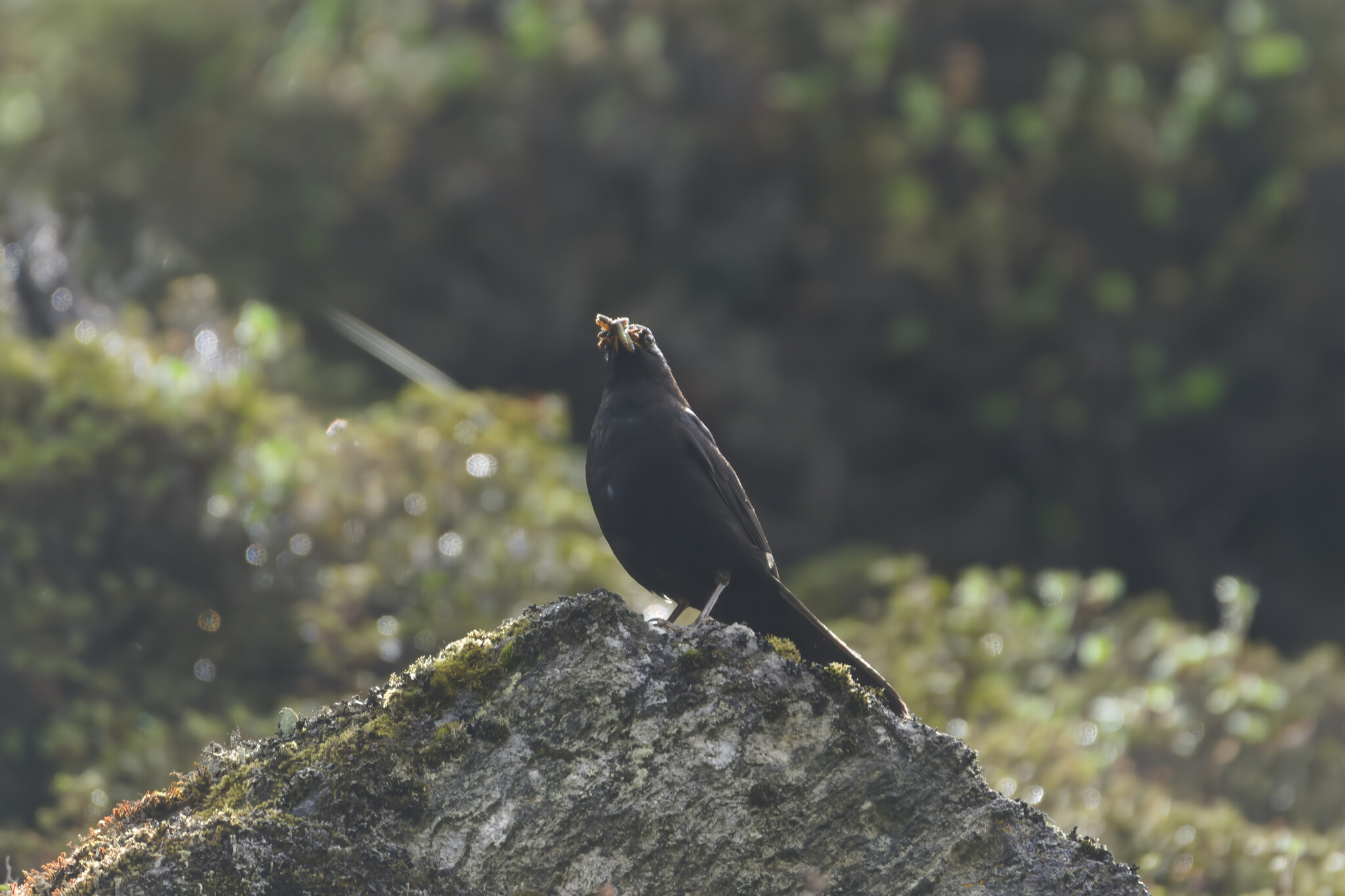
A species of bird in the thrush family Turdidae. Found in the Himalayas from northern Pakistan to southeastern Tibet. Inhabits steep grassy, rocky slopes and alpine meadows above the tree line at elevations of 3,200–4,800 metres. Originally described as a separate species in 1881, it was considered a subspecies of the common blackbird until 2008 when phylogenetic evidence revealed it was only distantly related. Distinguished by its complete lack of an eye-ring and reduced song. Listed as least concern by the IUCN due to its large range, large population, and increasing population trend.
Description
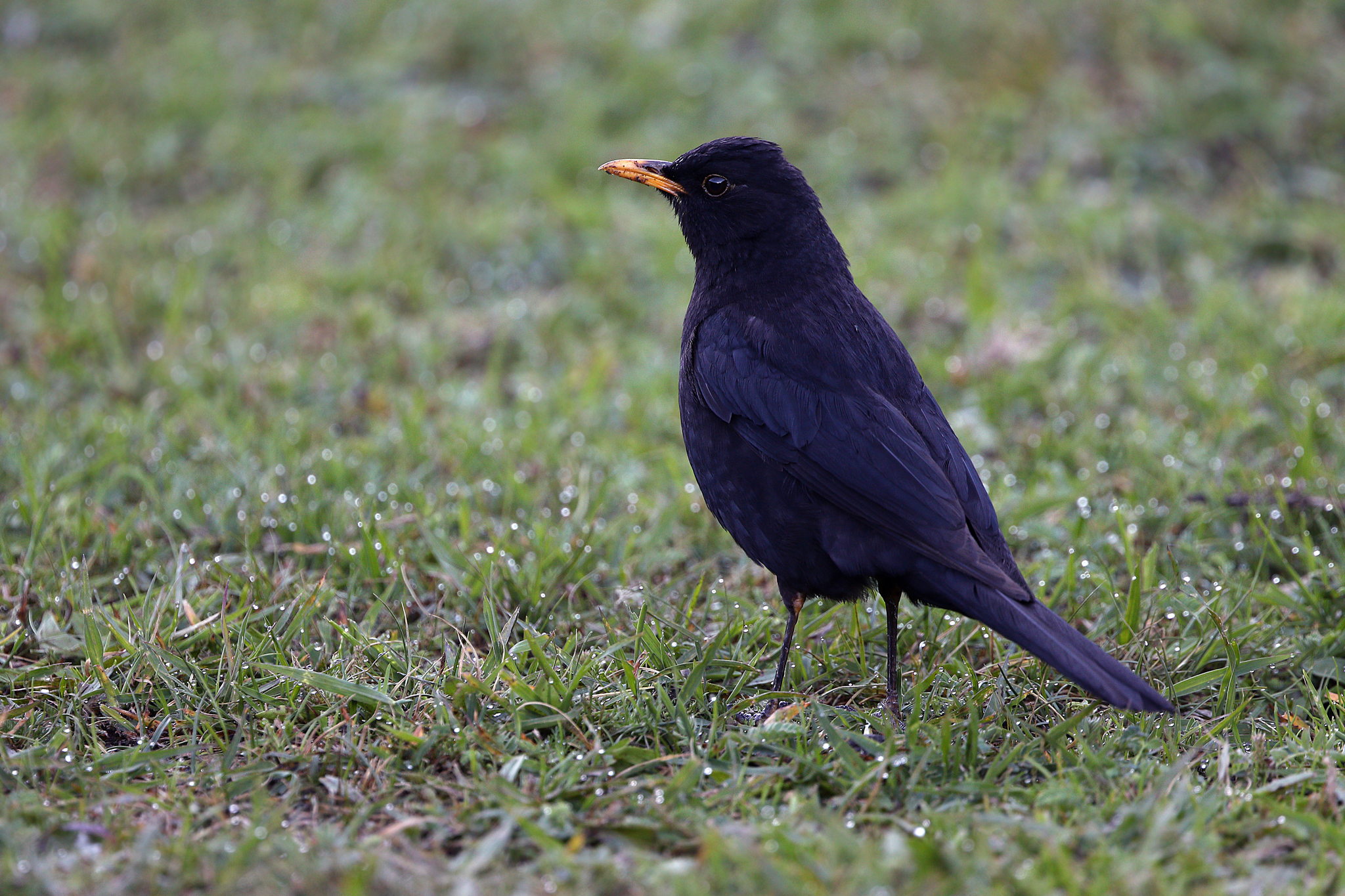
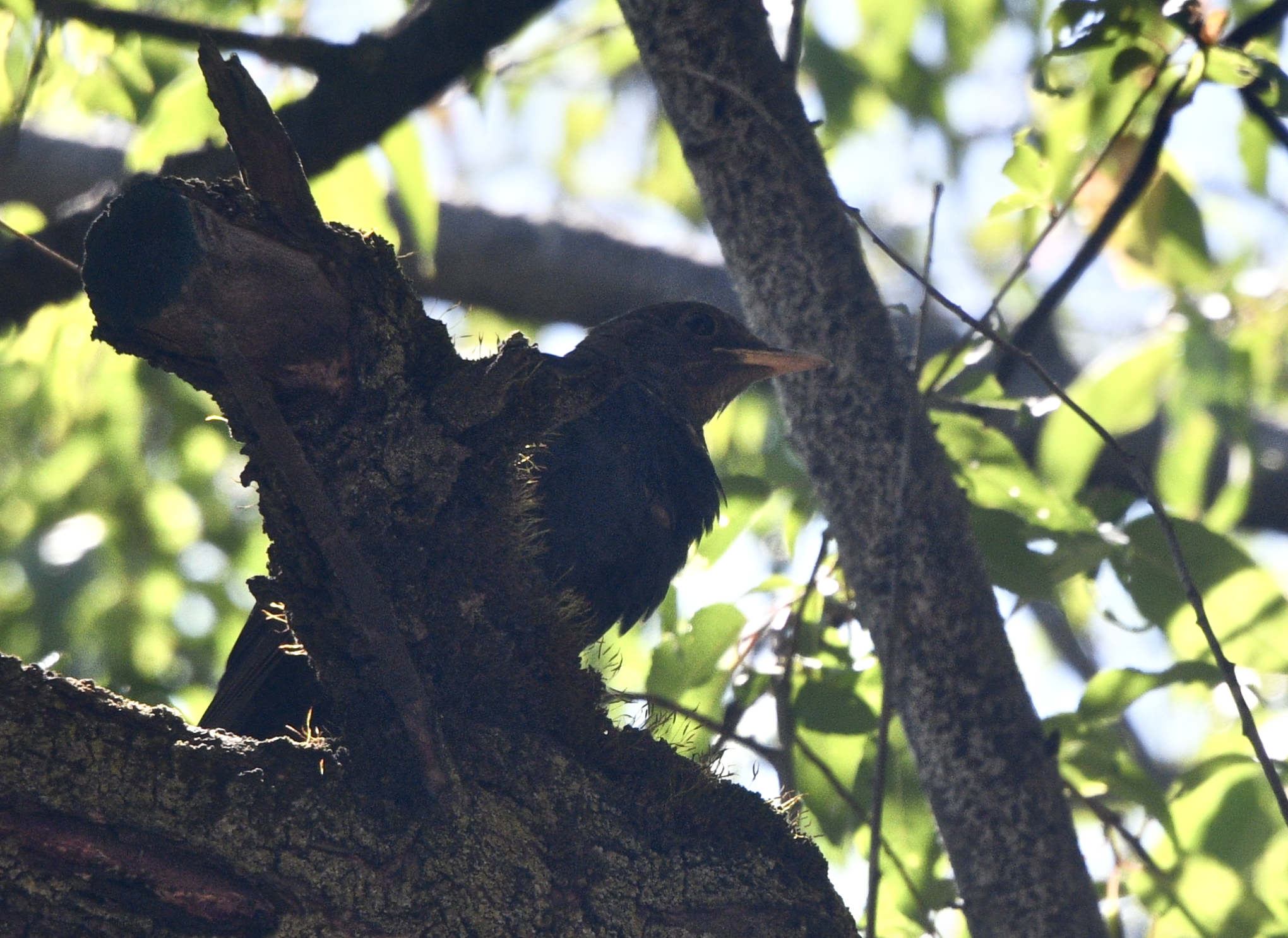
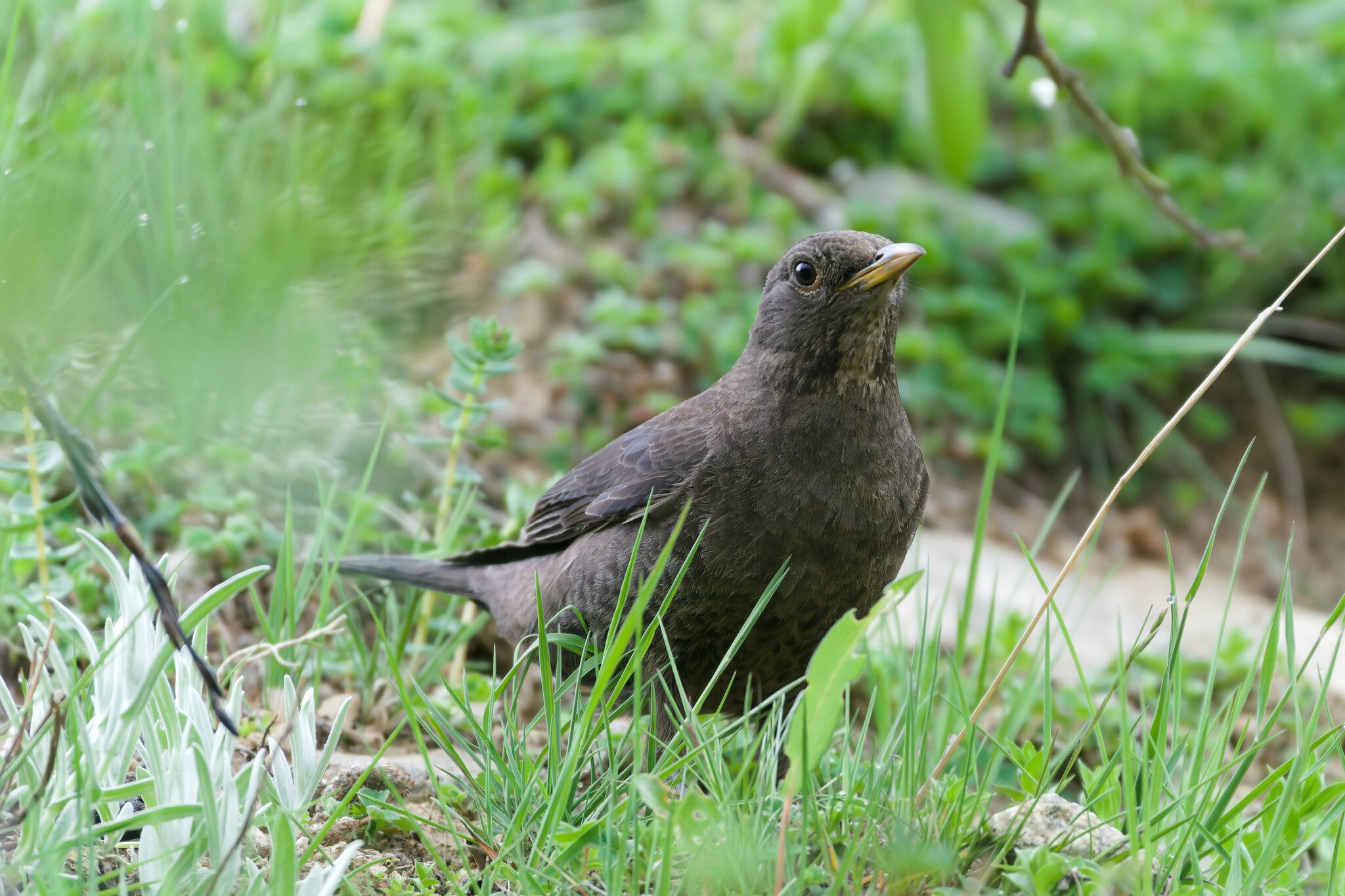
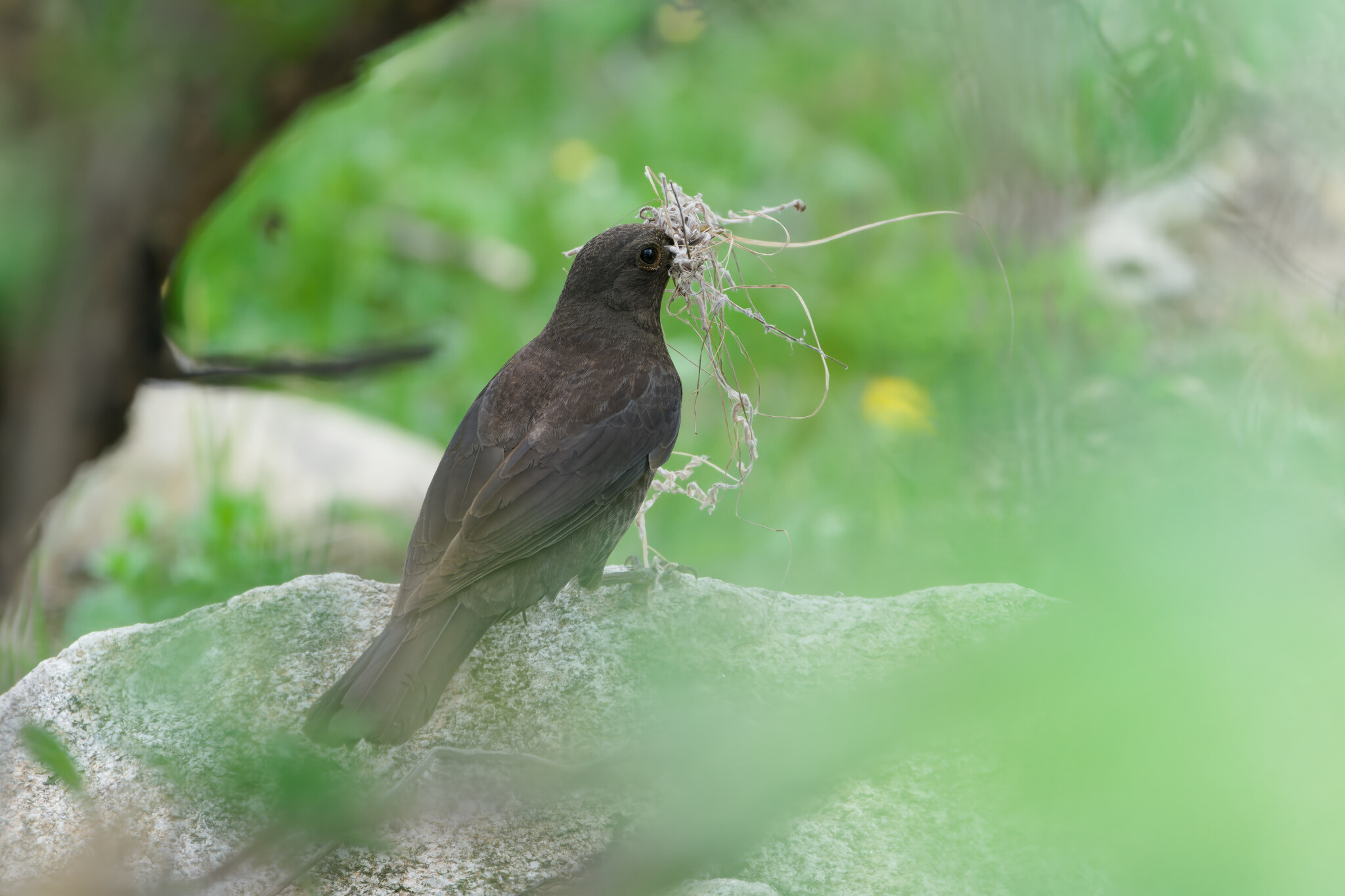
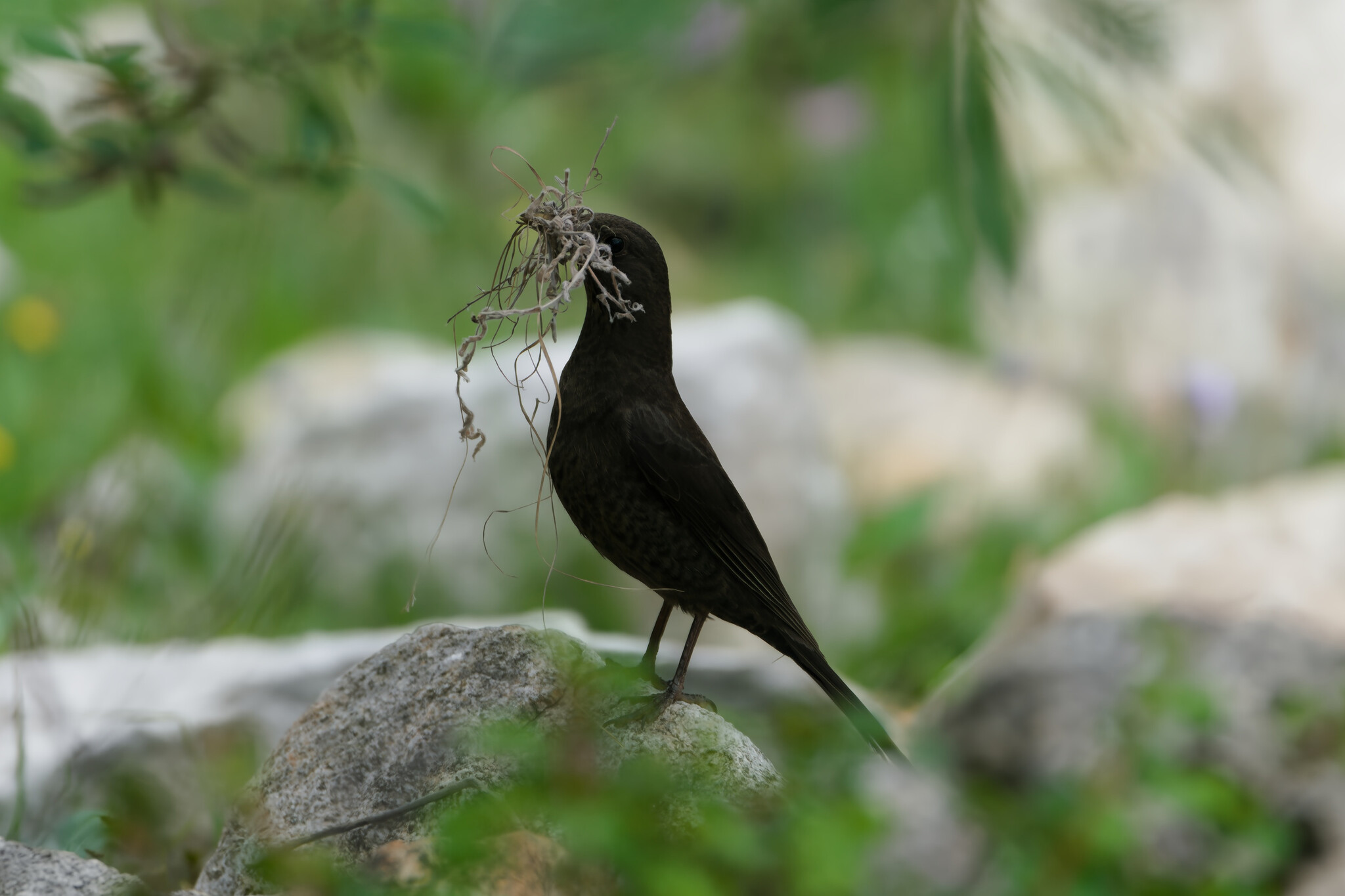
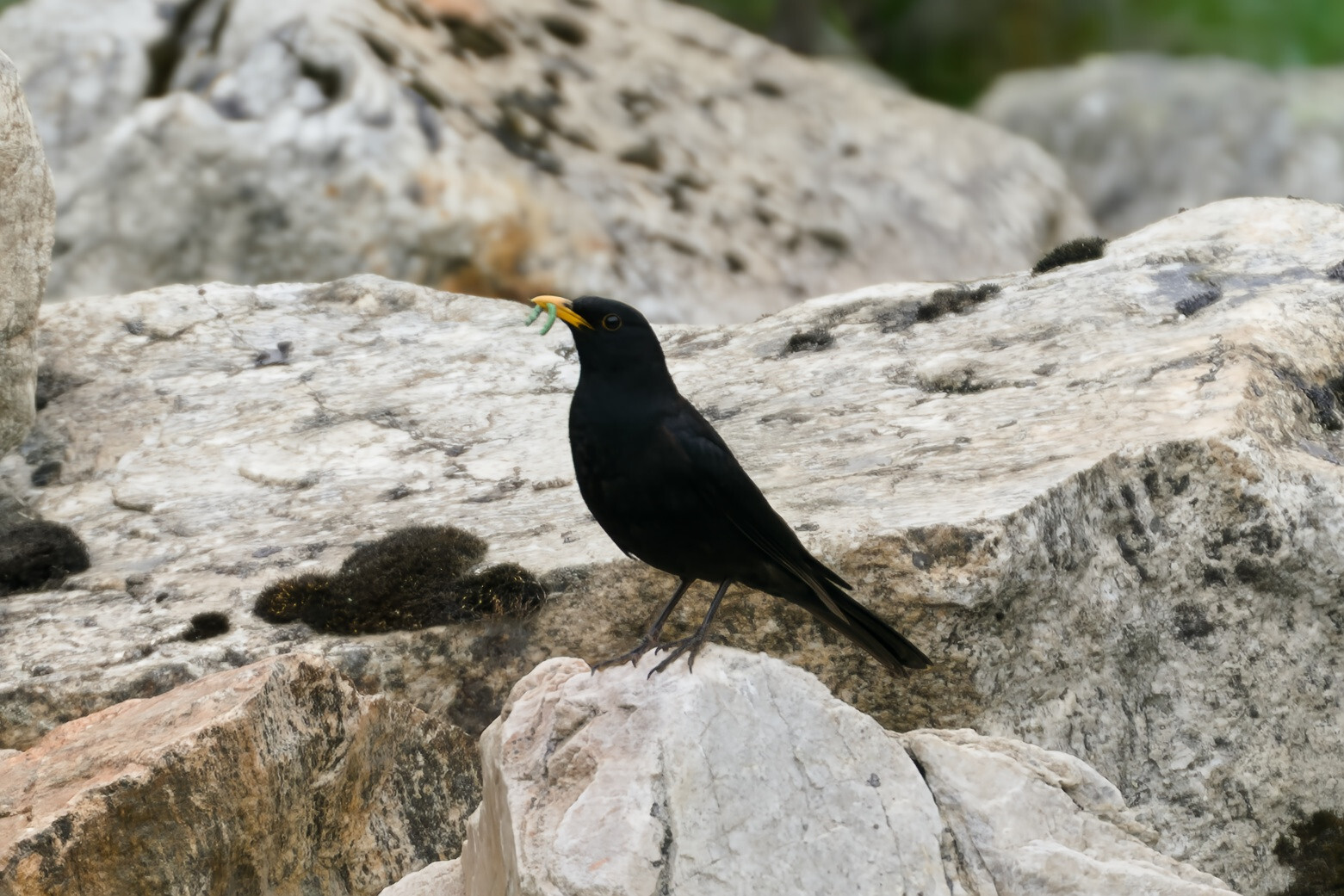
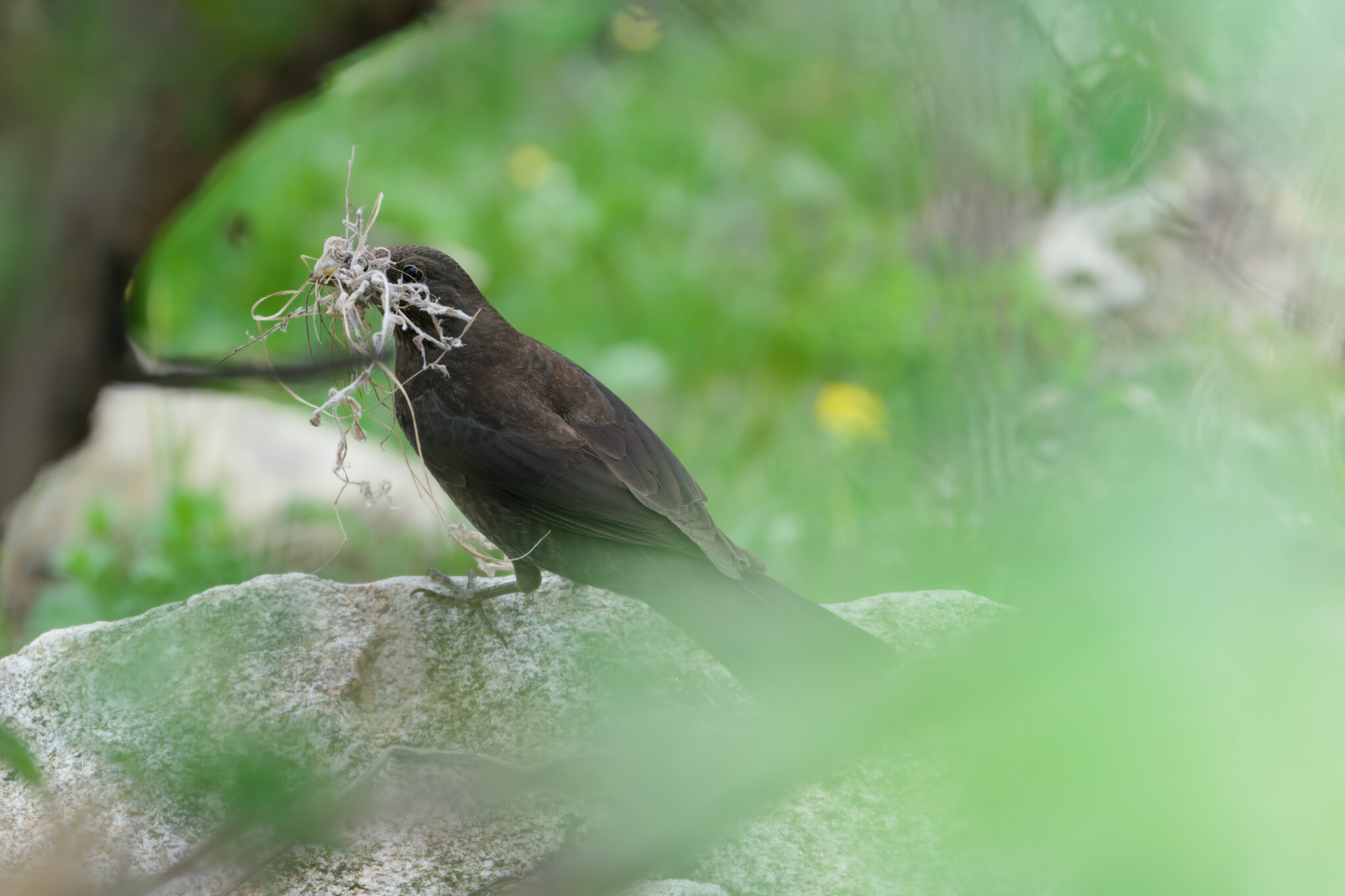
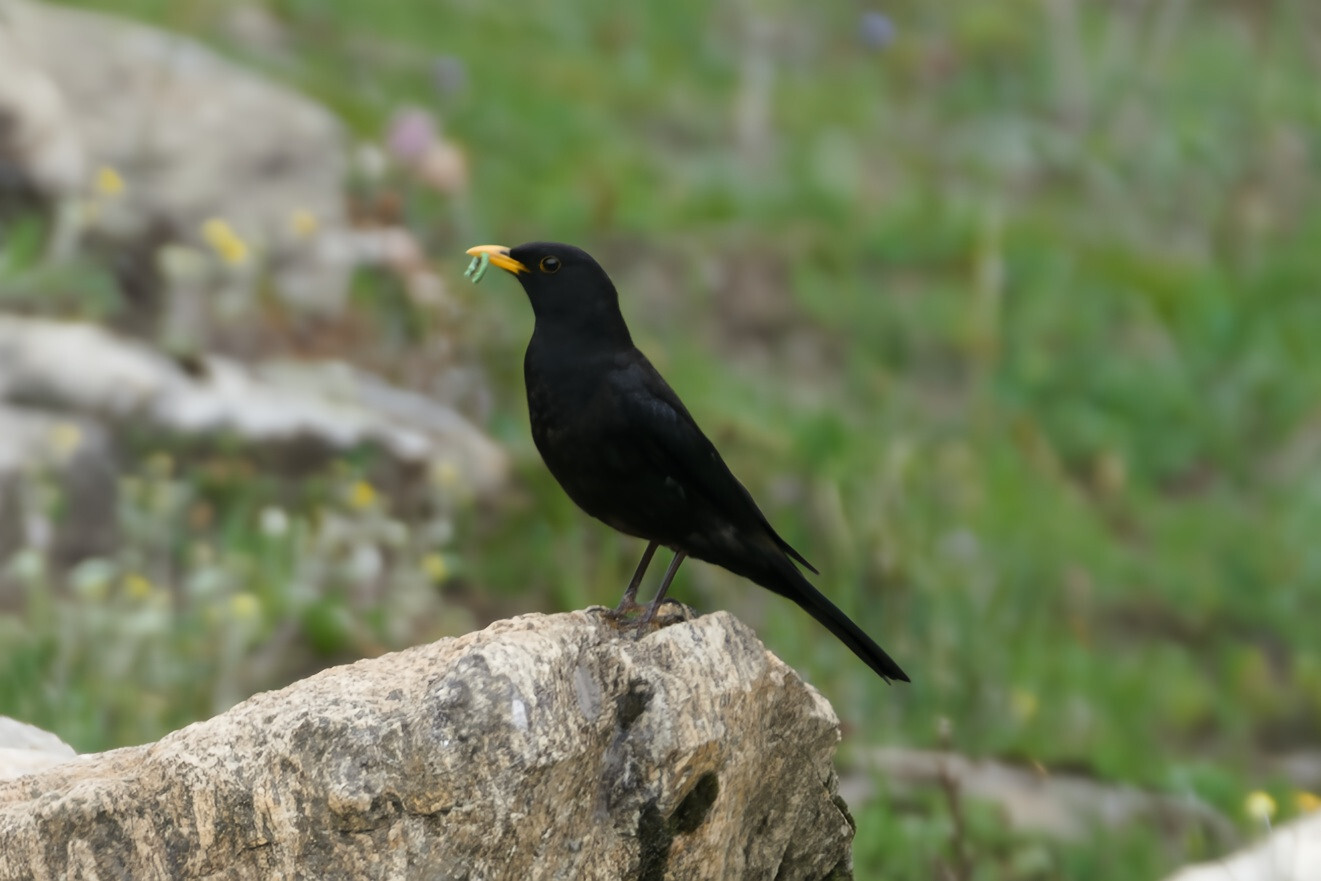
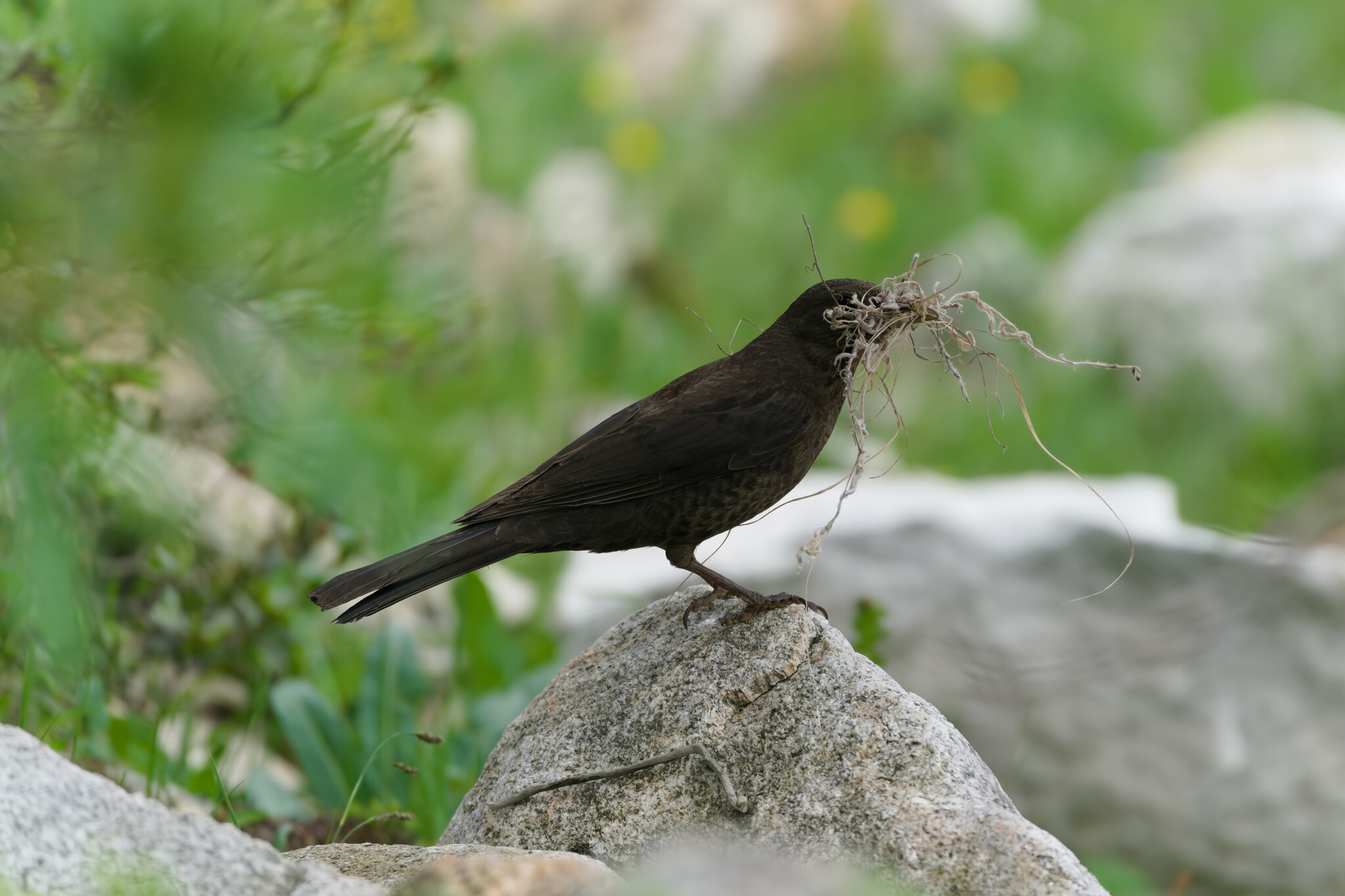
A relatively large thrush measuring 23–28 centimetres in length. Males are brownish-black overall with darker plumage on the head, breast, wings, and tail, and possess dull orange-yellow bills. Females have blackish-brown upperparts and browner underparts with faint streaking on the throat and a dull darkish yellow bill. Both sexes may appear slightly hooded. Juveniles resemble females but show greyish-buff coloring on the back, wing-coverts, and rump, along with greyish-buff streaking on the throat and barring on the belly to vent.
Identification
Distinguished from the common blackbird by its complete lack of an eye-ring and reduced song. Males are entirely blackish-brown with darker head and breast, lacking the orange-yellow bill base seen in common blackbirds. The song differs significantly, lacking the melodious warbles and trills of the common blackbird, instead consisting of rapid grating notes and unpleasant sounds.
Distribution & Habitat
Found locally throughout the Himalayas in India, Pakistan, Nepal, Bhutan, and China. During the breeding season, inhabits steep grassy, rocky slopes and alpine meadows just above the tree line at elevations of 3,200–4,800 metres. In winter, descends to lower elevations but rarely goes below 3,000 metres.
Behavior & Ecology
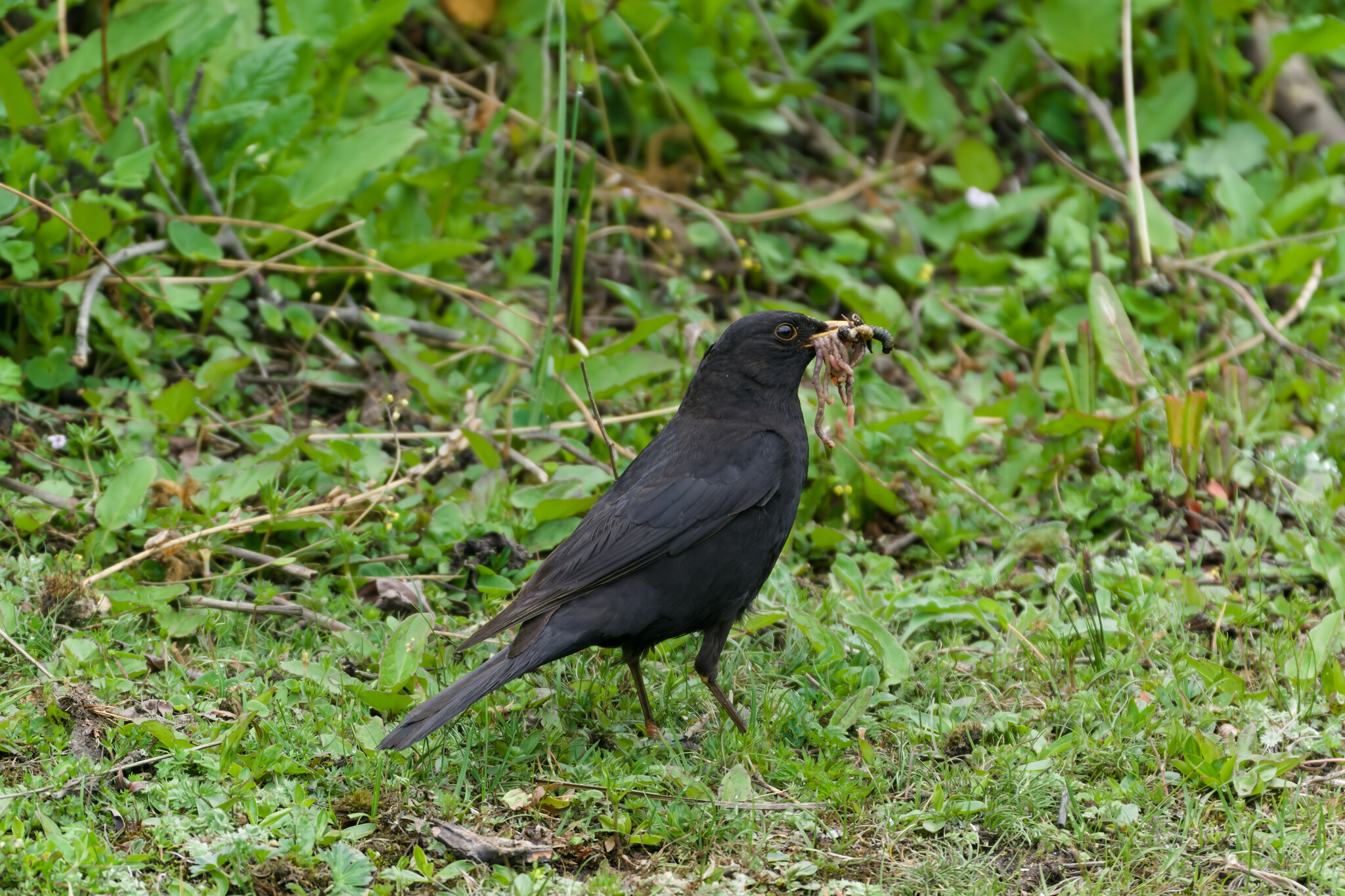
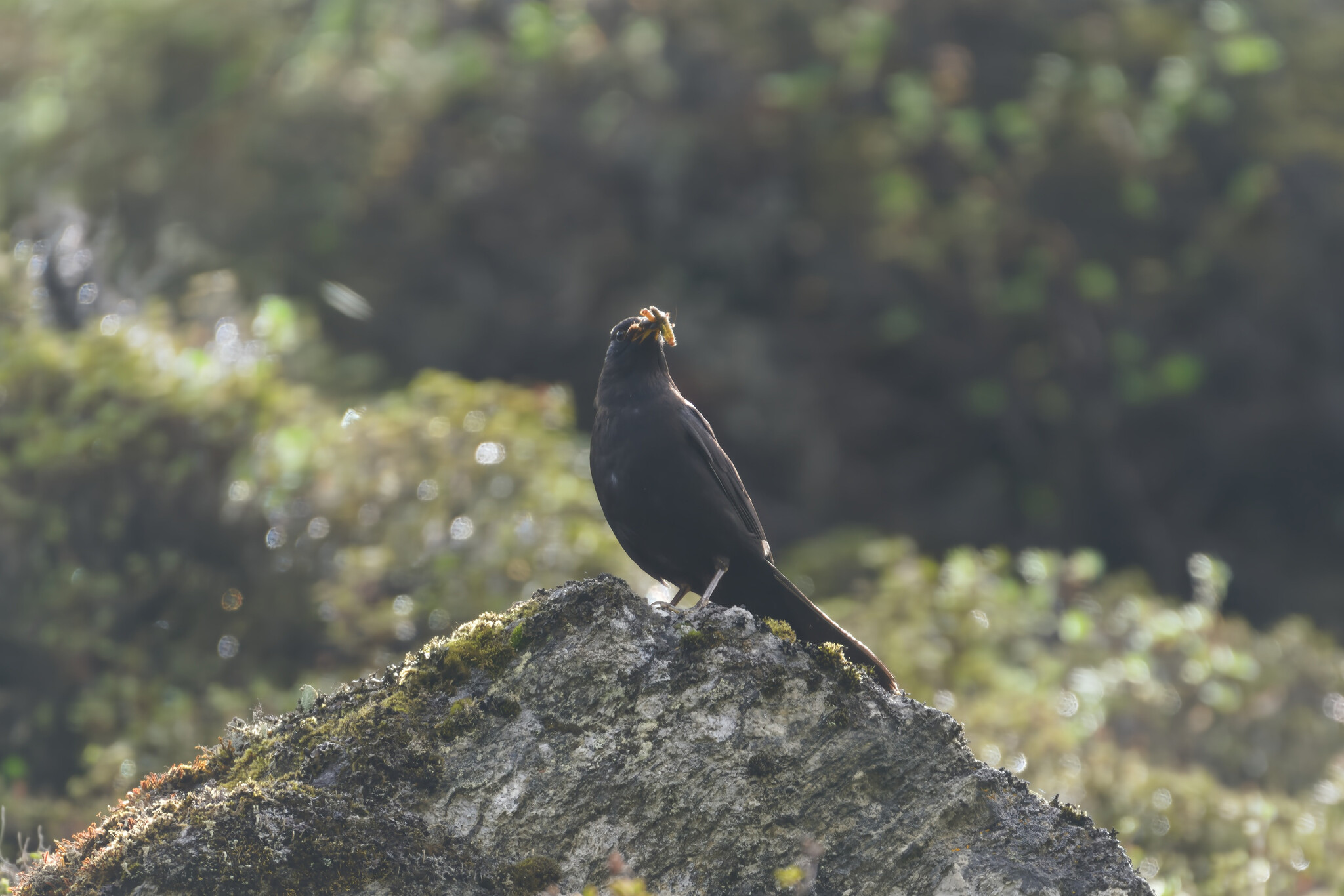
Omnivorous, feeding on earthworms, molluscs, insects, small lizards, fruit, and seeds. Forages on the ground by hopping over rocks and boulders, favoring soft bare ground at the edge of melting snow. In late summer, forages in flocks of up to ten individuals. Breeding occurs from May to July, peaking from June to early July. Builds bulky cup nests with mud, animal hair, and fine grass in juniper or rhododendron bushes. Lays clutches of 3–4 dull buff to grey eggs with brown blotches. Incubation lasts 12–13 days and nestlings fledge after 16–18 days. Song consists of rapid grating notes, squeaks, drongo-like wheezes, and guttural caws. Calls include a low-pitched chut-ut-ut, staccato chak-chak-chak-chak in flight, and a rattling chow-jow-jow-jow as an alarm call.
Conservation
Listed as least concern on the IUCN Red List due to its very large range, large population size, and population that appears to be increasing. No specific threats are identified in the available information.
Culture
No cultural information available.
Source: Wikipedia · CC BY-SA 3.0
Taxonomy
- Order
- Passeriformes
- Family
- Turdidae
- Genus
- Turdus
- eBird Code
- tibbla1
Distribution
western Pakistan and India to Sikkim, Bhutan, and southeastern Tibet
Data Sources
Species description from Wikipedia, licensed under CC BY-SA 3.0.
Bird images and sounds sourced from GBIF, contributed by citizen scientists worldwide under Creative Commons licenses.
Taxonomy data from AviList 2025.