Redwing
Turdus iliacus
白眉歌鸫
Introduction
A thrush (family Turdidae) native to Europe and the Palearctic. Breeds in conifer and birch forests and tundra across northern Europe from Iceland through Scandinavia and Russia to Chukotka. A migratory species forming loose flocks of 10-200 individuals during winter, often feeding with fieldfares, blackbirds, and starlings. The global population is estimated at 98-151 million individuals, with European populations numbering 26-40 million. Classified as Near Threatened due to suspected population declines exceeding 30% over three generations.
Description
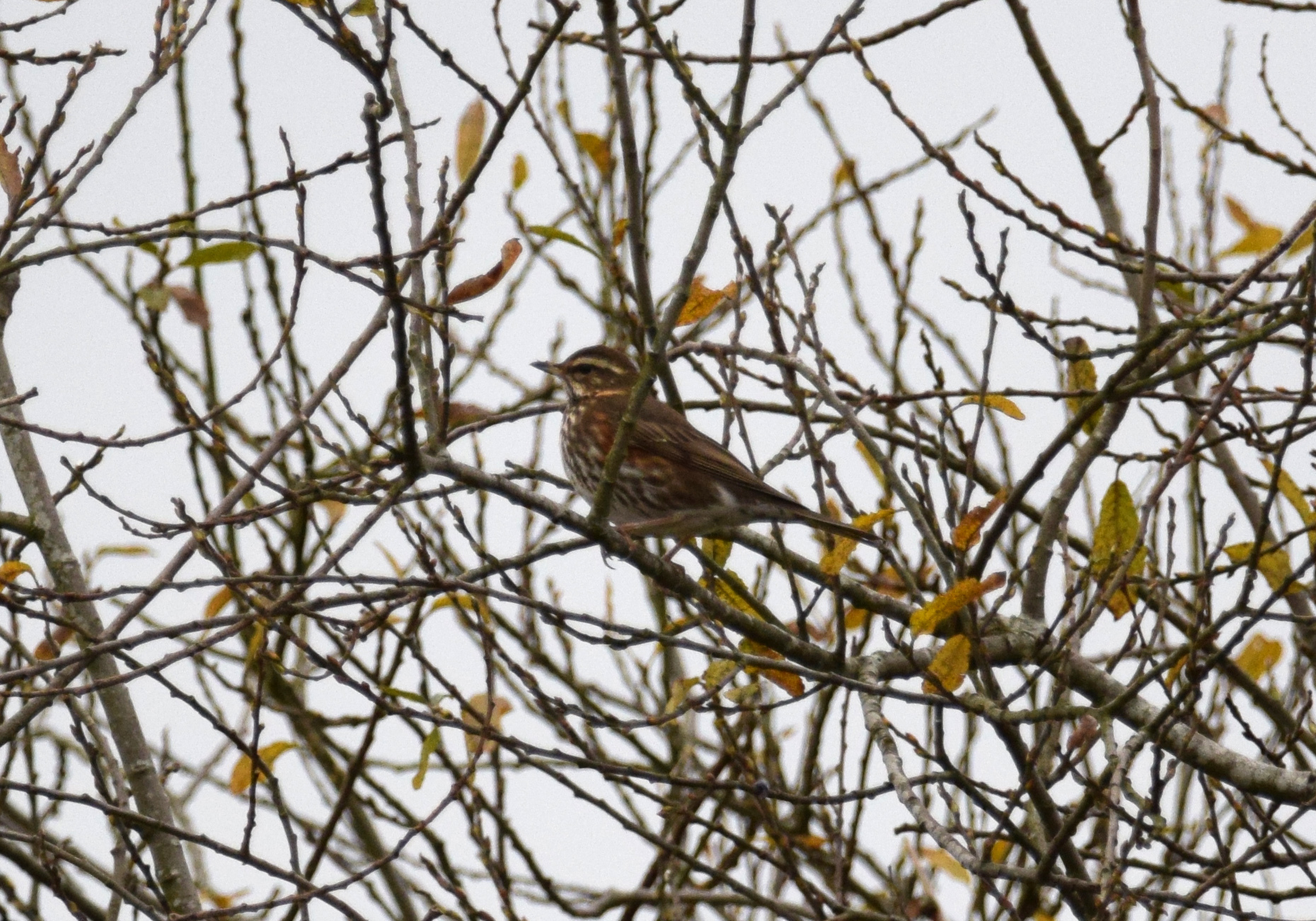
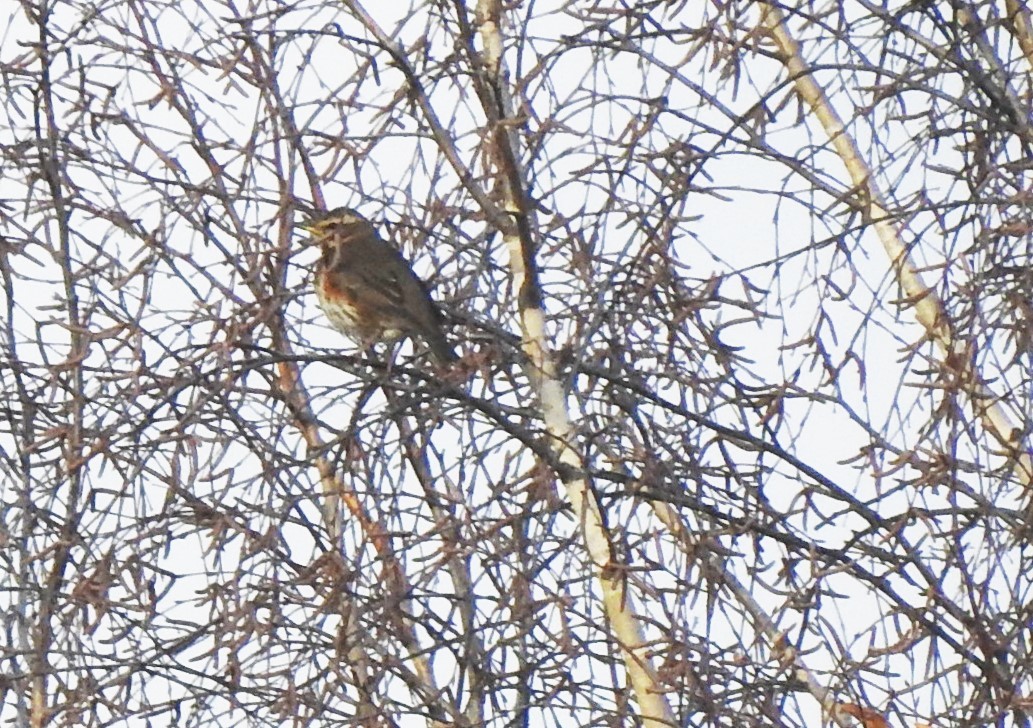
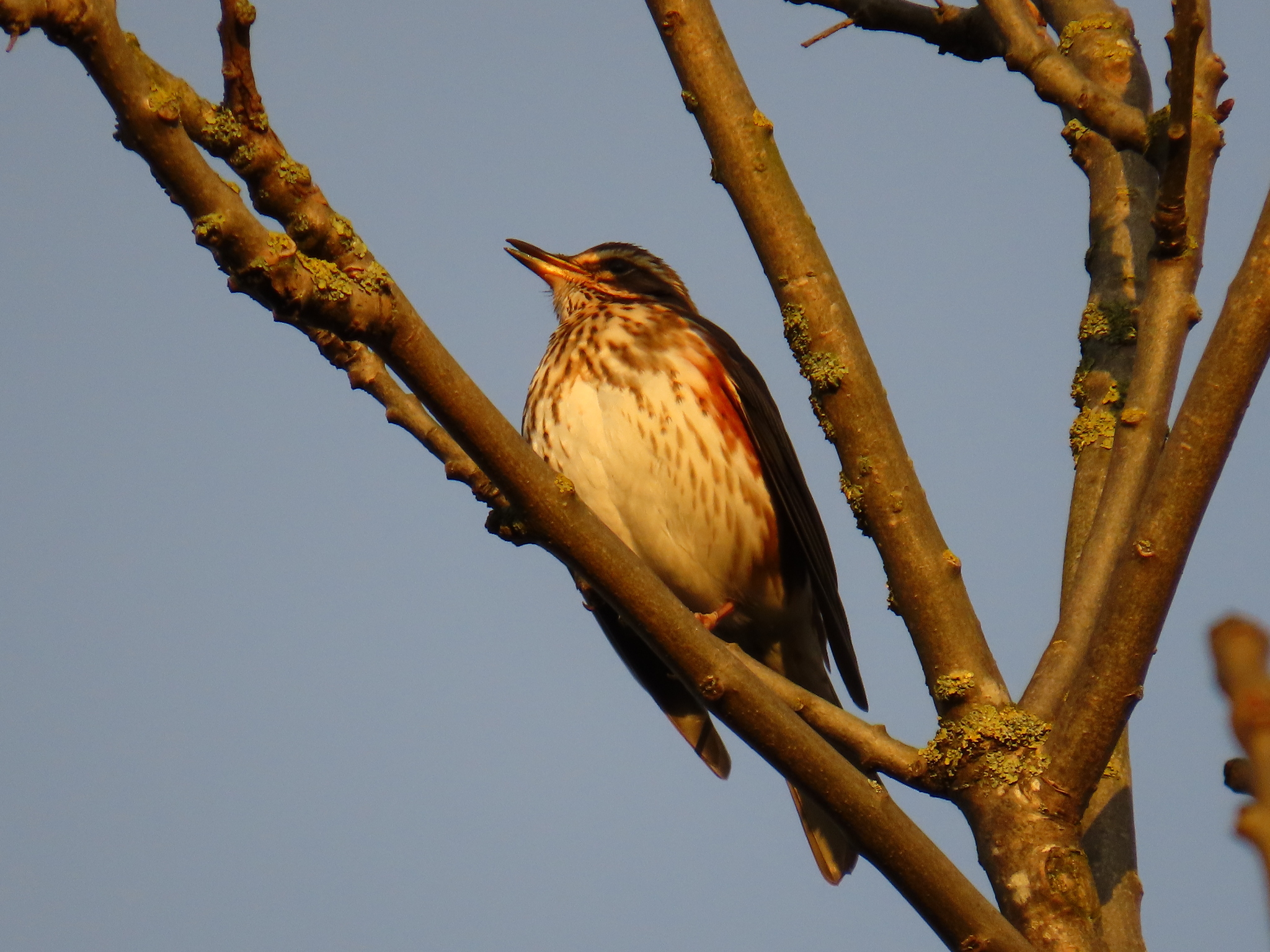
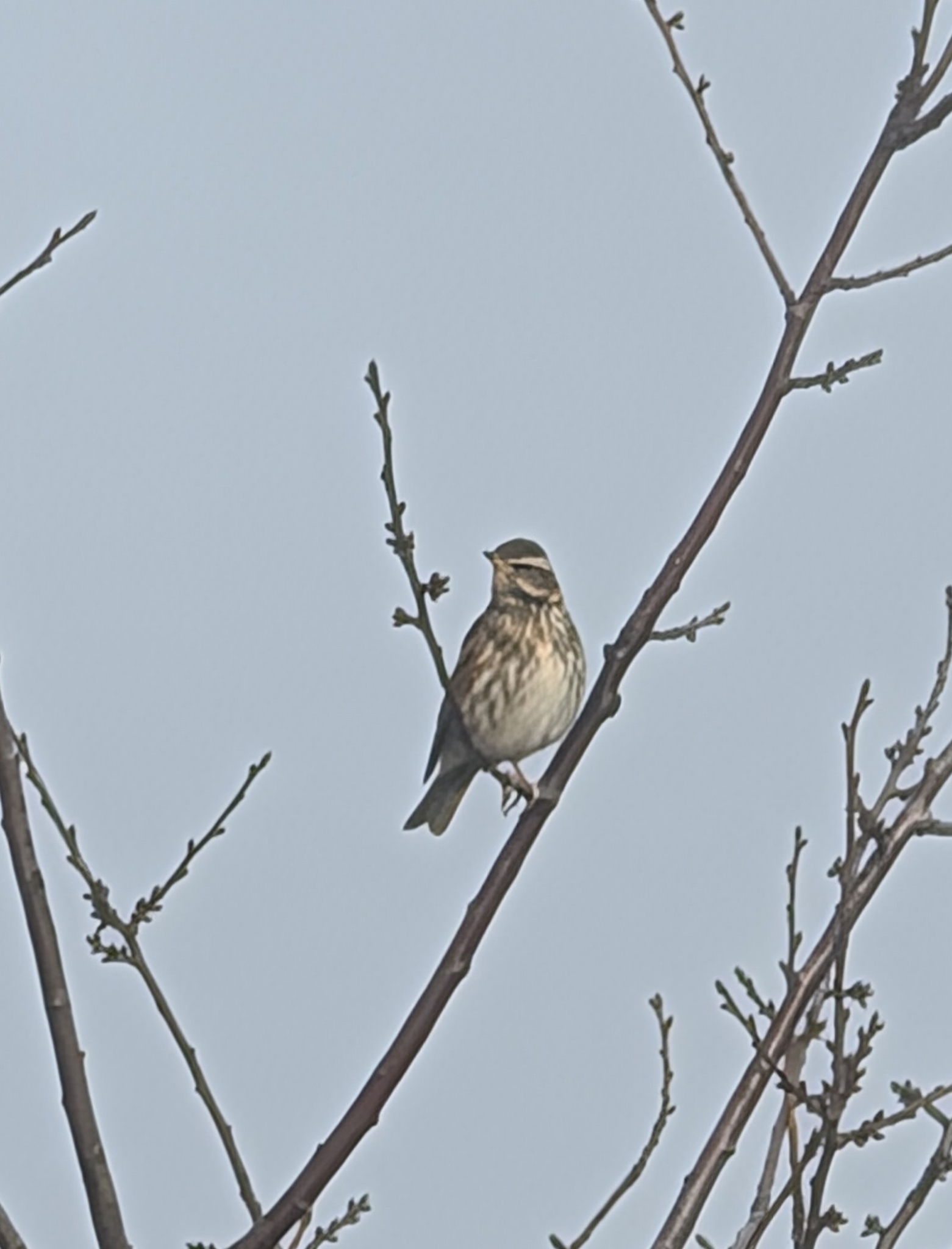
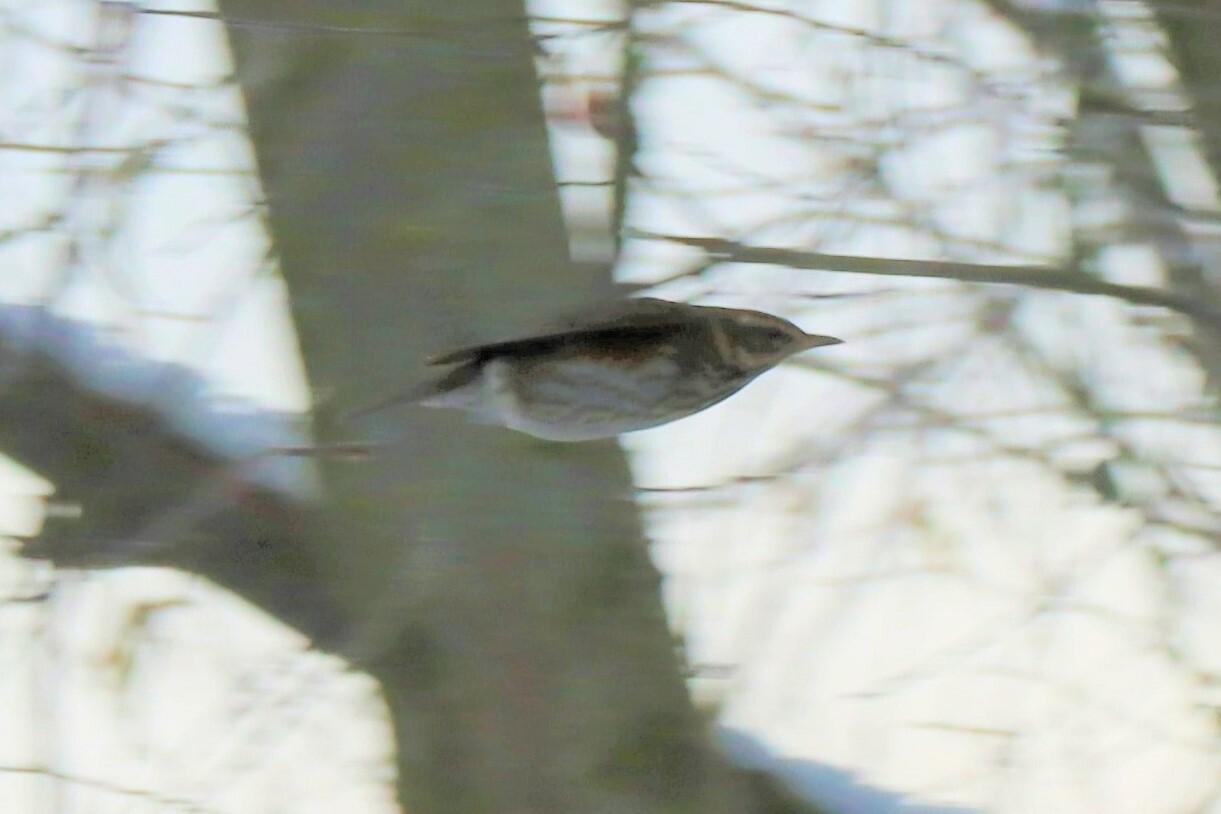
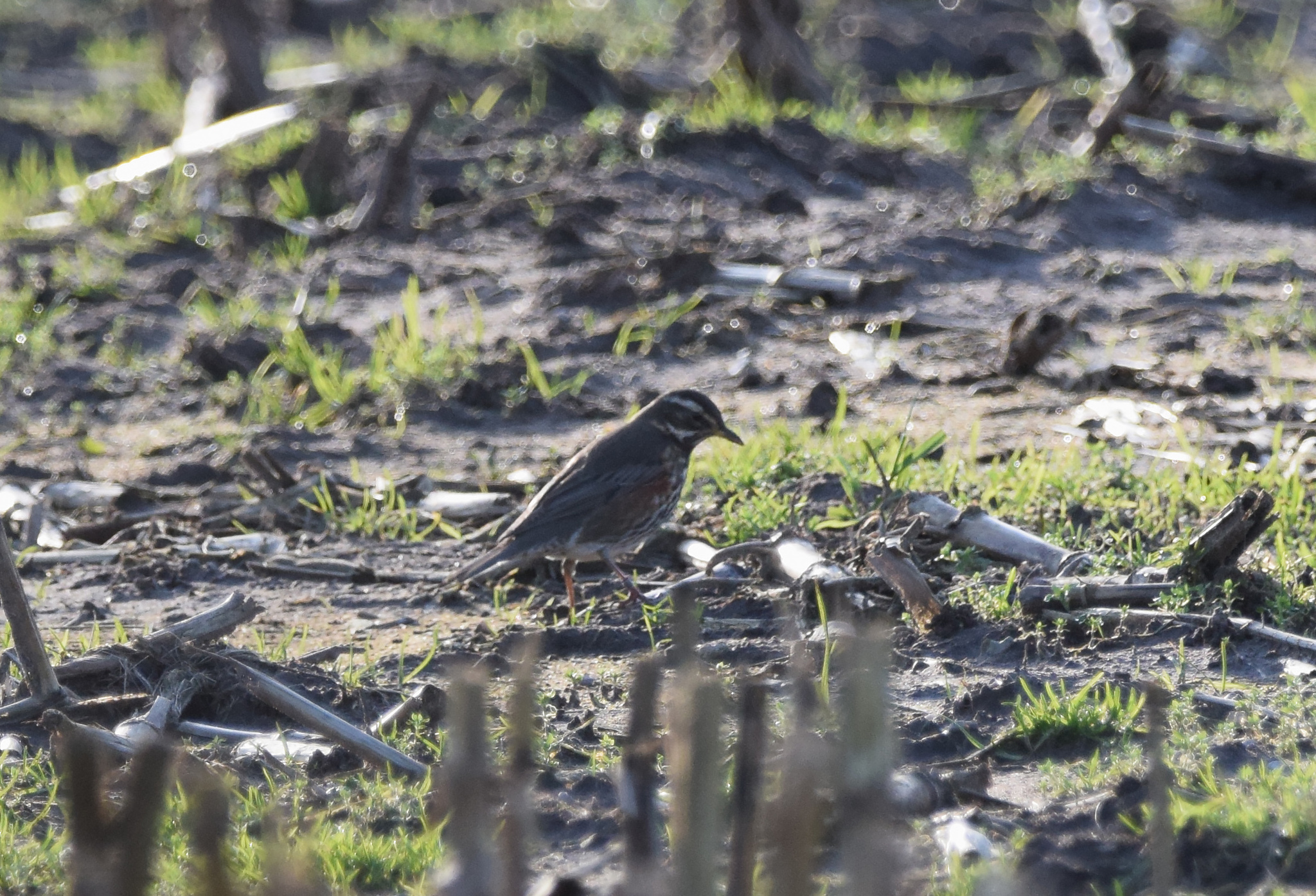
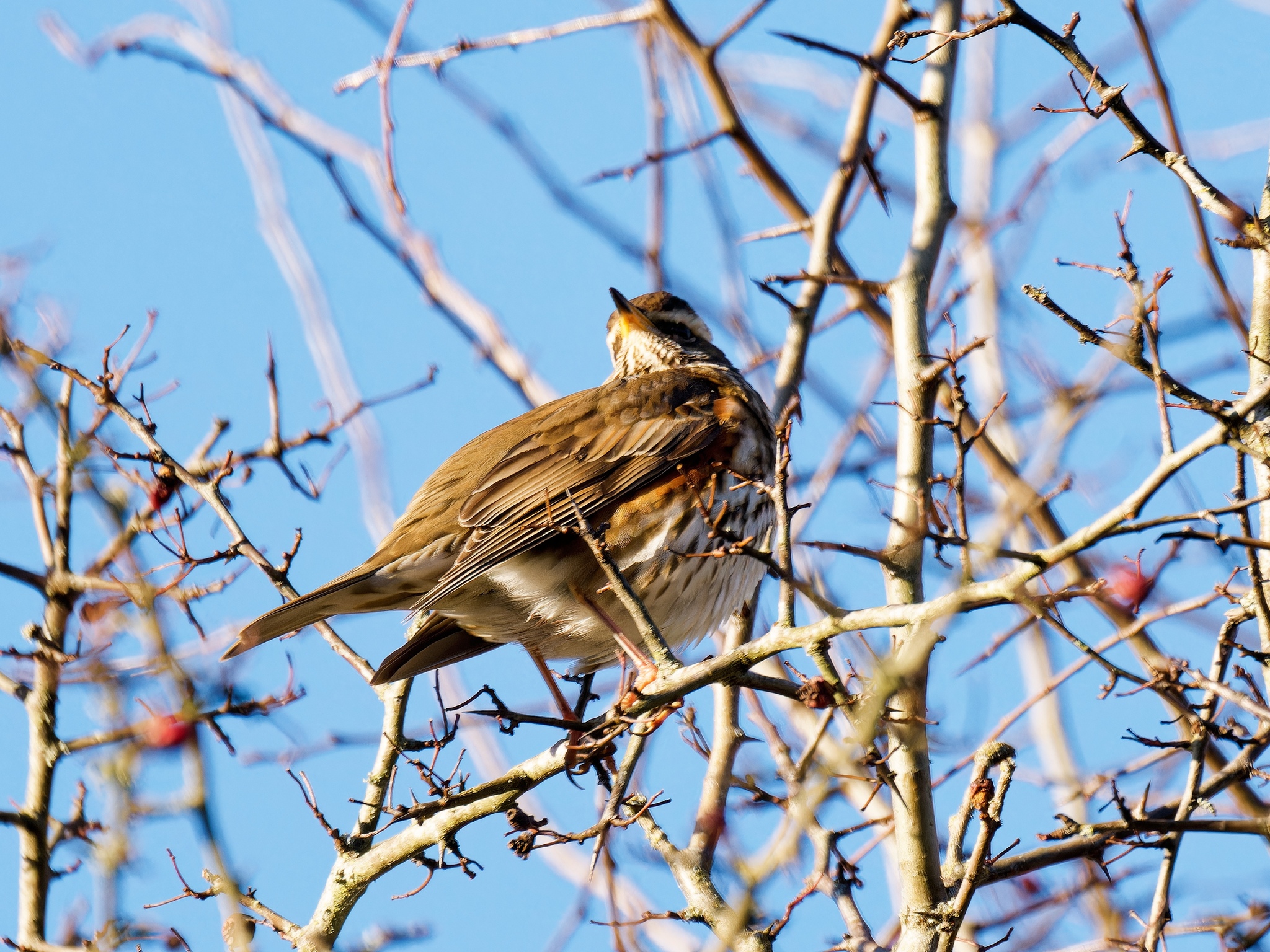
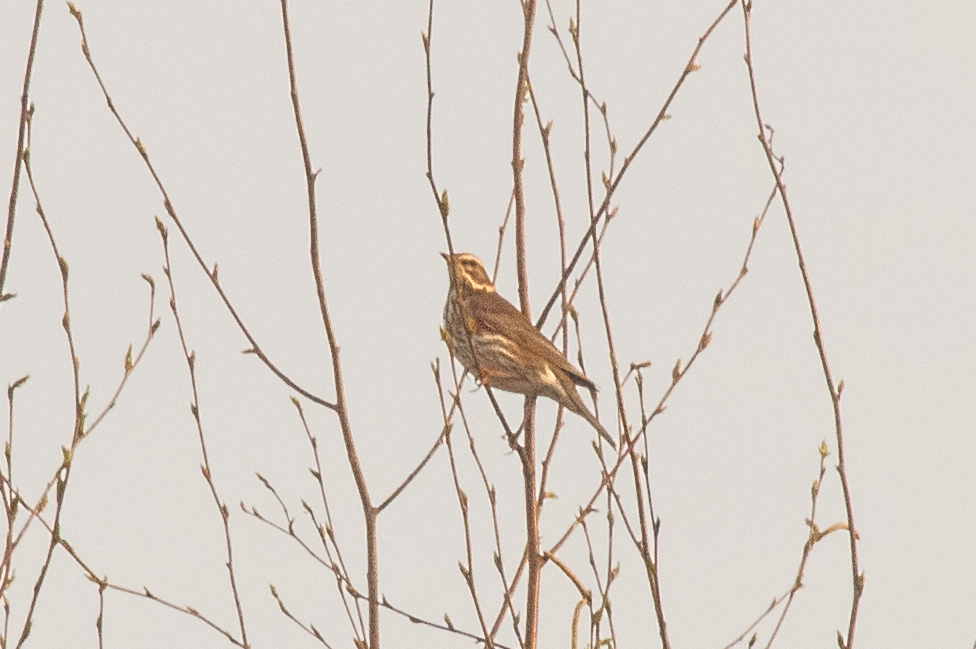
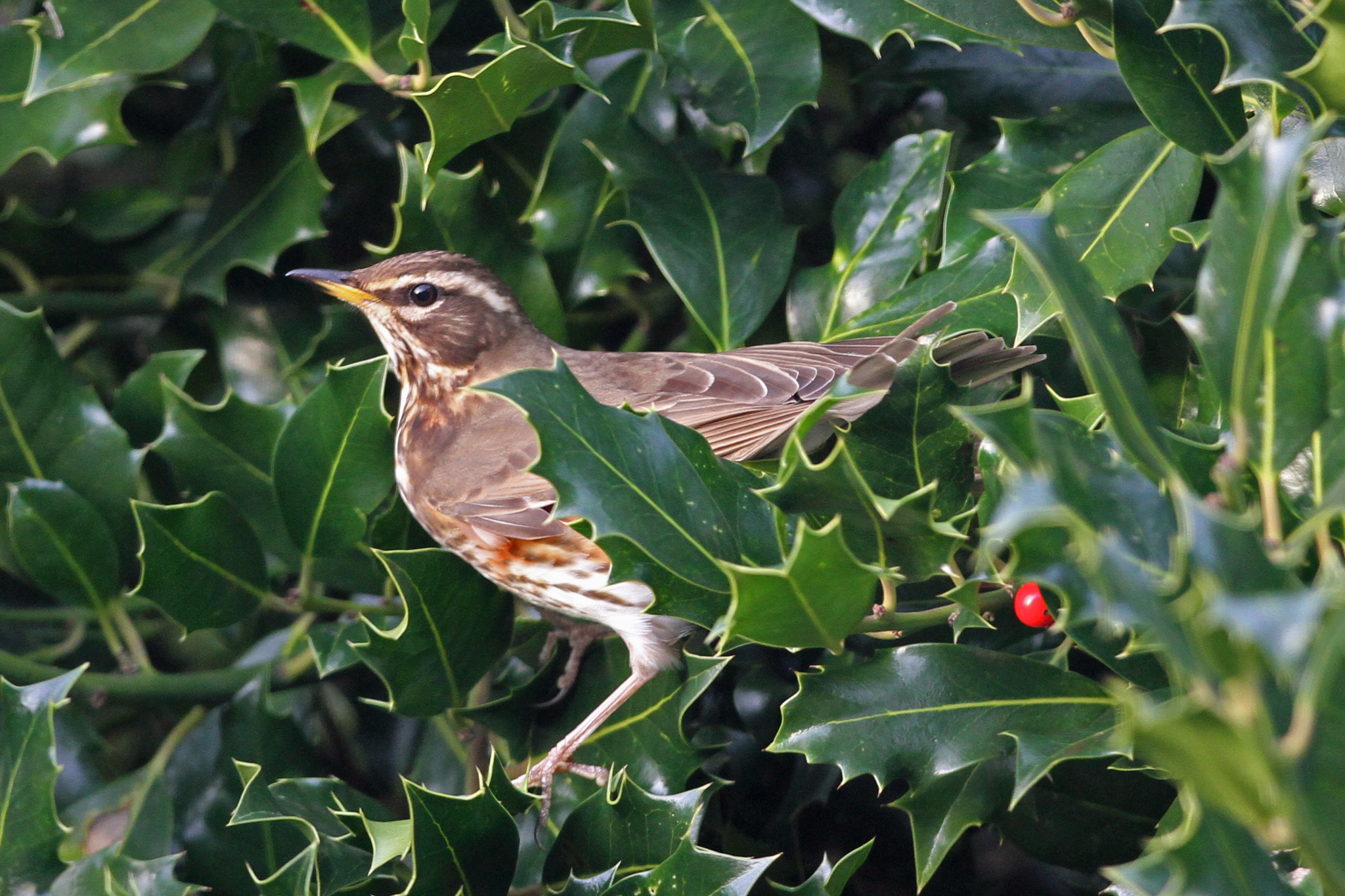
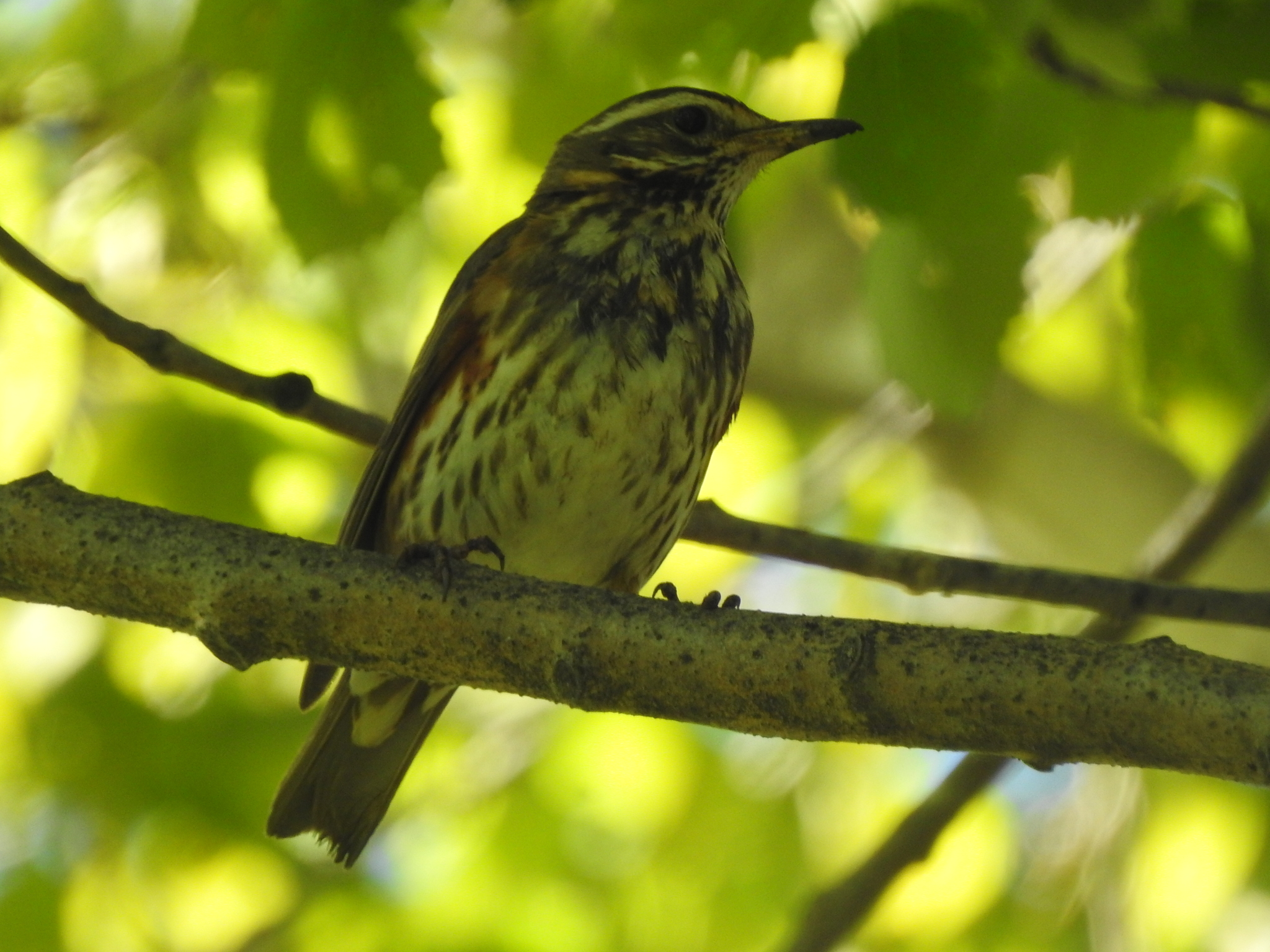
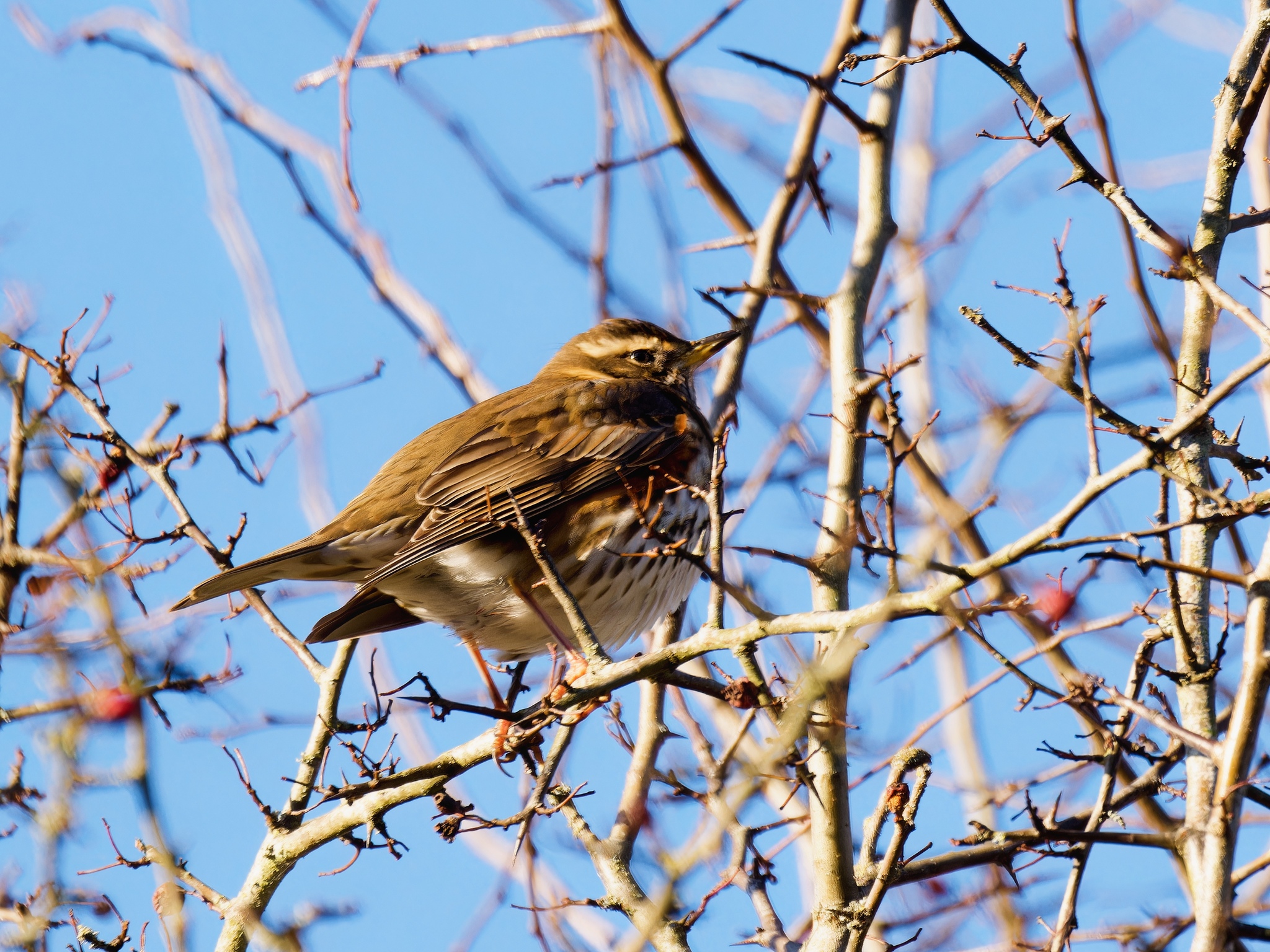
A medium-sized thrush measuring 20-24 cm in length with a wingspan of 33-34.5 cm and weighing 50-75 g. Sexes are similar in appearance with plain brown upperparts and dark brown spotting on white underparts. The most distinctive features are the brick-red flanks and underwing coverts, and a creamy white supercilium (stripe above the eye). Adults undergo a complete moult between June and September.
Identification
The red flanks and underwing are the most striking field marks, along with the creamy white stripe above the eye. Slightly smaller than the related song thrush, though plumage is similar. Can be distinguished from other Turdus thrushes by the combination of red underwing and facial stripe. Not related to the North American red-winged blackbird despite both sharing 'redwing' in their common names.
Distribution & Habitat
Breeds across northern Europe and the Palearctic from Iceland south to northern Scotland, east through Scandinavia, the Baltic States, northern Poland and Belarus, and across Russia to approximately 165°E in Chukotka. Range has expanded slightly into northern Ukraine and southern Greenland (colonized 1990-1991). Winters in western, central and southern Europe, northwest Africa, and southwest Asia east to northern Iran. Some populations in southwestern Norway are resident. Eastern breeders migrate 6,500-7,000 km to wintering grounds. Vagrant records exist from North America.
Behavior & Ecology
Omnivorous diet consisting of insects and earthworms year-round, supplemented by berries in autumn and winter, particularly rowan and hawthorn. Migrates at night, often forming loose flocks of 10-200 birds. Makes a distinctive 'Tseep' contact call. Breeding occurs in conifer and birch forests and tundra; nests are built in shrubs or on the ground. Lays 4-6 eggs measuring 2.6 x 1.9 cm and weighing 4.6 g. Incubation lasts 12-13 days, chicks fledge after 12-15 days and remain dependent for another 14 days. Does not typically return to the same wintering areas annually.
Conservation
Classified as Near Threatened on the IUCN Red List. The species has an extensive range of 10 million square kilometres with an estimated global population of 98-151 million individuals. European populations number 26-40 million (about 40% of global total). Population declines are suspected to approach the 30% threshold over three generations. Threats include severe winters causing high mortality and cold wet summers reducing breeding success.
Culture
The English name derives from the bird's red underwing. The binomial Turdus iliacus comes from Latin, meaning 'thrush' and 'flank'. Not closely related to the North American red-winged blackbird, which is sometimes nicknamed 'redwing' but belongs to a different family (Icteridae).
Source: Wikipedia · CC BY-SA 3.0
Taxonomy
- Order
- Passeriformes
- Family
- Turdidae
- Genus
- Turdus
- eBird Code
- redwin
Subspecies (2)
-
Turdus iliacus coburni
breeds Iceland and Faroe Islands; winters to northwestern Europe
-
Turdus iliacus iliacus
breeds northern Europe to central Asia; winters to North Africa and Near East
Data Sources
Species description from Wikipedia, licensed under CC BY-SA 3.0.
Bird images and sounds sourced from GBIF, contributed by citizen scientists worldwide under Creative Commons licenses.
Taxonomy data from AviList 2025.