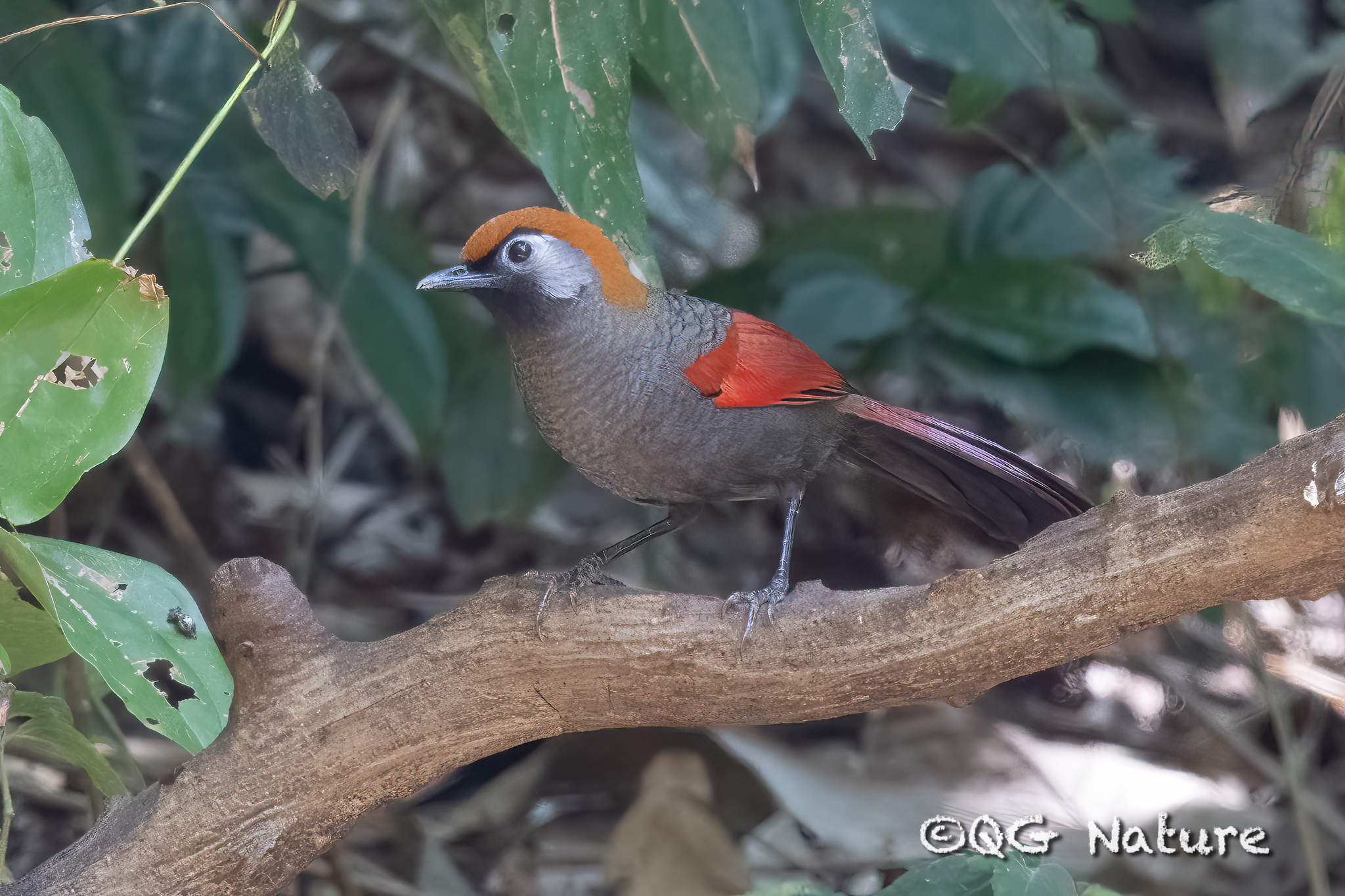
Red-tailed Laughingthrush
Trochalopteron milnei
红尾噪鹛
Introduction
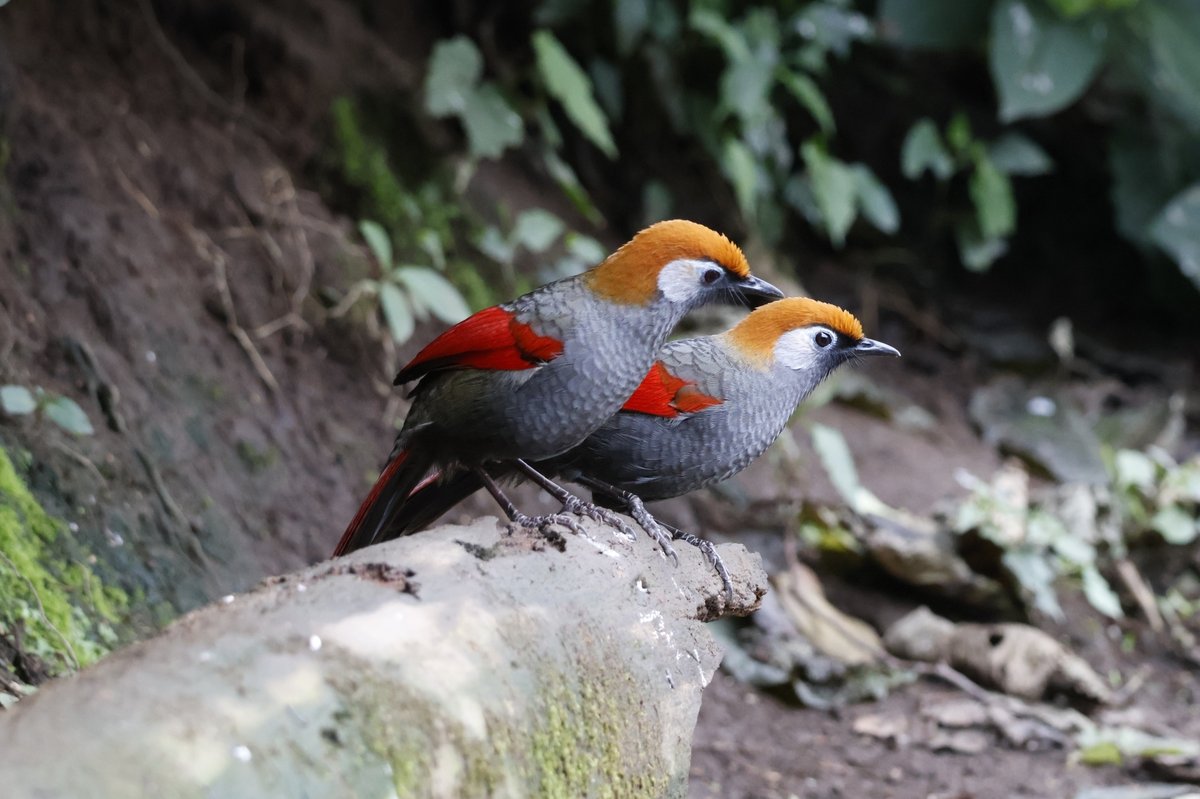
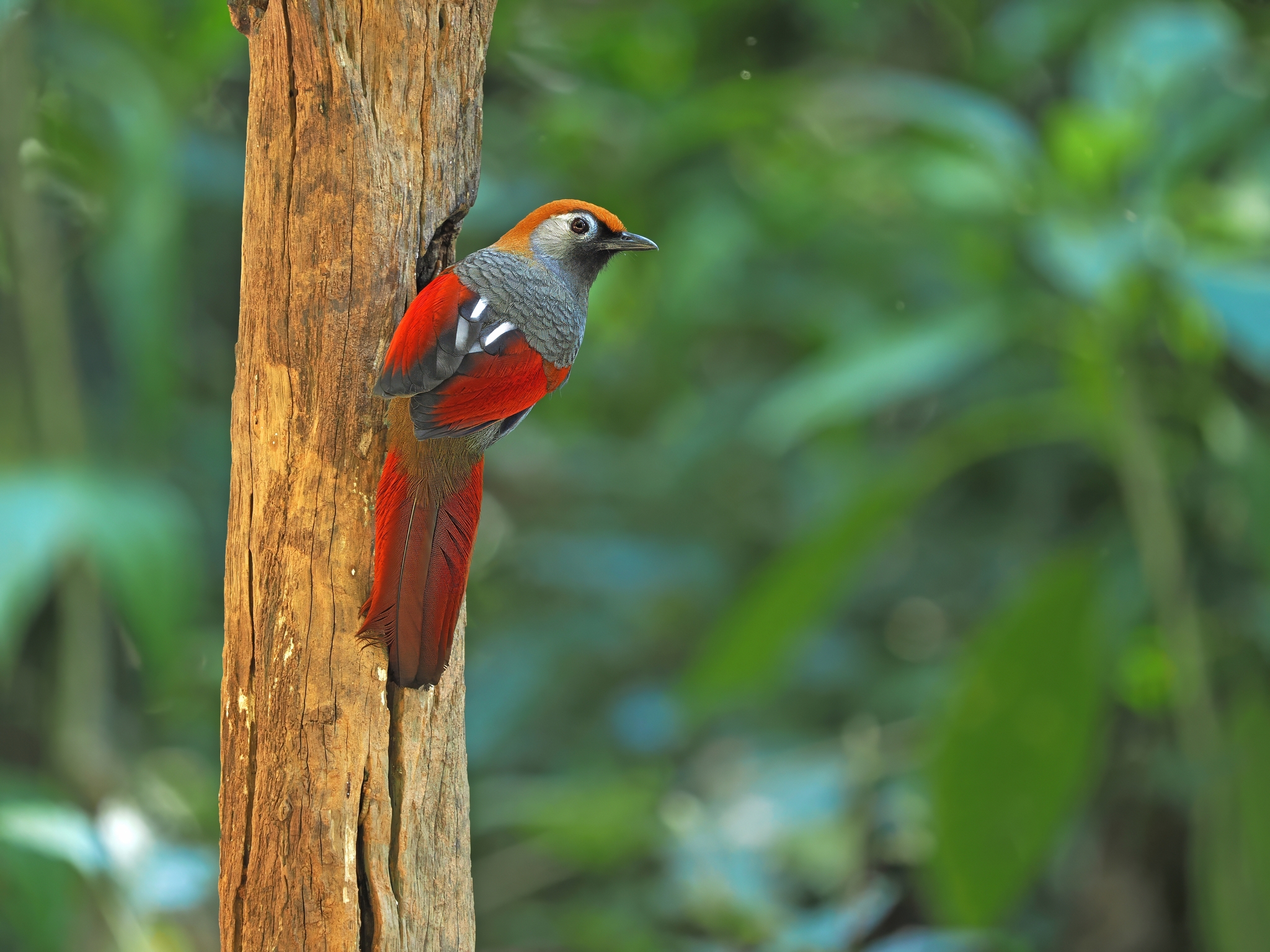
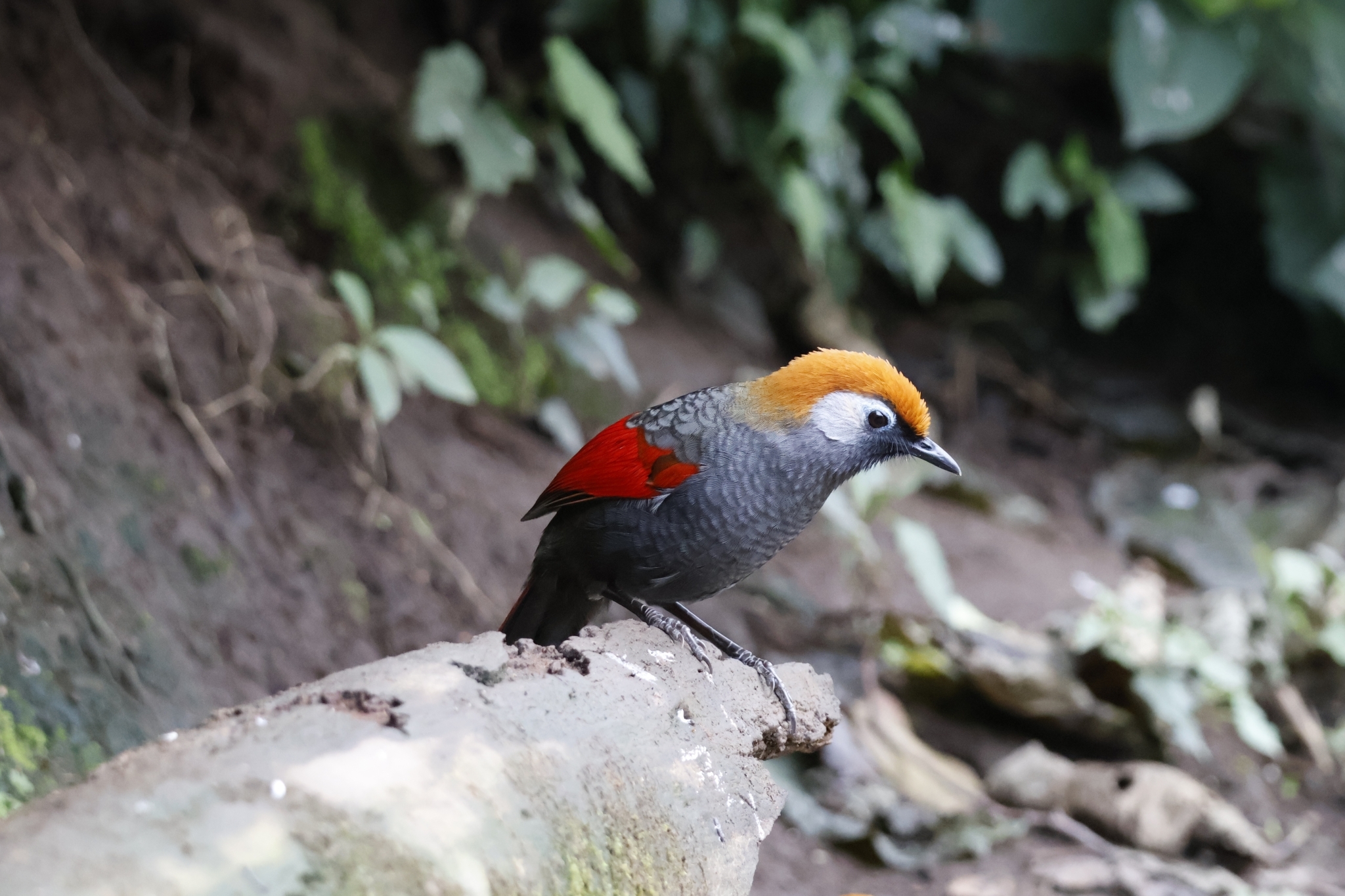
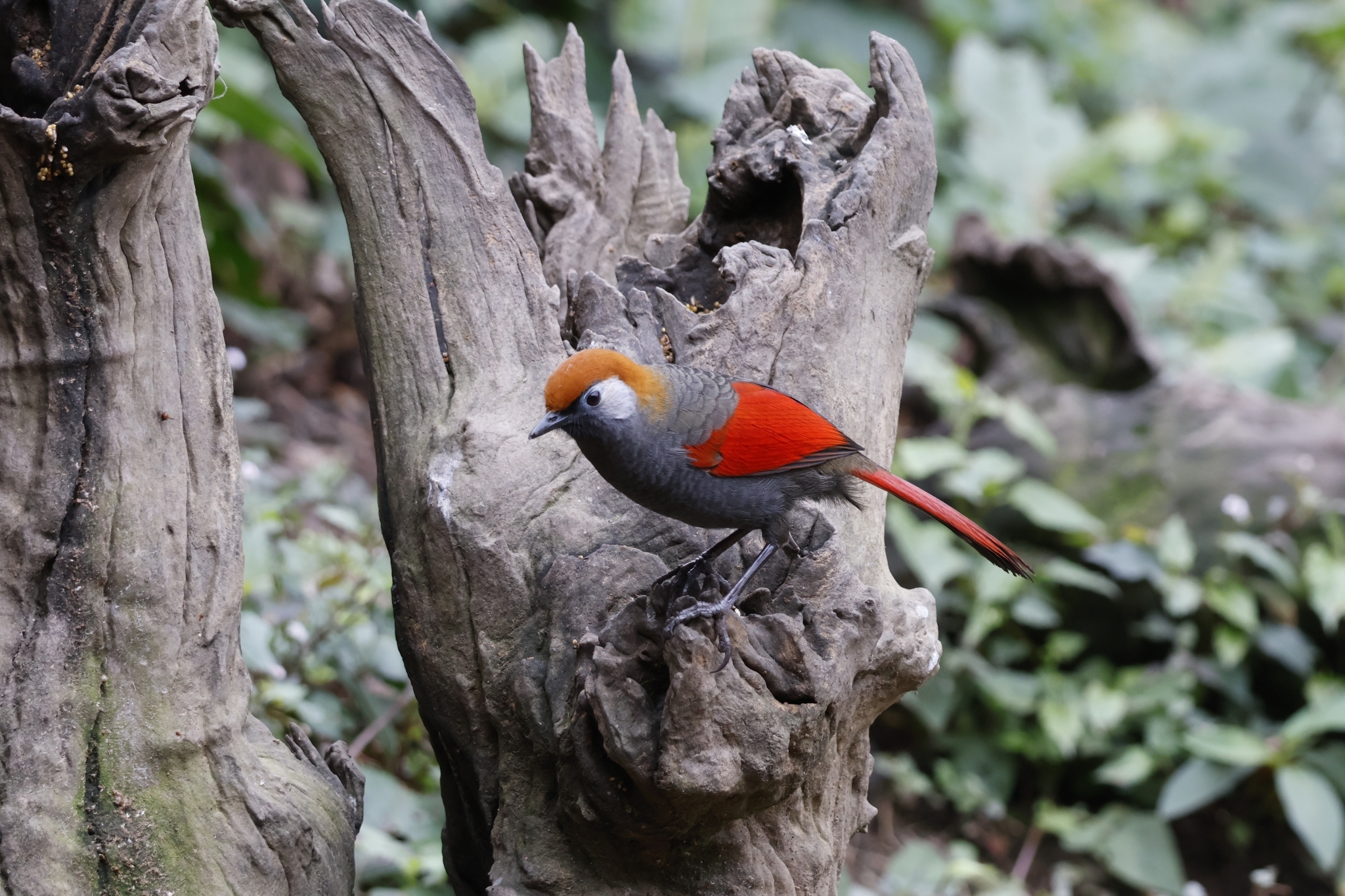
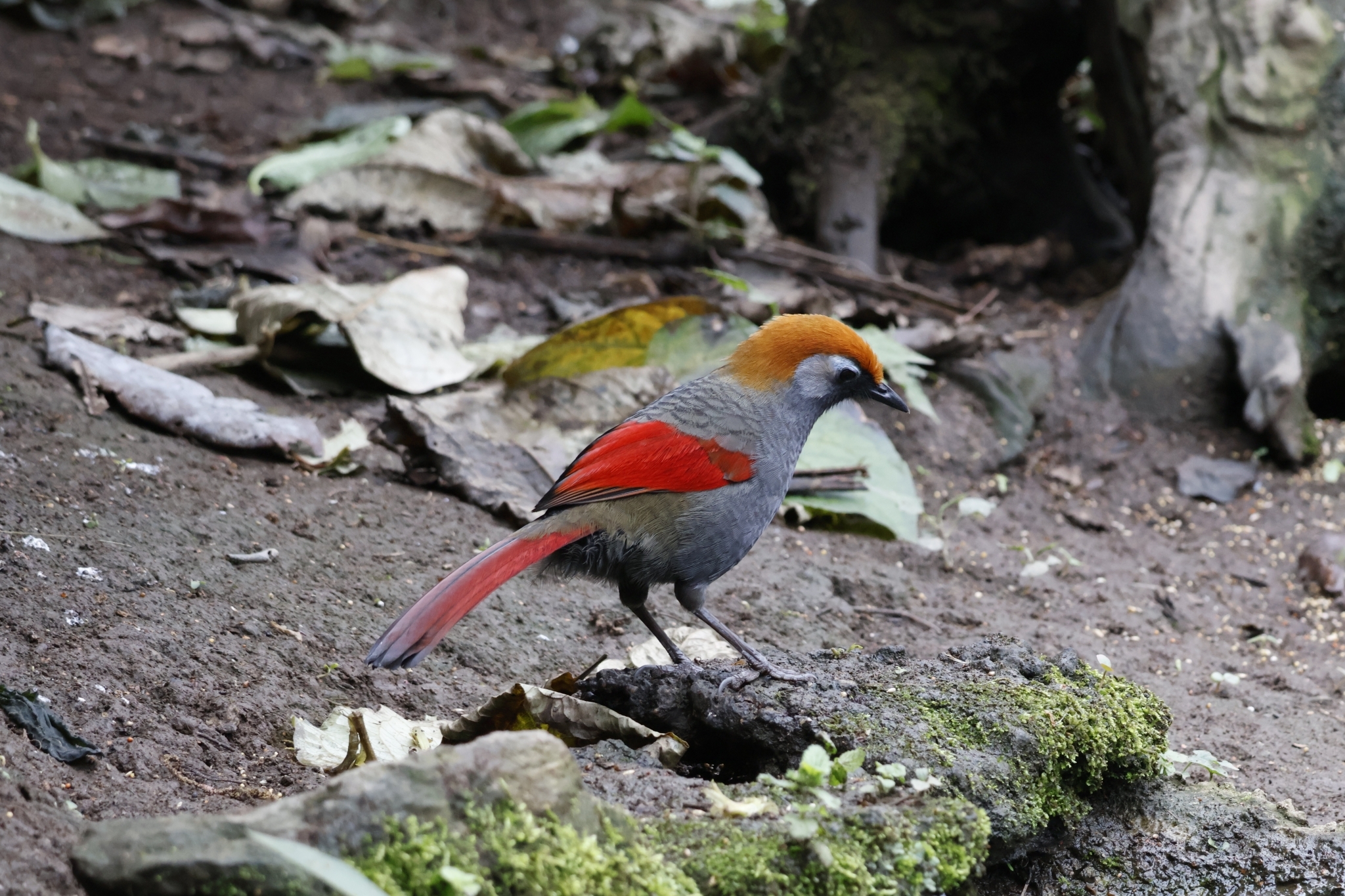
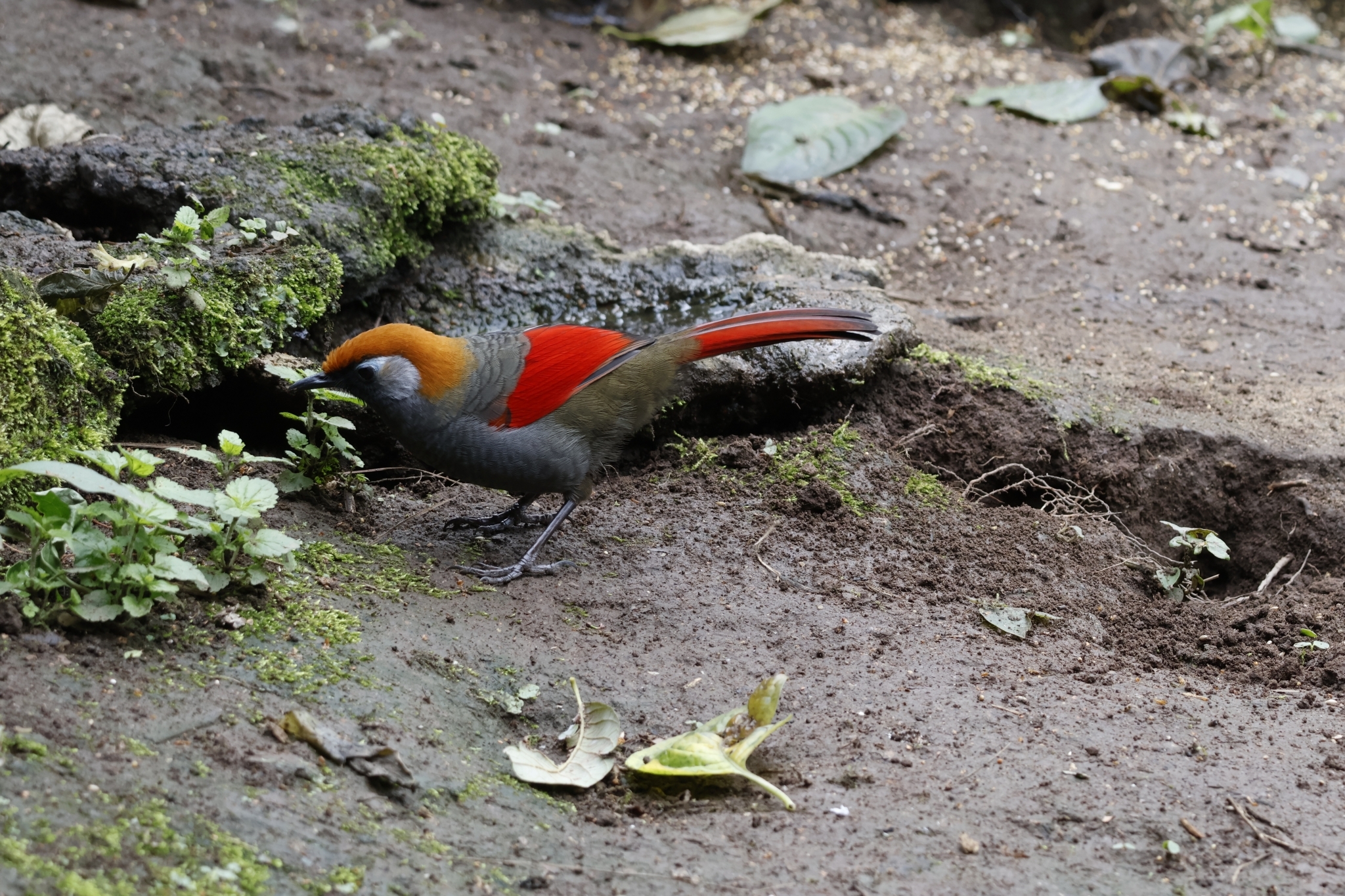
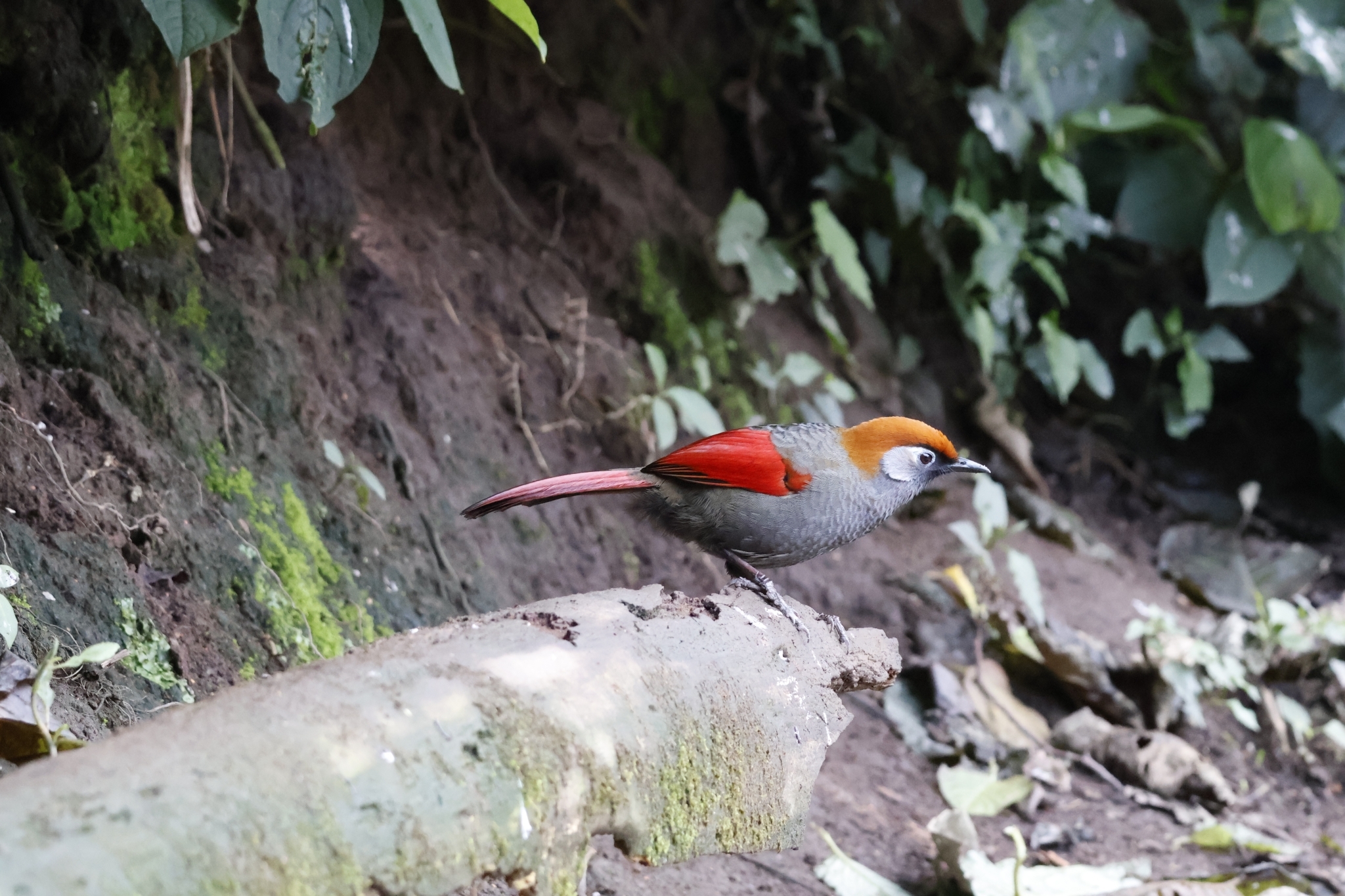
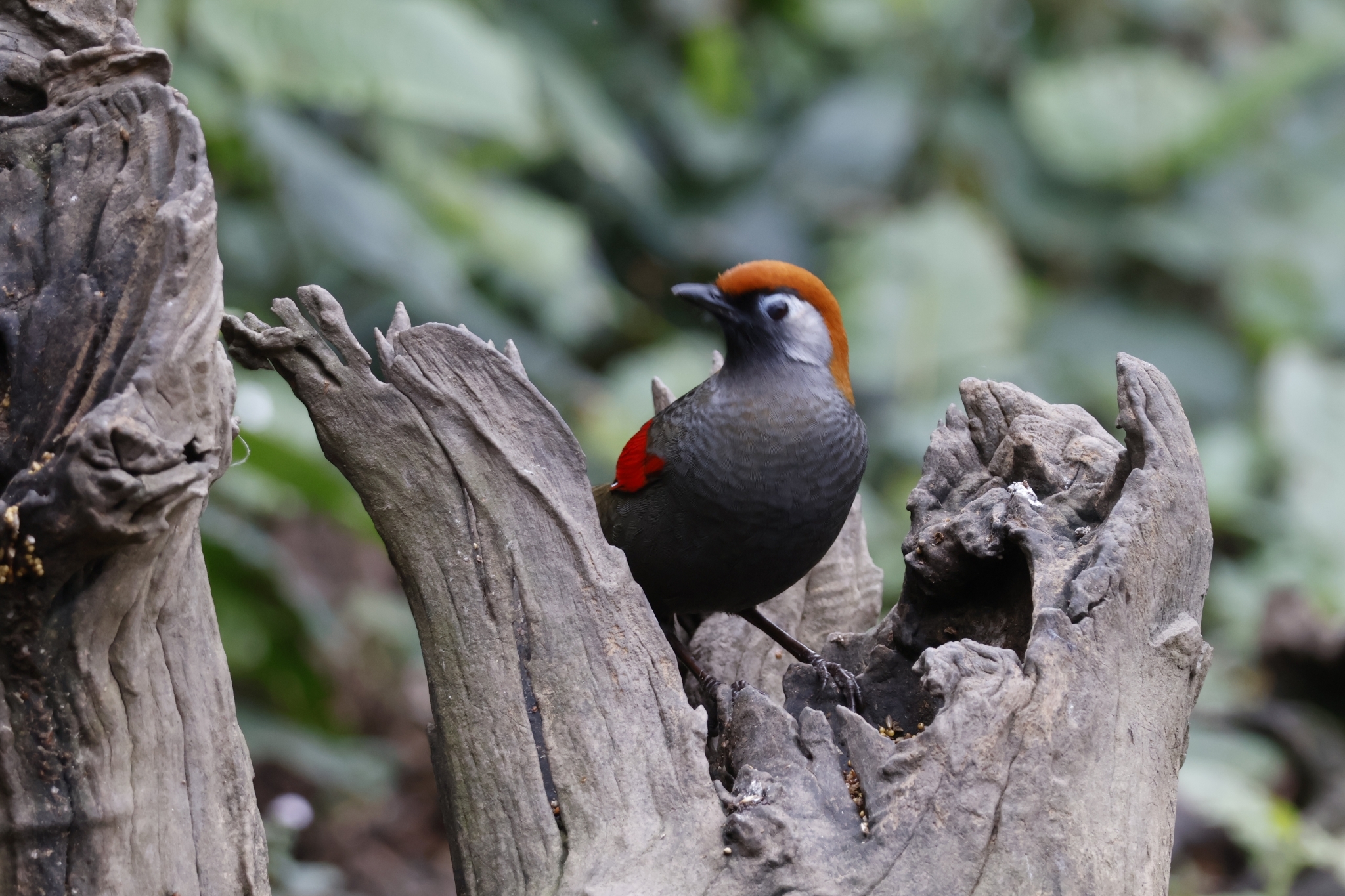
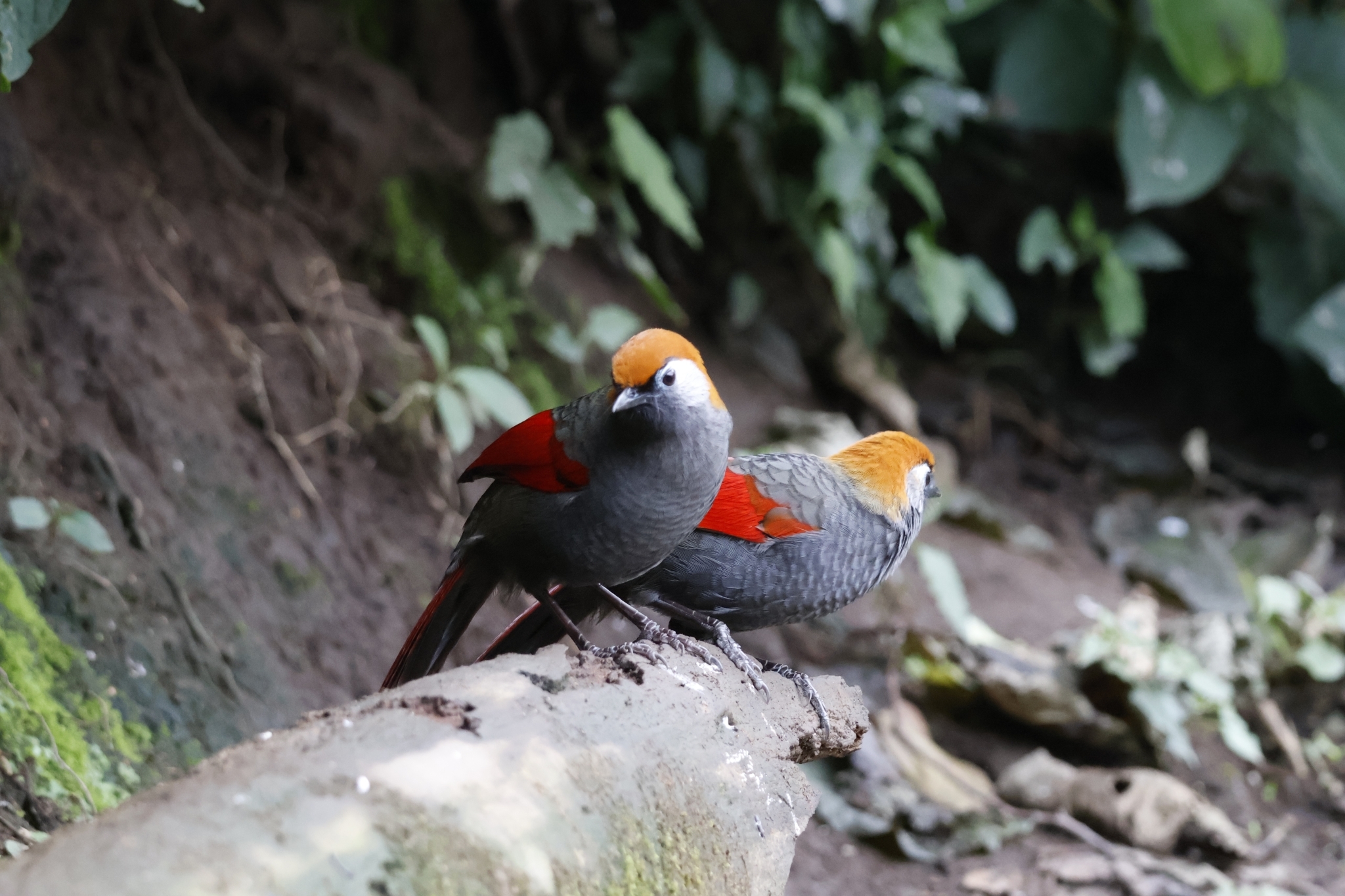
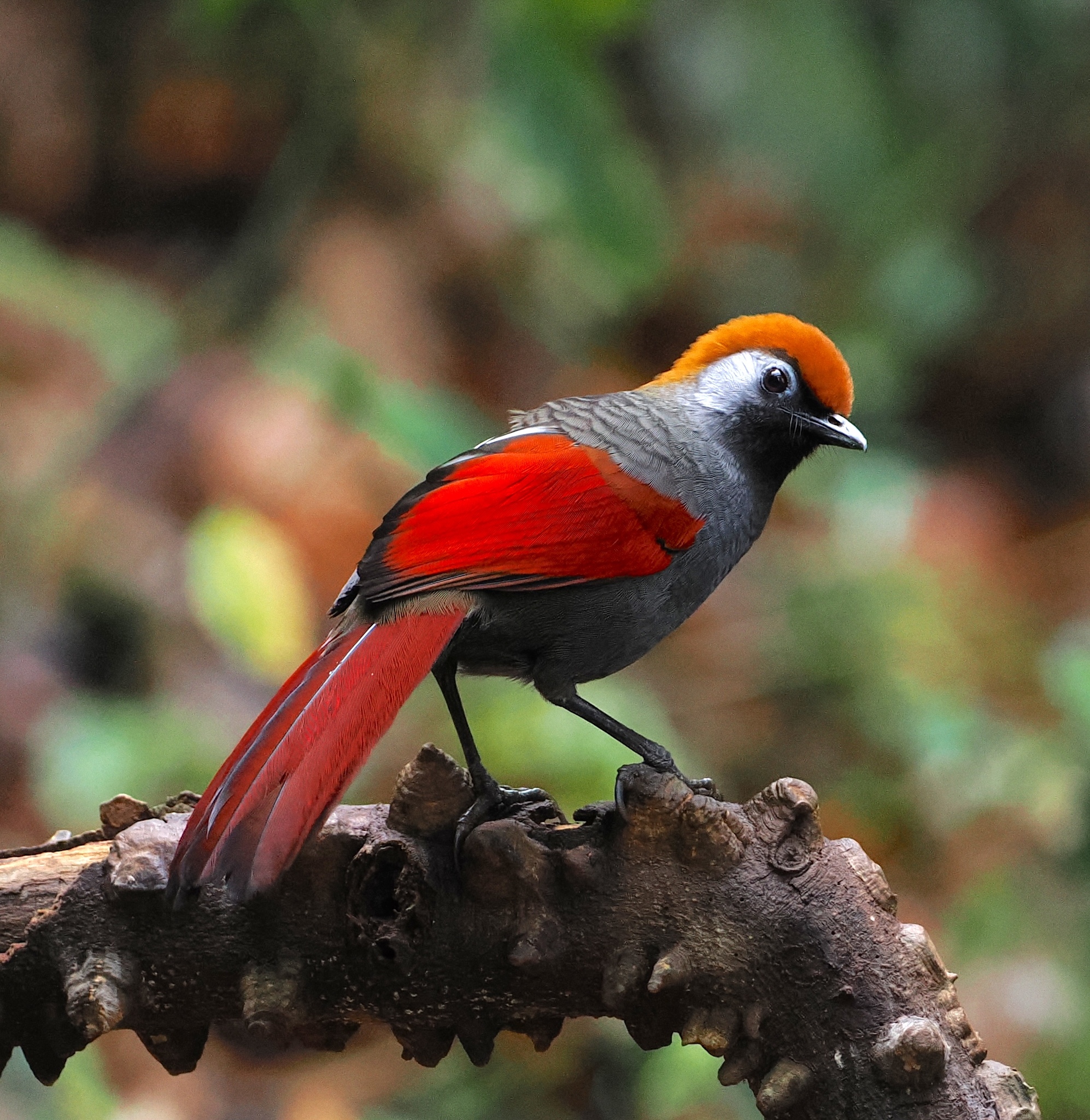
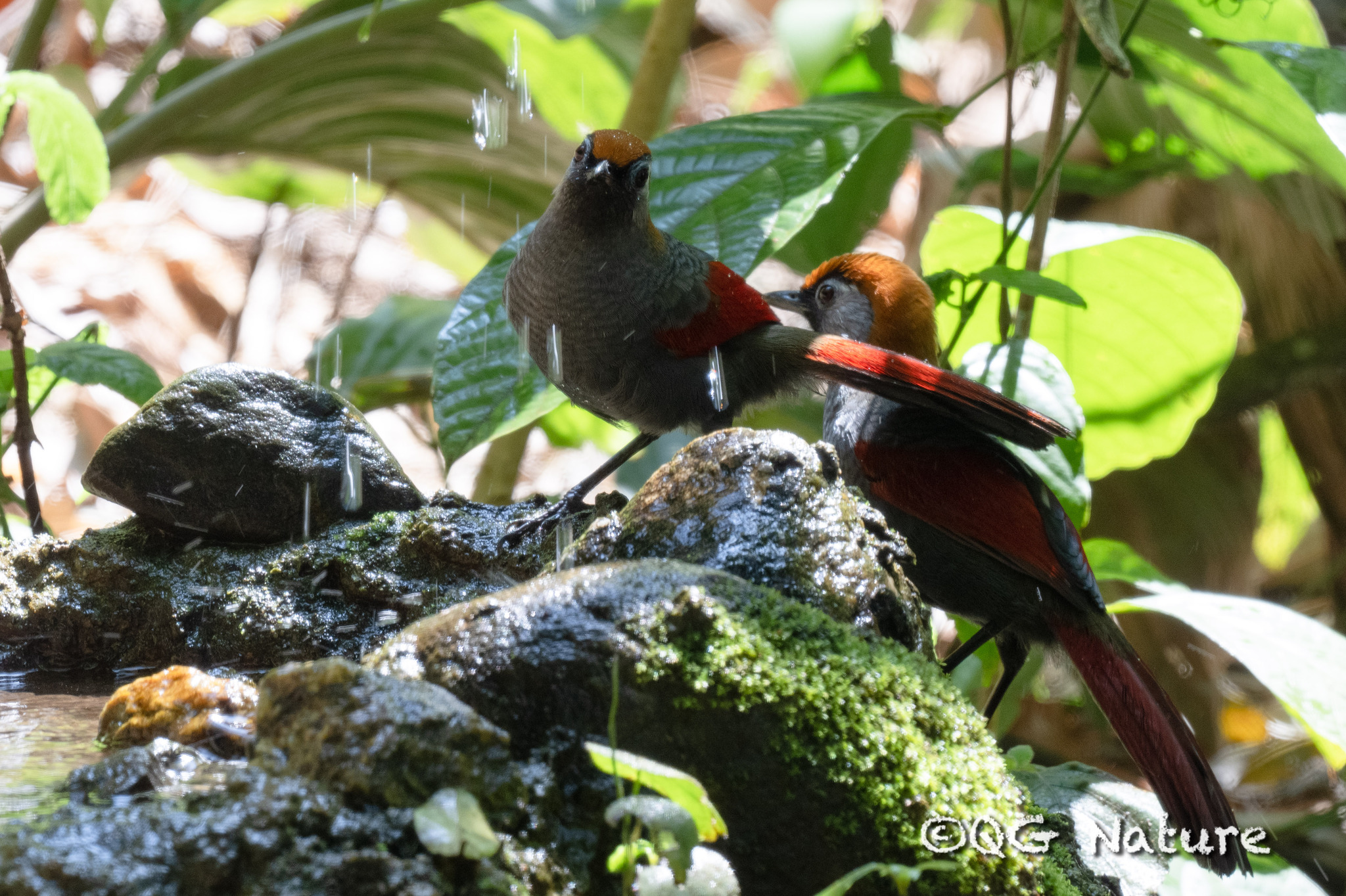
A bird in the laughingthrush family Leiothrichidae. Found in the montane forests of Myanmar, Laos, southern China and central Vietnam. Inhabits the understorey of broadleaf evergreen forests at elevations of 1,800-2,500 metres. Distinctive for its crimson wings and tail contrasting with dull ochrous-grey body plumage, and its diet of insects and berries, particularly Saurauia fruits.
Description
Length 26-28 cm, weight 66-93 g. Overall plumage dull ochrous-grey with a bright rufous-chestnut crown and blackish face. Ear-coverts are whitish. Wings and tail are crimson. The sexes are similar in appearance.
Distribution & Habitat
Found in China, Laos, Myanmar, Thailand, and Vietnam. Inhabits the understorey of broadleaf evergreen forests in mountainous areas. Strictly montane, occurring at elevations of 1,800-2,500 metres above sea level. Likely resident year-round within its range.
Behavior & Ecology
Forages mainly on insects and small arthropods including beetles and centipedes, supplemented by berries and fruits, especially Saurauia species. Breeding season runs from April to June. Both sexes construct a tidy cup nest of grasses and bamboo leaves, placed up to 1 m above ground. Clutch size is 2-3 eggs, incubated for 17-18 days. Both parents feed the chicks, which fledge at 14-16 days old.
Culture
Not documented in article.
Source: Wikipedia · CC BY-SA 3.0
Taxonomy
- Order
- Passeriformes
- Family
- Leiothrichidae
- Genus
- Trochalopteron
- eBird Code
- retlau1
Subspecies (4)
-
Trochalopteron milnei milnei
mountains of southeastern China (northwestern Fujian)
-
Trochalopteron milnei sharpei
eastern Myanmar to southern China (southern Yunnan), northwestern Thailand, and northern Indochina
-
Trochalopteron milnei sinianum
southeastern China (Guizhou and Guangxi)
-
Trochalopteron milnei vitryi
southern Laos (Bolaven Plateau)
Data Sources
Species description from Wikipedia, licensed under CC BY-SA 3.0.
Bird images and sounds sourced from GBIF, contributed by citizen scientists worldwide under Creative Commons licenses.
Taxonomy data from AviList 2025.