

Common Redshank
Tringa totanus
红脚鹬
Introduction
The common redshank is a Scolopacidae family wader inhabiting wetlands across temperate Eurasia, from Iceland to eastern Asia. It occurs in coastal areas, estuaries, damp meadows, and salt marshes during migration and winter. This species has red legs, a red-and-black bill, and gives loud piping calls. It breeds in various wetland habitats, often at high densities. Six recognized subspecies show slight variations in size and plumage tones. Globally, populations are not considered threatened, though they fluctuate in response to habitat changes across their range.
Description
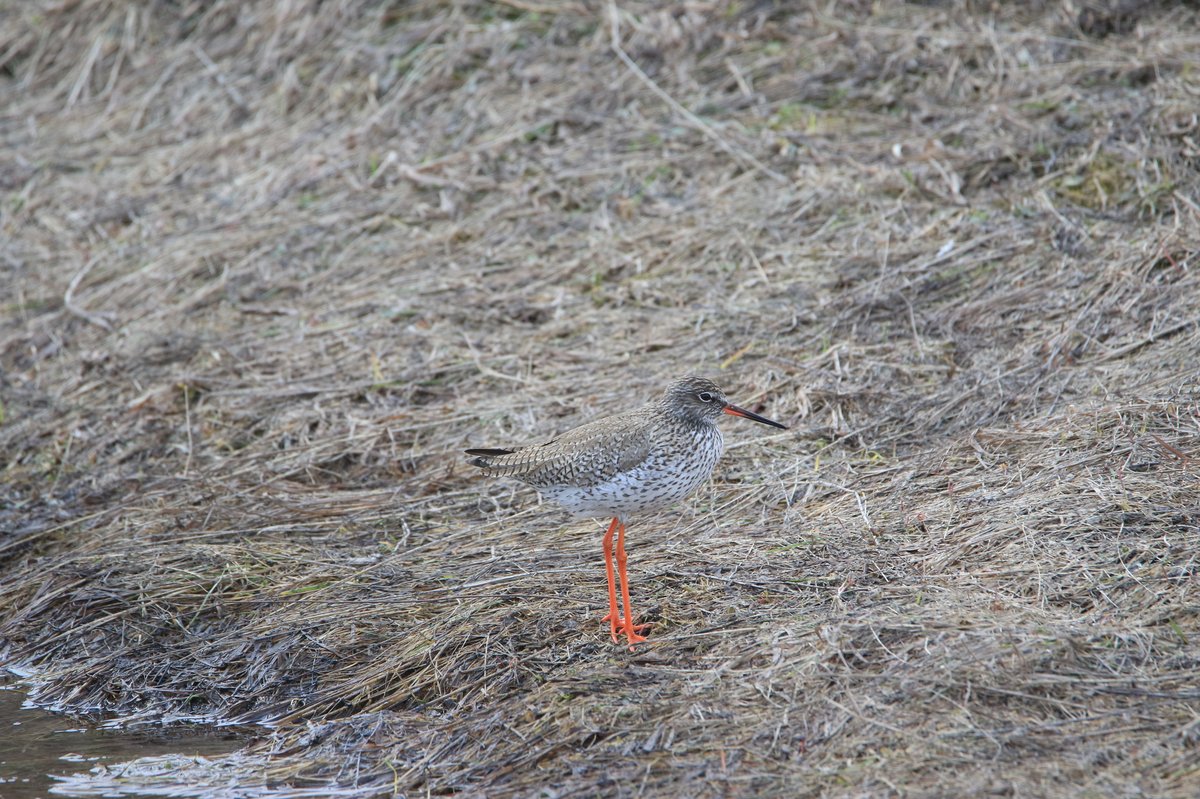
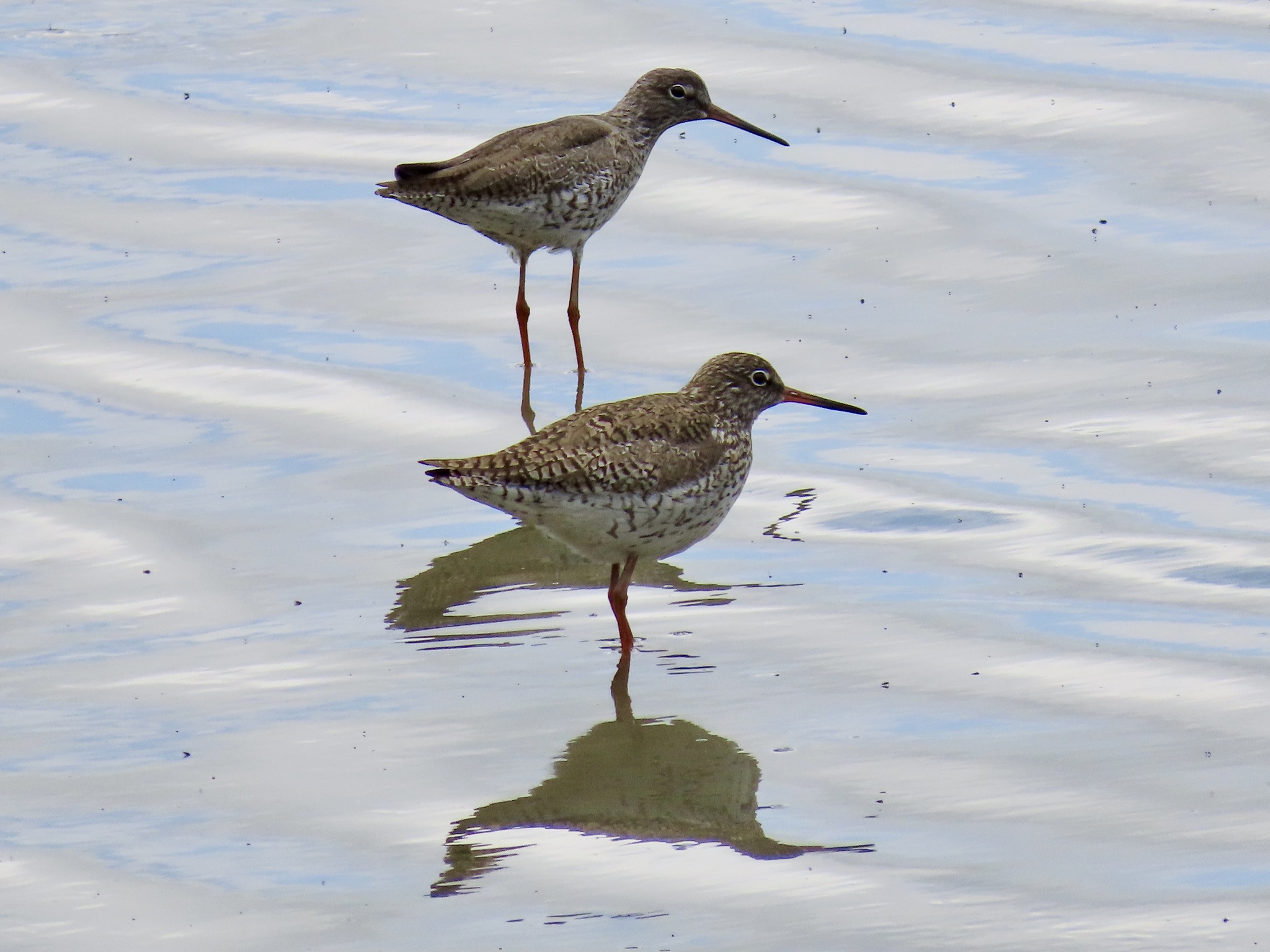
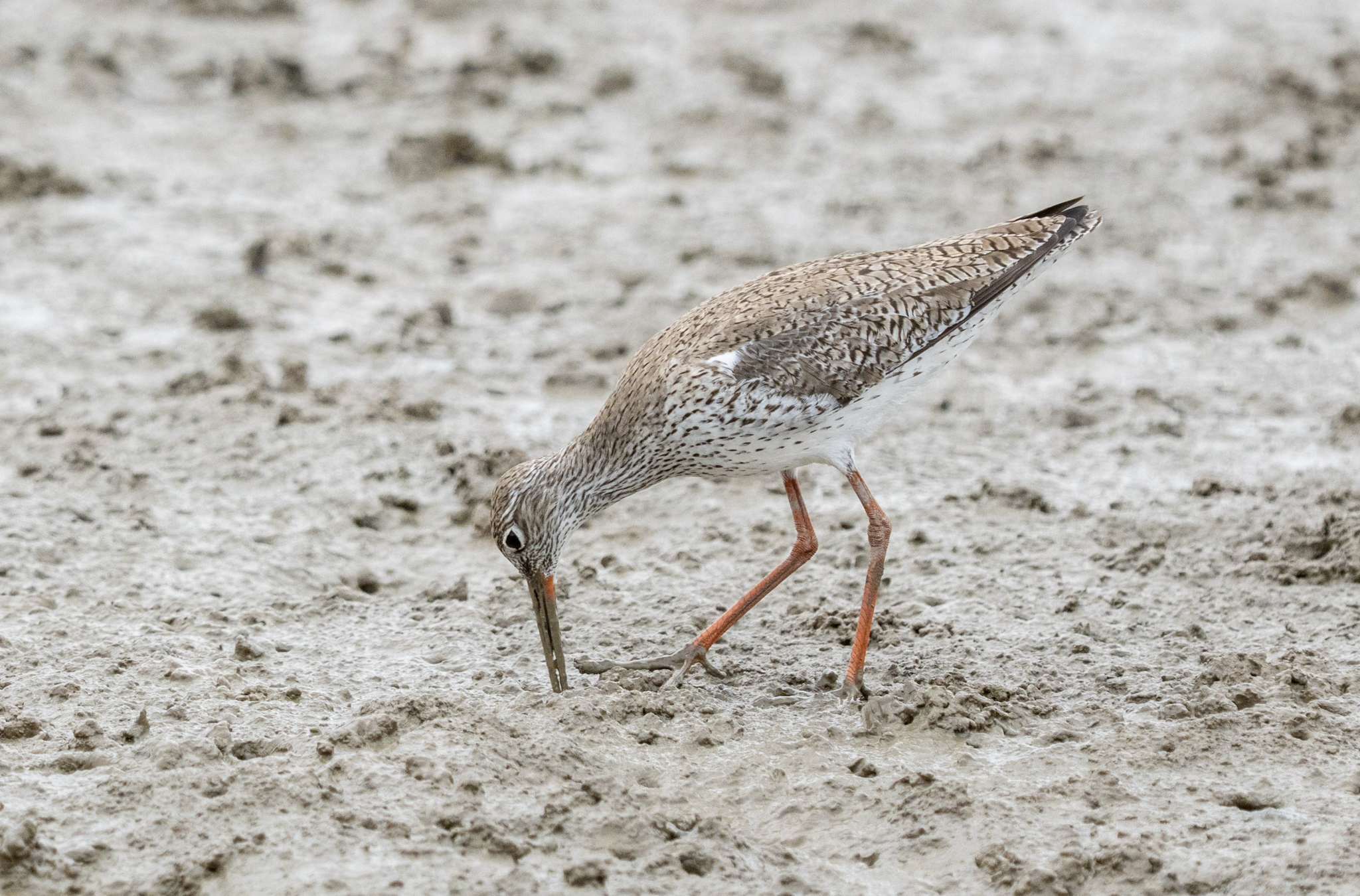
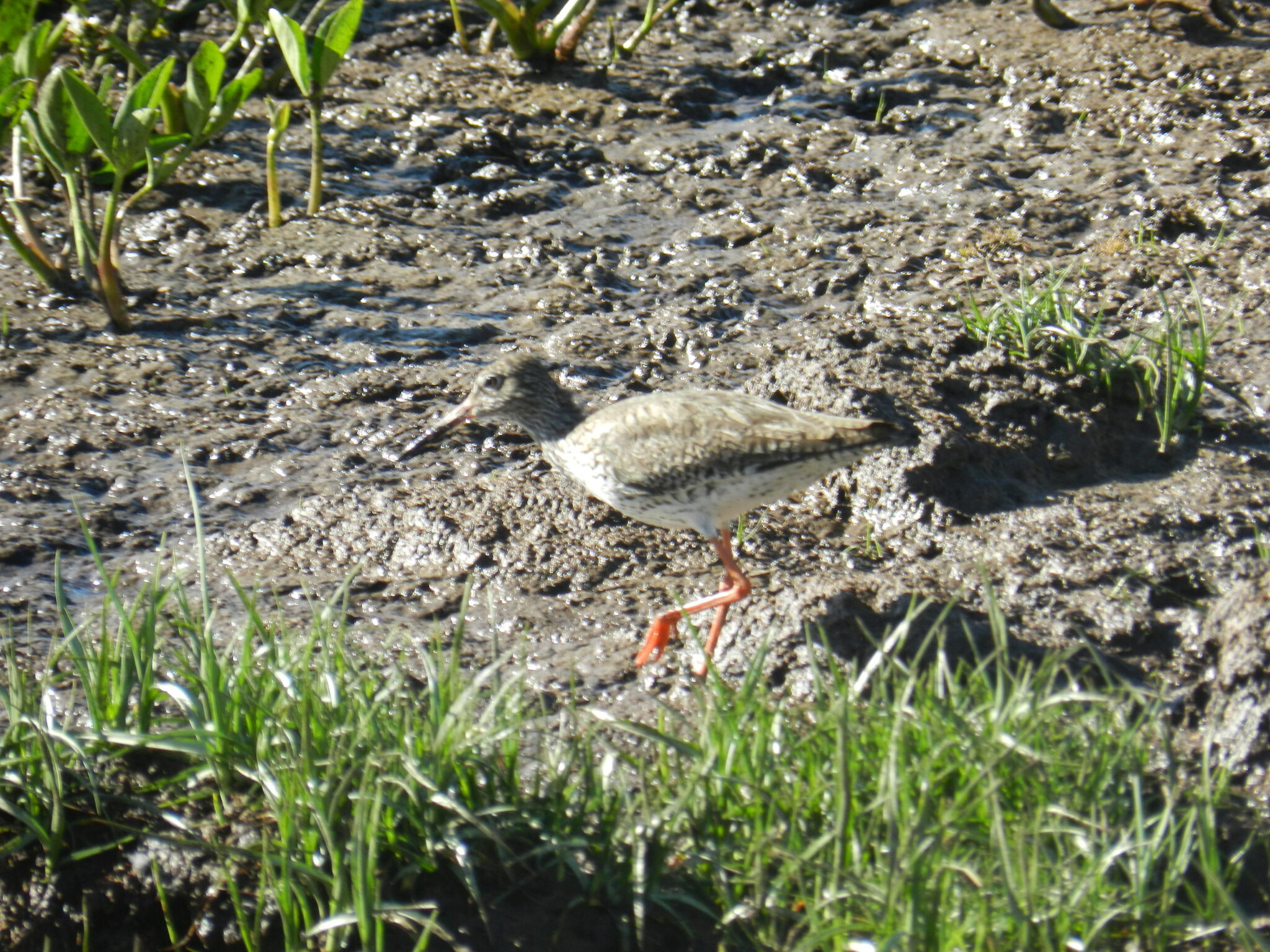
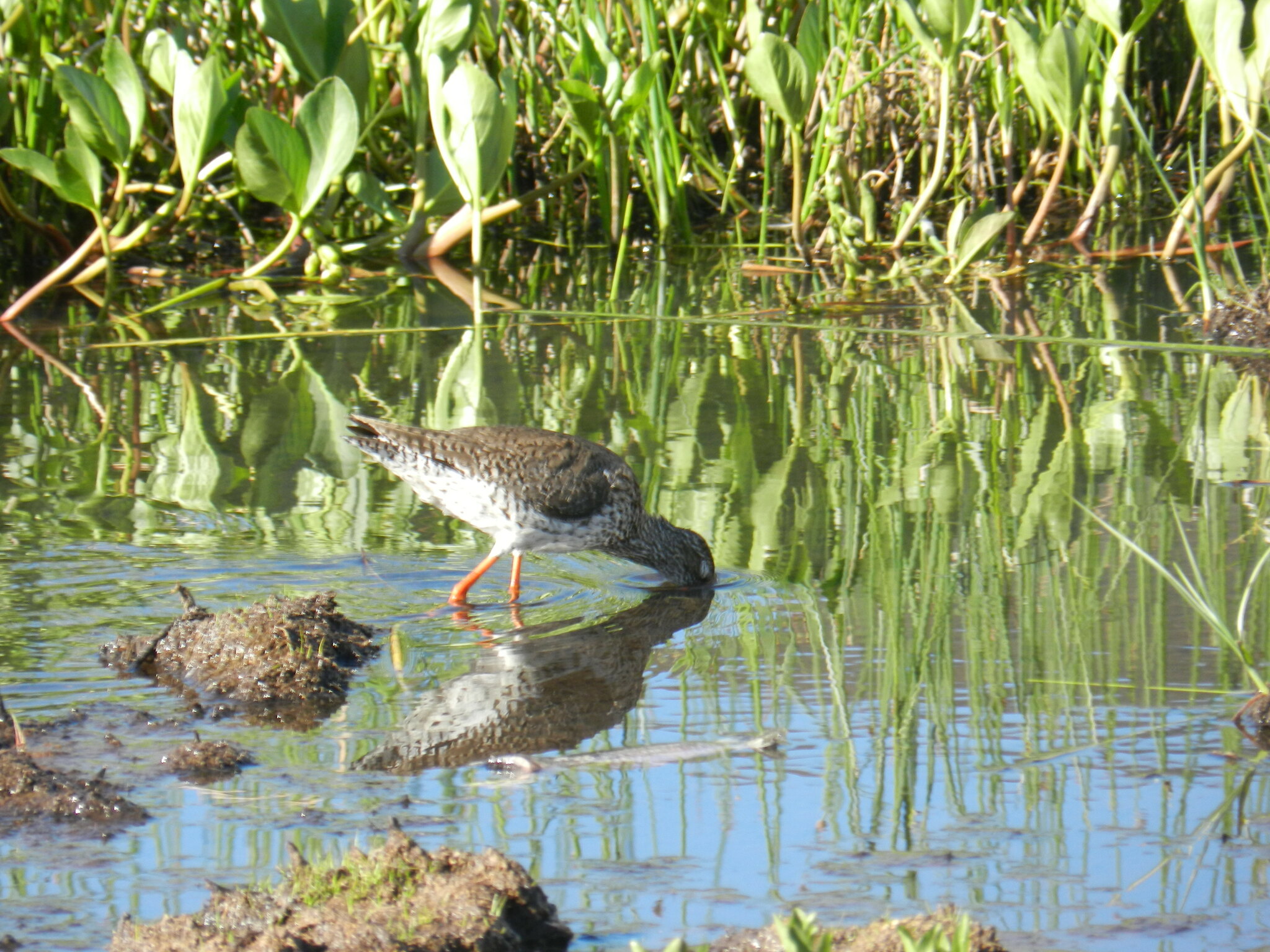
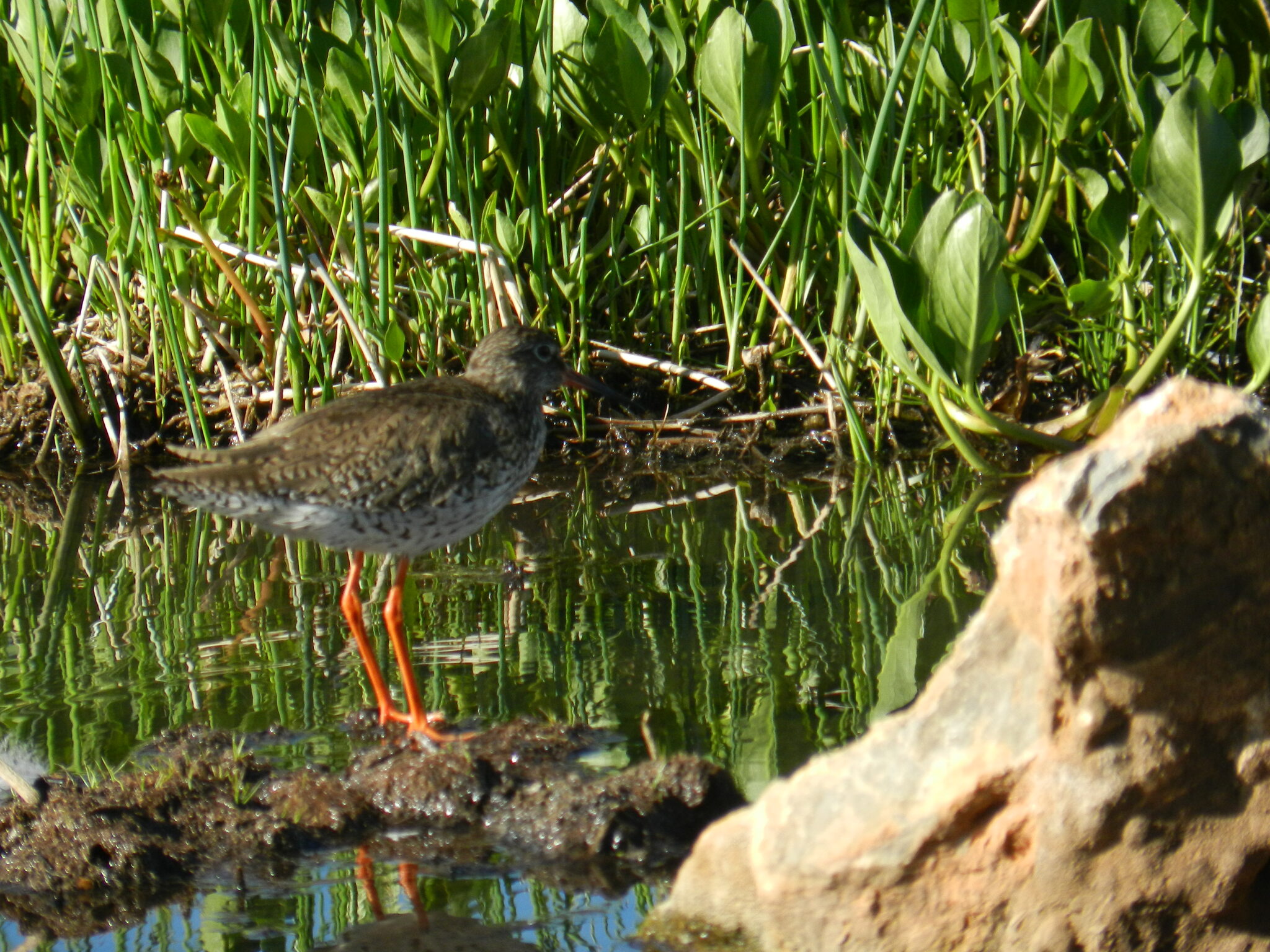
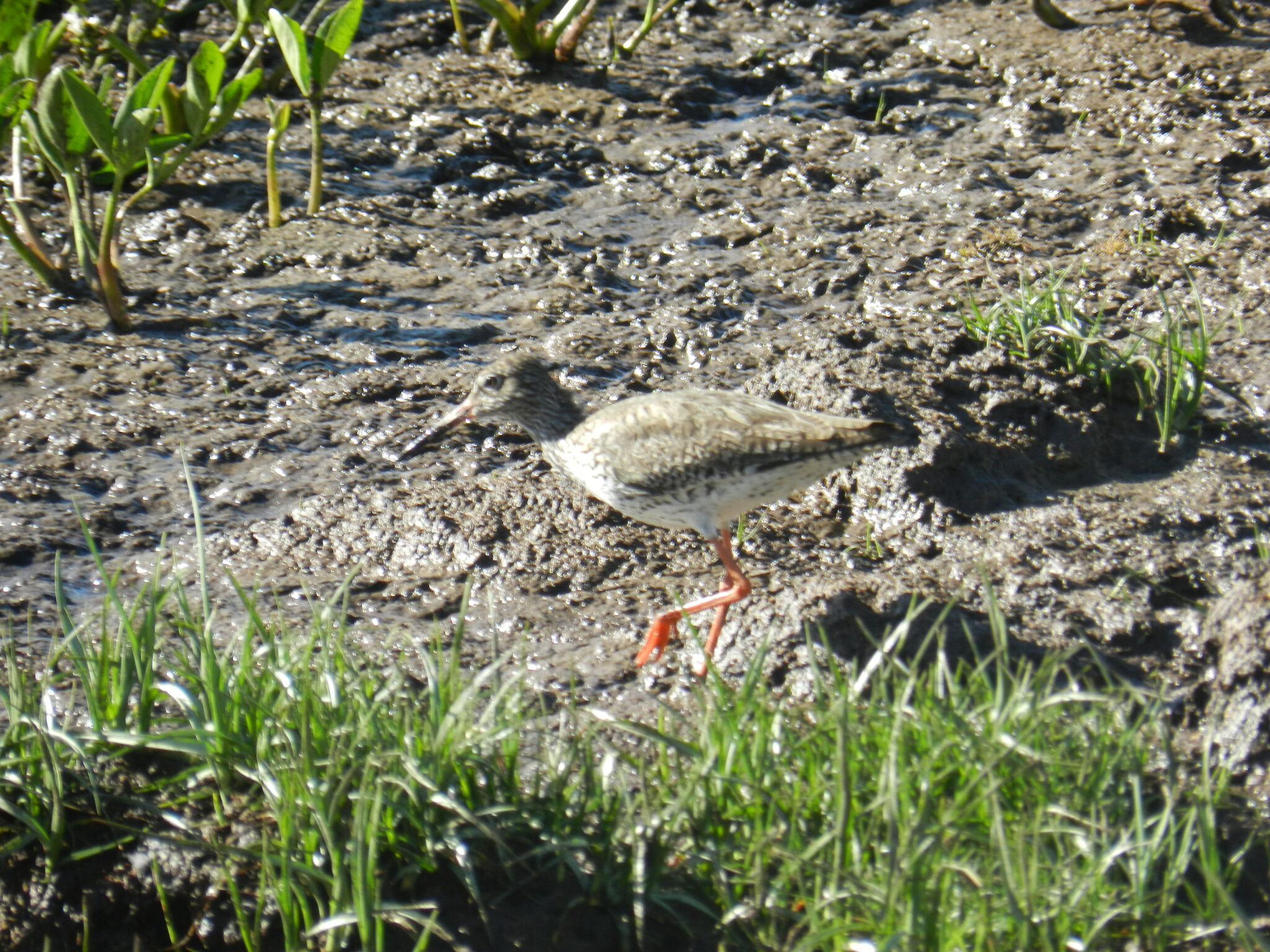
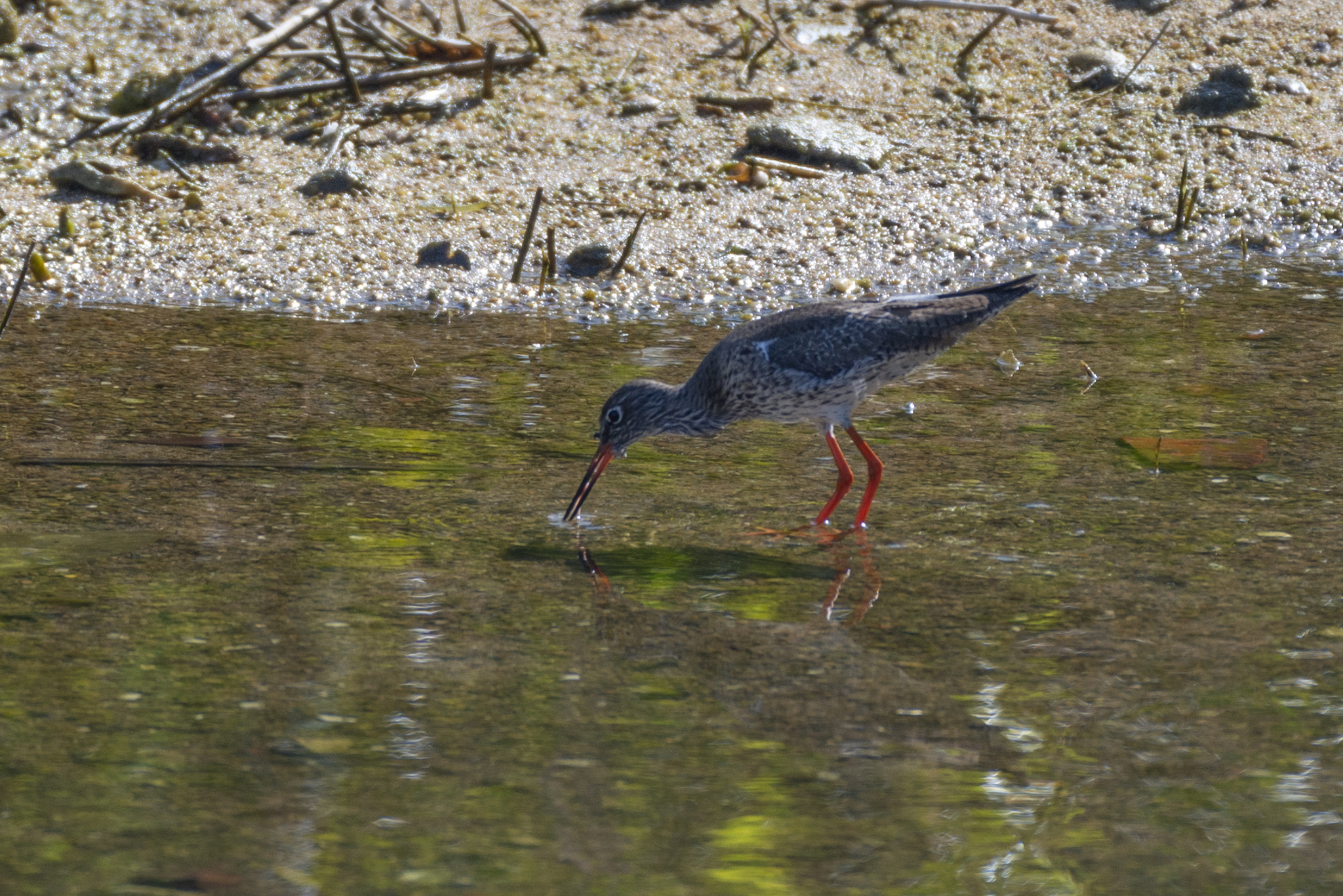
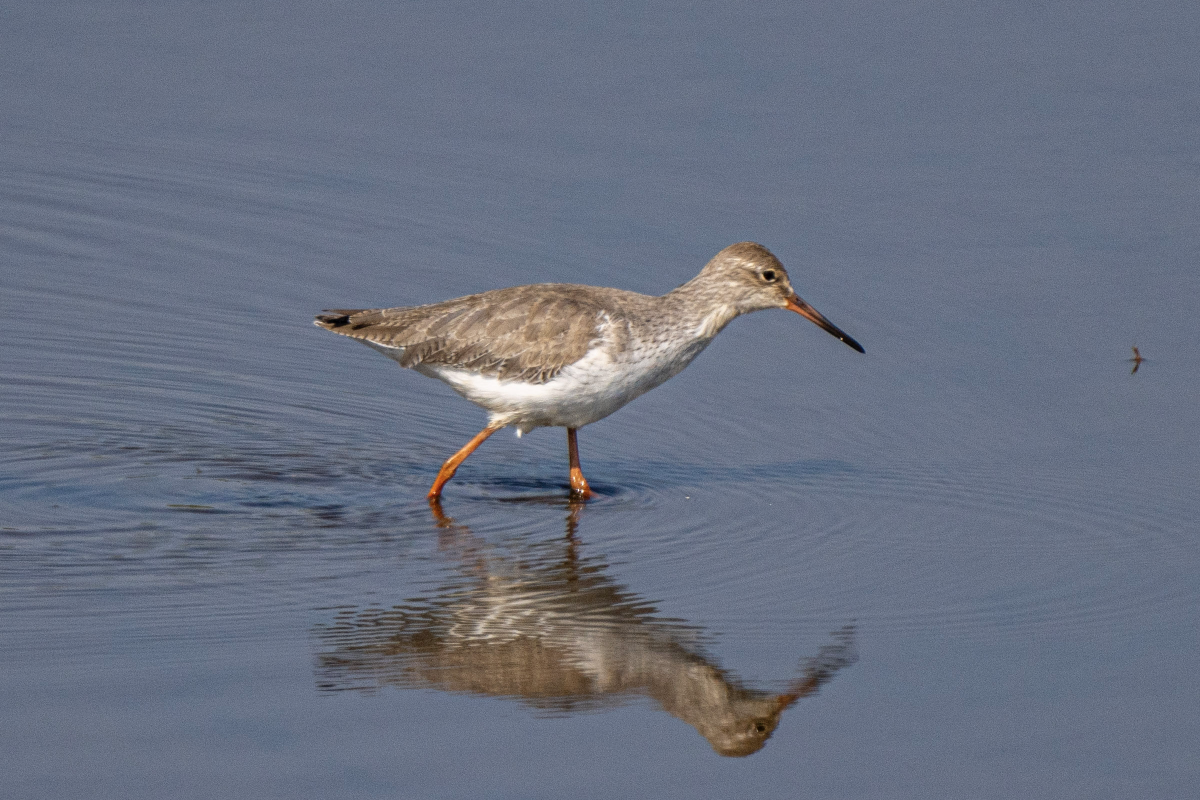
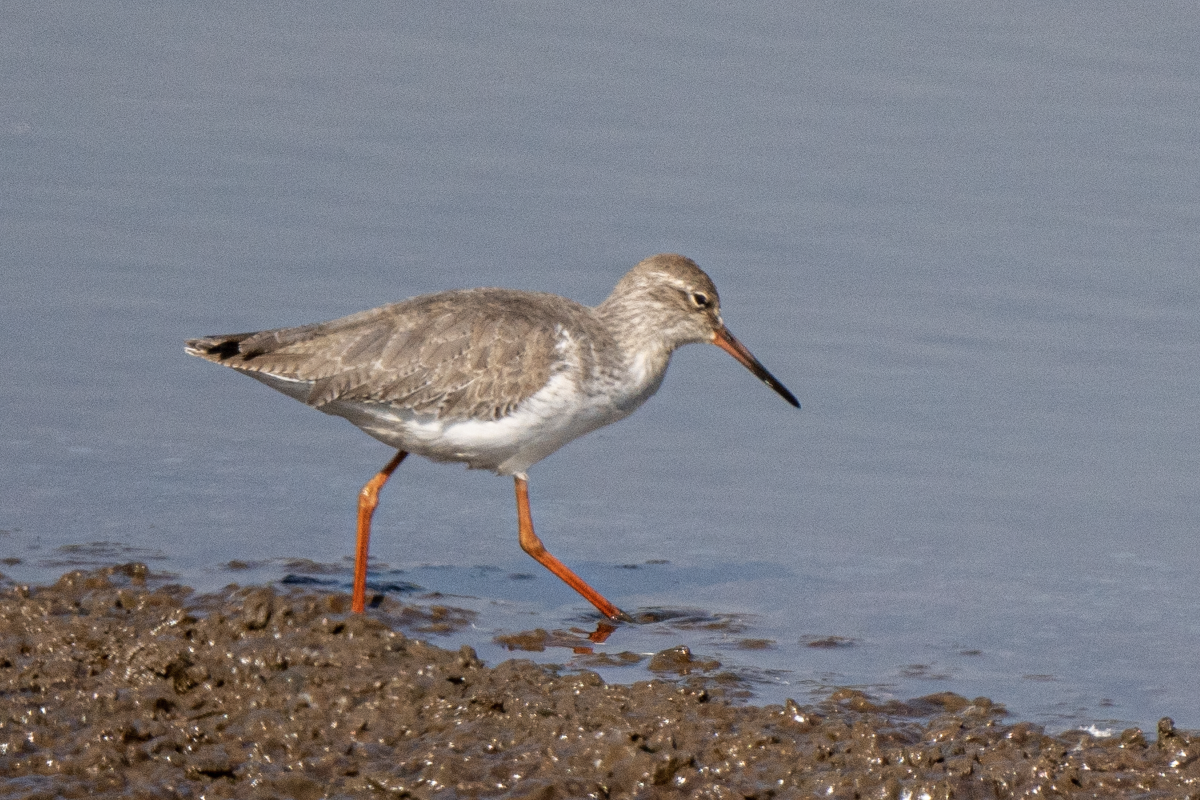
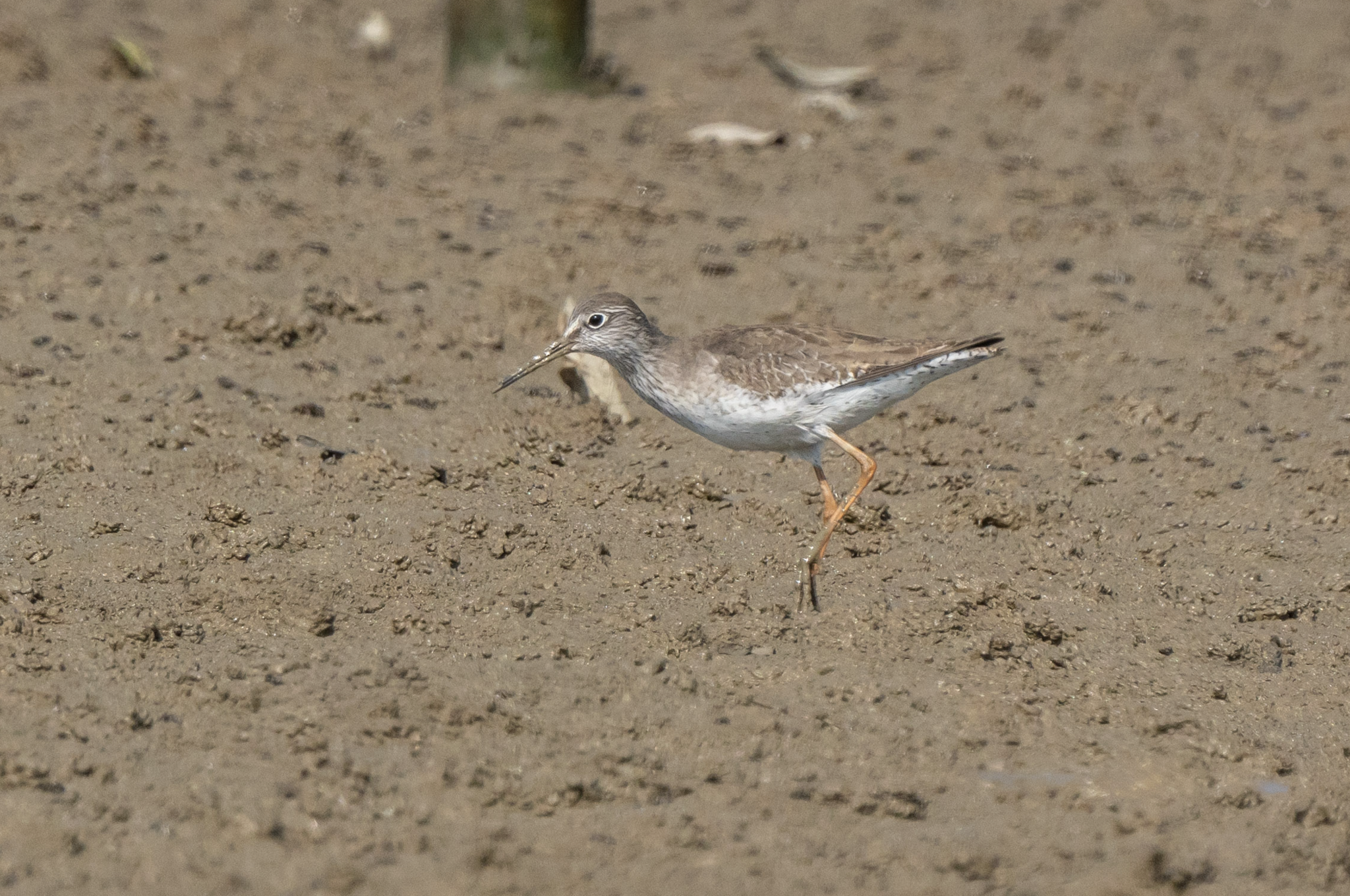
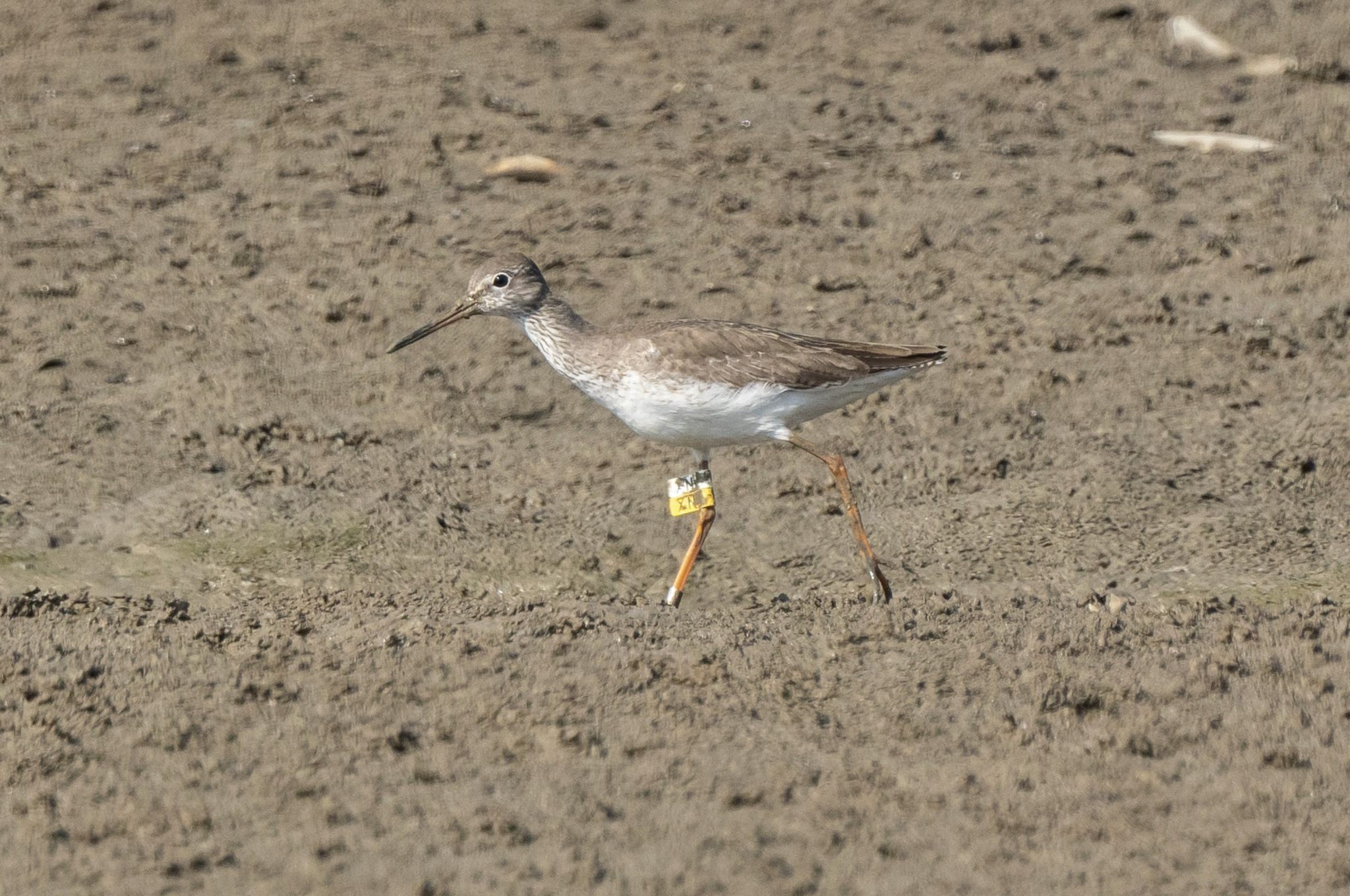
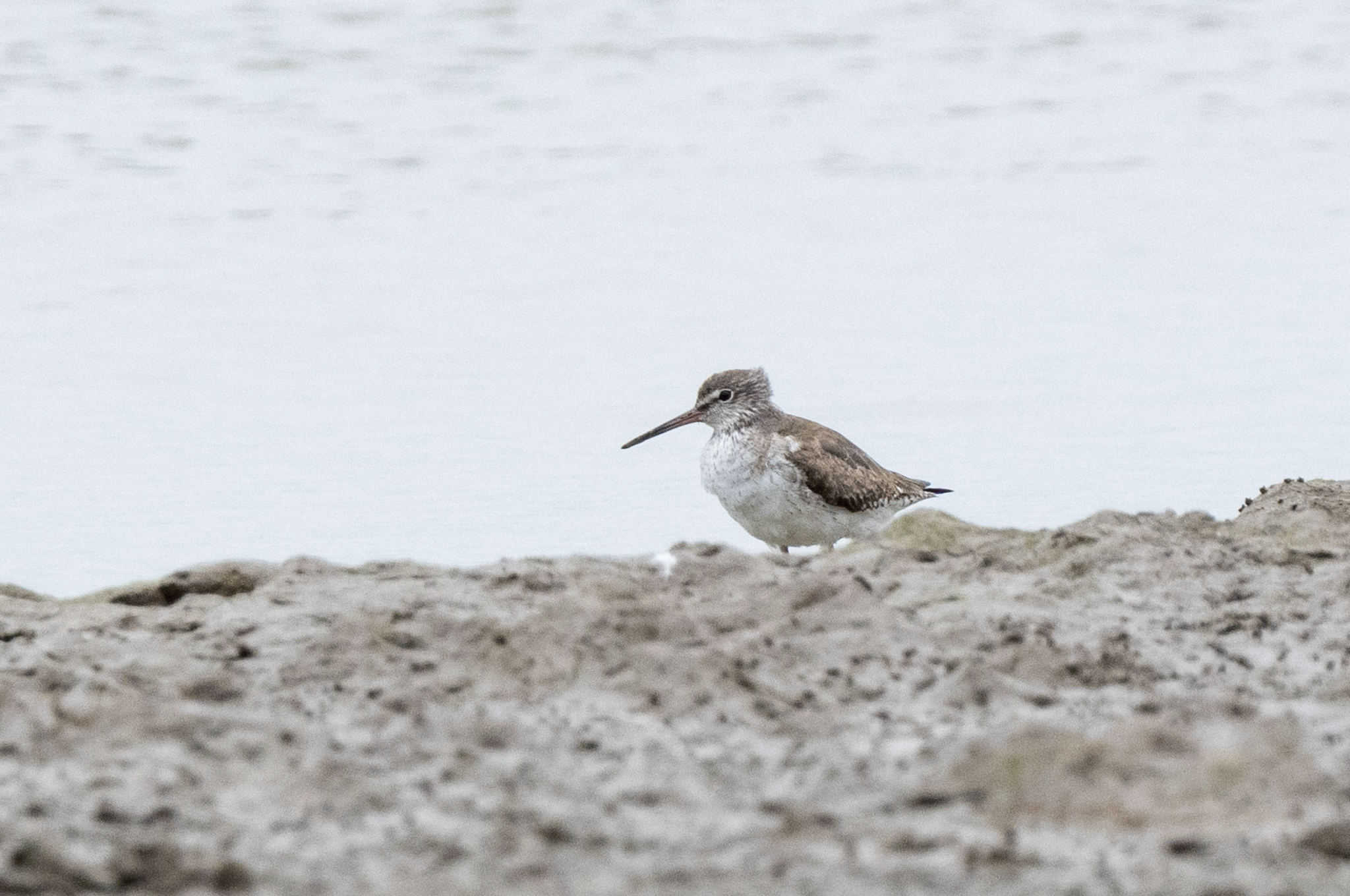
This elegant wader presents a marbled brown appearance in breeding plumage, with slightly lighter underparts. Winter plumage transforms the bird into a lighter, more uniform look - greyish-brown upperparts and whitish underparts with reduced patterning. The most diagnostic features are the vivid red legs and the distinctive black-tipped red bill. In flight, characteristic white flashes appear along the back and wings. Adults belong to a group of smallish shanks closely related to marsh and wood sandpipers, sharing similar body proportions and leg coloration patterns. The species shows subtle brown mottling on the breast and neck in breeding condition.
Identification
Field identification centers on the combination of red legs, black-tipped red bill, and the white wing and back patches visible in flight. The spotted redshank presents a confusingly similar silhouette but differs significantly: it has longer bill and legs, appears almost entirely black in breeding plumage, and becomes very pale in winter plumage. The common redshank is also noticeably smaller than the common greenshank. The loud, piping alarm call serves as another identification cue, as does the bird's wary behavior - individuals will call and move away when approached. The relatively plain winter plumage distinguishes it from more boldly marked related species.
Distribution & Habitat
This widespread breeder occupies temperate wetland habitats across Eurasia, from Iceland and western Europe through Siberia to eastern Asia. The six subspecies occupy distinct geographic ranges: robusta breeds in Iceland and the Faroe Islands; totanus across western and northern Europe to western Siberia; ussuriensis in southern Siberia and Mongolia; terrignotae in southern Manchuria and eastern China; craggi in northwest China; and eurhina in Tajikistan, northern India and Tibet. Migratory populations winter along Mediterranean coasts, the Atlantic coast of Europe from Ireland and Great Britain southwards, and throughout South and Southeast Asia. Vagrants occasionally appear far outside the normal range, including records from Palau, North America, the Caribbean, and South America.
Behavior & Ecology
These vigilant birds maintain constant alertness, readily issuing loud piping calls that alert entire wetland communities to any disturbance. Their diet consists primarily of small invertebrates, which they forage from mudflats, shallow waters, and wetland margins using typical wading techniques. Breeding behavior centers on wetland territories, where pairs establish nests in damp meadows, marshes, or saltmarshes, often forming loose colonies at high densities. The clutch typically contains 3-5 eggs. They demonstrate strong site fidelity, returning to traditional breeding and wintering areas annually. The alarm call is so characteristic and reliable that birdwatchers often locate hidden birds by listening for their warning notes.
Conservation
The IUCN assesses this species as not globally threatened due to its wide distribution and generally sufficient numbers in many regions. However, local populations face pressure from wetland drainage, agricultural intensification, and coastal development that reduces suitable habitat. The species benefits from protection under the Agreement on the Conservation of African-Eurasian Migratory Waterbirds, which coordinates international conservation efforts for migratory waterbirds across their range. Continued monitoring of populations in key habitat areas remains important for detecting any concerning trends.
Culture
The article does not contain information about cultural significance or folklore.
Source: Wikipedia · CC BY-SA 3.0
Taxonomy
- Order
- Charadriiformes
- Family
- Scolopacidae
- Genus
- Tringa
- eBird Code
- comred1
Subspecies (6)
-
Tringa totanus craggi
breeds northwestern China (northwestern Xinjiang); winter grounds unknown
-
Tringa totanus eurhina
breeds Pamir Mountains of Tajikistan to northern India and Tibet; winters to India and Malayan Peninsula
-
Tringa totanus robusta
breeds Iceland, Faroe Islands, and Scotland; winters British Isles and western Europe
-
Tringa totanus terrignotae
breeds southern Manchuria and eastern China; winters to southeastern Asia
-
Tringa totanus totanus
breeds Scandinavia to Iberia; winters to Africa, India, and Indonesia
-
Tringa totanus ussuriensis
breeds southern Siberia and Mongolia eastward to eastern Russia; winters to Africa and India
Data Sources
Species description from Wikipedia, licensed under CC BY-SA 3.0.
Bird images and sounds sourced from GBIF, contributed by citizen scientists worldwide under Creative Commons licenses.
Taxonomy data from AviList 2025.