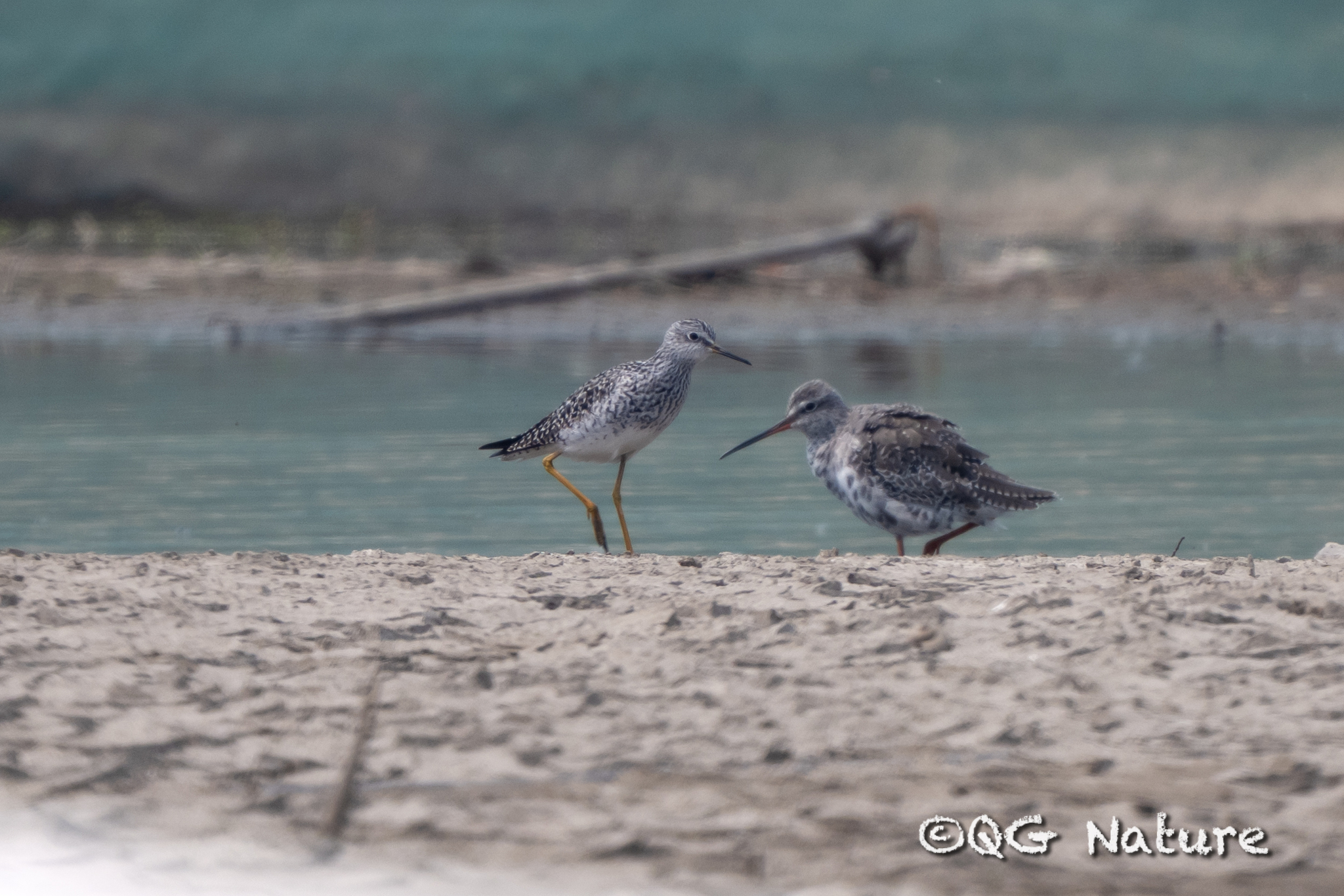
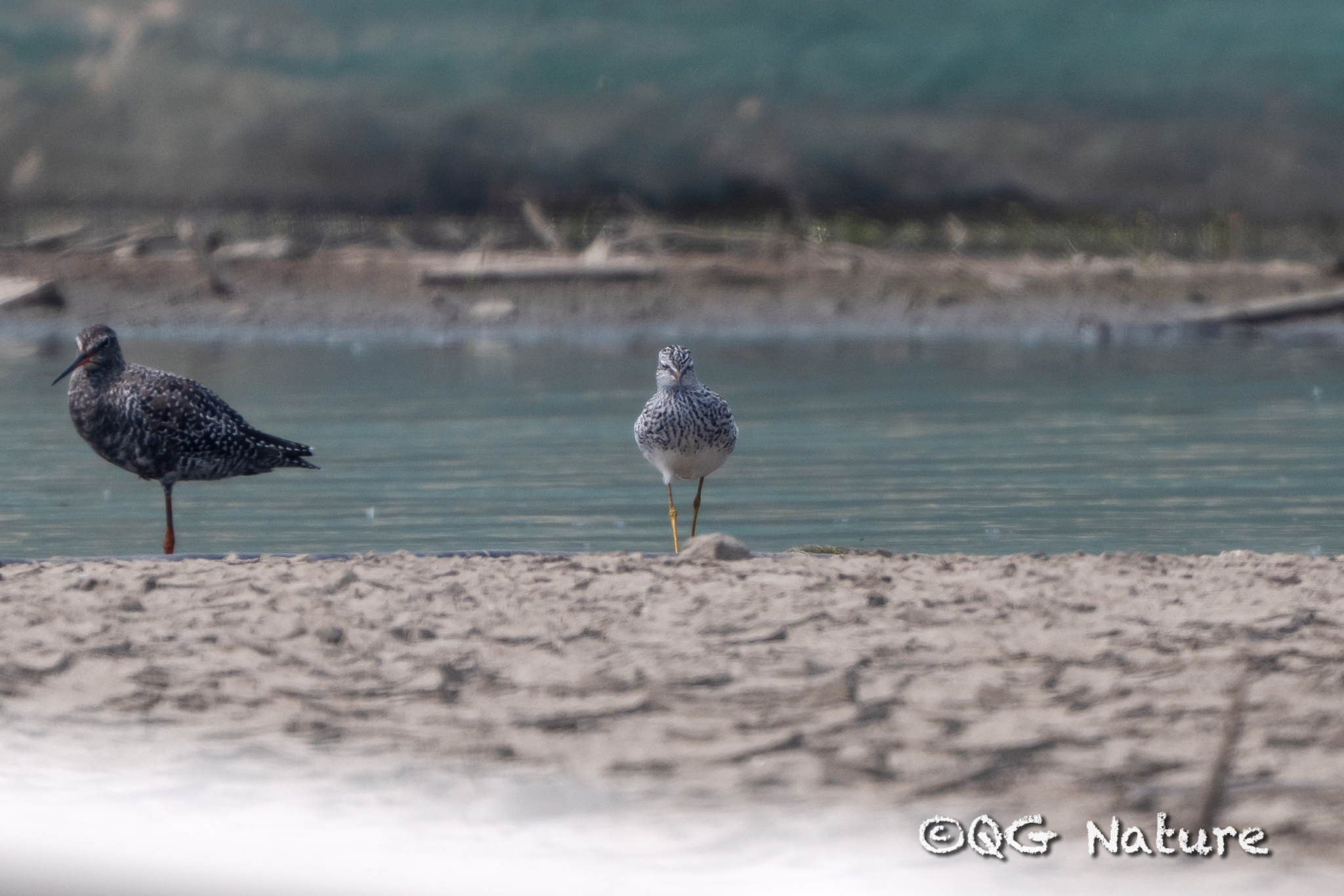
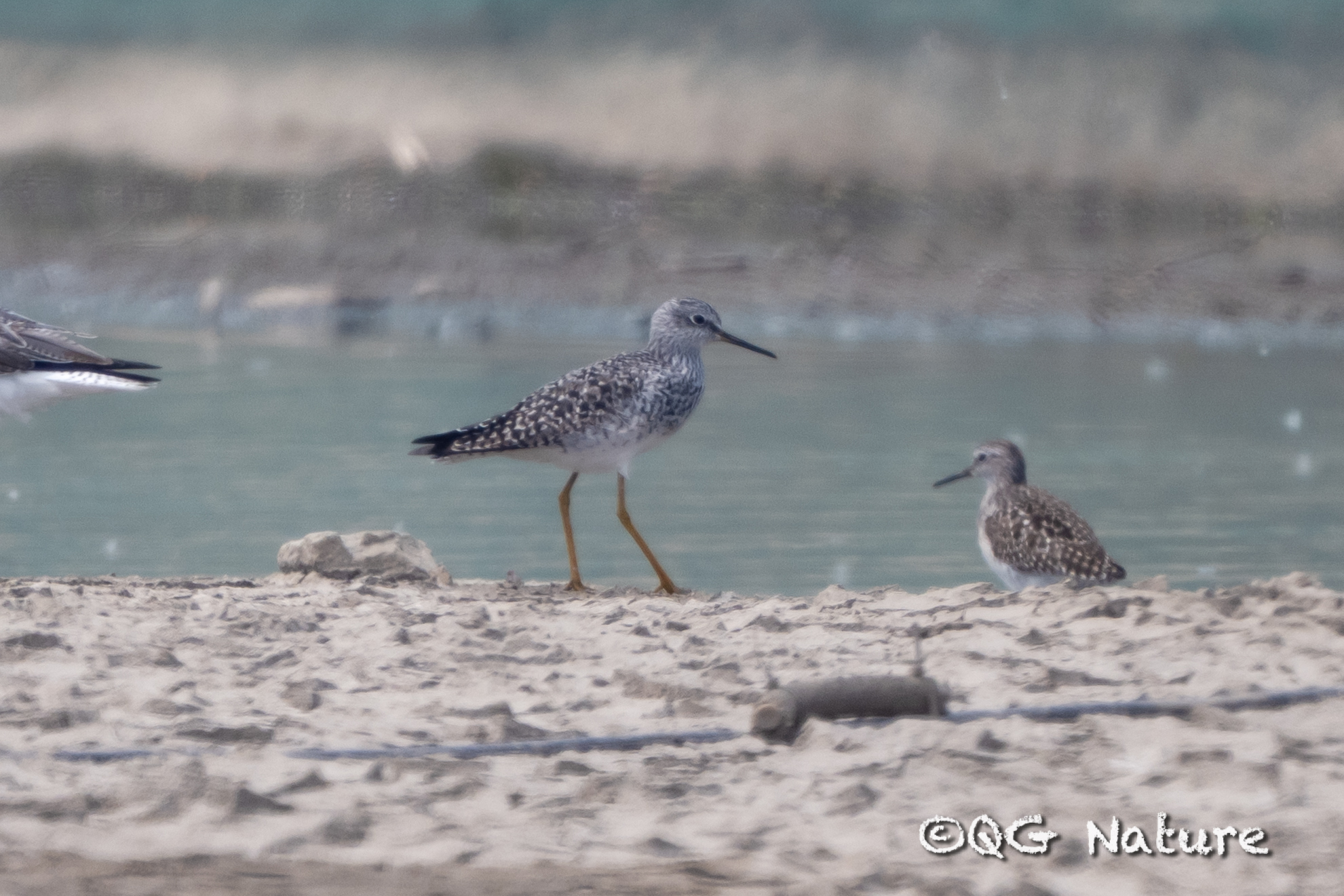
Lesser Yellowlegs
Tringa flavipes
小黄脚鹬
Introduction
A medium-sized shorebird in the family Scolopacidae. It breeds in the boreal forest region of North America, from interior Alaska eastward to central Quebec, primarily between 51° and 69° N latitude. The species nests in clearings near ponds, utilizing wetland habitats within the boreal forest. It is highly migratory, with wintering grounds extending throughout the southern United States, Mexico, Central America, South America, and the Antilles. The species is monotypic, with no recognized subspecies. Leg color is yellow, serving as a distinguishing field mark.
Description
A medium-large shorebird measuring 23-25 cm in length with a wingspan of 59-64 cm and weighing 67-94 g. Sexes are similar in plumage and size. Breeding plumage features mottled gray-brown, black, and white upperparts, with white underparts marked by irregular brown streaking on the breast and neck. Non-breeding plumage shows more uniform gray-brown upperparts. The legs are yellow. The bill is slim, straight, and uniformly dark, shorter than that of the similar greater yellowlegs, approximately equal to the head length in appearance. The breast is streaked and the flanks display fine, short bars.
Identification
Often confused with the larger greater yellowlegs, this species can be distinguished by its smaller size and proportionately shorter bill. The bill is visually about the same length as the head and appears more slender than that of the greater yellowlegs. The call is softer and less piercing than the greater yellowlegs' alarm note. Despite superficial similarity to the greater yellowlegs, genetic evidence shows closer relationship to the much larger willet. The fine, dense neck pattern in breeding plumage provides additional identification clues.
Distribution & Habitat
Breeding range extends across interior Alaska and northern Canada to central Quebec, occupying clearings near ponds in boreal forest habitat. The species is a long-distance migrant. Winter distribution includes the Atlantic coast from New Jersey southward, the Pacific coast north to San Francisco Bay, and coastal regions of the Gulf of Mexico and Gulf of California. It is widely distributed throughout Mexico, Central America, South America, and the Antilles, with largest populations wintering in these regions; smaller numbers winter inland. Regular vagrant to western Europe, with approximately five individuals recorded annually in Great Britain, primarily between August and October, occasionally overwintering.
Behavior & Ecology
Forages actively in shallow water or on land, moving with a high-stepping gait and outstretched neck. Uses quick bill jabs to pick prey, occasionally probing mud or sweeping the bill through water; sometimes forages at night. Diet consists primarily of invertebrates including flies, beetles, water boatmen, and mayflies, supplemented by small fish, crustaceans, aquatic worms, molluscs, spiders, and seeds. Nest is a depression on dry, mossy ground, well hidden within 200 meters of water and positioned near fallen branches, logs, or low shrubs. Clutch is 3-5 buff or gray-brown eggs with brown spots, measuring 3.9-4.7 cm in length and 2.7-3.1 cm in width. Incubation lasts 22-23 days by both sexes. Young are precocial, leaving the nest within hours of hatching, self-feeding immediately, and fledging at 23-31 days. Both parents brood and protect young, displaying aggressive nest defense within 1 meter of intruders.
Conservation
Population status and specific conservation assessment are not detailed in available sources. However, predation pressure is significant, with numerous avian predators including peregrine falcons, merlins, long-tailed jaegers, northern harriers, northern goshawks, sharp-shinned hawks, short-eared owls, and gyrfalcons preying on adults and fledglings. Eggs and chicks are vulnerable to sandhill cranes, bald eagles, mew gulls, herring gulls, common ravens, black-billed magpies, coyotes, and domestic cats.
Culture
Cultural significance, folklore, or traditional uses are not documented in available sources.
Source: Wikipedia · CC BY-SA 3.0
Taxonomy
- Order
- Charadriiformes
- Family
- Scolopacidae
- Genus
- Tringa
- eBird Code
- lesyel
Distribution
breeds subarctic tundra to forest from Alaska mainland eastward to James Bay and probably central Quebec (east-central Canada); winters southern USA throughout Caribbean southward to Tierra del Fuego
Data Sources
Species description from Wikipedia, licensed under CC BY-SA 3.0.
Bird images and sounds sourced from GBIF, contributed by citizen scientists worldwide under Creative Commons licenses.
Taxonomy data from AviList 2025.