White-bellied Green Pigeon
Treron sieboldii
红翅绿鸠
Introduction
This columbid is one of the few migratory green pigeon species. It inhabits temperate and subtropical forests across East Asia, with a preference for primary forest habitats. It feeds on fruit in forest canopies and visits traditional saltwater drinking sites during summer months. Population increases have been recorded since 2000.
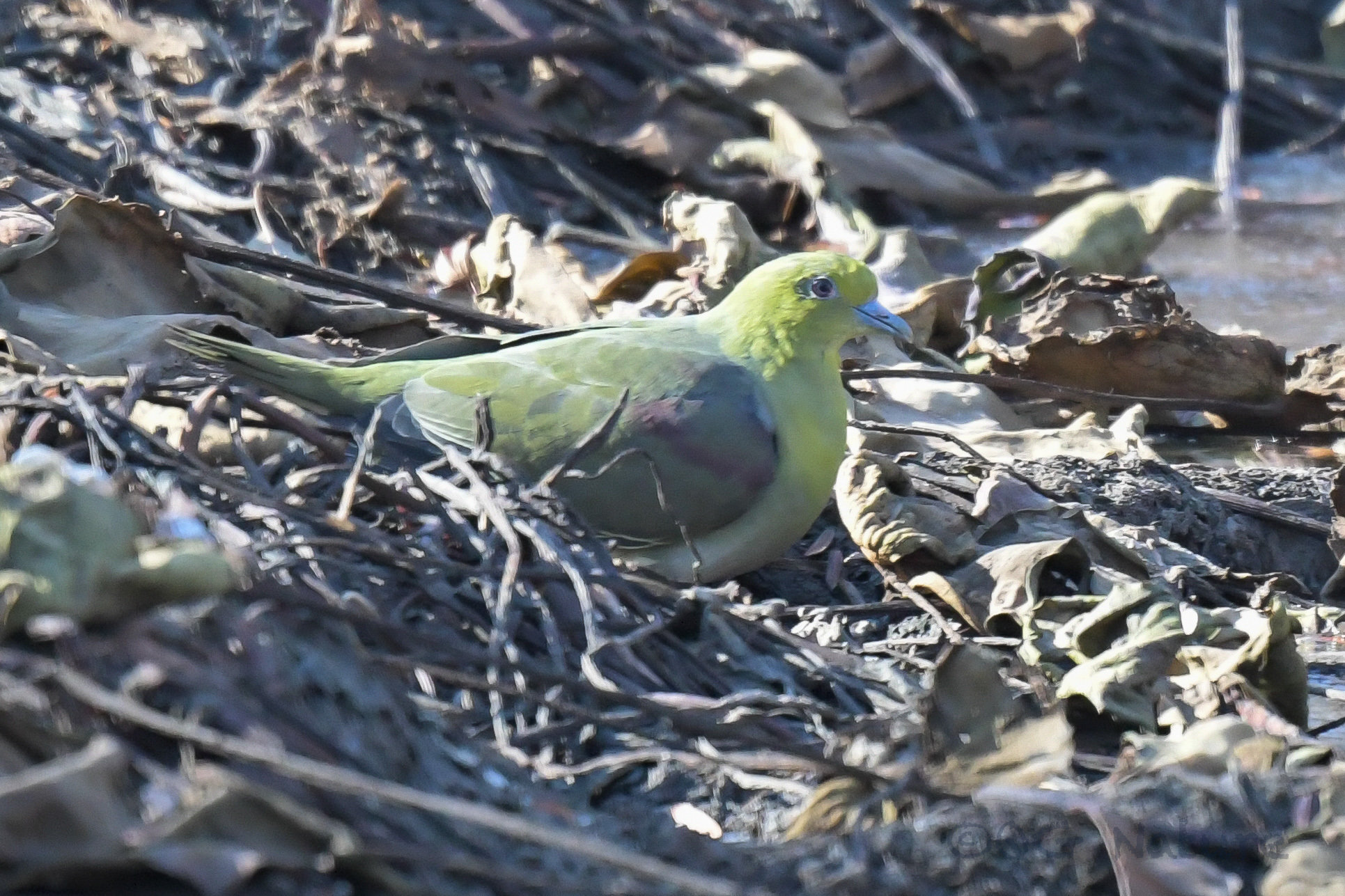
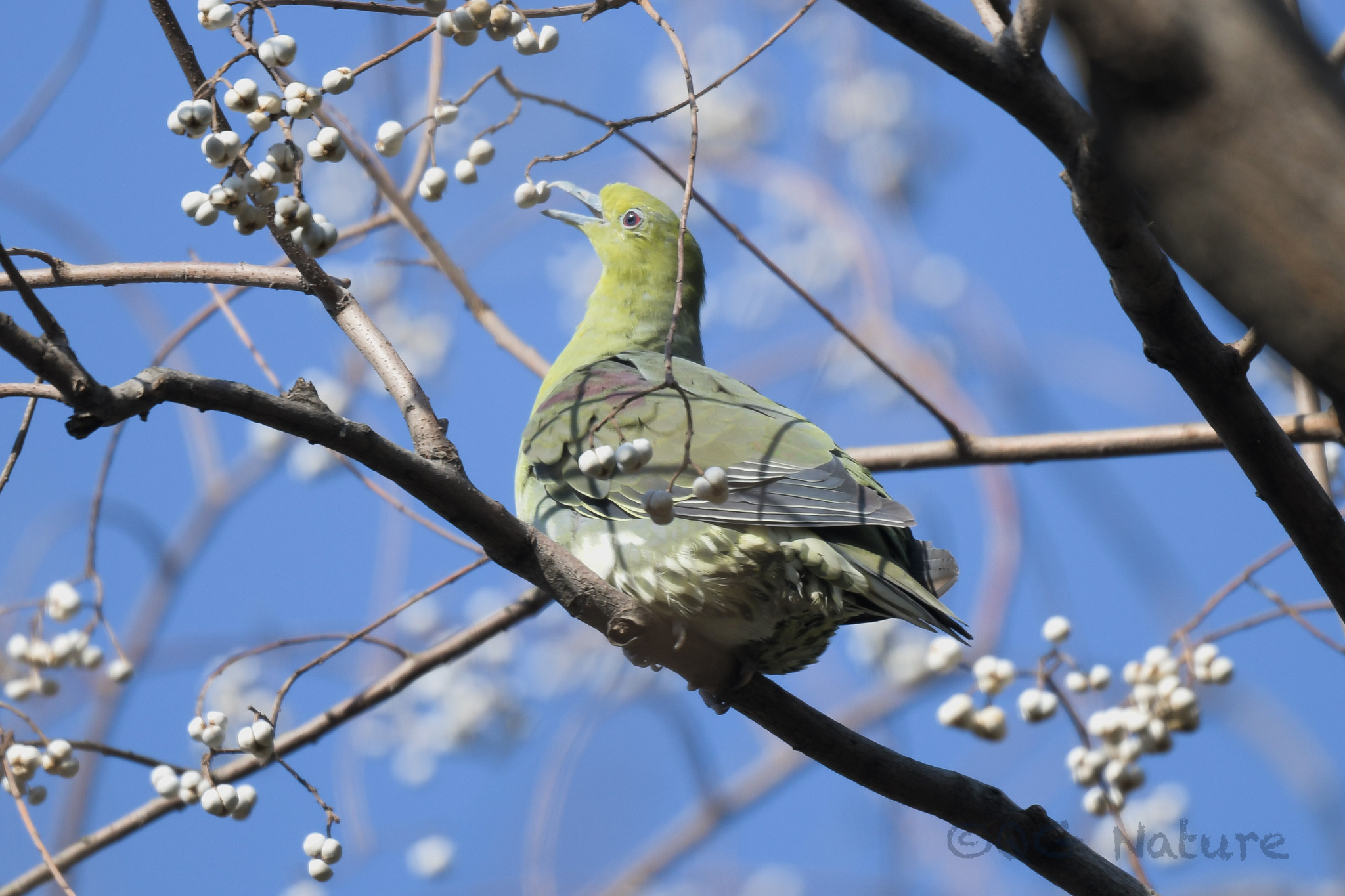
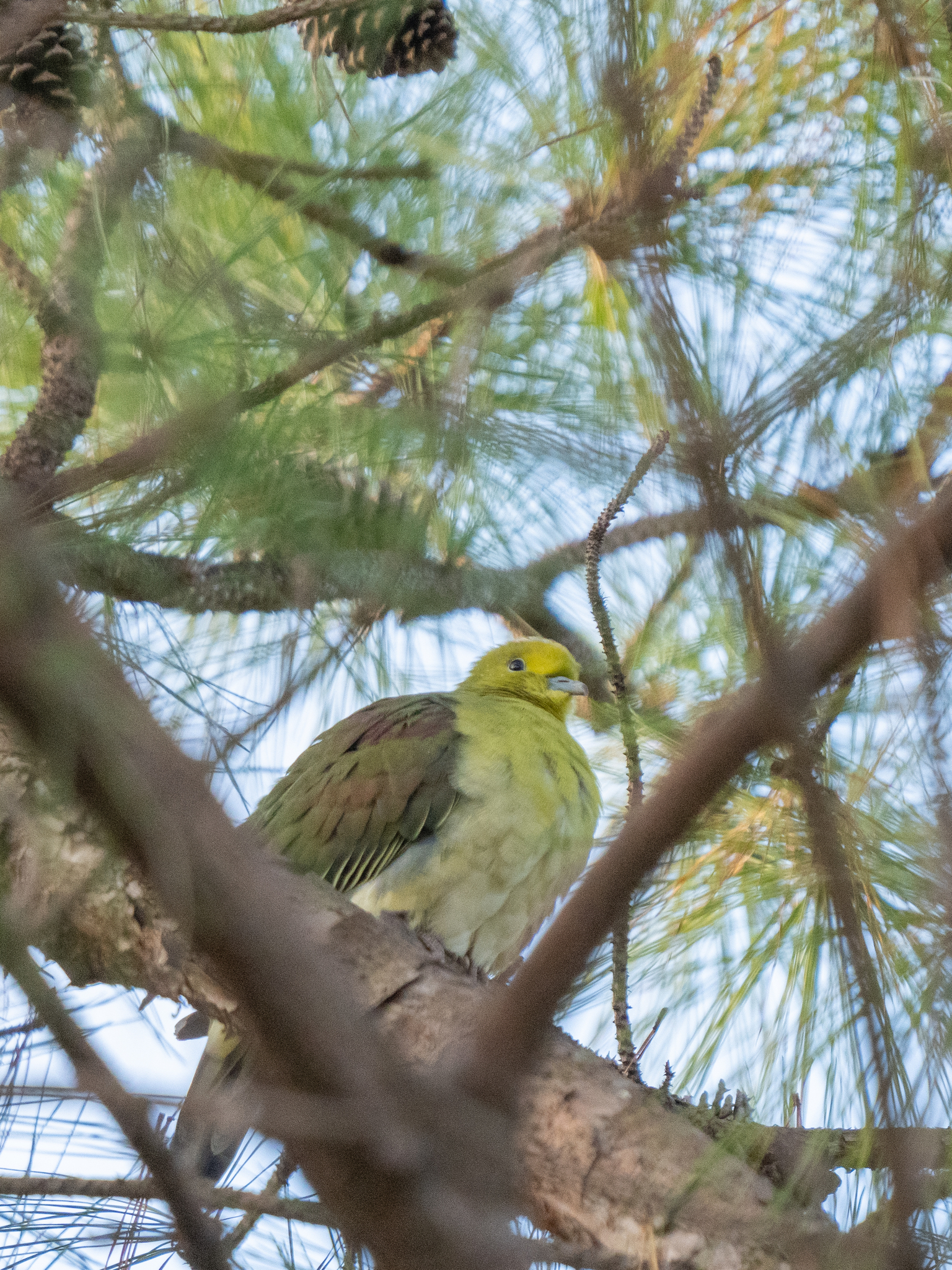
Description
A medium-sized, compact pigeon exceeding 36 centimeters in body length with a relatively short tail measuring 10-13 centimeters. The bill is modest, under 2.5 centimeters long. Adult males display a vibrant green head and breast contrasting with olive-toned wings, throat, and neck. The underparts are white as the name suggests, including the belly and undertail. A distinctive maroon shoulder patch adorns each wing, complemented by vivid blue eye rings. The iris ranges from pink to violet, while the feet are red to violet. Females resemble males but appear less vibrant, lacking the maroon shoulder patch entirely and showing a frosted green breast instead of the bright green of males.
Distribution & Habitat
Distributed across East Asia, the Russian Far East, and Southeast Asia. In Japan, populations occur on Hokkaido and the Ryukyu Islands, extending through Taiwan and Orchid Island. Chinese distribution includes Hebei, southern Shaanxi, eastern Sichuan, Fujian, Guizhou, Guangxi, Hainan, and Hong Kong. The species also inhabits northern Thailand, Laos, and Vietnam. This migratory pigeon winters in China. Its preferred habitat consists of deciduous and mixed forests, with a marked preference for primary growth. In Japan, it occupies both lowland and mountain forests.
Behavior & Ecology
This species exhibits a remarkable and unusual habit of drinking saltwater, believed to aid digestion of acidic berries. A well-known gathering site is Terugasaki in Ōiso, Kanagawa Prefecture, Japan. It lives in pairs or small groups of up to ten individuals, though larger aggregations form in summer—up to 200 birds in Hokkaido and 440 in Honshu. The diet consists exclusively of fruit, including Korean cherries, crimson glory vine grapes, and cornels, switching to acorns in winter. Foraging occurs primarily in branches, though birds descend to drink water. Summer groups gather at saltwater sources due to mineral deficiencies in their seasonal diet. Nests are typical pigeon constructions—loose twig platforms built in trees where females lay two eggs.
Conservation
Population trends indicate significant increase since 2000, suggesting expanding numbers or improving conditions across parts of its range. While the species inhabits forest environments and shows preference for primary woodland, specific conservation assessments and detailed threat analyses are not provided in available sources.
Source: Wikipedia · CC BY-SA 3.0
Taxonomy
- Order
- Columbiformes
- Family
- Columbidae
- Genus
- Treron
- eBird Code
- whbpig1
Vocalizations
Subspecies (4)
-
Treron sieboldii fopingensis
lowlands and foothills of central China (eastern Sichuan and southern Shaanxi)
-
Treron sieboldii murielae
far southwestern China to northern Thailand, central Vietnam, and Hainan
-
Treron sieboldii sieboldii
eastern China and Japan
-
Treron sieboldii sororius
Taiwan
Data Sources
Species description from Wikipedia, licensed under CC BY-SA 3.0.
Bird images and sounds sourced from GBIF, contributed by citizen scientists worldwide under Creative Commons licenses.
Taxonomy data from AviList 2025.