Yellow-footed Green Pigeon
Treron phoenicopterus
黄脚绿鸠
Introduction
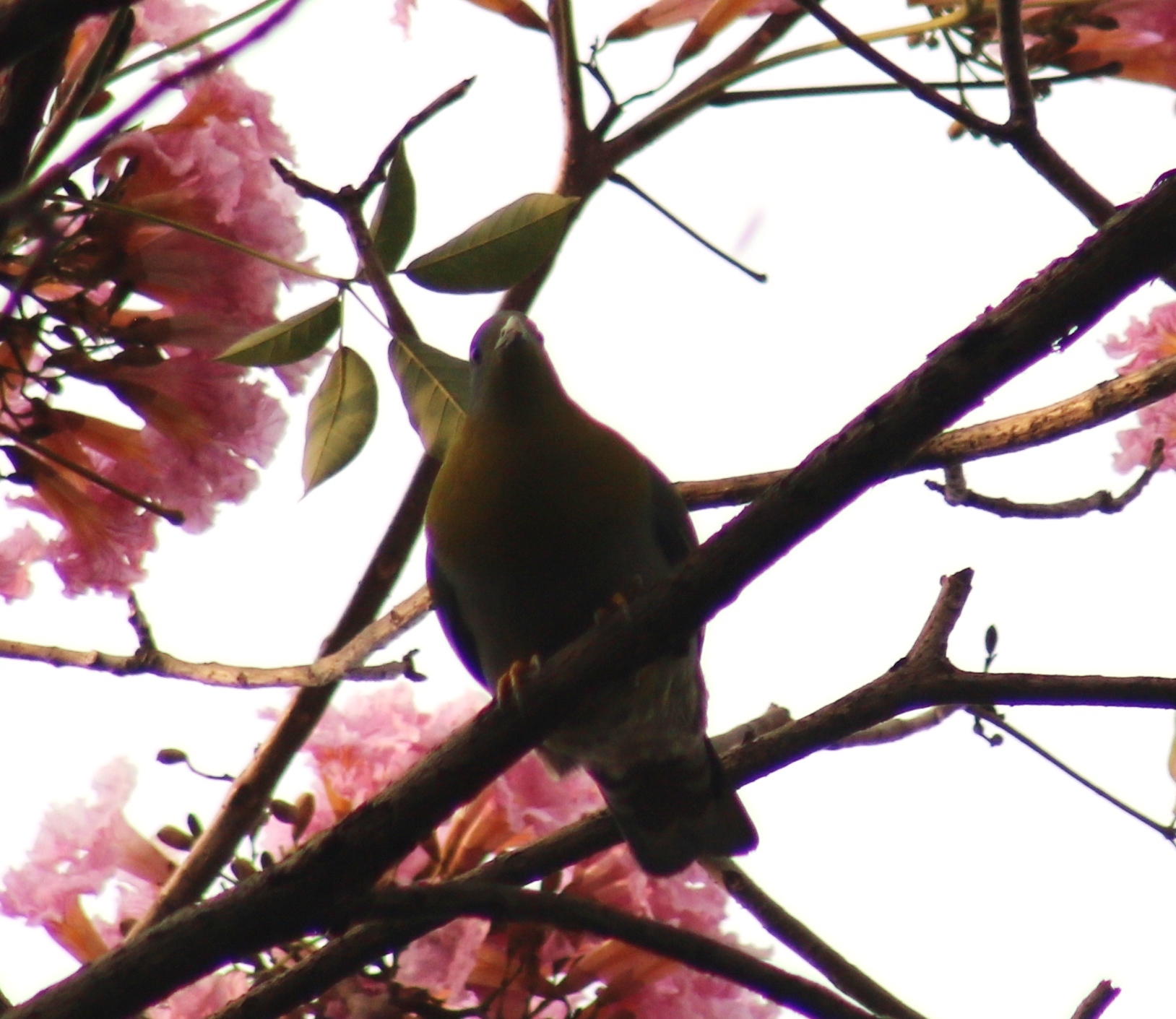
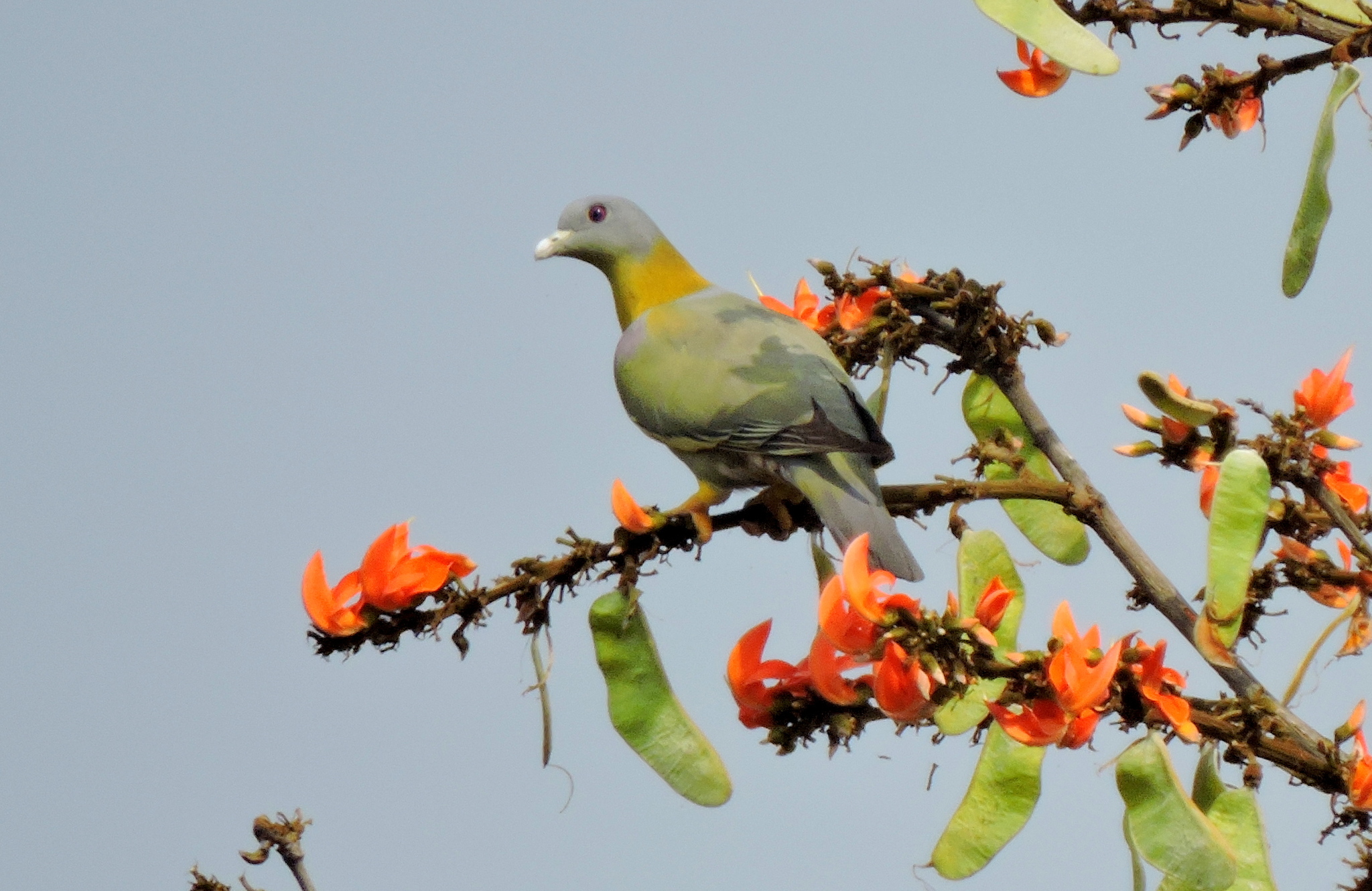
The yellow-footed green pigeon (Treron phoenicopterus) is a species of green pigeon in the family Columbidae. It ranges across the Indian subcontinent and parts of Southeast Asia, including Pakistan, India, Nepal, Sri Lanka, Bangladesh, Bhutan, Myanmar, China, Thailand, Vietnam, Laos, and Cambodia. It is a habitat generalist found in dense forest areas, particularly around Banyan trees, as well as urban green spaces. It forages in flocks and feeds primarily on fruit, especially Ficus species. A distinctive behavior is sunning on the tops of emergent trees in early morning. The species is the state bird of Maharashtra and its population is currently increasing.
Description
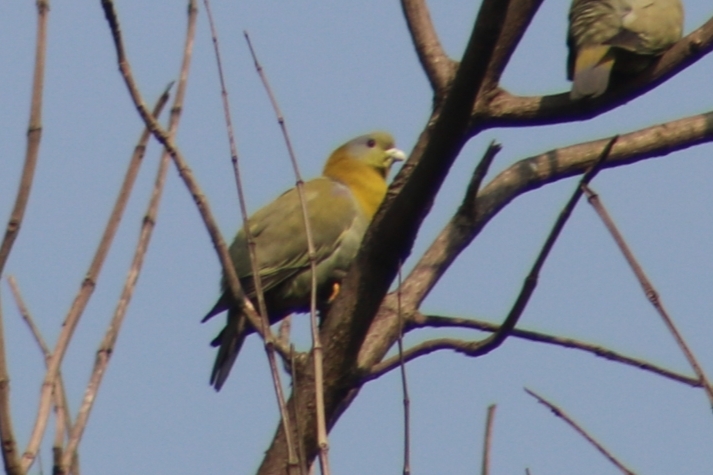
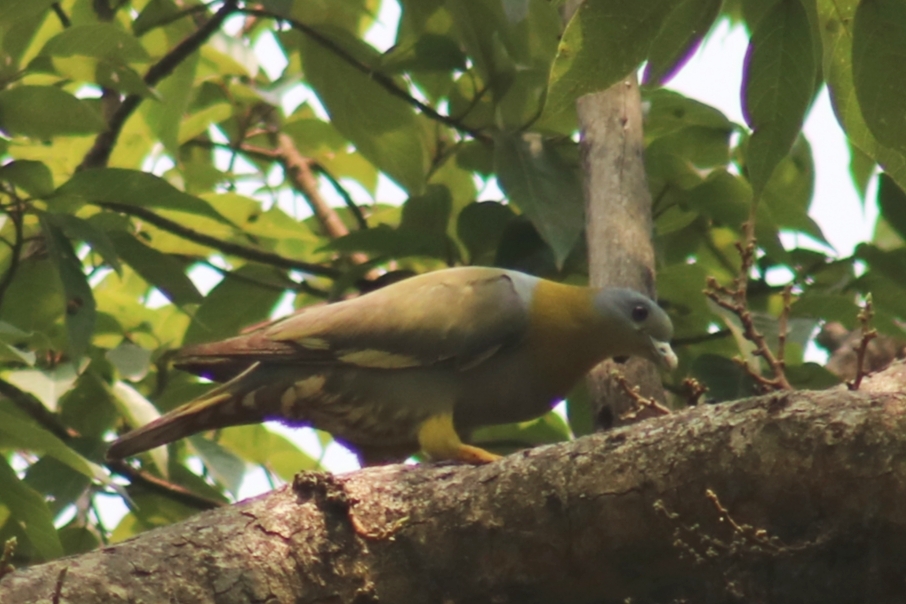
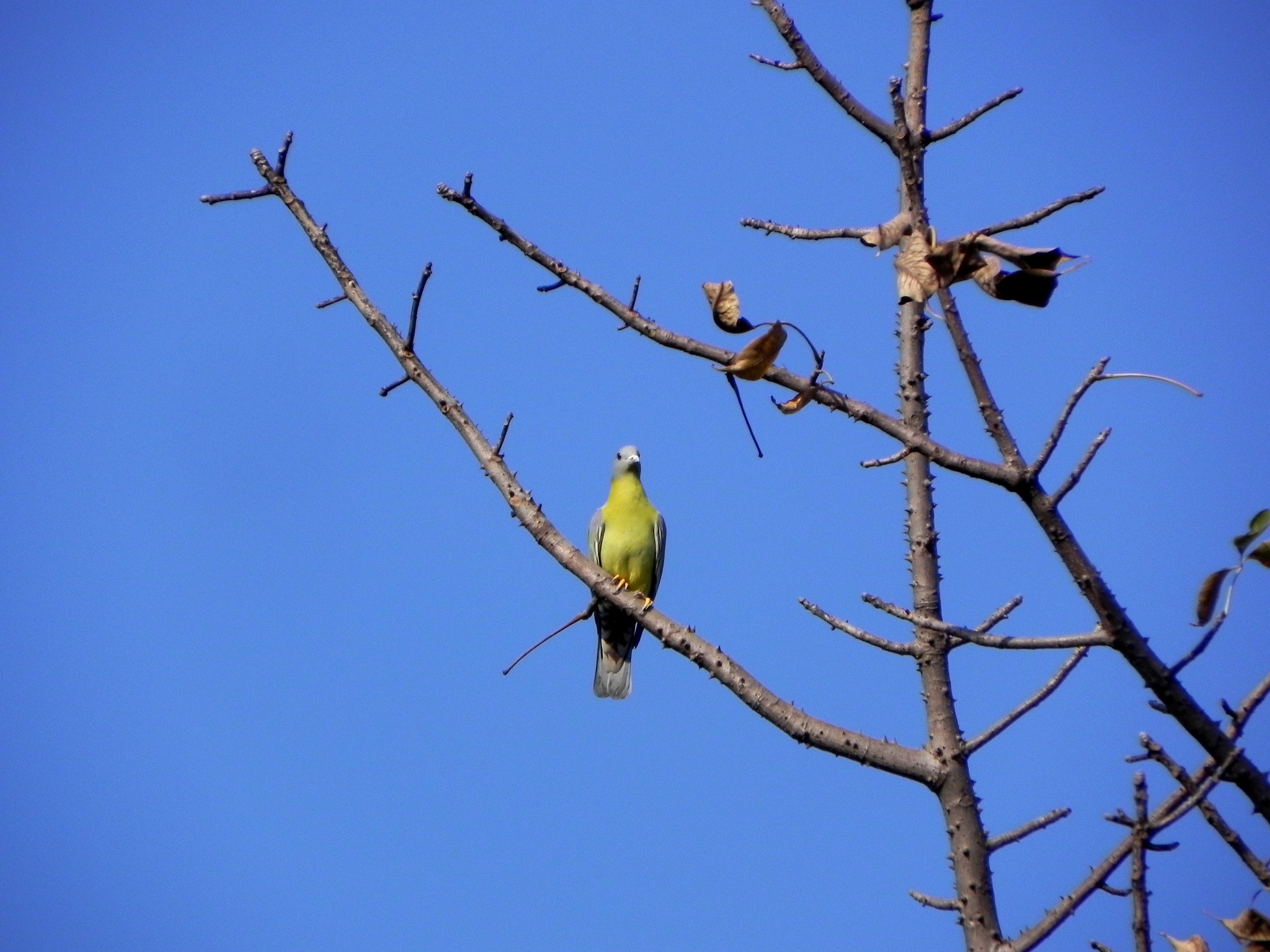
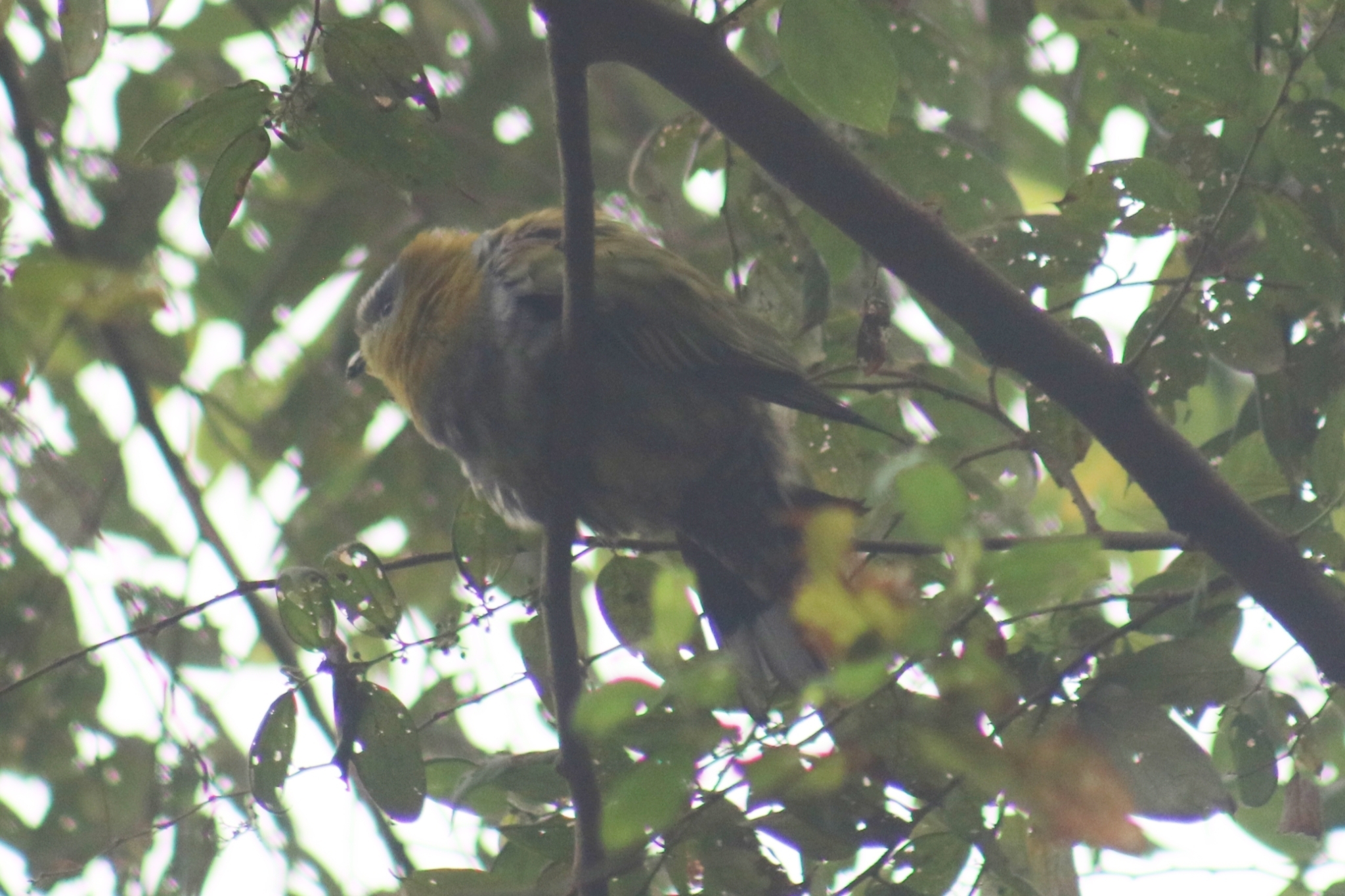
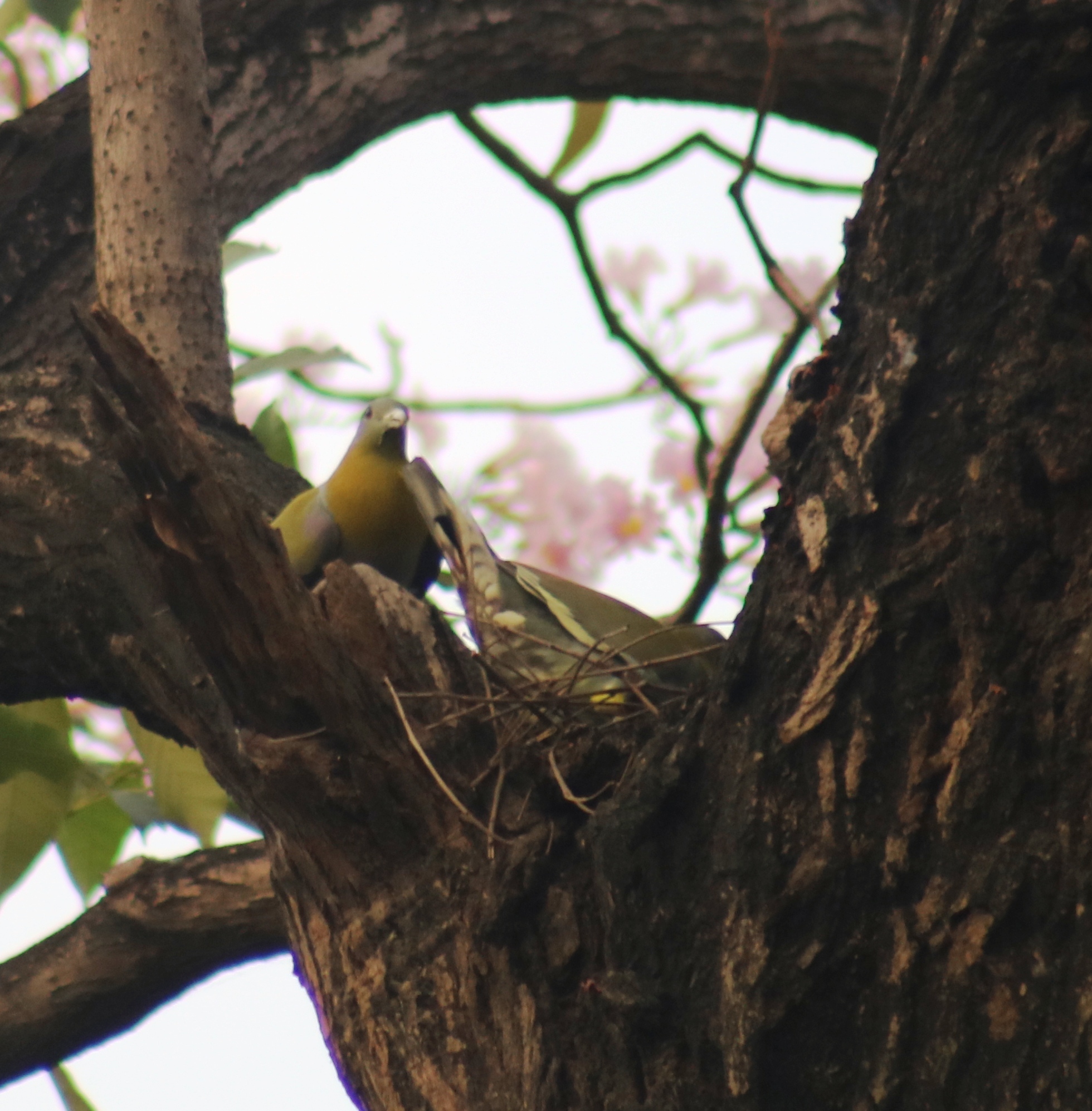
The species is a medium-sized green pigeon with predominantly green plumage. As its name suggests, it has distinctive yellow feet or yellow legs. The wings and tail show characteristic coloration typical of green pigeons in the Treron genus.
Identification
The yellow legs and feet are the most distinctive field mark separating it from other green pigeon species. It can be distinguished from similar Treron species by its range and leg coloration. In its widespread range across the Indian subcontinent, it is the most commonly encountered green pigeon species.
Distribution & Habitat
The species occurs across Pakistan, India, Nepal, Sri Lanka, Bangladesh, Bhutan, Myanmar, China, Thailand, Vietnam, Laos, and Cambodia. It inhabits various woodland types including dense forests, particularly where Banyan trees are present, and has adapted to urban areas with natural remnants. It is considered a resident species throughout much of its range with some local movements.
Behavior & Ecology
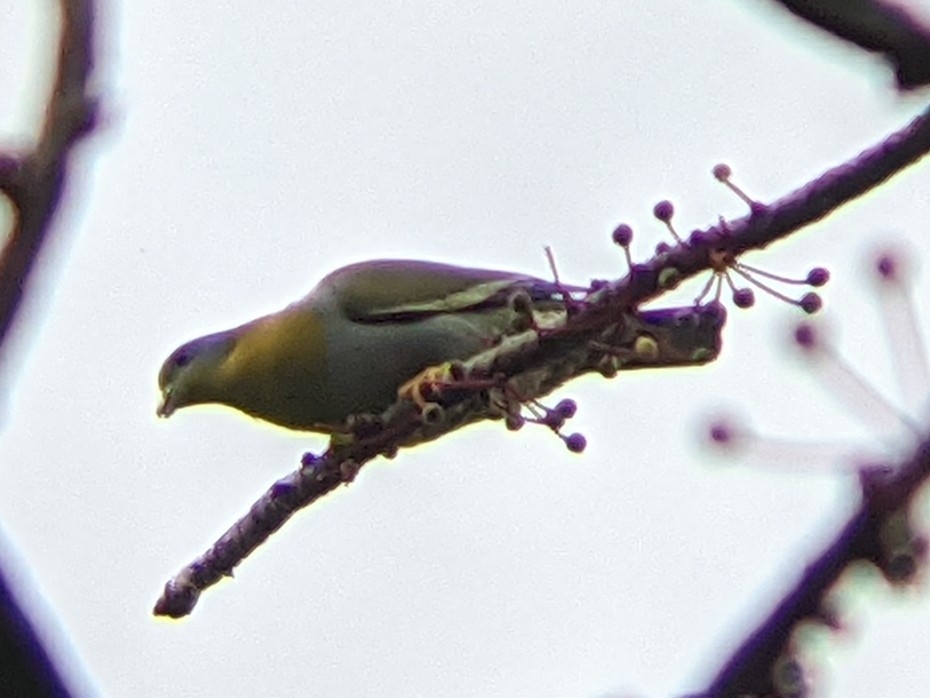
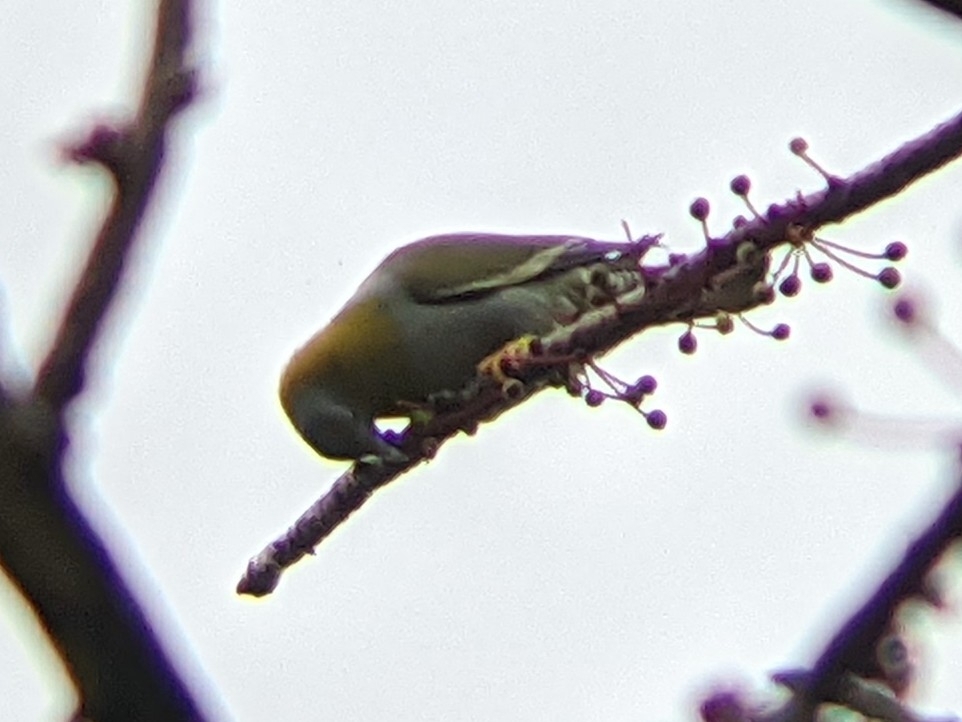
The species is highly social, foraging in flocks. Diet consists primarily of fruit, with many Ficus species being important food sources. In the early morning, individuals are frequently observed sunning on the tops of emergent trees in dense forest areas, especially near Banyan trees. No specific vocalization details were provided.
Conservation
The species is currently assessed as having an increasing population trend. No specific threats or conservation concerns were detailed in the source text. Its adaptability to urban environments may contribute to its stable population status.
Culture
It is the state bird of Maharashtra. In Marathi, it is known as Haroli or Hariyal. In Upper Assam it is called Haitha, and in Lower Assam it is known as Haitol. No additional folklore or cultural significance was documented.
Source: Wikipedia · CC BY-SA 3.0
Taxonomy
- Order
- Columbiformes
- Family
- Columbidae
- Genus
- Treron
- eBird Code
- yefpig1
Subspecies (5)
-
Treron phoenicopterus annamensis
eastern Thailand to southern Laos and southern Vietnam
-
Treron phoenicopterus chlorigaster
peninsular India south of the Gangetic Plain
-
Treron phoenicopterus phillipsi
Sri Lanka
-
Treron phoenicopterus phoenicopterus
eastern Pakistan and northern India to Assam and Bangladesh
-
Treron phoenicopterus viridifrons
far southwestern China (Yunnan) to Myanmar and northwestern Thailand
Data Sources
Species description from Wikipedia, licensed under CC BY-SA 3.0.
Bird images and sounds sourced from GBIF, contributed by citizen scientists worldwide under Creative Commons licenses.
Taxonomy data from AviList 2025.