Orange-breasted Green Pigeon
Treron bicinctus
橙胸绿鸠
Introduction
A species of pigeon (Treron bicinctus) found across tropical Asia south of the Himalayas, including the Indian subcontinent and Southeast Asia. Inhabits forest environments from the Terai and lower Himalayas up to 1,500 meters elevation, through the Western and Eastern Ghats, and Sri Lankan forests near the coast. Found in Burma, Thailand, the Malay Peninsula, Vietnam, Java, and Hainan. Feeds mainly on small fruit, typically found in pairs or small flocks, foraging quietly while moving slowly through trees. Some seasonal movements are suspected based on vagrant records from locations such as Sindh.
Description
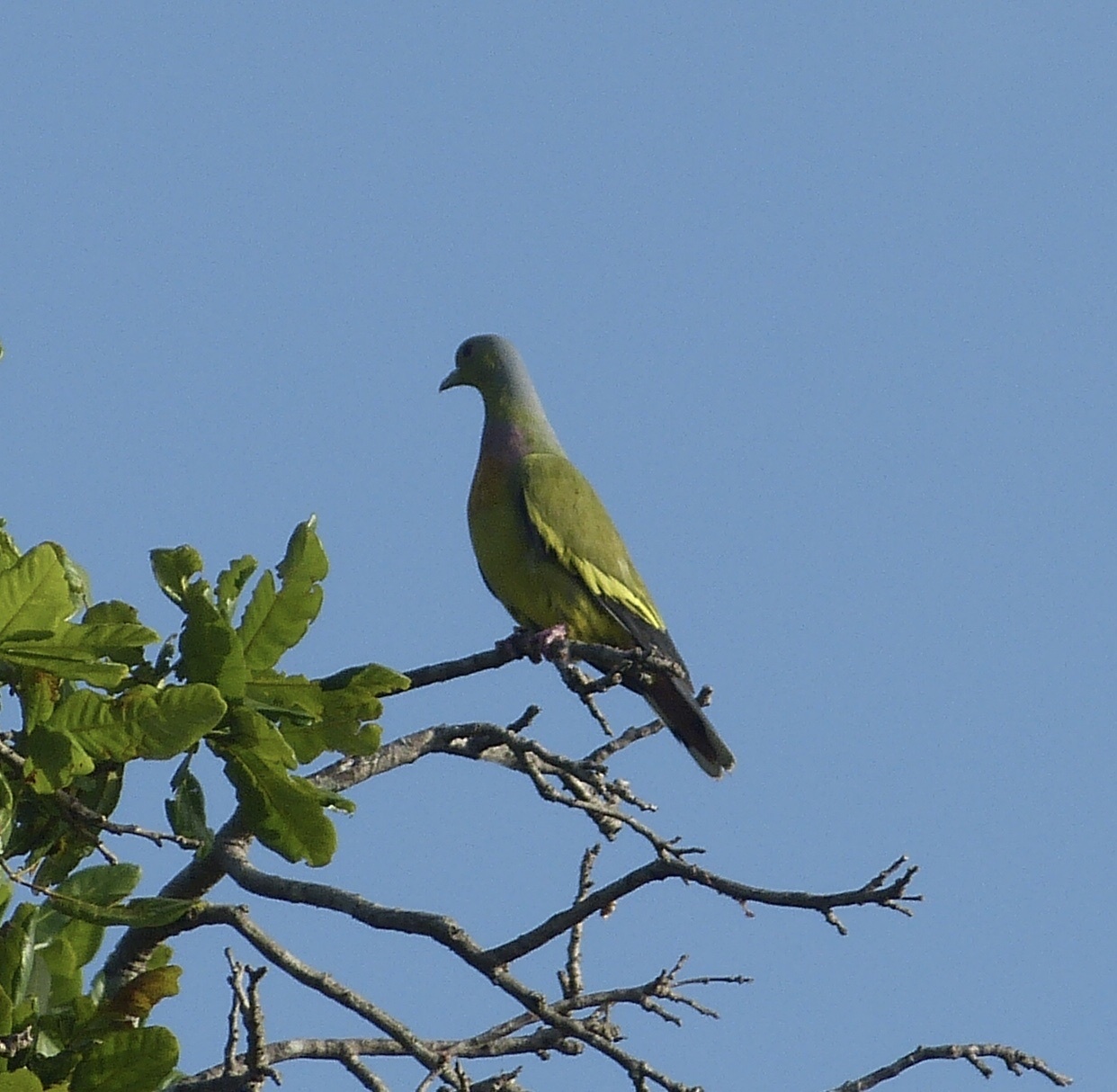
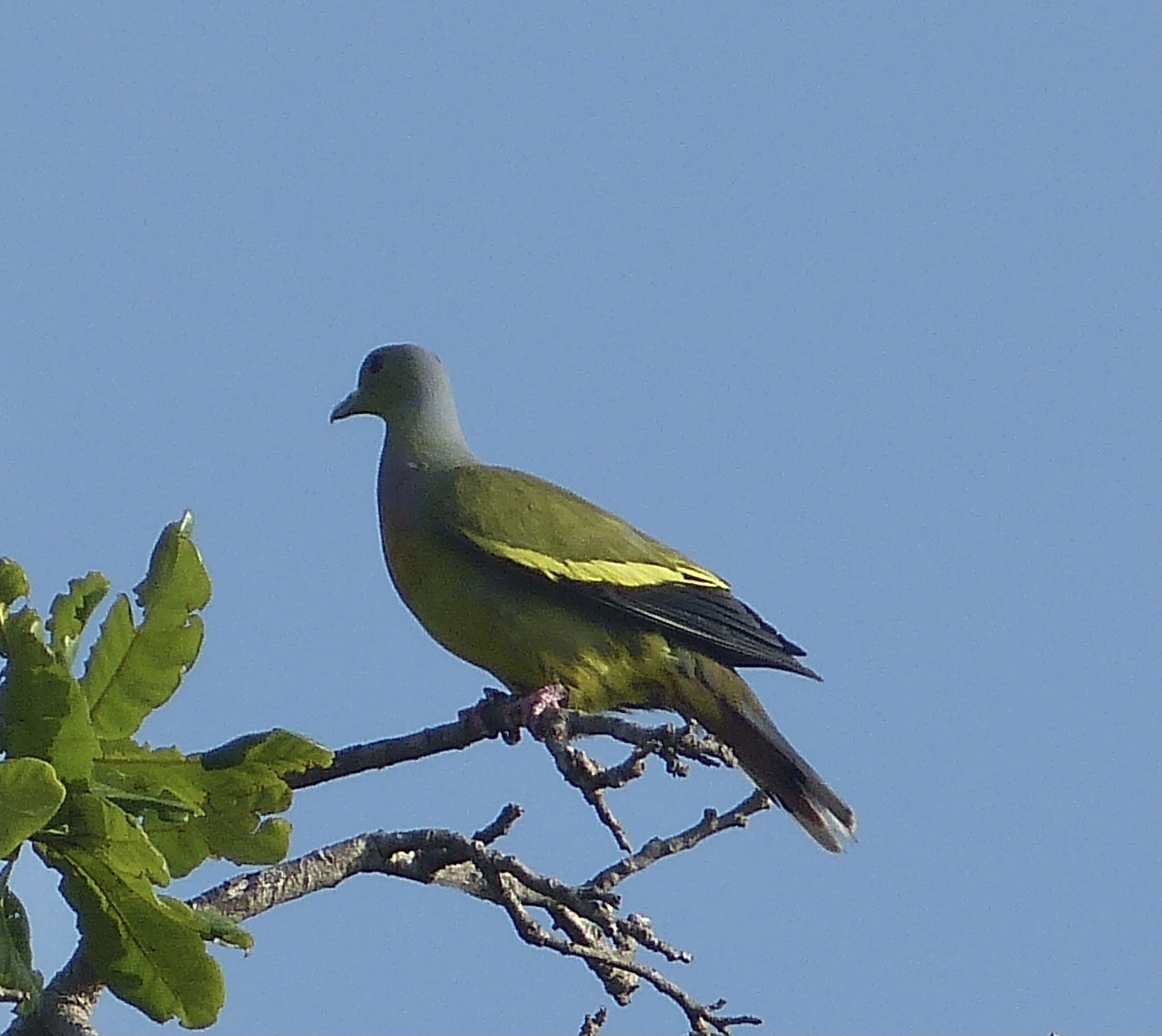
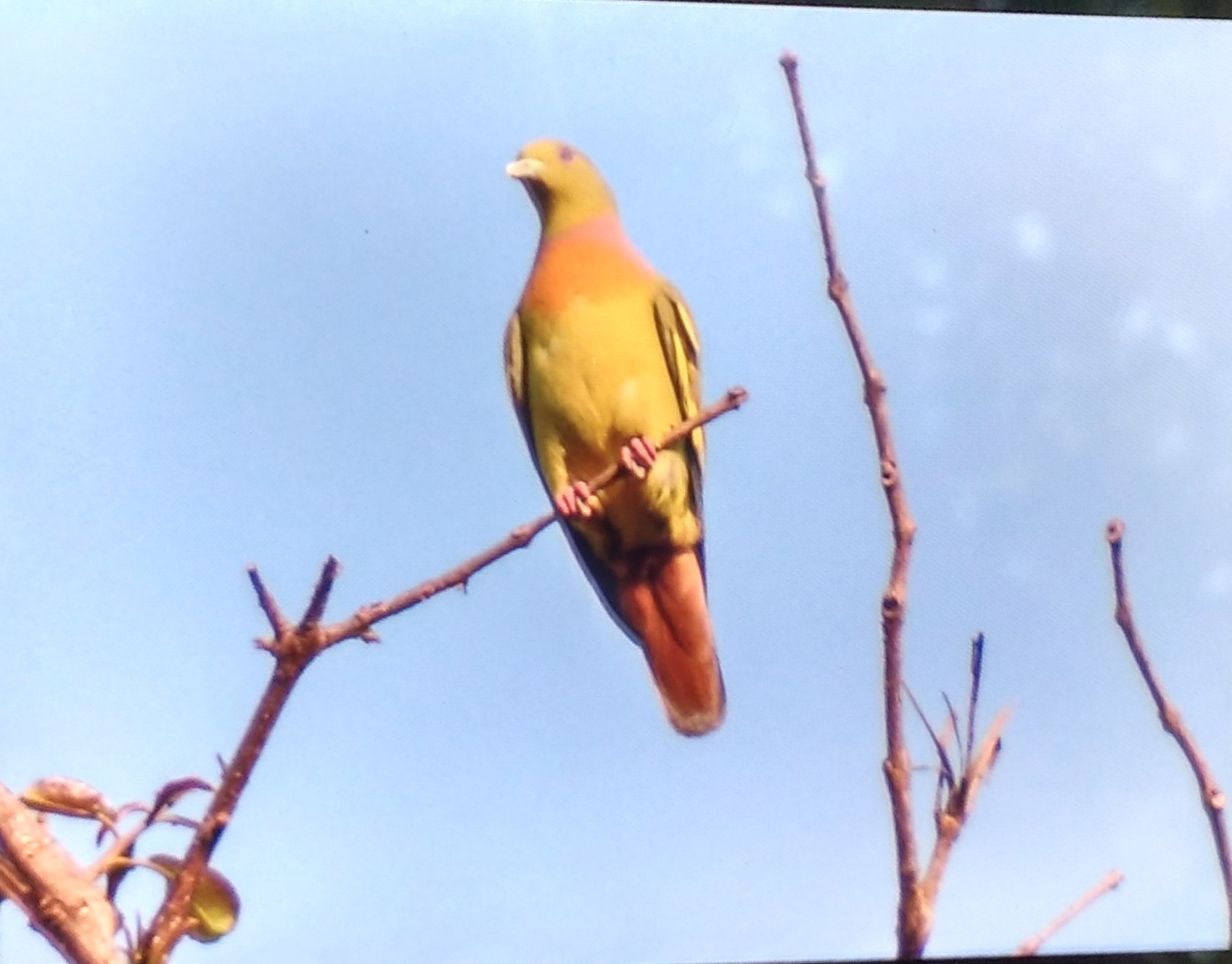
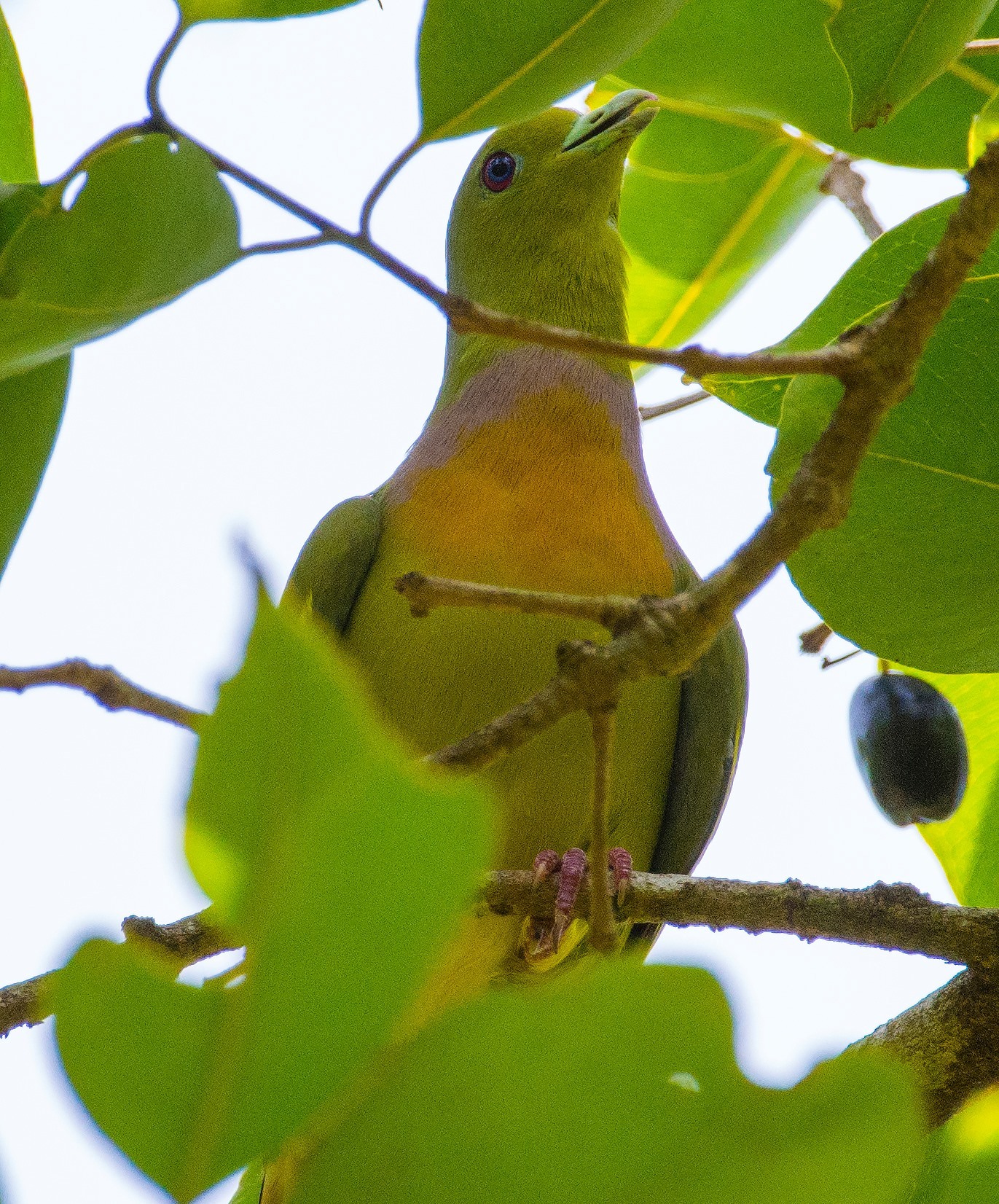
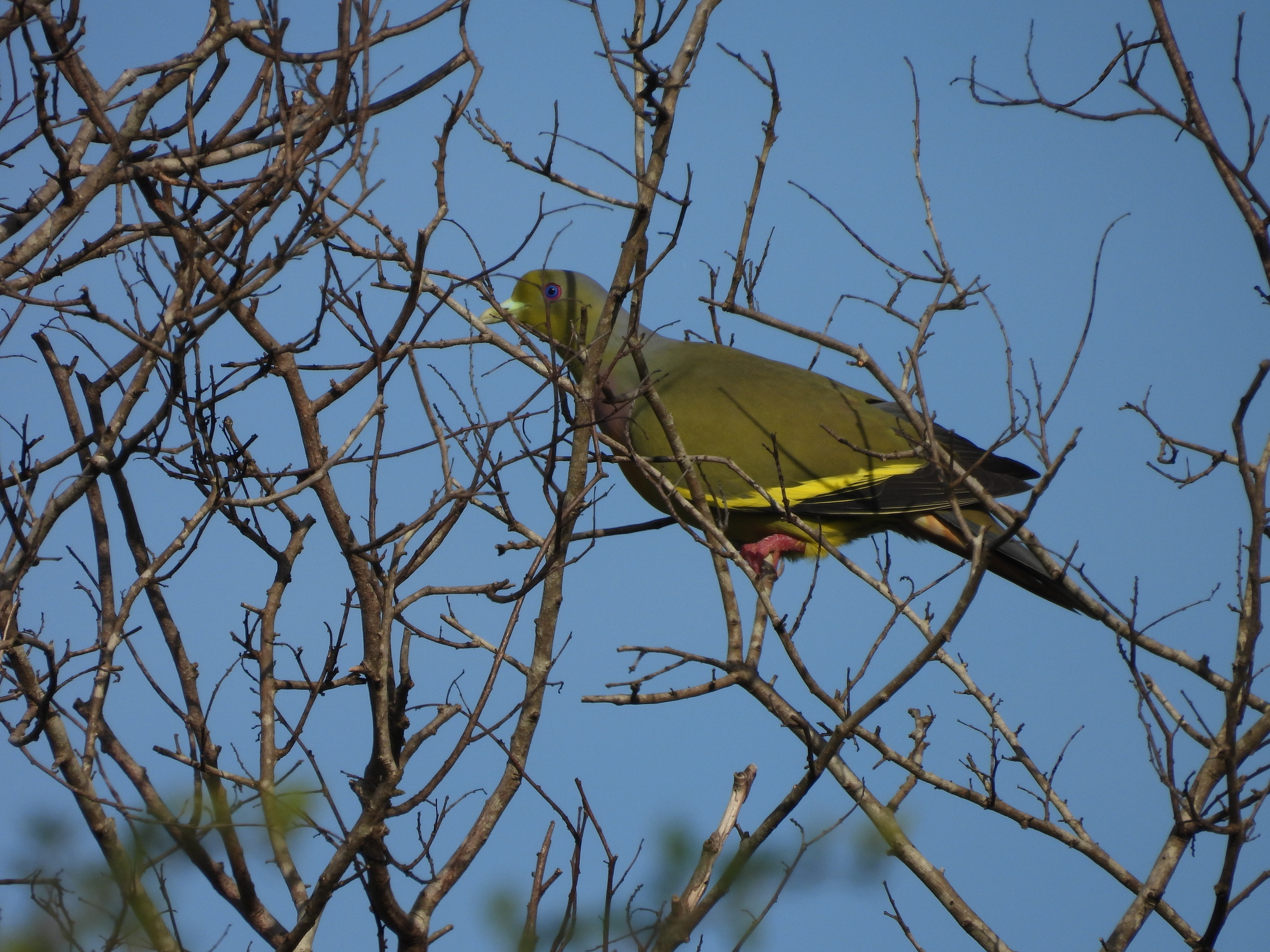
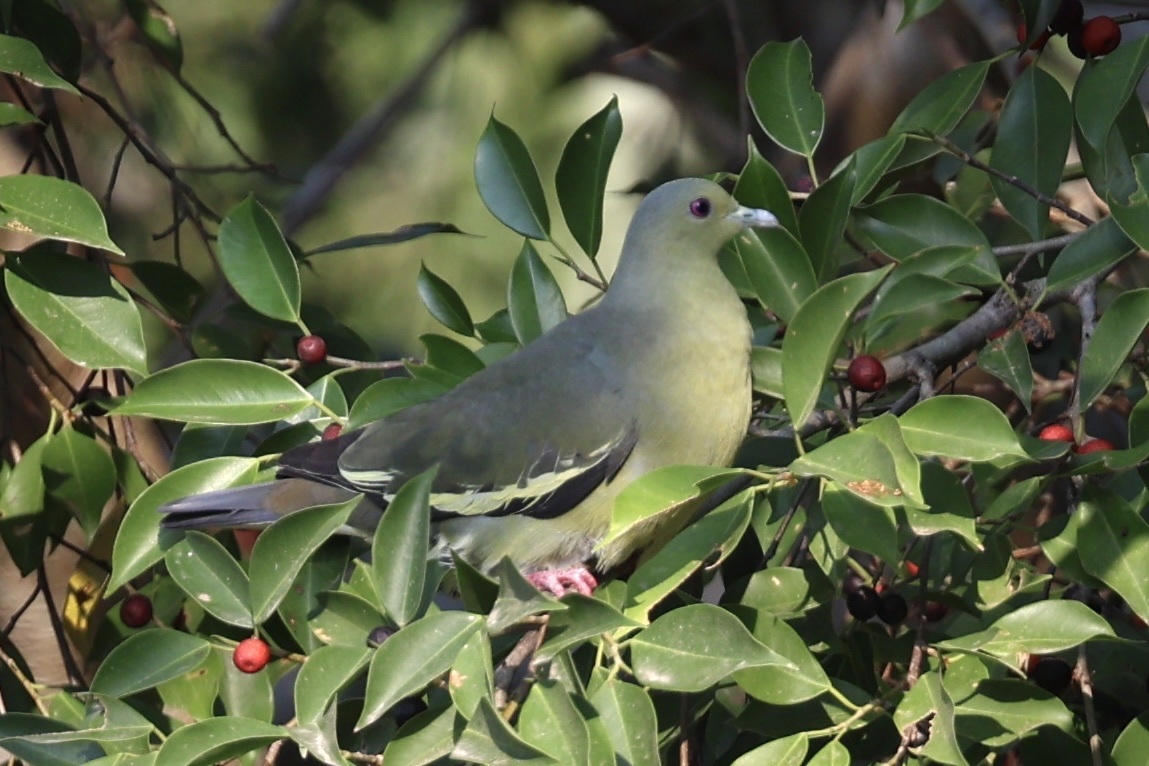
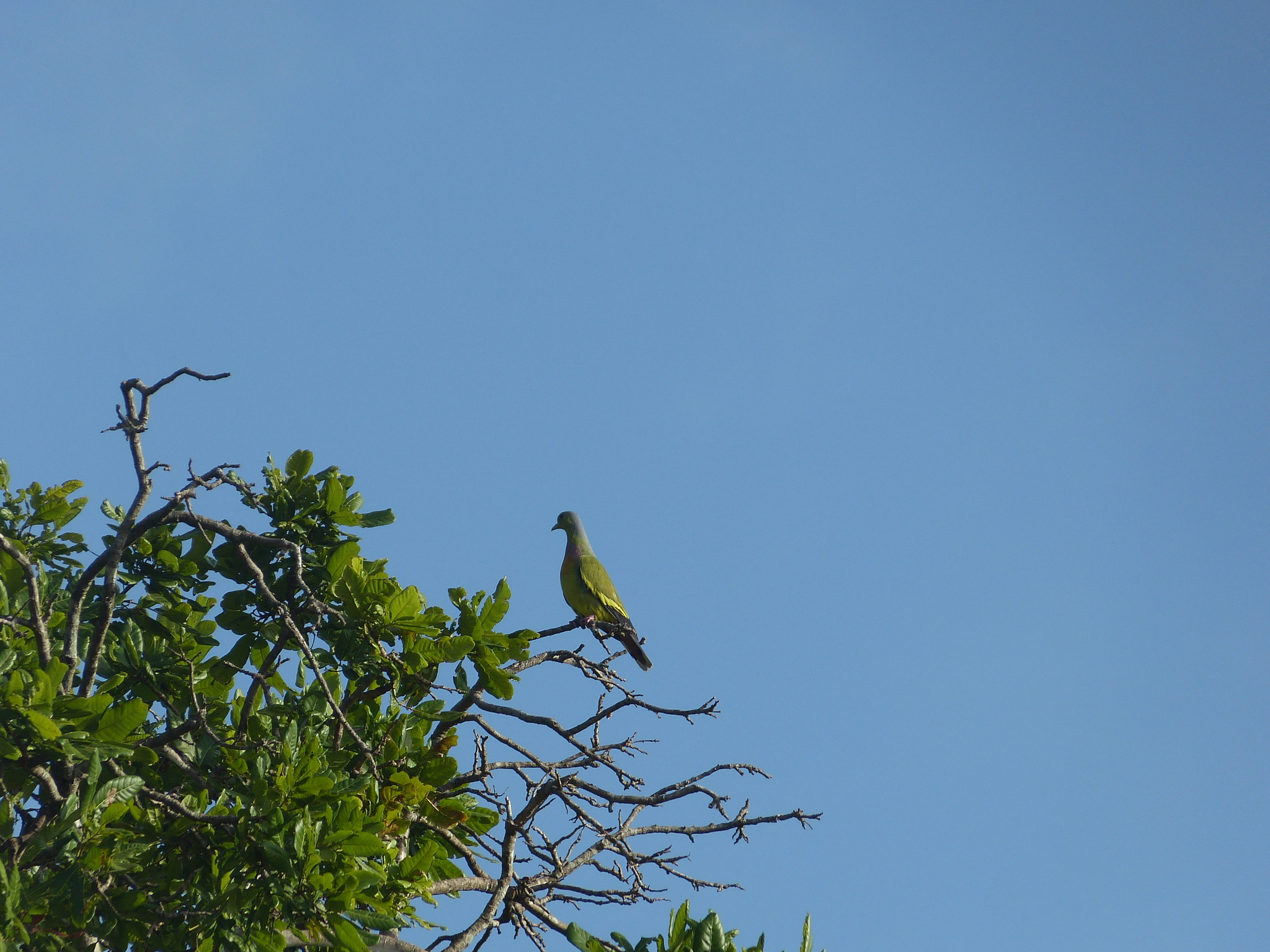
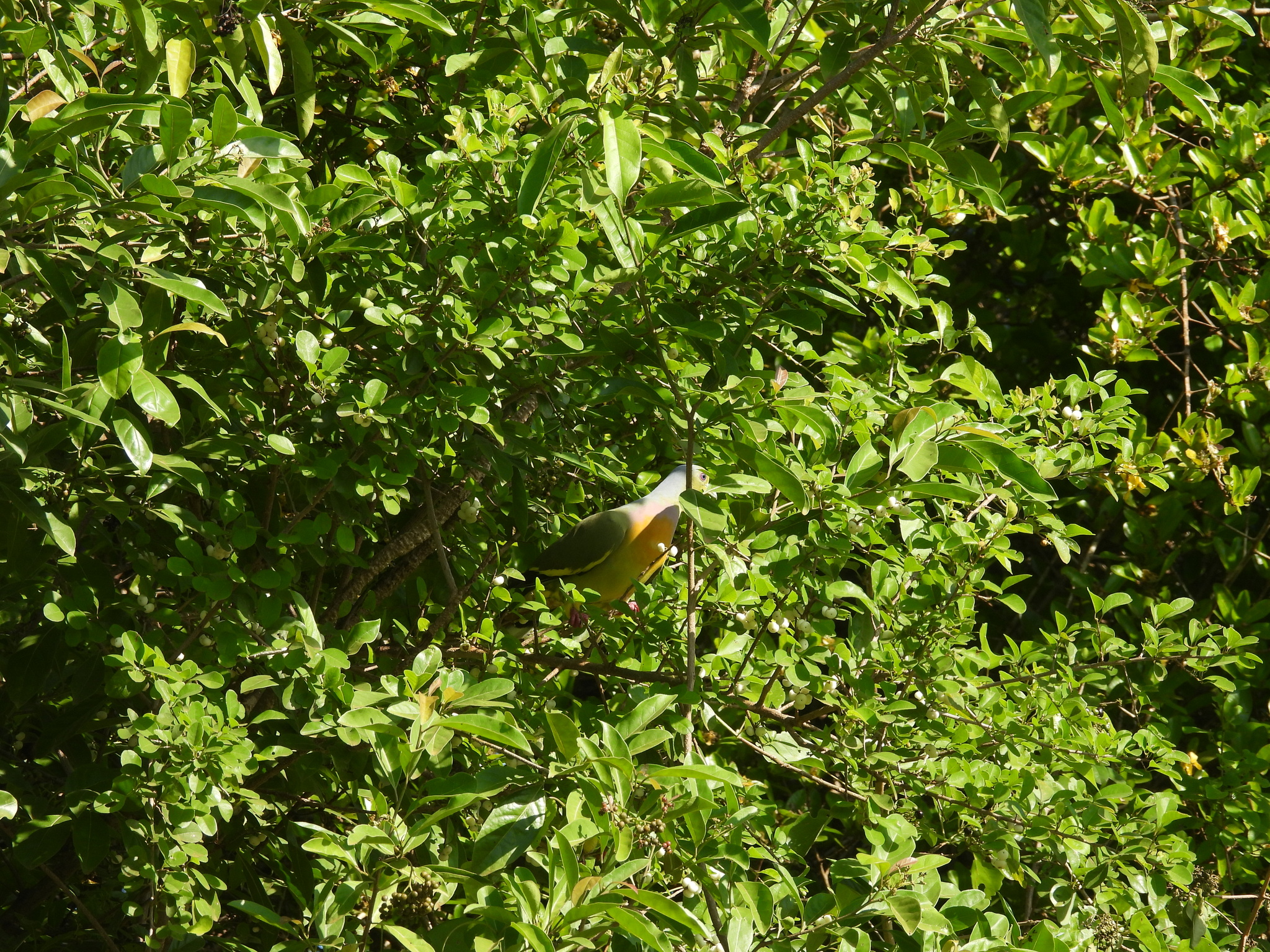
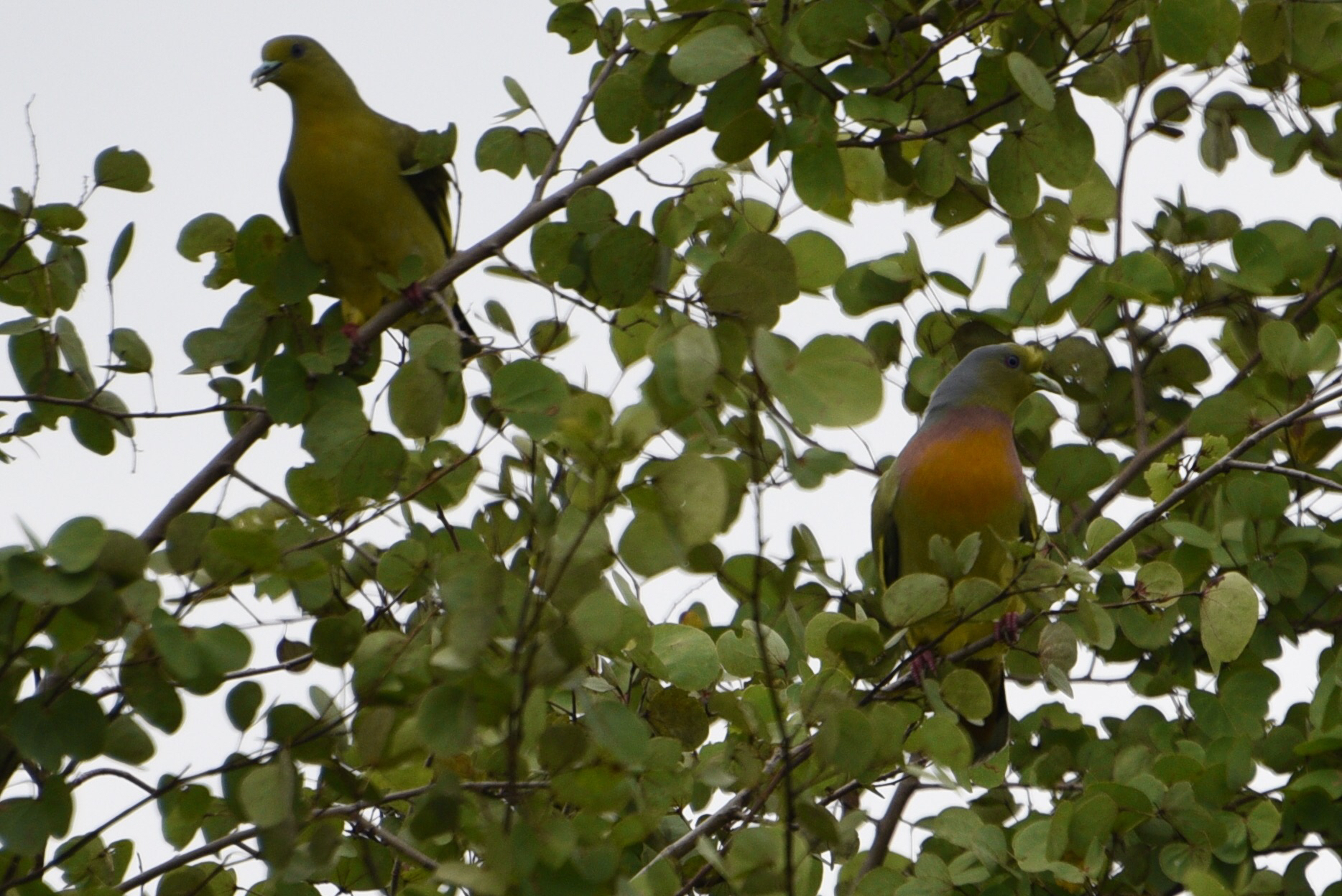
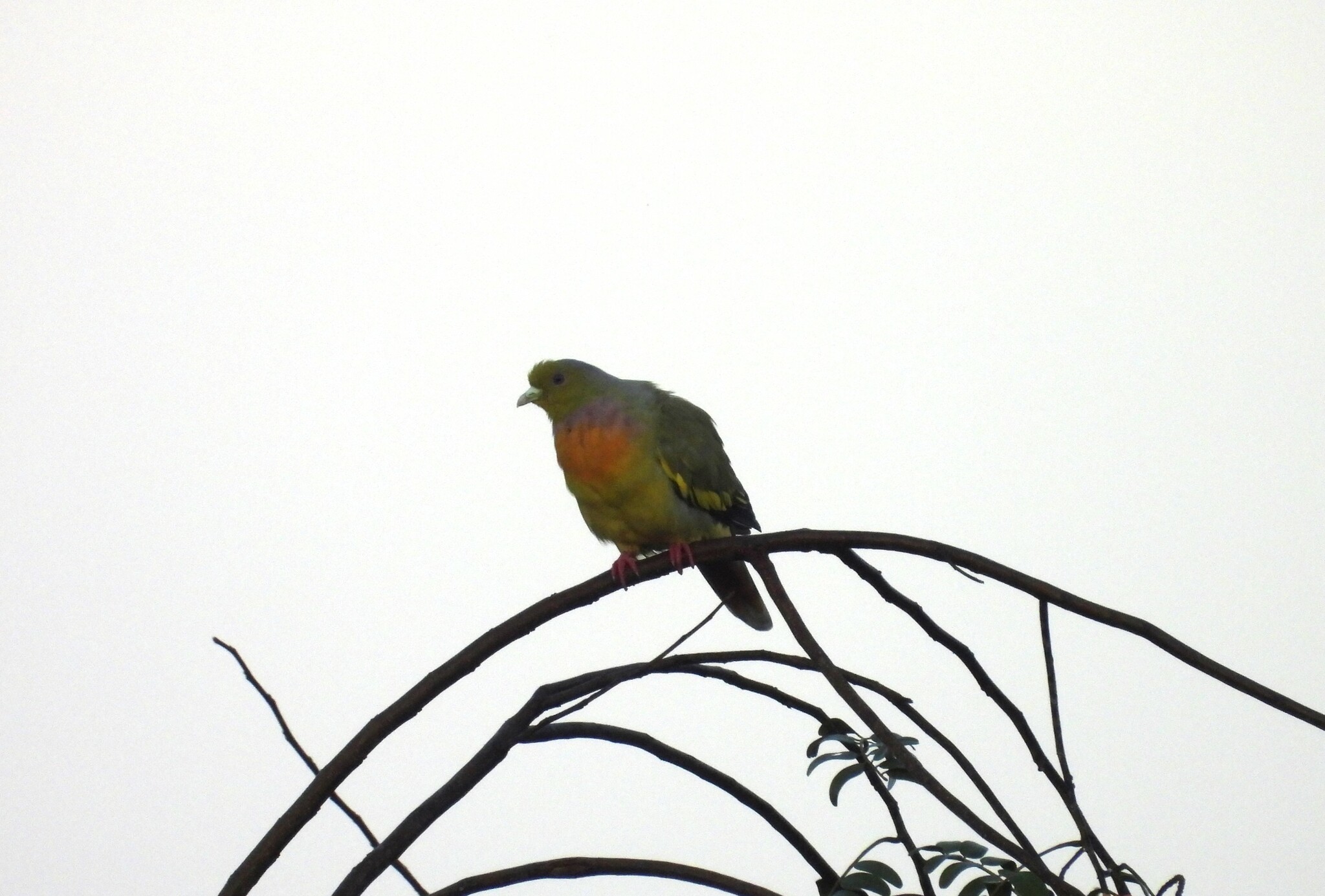
A medium-sized green pigeon with a blue-grey nape and yellowish-green crown. The uppertail coverts are bronzed, while the undertail coverts are unmarked rufous. Males display a pinkish band on the upper breast with a broader orange band below. Females have a bright yellow breast. The tail is grey above with a broad subterminal dark band.
Identification
Similar to other green pigeons including the yellow-footed green pigeon and grey-fronted green pigeon, but lacks maroon on the wing. Males differ in having no grey on the head, a narrow lilac band on the upper breast, and a broader orange band below. The undertail coverts are cinnamon with longer feathers edged yellow. Females are yellow below without orange or lilac bands and have duller cinnamon undertail coverts with greenish spots. The central upper tail feathers are slaty grey rather than green as in females of T. affinis or T. pompadora. The Sri Lankan population (T. b. leggei) is slightly smaller in wing length.
Distribution & Habitat
Widely distributed in forest habitats from the Terai and lower Himalayas below 1,500 meters (4,900 ft) elevation, south through the Western and Eastern Ghats, and in Sri Lankan forests near the coast. Range extends through Burma, Thailand, the Malay Peninsula, Vietnam, Java, and Hainan Island. Some seasonal movements are suspected, with vagrants recorded from locations such as Sindh.
Behavior & Ecology
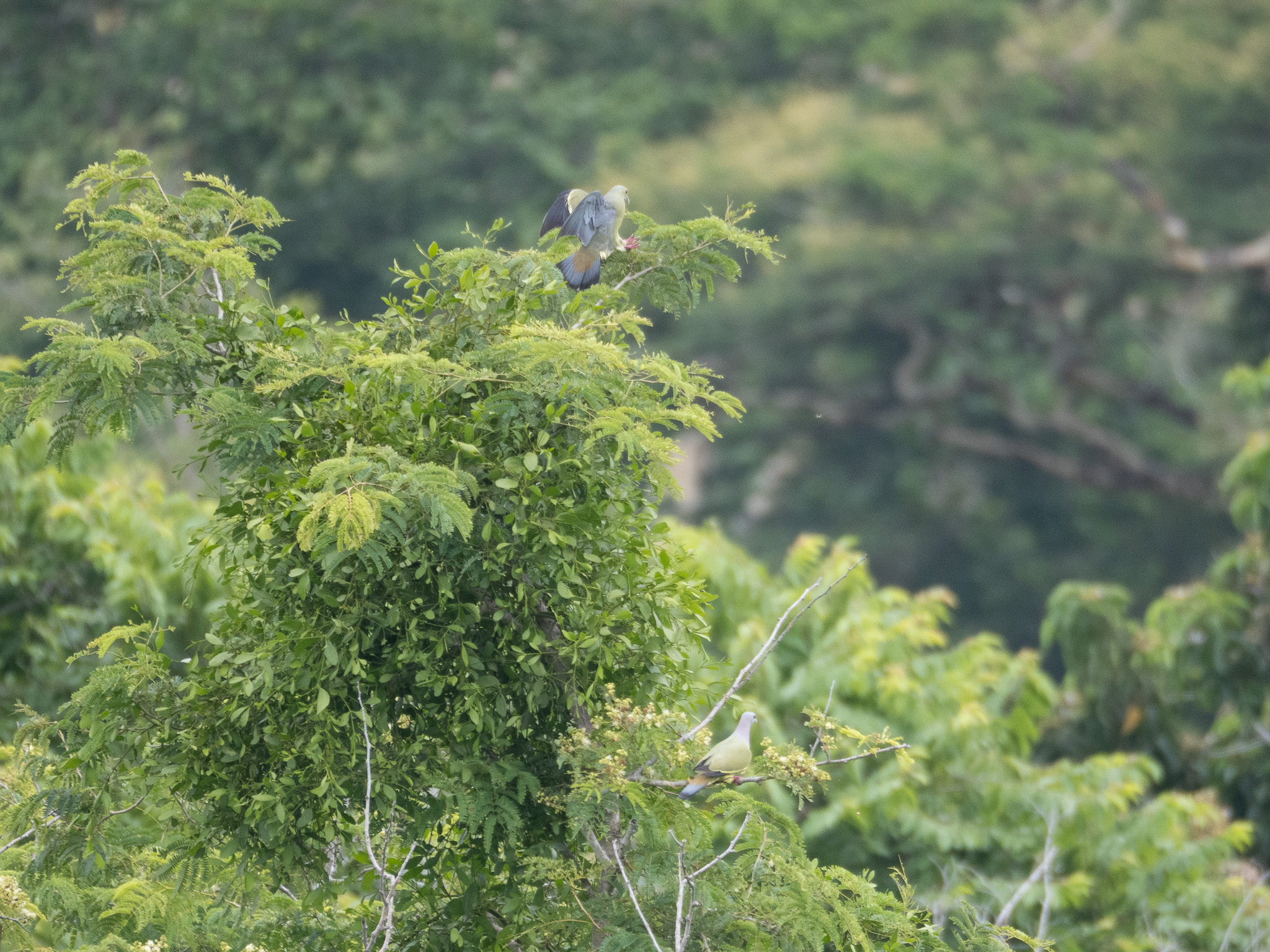
Usually occurs singly or in small groups. Flight is fast and direct with regular wing beats and occasional sharp flicks characteristic of pigeons. Feeds on seeds and fruits of a wide variety of plants, often joining other frugivores at fruiting figs; forages by slowly walking along branches. Known to feed on Strychnos nux-vomica fruits, which are toxic to mammals. Occasionally seen on the ground. Call is a low subdued series of modulated wandering whistles. Males fight during breeding season, slapping and pecking each other. Breeding season in India is March to September (mainly before June); in Sri Lanka, mainly December to May. Nest is a flimsy platform of twigs where two white eggs are laid. Both sexes incubate; eggs hatch in approximately 12 to 14 days.
Source: Wikipedia · CC BY-SA 3.0
Taxonomy
- Order
- Columbiformes
- Family
- Columbidae
- Genus
- Treron
- eBird Code
- orbpig1
Subspecies (4)
-
Treron bicinctus bicinctus
Indian subcontinent and southeastern Asia
-
Treron bicinctus domvilii
Hainan (southern China)
-
Treron bicinctus javanus
Java and Bali
-
Treron bicinctus leggei
Sri Lanka
Data Sources
Species description from Wikipedia, licensed under CC BY-SA 3.0.
Bird images and sounds sourced from GBIF, contributed by citizen scientists worldwide under Creative Commons licenses.
Taxonomy data from AviList 2025.