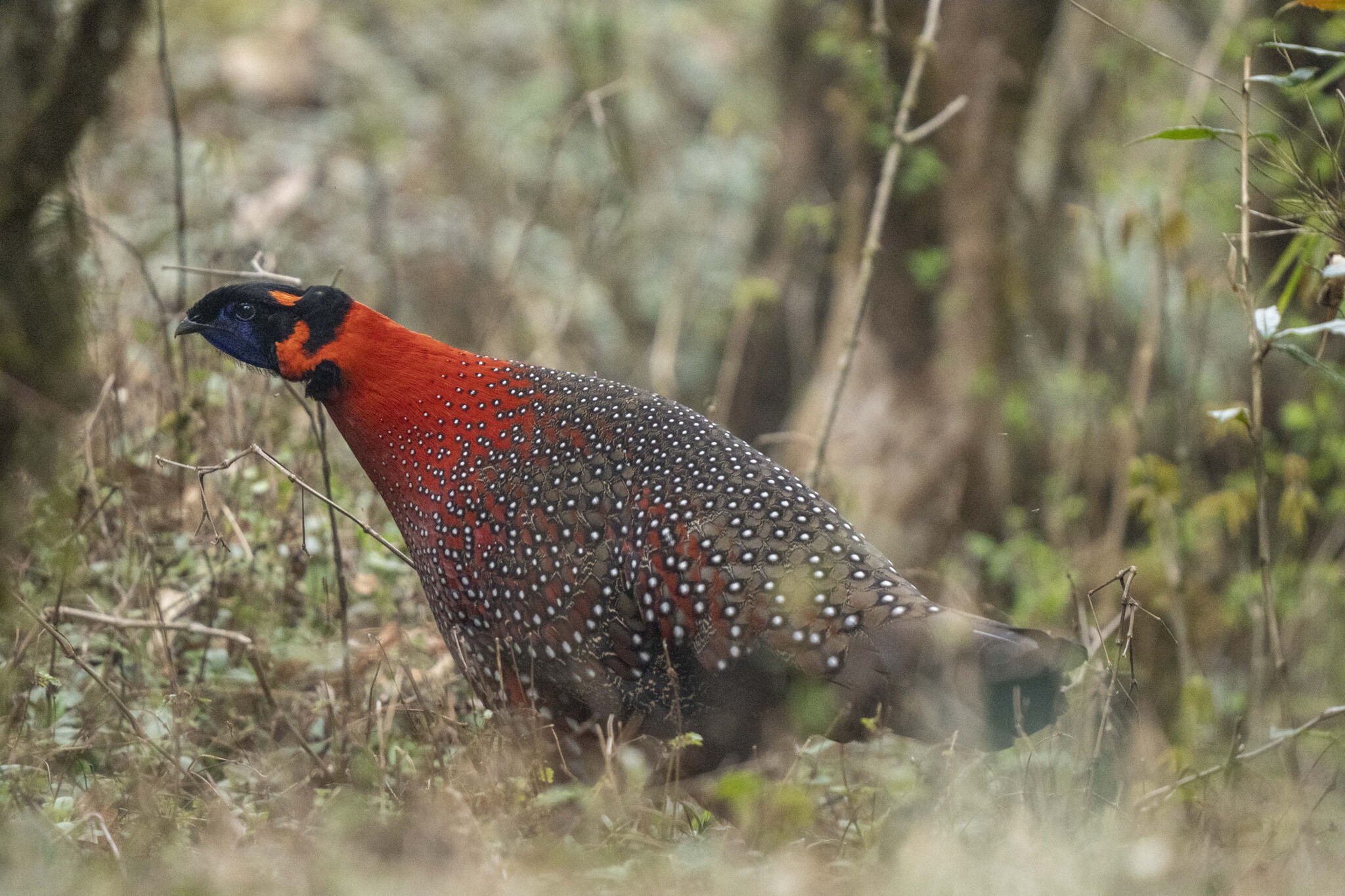
Satyr Tragopan
Tragopan satyra
红胸角雉
Introduction
A pheasant species (Tragopan satyra) found in the Himalayan reaches of India, Tibet, Nepal, and Bhutan. Inhabits moist oak and rhododendron forests with dense undergrowth and bamboo clumps, ranging from 2,400 to 4,200 meters elevation in summer and 1,800 meters in winter. The species is notable for the male's elaborate mating display, during which blue horns and a gular wattle are inflated while the bird hides behind rocks before performing for approaching females. Among the least threatened of the tragopan species, it nonetheless has a moderately small population facing hunting pressure and habitat loss throughout most of its range.
Description
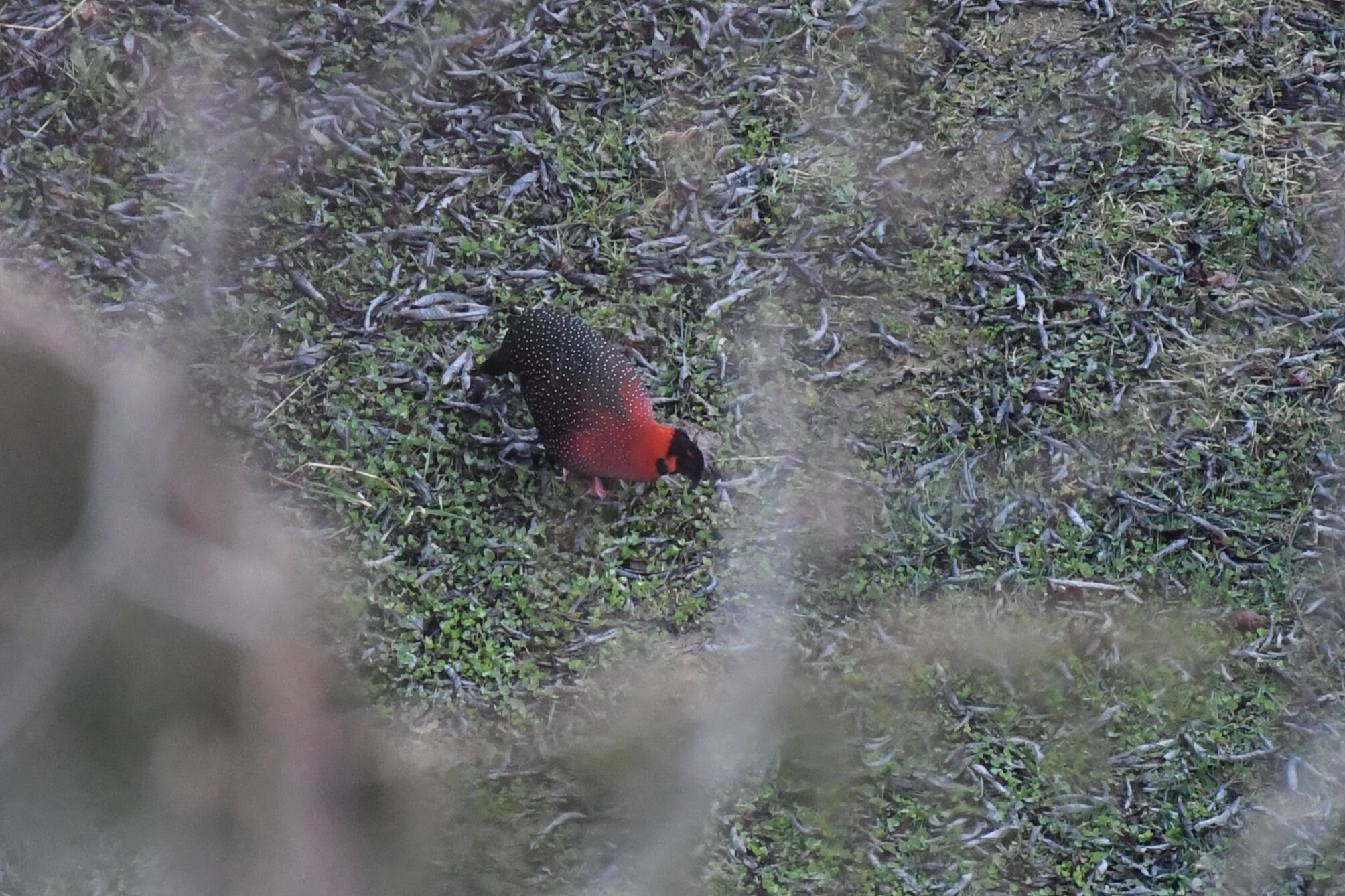
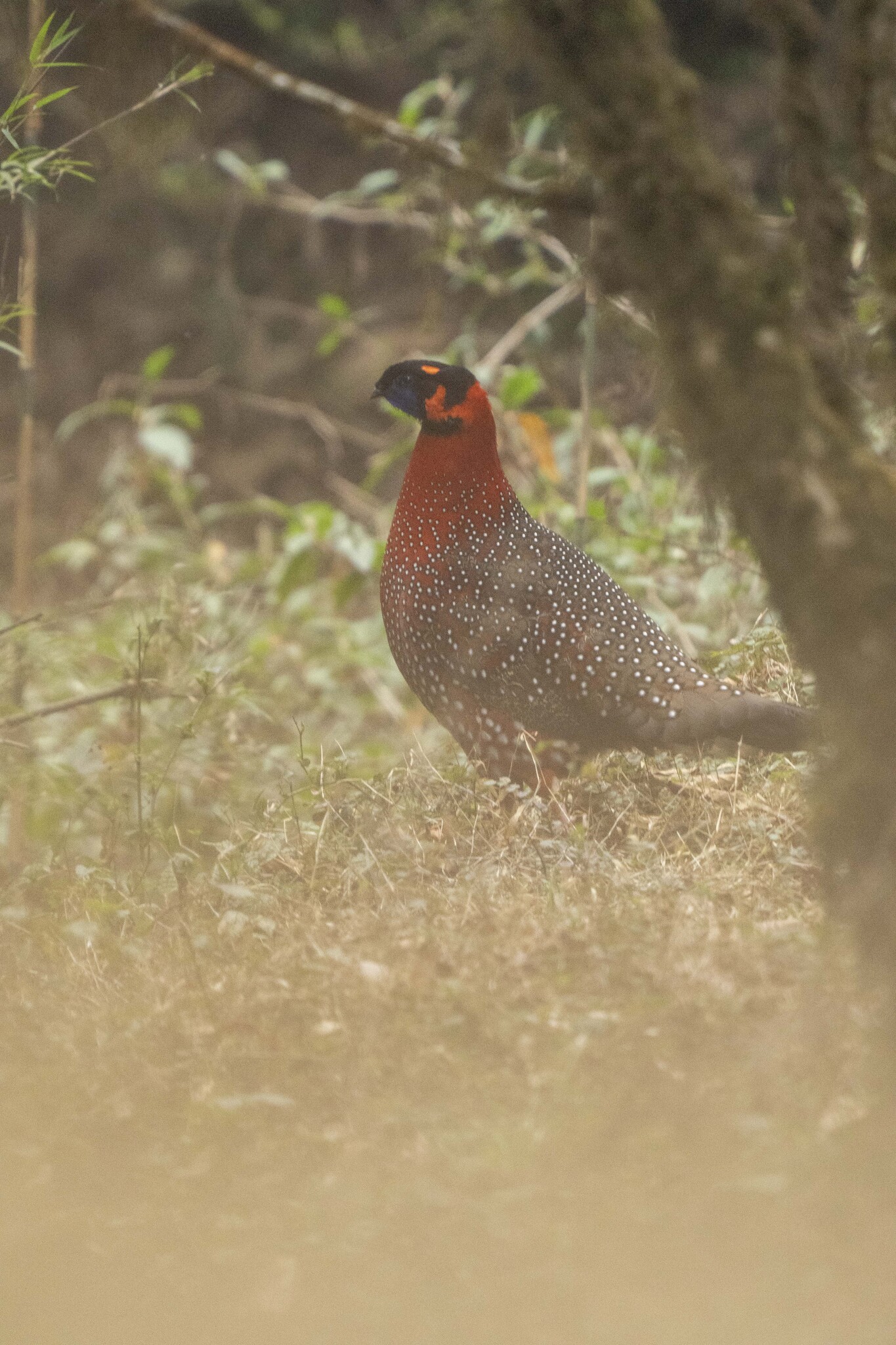
A medium-sized pheasant with marked sexual dimorphism. Males measure approximately 70 cm in length and display brilliant crimson plumage adorned with blue, black, and white spots and freckles across the body. Females are uniformly brown in coloration, providing effective camouflage in their forested habitat.
Identification
Males are unmistakable within their range due to their crimson plumage and the blue horns that appear during breeding season. The combination of red body plumage with spotted blue, black, and white markings distinguishes them from other pheasant species in the Himalayan region. Females, being uniformly brown, may be more challenging to identify but can be distinguished by their habitat preference and association with males during breeding season.
Distribution & Habitat
Occurs throughout the Himalayan region including India, Tibet, Nepal, and Bhutan. Inhabits moist oak and rhododendron forest types with well-developed understories and bamboo clumps. Seasonal vertical migration occurs, with birds found at higher elevations of 2,400 to 4,200 meters during summer breeding season and descending to approximately 1,800 meters during winter months.
Behavior & Ecology
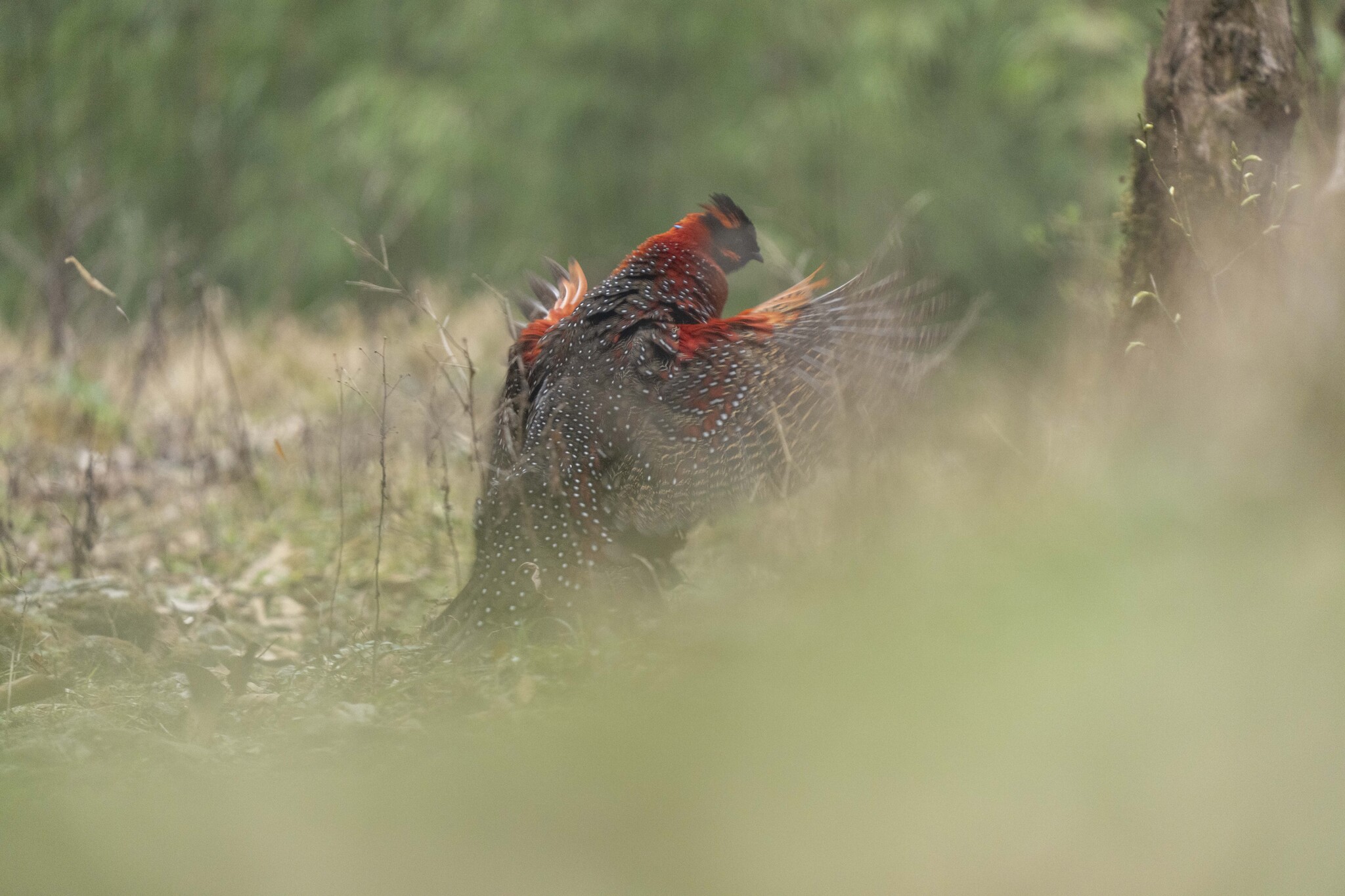
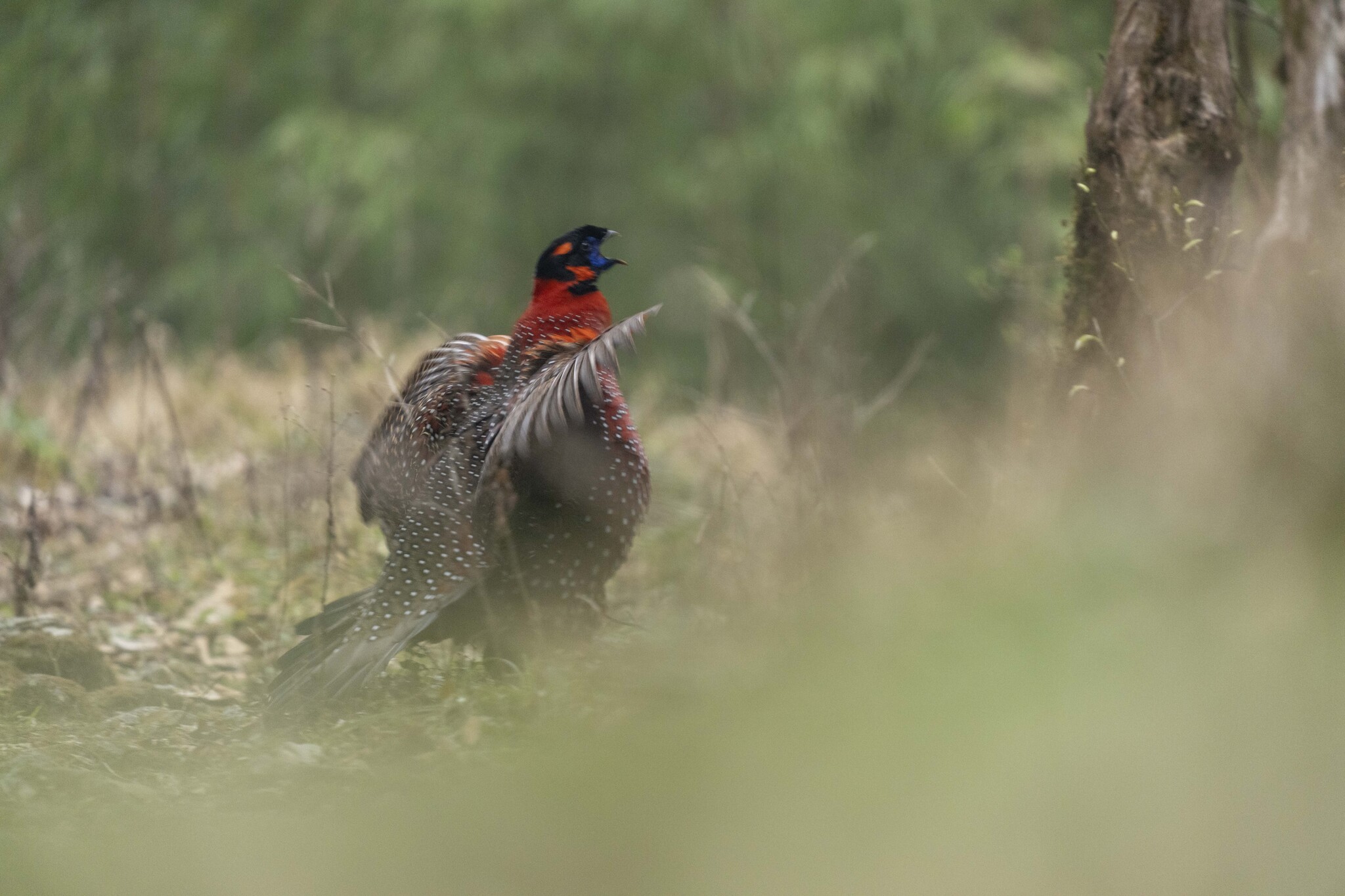
During the breeding season, males develop conspicuous blue horns and a gular wattle. The mating display is highly elaborate: males inflate their horns and conceal themselves behind rocks, waiting for females to pass. When a female approaches, the male emerges and performs an elaborate courtship display, culminating in stretching to full height to exhibit all ornaments. Females are responsible for incubation and chick-rearing. Diet consists primarily of plant matter including seeds, buds, leaves, and insects found by foraging on the forest floor.
Conservation
Classified as Near Threatened with a moderately small global population. While considered the least threatened of the tragopan species, populations face ongoing pressures from hunting throughout much of their range and continued habitat loss due to deforestation and human settlement expansion. Conservation measures include protected area coverage across portions of the species' range and monitoring programs.
Culture
The species has historical taxonomic significance, being one of the unusual birds illustrated by English naturalist George Edwards in his 1750 work 'A Natural History of Uncommon Birds', where it was termed 'The Horned Indian Pheasant'. The genus name 'Tragopan' derives from Latin, referencing a mythical horned bird mentioned by Roman authors Pliny and Pomponius Mela. The specific epithet 'satyra' connects to the satyr, a Roman deity traditionally depicted with horns.
Source: Wikipedia · CC BY-SA 3.0
Taxonomy
- Order
- Galliformes
- Family
- Phasianidae
- Genus
- Tragopan
- eBird Code
- sattra1
Distribution
oak-rhododendron forest of northern India to Nepal and southeastern Tibet
Data Sources
CBR Notes: IUCN红色名录等级由NT降为LC
Species description from Wikipedia, licensed under CC BY-SA 3.0.
Bird images and sounds sourced from GBIF, contributed by citizen scientists worldwide under Creative Commons licenses.
Taxonomy data from AviList 2025.