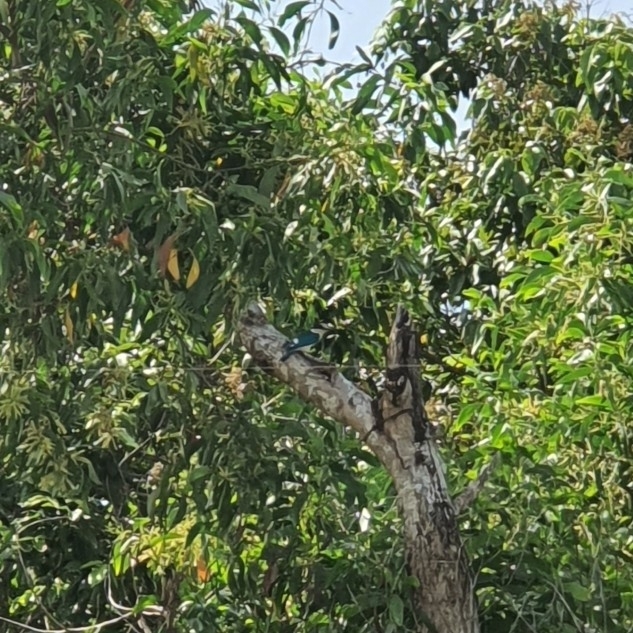
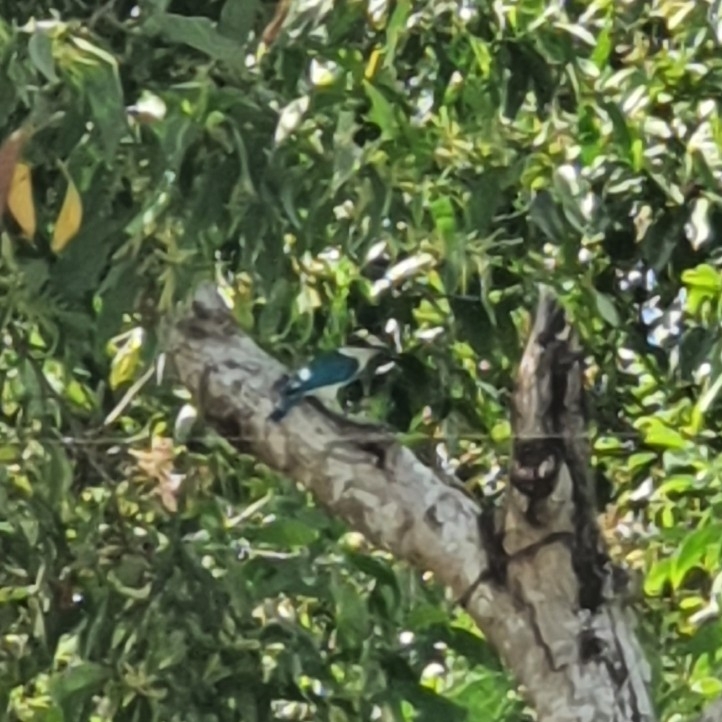
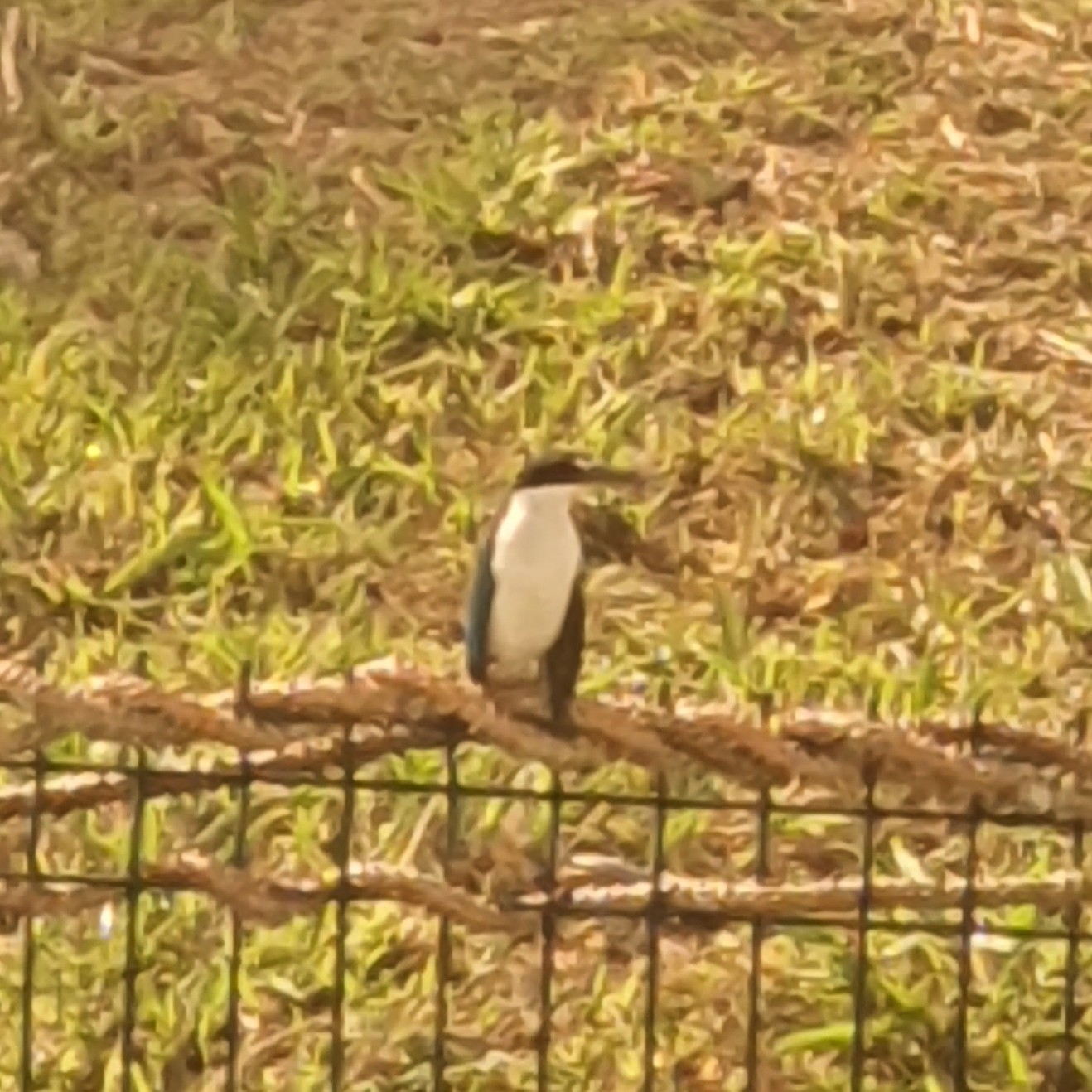
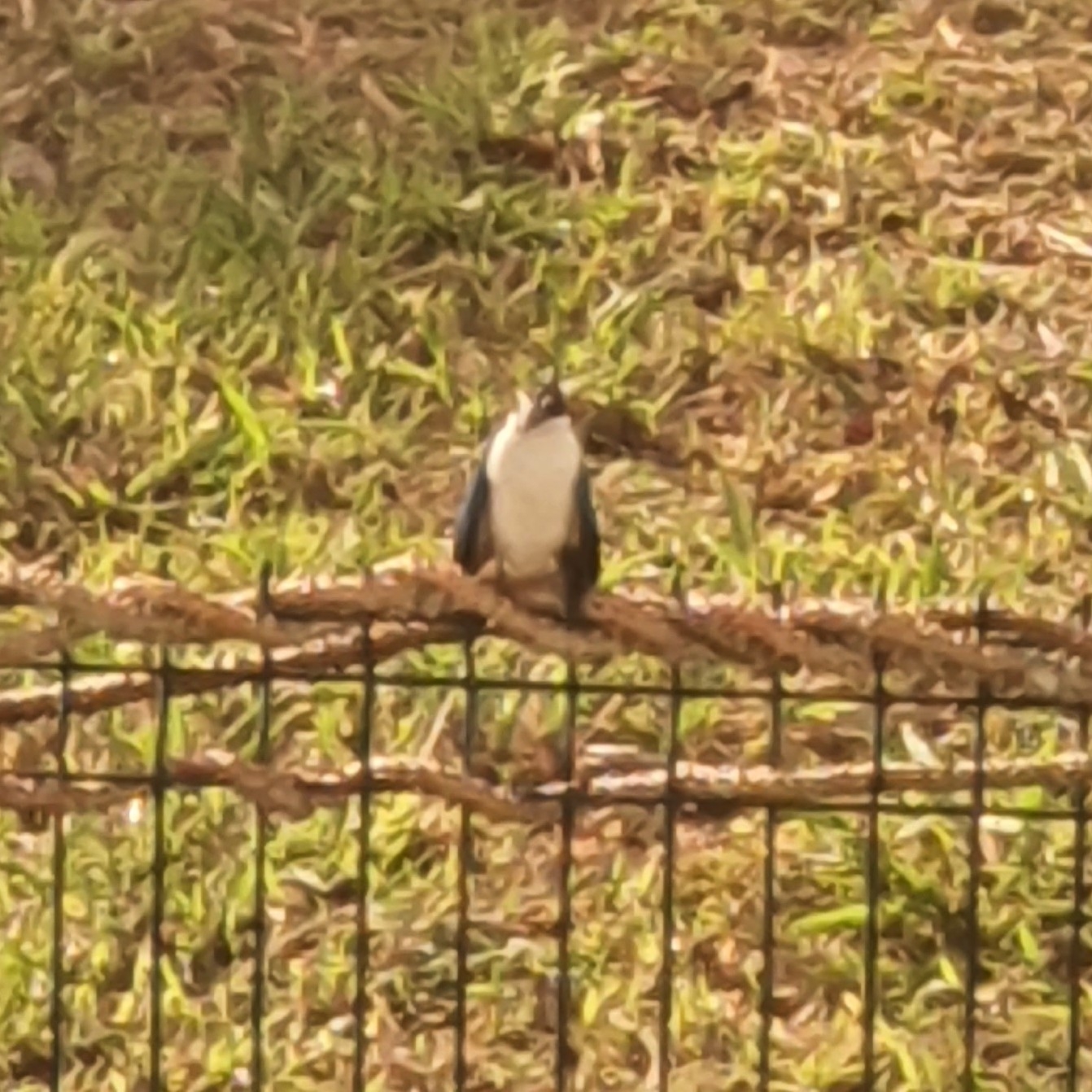
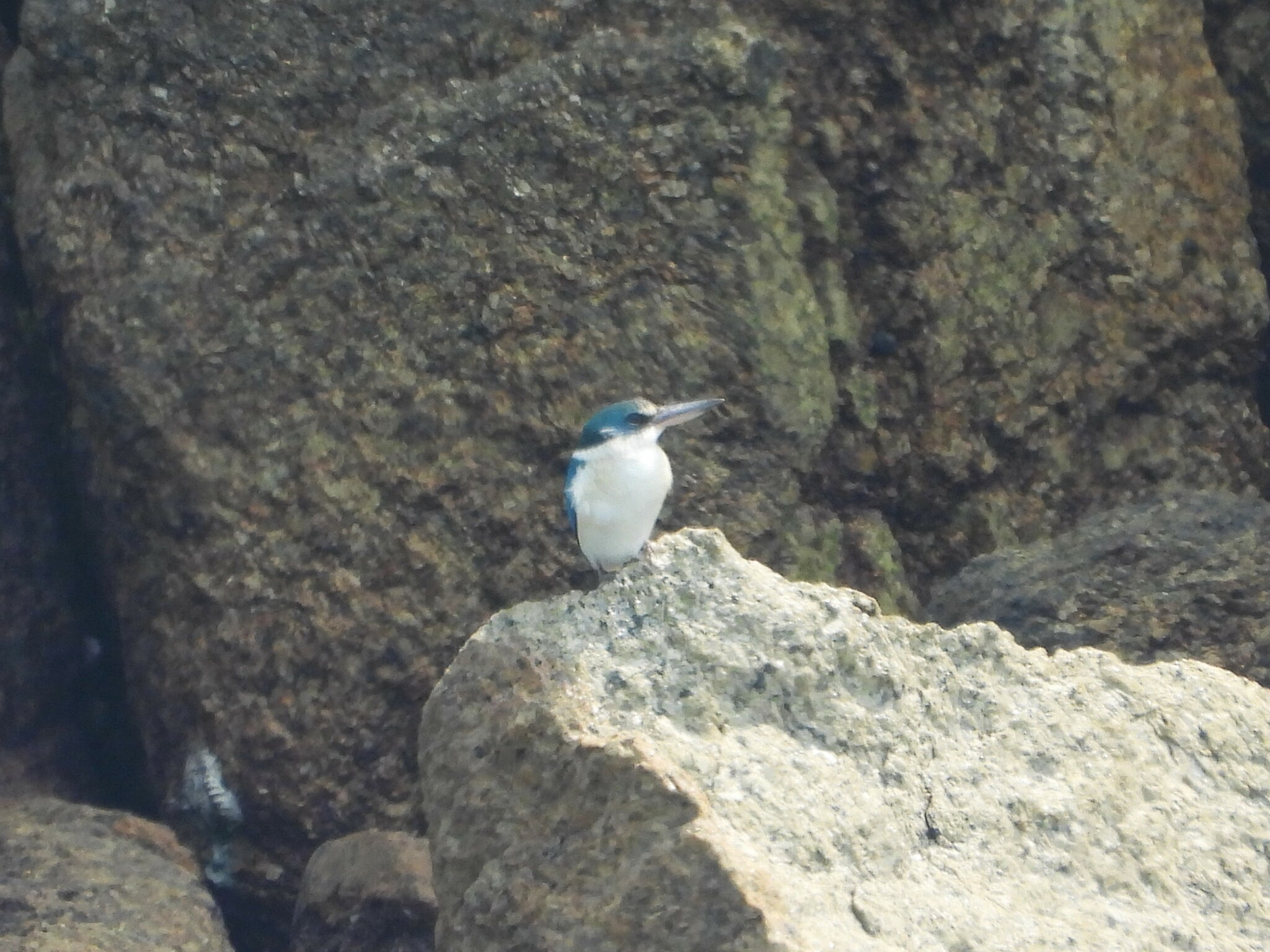
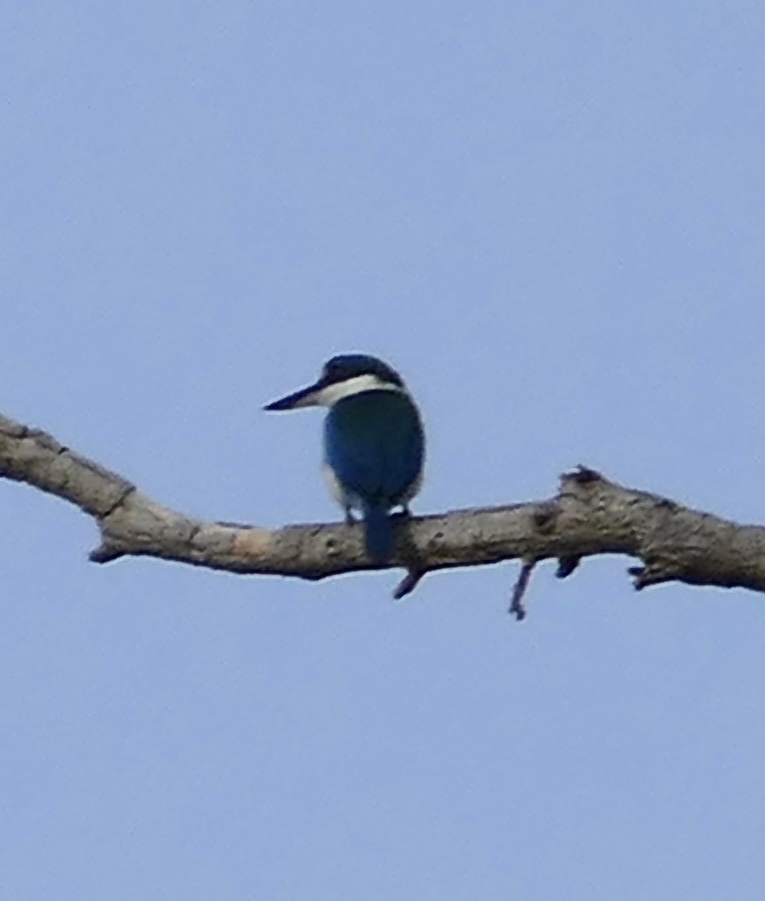
Collared Kingfisher
Todiramphus chloris
白领翡翠
Introduction
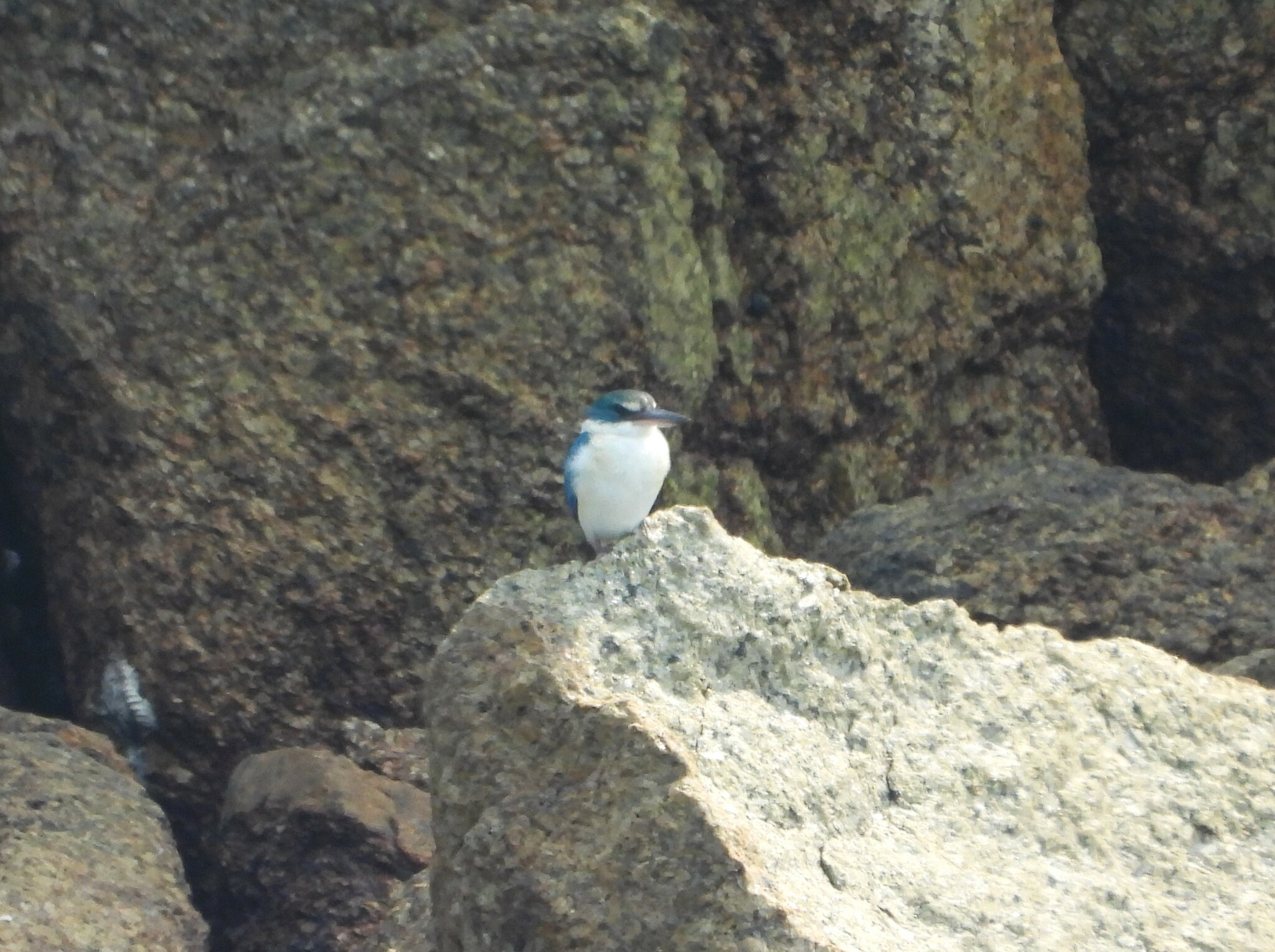
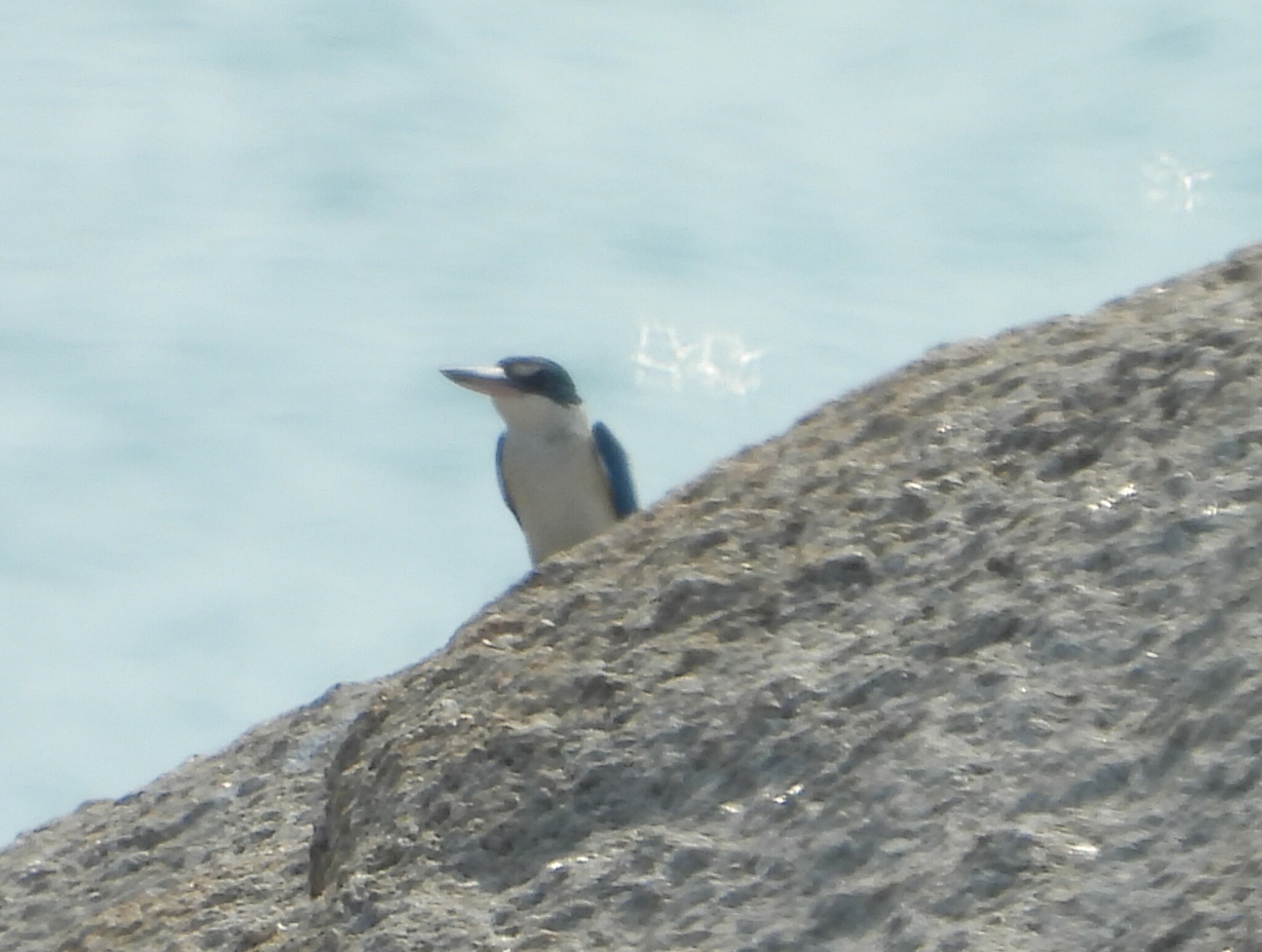
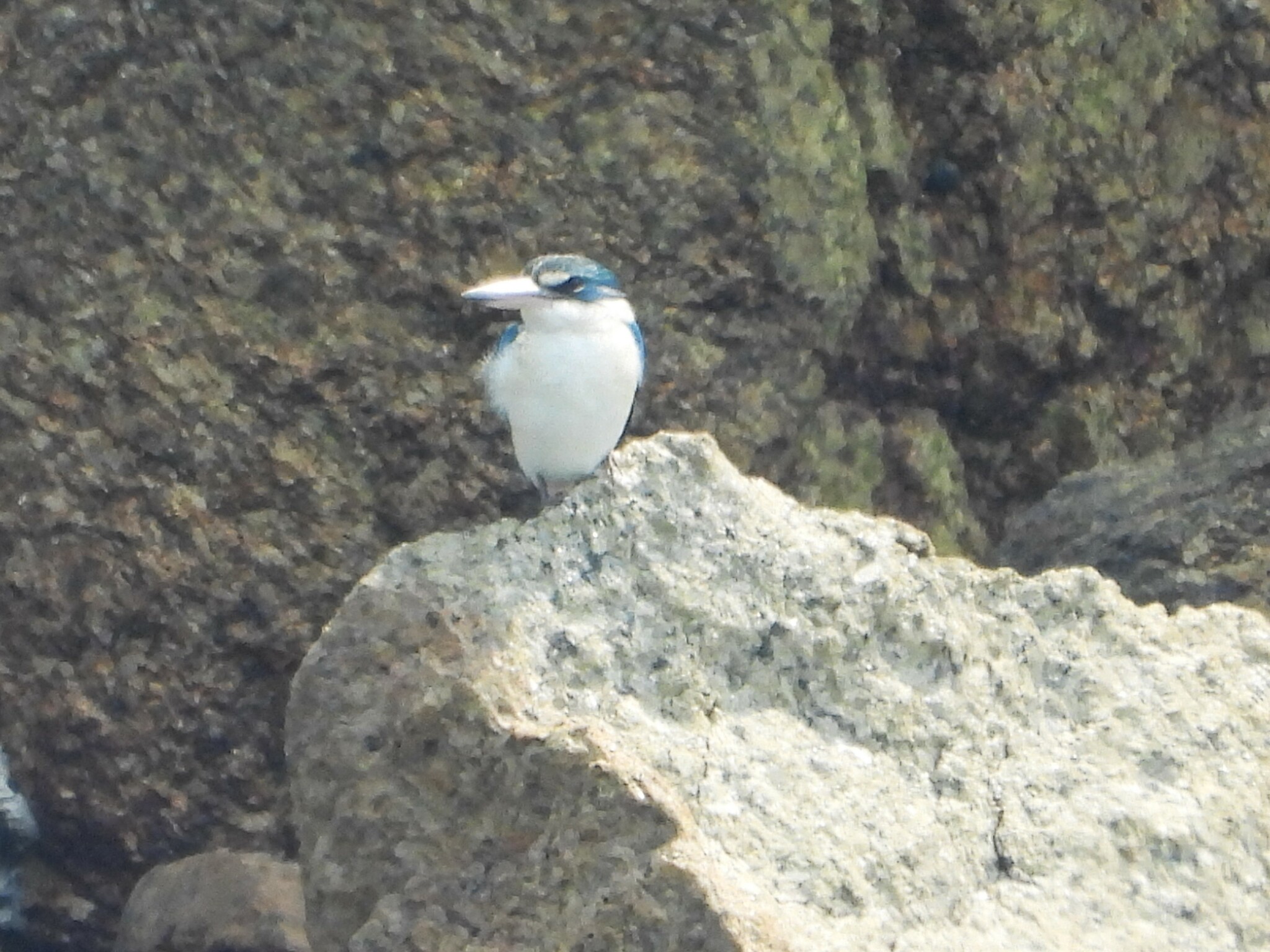
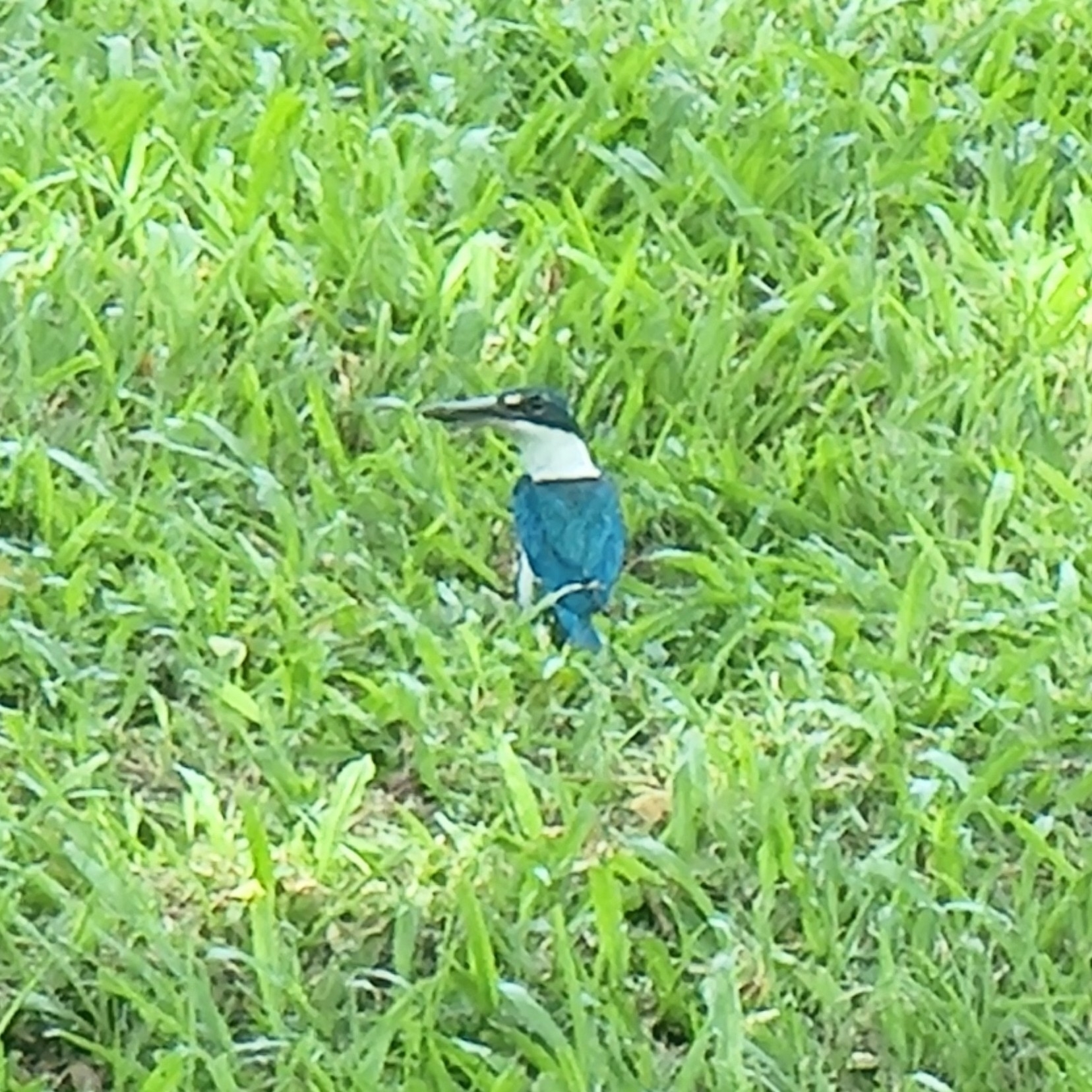
A medium-sized kingfisher belonging to the subfamily Halcyoninae (tree kingfishers). Also known as white-collared kingfisher, black-masked kingfisher, or mangrove kingfisher. Has an extensive range from the Red Sea across southern Asia to Melanesia. Several subspecies and subspecies groups have been classified as separate species including the Pacific kingfisher, Islet kingfisher, Torresian kingfisher, Mariana kingfisher, and Melanesian kingfisher. Primarily inhabits coastal areas, particularly mangrove swamps, but also occurs in farmland, open woodland, grassland, and gardens. Feeds on crabs, shrimps, insects, and various small animals. Nesting occurs in tree holes or excavated burrows, with both parents participating in rearing young. Classified as Least Concern on the IUCN Red List, though one endangered race in the UAE has a population of approximately 55 pairs.
Description
A medium-sized kingfisher, 23 to 25 cm (9.1 to 9.8 in) in length. Males weigh 51 to 90 g (1.8 to 3.2 oz), while females weigh 54–100 g (1.9–3.5 oz). Upperparts range from blue to green, with white or buff underparts. A distinctive white collar encircles the neck. Some subspecies display a white or buff stripe over the eye, while others have a white spot between the eye and bill. A black stripe runs through the eye. The large bill is black with a pale yellow base to the lower mandible. Females typically appear greener than males. Immature birds are duller than adults, showing dark scaly markings on the neck and breast.
Distribution & Habitat
Found across a wide range extending from the Red Sea across southern Asia to Melanesia. Primarily inhabits coastal areas, particularly mangrove swamps, but also occurs in farmland, open woodland, grassland, and gardens. On islands, individuals may be found further inland, ranging into forest or mountain habitats. The westernmost populations occur in mangroves of Eritrea, with records from Sudan and Somalia. An endangered race in the UAE has a population of approximately 55 pairs, restricted to Khor Kalba with recent breeding recorded at Khor Shinas in Oman. Widespread and common throughout Southeast Asia, Indonesia, and the Philippines, where it occurs far inland in some regions.
Behavior & Ecology
Diet consists primarily of small crabs and shrimps in coastal regions, with a varied intake of insects (beetles, cicadas, stick-insects, grasshoppers, moths, butterflies), spiders, earthworms, snails, frogs, lizards, small snakes, fish, small birds, and mice. Forages by perching motionless for extended periods, then gliding down to catch prey and returning to the perch. Larger items are pounded against branches to subdue them. Indigestible remains are regurgitated as pellets. Nests in tree holes or burrows excavated in rotten trees, arboreal termite nests, or earth banks; also uses old woodpecker holes. Lays a clutch of two to five rounded, whitish eggs directly on the burrow floor with no nesting material. Both parents share incubation and chick-rearing duties. Young leave the nest about 44 days after hatching. Two broods are often raised annually. Vocalizations include a loud, harsh, metallic 'kee-kee-kee' call repeated several times, with geographic variation in calls.
Conservation
Classified as Least Concern on the IUCN Red List due to its very wide distribution and common to abundant population. One endangered race (T. c. kalbaensis) in the UAE has a population of approximately 55 breeding pairs, restricted to Khor Kalba.
Source: Wikipedia · CC BY-SA 3.0
Taxonomy
- Order
- Coraciiformes
- Family
- Alcedinidae
- Genus
- Todiramphus
- eBird Code
- colkin1
Vocalizations
Subspecies (14)
-
Todiramphus chloris abyssinicus
western coast of Red Sea to head of Gulf of Aden
-
Todiramphus chloris armstrongi
interior of Myanmar and Thailand to Cambodia, southern Laos, and Vietnam
-
Todiramphus chloris azelus
Enggano (off southwestern Sumatra)
-
Todiramphus chloris chloris
Sulawesi to northwestern New Guinea and Lesser Sundas
-
Todiramphus chloris chloropterus
islands off western Sumatra (except Enggano)
-
Todiramphus chloris collaris
Philippines, Sulu Archipelago, and Palawan
-
Todiramphus chloris davisoni
Andaman and Coco islands (off western Myanmar, Indian Ocean)
-
Todiramphus chloris humii
coasts from northeastern India (West Bengal) and Bangladesh eastward to Myanmar, the Thai-Malay Peninsula (including Tioman Island and the Mergui Archipelago), and northeastern Sumatra
-
Todiramphus chloris kalbaensis
southern coast of Arabian Peninsula to far northwestern Oman
-
Todiramphus chloris laubmannianus
southern Sumatra, Borneo, and adjacent islands
-
Todiramphus chloris occipitalis
Nicobar Islands
-
Todiramphus chloris palmeri
Java, Bali, and adjacent islands in Java Sea
-
Todiramphus chloris teraokai
Palau (western Caroline Islands)
-
Todiramphus chloris vidali
peninsular India (Ratnagiri District)
Data Sources
Species description from Wikipedia, licensed under CC BY-SA 3.0.
Bird images and sounds sourced from GBIF, contributed by citizen scientists worldwide under Creative Commons licenses.
Taxonomy data from AviList 2025.