
Wallcreeper
Tichodroma muraria
红翅旋壁雀
Introduction
A monotypic species belonging to the family Tichodromidae, this bird is the sole extant member of the genus Tichodroma. It inhabits high mountains throughout the Palearctic, ranging from southern Europe eastwards to central China. It breeds at elevations of 1,000–3,000 meters in Europe, 2,800–4,000 meters in the Tien Shan, and 3,600–5,100 meters in the Himalaya. The species is distinguished by its extraordinary crimson wings with white spots and its distinctive method of foraging across cliff faces by moving in short flights and quick hops with wings partially spread. Two subspecies are recognized: T. m. muraria and T. m. nepalensis.
Description
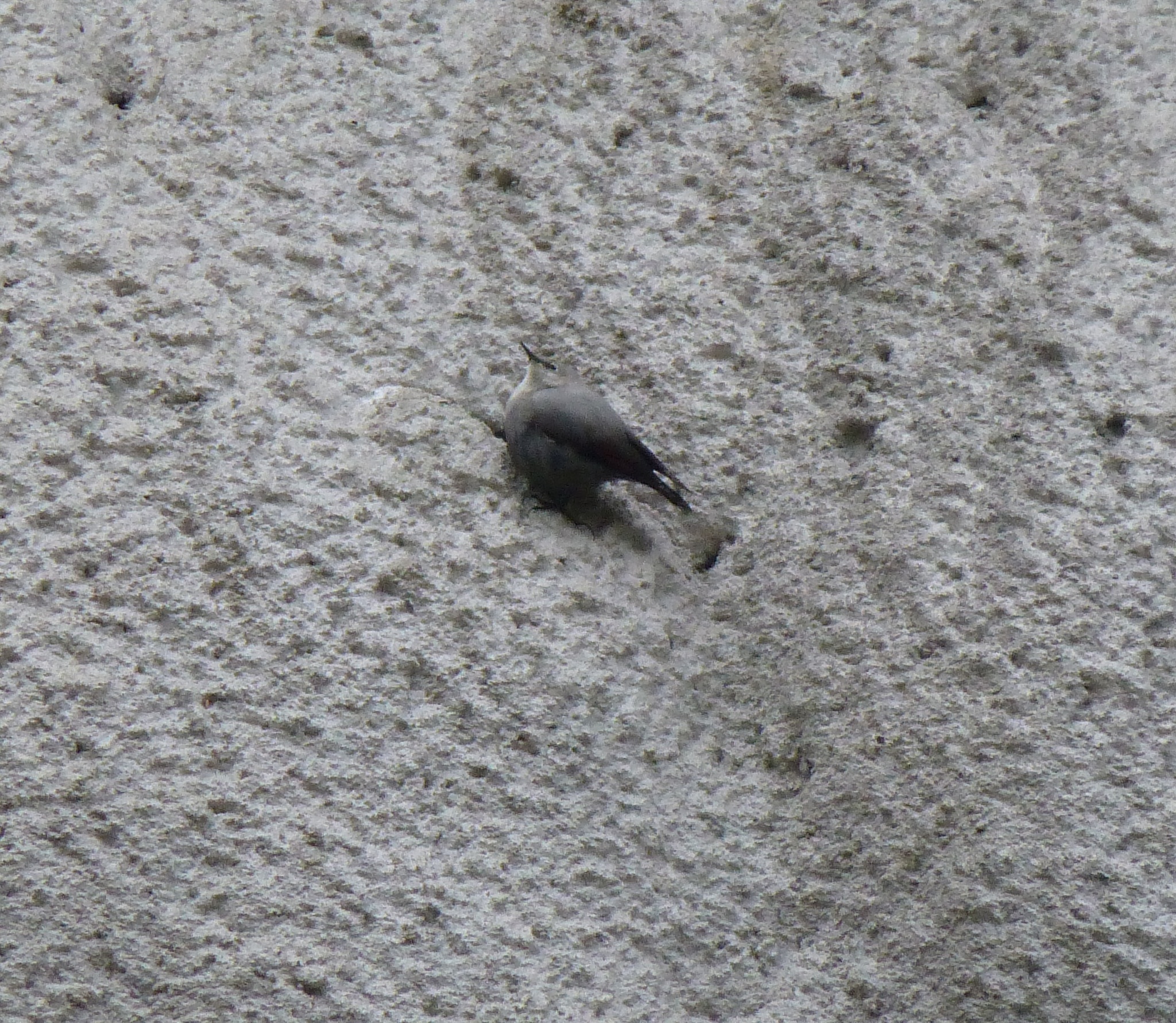
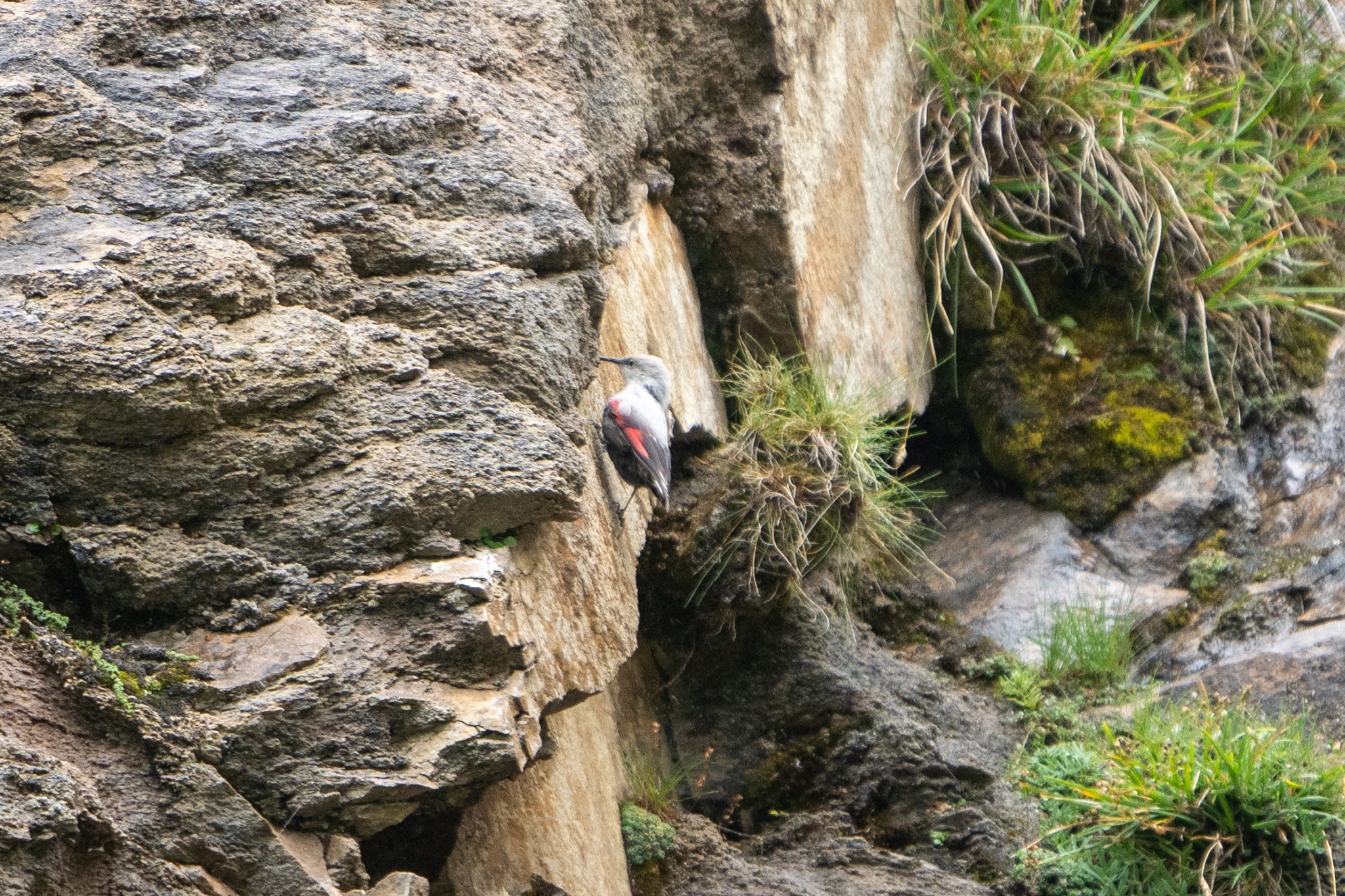
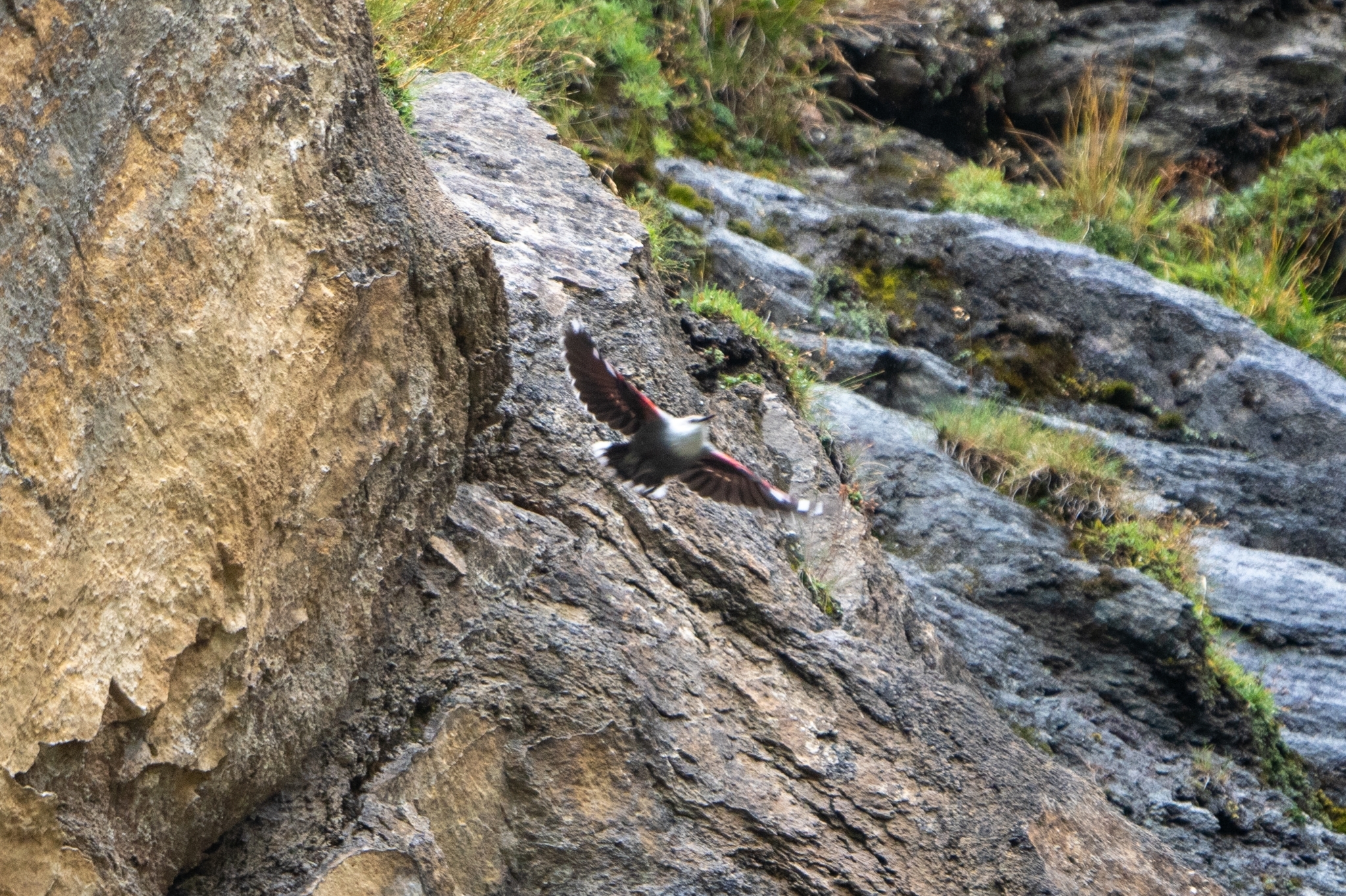
A small passerine measuring 15.5–17 centimeters in length and weighing 17–19 grams. The plumage is primarily blue-grey, with darker flight and tail feathers. The most striking feature is the crimson wings with white spots, which are largely hidden when folded but cover most of the covert feathers and basal half of the primaries and secondaries when displayed. The tail is short, black with a narrow white fringe. In summer, males have a black throat grading into grey, while females have either a white throat or small dark throat patch. Both sexes show a white throat in autumn and winter. Juveniles resemble winter plumage. The Asian subspecies T. m. nepalensis is slightly darker than the nominate race.
Identification
The combination of blue-grey plumage and brilliant crimson wing patches makes this species distinctive. The wing pattern is particularly visible in flight and when the wings are displayed during foraging. The short, black-and-white tail and reliance on vertical cliff faces for foraging also aid identification. The bird can be surprisingly difficult to see despite its bright plumage, as it blends effectively against mountain rock faces.
Distribution & Habitat
Breeds throughout the high mountains of the Palearctic from southern Europe to central China, including the Caucasus, Tien Shan, and Himalaya. The Asian subspecies occurs from Kazakhstan and eastern Iran eastwards through Central Asia to eastern China, while the European subspecies ranges from southern and eastern Europe to the Caucasus and western Iran. Largely resident but descends to lower elevations in winter, where it occurs on buildings, quarries, and rock faces. Regular winter visitor to cathedrals and viaducts in Brittany and Normandy, France. Vagrants have reached England and the Netherlands, including one individual that wintered at Vrije Universiteit in Amsterdam for two consecutive winters between 1989 and 1991.
Behavior & Ecology
Feeds on terrestrial invertebrates, primarily insects and spiders, gleaned from rock faces by moving across cliff surfaces in short flights and quick hops, often with wings partially spread. Also hawks flying insects in short sallies from perch positions. Territorial during breeding season, with pairs vigorously defending nesting areas. Solitary in winter, with males and females defending individual feeding territories that may comprise a single large quarry or rock massif, or a series of smaller sites. Shows site fidelity to winter feeding territories across years. Builds a cup-shaped nest of grass and moss in rock crevices, holes, or caves, typically with two entrances and lined with feathers or wool. Lays 4–5 white eggs measuring 21 mm with black or reddish-brown speckles; female incubates for 19–20 days. Both parents feed altricial young for 28–30 days until fledging; single brood per year. Largely silent but females sing while defending winter feeding territories. Song is a high-pitched, drawn-out whistle with notes rising and falling. Males sing during breeding season while perched or climbing.
Conservation
The species is listed as Least Concern by the IUCN, with a large range and no evidence of significant population decline. While specific population numbers are not provided, the species is considered common in suitable habitat throughout its extensive range.
Culture
Also known as the red-winged wall creeper. The genus name Tichodroma derives from Ancient Greek teikhos (wall) and dromos (runner). The specific name muraria is Medieval Latin for 'of walls', from Latin murus (wall).
Source: Wikipedia · CC BY-SA 3.0
Taxonomy
- Order
- Passeriformes
- Family
- Tichodromidae
- Genus
- Tichodroma
- eBird Code
- wallcr1
Subspecies (2)
-
Tichodroma muraria muraria
Europe and southwestern Asia to northern and western Iran
-
Tichodroma muraria nepalensis
south-central Asia (Turkmenistan) and eastern Iran to China
Data Sources
Species description from Wikipedia, licensed under CC BY-SA 3.0.
Bird images and sounds sourced from GBIF, contributed by citizen scientists worldwide under Creative Commons licenses.
Taxonomy data from AviList 2025.