Black-headed Ibis
Threskiornis melanocephalus
黑头白鹮
Introduction
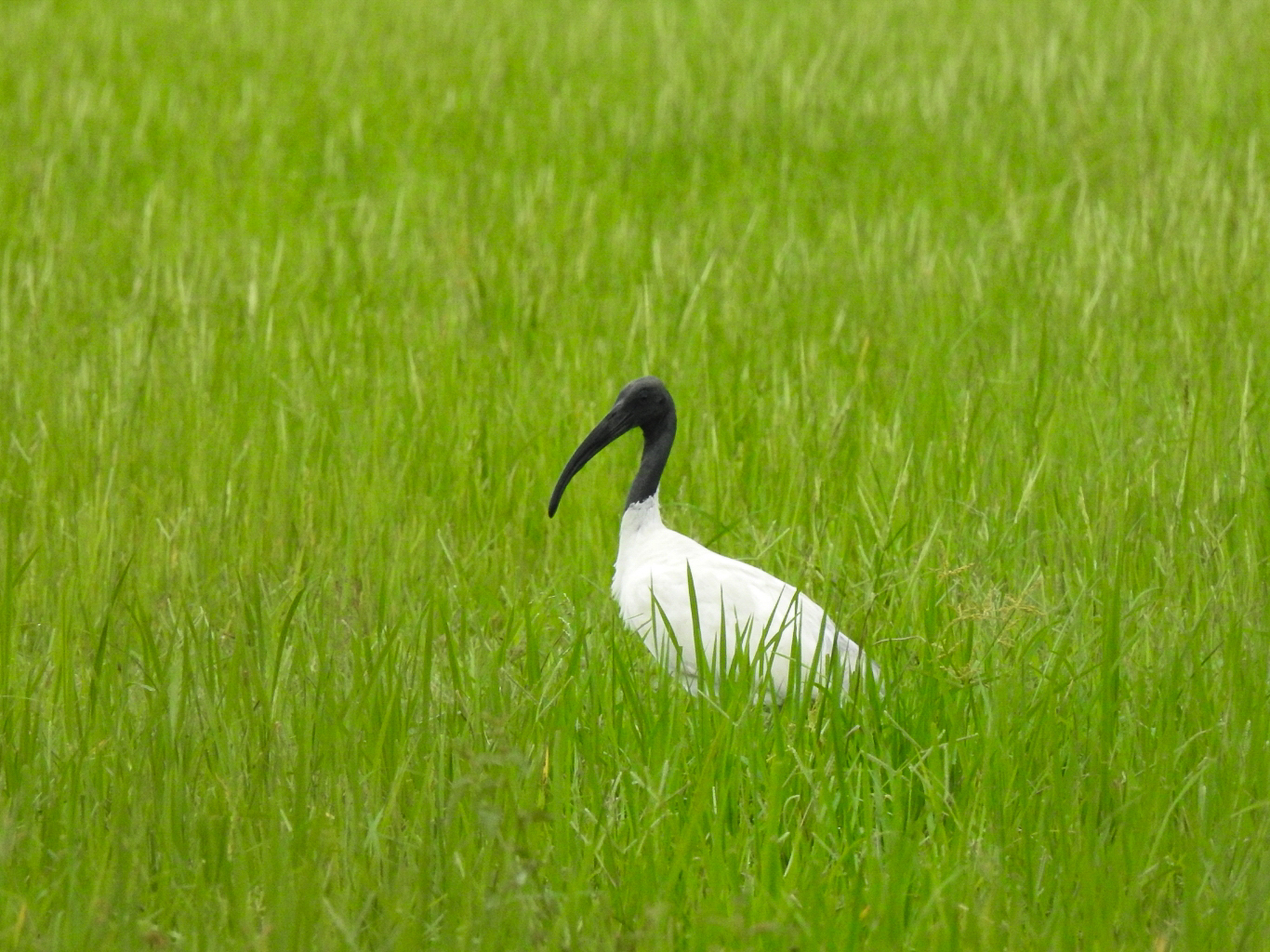
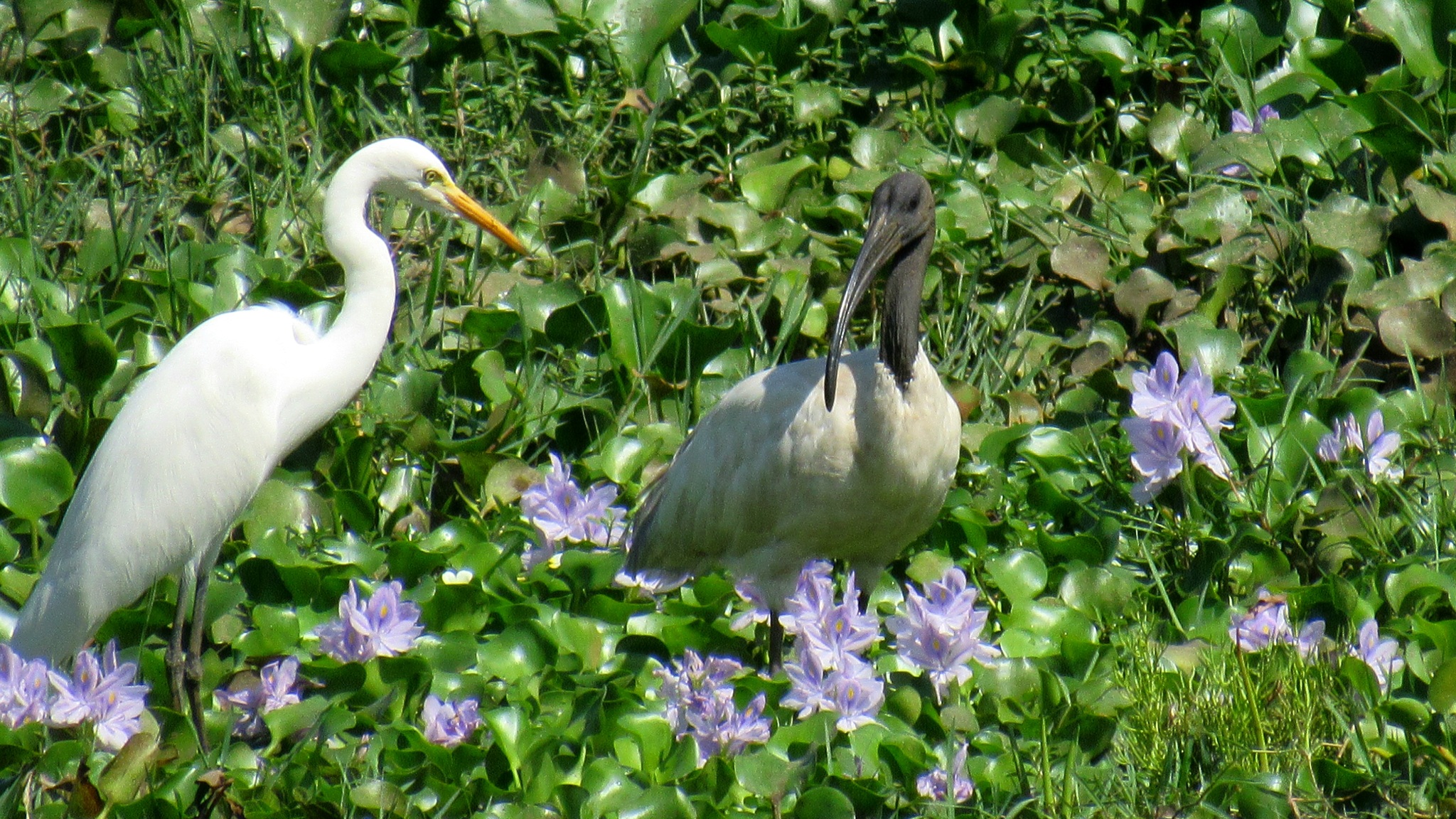
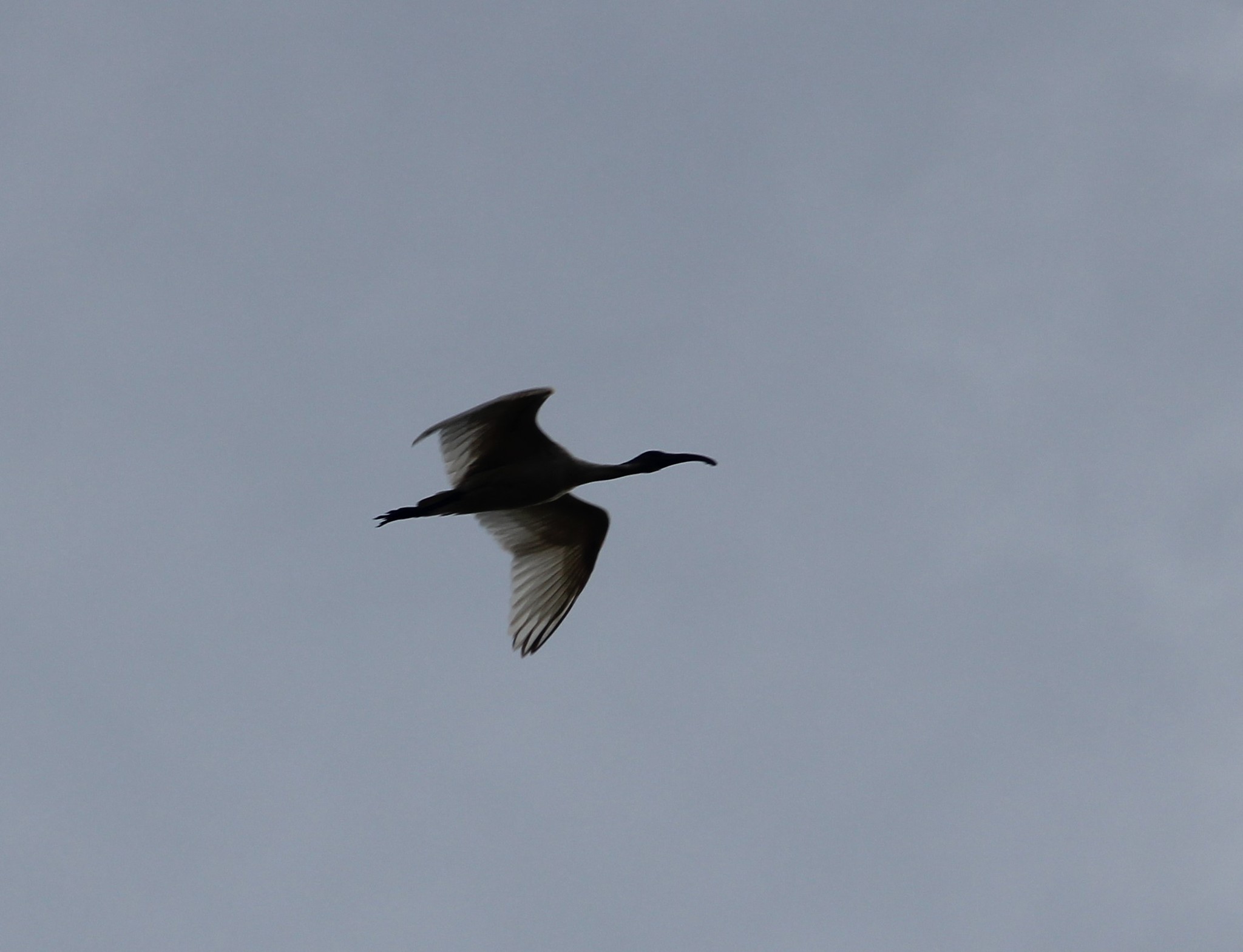
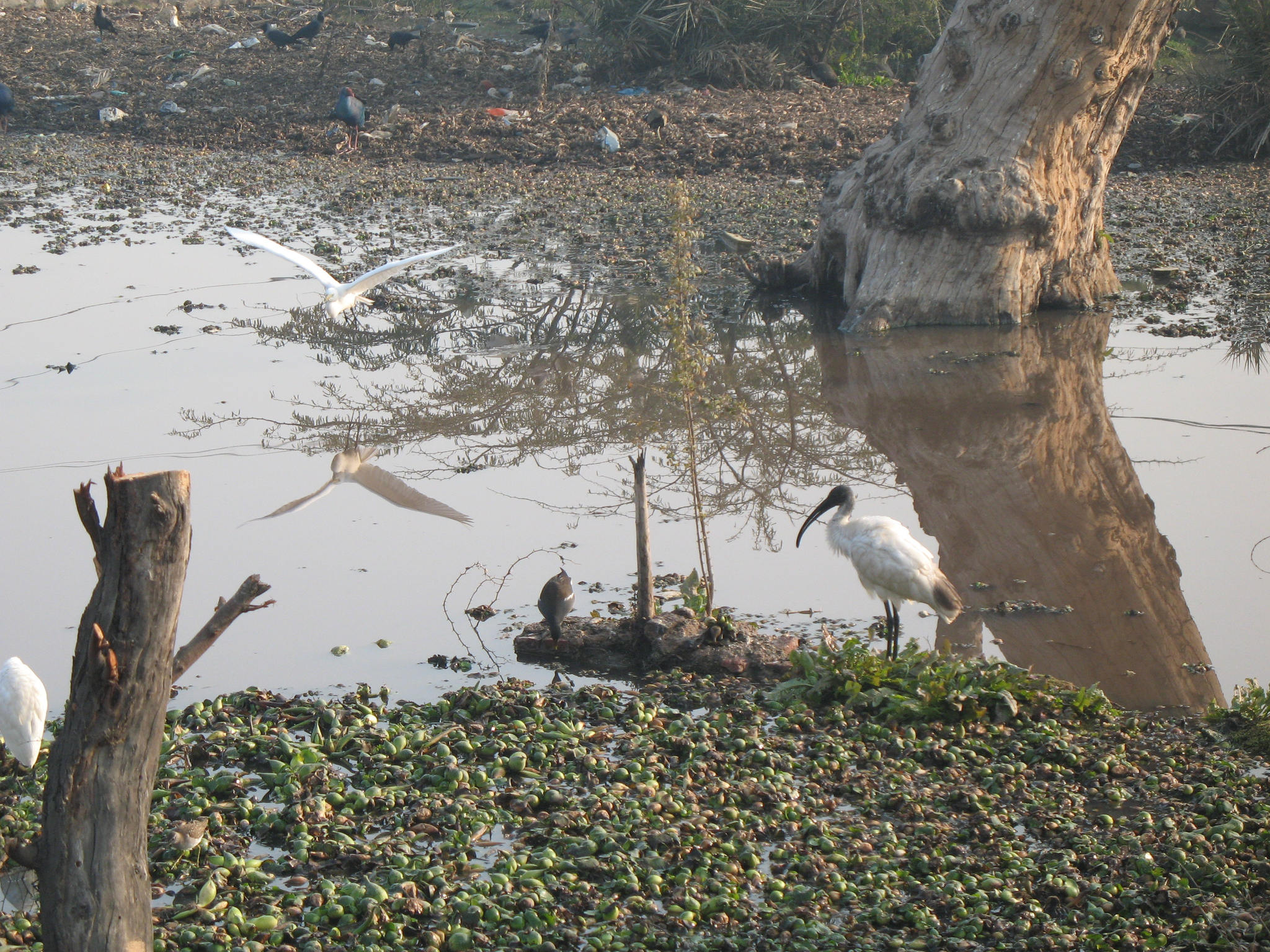
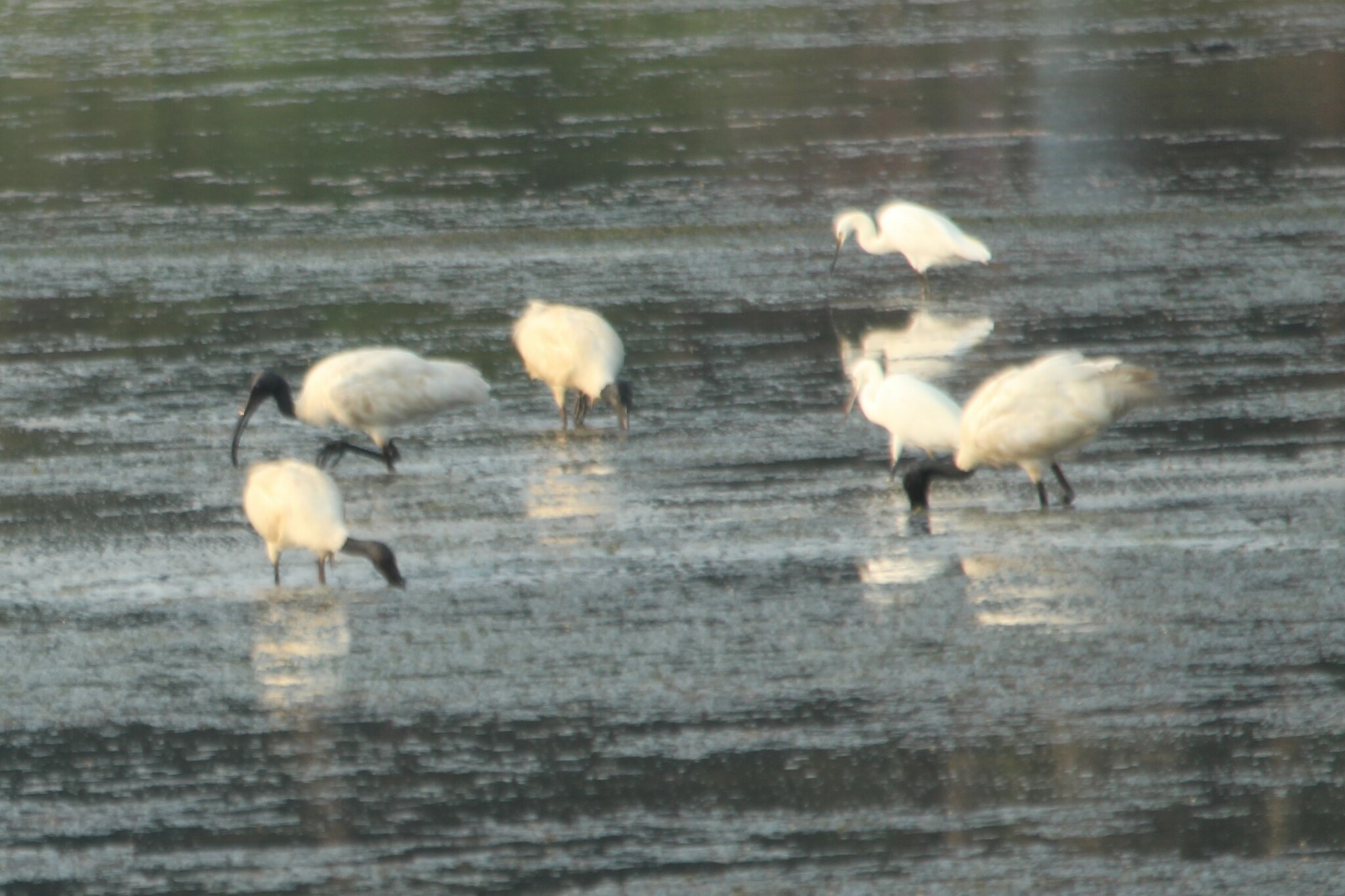
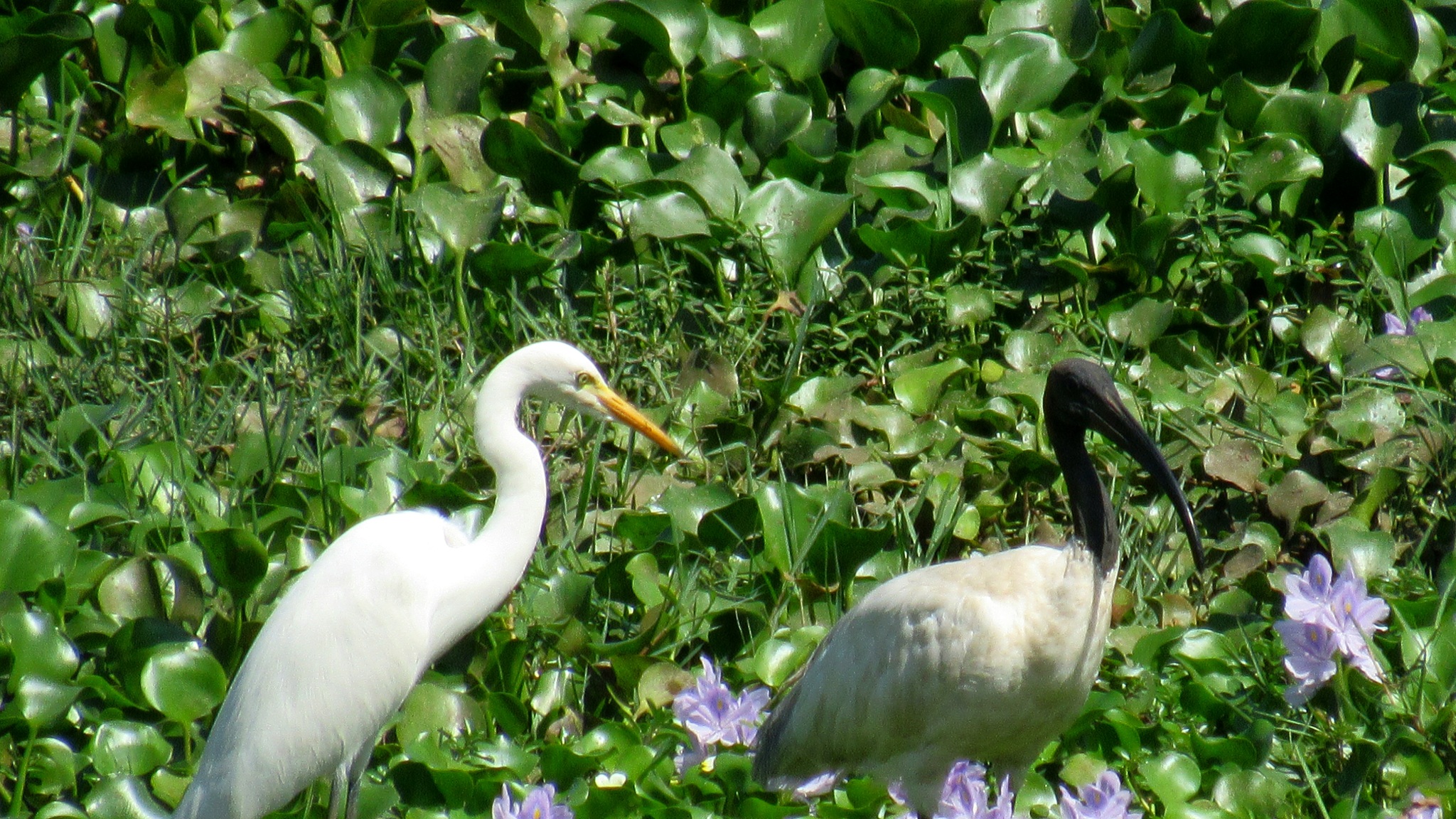
The species is the only native ibis across its range. It has white plumage with a black neck and head, and black down-curved beak and legs. Its range extends through South and Southeast Asia from India to Japan. It inhabits wetlands and adjacent areas, foraging in agricultural fields, urban water bodies, and modified landscapes. The species breeds during the monsoon season, forming colonies in heronries near water bodies. It is typically silent, producing soft grunts only at the nest.
Description
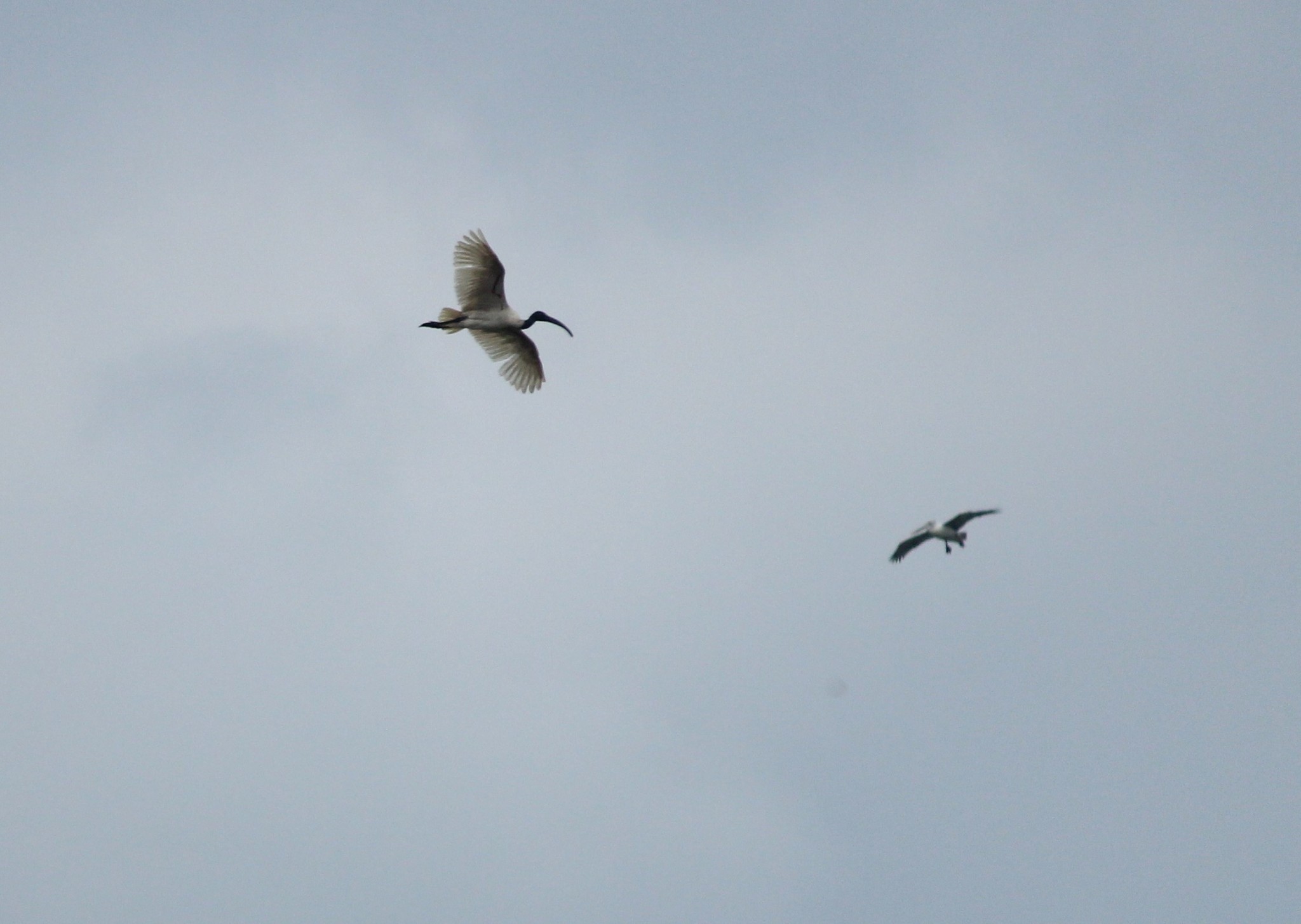
This large waterbird measures 65-76 cm in length with a striking appearance. The pure white plumage creates bold contrast against the conspicuous naked black neck and head, complemented by a black down-curved beak. Adults display light grey ornamental tail feathers that become jet black during the breeding season. Blood-red bare patches appear under the wings during breeding, and some individuals develop a bluish tinge on the head or rarely pink or red patches behind the neck. White feather tufts may emerge behind the neck, with occasional yellowish coloration on the breast and back. Sexes appear identical, while juveniles differ with greyish feathering on the neck and speckled brown-grey plumage on the wings and back. Like storks and spoonbills, it lacks a true syrinx and remains largely silent.
Identification
This species is unmistakable within its range as the only native ibis displaying overall white plumage combined with a black neck and head. The stark color contrast and large size make identification straightforward in suitable habitat. The down-curved black beak distinguishes it from storks and herons, while the predominantly white plumage separates it from any dark ibis species. Juveniles can be identified by their greyish neck feathers and speckled brown-grey wing and back plumage, contrasting with the all-black head and neck of adults.
Distribution & Habitat
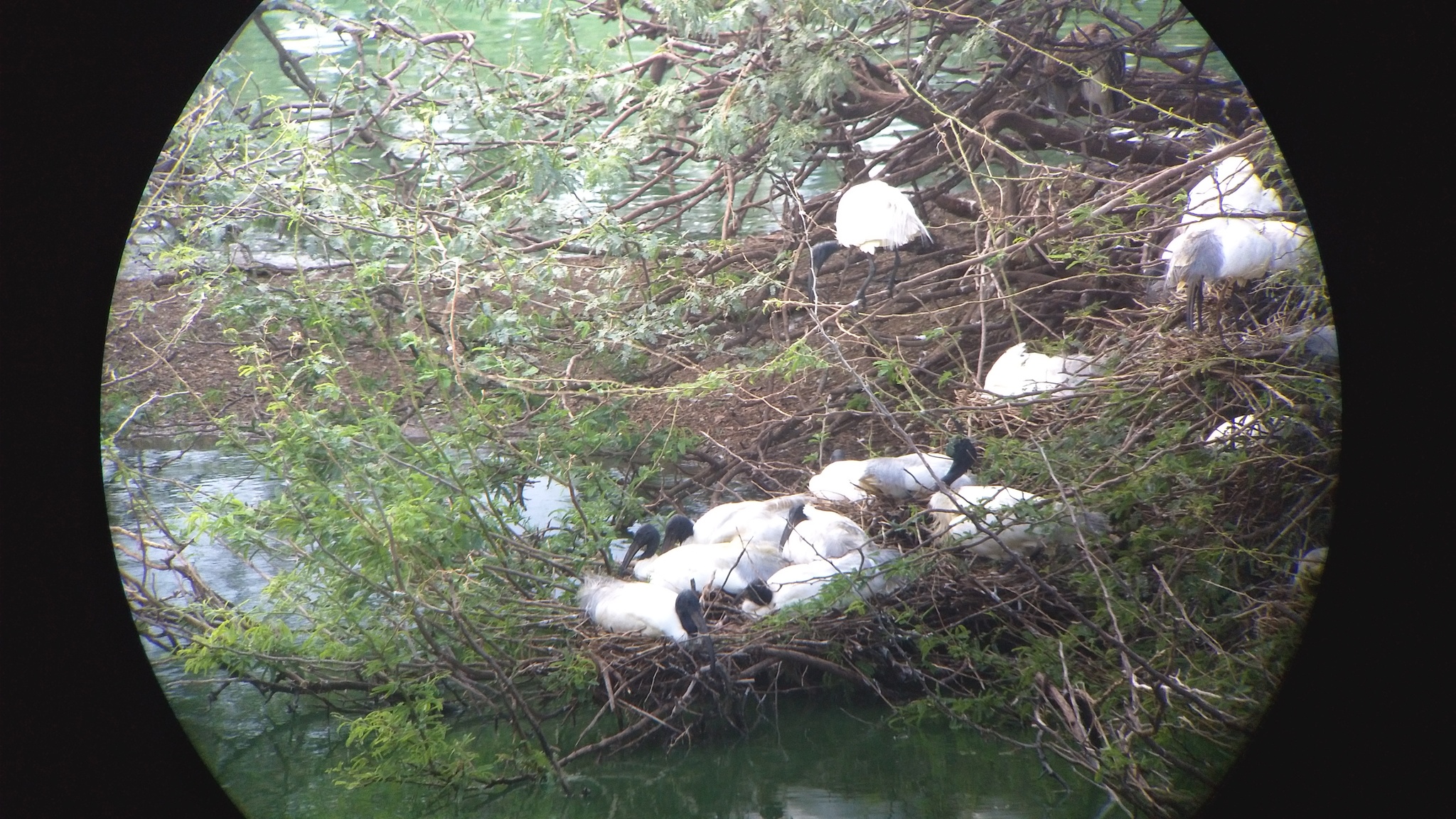
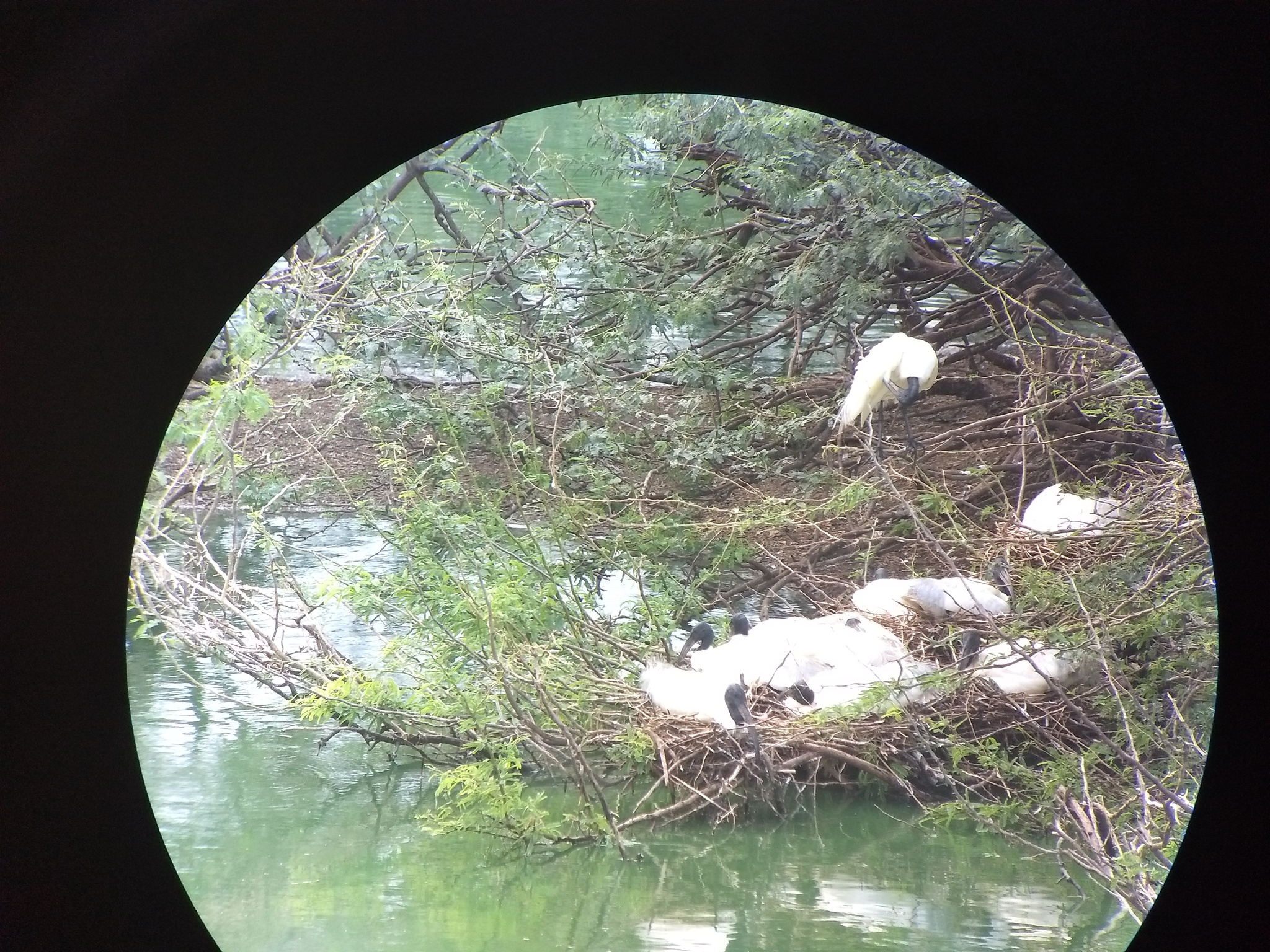
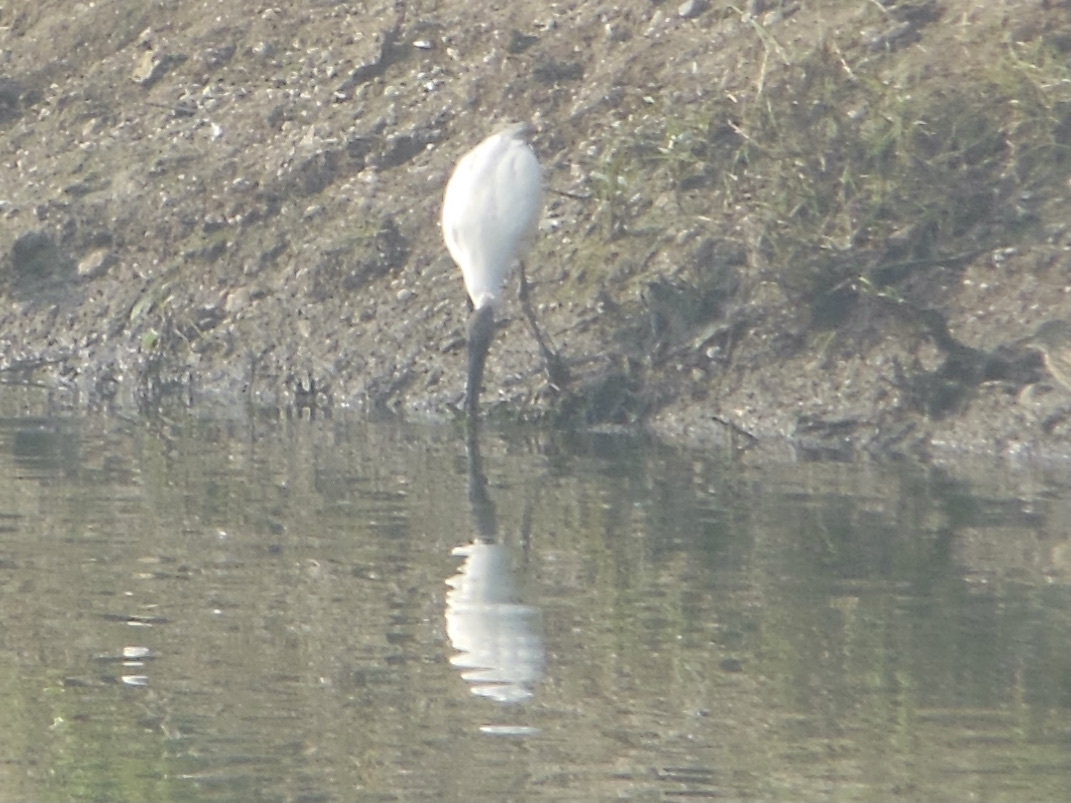
Native to Bangladesh, Cambodia, China, Hong Kong, India, Indonesia, Malaysia, Myanmar, Nepal, Pakistan, Philippines, Russia, Sri Lanka, Thailand, and Vietnam, with migratory or vagrant populations in Japan, South Korea, Laos, and Mongolia. Widespread as a breeding bird across India, Sri Lanka, Nepal, and Myanmar, though populations have declined significantly in Cambodia, Indonesia, Malaysia, Thailand, Vietnam, and especially Sumatra. Highly adaptable habitat use includes freshwater and salt-water marshes, lakes, ponds, rice fields, ploughed fields, irrigation canals, riversides, reservoirs, urban lakes, open sewage lines, grazing lands, and garbage dumping sites. Seasonal habitat shifts occur in agricultural regions, with summer use favoring natural marshes and fallow fields while monsoon seasons see increased use of agricultural fields. Nests in heronry colonies near wetlands, building platform nests of sticks lined with grass and threads in trees.
Behavior & Ecology
Breeding occurs exclusively during the rainy season with nests built as platforms of sticks lined with grass and threads in trees near wetlands. Colonies form in heronry sites, with old trees in urban areas used for both night roosting and nesting. The species is largely silent, communicating only through ventriloquistic grunts exchanged between breeding pairs at the nest. Activity budget studies in protected wetlands reveal approximately 48% of time spent feeding and 23% resting. Habitat preferences shift seasonally in agricultural landscapes, with individuals showing flexibility in foraging across varied natural and man-made environments.
Conservation
Populations have declined considerably across much of Southeast Asia, with the species now restricted to few locations or breeding colonies in Cambodia, Indonesia, Malaysia, Thailand, and Vietnam. The most rapid decline has occurred in Sumatra, though broader regional decreases have been documented throughout the species' range. The decline is attributed to habitat loss and degradation across wetland environments, though specific threat details are not provided in source material.
Culture
No cultural significance or folklore information available in source material.
Source: Wikipedia · CC BY-SA 3.0
Taxonomy
- Order
- Pelecaniformes
- Family
- Threskiornithidae
- Genus
- Threskiornis
- eBird Code
- blhibi1
Distribution
India to southeastern Asia; winters to eastern China, Sumatra, and Philippines
Data Sources
CBR Notes: IUCN红色名录等级由NT降为LC
Species description from Wikipedia, licensed under CC BY-SA 3.0.
Bird images and sounds sourced from GBIF, contributed by citizen scientists worldwide under Creative Commons licenses.
Taxonomy data from AviList 2025.