

Little Bustard
Tetrax tetrax
小鸨
Introduction
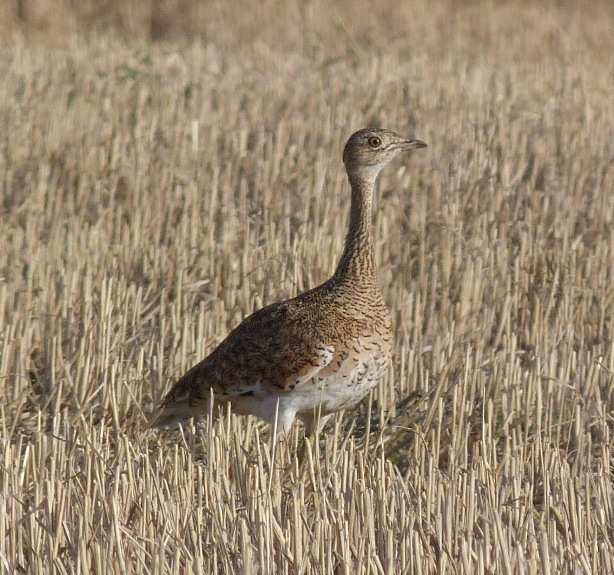
A monotypic species in the bustard family (Otididae), the only member of the genus Tetrax. It breeds across Southern Europe and Western and Central Asia. This species occupies open grassland and undisturbed cultivation with tall vegetation providing cover. Distinctive traits include its slow, stately walking gait, tendency to run when disturbed rather than fly, gregarious behavior especially in winter, and nocturnal migration with frequent stopovers in croplands. The species is declining throughout its range due to habitat loss, with the central European population in Hungary having become extinct several decades ago.
Description
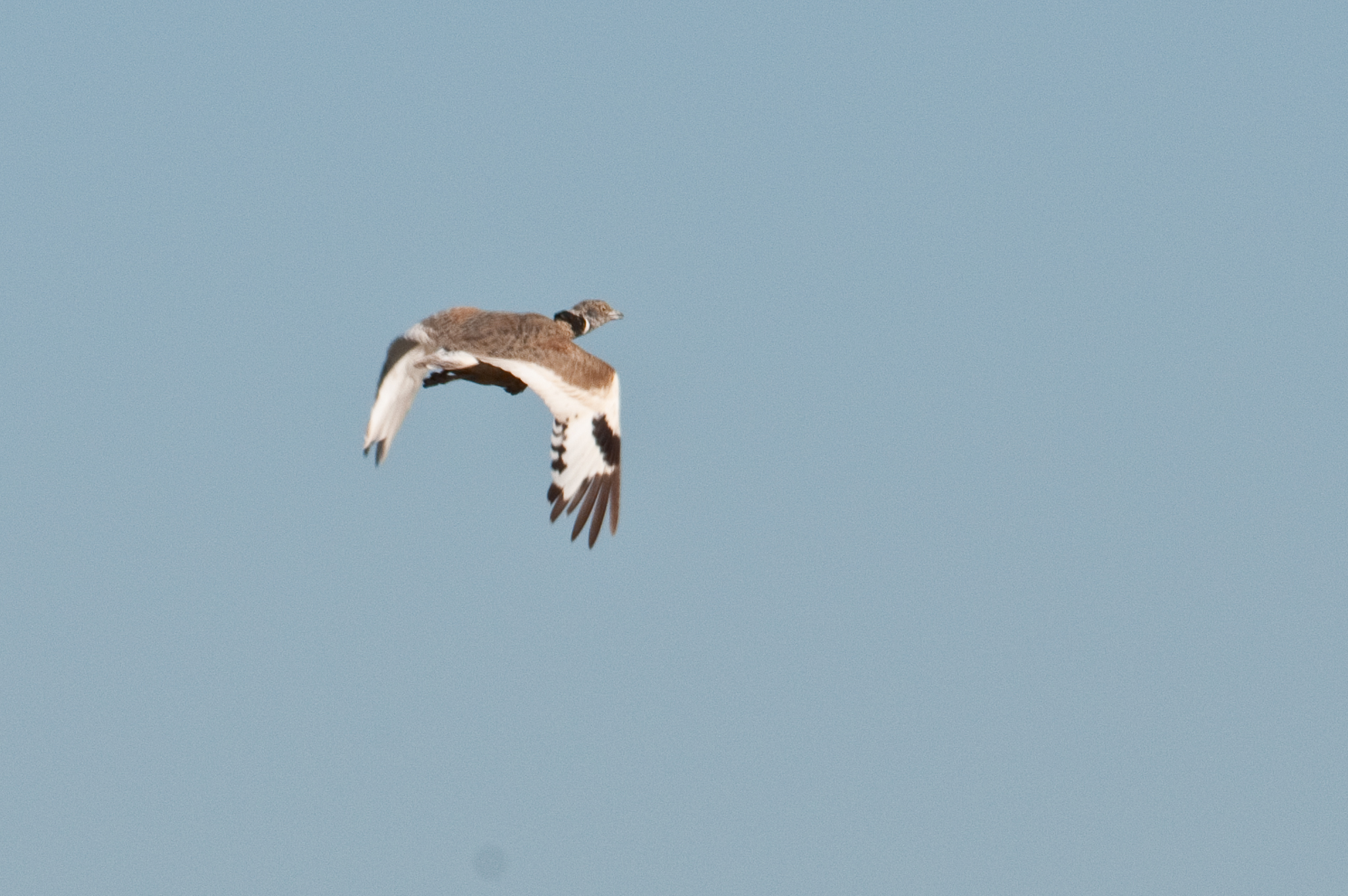
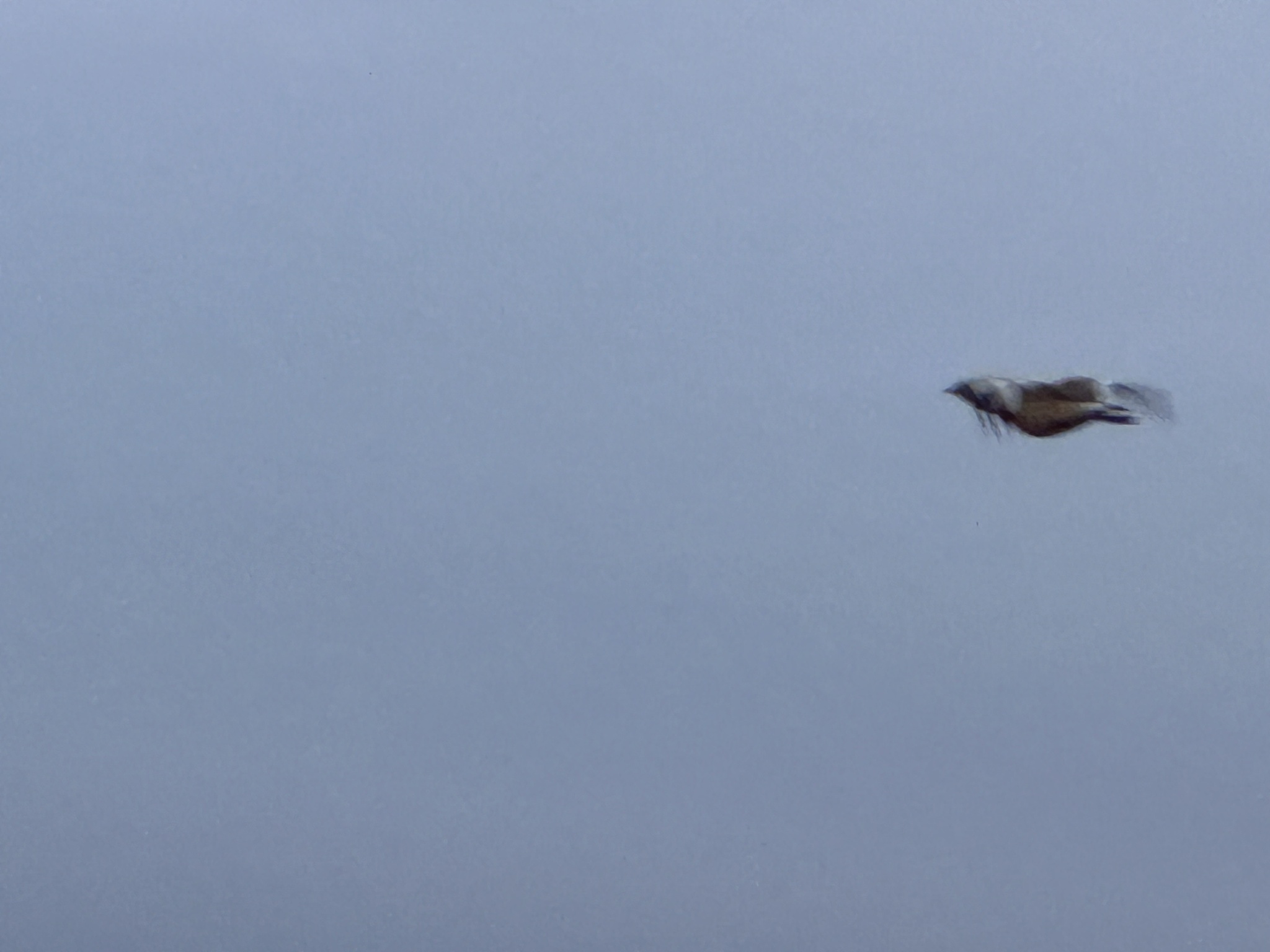
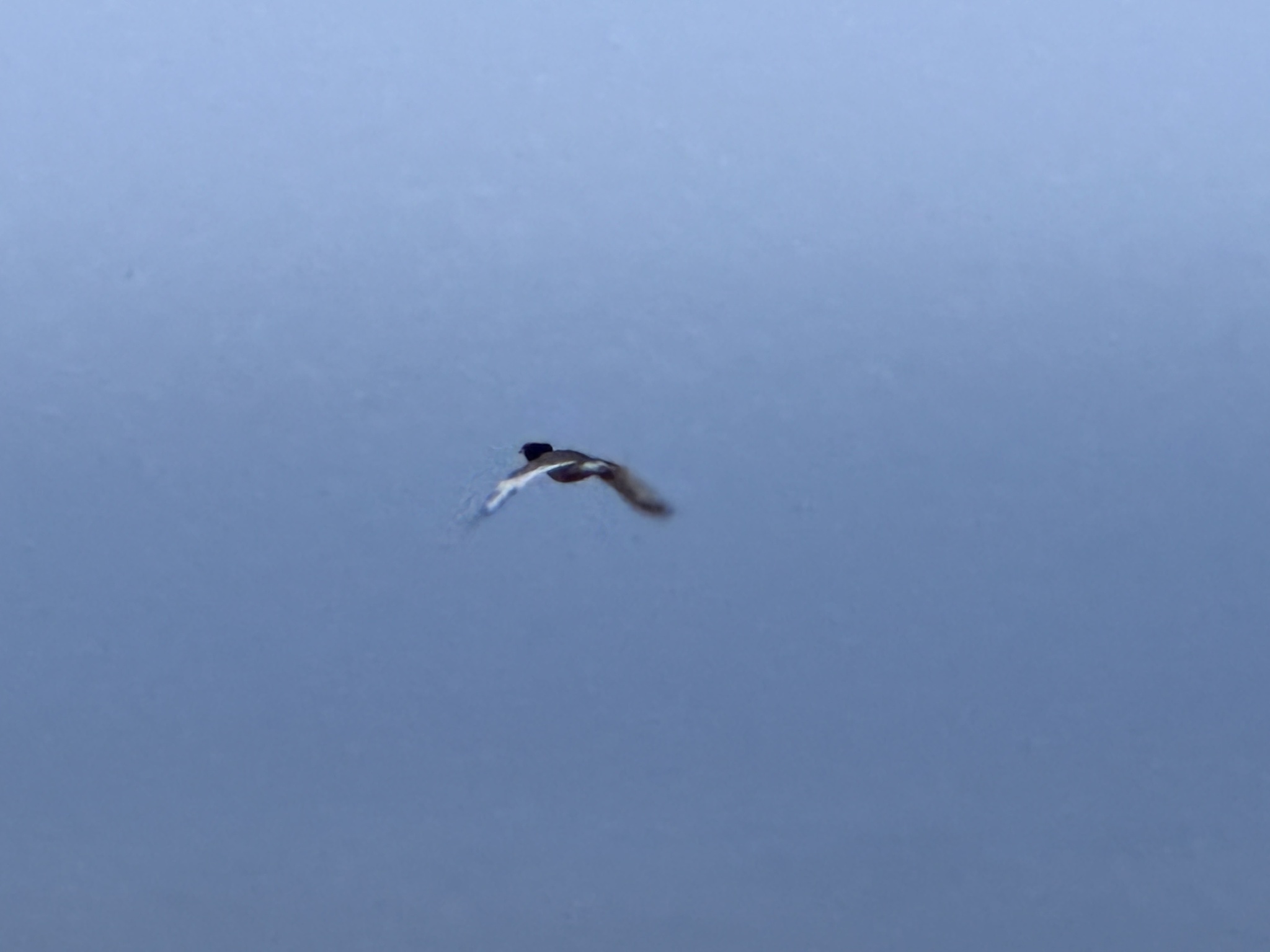
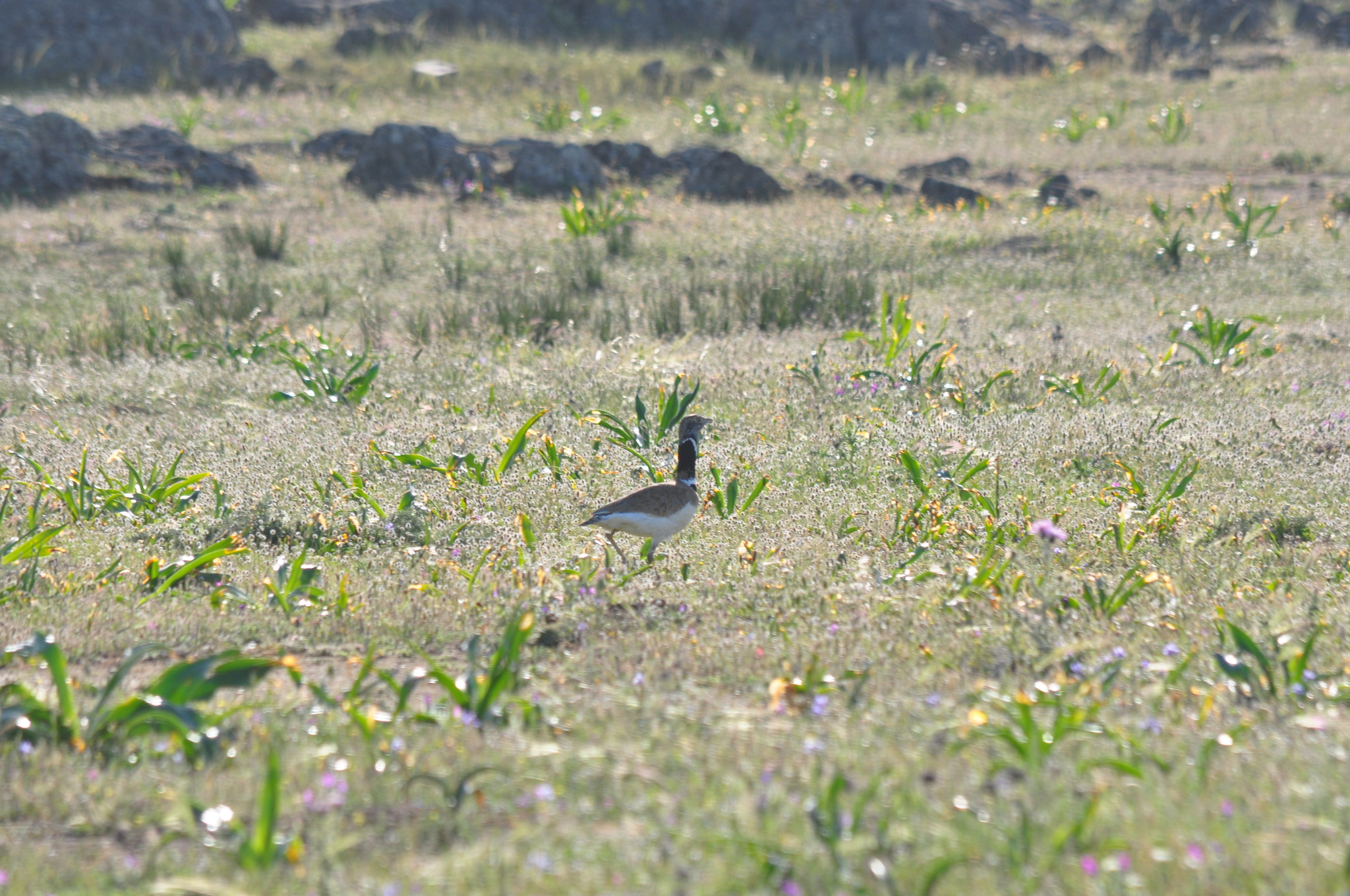
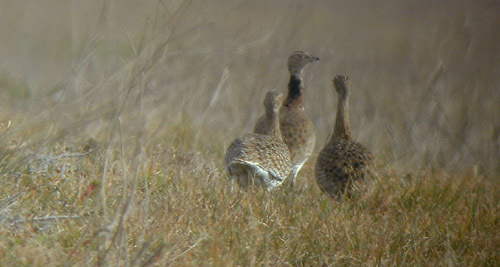
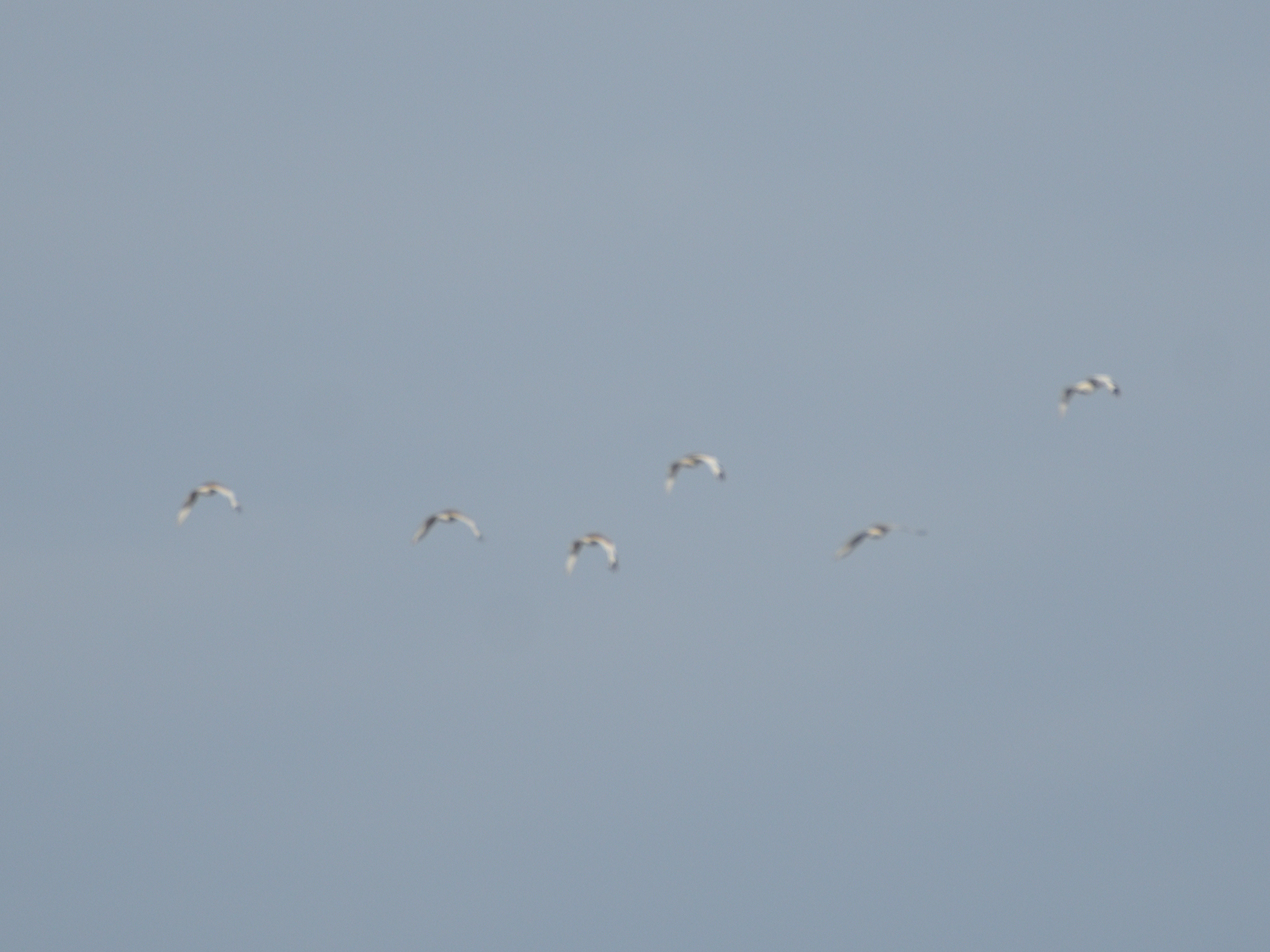
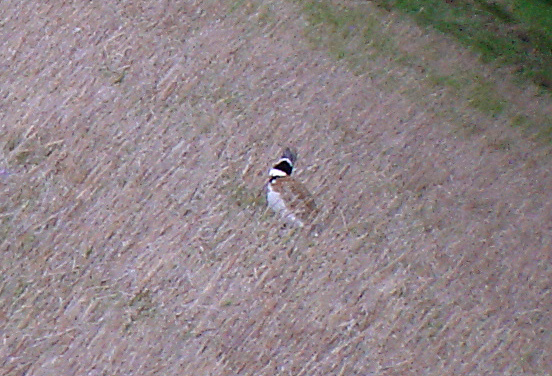
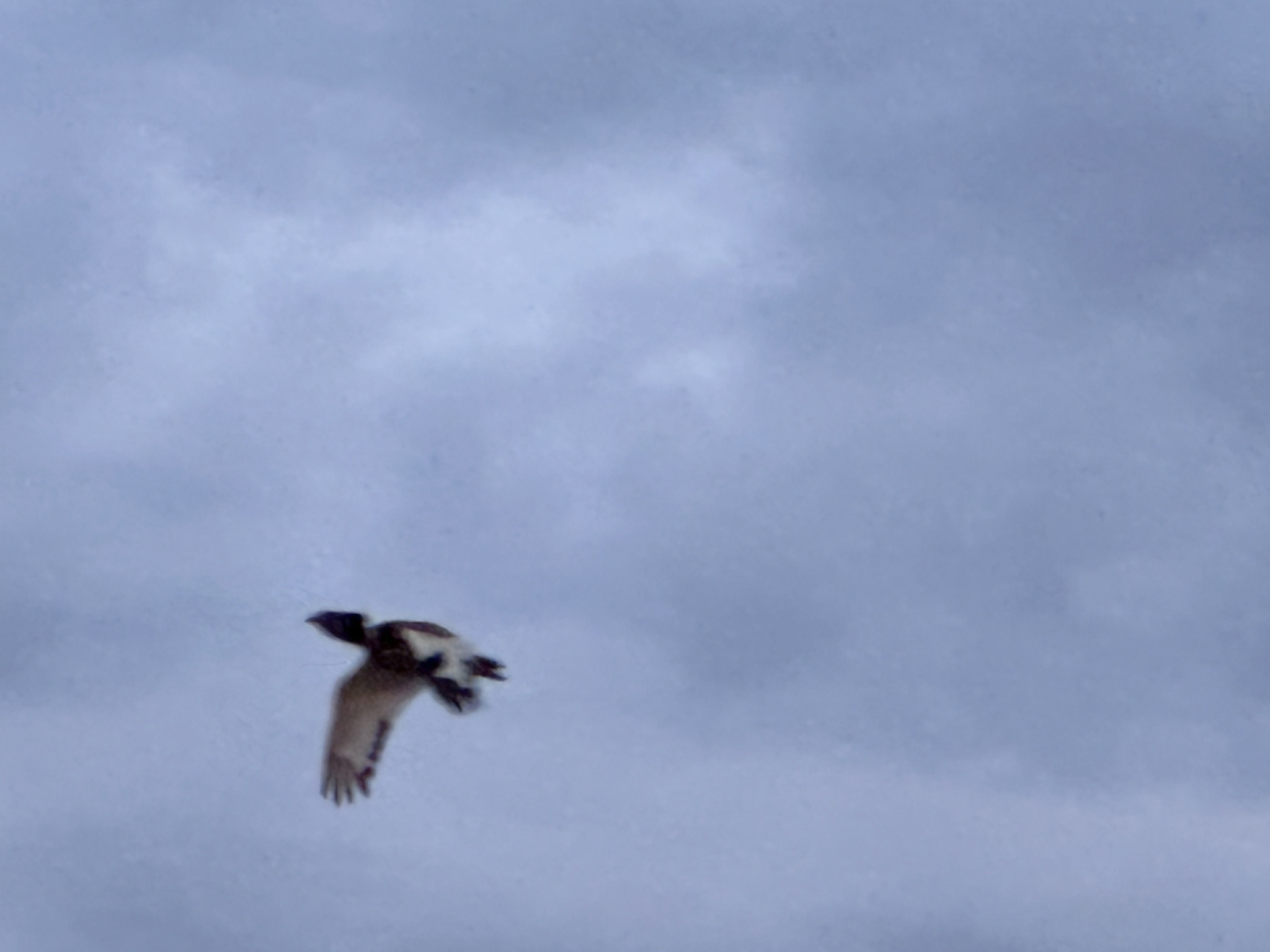
The smallest Palearctic bustard but still pheasant-sized, measuring 42-45 cm in length with a 90-110 cm wingspan and weighing 830 g. In flight, the long wings show extensive white coloration. Breeding males have brown upperparts, white underparts, a grey head, and a black neck bordered above and below by white. Females and non-breeding males lack the dramatic neck pattern, with females appearing darker below than males. Immature birds resemble females. Both sexes are typically silent, though males produce a distinctive 'raspberry-blowing' call described as 'prrt'.
Distribution & Habitat
Breeds across Southern Europe and Western and Central Asia. Southern European populations are largely resident, while other populations migrate southward in winter. The species has declined significantly, with the central European population in Hungary now extinct; it formerly ranged north to Poland occasionally. Despite breeding in France, it is a very rare vagrant to Great Britain. Habitat consists of open grassland and undisturbed cultivation with sufficiently tall vegetation for cover. Males and females show similar habitat selection.
Behavior & Ecology
Omnivorous diet includes seeds, insects, rodents, and reptiles. Like other bustards, males perform a flamboyant breeding display involving foot-stomping and aerial leaping. Females lay 3-5 eggs on the ground. The species is gregarious, particularly during winter. Males are nocturnal migrants that make frequent stopovers in both non-irrigated and irrigated croplands when traveling to post-breeding areas.
Conservation
The species is declining throughout its range due to habitat loss from agricultural intensification and landscape changes. The central European population in Hungary has become extinct, and the species has disappeared from many areas where it formerly bred. The decline has been attributed to agricultural modernization reducing suitable grassland habitat and disturbing breeding areas.
Culture
In December 2013, a dead individual was discovered in the United Nations Buffer Zone of Cyprus, having been shot by poachers. This incident caused controversy among conservationists and birdwatchers, as the little bustard is a very rare visitor to Cyprus with no official records since December 1979.
Source: Wikipedia · CC BY-SA 3.0
Taxonomy
- Order
- Otidiformes
- Family
- Otididae
- Genus
- Tetrax
- eBird Code
- litbus1
Distribution
breeds Morocco and southern Europe (possibly now extinct in Italy); Ukraine and southwestern Russia through Kazakhstan, Kyrgyzstan, far northern Iran, and far northwestern China; winters from Mediterranean zone through Türkiye and Caucasus to Iran, and erratically elsewhere in southern Asia
Vocalizations
Data Sources
Species description from Wikipedia, licensed under CC BY-SA 3.0.
Bird images and sounds sourced from GBIF, contributed by citizen scientists worldwide under Creative Commons licenses.
Taxonomy data from AviList 2025.