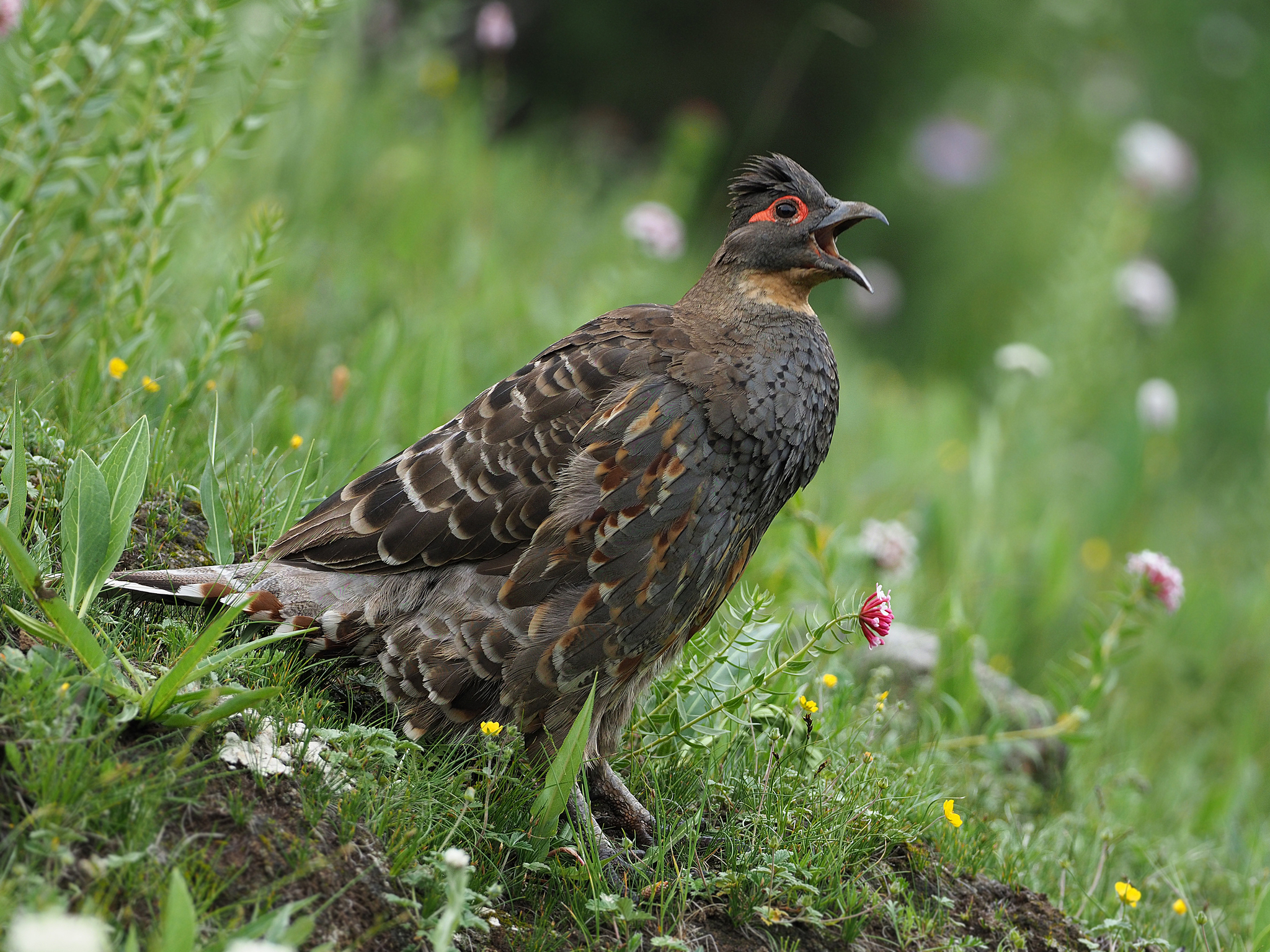
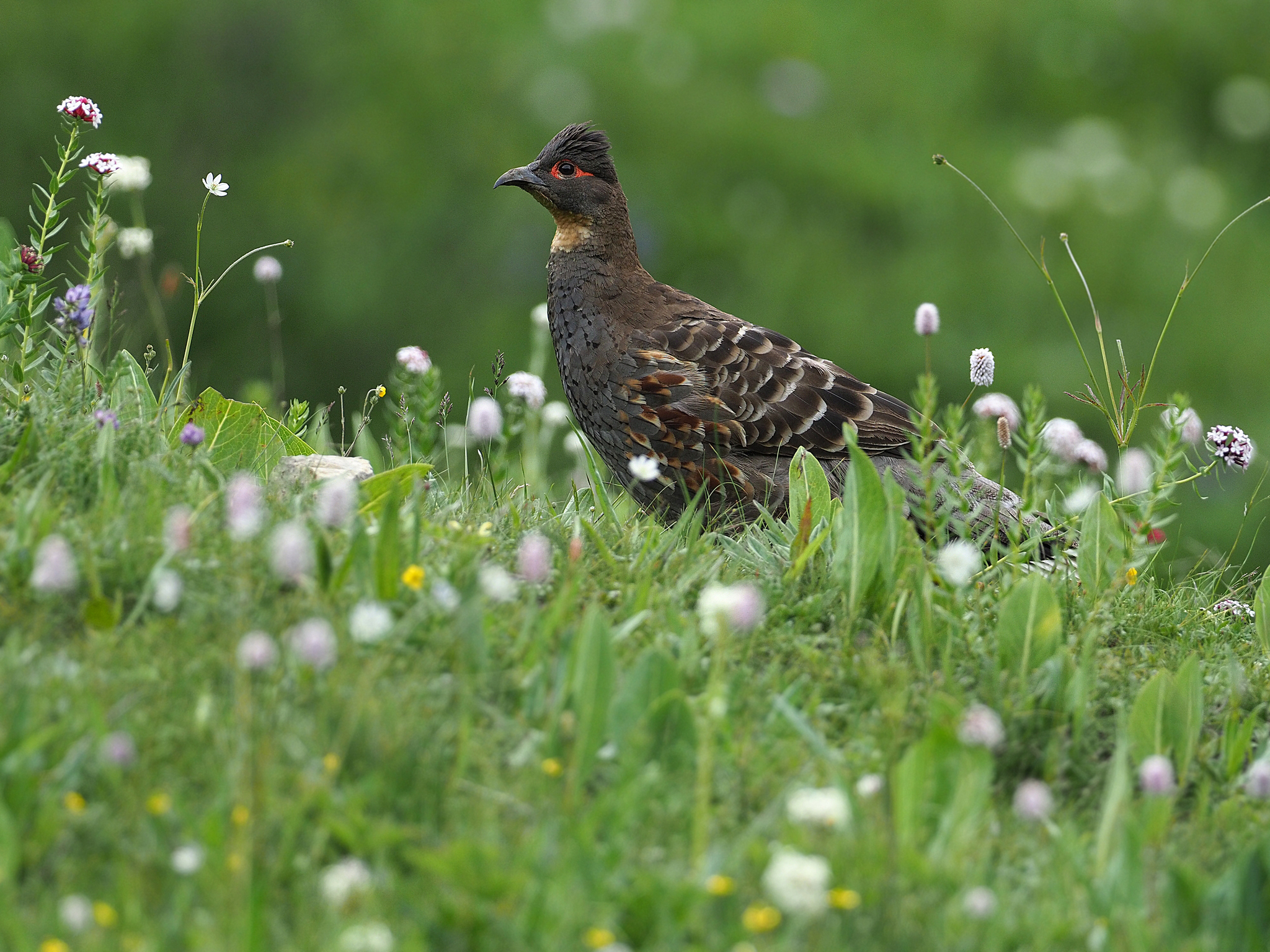

Buff-throated Monal-Partridge
Tetraophasis szechenyii
黄喉雉鹑
Introduction
A medium-sized partridge belonging to the family Phasianidae in the order Galliformes. Endemic to the high mountains (3350–4600 m) of western China, specifically southeastern Tibet, southern Qinghai, western Sichuan and northwestern Yunnan. Inhabits mixed coniferous forest, rhododendron shrubs, oak thickets, alpine meadows, and rocky ravines. One of the few galliformes species exhibiting cooperative breeding behavior, with family units consisting of a breeding pair and one to three helpers. Also engages in communal roosting in large fir trees. Globally assessed as Least Concern on the IUCN Red List, though classified as Endangered in China's Red Book and listed in Category I of nationally protected animals.
Description
A sexually monochromatic, medium-sized partridge with distinctive facial features including an orange horizontal teardrop-shaped eye ring and a light gold gorget. Possesses a crest that can be flared occasionally. The upper chest is grey, while the belly is speckled with orange and grey markings. Adults measure 29–50 cm in length and weigh between 660-1790 g.
Distribution & Habitat
Endemic to western China, restricted to high-altitude mountain habitats ranging from 3350 to 4600 meters elevation. Found across southeastern Tibet, southern Qinghai, western Sichuan, and northwestern Yunnan. Inhabits mixed coniferous forests, rhododendron shrubs, oak thickets, alpine meadows, and rocky ravines. No significant migration patterns described.
Behavior & Ecology
Diet consists primarily of leaves, roots, stems, bulbs, fruits, and seeds from various herbs and shrubs, supplemented with moss. In areas near Tibetan monasteries, monks occasionally supplement their diet with rice and corn. Breeds from April to June, participating in cooperative breeding with one to three helpers per family unit, typically males. Nests in soil scrapes lined with leaves, sticks, and bark at the base of trees or shrubs. Females lay 3-4 eggs incubated for approximately four weeks. Engages in communal roosting in large fir trees, typically around 7 meters high, arranged in linear huddles for thermoregulatory benefits and predator avoidance. Roosting behavior includes entering the roost one by one, with chicks positioned in the middle of the huddle for warmth and safety.
Conservation
Classified as Least Concern on the IUCN Red List but considered Endangered under China's Red Book of Wildlife, listed in Category I of nationally protected animals. Sichuan and Yunnan provinces have experienced rapid modernization since the mid-1970s, raising concerns about deforestation from logging companies clearing large areas of natural forest, particularly firs and spruce firs that serve as roosting sites. More ecological and habitat use research is needed to determine appropriate conservation measures.
Culture
Associated with Tibetan sacred sites where local monastery monks have been documented providing supplementary food (rice and corn) to these birds. This supplementary feeding has been observed to have beneficial effects on breeding outcomes, including earlier clutch initiation, increased clutch and egg sizes, and improved survival rates through winter months.
Source: Wikipedia · CC BY-SA 3.0
Taxonomy
- Order
- Galliformes
- Family
- Phasianidae
- Genus
- Tetraophasis
- eBird Code
- szepar1
Distribution
mountains of eastern Tibet and southwestern China
Data Sources
Species description from Wikipedia, licensed under CC BY-SA 3.0.
Bird images and sounds sourced from GBIF, contributed by citizen scientists worldwide under Creative Commons licenses.
Taxonomy data from AviList 2025.