Himalayan Snowcock
Tetraogallus himalayensis
暗腹雪鸡
Introduction
A snowcock in the pheasant family Phasianidae found across the Himalayan ranges and parts of the adjoining Pamir range of Central and South Asia. Inhabits alpine pastures and steep rocky cliffs above the treeline and near the snowline, descending to lower elevations during severe winters. Distinguished by its tendency to dive down hill slopes when approached from above, while climbing uphill on foot when approached from below. Overlaps with the slightly smaller Tibetan snowcock in parts of its range. Populations show geographic variation in coloration, with approximately five subspecies described. Successfully introduced to the Ruby Mountains of Nevada in the 1960s, where a wild population of 200-500 birds has established. Classified as Least Concern by the IUCN due to its large range and no visible population declines.
Description
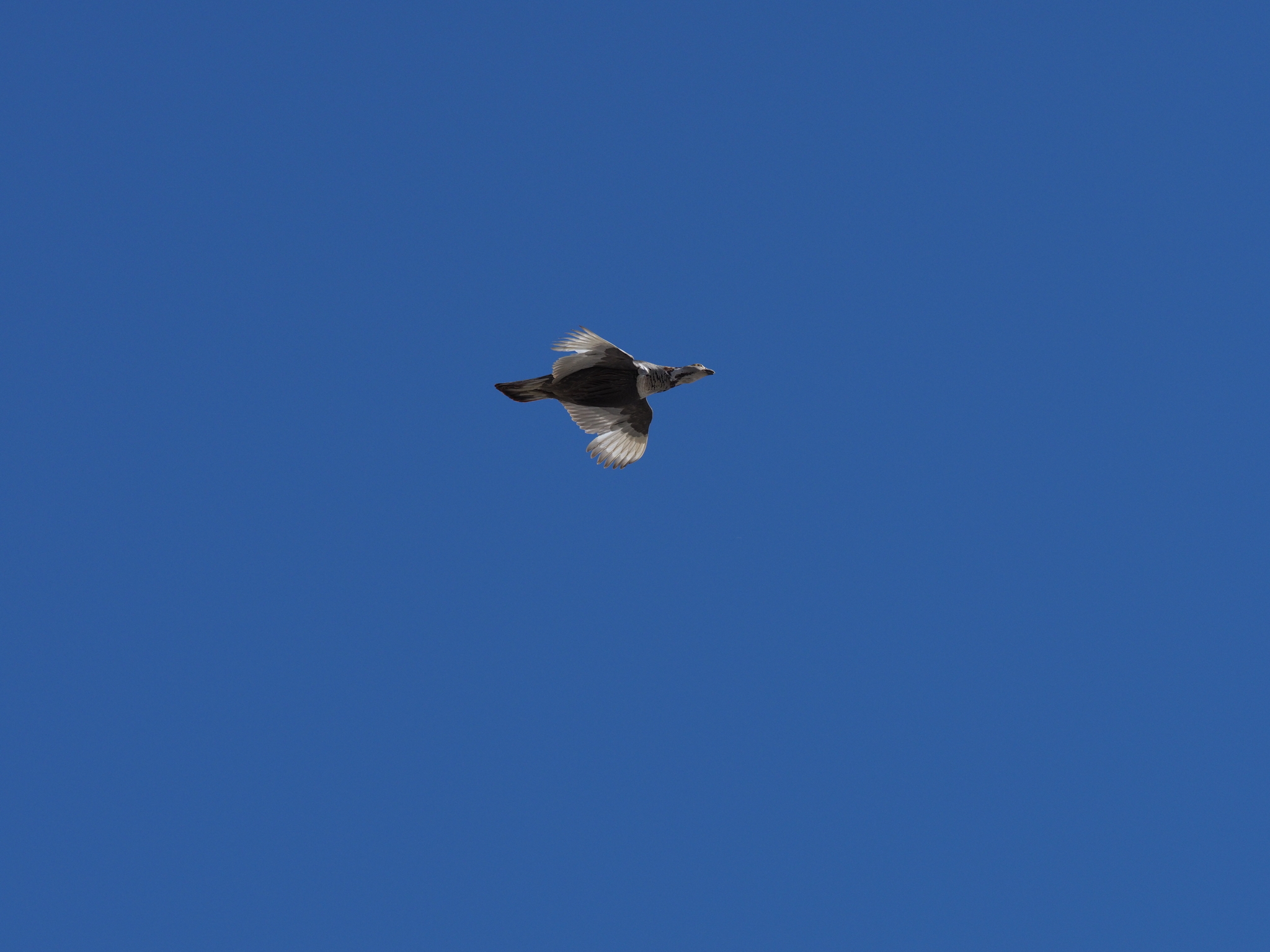
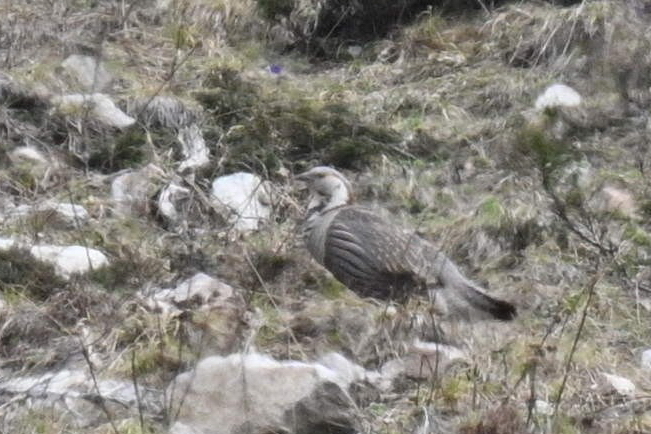
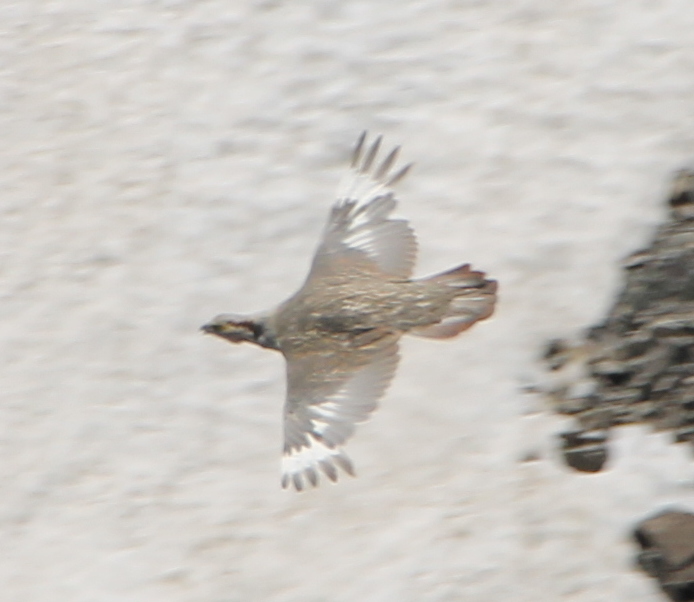
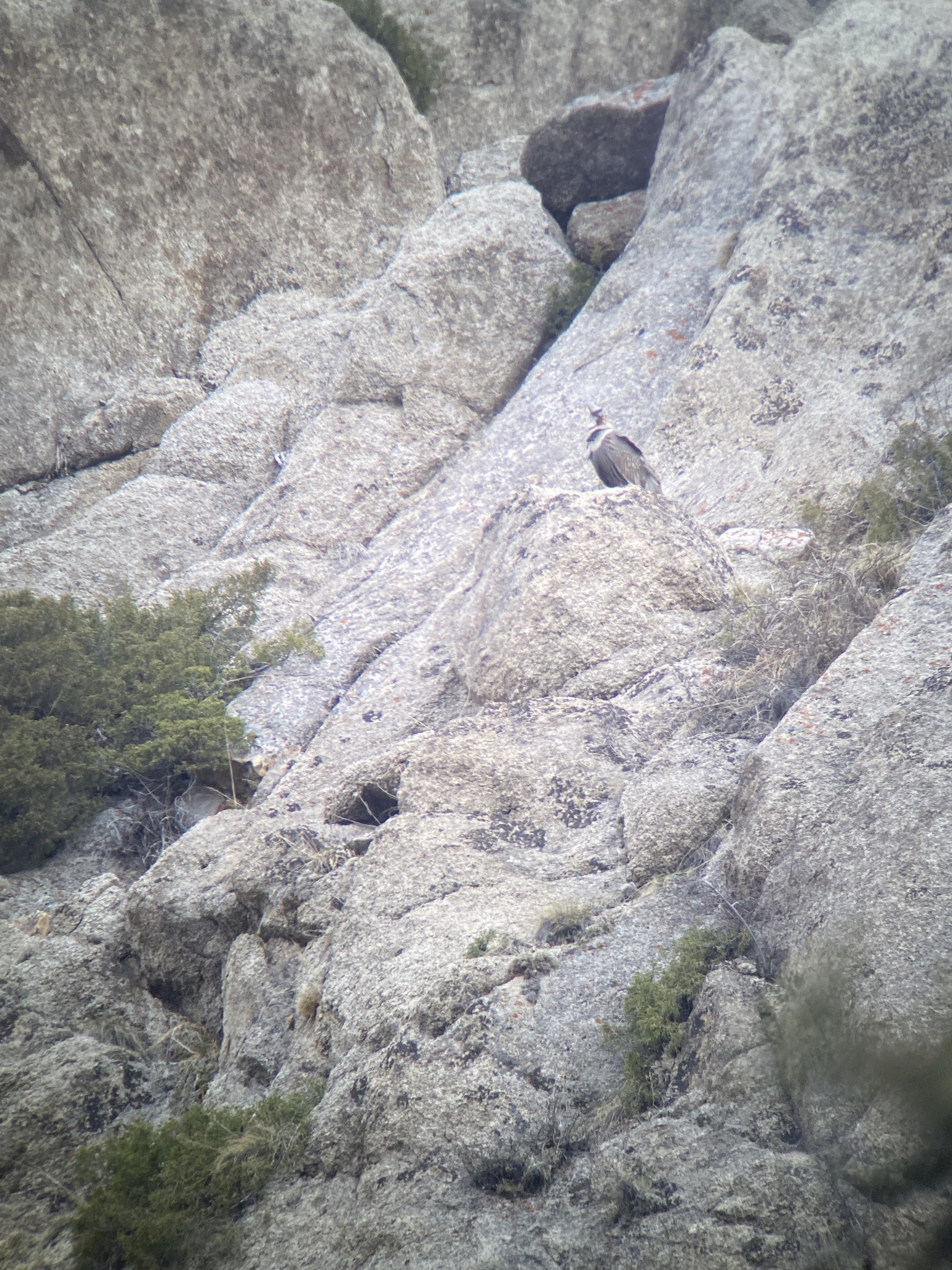
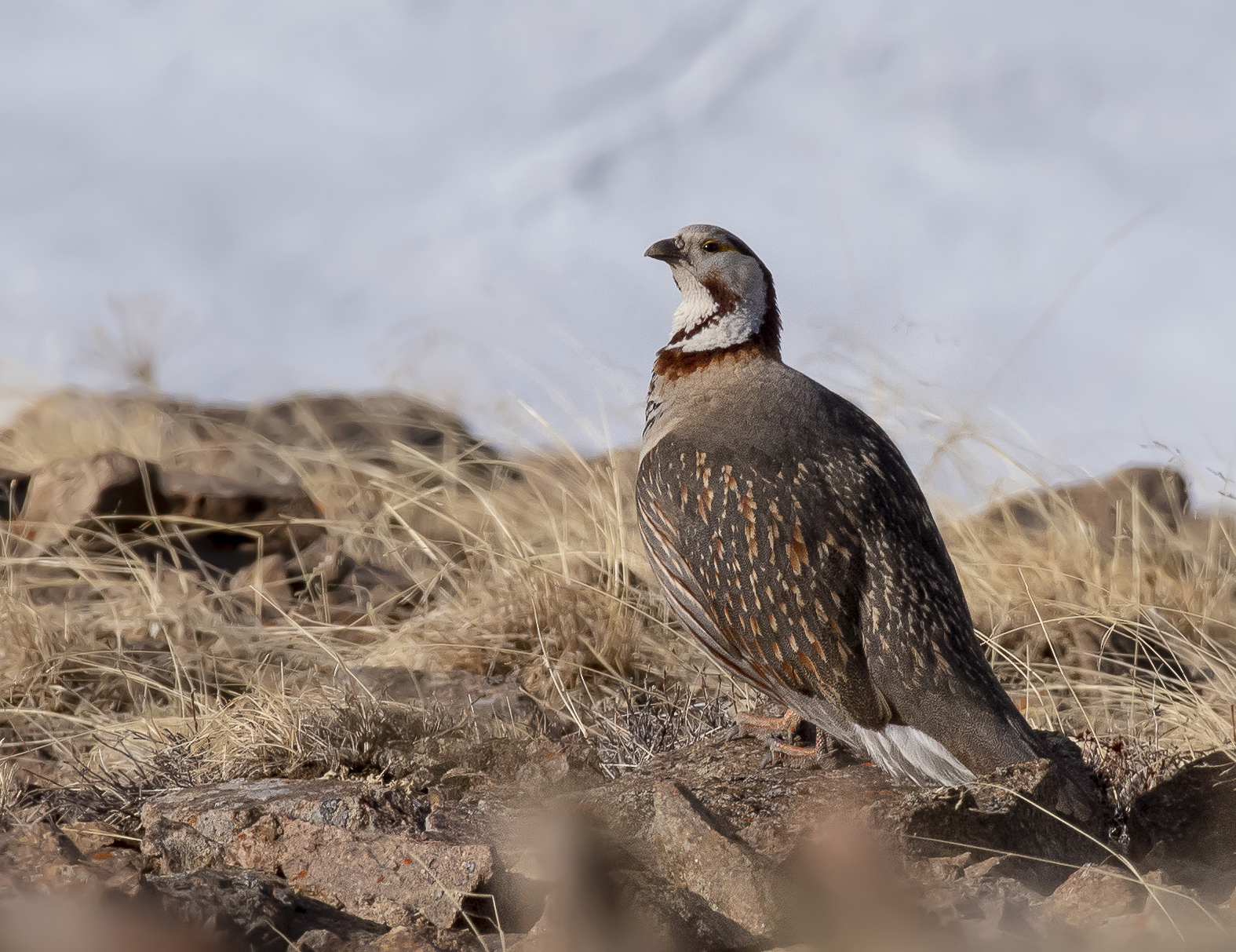
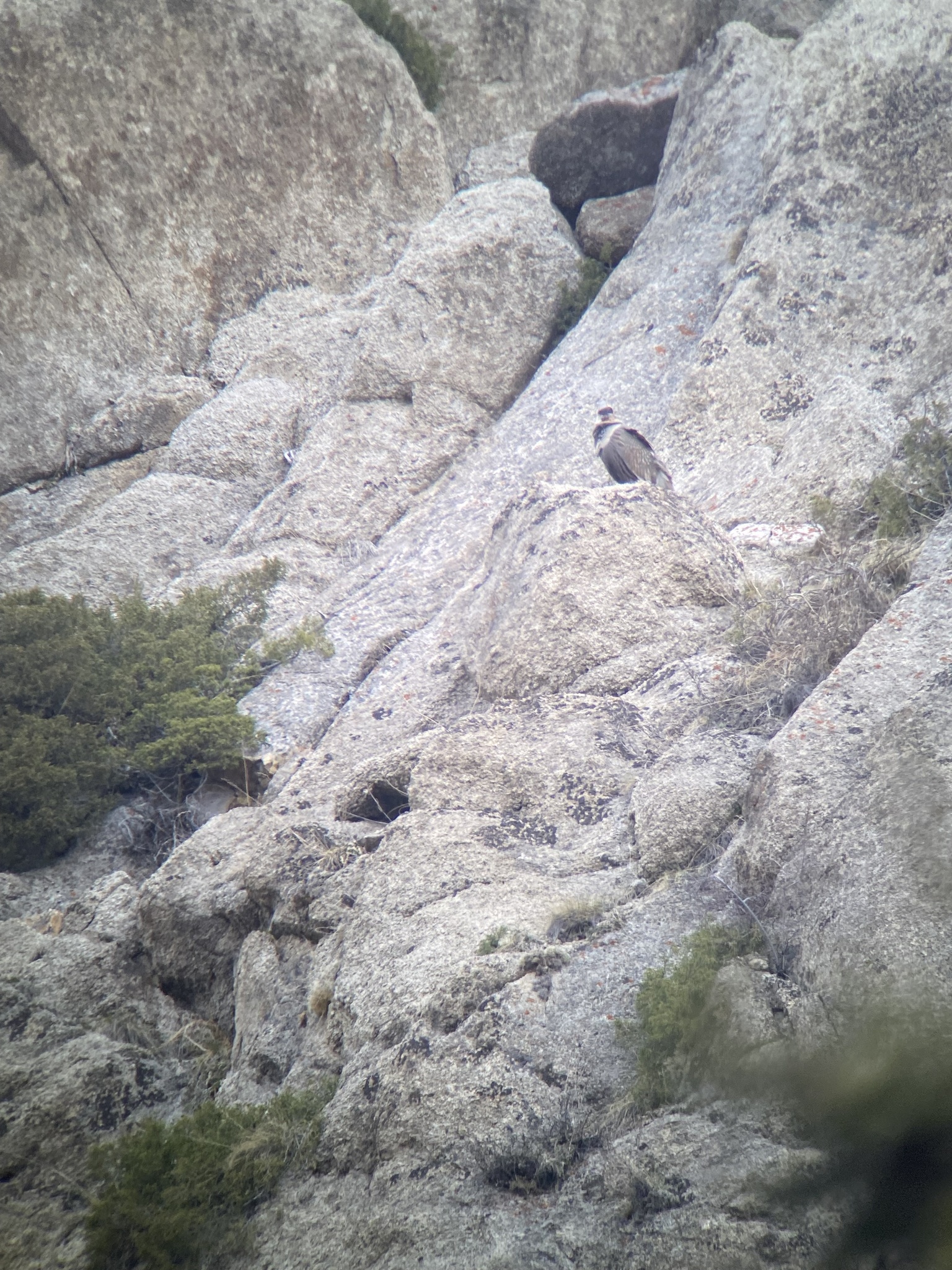
A large grey partridge-like bird measuring 55-74 cm in length and weighing 2-3.1 kg. The head pattern resembles the smaller chukar partridge, with white throat and sides of head bordered by a chestnut moustachial stripe and a dark broad chestnut band extending from the eye over the ear into a collar. Upper parts are grey with rufous borders on rump and wing feathers. The upper breast is grey with dark crescent bars, while the lower breast is dark grey; the sides are streaked with black, chestnut and white. Undertail coverts are white. Legs and orbital skin are yellow. Sexes are similar in plumage, but females are smaller and lack the male's tarsal spur. In flight, shows white primaries tipped in black and rufous outer tail feathers.
Identification
In flight, the white primaries tipped in black and rufous outer tail feathers are distinctive. The Tibetan snowcock is similar but can be distinguished by its wing pattern: the Tibetan has a white trailing edge to the secondaries that contrasts with the grey wings, whereas the Himalayan lacks this contrasting pattern.
Distribution & Habitat
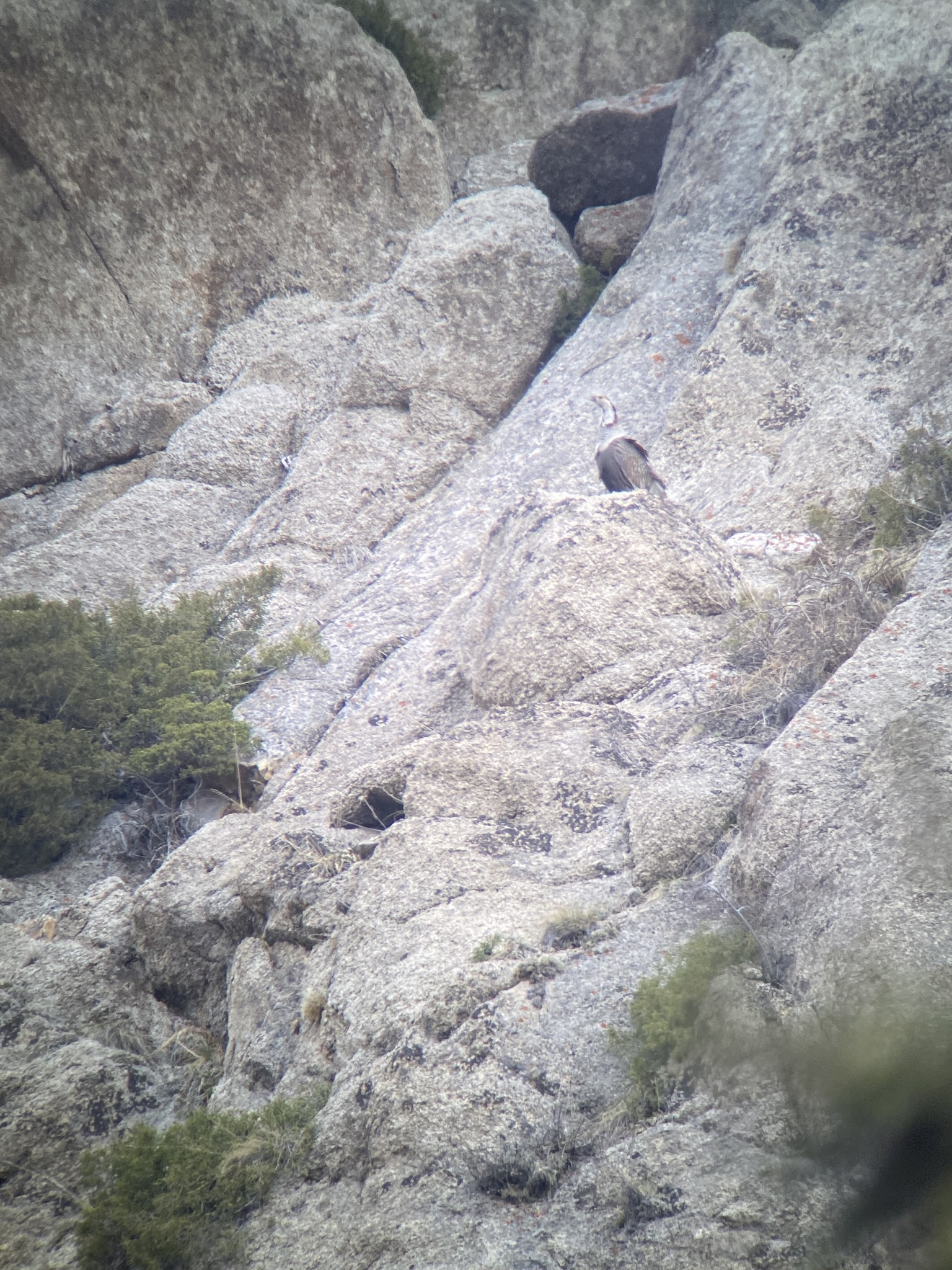
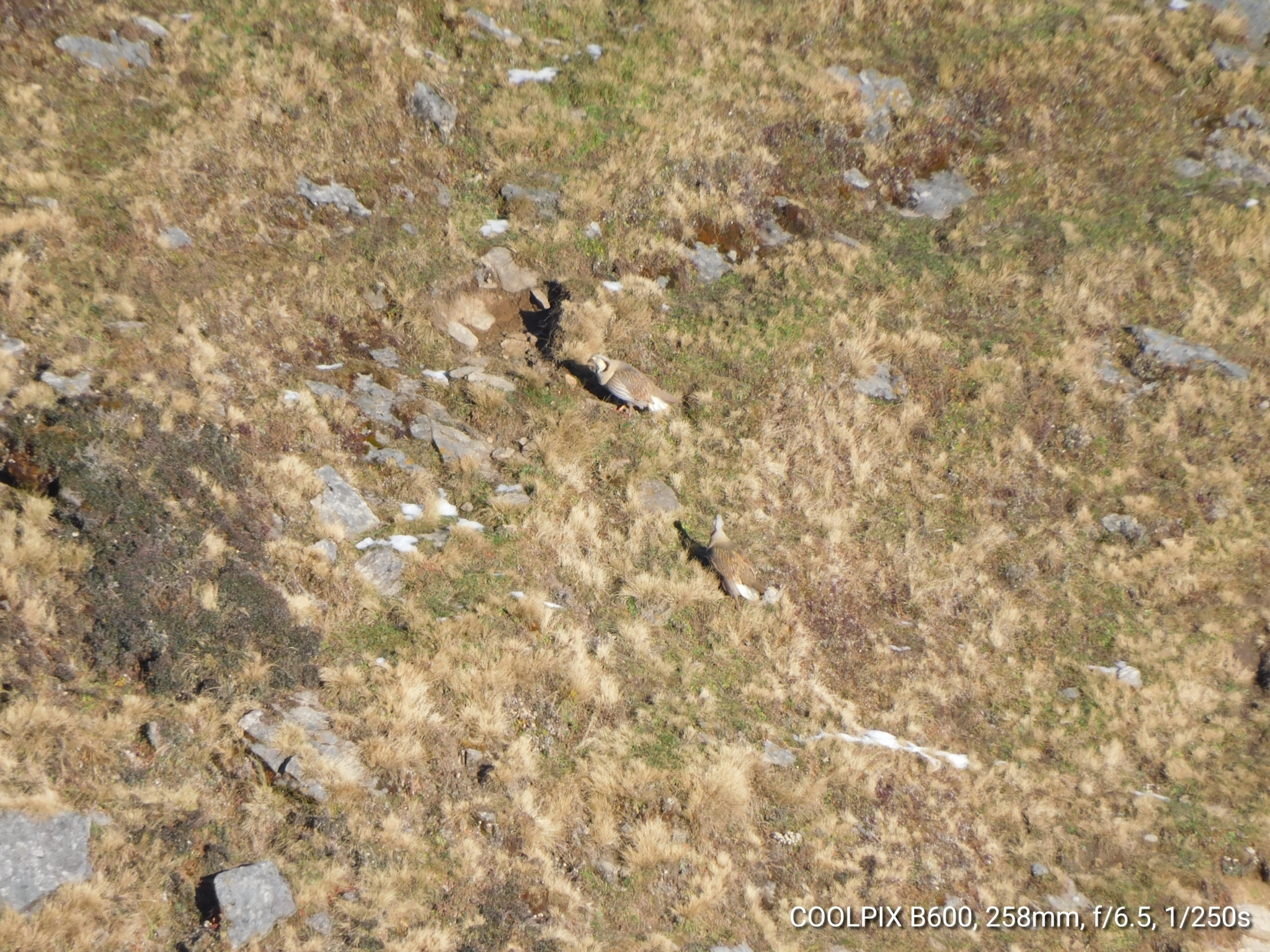
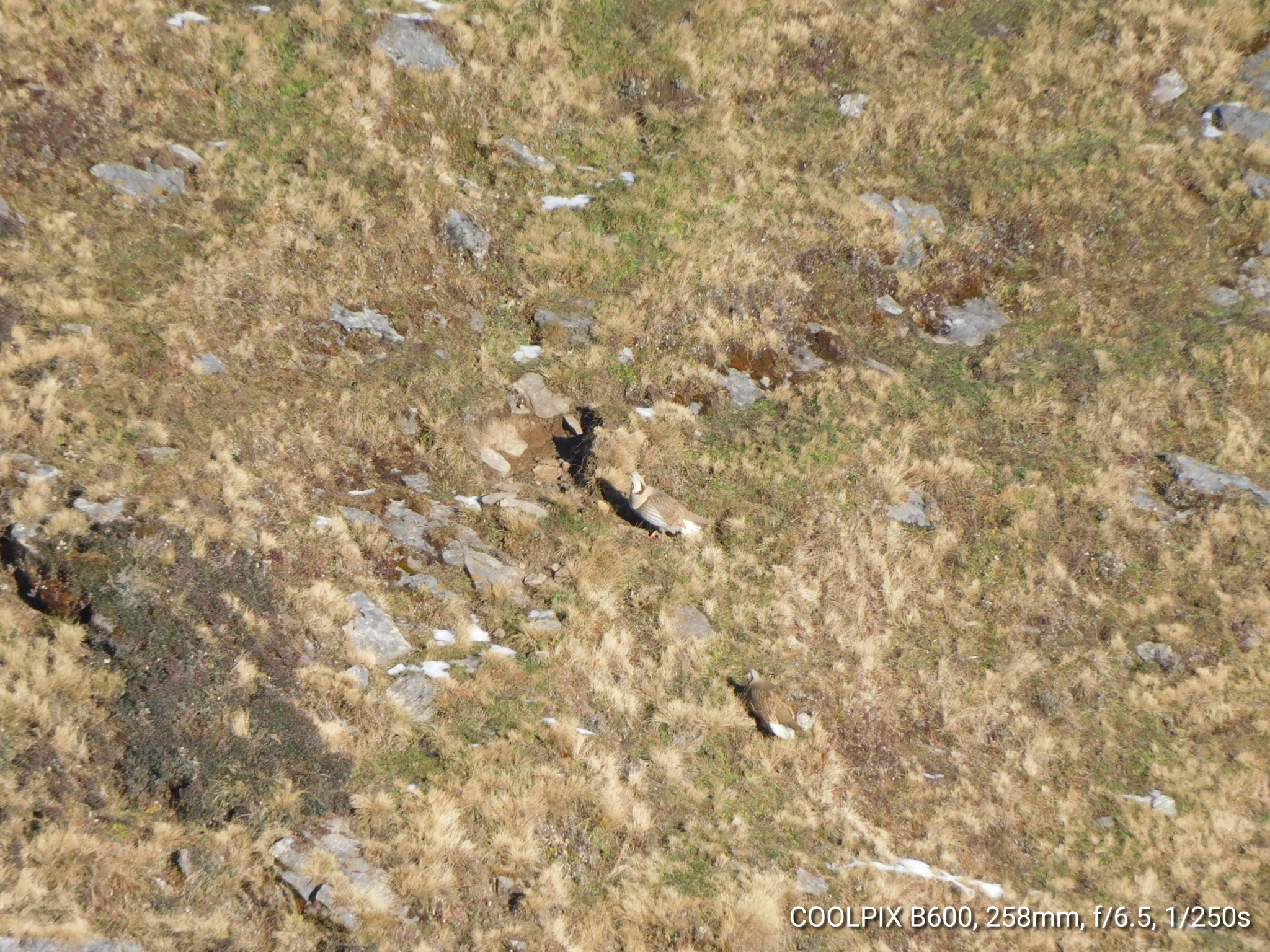
Occurs across the Himalayan ranges and parts of the adjoining Pamir range of Central and South Asia. Frequents alpine pastures and steep ridges above the treeline and near the snowline. In the Himalayas, found at elevations of 4000-5000 m in summer, descending to 2400 m during severe winters. Introduced to the mountains of Nevada in the 1960s, with a wild population now established in the Ruby Mountains, where they forage above the treeline.
Behavior & Ecology
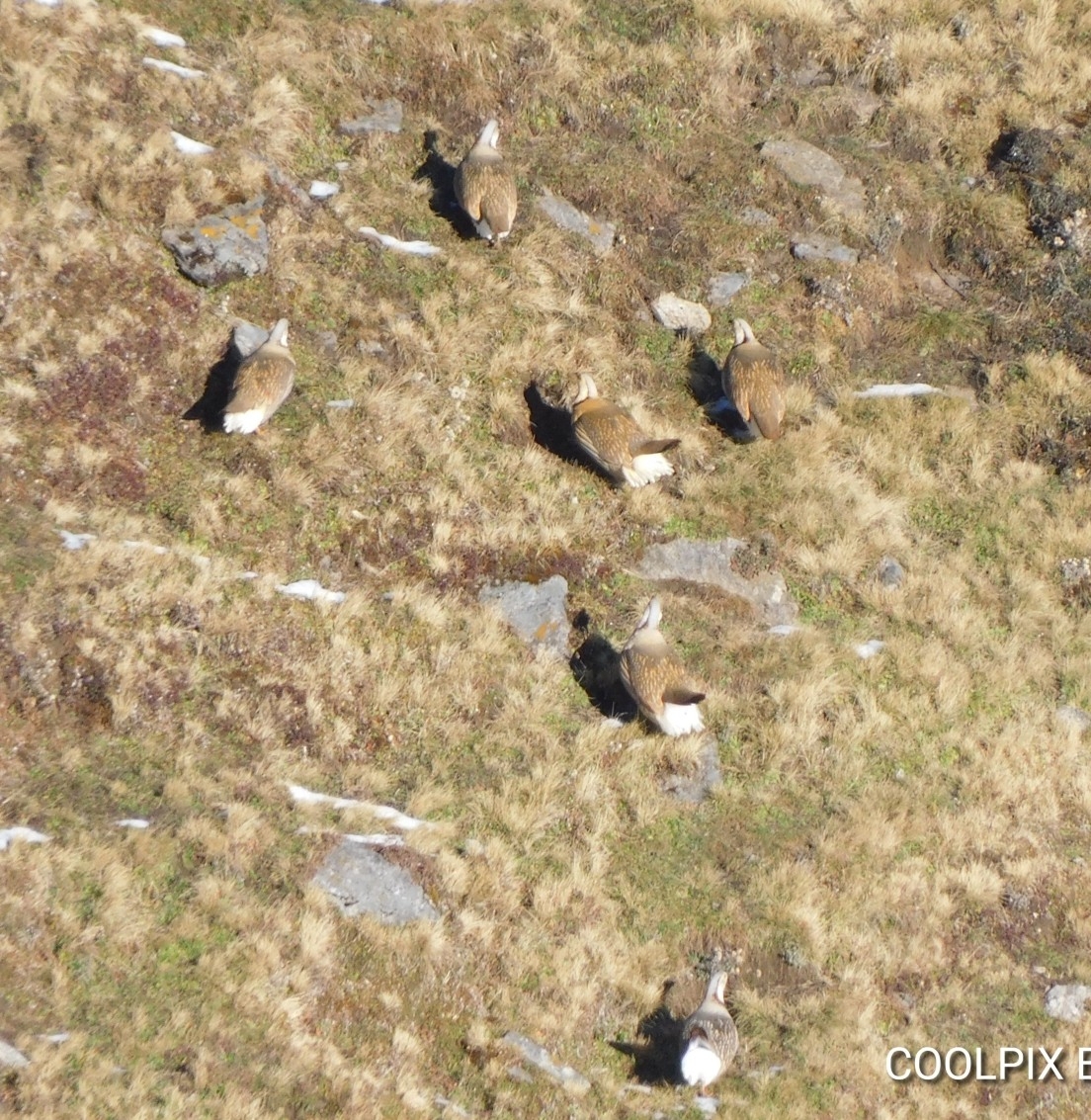
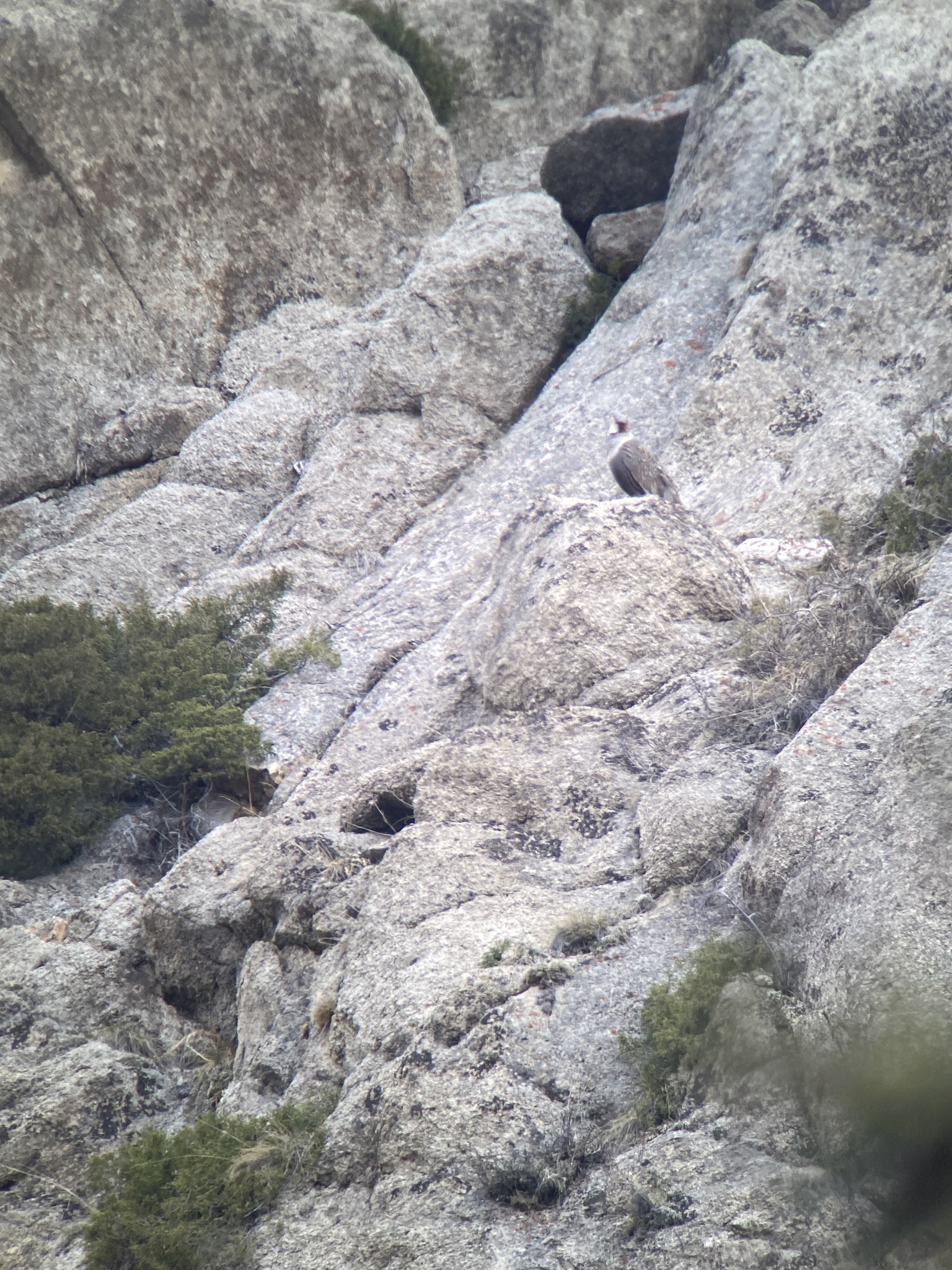
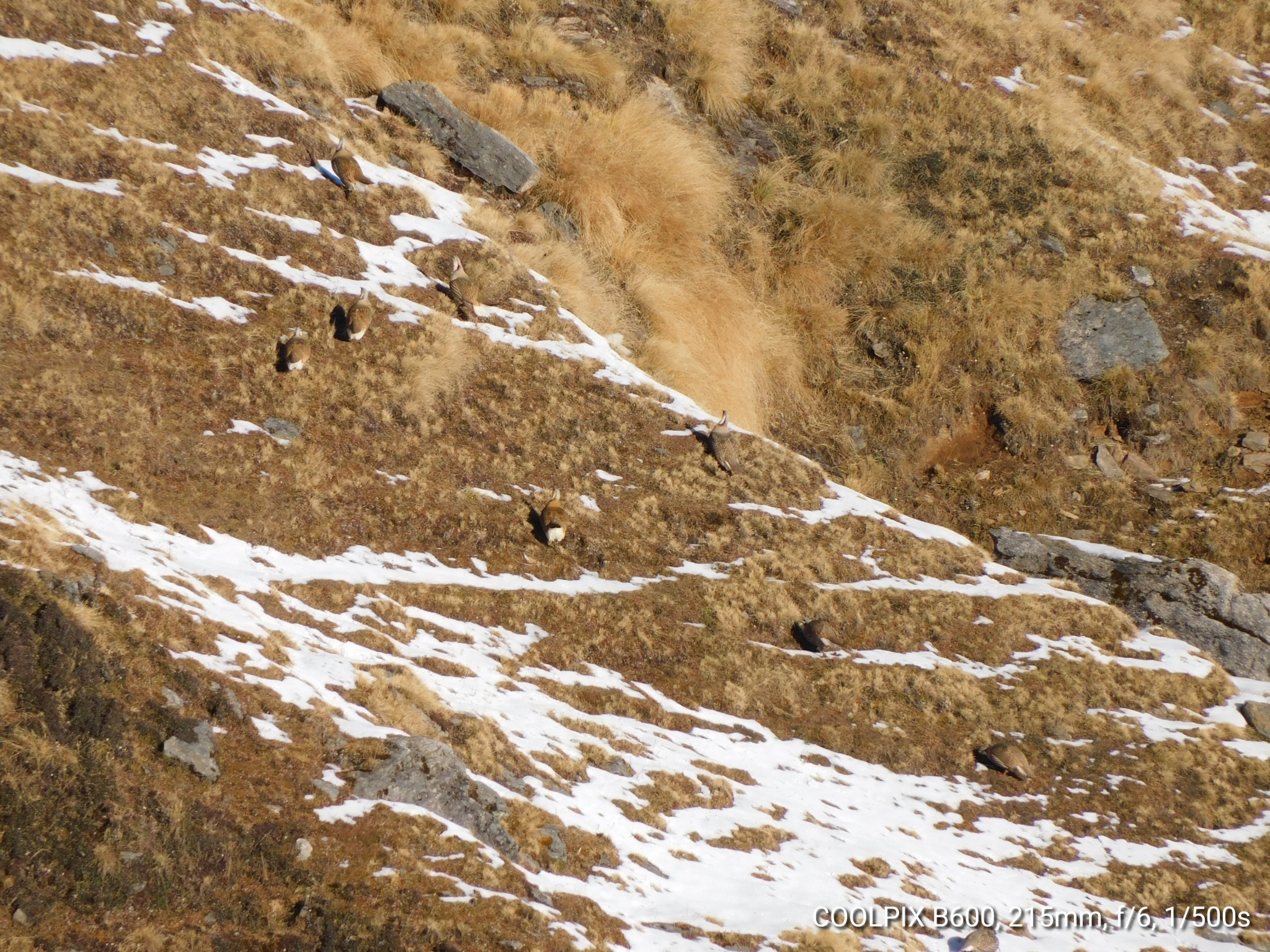
Gregarious outside the breeding season, moving in small groups that may share the same hill. Keeps entirely to open country, preferring rocky hill-sides. Feeds on grass, shoots, berries, seeds, Ephedra berries, Artemisia leaves, and grass heads. Flies downhill to drink water each morning. When disturbed, climbs uphill on foot if approached from below, or dives down valleys on open wings if approached from above. Walks slowly uphill while feeding, cocking the tail to show white undertail coverts. Breeding season is April to June. Song is a loud three-part whistle with ascending tone; also makes a rising, shrill piping call. Nest is a bare ground scrape under a stone or bush near ridge crests, lined with 5-12 stony olive or brown eggs with red or brown spots. Female incubates for 27-28 days. Males are monogamous and guard the nest from elevated rocks. Prone to predation by golden eagles, particularly in open alpine pastures.
Conservation
IUCN Red List status: Least Concern. The species has a large distribution range with no visible population declines. Introduced successfully to Nevada in the 1960s, with a wild population of 200-500 birds now established in the Ruby Mountains. Over 2,000 birds were released over a 15-year period (1965-1979) as part of the introduction program.
Culture
In spring, the species' call is described as a familiar part of the landscape in its range. The bird was considered a good game bird for introduction to Nevada based on the similarity of Himalayan landscapes to the Nevada region.
Source: Wikipedia · CC BY-SA 3.0
Taxonomy
- Order
- Galliformes
- Family
- Phasianidae
- Genus
- Tetraogallus
- eBird Code
- himsno
Subspecies (6)
-
Tetraogallus himalayensis grombczewskii
mountains of western China (Kunlun Mountains) to northern Tibet and southern Xinjiang
-
Tetraogallus himalayensis himalayensis
mountains of eastern Afghanistan to northwestern India and Nepal
-
Tetraogallus himalayensis incognitus
mountains of southern Tajikistan and northern Afghanistan
-
Tetraogallus himalayensis koslowi
mountains of western China (Nam Shan and Ching Hai Ku Mountains)
-
Tetraogallus himalayensis sauricus
Tarbagatai and Saur mountains (eastern Kazakhstan and western China)
-
Tetraogallus himalayensis sewerzowi
Tien Shan Mountains to northwestern China (eastern Xinjiang)
Data Sources
Species description from Wikipedia, licensed under CC BY-SA 3.0.
Bird images and sounds sourced from GBIF, contributed by citizen scientists worldwide under Creative Commons licenses.
Taxonomy data from AviList 2025.