
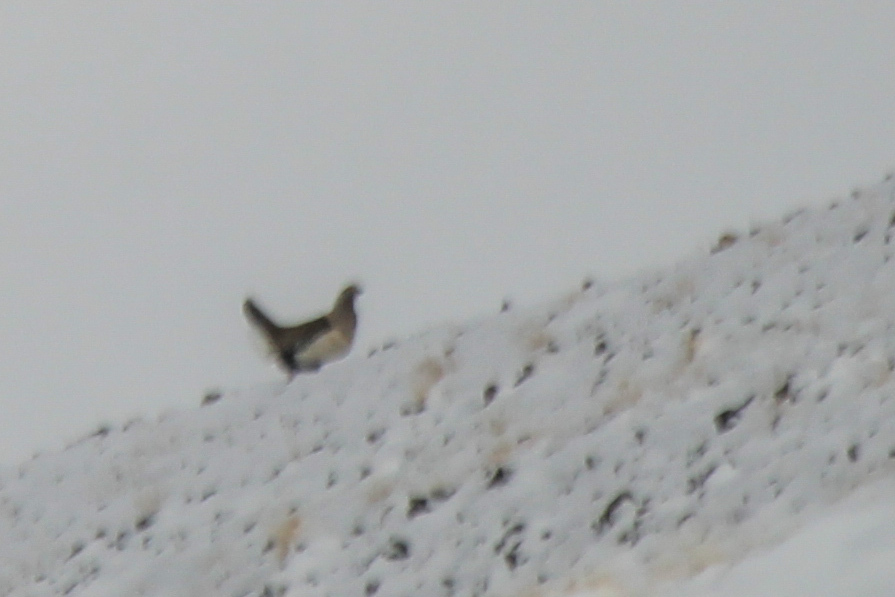

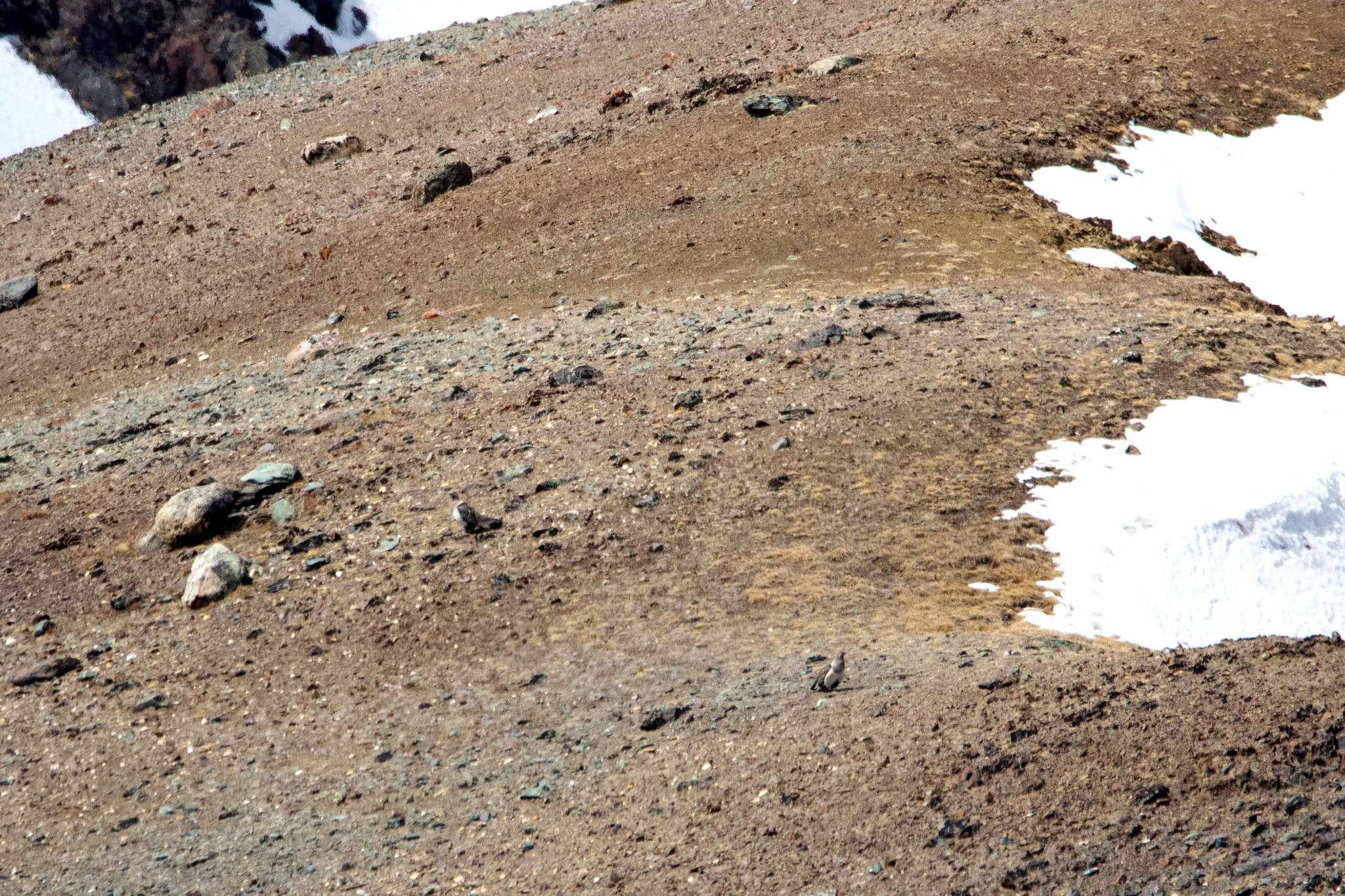

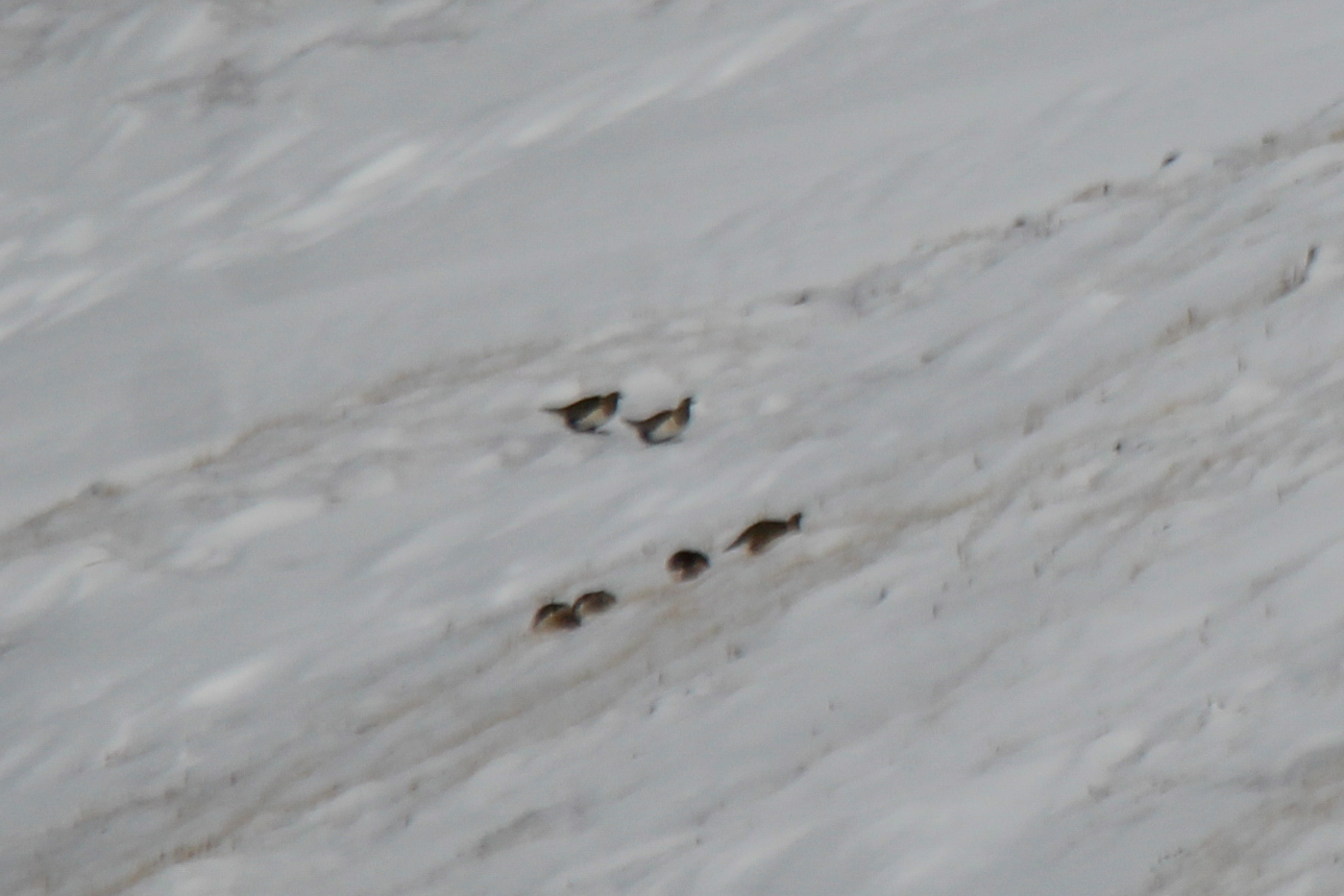
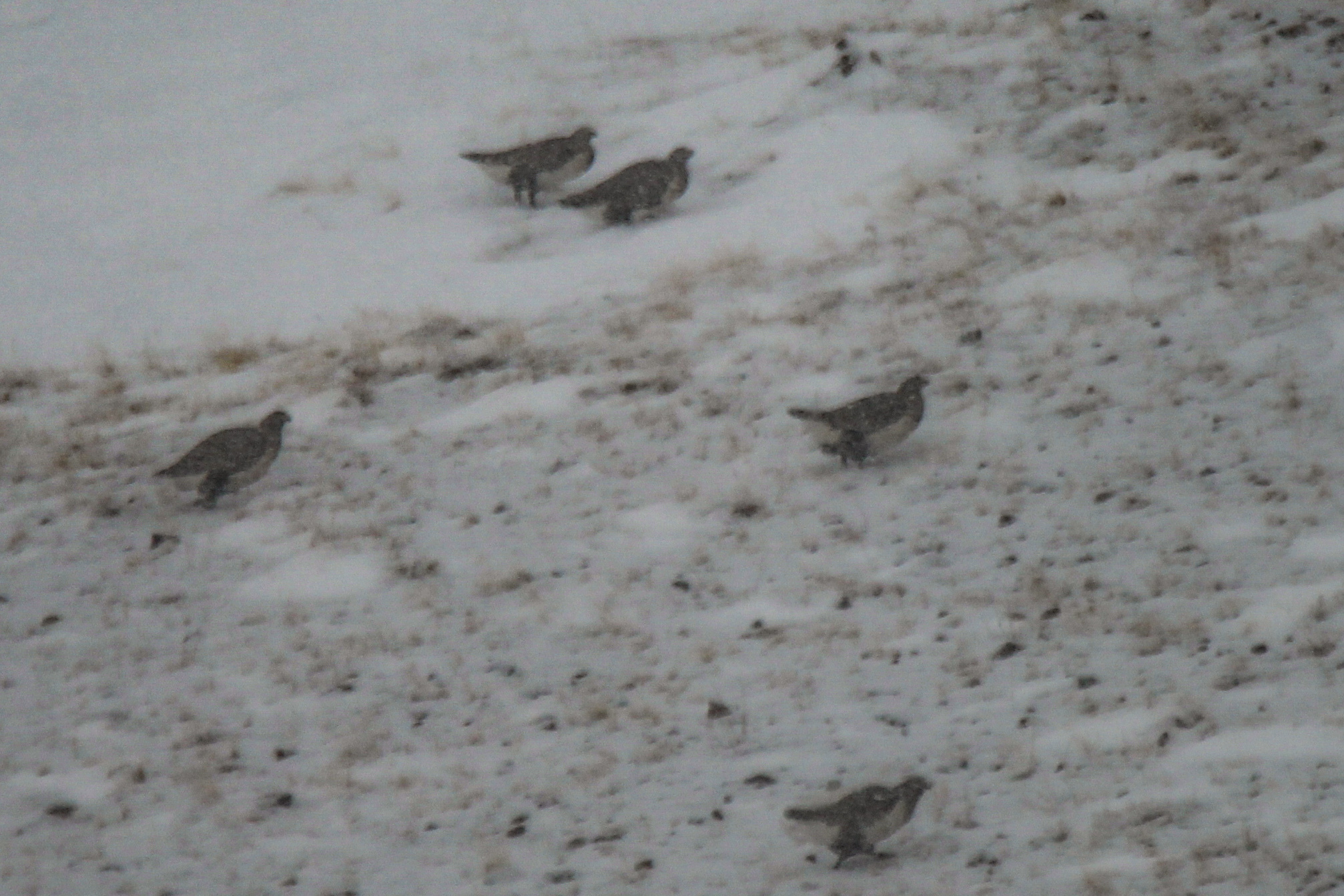

Altai Snowcock
Tetraogallus altaicus
阿尔泰雪鸡
Introduction
A large game bird in the family Phasianidae. Inhabits the mountain ranges of western Mongolia and adjacent regions of China, Kazakhstan, and southwestern Siberia in Russia. Occupies open alpine terrain above the tree line at elevations between 2,000 and 3,600 meters. Plump, partridge-like bird with cryptic grey and white plumage adapted to rocky mountainous terrain. Classified as Least Concern by the IUCN despite population declines from hunting pressure, with an estimated range of 819,000 square kilometers and over 10,000 mature individuals.
Description
The largest snowcock species, measuring 57-61 cm in length with females averaging 2.54 kg and males approximately 3 kg. The head and neck are slatey-grey with a partial dark collar at the base. Upperparts are grey marked with white spots, while the tail is black. The chin, breast, and belly are white, and the throat features a grey breastband with black patches. The primary and secondary flight feathers are black; primaries display white bases visible as a white flash during flight. The beak is yellowish brown and the legs and feet are reddish brown.
Distribution & Habitat
Native to mountain ranges of western Mongolia and southwestern Siberia in Russia. In Russia, occurs in mountainous regions near Abakan, the Sayan Mountains, and the Tannu-Ola Mountains. In Mongolia, found in the Mongolian Altai, Govi-Altai, Khangai Mountains, and mountains east of Lake Khuvsgul. Inhabits open alpine terrain above the tree line at elevations typically ranging from 2,000 to 3,600 meters (6,600 to 11,800 feet).
Behavior & Ecology
Feeds on buds, shoots, roots, berries, and insects, with approximately forty different plant species recorded in the diet. Occasionally consumes small rodents. Forages on the ground in alpine terrain. Two subspecies are recognized: Tetraogallus altaicus altaicus and Tetraogallus altaicus orientalis.
Conservation
Listed as Least Concern on the IUCN Red List of Threatened Species. Populations are believed to be decreasing due to over-hunting and habitat degradation. The species has a wide distribution covering approximately 819,000 square kilometers (316,000 square miles) with an estimated population of over 10,000 mature individuals, not declining at a rate that would warrant a more threatened category.
Culture
The species was first described in 1836 by Frederic Gebler, a doctor and naturalist who lived in the Altai region for forty years and named many previously unknown species.
Source: Wikipedia · CC BY-SA 3.0
Taxonomy
- Order
- Galliformes
- Family
- Phasianidae
- Genus
- Tetraogallus
- eBird Code
- altsno1
Distribution
open alpine habitats to snowline of far northeastern Kazakhstan, southwestern Siberia, northern Xinjiang, and western and central Mongolia
Data Sources
Species description from Wikipedia, licensed under CC BY-SA 3.0.
Bird images and sounds sourced from GBIF, contributed by citizen scientists worldwide under Creative Commons licenses.
Taxonomy data from AviList 2025.