Western Capercaillie
Tetrao urogallus
松鸡
Introduction
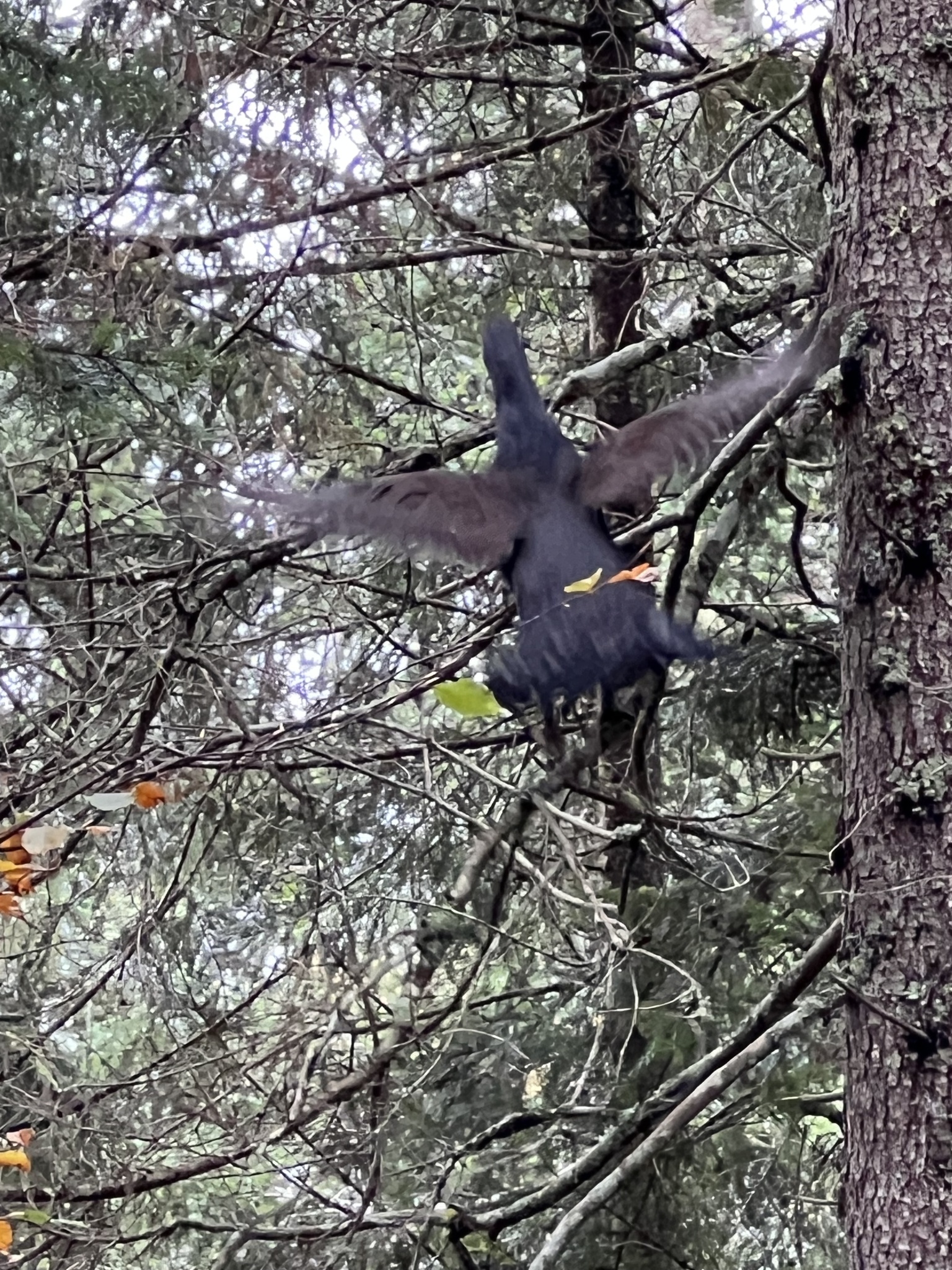
A heavy member of the grouse tribe (Tetraonini), this is the largest of all extant grouse species. Found across Europe and the Palearctic from Norway, Sweden, Finland and Russia south through the Alps to Romania, and east to Siberia. The species inhabits mature conifer forests with diverse species composition and relatively open canopy structure. Most distinctive traits are its extreme sexual dimorphism (males nearly twice the size of females) and elaborate courtship display performed at lekking grounds. The global population is listed as 'least concern' by IUCN, though central European populations are declining and fragmented or possibly extirpated.
Description
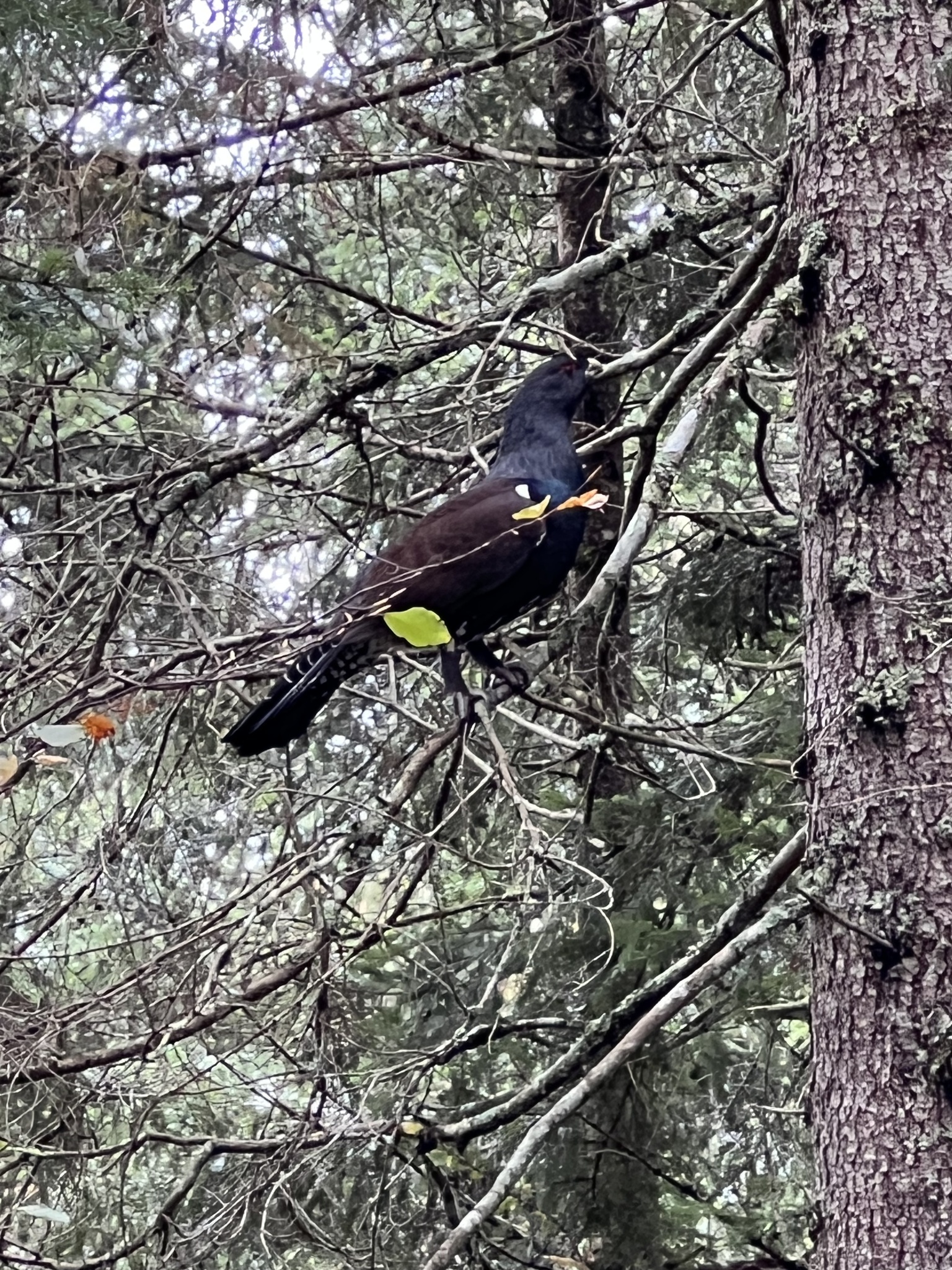
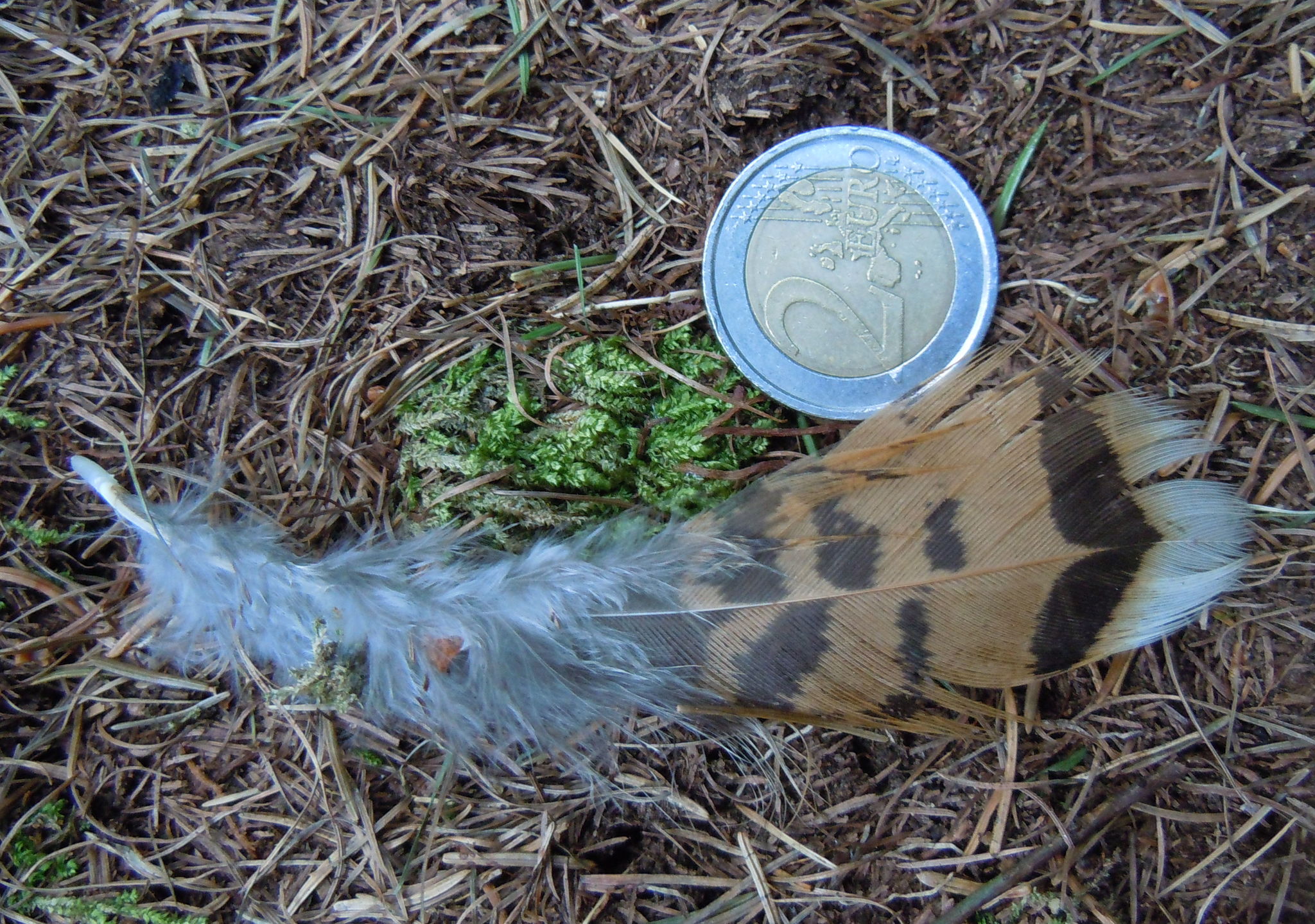
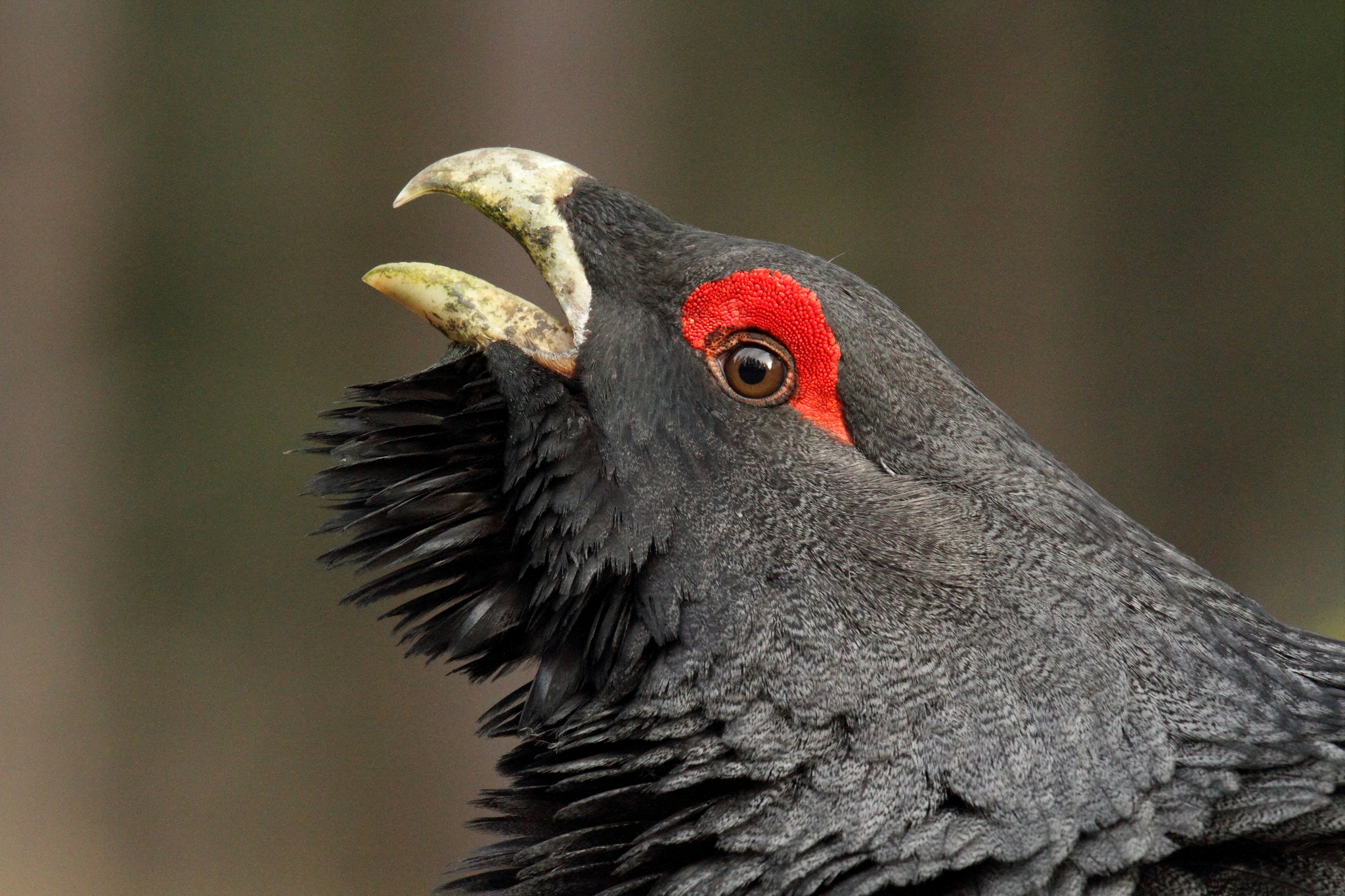
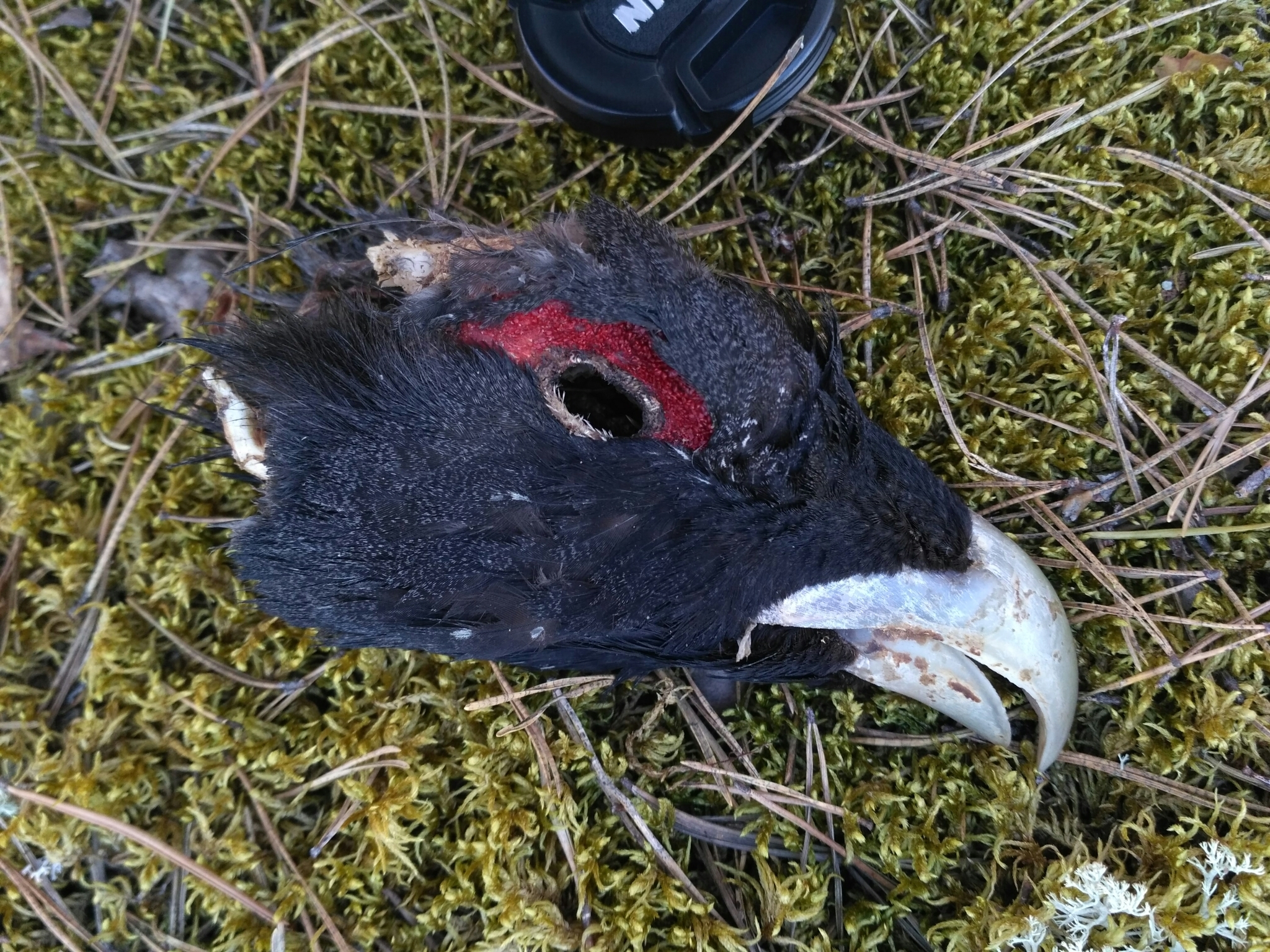
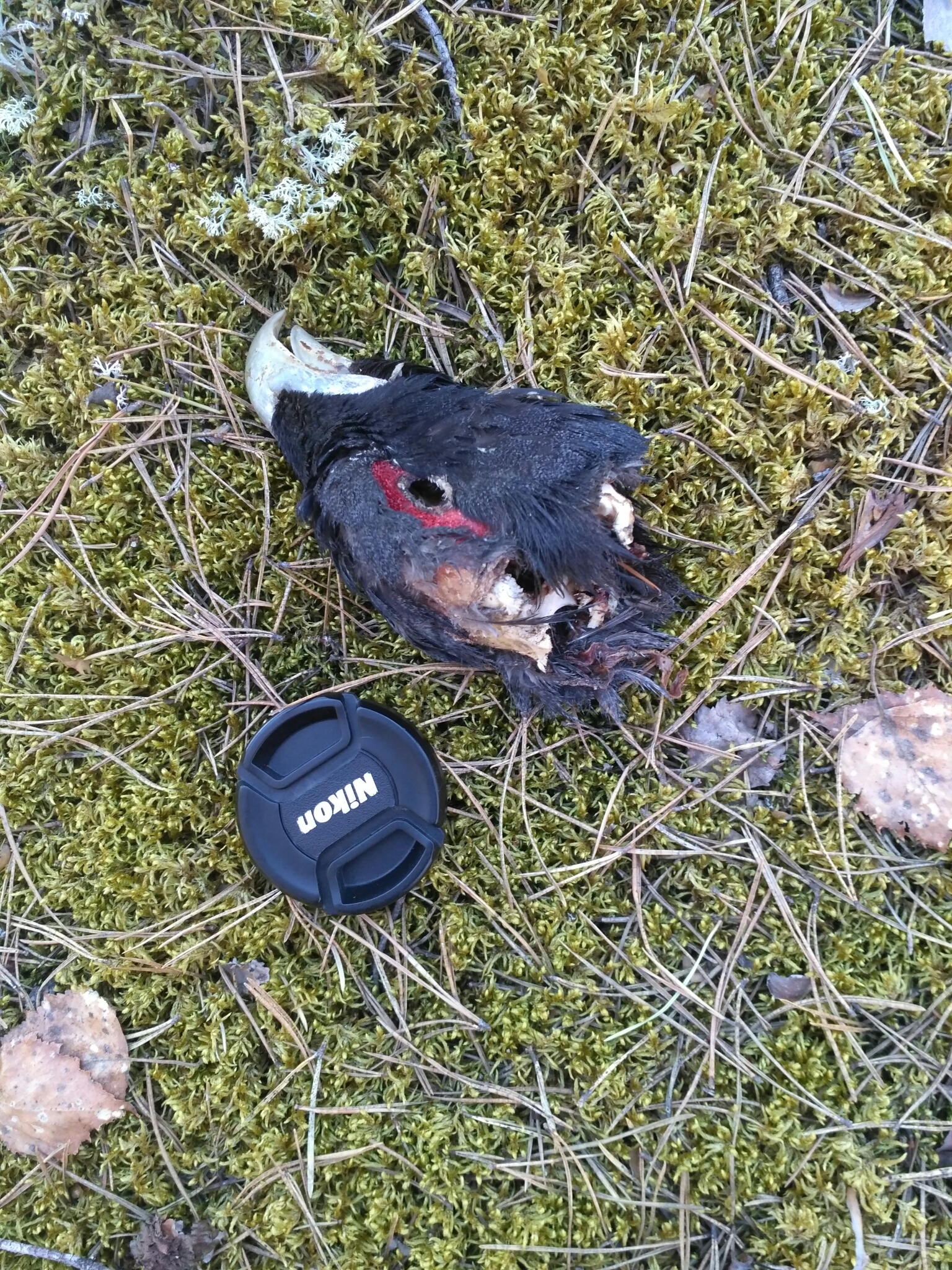
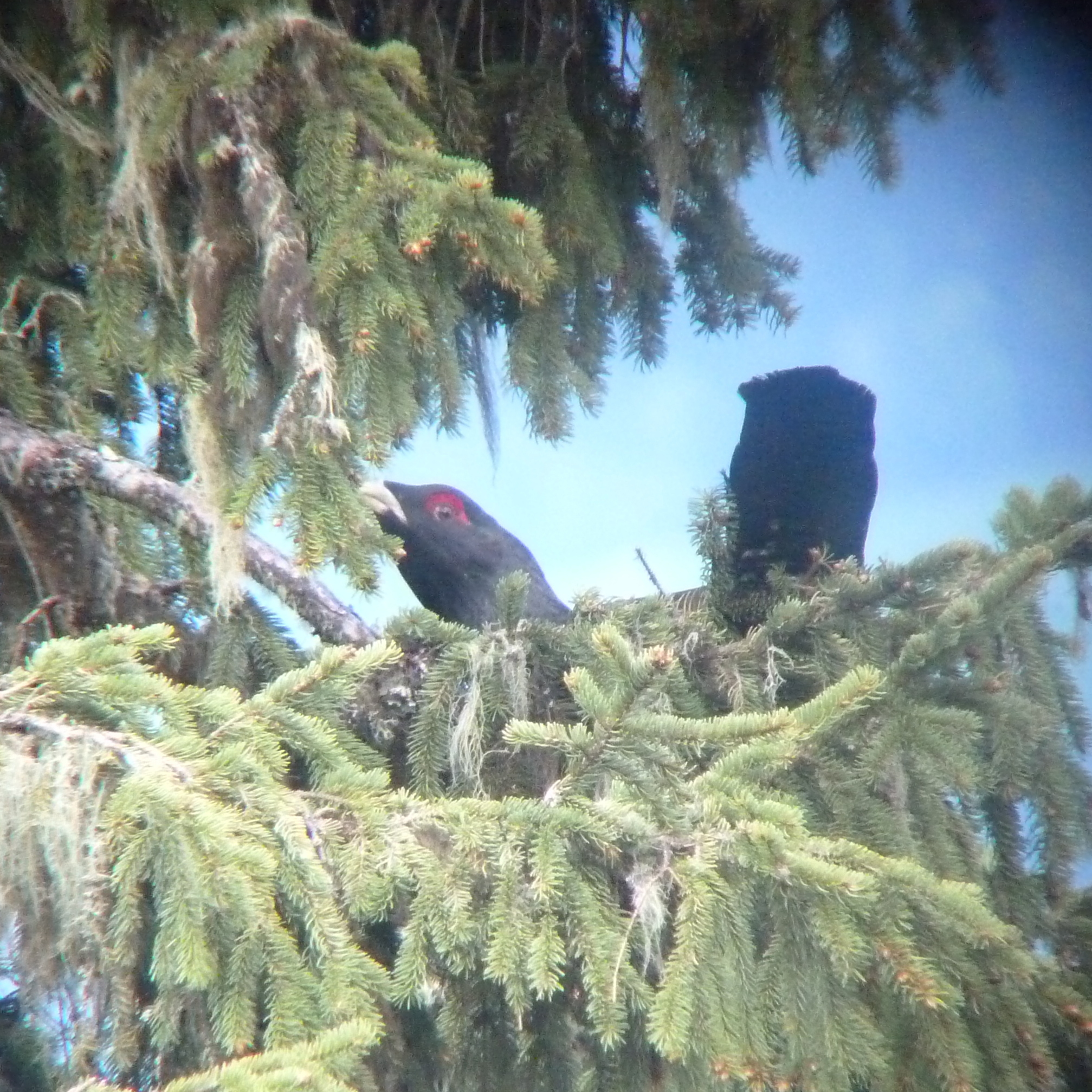
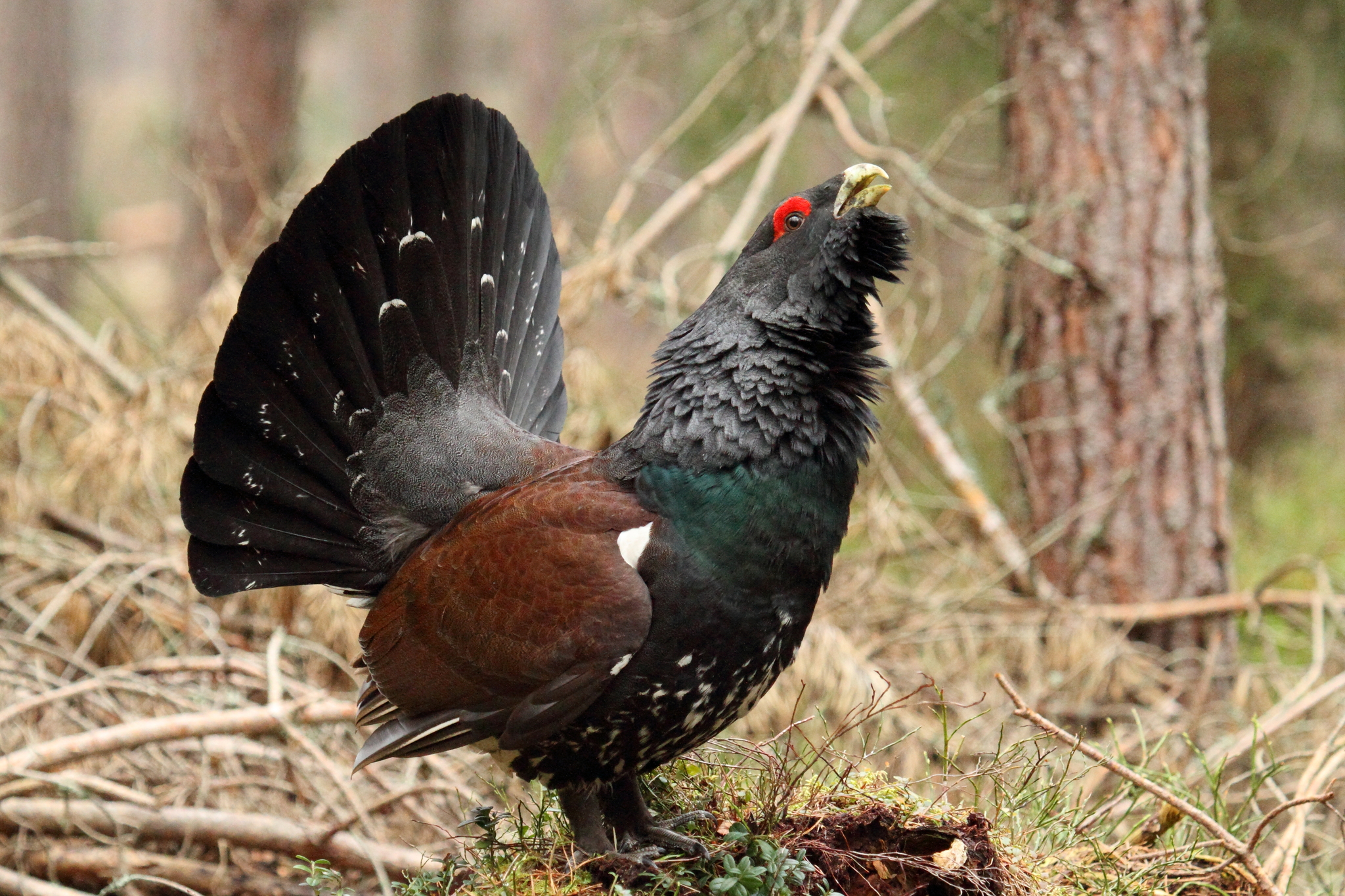
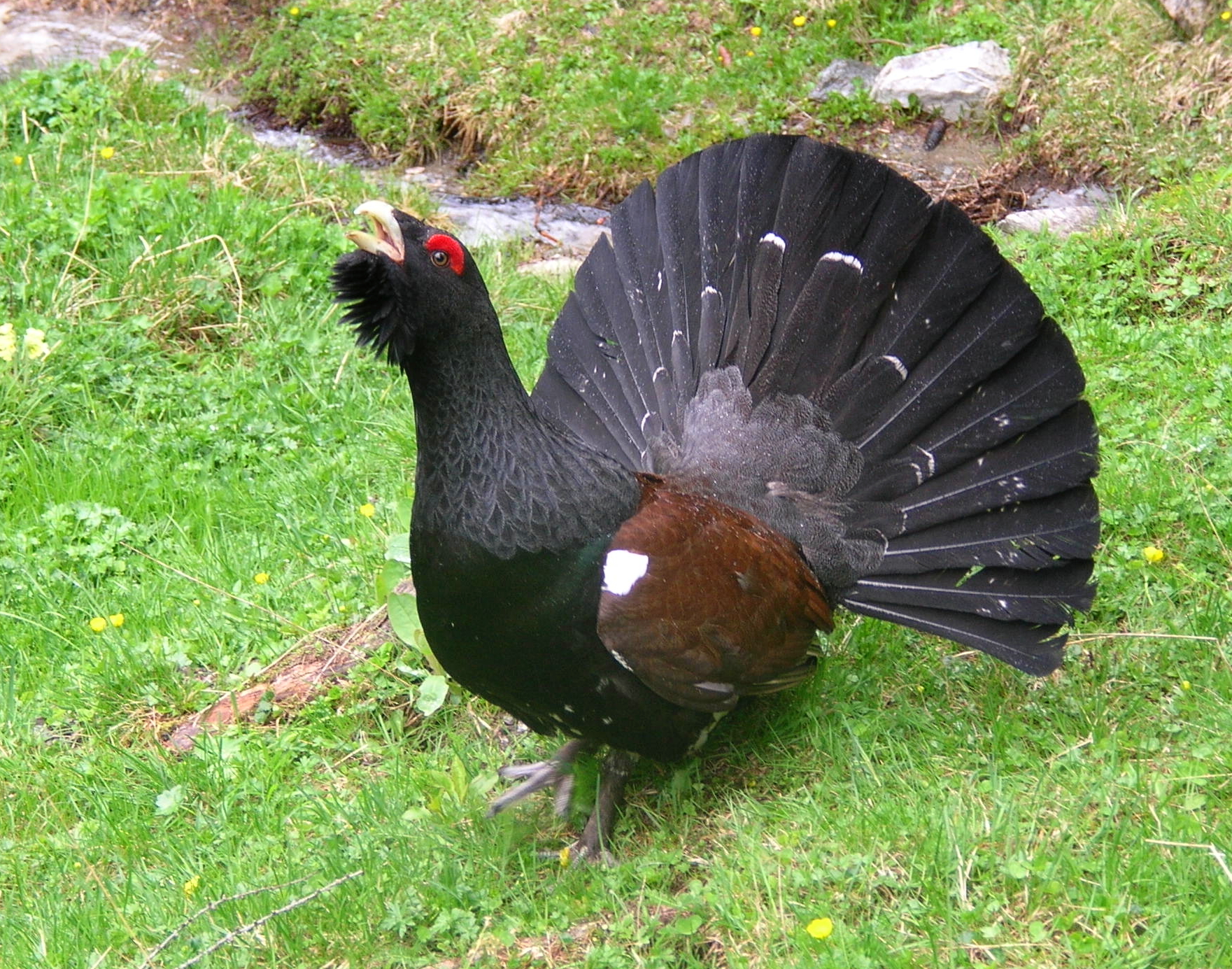
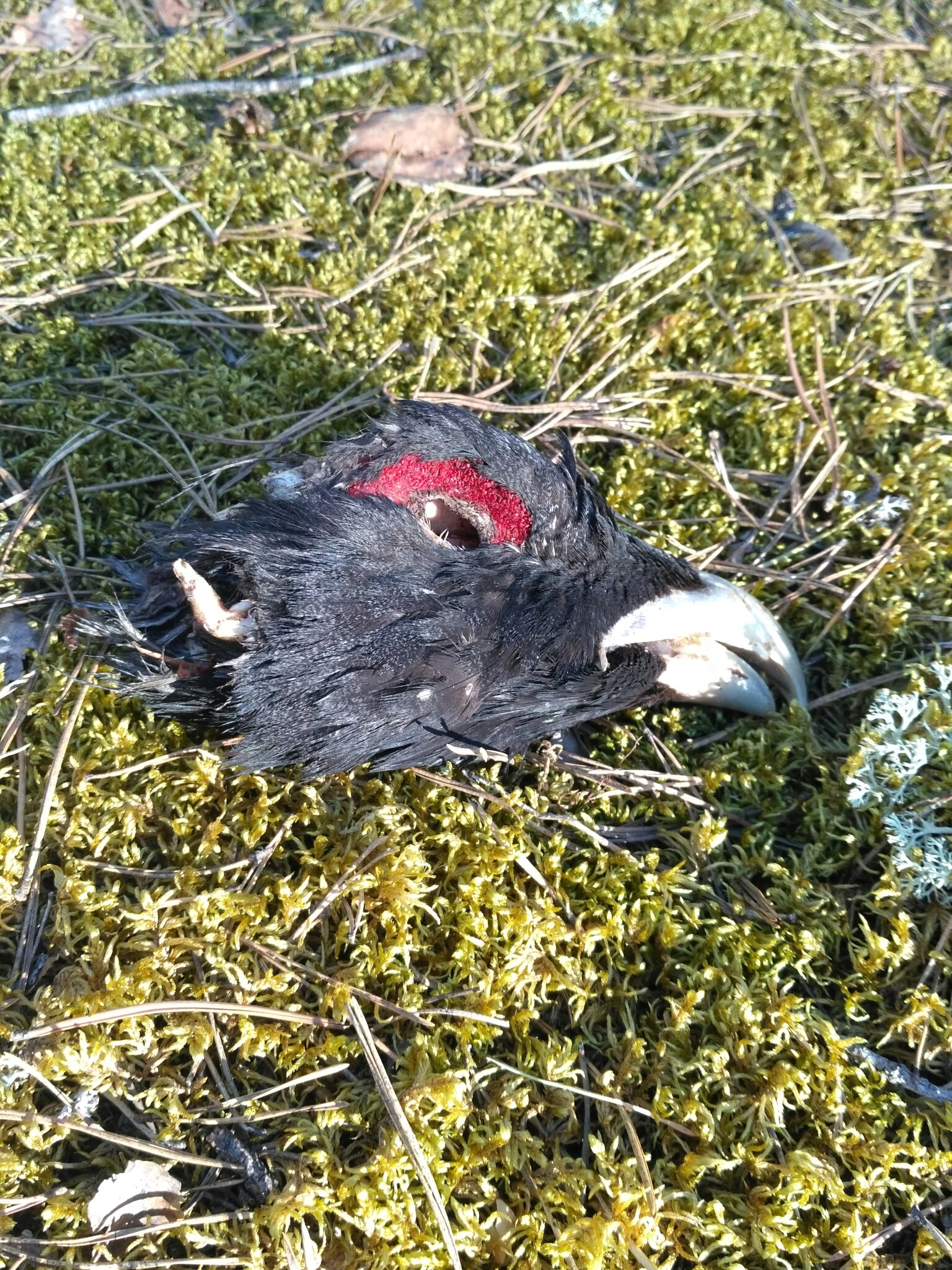
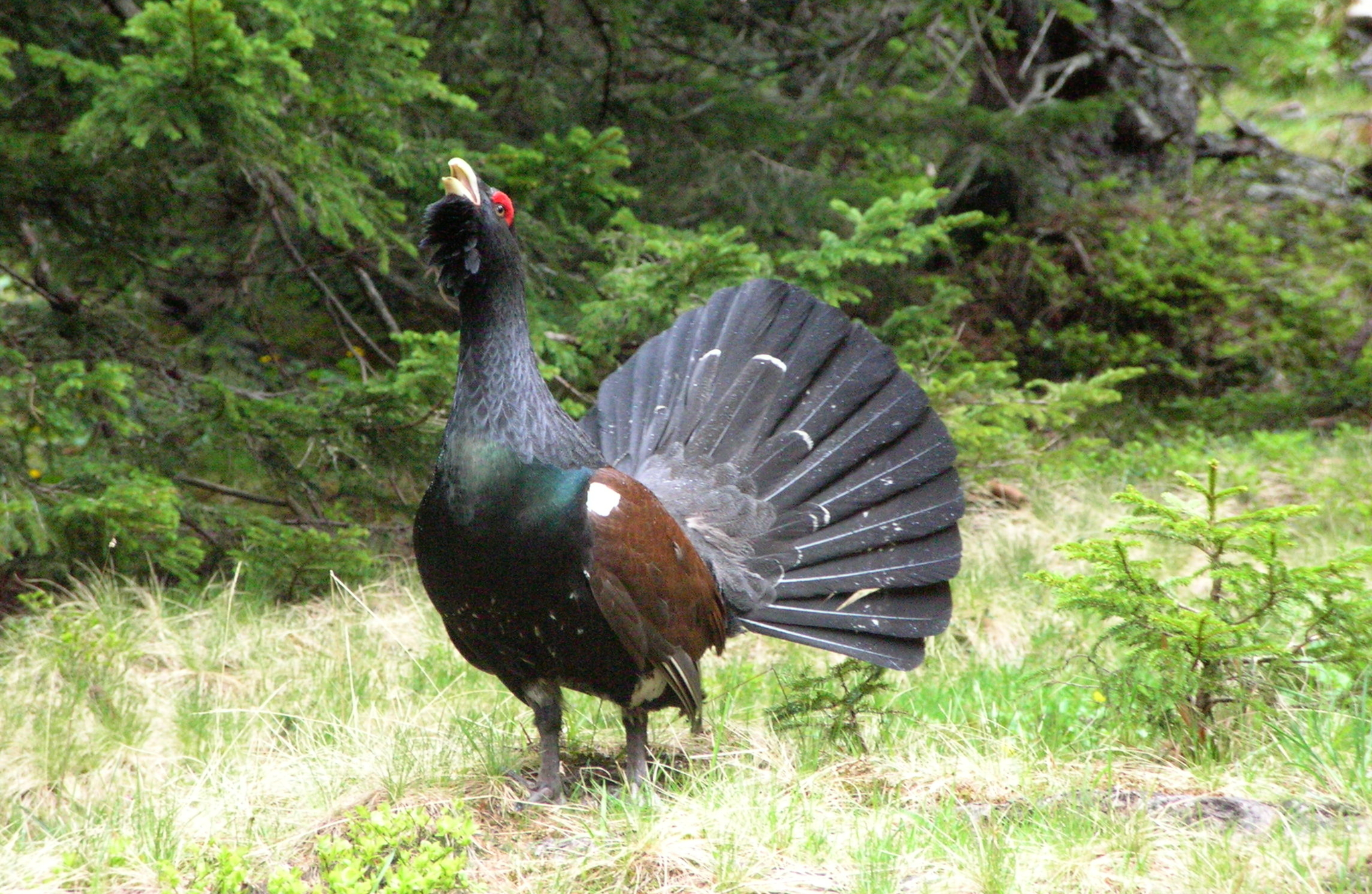
A very large, heavy grouse with extreme sexual dimorphism. Males range from 74 to 85 cm in length with wingspan of 90 to 125 cm and average weight of 4.1 kg; the largest wild specimens reach 100 cm and 6.7 kg. Body feathers are dark grey to dark brown with dark metallic green breast feathers; belly and undertail coverts vary from black to white depending on subspecies. Females measure 54 to 64 cm with 70 cm wingspan and weigh 1.5 to 2.5 kg (average 1.8 kg). Female plumage is brown with black and silver barring on upper parts and buffish yellow underparts. Both sexes have a white wing bow spot, feathered legs for cold protection, and bright red bare skin patches ('roses') above each eye. Eggs resemble chicken eggs but are more speckled with brown.
Identification
Males are unmistakable: extremely large, dark grey-brown body with conspicuous dark metallic green breast, white wing spot, and bright red skin patches above eyes. Females are much smaller with brown barred plumage above and buffish-yellow underparts, also showing the white wing bow spot. Size difference between sexes is extreme; footprints clearly distinguish males from females. Western capercaillies differ from the closely related black-billed capercaillie (T. urogalloides) by having a white rather than black underbelly and different tail pattern. Males show increasing white underparts from west to east across their range.
Distribution & Habitat
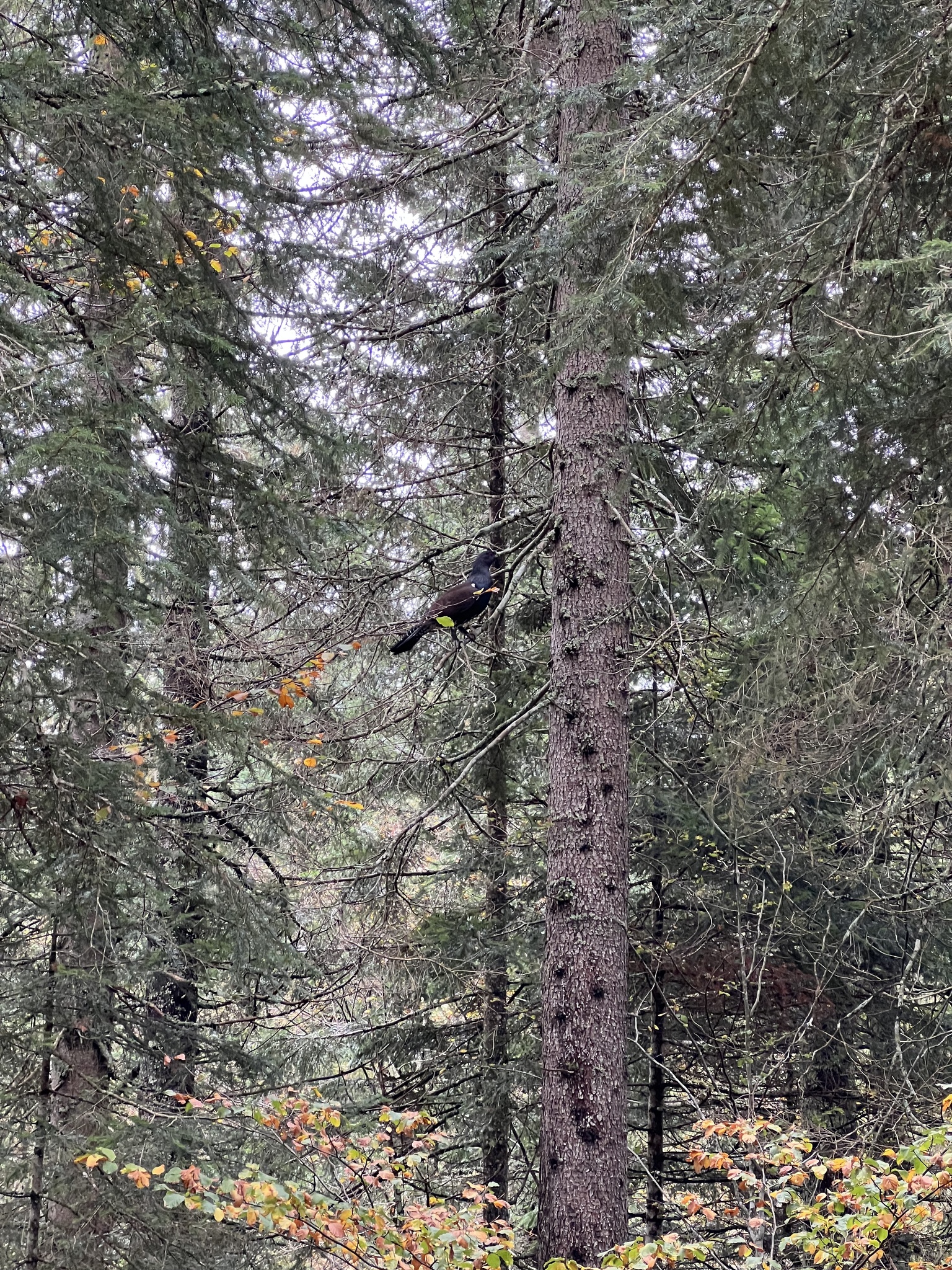
Non-migratory, sedentary species found across northern Europe and the Palearctic. Current strong populations exist in Norway, Sweden, Finland, Russia and Romania, particularly in boreal taiga forests. Present in the Alps (Switzerland, Austria, Italy) and Pyrenees (France/Spain). Scottish population became extinct between 1770-1785 and was reintroduced from Sweden. In Germany, now absent from Bavaria, Black Forest and Harz mountains despite captive breeding efforts. Largest French population is in the Pyrenees; smaller populations in Jura and Vosges mountains. Inhabits mature conifer forests with open canopy and dense ground vegetation of Vaccinium species.
Behavior & Ecology
Primarily ground-dwelling but roosts in trees with horizontal branches; feeds mainly on Vaccinium species (especially bilberry), conifer needles in winter, and insects for chicks. Produces distinctive whistling sounds in flight due to wing structure. Spring territories average 25 hectares per bird; male territories 50-60 hectares, female territories about 40 hectares. Breeding season runs March to June with elaborate courtship displays at lekking sites. Males perform tree displays with fanned tails and a clicking/popping song, followed by ground displays. Average clutch size is 8 eggs (up to 12), incubation 26-28 days. Hens and chicks are vulnerable to predation; adults have mammalian and avian predators including golden eagles, Eurasian lynx, and red foxes.
Conservation
IUCN Red List assessment: Least Concern globally with estimated range of 1,000,000-10,000,000 km² and European population of 1.5-2 million individuals. Overall decline does not yet exceed 30% threshold, but central European populations are severely fragmented. Scottish population crashed from 10,000 pairs in the 1960s to fewer than 1,000 birds by 1999; declared 'extremely vulnerable' with 1,114 birds remaining. Major threats include habitat degradation from single-species timber plantations, collisions with deer fences, predation by foxes and crows (increased due to loss of large predators), ski-lift cables, and human recreation. Hunting is now restricted in Scotland and Germany for over 30 years.
Culture
Common name derives from Scottish Gaelic 'capall coille' meaning 'Horse of the woodland'. Known also as wood grouse, heather cock, and cock-of-the-woods. Featured in the coat of arms of Central Finland region as a regional bird symbol. Described by Scottish biodiversity officials as 'magnificent' and 'iconic' for Scotland. Has been traditionally hunted as gamebird throughout central and northern Europe, with trophy-hunting now a tourist resource in some areas. The species holds cultural significance in Celtic and Germanic regions where it inhabited ancient forests.
Source: Wikipedia · CC BY-SA 3.0
Taxonomy
- Order
- Galliformes
- Family
- Phasianidae
- Genus
- Tetrao
- eBird Code
- wescap1
Vocalizations
Subspecies (8)
-
Tetrao urogallus aquitanicus
Pyrenees
-
Tetrao urogallus cantabricus
Cantabrian Mountains (northwestern Spain)
-
Tetrao urogallus crassirostris
Germany to southwestern Baltic countries and Balkan Peninsula
-
Tetrao urogallus kureikensis
northeastern Russia to north-central Siberia
-
Tetrao urogallus taczanowskii
central Siberia to Altai Mountains and northwestern Mongolia
-
Tetrao urogallus uralensis
southern Ural Mountains and southwestern Siberia
-
Tetrao urogallus urogallus
Scotland, Scandinavia and adjacent northwestern Russia
-
Tetrao urogallus volgensis
southern and central Belarus to central Russia
Data Sources
Species description from Wikipedia, licensed under CC BY-SA 3.0.
Bird images and sounds sourced from GBIF, contributed by citizen scientists worldwide under Creative Commons licenses.
Taxonomy data from AviList 2025.