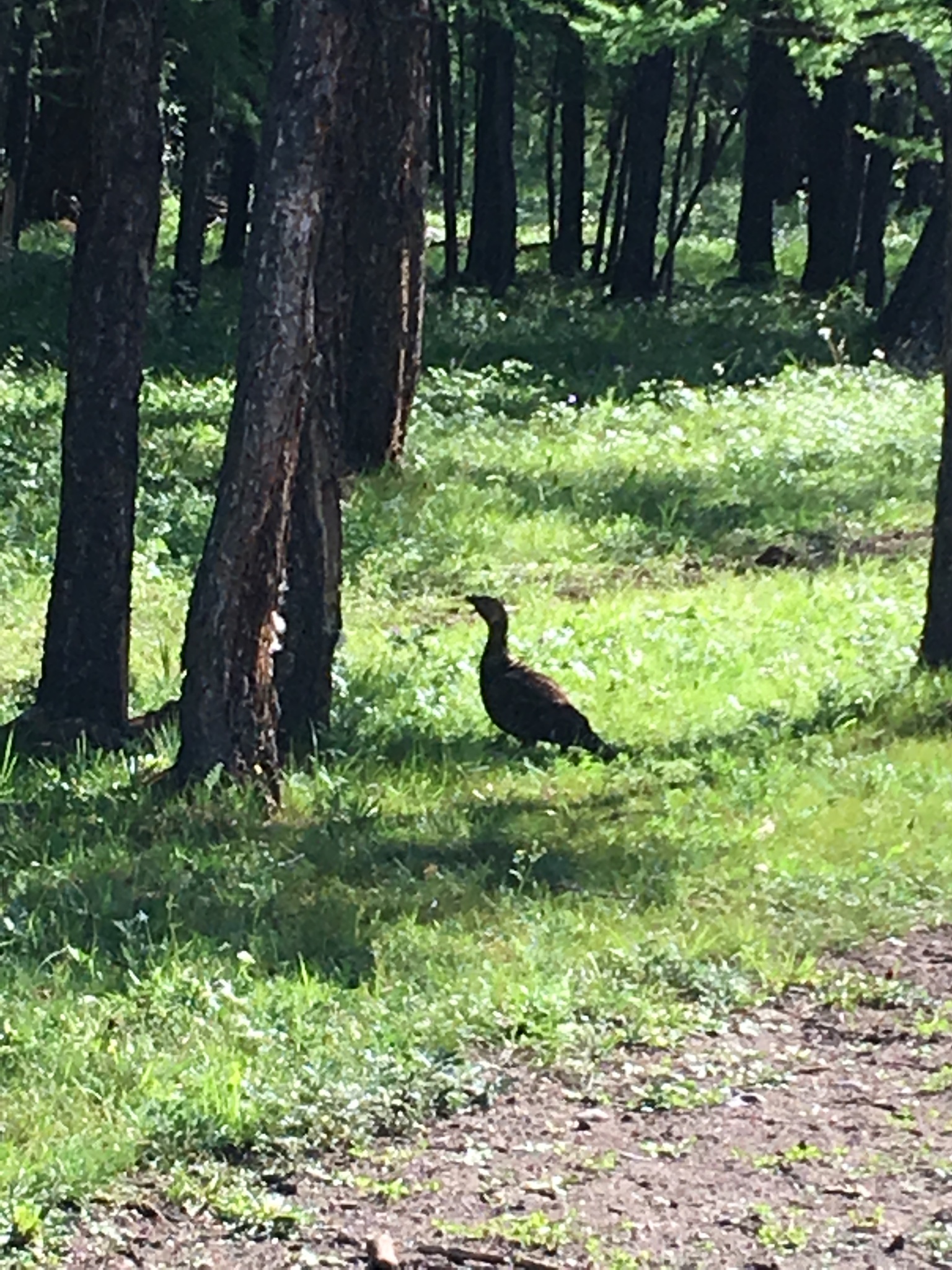
Black-billed Capercaillie
Tetrao urogalloides
黑嘴松鸡
Introduction
A large grouse species (Tetrao urogalloides) closely related to the western capercaillie. Inhabits larch taiga forests across eastern Siberia, northern Mongolia, and China. This sedentary species occupies less dense taiga communities and typically avoids thick coniferous forests. In the far western portion of its range, it hybridizes with the western capercaillie. Globally classified as Least Concern on the IUCN Red List; however, in China the species is endangered and designated as a first-class state protection animal.
Description
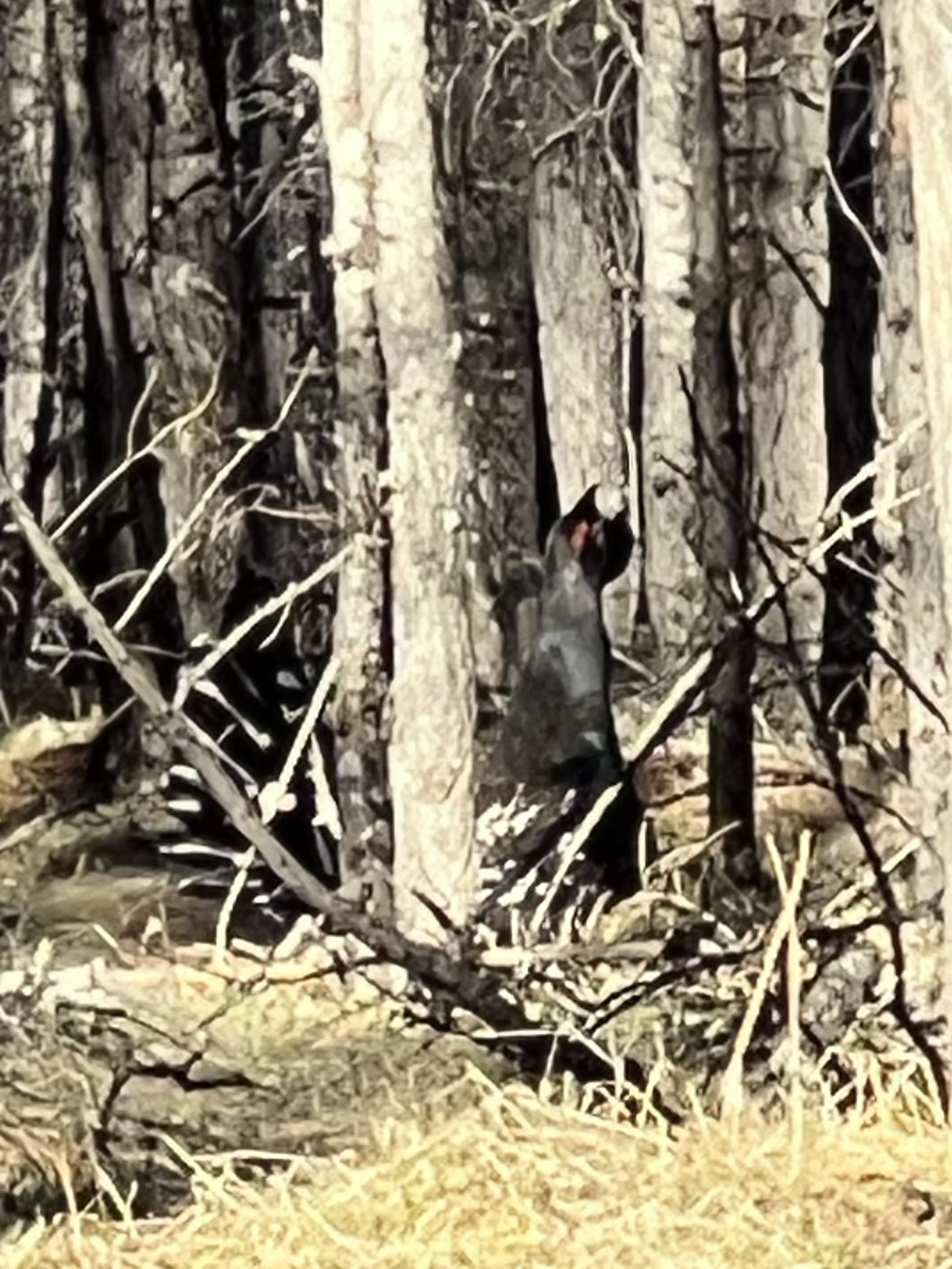
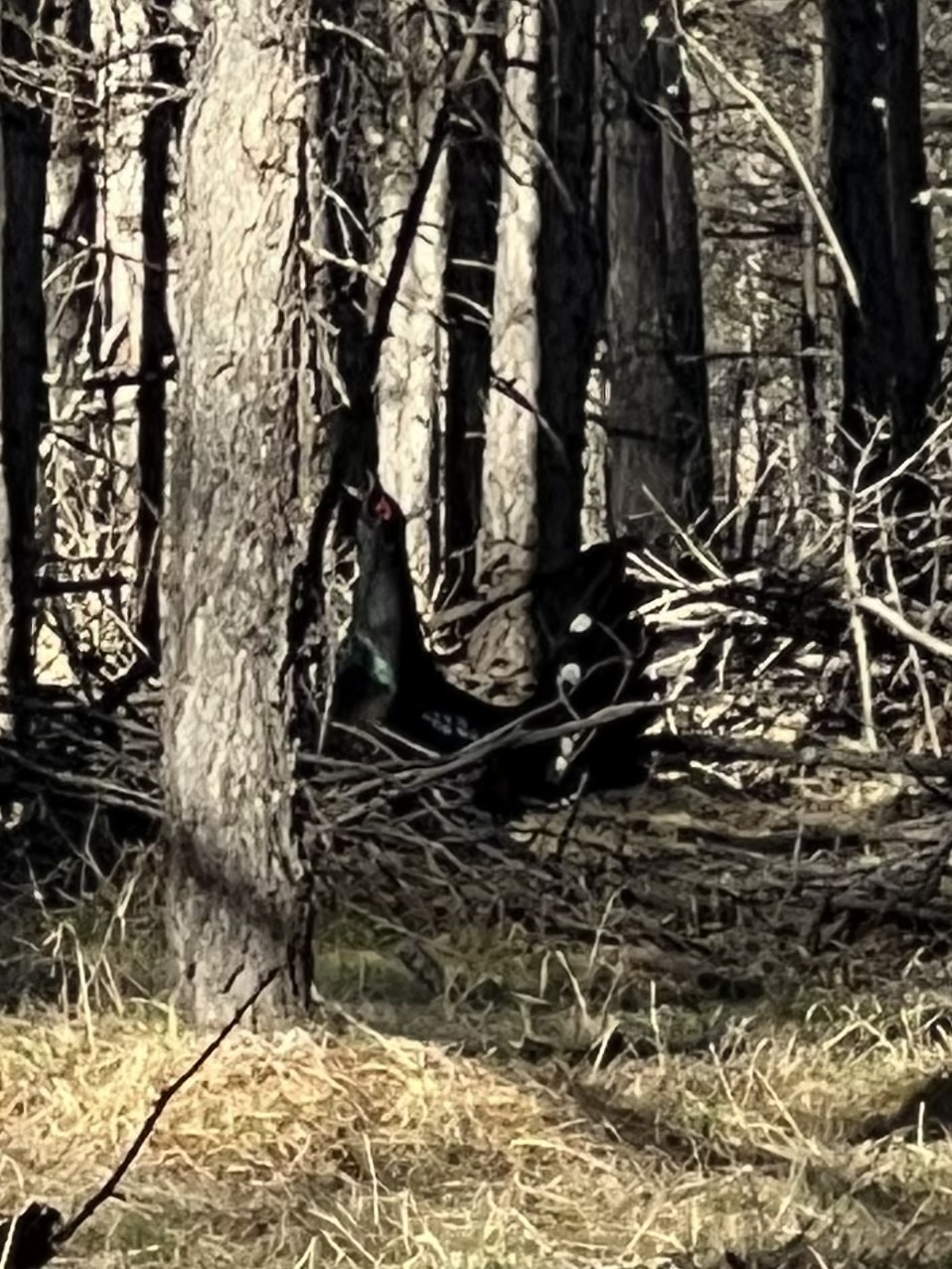
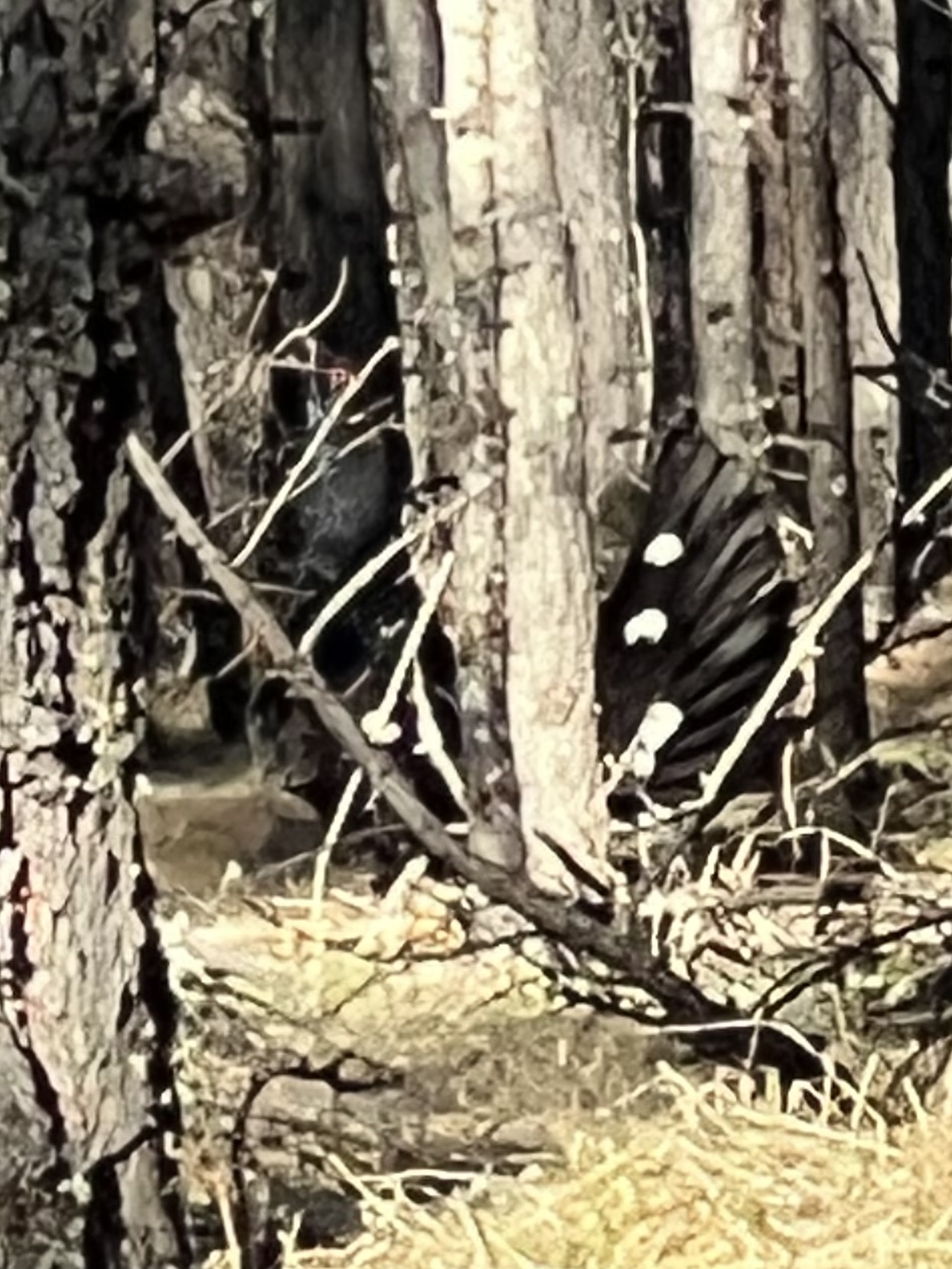
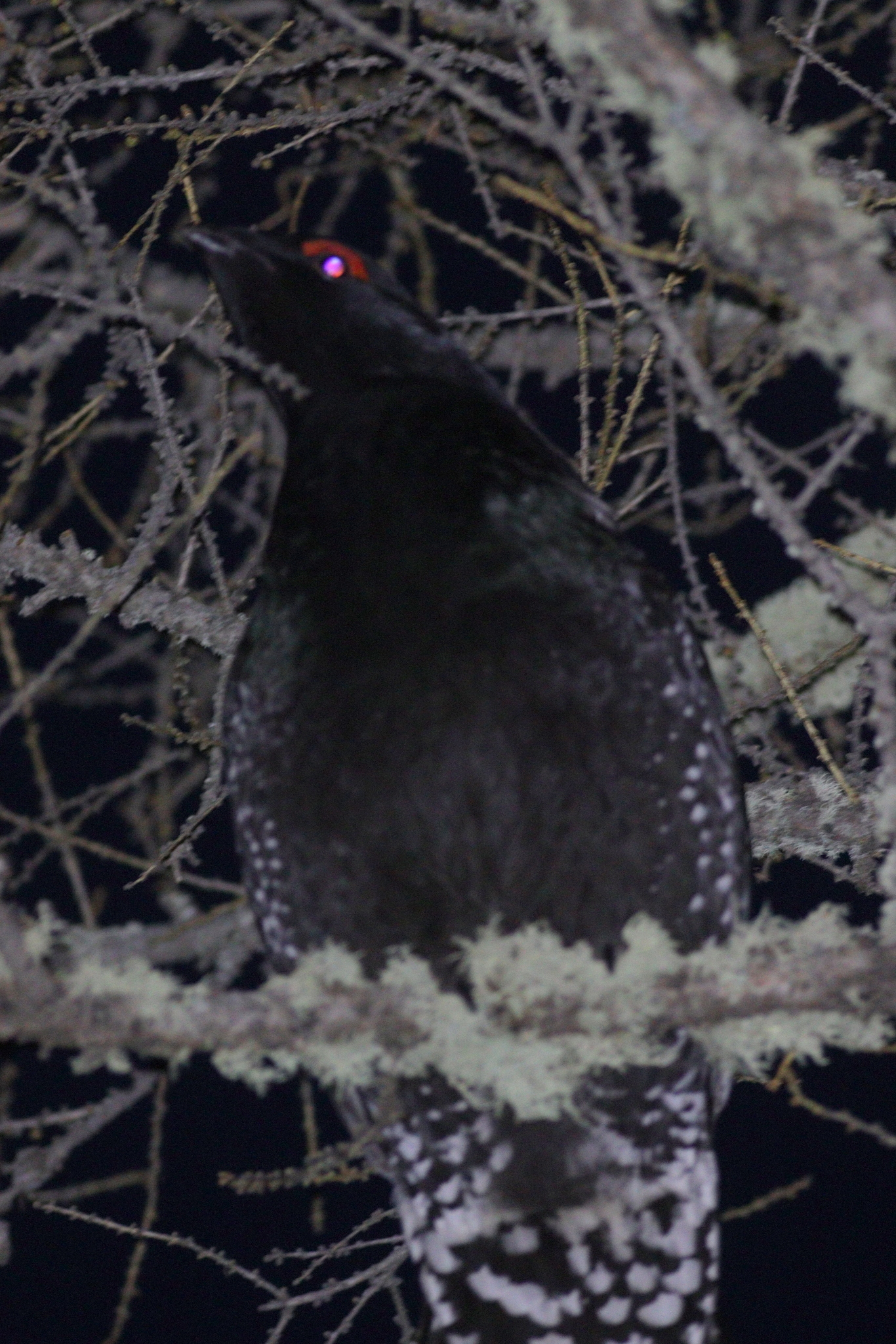
Males measure 89-97 cm in length and weigh 3.4-4.6 kg; females are smaller at 69-75 cm and 1.7-2.2 kg. Wingspan ranges from 75-115 cm. Compared to the western capercaillie, this species is slightly smaller with a slimmer body profile and longer neck. It has a distinctive black beak and a longer, more spatulate tail. The head and neck are glossy bluish-black, extending down to a metallic turquoise breast. White markings appear at the tips of the upper and undertail coverts, wing coverts, and flanks. Females have grayer overall plumage with more heavily scaled underparts, lack the solid rufous chest of western females, and display noticeably larger white spots on wing and tail coverts.
Identification
Distinguished from the western capercaillie by its smaller size, slimmer build, longer neck, and black beak (horn-colored in western). The tail is longer and more spatulate-shaped. Females differ in their grayer coloration, lack of rufous chest patch, more heavily scaled underparts, and larger white spots on the wings and tail compared to western females. The white-spotted plumage pattern gives this species its 'spotted capercaillie' nickname.
Distribution & Habitat
Occurs throughout eastern Siberia, extending into northern Mongolia and China. Inhabits larch taiga forests, which are typically less dense than other taiga communities. This is a sedentary species with no long-distance migration, though females may move to higher altitudes in winter to forage in younger, denser forests.
Behavior & Ecology
In spring, males perform elaborate courtship displays at lekking grounds, fanning tails, puffing chests, and raising heads while vocalizing. Male territories measure approximately 30 x 30 meters. Their loud castanet-like call, consisting of ascending clicking sounds, carries up to 1.5 km. Flutter flights involve jumps of 2 meters height or 8-10 meter distances with thundering wing beats. Primarily herbivorous; winter diet consists of twigs, buds, and shoots from Siberian larch and prickly wild rose. Males create 'dwarf larch' gardens by trimming young trees. Males forage on the ground while females feed in trees. Summer diet includes green shoots, leaves, insects (caterpillars, larvae, ants, midges), and berries.
Conservation
Globally Least Concern due to extensive Siberian range. In China, classified as endangered with first-class state protection. Population in northeastern China has declined 35.25% in range since 1970. Threats include climate change, deforestation, overhunting, and urban/agricultural expansion. China's conservation measures, including the Natural Forest Protection Project and wildlife protection laws, have helped stabilize the decline.
Culture
Known in Russian as the 'stone capercaillie'. Also called the eastern capercaillie or Siberian capercaillie.
Source: Wikipedia · CC BY-SA 3.0
Taxonomy
- Order
- Galliformes
- Family
- Phasianidae
- Genus
- Tetrao
- eBird Code
- blbcap1
Subspecies (2)
-
Tetrao urogalloides kamtschaticus
Kamchatka Peninsula
-
Tetrao urogalloides urogalloides
Lake Baikal region, Sayan Mountains, and northern Mongolia eastward to northern Manchuria, Ussuriland, and Sakhalin Island
Data Sources
Species description from Wikipedia, licensed under CC BY-SA 3.0.
Bird images and sounds sourced from GBIF, contributed by citizen scientists worldwide under Creative Commons licenses.
Taxonomy data from AviList 2025.