Collared Bush Robin
Tarsiger johnstoniae
台湾林鸲
Introduction
A species of bird in the family Muscicapidae. Endemic to Taiwan, where it inhabits montane and subalpine forests at elevations of 2,000–2,800 meters, sometimes occurring above the tree line and descending to lower elevations in winter. It forages for invertebrates by catching insects from perches and feeding on the ground and in low vegetation. The species has been assessed as least concern by the IUCN, with a suspected stable population.
Description
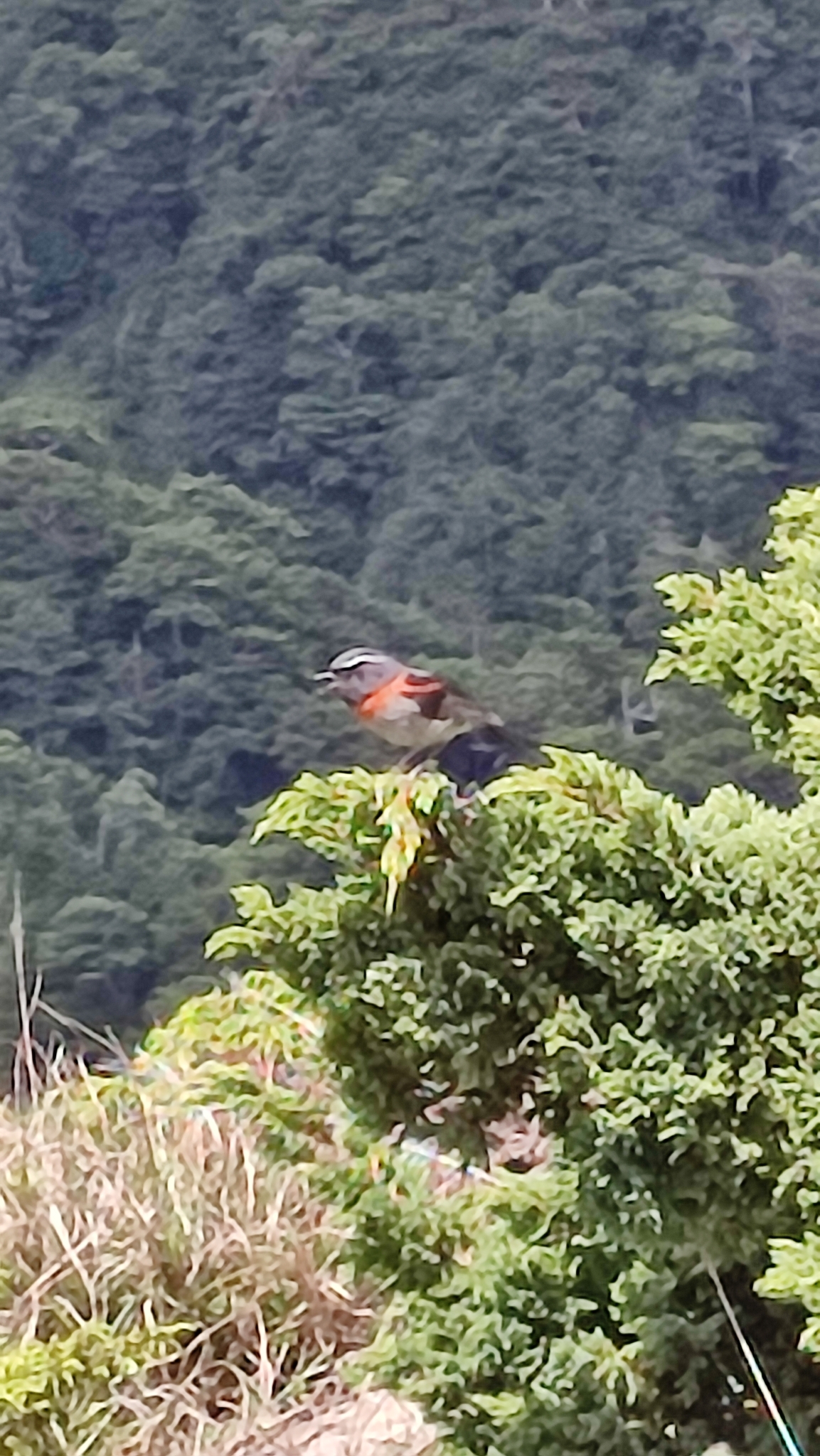
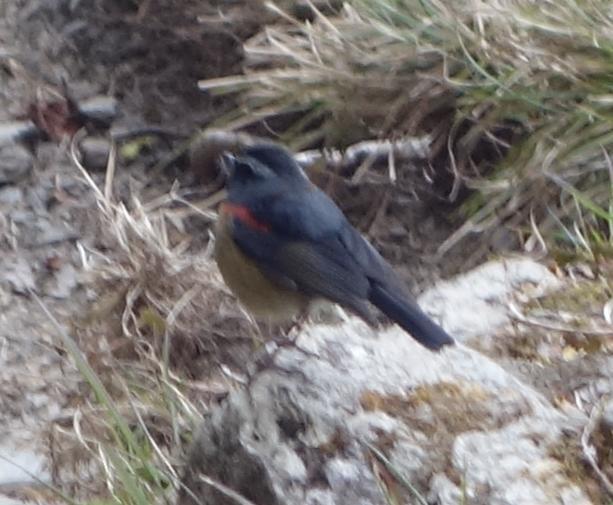
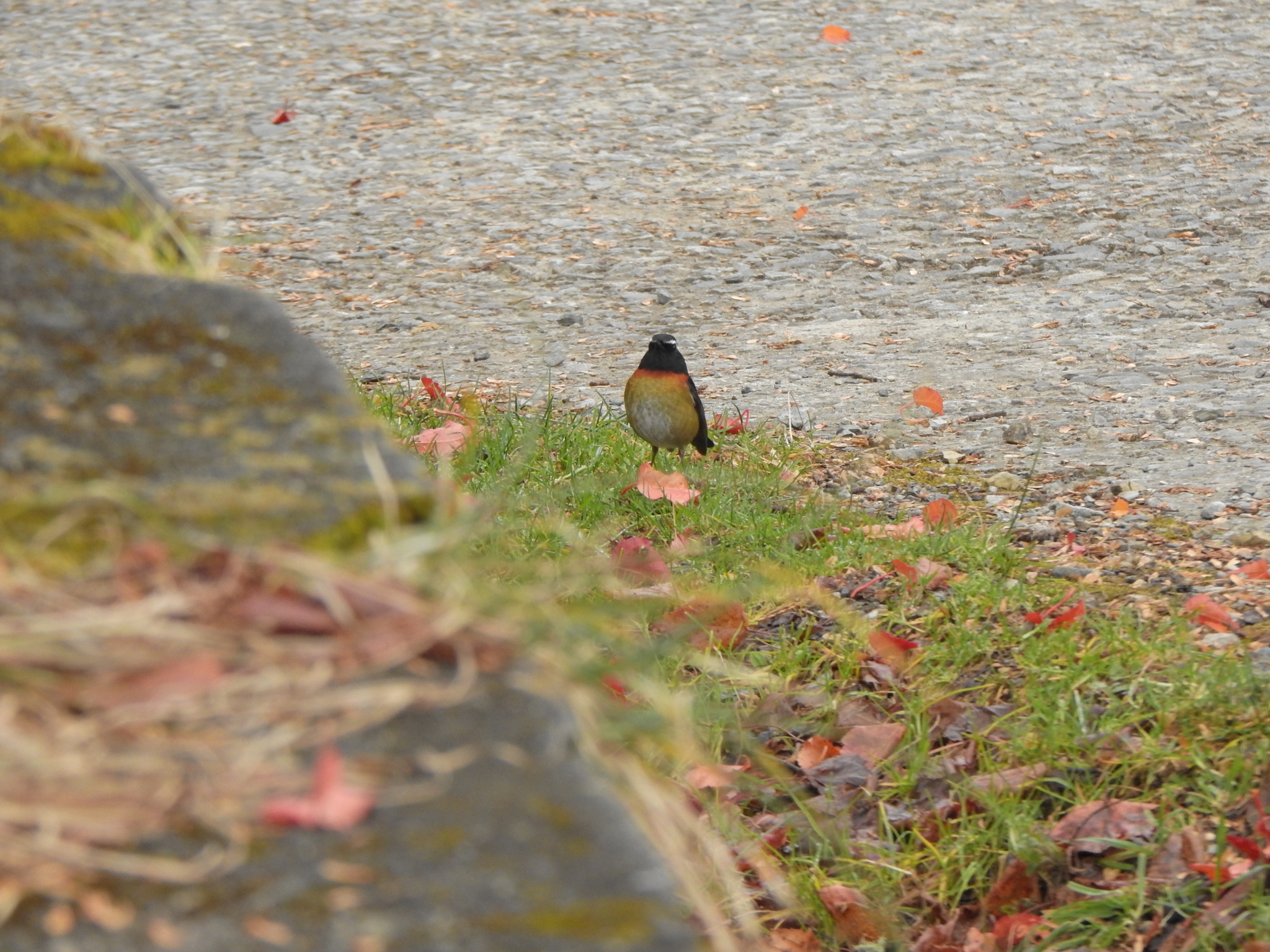
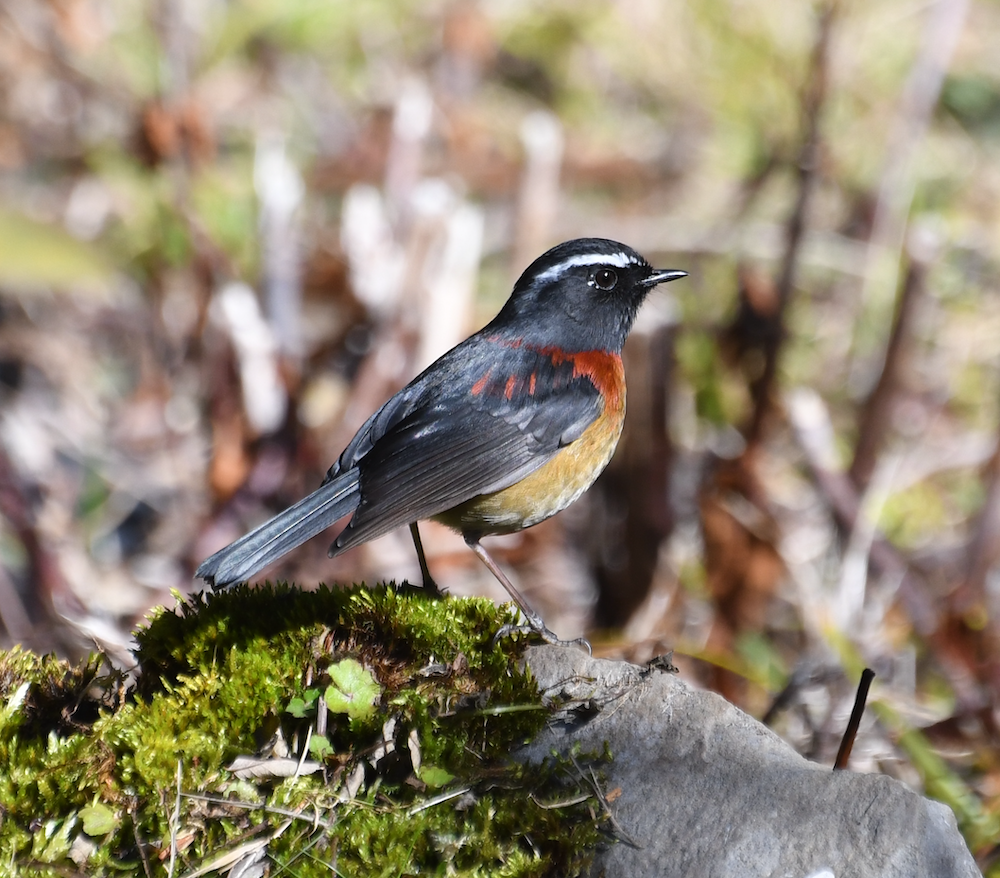
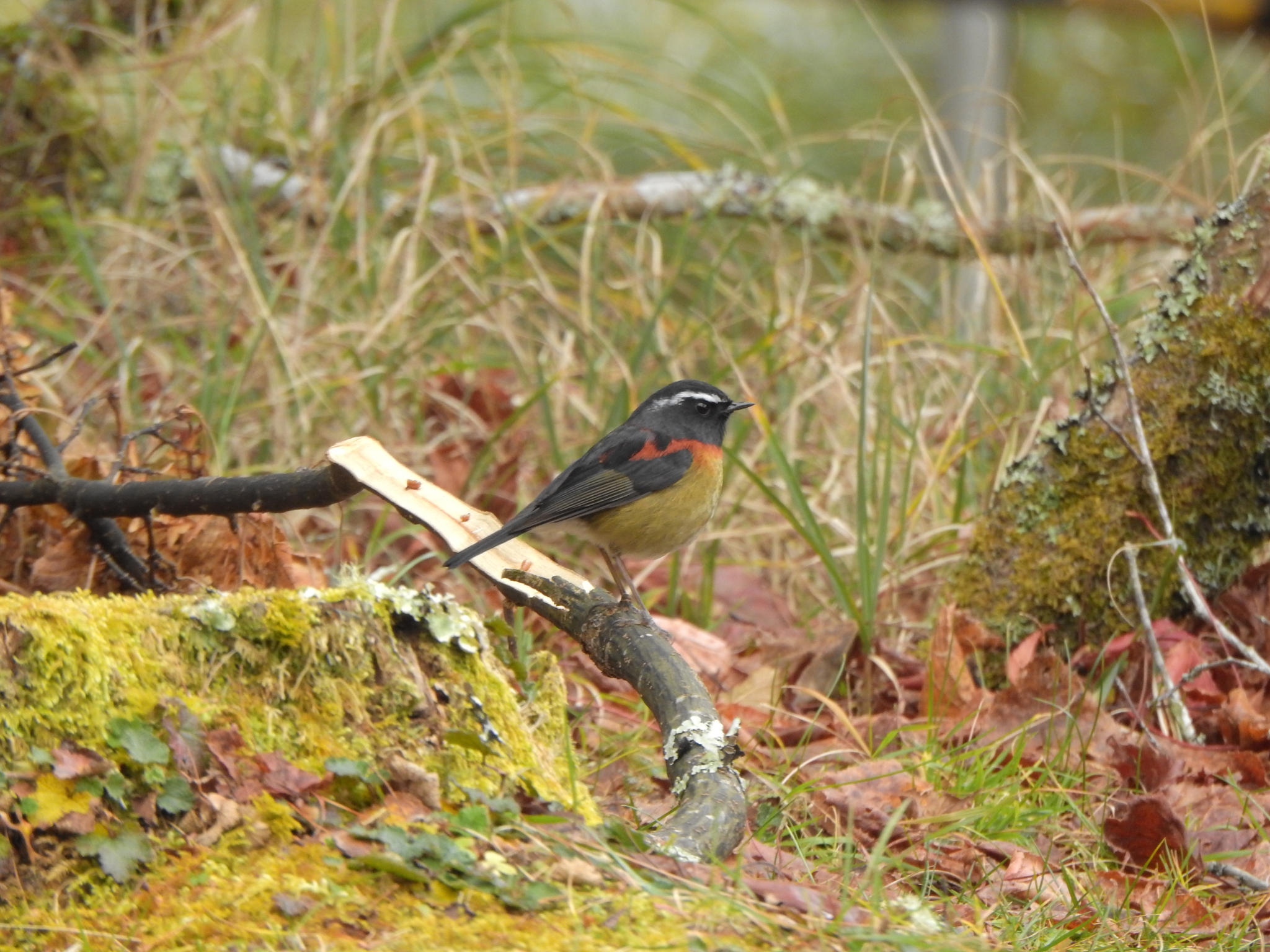
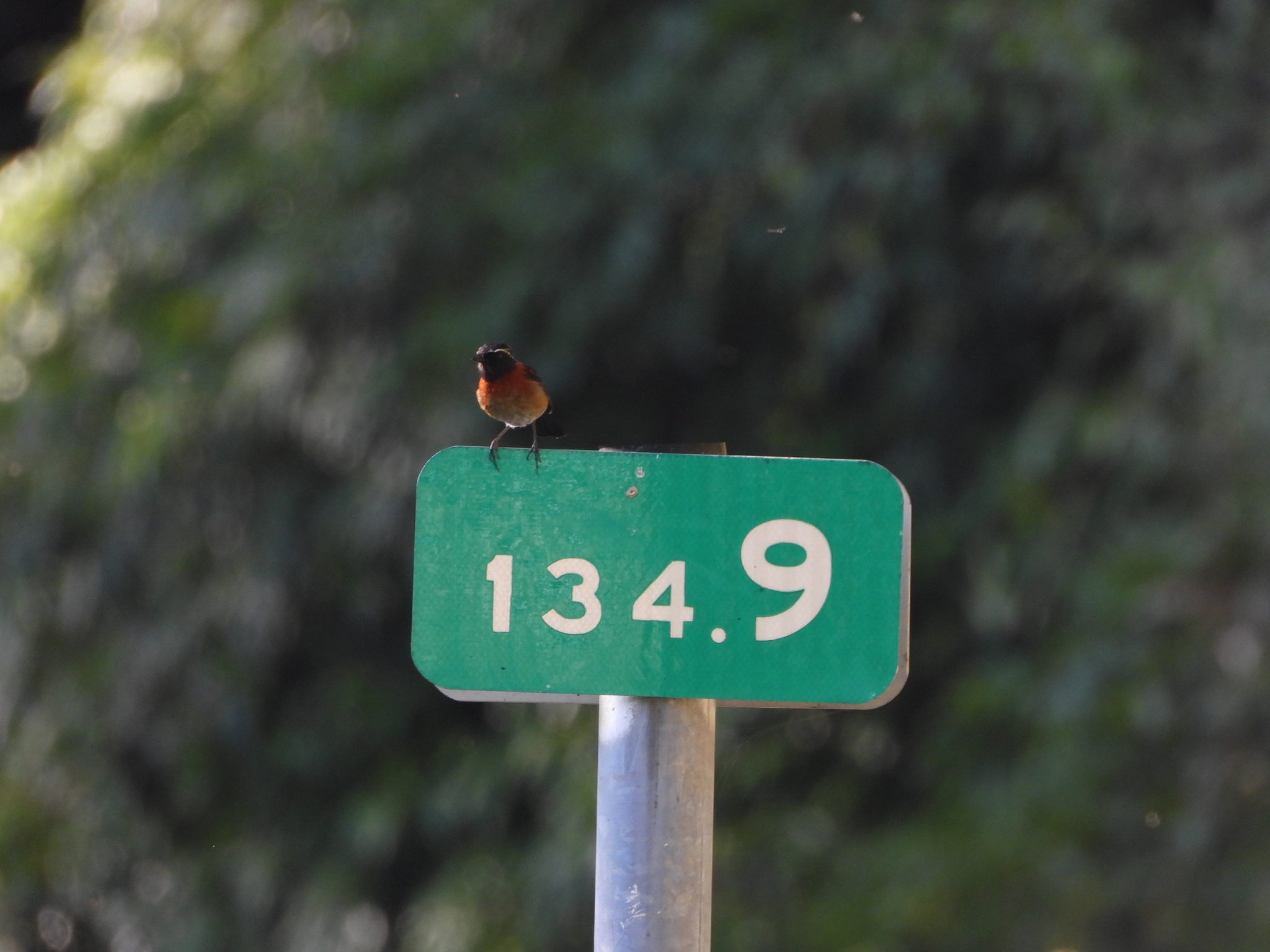
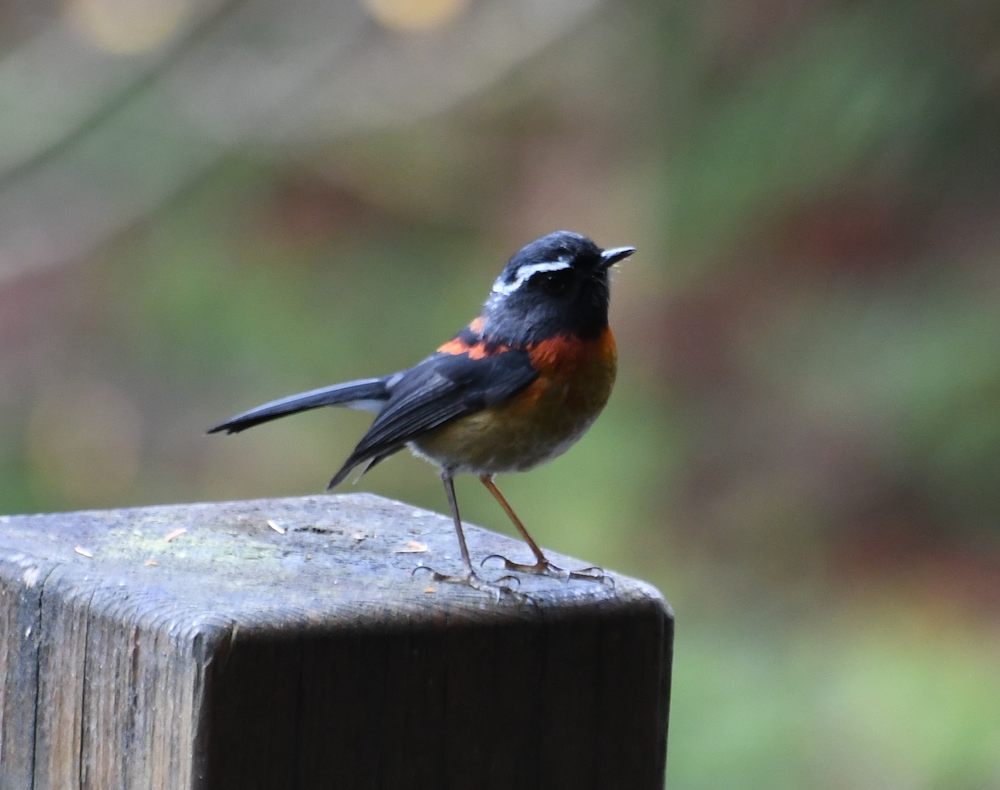
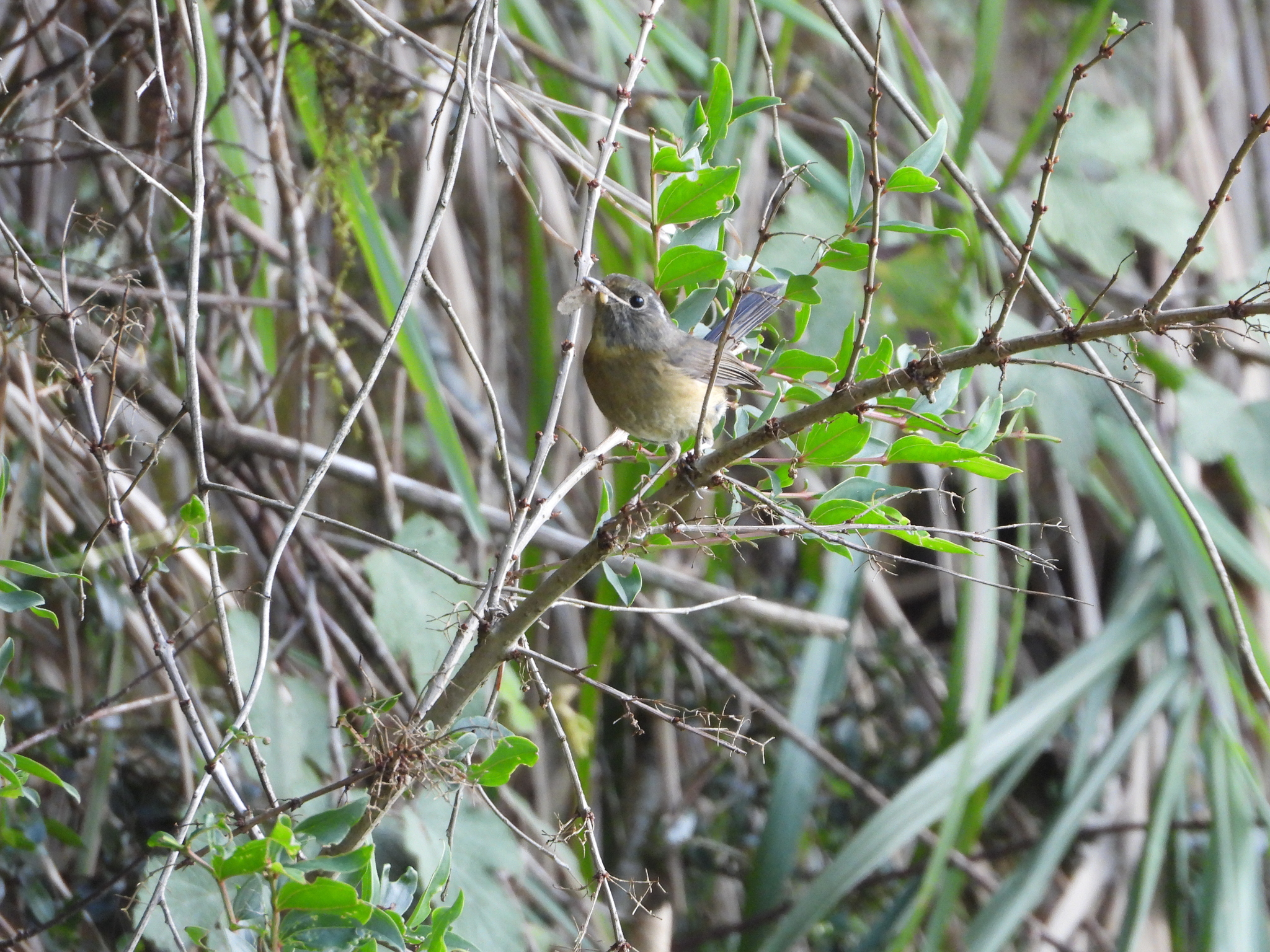
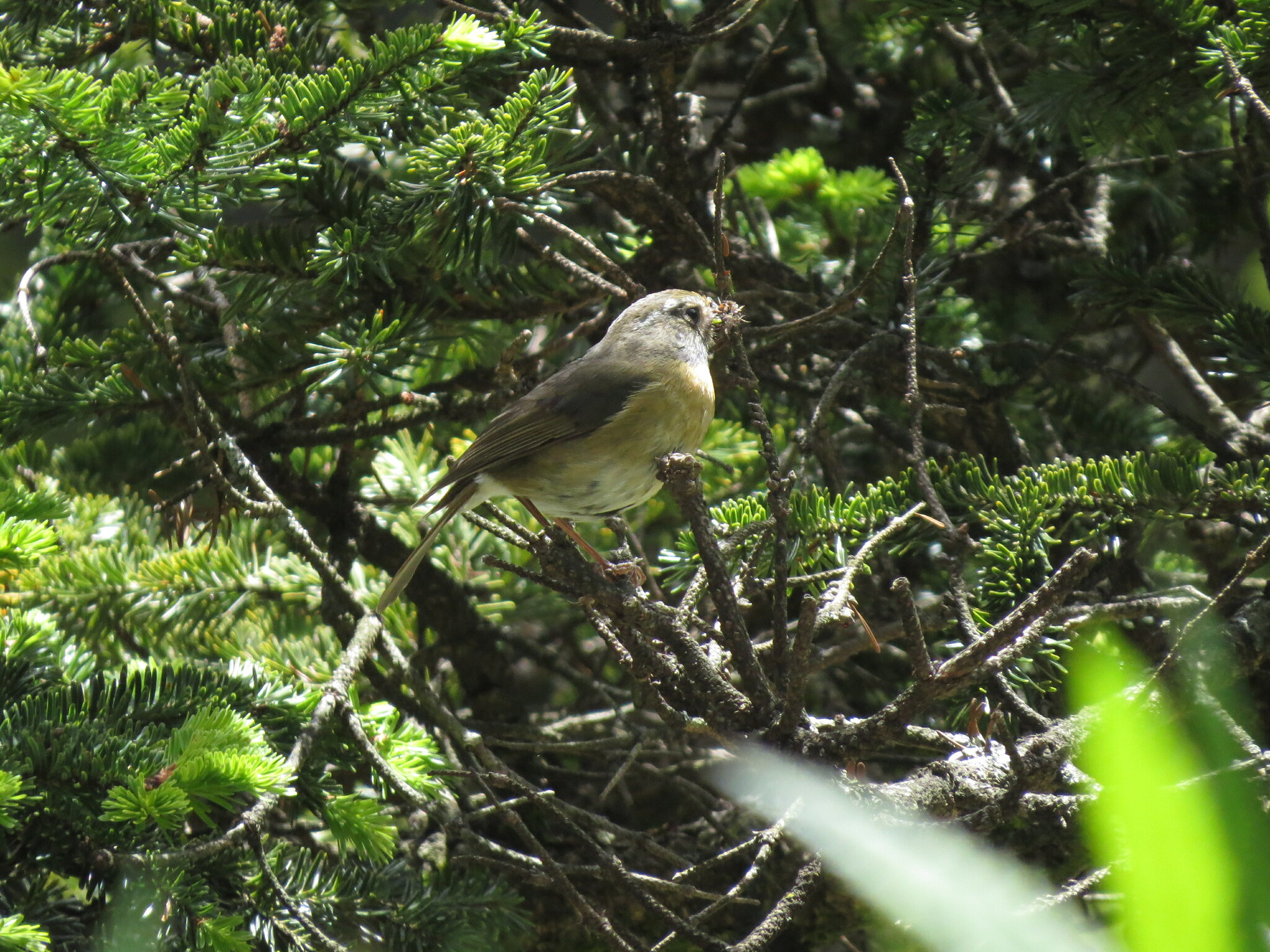
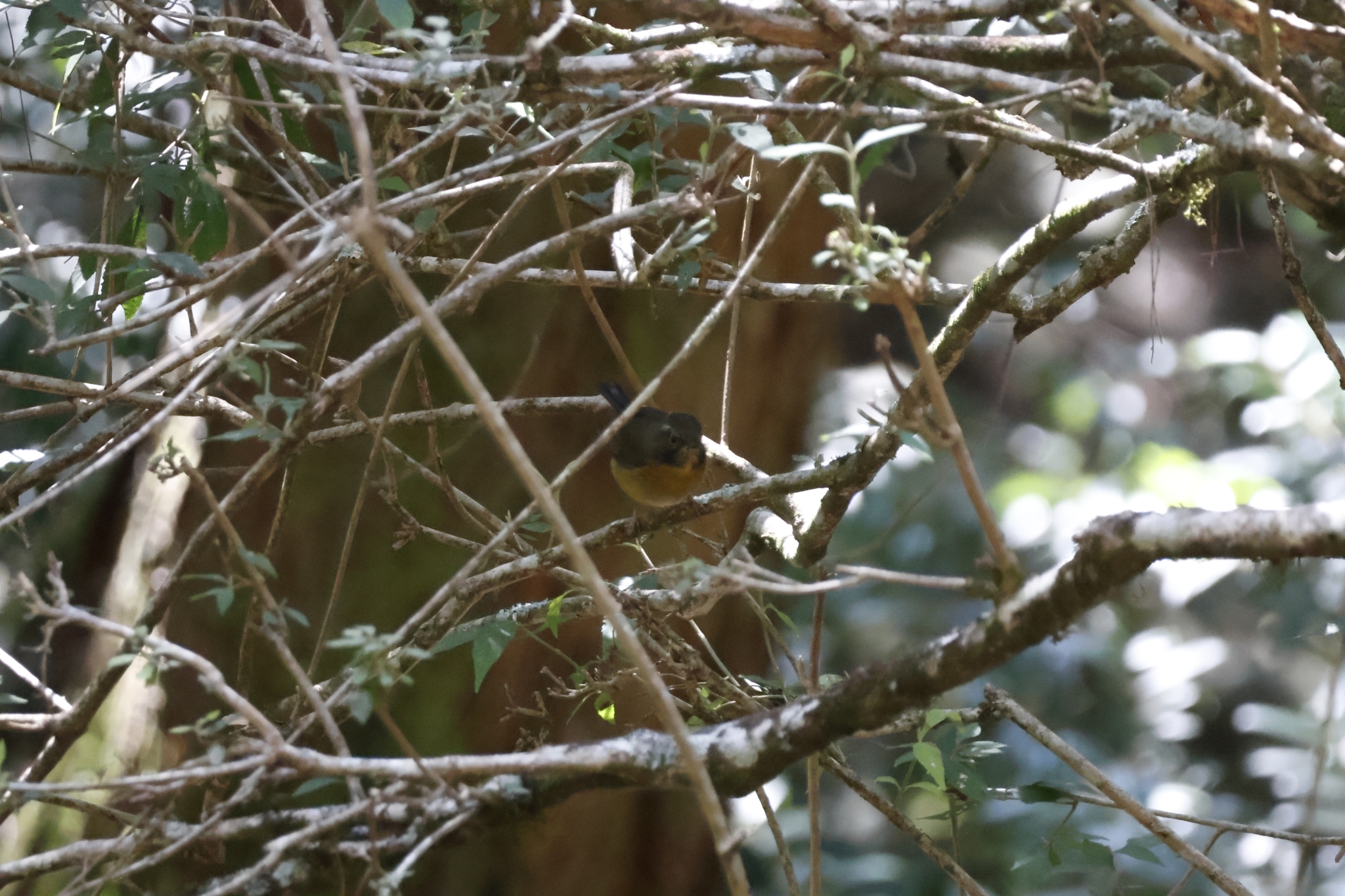
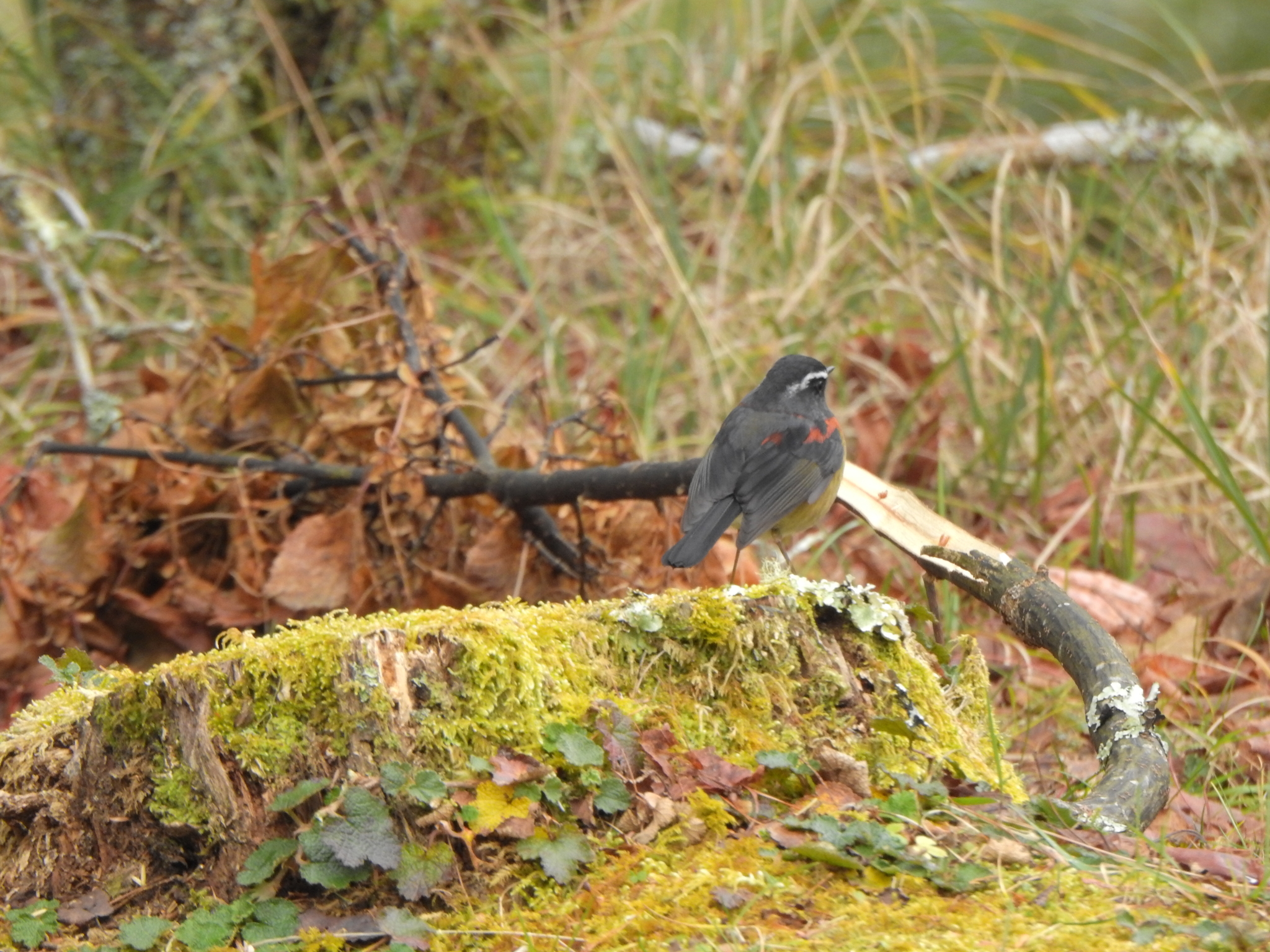
A small robin measuring approximately 12 cm in length. The male has a slate-black head with a prominent white supercilium, rufous upper breast, mantle, and scapulars forming a distinctive collar, a sooty-black back, black and brownish-black wings, and a black tail. The lower breast is buffish-yellow and the belly ranges from grey-white to buffish-olive. The beak and legs are black. The female has a less distinct supercilium, mostly dull olive-brown upperparts, dark brown wings and tail, warm brown throat and breast (sometimes with a blackish throat), and pale yellow or yellowish-olive underparts. Juveniles are distinguished by pale buff streaks and spots.
Identification
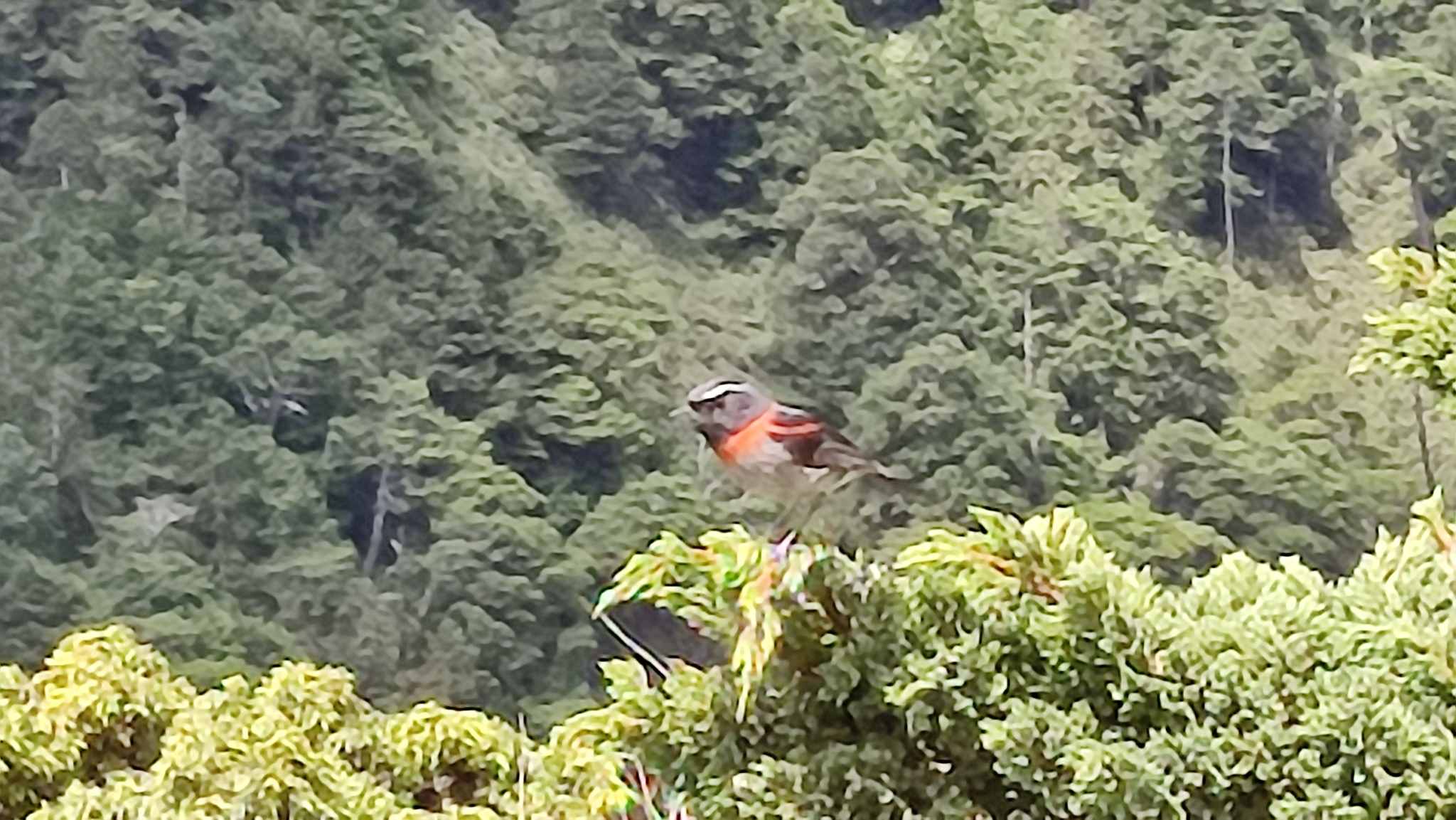
The male's rufous collar and white supercilium against the slate-black head are distinctive field marks. The species can be distinguished from similar robins by its combination of the rufous collar, white supercilium, and the male's predominantly black and slate plumage. Hybridization occurs with subspecies formosanus of the white-browed bush robin.
Distribution & Habitat
Endemic to Taiwan. Inhabits montane and subalpine forests, typically at elevations of 2,000–2,800 meters and occasionally above the tree line. It descends to lower elevations during winter. Prefers the undergrowth of coniferous forests containing shrubs and bamboo. Also occurs in parks and along roadsides.
Behavior & Ecology
Forages for invertebrates by catching insects from perches and by searching on the ground and in low vegetation. Often seen in pairs or singly. Vocalizations include tuc notes with pi notes in between, a low grruit, and combinations of piping and grating notes. The song consists of a series of phrases, each containing two or three high-pitched, sibilant notes delivered from a perch. Breeding occurs from March to August with two broods per year. Both parents defend the territory. The female builds a cup nest from plant materials and lays two to three eggs.
Conservation
Assessed as least concern by the IUCN. The population is suspected to be stable.
Source: Wikipedia · CC BY-SA 3.0
Taxonomy
- Order
- Passeriformes
- Family
- Muscicapidae
- Genus
- Tarsiger
- eBird Code
- cobrob1
Distribution
mountains of Taiwan
Vocalizations
Data Sources
Species description from Wikipedia, licensed under CC BY-SA 3.0.
Bird images and sounds sourced from GBIF, contributed by citizen scientists worldwide under Creative Commons licenses.
Taxonomy data from AviList 2025.