


Common Shelduck
Tadorna tadorna
翘鼻麻鸭
Introduction
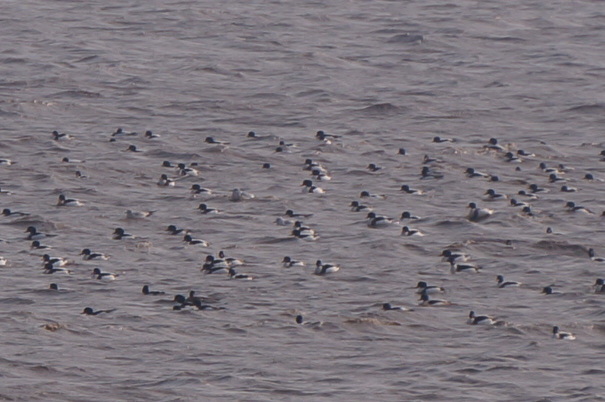
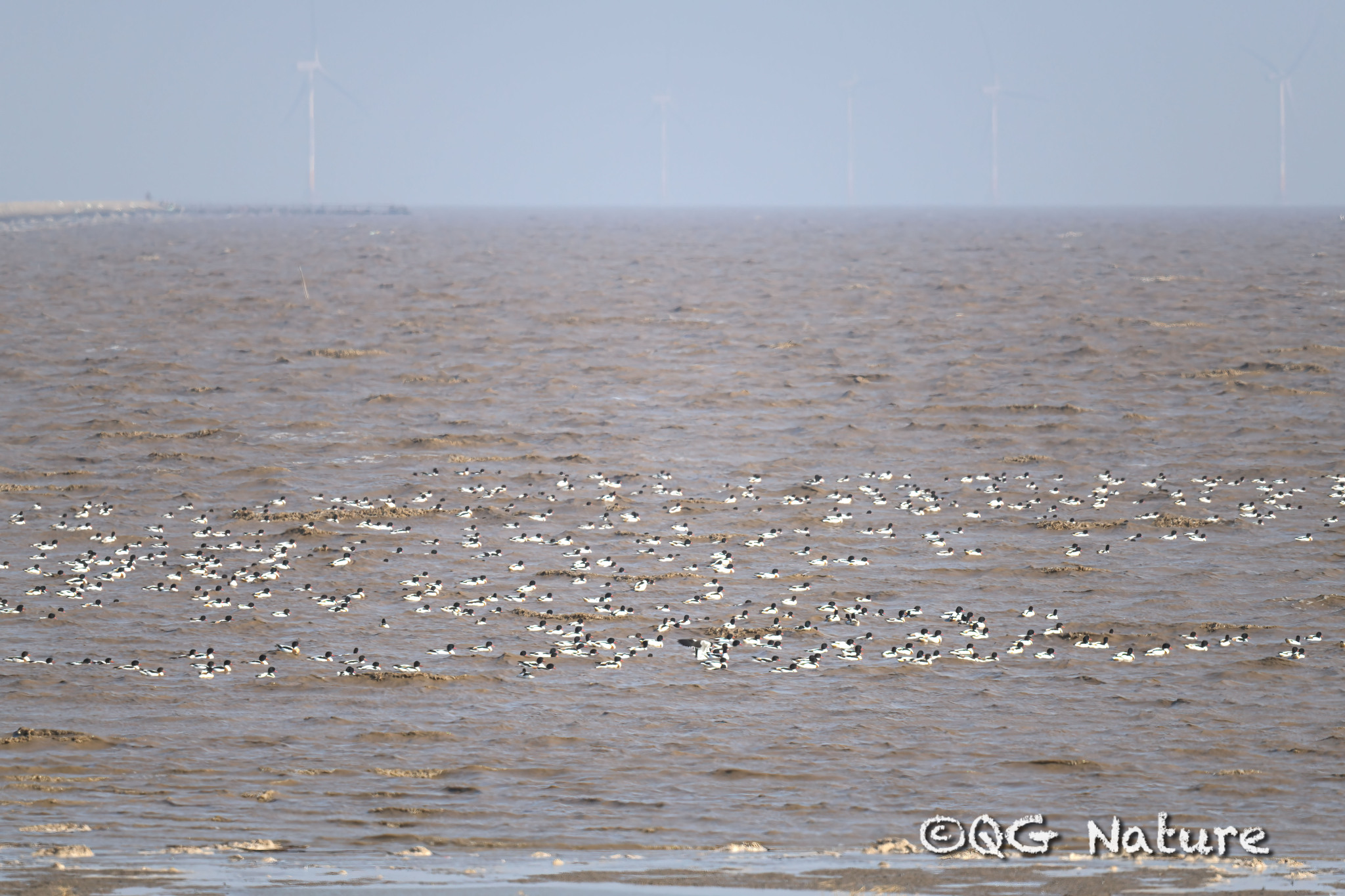
This is a large duck species occurring across coastal regions of Euro-Siberia, from western Europe to central Asia. Its range extends through temperate regions, with western European populations largely resident while other populations shift to milder subtropical areas during winter months. The species inhabits salt marshes, estuaries, mudflats, and open countryside near lakes and rivers. It characteristically nests in rabbit burrows. During the annual wing-moult period, tens of thousands of birds gather in major concentrations, particularly in the Wadden Sea.
Description
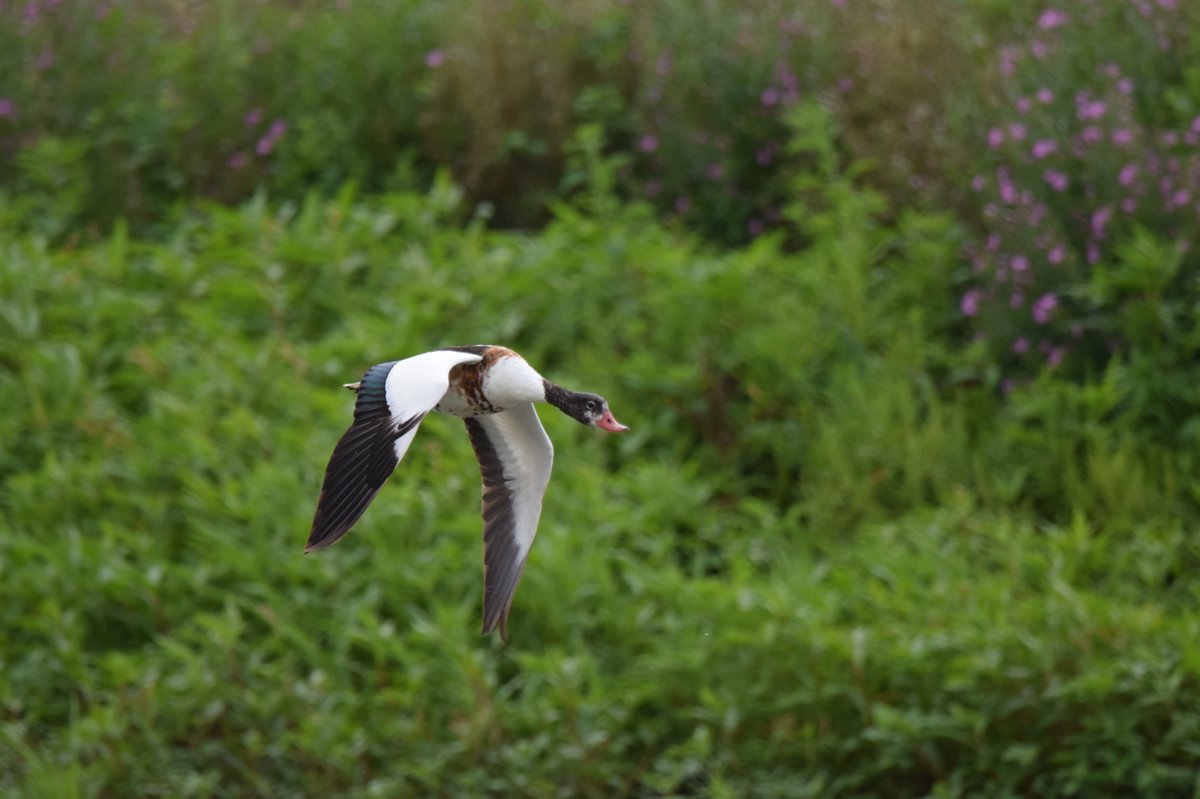
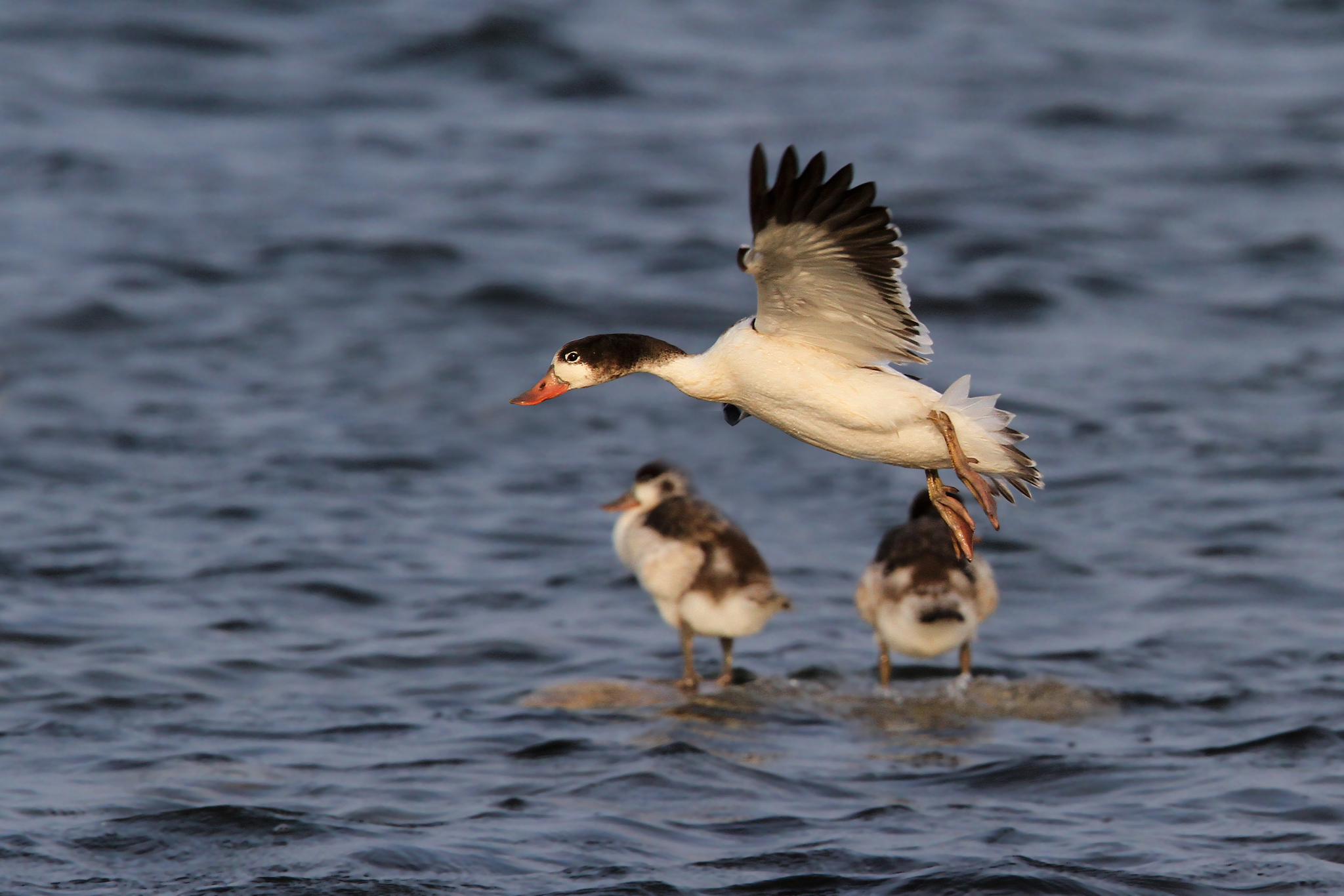
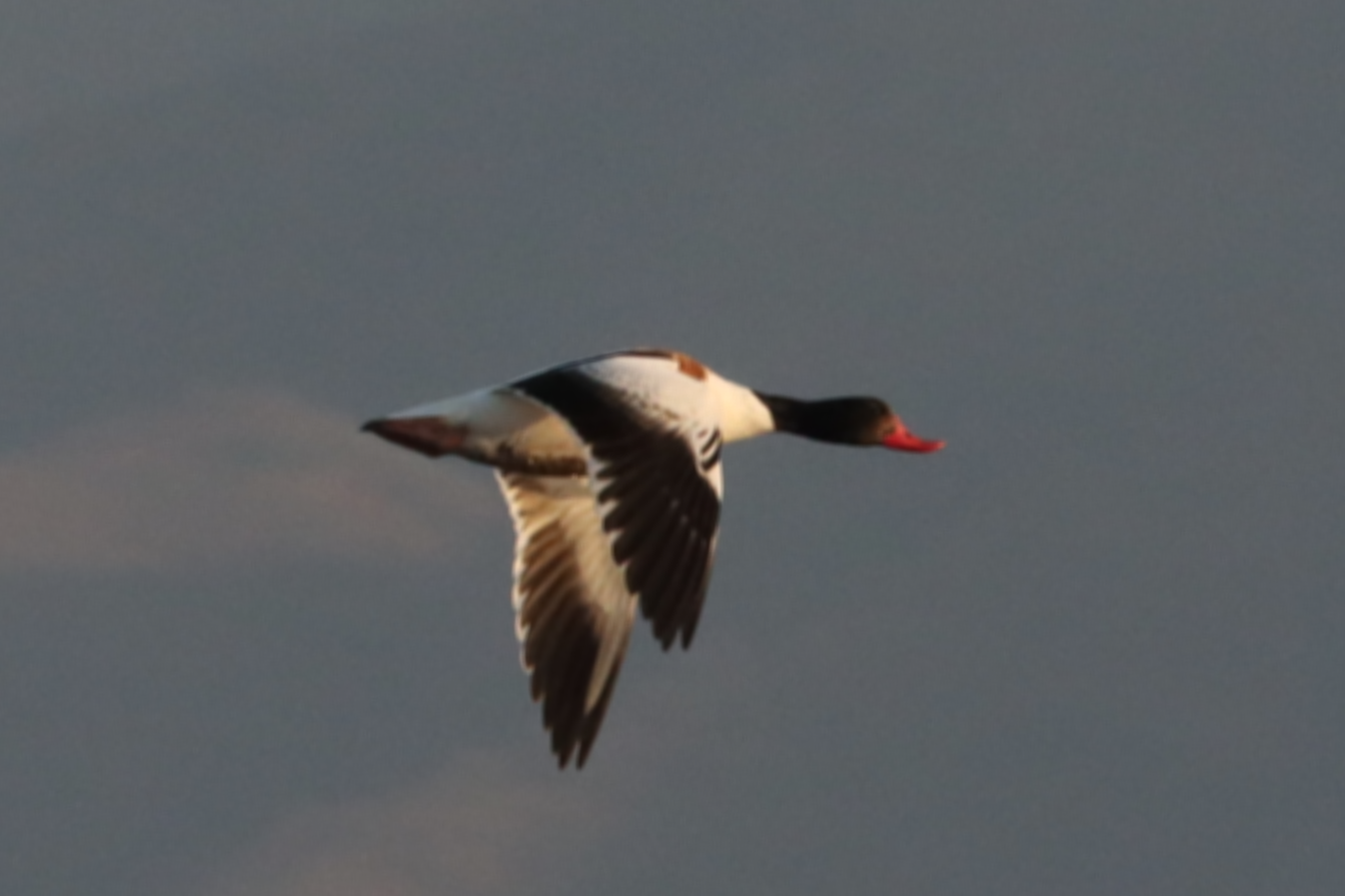
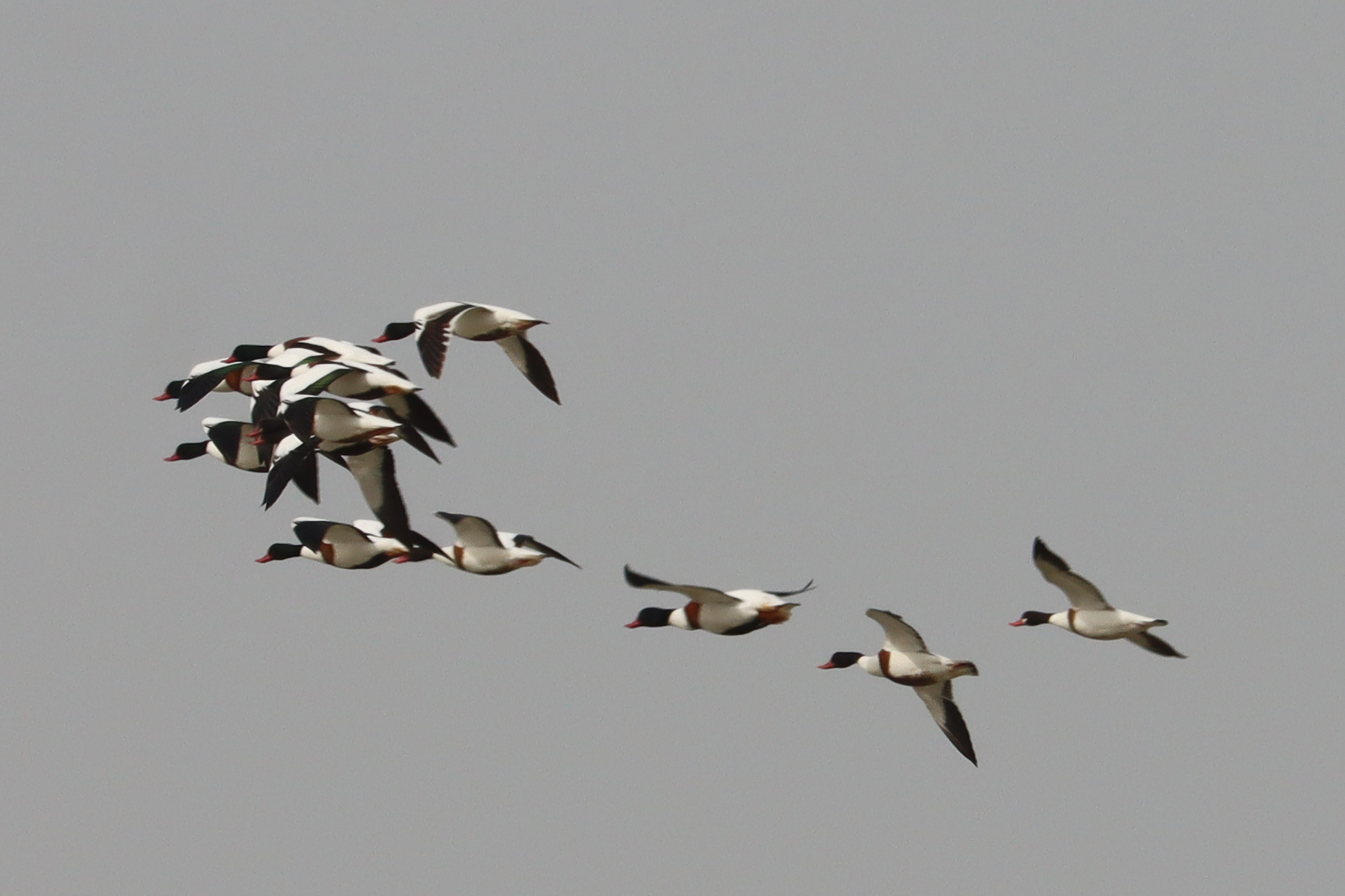
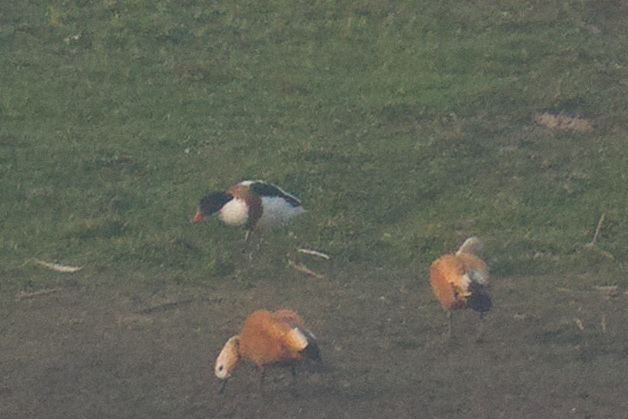
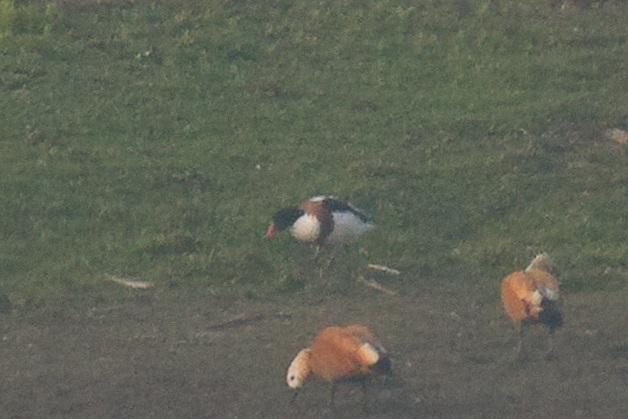
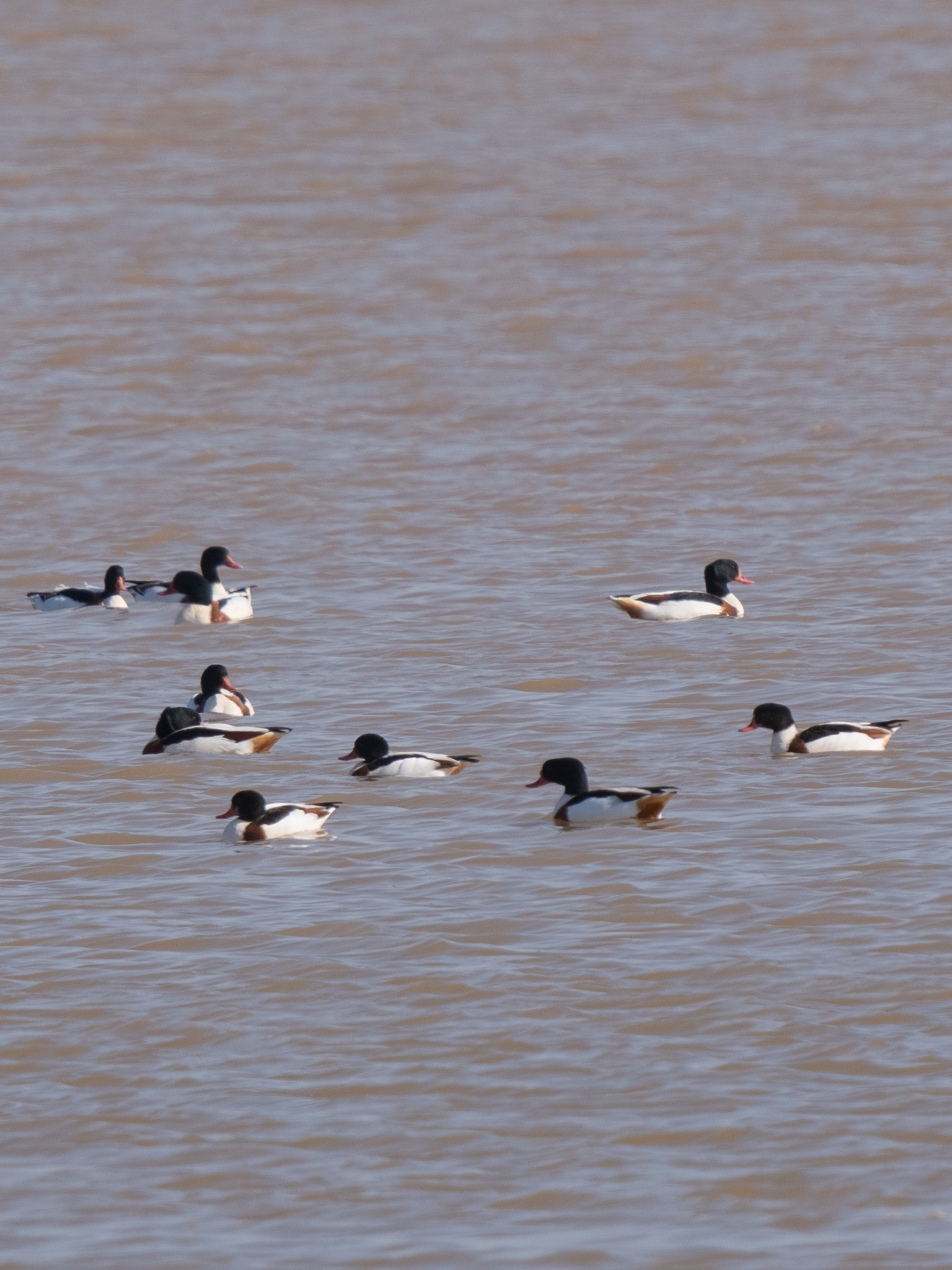
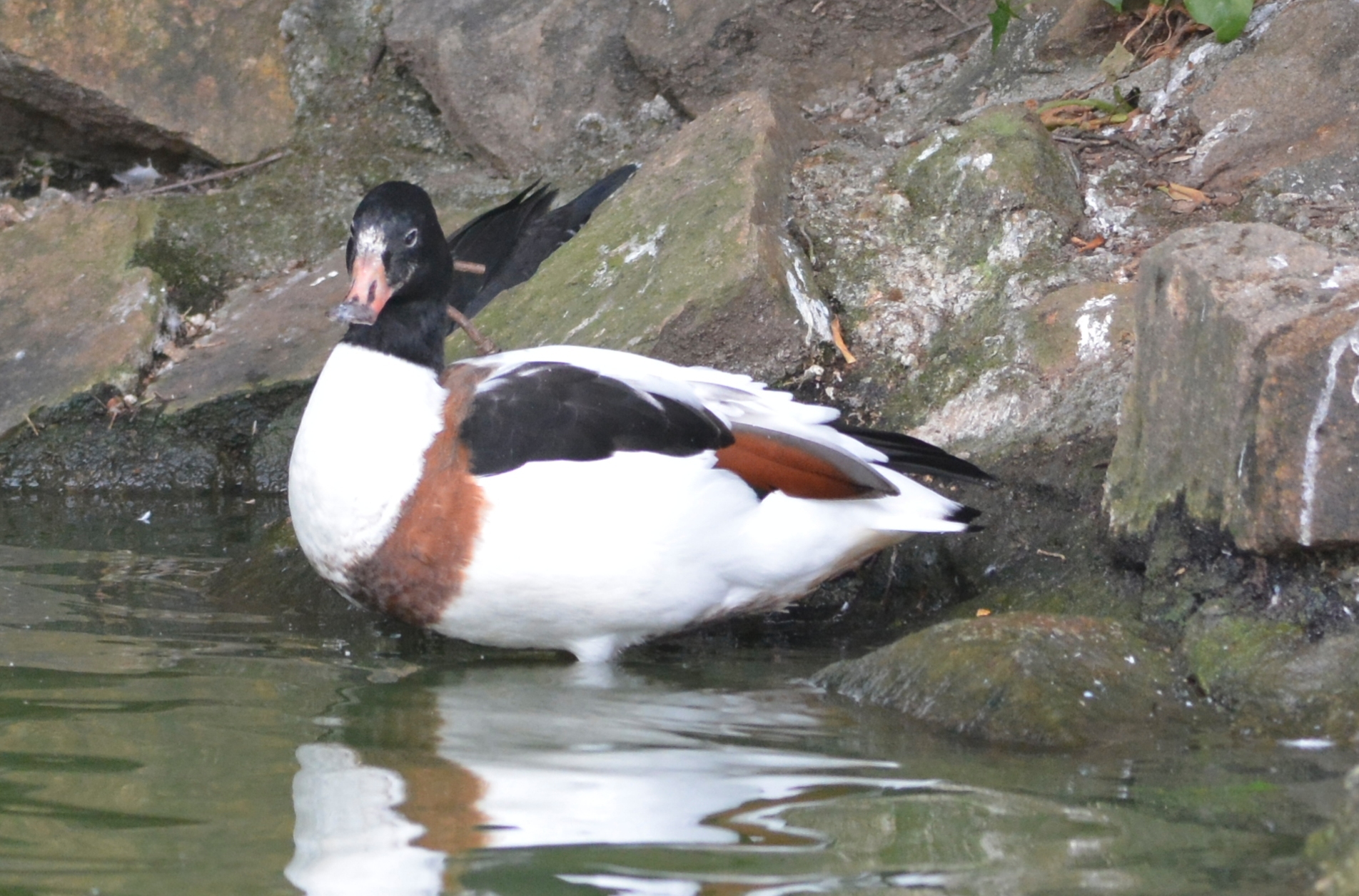
This large duck resembles a small short-necked goose in both size and shape. The plumage is striking and distinctive: a white body contrasts with chestnut patches on the breast and a dark belly, while the head and neck are an iridescent dark green. The bill is reddish-pink, the feet are pink, and the wings show white coverts with black flight feathers. In flight, green secondaries become visible alongside the chestnut. Sexes appear similar, though females are smaller and show some white facial markings. Breeding males display the most vivid coloration, with a bright red bill bearing a prominent frontal knob. Ducklings are white with black on the cap, hindneck, wings, and back. Juveniles are greyish above and mostly white below but already show the adult wing pattern. The call is a loud, goose-like honk.
Identification
The combination of dark green head, white body with chestnut belly patches, and reddish-pink bill makes this species unmistakable across its range. The large size and upright posture help distinguish it from other ducks. In flight, the white wing coverts and dark flight feathers create a distinctive pattern. Females lack the male's bright bill coloration and frontal knob, appearing somewhat duller overall. Juveniles are more muted but show the characteristic wing pattern and dark head. The species is larger than typical ducks and lacks the diving behavior of pochards or scaup. From similar distances, the contrasting plumage pattern and relatively long neck set it apart from related shelducks in areas of overlap.
Distribution & Habitat
This species breeds across temperate Eurosiberia from western Europe through central Asia. Most populations migrate south to subtropical regions for winter, though western European birds are largely resident apart from movements to traditional moulting grounds. The Wadden Sea on the German coast supports enormous moulting congregations exceeding 100,000 birds. In Britain and Ireland, it is common around coastlines, particularly salt marshes and estuaries. Winter populations extend to the Maghreb in North Africa. North American sightings are rare, with occasional records from the U.S., Canada, and the Caribbean, primarily Barbados. A single South American record exists from Colombia.
Behavior & Ecology
Breeding occurs in rabbit burrows, tree holes, haystacks, and similar cavities in open country near lakes and rivers. This species is highly social, forming enormous moulting flocks that can reach 100,000 individuals. Pairs leave their partially grown young in crèches supervised by just one or two adults, a strategy that concentrates predation risk away from most parents. Ducklings dive underwater to evade predators while adults feign injury to draw threats away. Winter flocks gather on estuaries and tidal mudflats where suitable habitat exists. The species is protected under the AEWA agreement covering African-Eurasian migratory waterbirds.
Conservation
The species holds a status of Least Concern globally, reflecting its extensive range and large, stable populations. It remains common and widespread across much of its Euro-Siberian range, though local populations face pressures from habitat loss, particularly degradation of coastal wetlands and disturbances to breeding sites. The protection of key moult and wintering sites such as the Wadden Sea has been important for maintaining regional populations. Conservation measures focus on preserving salt marsh and estuary habitats, as well as ensuring sustainable management of wetland resources throughout its migratory route.
Culture
In Great Britain and Ireland, the species is known simply as 'the shelduck,' reflecting its familiar status in coastal regions where it is abundant and conspicuous. The name 'shelduck' derives from Old English roots meaning 'pied waterfowl,' referring to the bird's striking black-and-white plumage. The species lacks extensive folklore or mythological associations compared to some other waterfowl, though its conspicuous presence in coastal landscapes has made it a familiar feature of British and Irish birdwatching culture.
Source: Wikipedia · CC BY-SA 3.0
Taxonomy
- Order
- Anseriformes
- Family
- Anatidae
- Genus
- Tadorna
- eBird Code
- comshe
Distribution
breeds western Europe to east-central Asia; winters to northern Africa through southern Asia
Vocalizations
Data Sources
Species description from Wikipedia, licensed under CC BY-SA 3.0.
Bird images and sounds sourced from GBIF, contributed by citizen scientists worldwide under Creative Commons licenses.
Taxonomy data from AviList 2025.