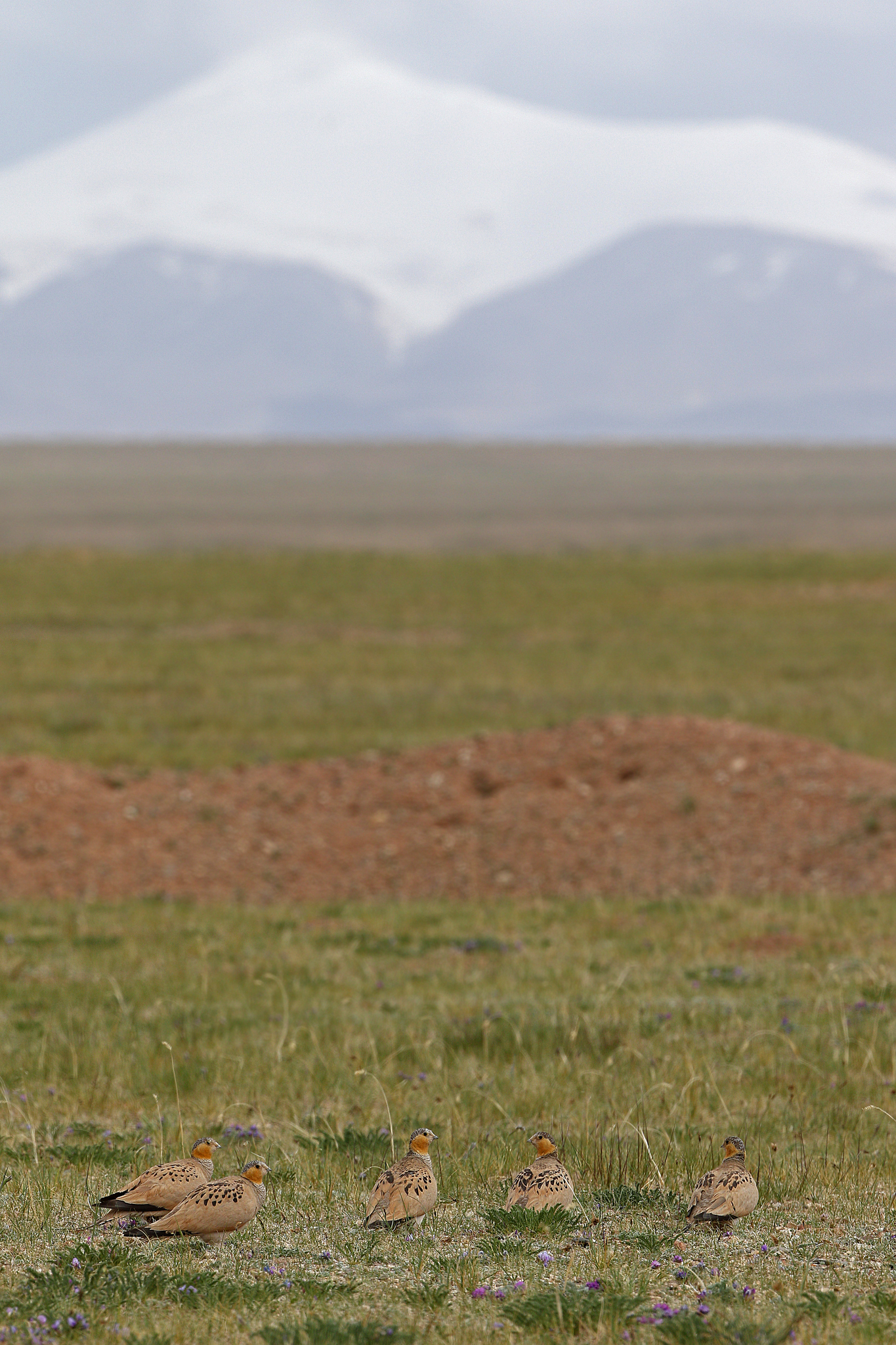
Tibetan Sandgrouse
Syrrhaptes tibetanus
西藏毛腿沙鸡
Introduction
A large sandgrouse species (family Pteroclididae) endemic to the high plateaus and mountain ranges of Central Asia. Its range extends across Tibet, Central China, and the Himalayas, including the Pamirs and Ladakh regions. This species inhabits barren sandy plains and semi-desert environments near water sources at high elevations. Two distinctive traits are its unique foot structure—three front toes fused together with no hind toe, giving a paw-like appearance—and its specialized water-fetching behavior, where flocks make regular flights to watering holes at dawn. The species was first described by Gould in 1850 based on a specimen from Tso-Morriri in Ladakh. While the population is decreasing, its extensive range and slow decline rate support its IUCN classification as Least Concern.
Description
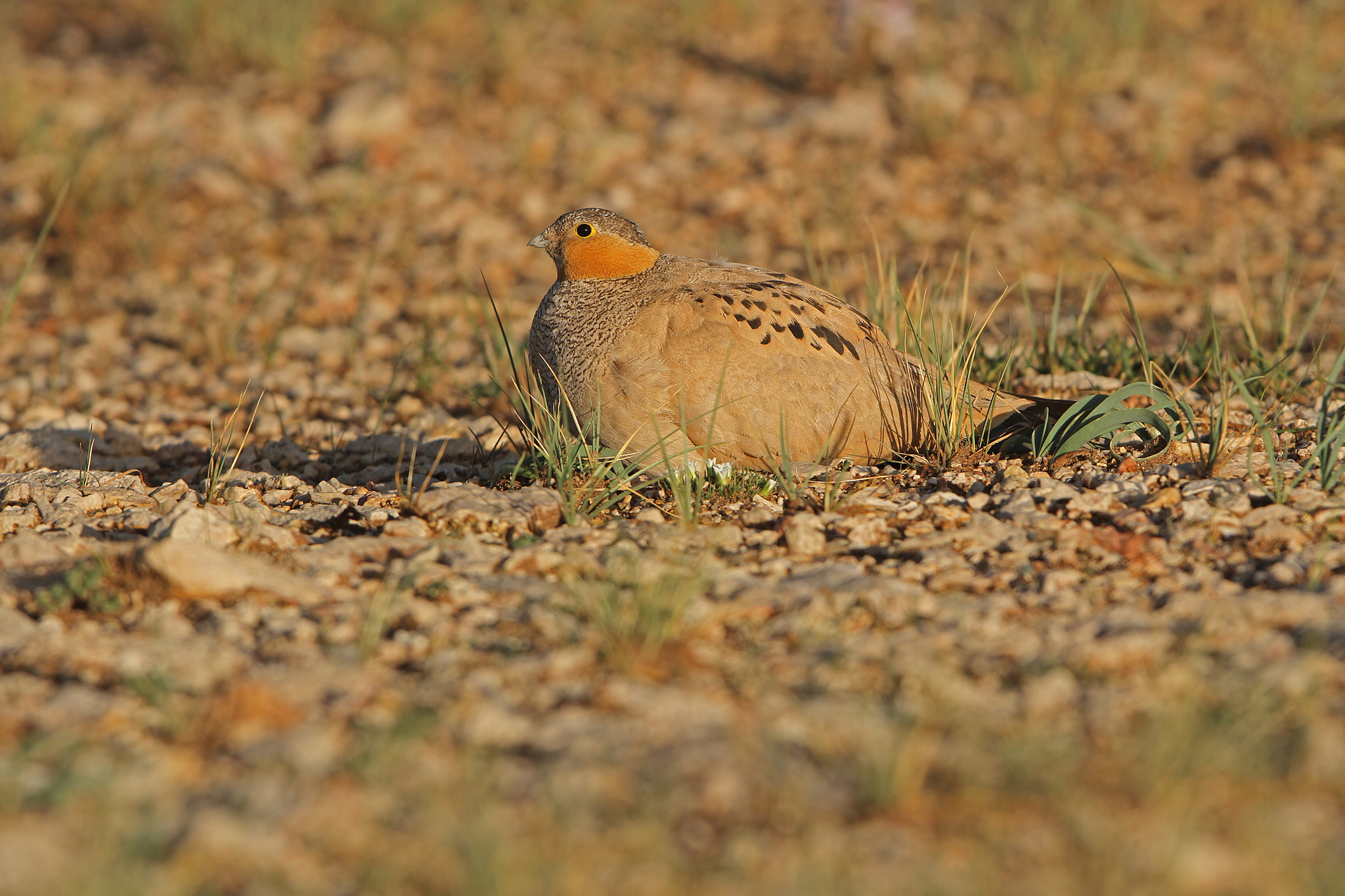
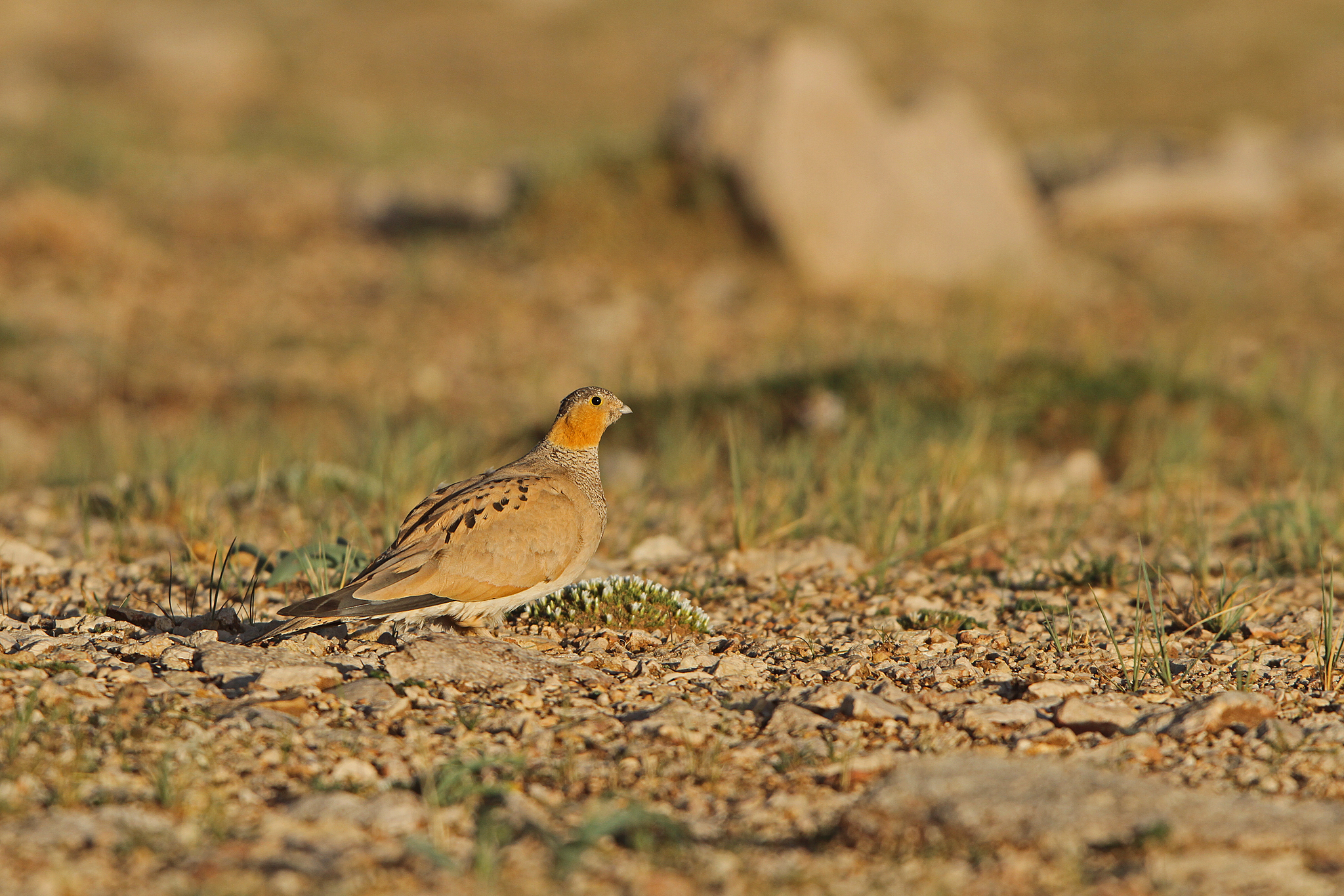
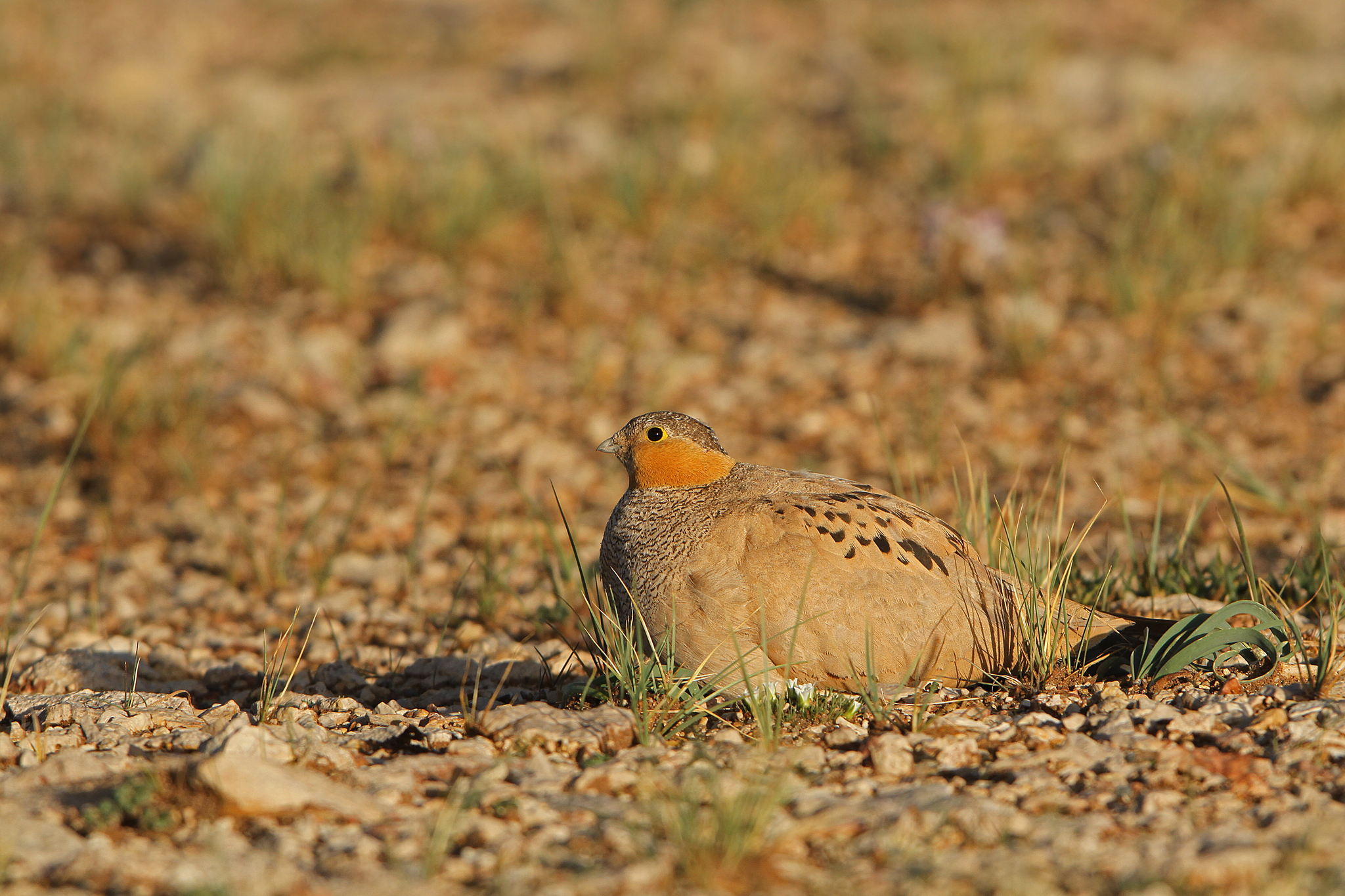
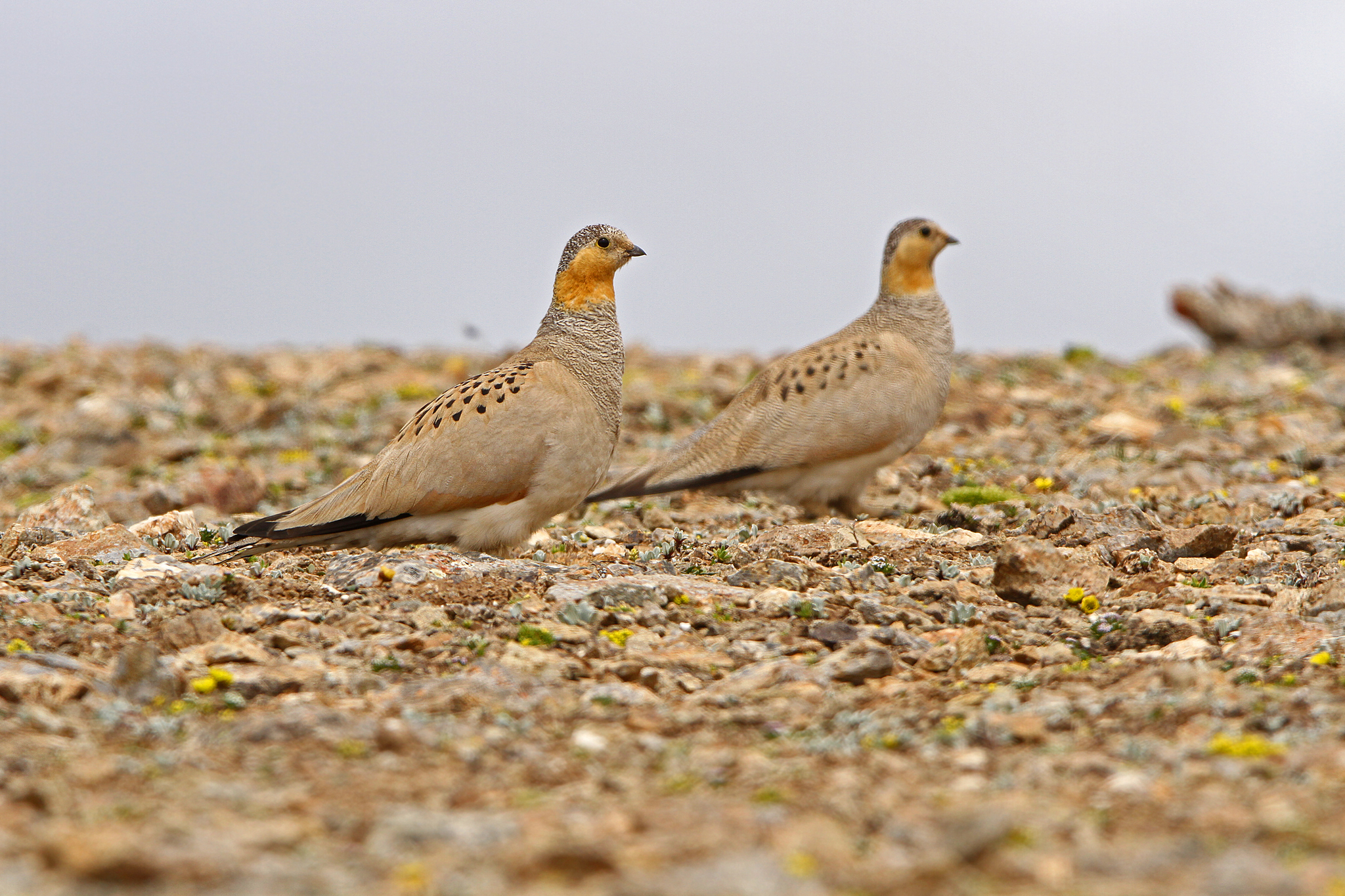
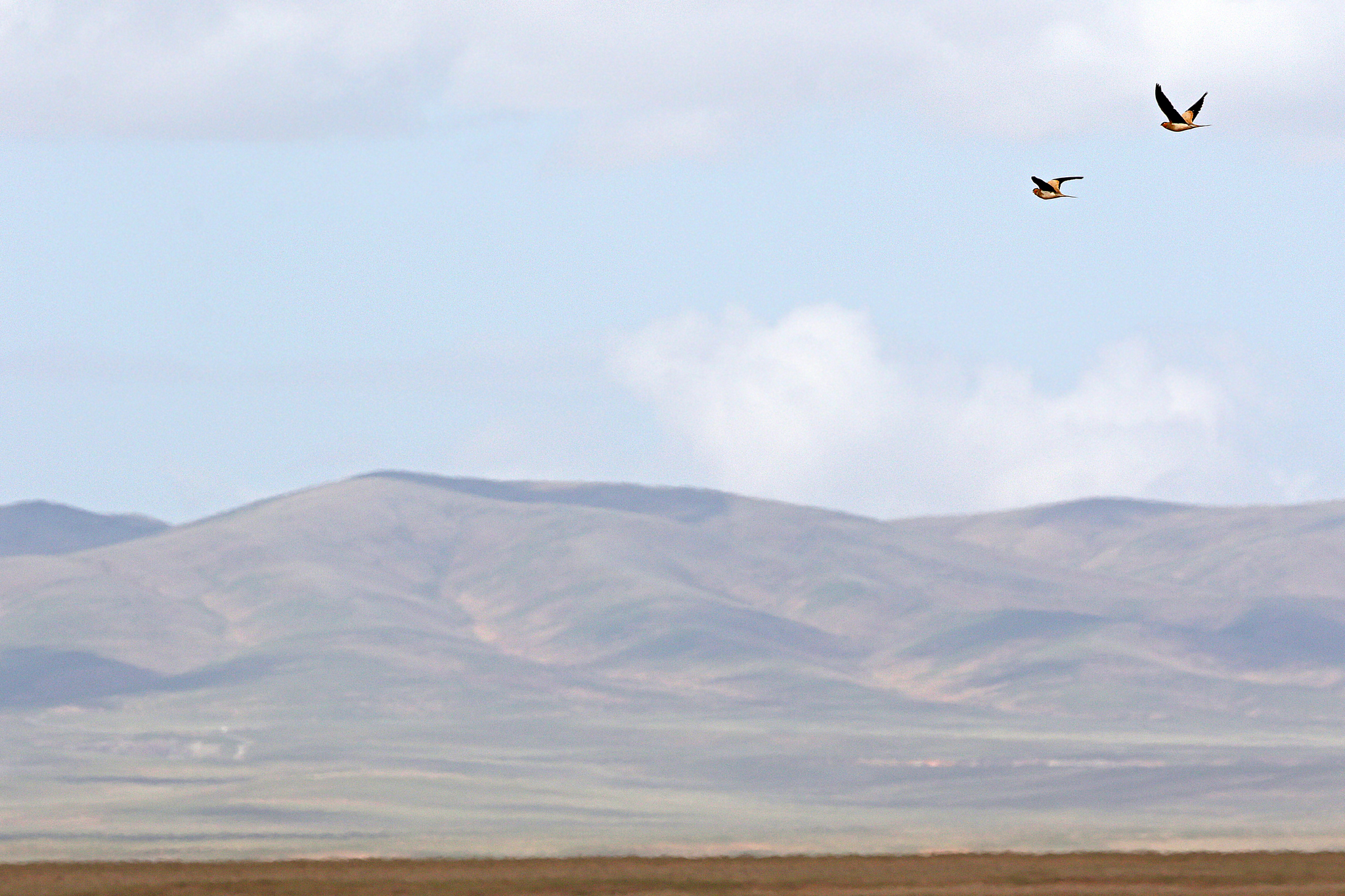
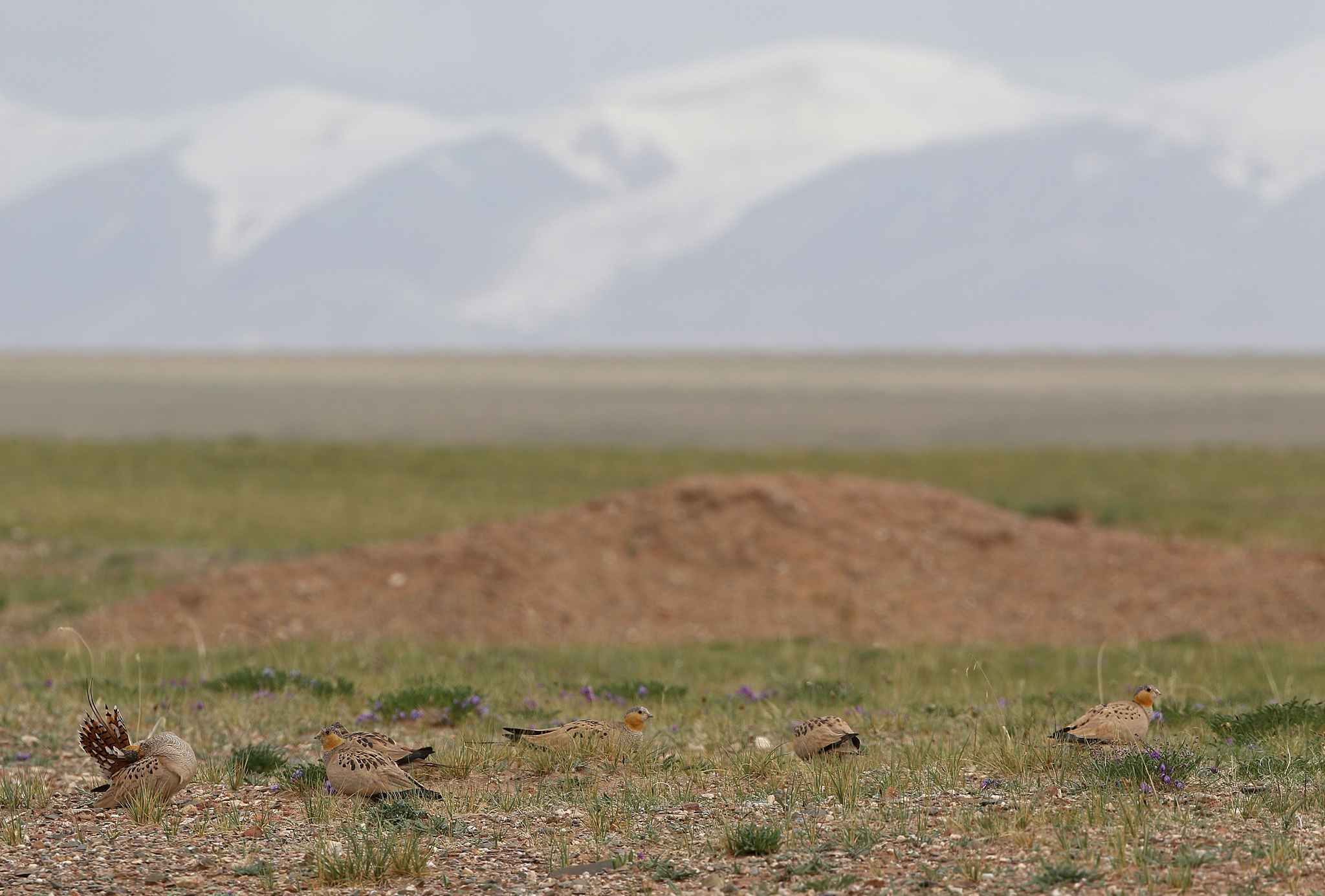
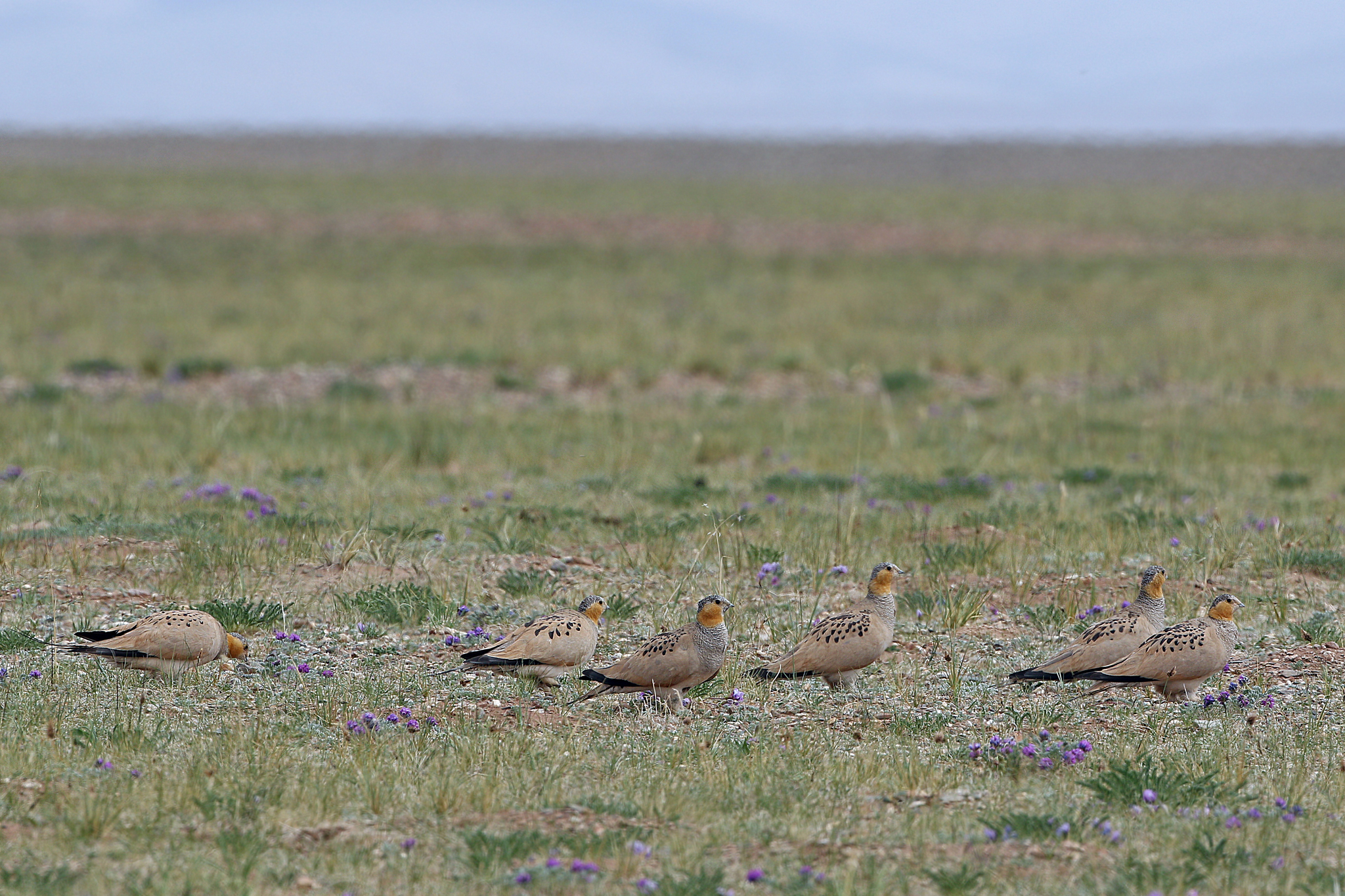
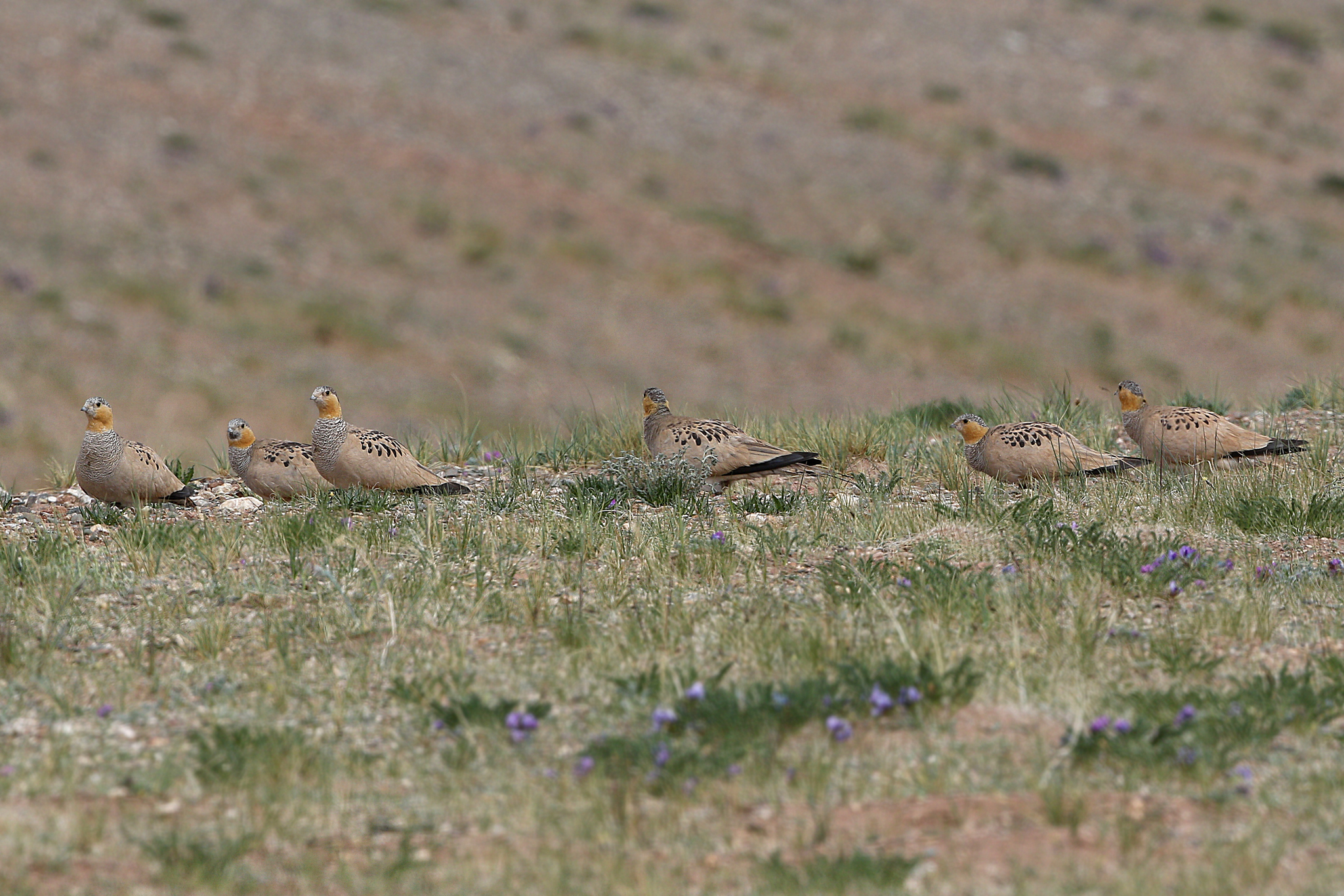
A large sandgrouse measuring 30-41 cm (12-16 in) in length with a small, pigeon-like head and neck but a sturdy, compact body. It has long pointed wings and a distinctive pin tail. The face is orange, while the breast, neck, and crown are finely barred grey. The belly is white and the underwings are black. Males display unspotted buff wings, while females have barred wing coverts, upperparts, and upper belly. Juveniles lack the tail pin, have narrower barrings, and show less orange on the face. The feet are highly modified: no hind toe exists, and the three front toes are fused together with a fleshy pad on the underside.
Identification
The white belly and dark underwings distinguish this species from the similar Pallas's sandgrouse, with which its range overlaps. Males are told apart by their unspotted buff wings versus any markings. Females and juveniles show barred patterning on the wing coverts, upperparts, and upper belly, unlike the male's cleaner appearance. The juvenile lacks the characteristic pin tail. The combination of orange facial coloring, grey barred upperparts, and white underparts with black underwing visible in flight are key field marks.
Distribution & Habitat
Occurs throughout the mountain ranges of Central Asia, Tibet, Central China, and the Himalayas. The species is found on barren, sandy plains and semi-desert plateaus near water sources at high elevations. Formerly classified races from the Pamir region (pamirensis) are now considered part of the monotypic species. No regular migration is described, though the species may make local movements in response to water and food availability.
Behavior & Ecology
Gregarious birds that form loose flocks. Foraging occurs in the morning and afternoon on undulating semi-desert plains, with rapid movements. During midday, individuals squat in ground depressions to bask in the sun and are generally unwary during rest periods. Flight is fast and direct, accompanied by a clanging double note uttered repeatedly. Flocks make noisy flights to watering holes at dawn and dusk, though this is less regular than in other sandgrouse species. Breeding takes place from May to June on arid stony plateaus and ridges, with nests as ground scrapes typically placed near ridge tops on the leeward side. Clutches consist of three pale brown elliptical eggs with cryptic markings. Chicks are precocial, moving with the flock shortly after hatching. Adults perform distraction displays when threatened, while chicks crouch and freeze. Diet consists of seeds, grass, buds, and legumes.
Conservation
Classified as Least Concern on the IUCN Red List. While the global population is decreasing, the large geographic range and relatively slow rate of decline mean the species does not currently meet the thresholds for a more threatened category. Specific threat information is not provided in the source material.
Source: Wikipedia · CC BY-SA 3.0
Taxonomy
- Order
- Pterocliformes
- Family
- Pteroclidae
- Genus
- Syrrhaptes
- eBird Code
- tibsan1
Distribution
desert of eastern Afghanistan to Tibetan plateau
Data Sources
Species description from Wikipedia, licensed under CC BY-SA 3.0.
Bird images and sounds sourced from GBIF, contributed by citizen scientists worldwide under Creative Commons licenses.
Taxonomy data from AviList 2025.