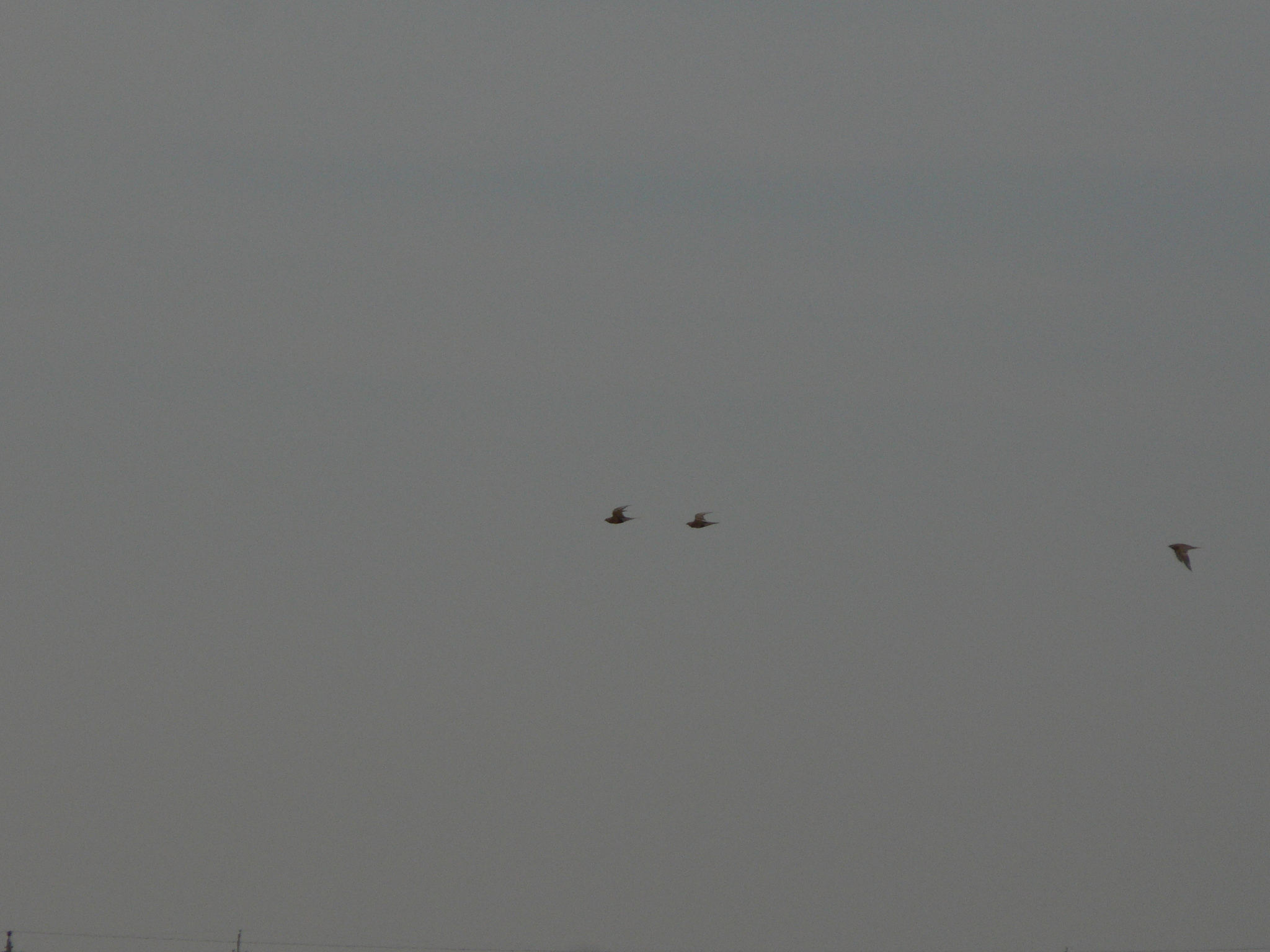
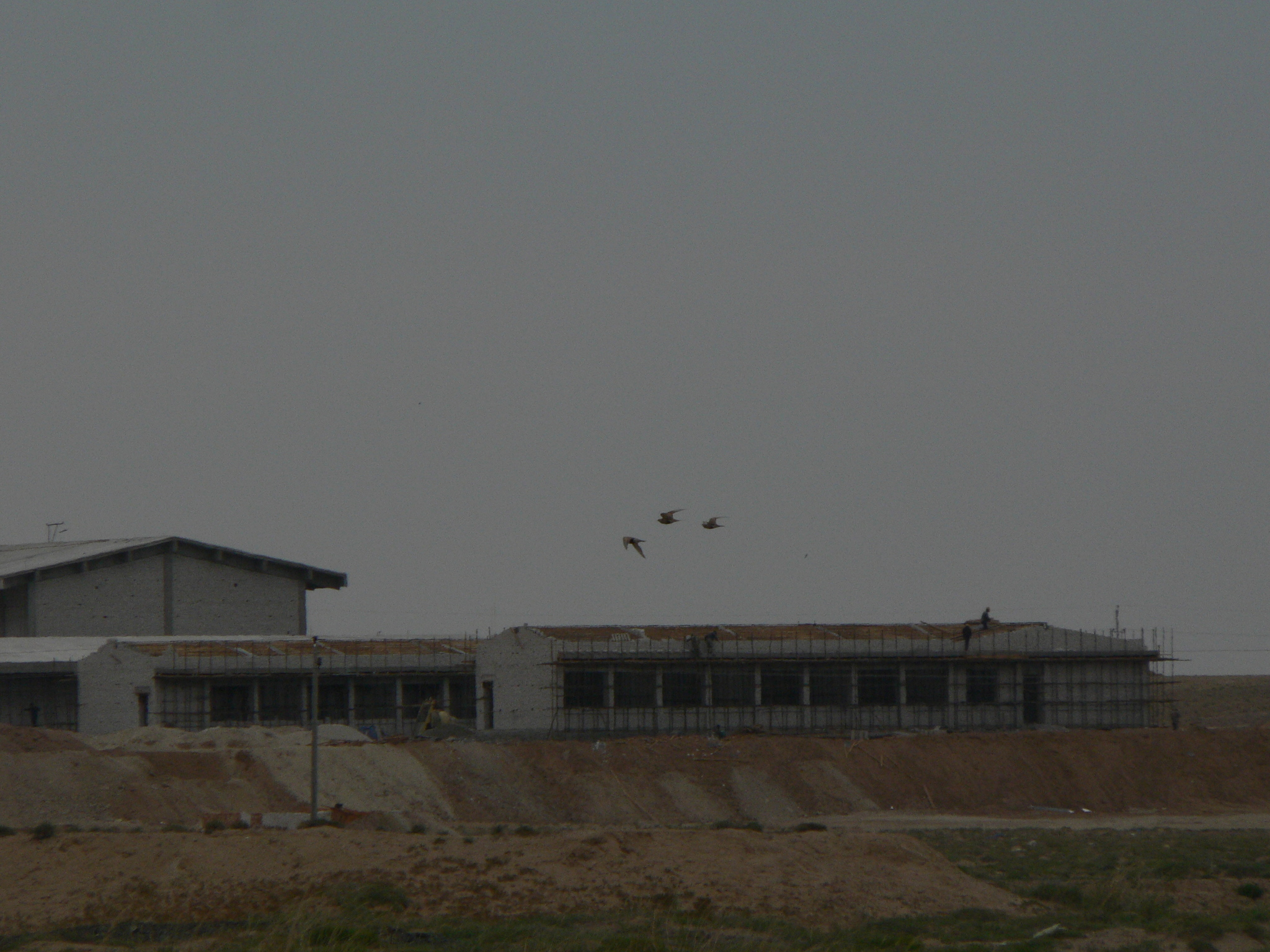

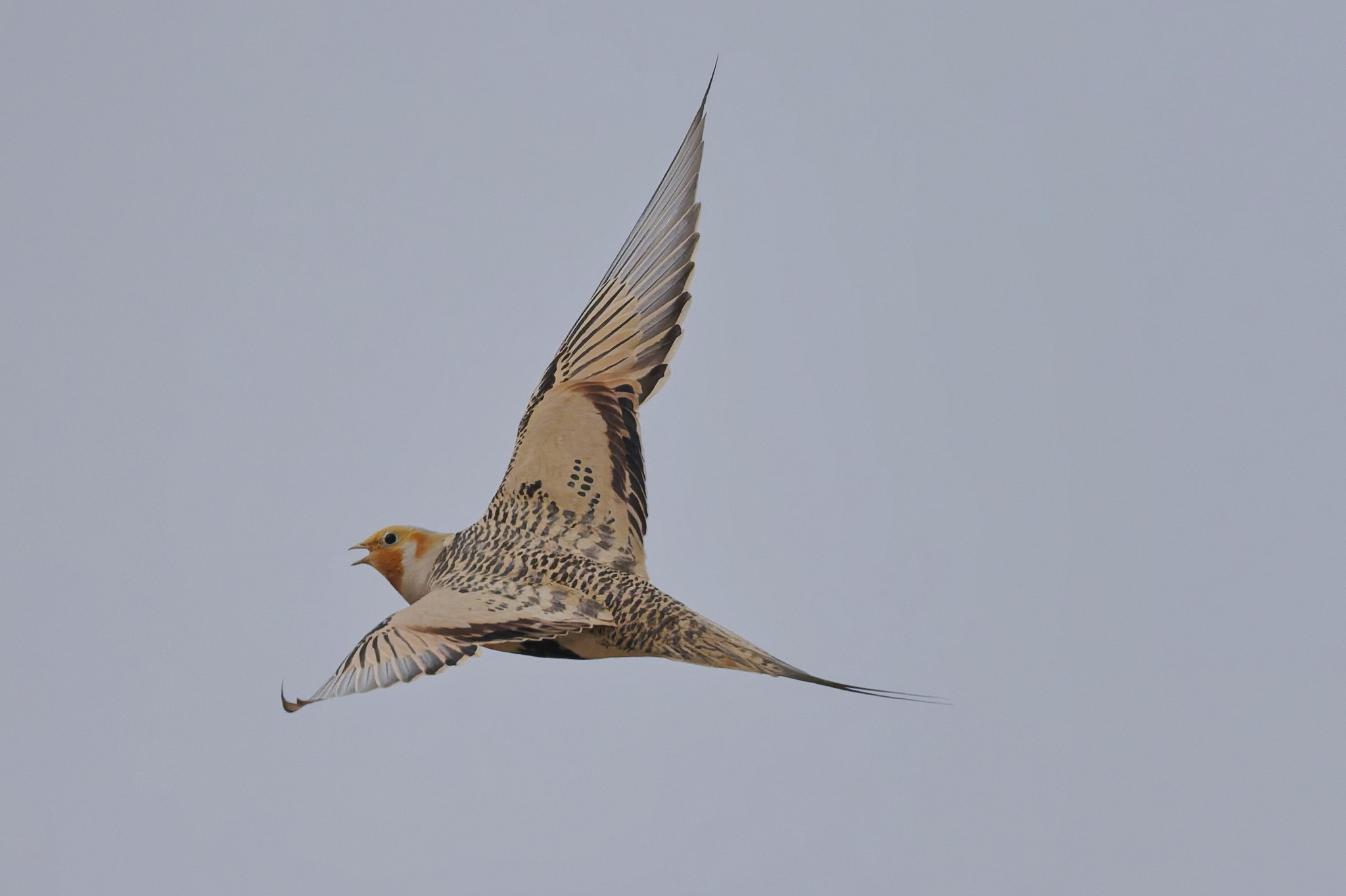
Pallas's Sandgrouse
Syrrhaptes paradoxus
毛腿沙鸡
Introduction
Medium to large bird in the sandgrouse family (Syrrhaptes paradoxus). Breeds across middle latitudes of central Asia on dry steppes. Characterized by long pointed wings and tail, and feathered legs and toes with the three front toes fused together. Partial migrant from northern parts of range in Kazakhstan and Mongolia, with winter movements dependent on snowfall. Occasionally irrupts as vagrant across Europe to Great Britain and Ireland.
Description
30–41 cm (12–16 in) long with a small, pigeon-like head and neck and sturdy compact body. Long pointed wings and tail. Legs and toes are feathered; the small feet lack a hind toe and the three front toes are fused together. Upper surface is feathered with a fleshy pad underneath, resembling a paw more than an avian foot. Plumage is buff-coloured and barred above with a black belly patch and pale underwings. Male has grey head and breast, orange face, and grey breast band. Female has duller plumage, lacks the breast band, but shows more barring on the upperparts.
Identification
The black belly and pale underwings distinguish this species from the related Tibetan sandgrouse. Male is recognized by its grey head and breast, orange face, and grey breast band. Female has duller overall plumage and lacks the breast band, though it has more barring on the upperparts.
Distribution & Habitat
Breeds across middle latitudes of central Asia on dry steppes and similar habitats. Partial migrant, especially from northern parts of range in Kazakhstan and Mongolia; the extent of southerly winter movements depends on snowfall amounts. Occasional irruptions occur as a vagrant across Europe as far west as Great Britain (where it has bred) and Ireland. Western Siberian range has contracted as steppes become more agricultural.
Behavior & Ecology
Primarily feeds on seeds and must drink large volumes of water. Wing morphology allows fast flight with speeds up to 64 km/h (40 mph) recorded. Large flocks of several thousand individuals make round trips of up to 121 km (75 mi) per day to watering holes at dawn and dusk. Males soak their breast plumage in water while drinking, allowing chicks to drink from the absorbed moisture. Nest is a ground scrape containing 2–3 greenish eggs with cryptic markings.
Conservation
IUCN status not specified. Population trend shows contraction of western Siberian range as steppes become more agricultural, leading to less frequent irruptions into western Europe.
Culture
Marco Polo mentions a bird called Bargherlac (from Turkmen bağırlak) in The Travels of Marco Polo (c. 1300), which is probably this species.
Source: Wikipedia · CC BY-SA 3.0
Taxonomy
- Order
- Pterocliformes
- Family
- Pteroclidae
- Genus
- Syrrhaptes
- eBird Code
- palsan1
Distribution
sandy steppes of central Asia from western Kazakhstan to northeastern and east-central China
Data Sources
Species description from Wikipedia, licensed under CC BY-SA 3.0.
Bird images and sounds sourced from GBIF, contributed by citizen scientists worldwide under Creative Commons licenses.
Taxonomy data from AviList 2025.