Mrs. Hume's Pheasant
Syrmaticus humiae
黑颈长尾雉
Introduction
Large forest pheasant (Syrmaticus humiae) endemic to northeast India, Myanmar, south China, and northwestern Thailand. Found in forested habitats of the Mizoram, Patkai Range, Manipur, Yunnan, and northern regions of Myanmar and Thailand. The species is notable for being one of the rarest and least known pheasants in its range. Serves as the state bird of Mizoram and Manipur. Classified as Vulnerable on the IUCN Red List due to habitat loss, fragmentation, and hunting pressure.
Description
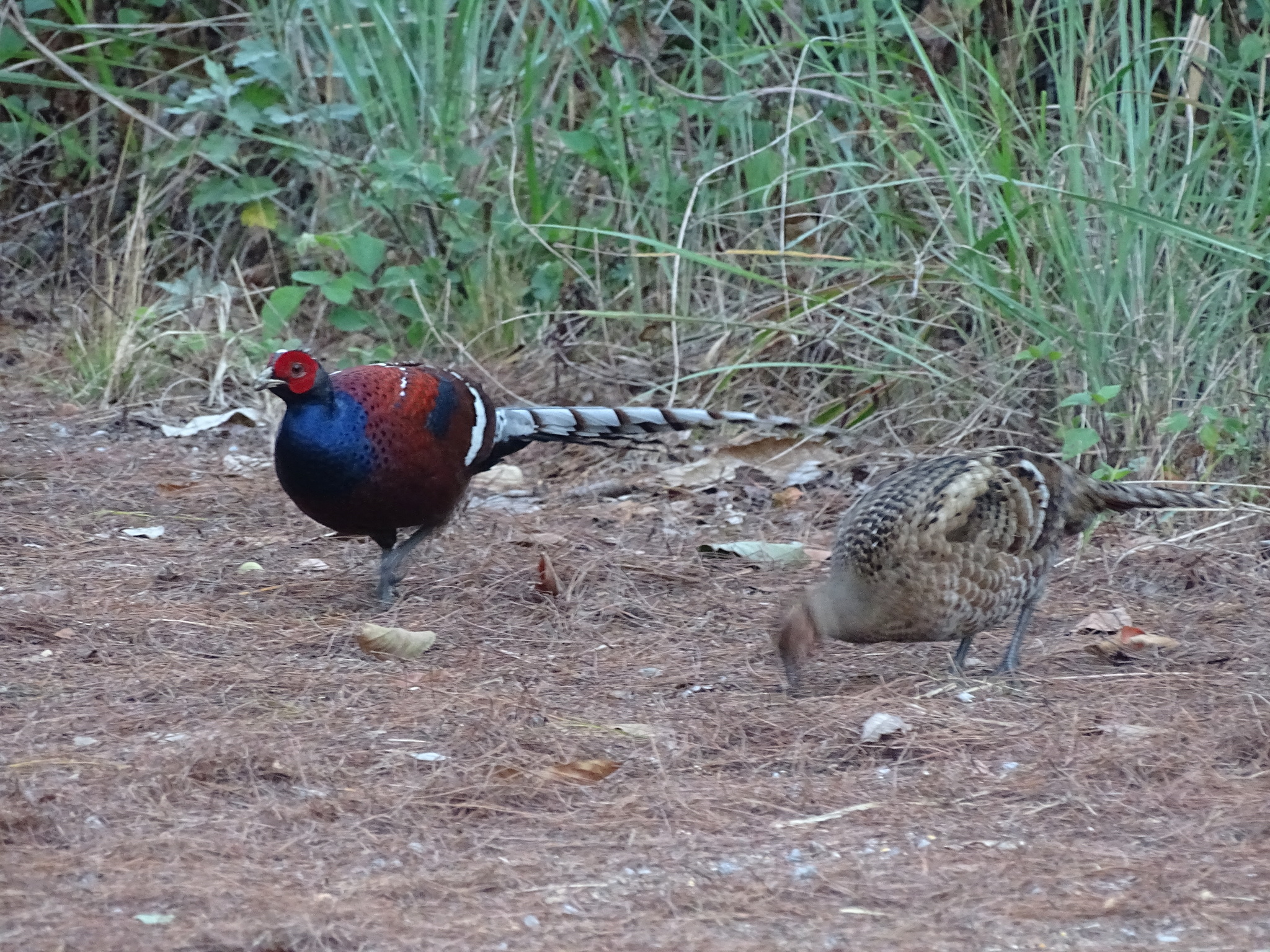
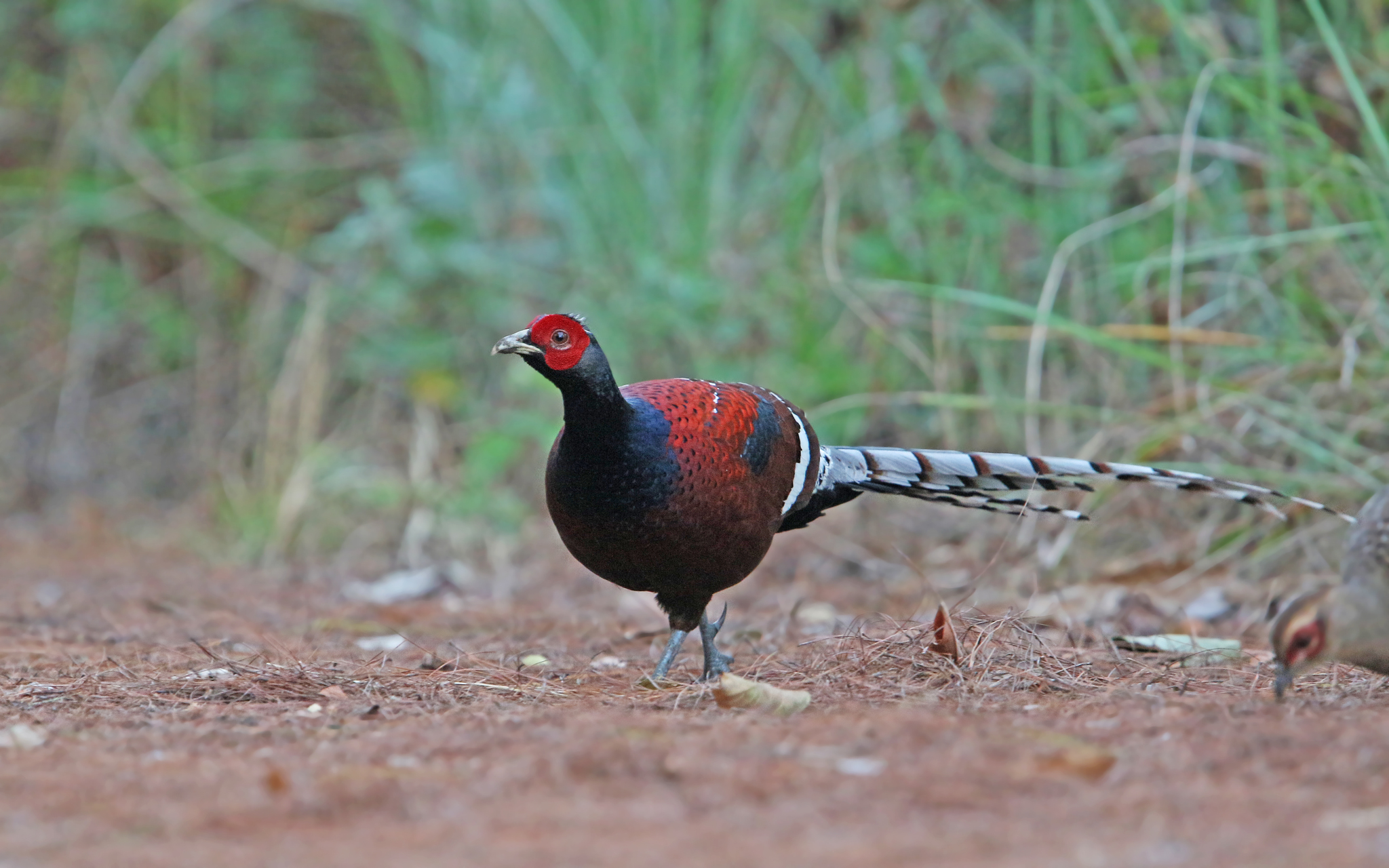
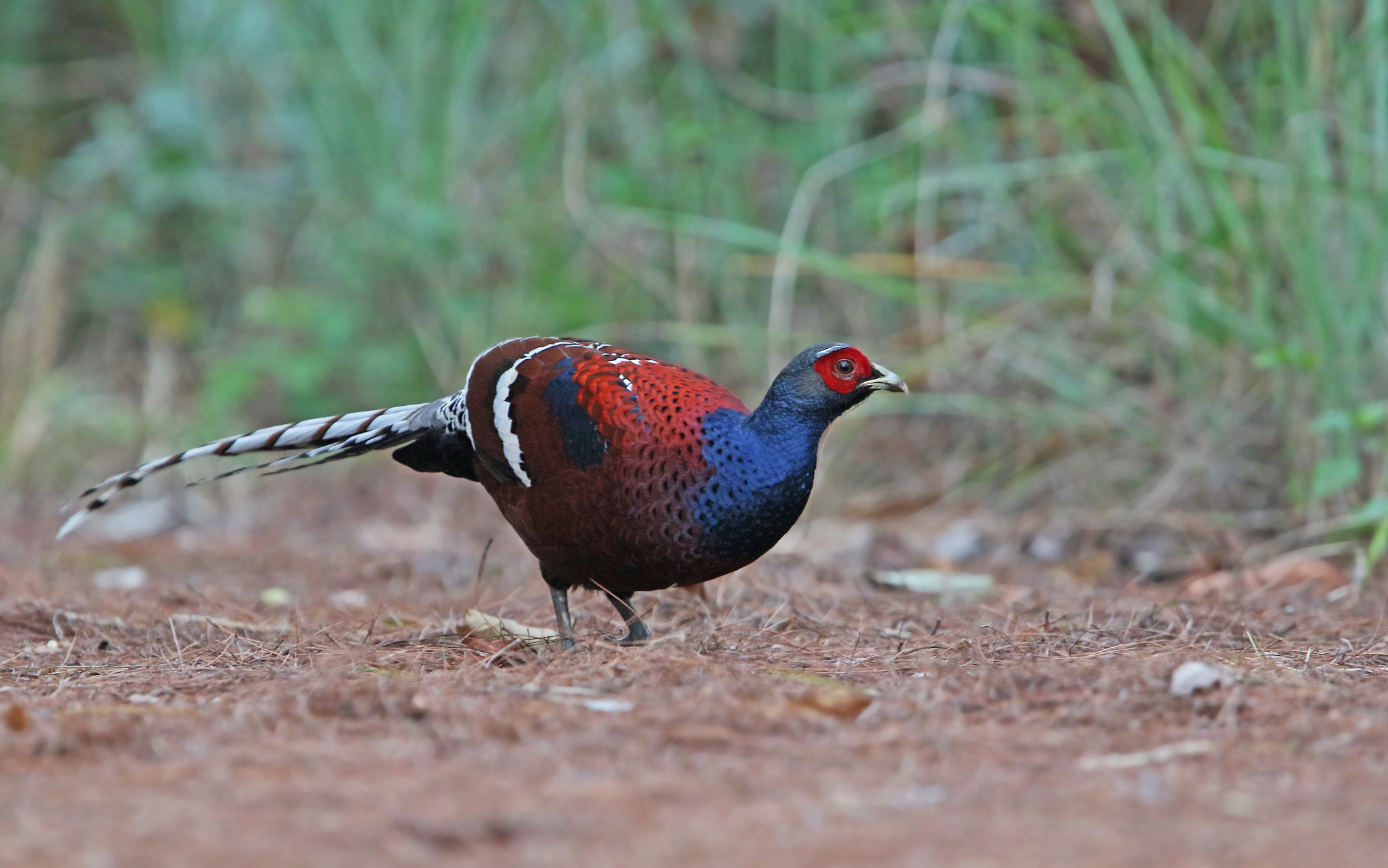
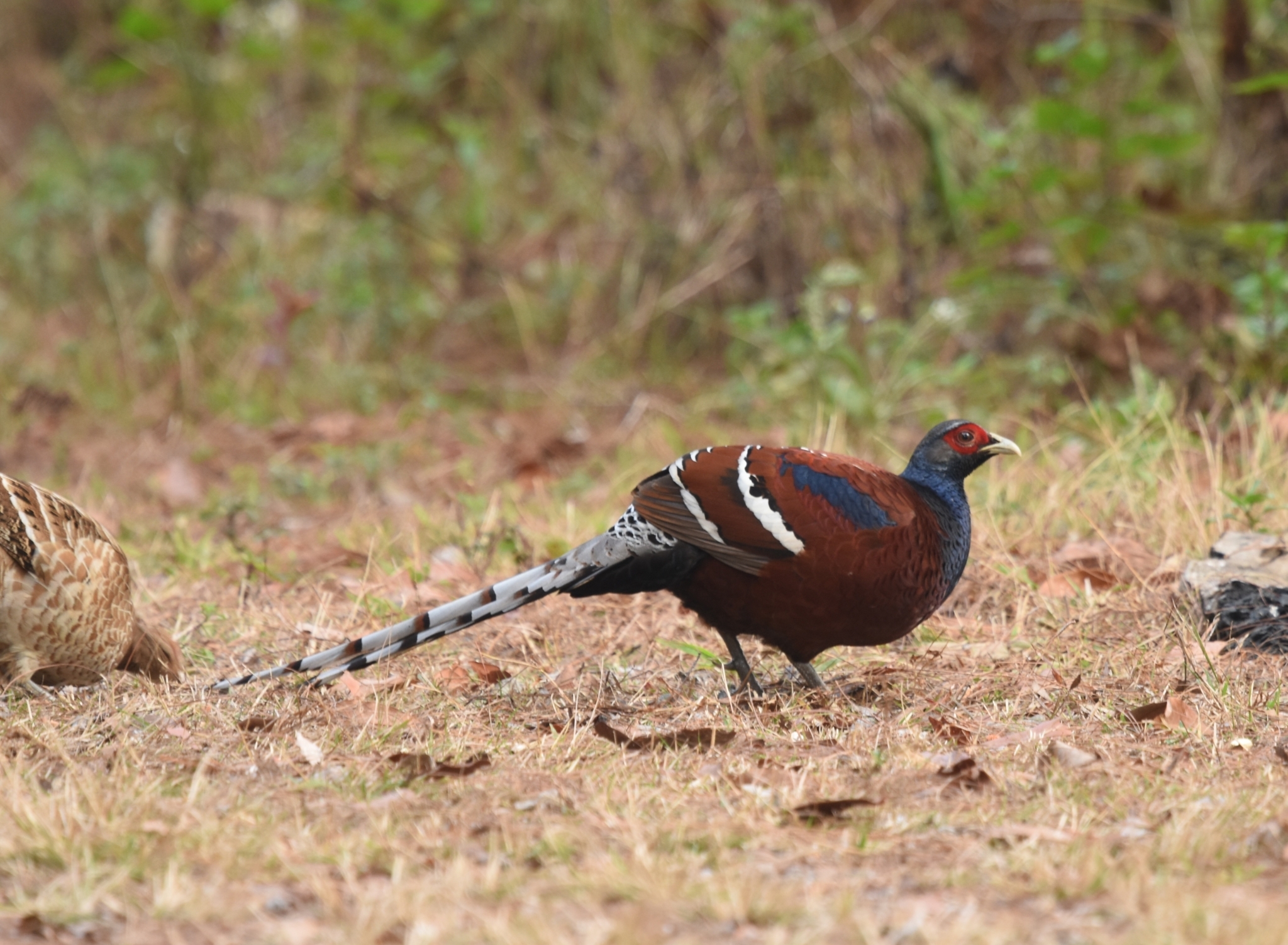
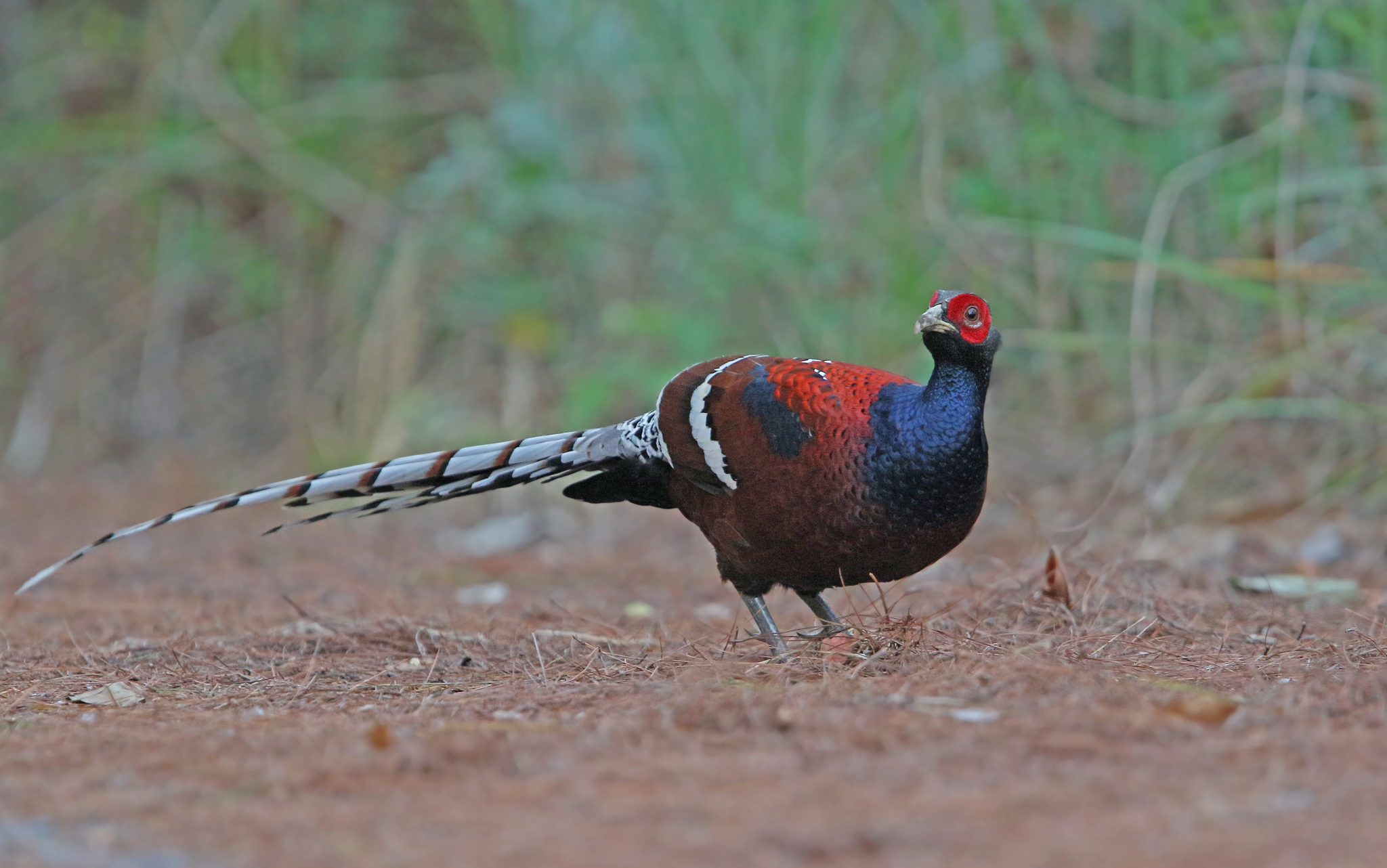
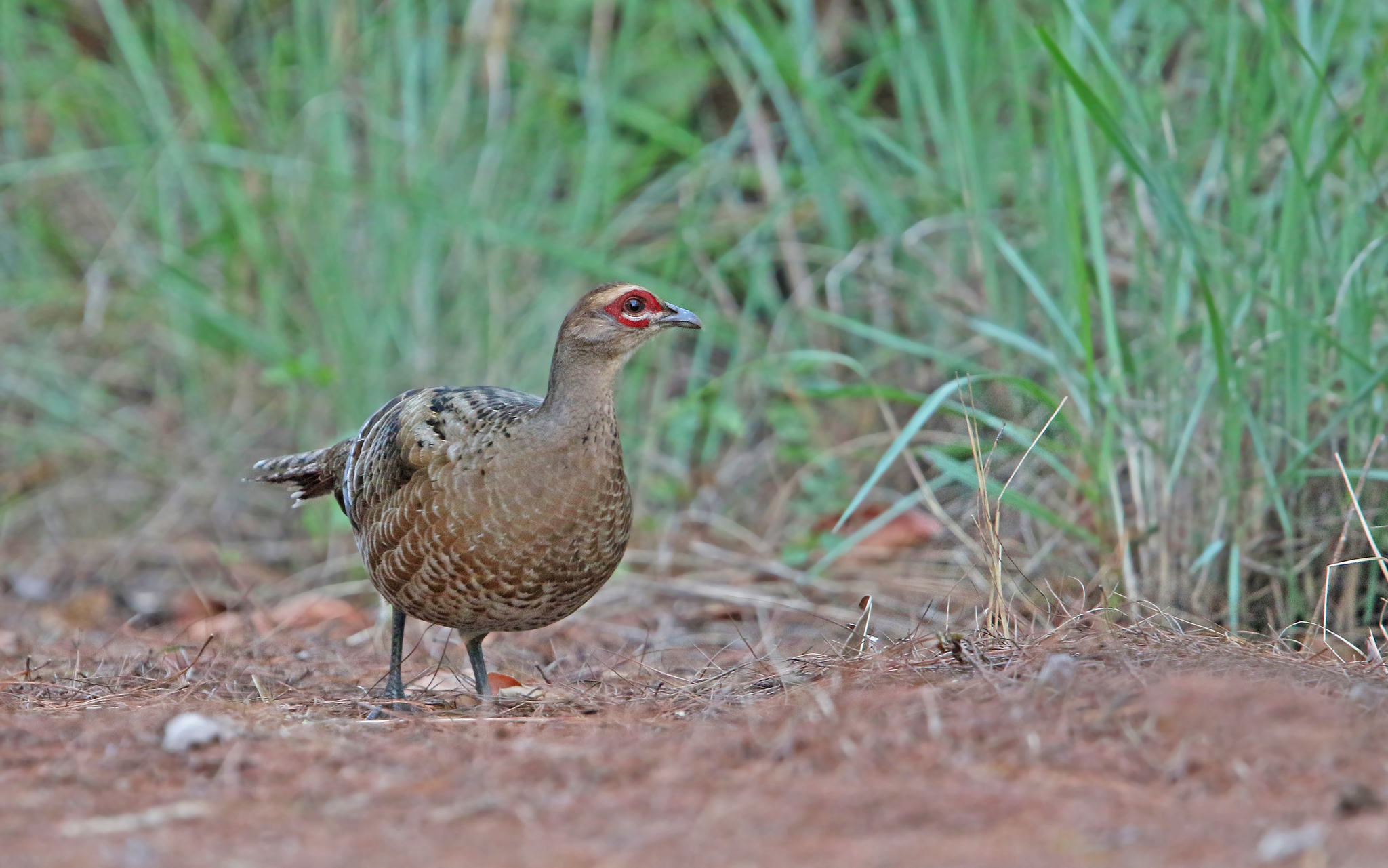
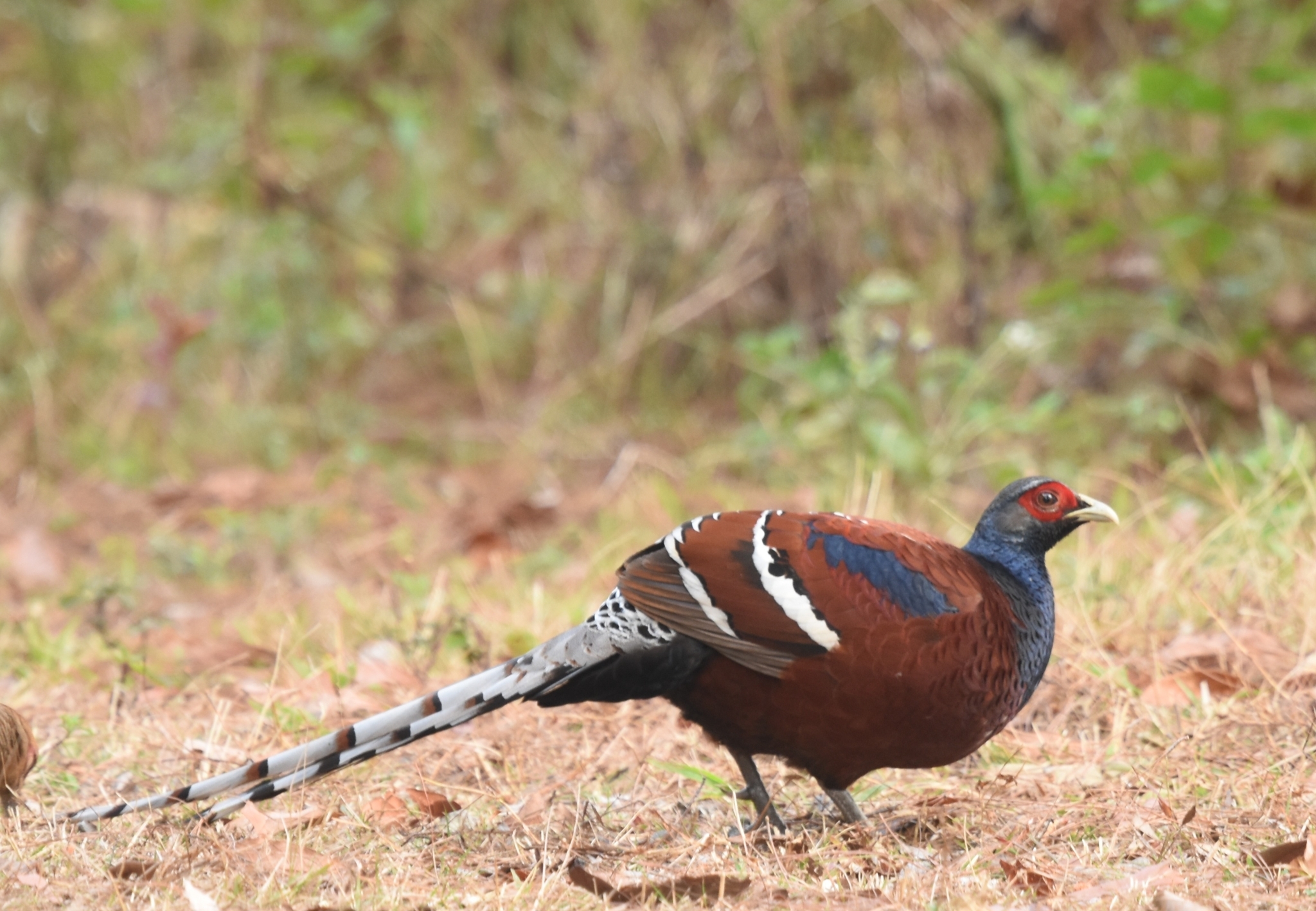
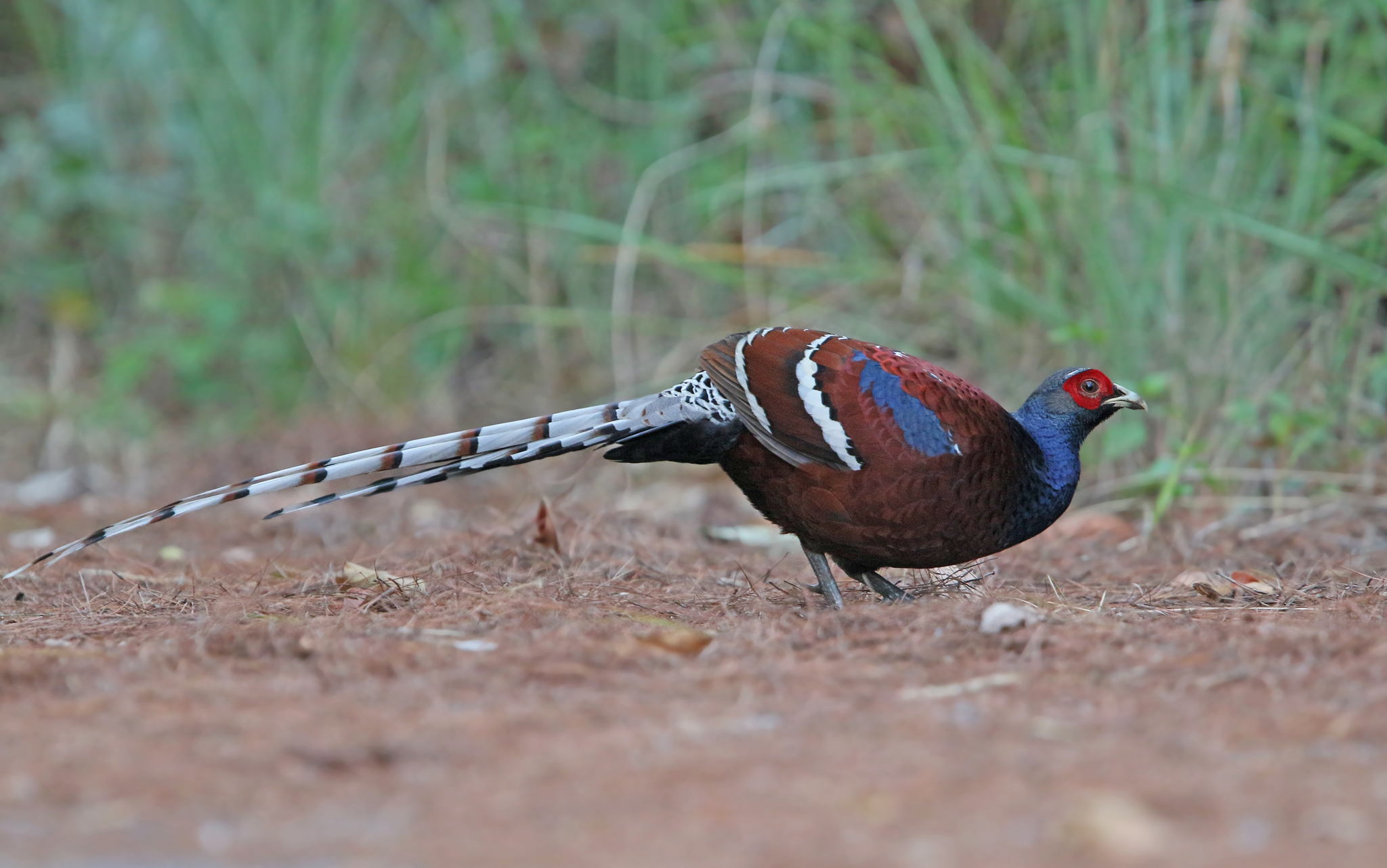
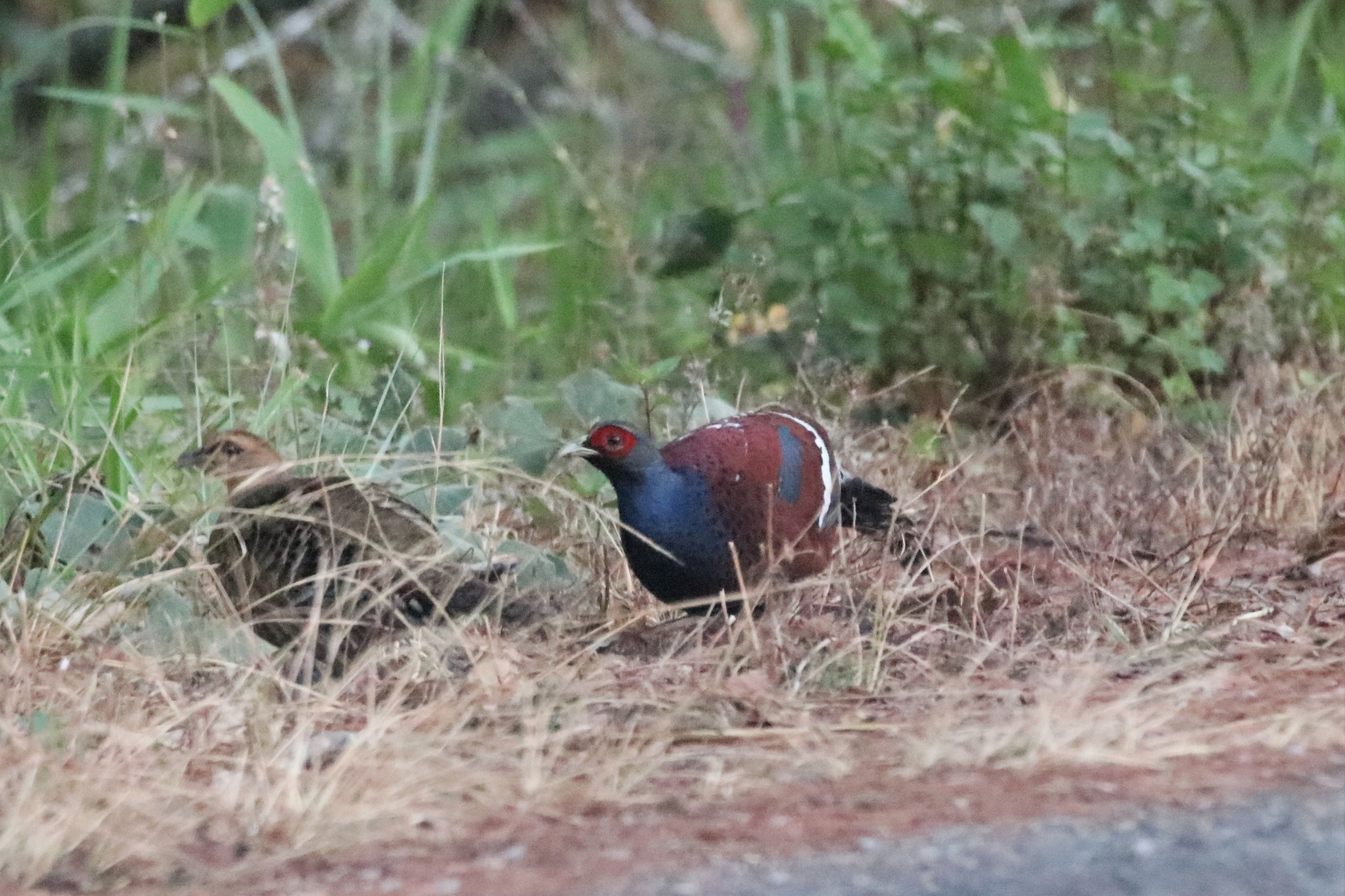
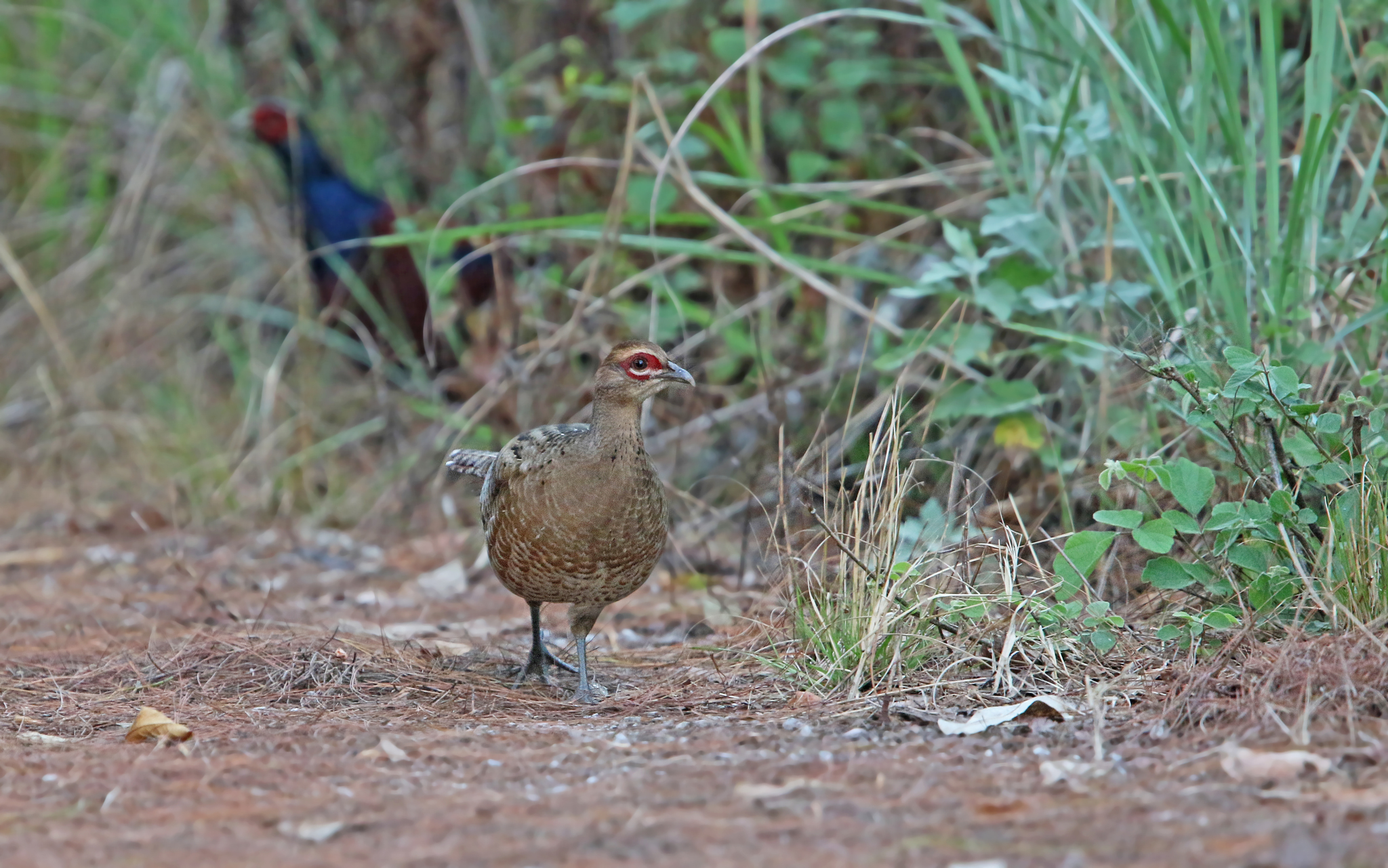
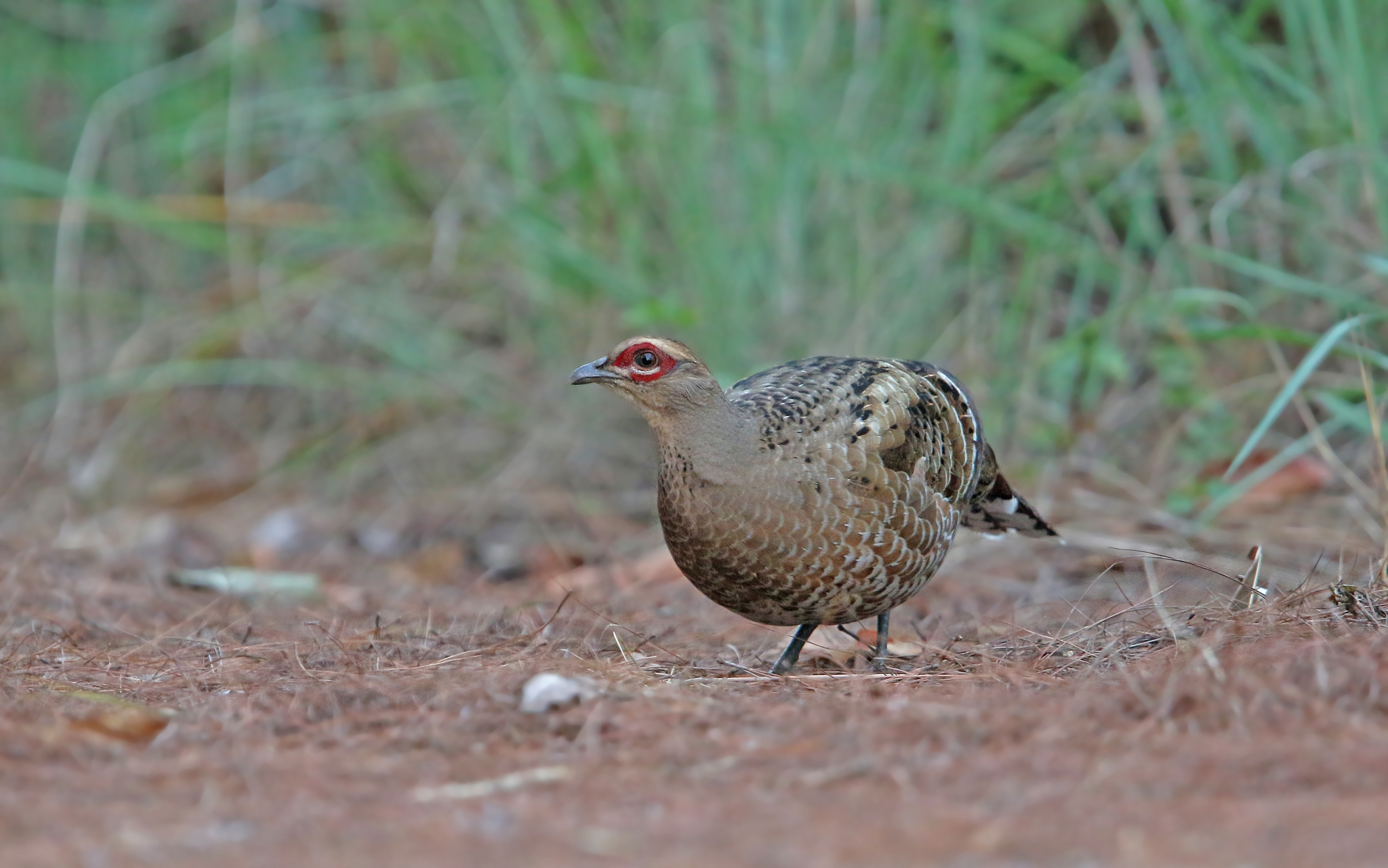
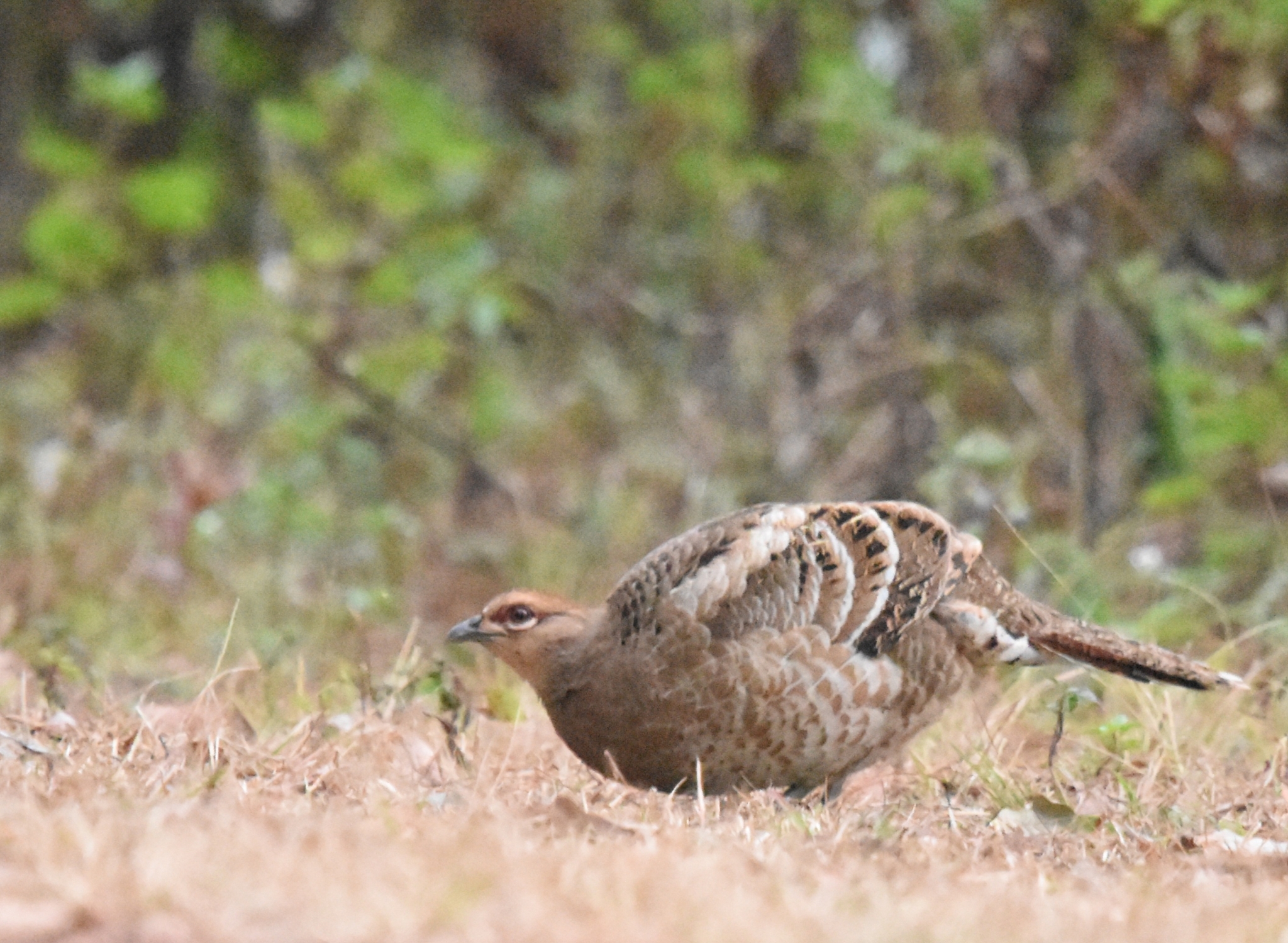
A large pheasant reaching up to 90 cm (35 inches) in length. The head is greyish brown with bare red facial skin. The plumage is chestnut brown with metallic blue neck feathers, white wingbars, a yellowish bill, and brownish orange iris. The male possesses a long greyish white tail barred with black and brown. The female is chestnut brown overall with a whitish throat, buff-colored belly, and white-tipped tail.
Distribution & Habitat
Inhabits forested habitats across northeast India (Arunachal Pradesh, Manipur, Mizoram, Nagaland), Myanmar, south China (southwestern Yunnan, western Guangxi, extreme southwestern Guizhou), and northwestern Thailand. The population is fragmented across its range due to habitat loss and degradation.
Behavior & Ecology
Diet consists primarily of vegetation matter. The female lays 3 to 12 creamy white eggs in nests constructed from leaves, twigs, and feathers. Additional information on vocalizations, social structure, and breeding behavior is limited.
Conservation
Evaluated as Vulnerable on the IUCN Red List of Threatened Species. The population is declining due to ongoing habitat loss, fragmented populations, and hunting for food. Listed on Appendix I of CITES, prohibiting commercial international trade.
Culture
State bird of Mizoram and Manipur. Known locally as Nongin in Meitei (meaning "one who follows the track of rain") and Vavu in Mizo. The scientific name commemorates Mary Ann Grindall Hume, wife of British naturalist Allan Octavian Hume, a key founder of the Indian National Congress.
Source: Wikipedia · CC BY-SA 3.0
Taxonomy
- Order
- Galliformes
- Family
- Phasianidae
- Genus
- Syrmaticus
- eBird Code
- humphe1
Subspecies (2)
-
Syrmaticus humiae burmanicus
southwestern China (southwestern Yunnan) to Myanmar and northwestern Thailand
-
Syrmaticus humiae humiae
montane forest of far northeastern India and northern Myanmar
Data Sources
CBR Notes: IUCN红色名录等级由NT升为VU
Species description from Wikipedia, licensed under CC BY-SA 3.0.
Bird images and sounds sourced from GBIF, contributed by citizen scientists worldwide under Creative Commons licenses.
Taxonomy data from AviList 2025.