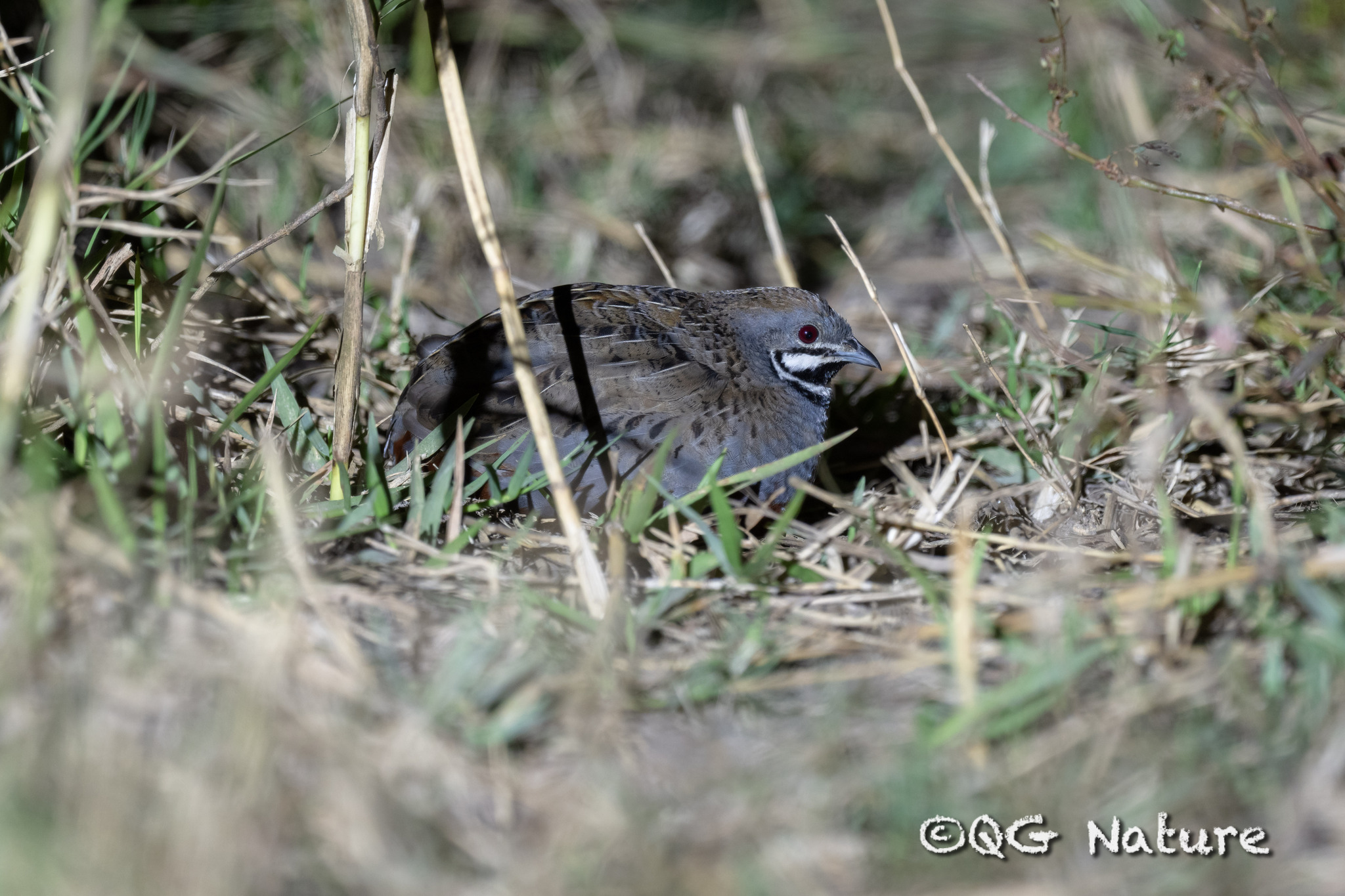
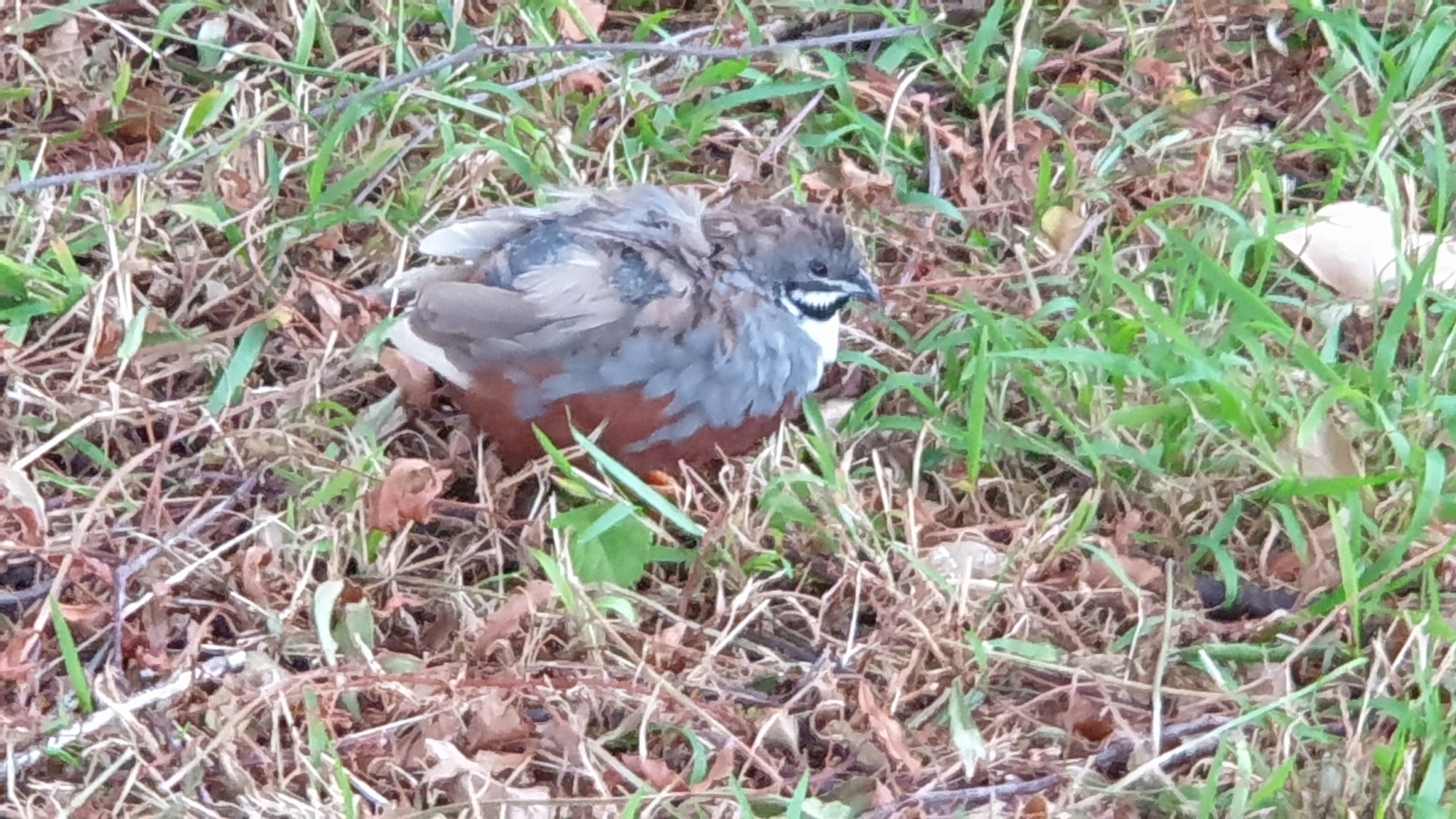
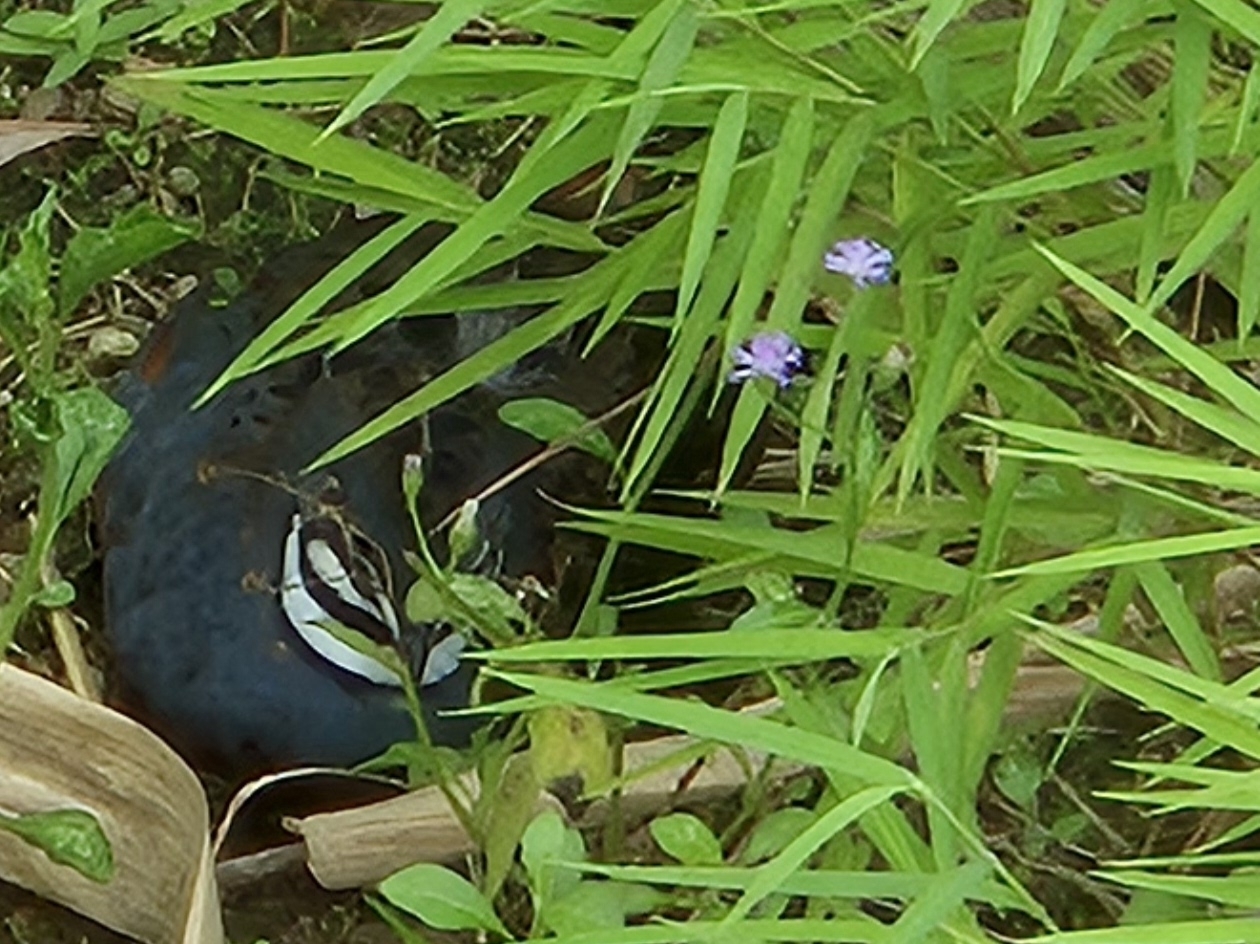
King Quail
Synoicus chinensis
蓝胸鹑
Introduction
A very small galliform bird belonging to the tribe Coturnicini in the subfamily Phasianidae. This species represents the smallest member of its subfamily, family, and the entire order Galliformes. Its natural range extends from southern China through South and Southeast Asia to Oceania, reaching southeastern Australia. Six subspecies are recognized across this distribution. The species is distinguished by its extremely small size and ground-dwelling lifestyle. In aviculture, it is commonly but incorrectly referred to as the 'button quail,' despite being only distantly related to the true buttonquail family.
Description
A diminutive game bird with orange feet that are hard and adapted for continuous ground life. Males display various color mutations in captivity including blue, brown, silver, maroon, dark brown, and almost black. Females resemble males but do not occur in blue colorations. Eggs are light creamy-brown, slightly pointed at one end, and ovular in shape. The species has a piping whistle vocalization and produces sharp cheeps when disturbed.
Distribution & Habitat
Native range spans southern China, South and Southeast Asia to Oceania, extending south to southeastern Australia. Six subspecies are recognized with specific geographic distributions: S. c. chinensis (India and Sri Lanka to Malaya, Indochina, southeastern China, and Taiwan), S. c. trinkutensis (Nicobar Islands), S. c. lineatus (Philippines, Borneo, Lesser Sundas, Sulawesi and Sula Islands), S. c. lepidus (New Guinea and Bismarck Archipelago), S. c. victoriae (eastern Australia), and S. c. colletti (northern Australia). A failed introduction attempt was made to New Zealand in the late 1890s.
Behavior & Ecology
The diet consists of small bugs, grass seeds, rape seeds, and available vegetation. During breeding, males compete for mating rights, with the winner breeding all females. Females can develop and lay eggs within one to two days of mating. Clutch size varies from five to 13 eggs, with incubation lasting approximately 16 days. The species produces a descending whistle and a raspy 'snoring' call. Nests are simple scrapes on the ground, lined with grasses, typically built by the female with male assistance.
Conservation
Not listed as threatened under Australia's national Environment Protection and Biodiversity Conservation Act 1999. However, the species is listed as endangered on the Victorian Flora and Fauna Guarantee Act (1988), reflecting regional population concerns. No recovery action statement has been prepared for the species in Victoria.
Culture
Also known as blue-breasted quail, Asian blue quail, Chinese painted quail, or Chung-Chi. The species has been popular in aviculture worldwide for many years, with numerous color mutations developed. It is frequently erroneously called the 'button quail,' which properly refers to a distantly related family of birds. Hybrids with brown quail are known to occur, and various mutations including silvers, cinnamons, pieds, albinos, and charcoals have been developed through selective breeding.
Source: Wikipedia · CC BY-SA 3.0
Taxonomy
- Order
- Galliformes
- Family
- Phasianidae
- Genus
- Synoicus
- eBird Code
- blbqua1
Vocalizations
Subspecies (6)
-
Synoicus chinensis chinensis
India to Sri Lanka, Malaya, Indochina, southeastern China, and Taiwan
-
Synoicus chinensis colletti
northwestern Australia (Kimberley region of northern Northern Territory)
-
Synoicus chinensis lepidus
New Guinea and Bismarck Archipelago
-
Synoicus chinensis lineatus
Philippines, Borneo, Sumatra and Java to Sulawesi, Sula Islands, and Lesser Sundas (Lombok to Sumba, Flores, and Timor)
-
Synoicus chinensis trinkutensis
Nicobar Islands
-
Synoicus chinensis victoriae
eastern Australia (Cape York Peninsula, Queensland, to eastern Victoria)
Data Sources
Species description from Wikipedia, licensed under CC BY-SA 3.0.
Bird images and sounds sourced from GBIF, contributed by citizen scientists worldwide under Creative Commons licenses.
Taxonomy data from AviList 2025.