Short-tailed Parrotbill
Suthora davidiana
短尾鸦雀
Introduction
A passerine bird in the family Paradoxornithidae. Found in China, Laos, Myanmar, Thailand, and Vietnam. Inhabits subtropical or tropical moist lowland forests. This genus is distinguished by having a tail less graduated and much shorter than related Suthora species—not more than three-fourths the length of the wing—and possesses a larger, deeper bill. Wings are more rounded with the 4th to 7th primaries subequal in length.
Description
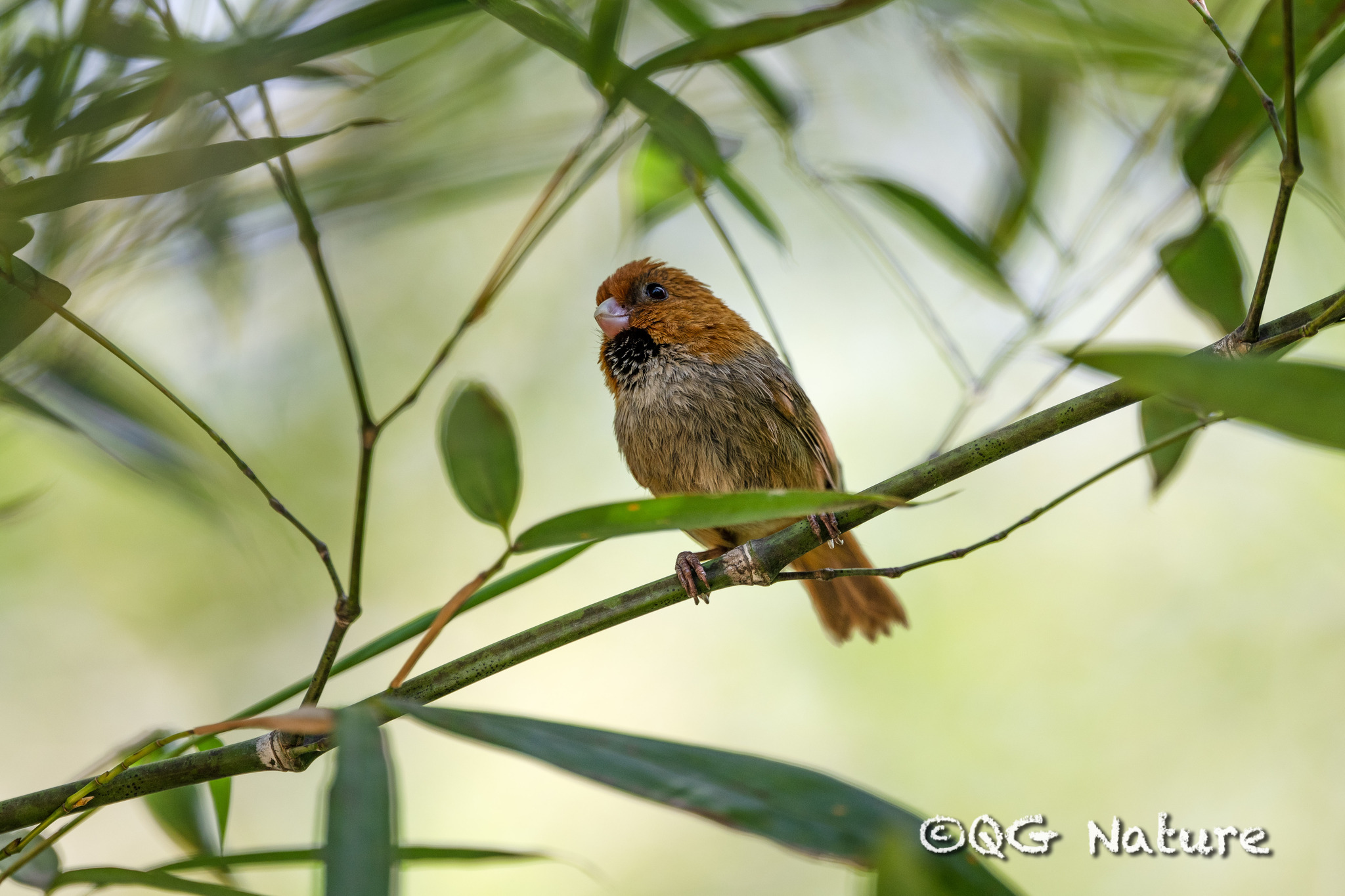
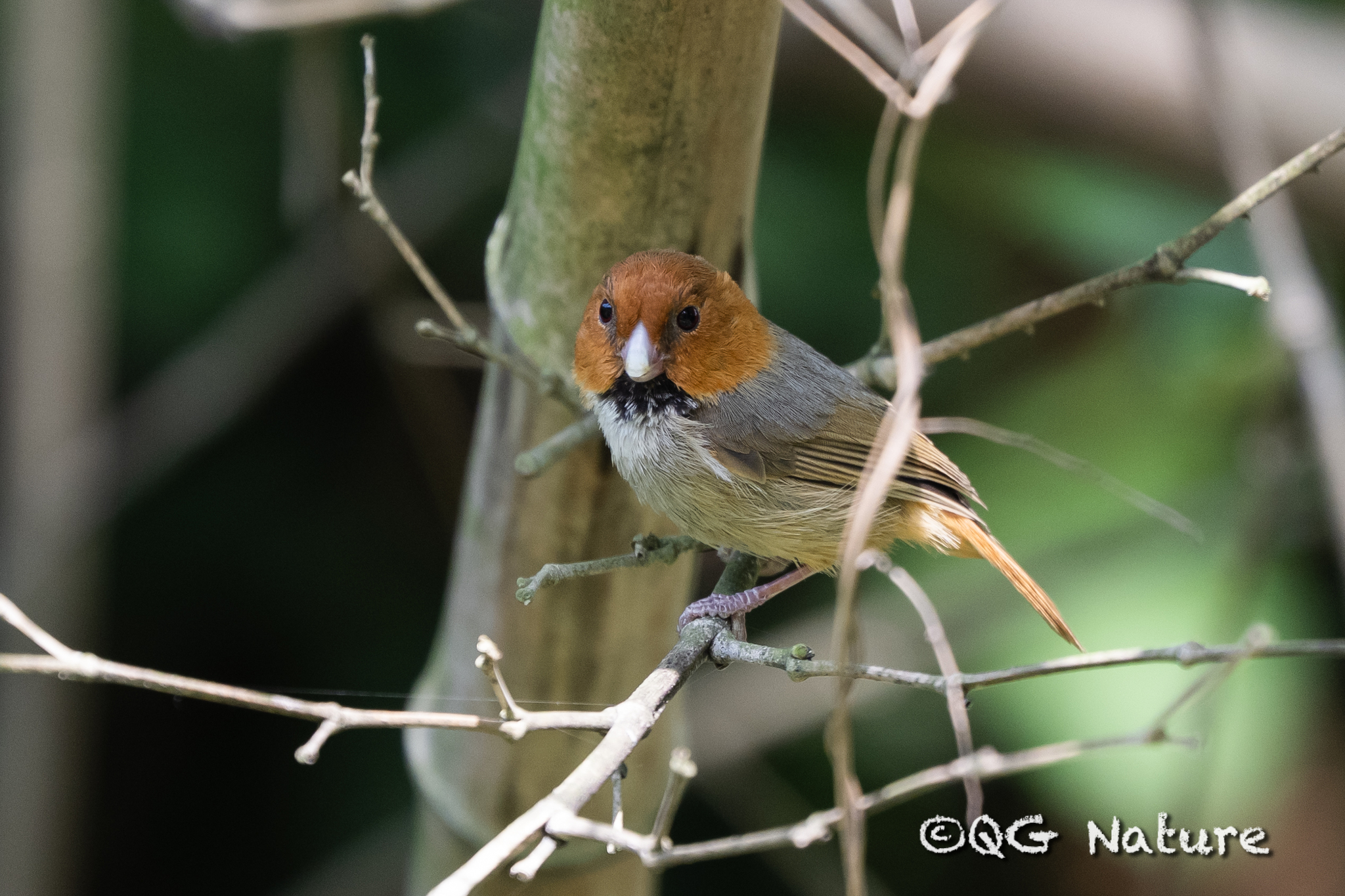
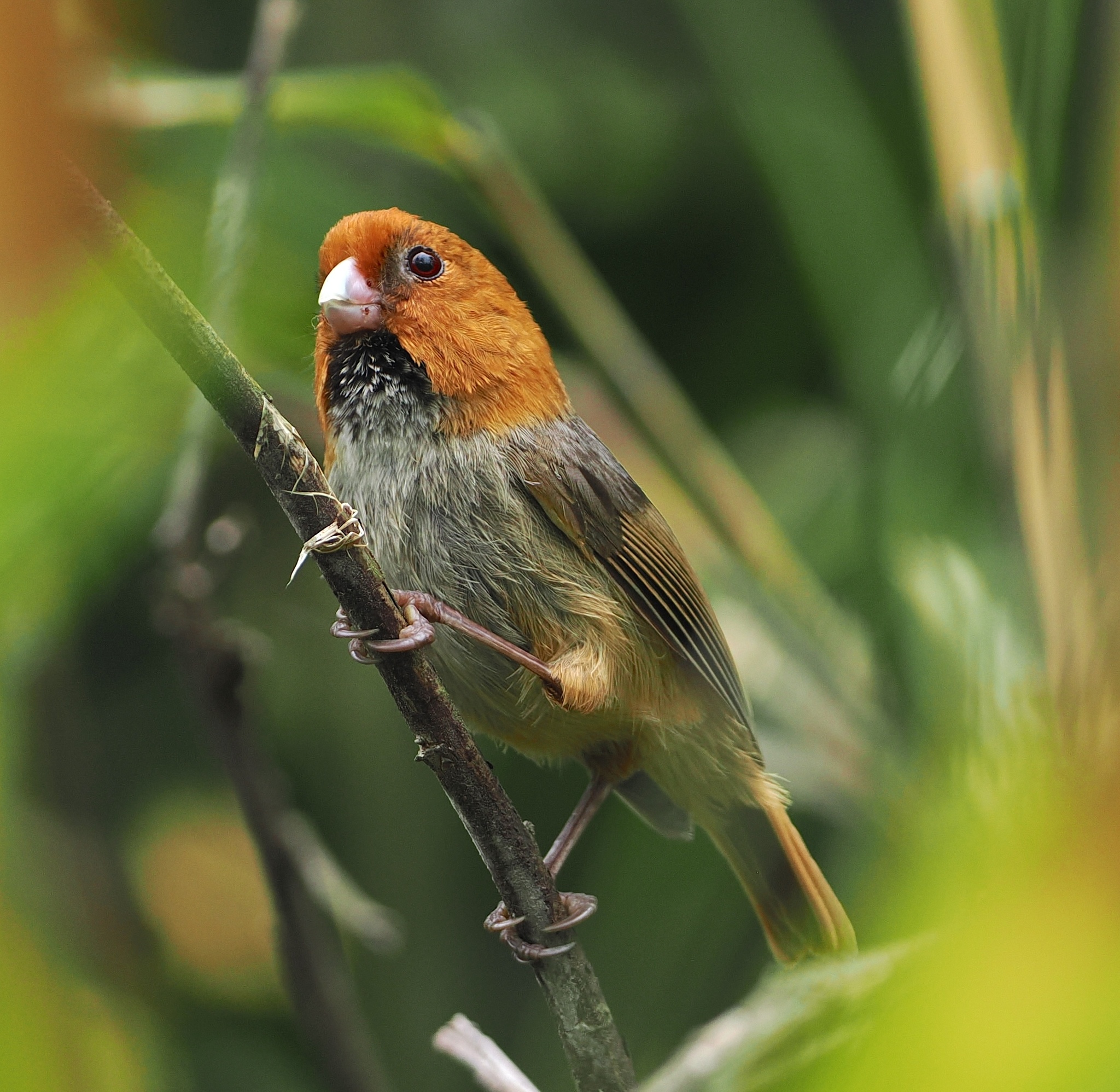
The head is bright cinnamon-rufous on the top and sides. The hind neck, back, and rump are pale slate-grey, washed with olive. Wings and tail are grey-brown with quills edged in bright rufescent brown. The chin and throat are black. The breast is grey tinged with buff, especially at the center. Flanks, abdomen, and lower tail-coverts are brownish ochraceous. The bill is fleshy horny, irides are hazel, and legs are plumbeous grey. Measures 95-100 mm in total length with a wing of 50-52 mm and tail of 36-38 mm.
Distribution & Habitat
Occurs across China, Laos, Myanmar, Thailand, and Vietnam. Three subspecies are recognized: S.d. thompsoni in India, S.d. tonkinensis in northeastern Laos, and S.d. davidiana in eastern China around northern Guangdong and Zhejiang. S.d. tonkinensis is found in the Southern Shan States of Myanmar.
Source: Wikipedia · CC BY-SA 3.0
Taxonomy
- Order
- Passeriformes
- Family
- Paradoxornithidae
- Genus
- Suthora
- eBird Code
- shtpar3
Subspecies (3)
-
Suthora davidiana davidiana
highlands of southeastern China (southern Zhejiang to central Fujian)
-
Suthora davidiana thompsoni
southern China (southern Yunnan) to eastern Myanmar, eastern Thailand, northwestern Laos, and northern Tonkin
-
Suthora davidiana tonkinensis
highlands of northern Vietnam (Bac Phan)
Data Sources
CBR Notes: 由Neosuthora属移入Suthora属(Cai et al. 2019)
Species description from Wikipedia, licensed under CC BY-SA 3.0.
Bird images and sounds sourced from GBIF, contributed by citizen scientists worldwide under Creative Commons licenses.
Taxonomy data from AviList 2025.