Pale-billed Parrotbill
Suthora atrosuperciliaris
黑眉鸦雀
Introduction
Suthora atrosuperciliaris is a small passerine bird belonging to the family Paradoxornithidae. This species is restricted to southern and southeastern Asia, where it inhabits evergreen forests and bamboo thickets. It is characterized by its distinctive foraging behavior, often moving through habitat in flocks of 6-12 individuals and hanging upside down while searching for food. The species descends to lower altitudes during colder months to escape harsh temperatures. It is currently classified as Least Concern on the IUCN Red List, though deforestation poses a potential threat to its habitat.
Description
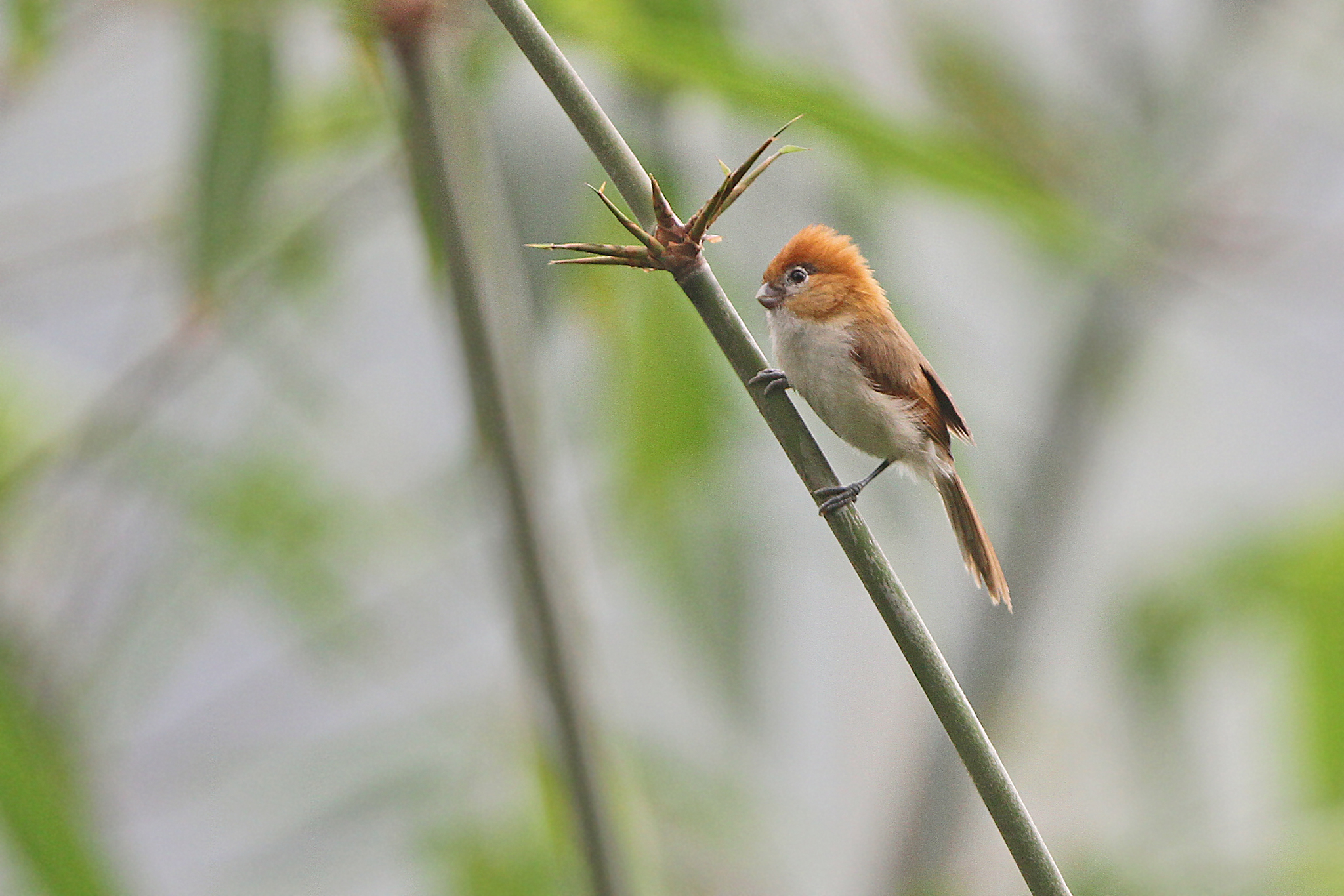
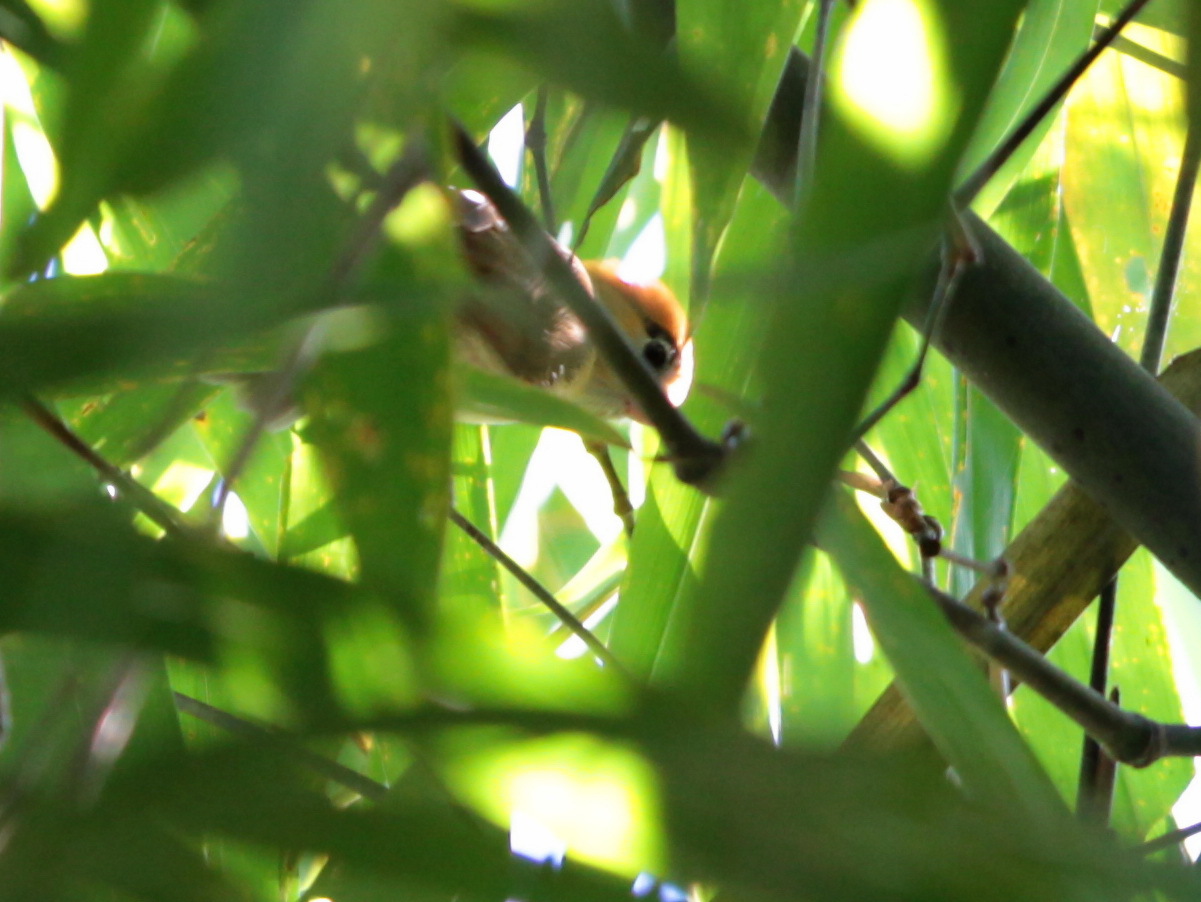
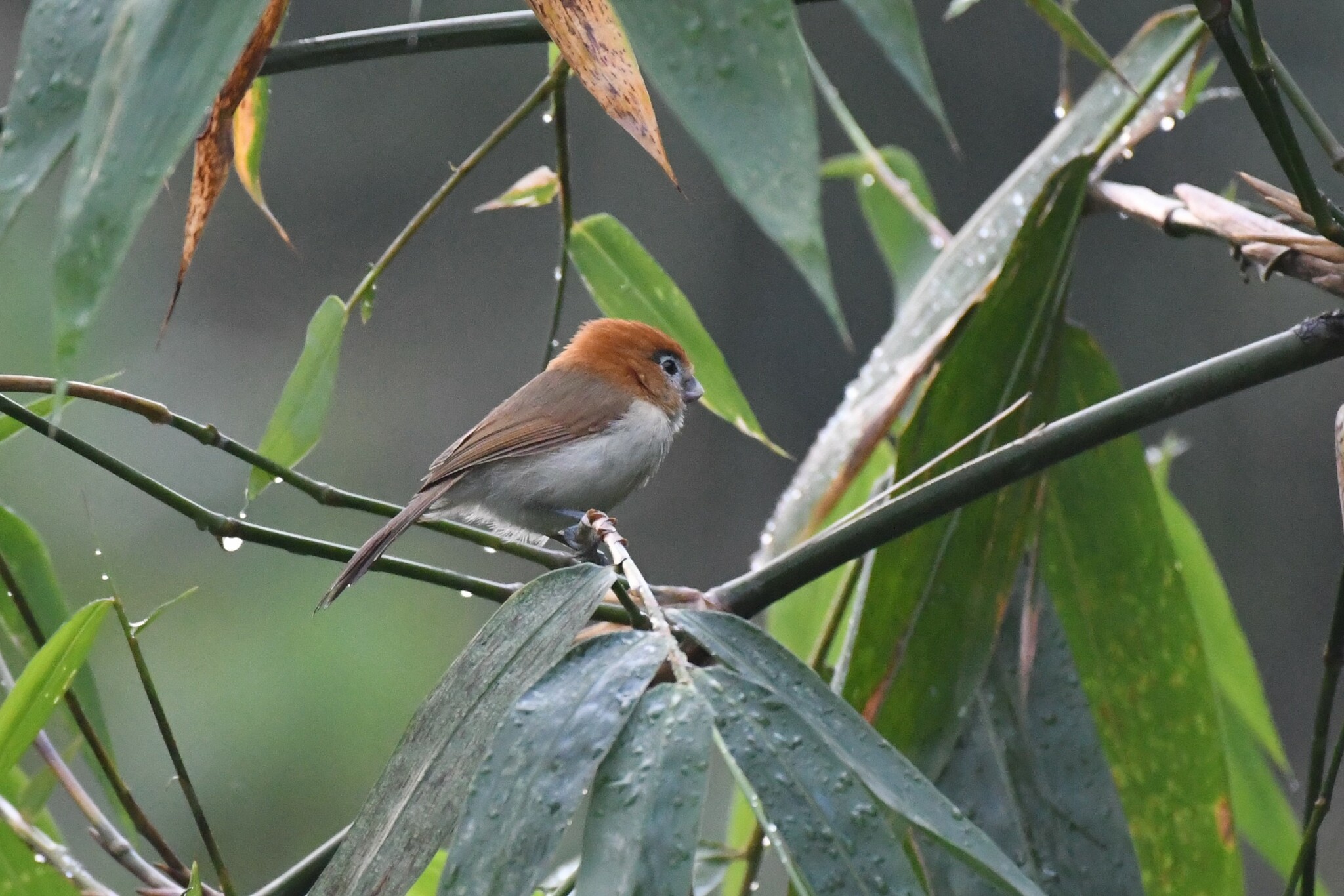
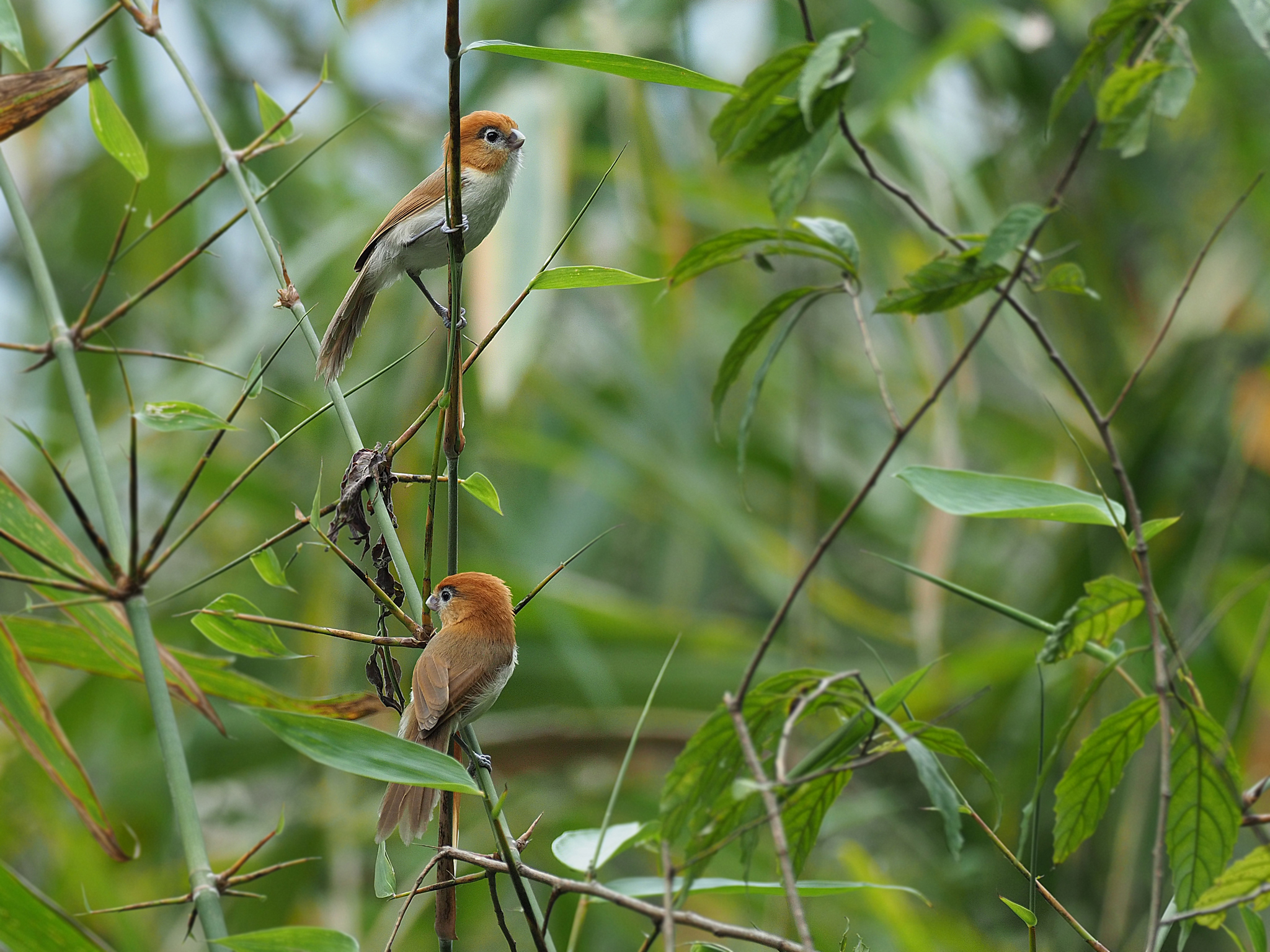
A small, round bird measuring 14-15 centimeters in length with a notably short tail. The plumage is primarily pale buff, while the upper wings are blackish-brown with rufous-buff inner fringes to the flight feathers. The tail is dark brown. The most distinctive features are the orange crown feathers that project upward and a blueish ring surrounding the eye. The irises are bright brown or bright red-brown, and the bill is pinkish. Sexual dimorphism is minimal to nonexistent. Juveniles appear duller with softer feathers, giving them an even rounder appearance.
Identification
The combination of round body shape, short tail, orange crown feathers, and blue eye ring distinguishes this species from similar parrotbills and warblers in its range. The pinkish bill separates it from species with darker or horn-colored bills. The species' habit of foraging while hanging upside down in bamboo thickets can aid identification. Its flock size of 6-12 birds is also characteristic when observed.
Distribution & Habitat
Found across Bangladesh, Bhutan, China, India, Laos, Myanmar, and Thailand in subtropical and tropical moist lowland regions. Inhabits evergreen forests and areas with dense bamboo growth at elevations ranging from 215 to 2,100 meters. During winter months, populations descend to lower altitudes to avoid cold temperatures.
Behavior & Ecology
An omnivorous species feeding on small seeds, fruits, nectar, beetles, grasshoppers, and spiders. Highly social, occurring in flocks of 6-12 individuals that forage together, often hanging upside down from bamboo and vegetation. This group foraging strategy improves food-finding efficiency. The call is simple and repetitive, consisting of sharp chirping notes delivered at varying speeds. When in flocks, individuals create a coordinated chorus that helps maintain group cohesion in dense forest habitat. Breeding season in India occurs from April to July. Nests are constructed from grass, bark, and bamboo, lined with grass stems and tree bark scraps, positioned approximately 2 meters from ground level among bamboo node twigs or attached to reeds.
Conservation
Classified as Least Concern on the IUCN Red List, indicating the species is not currently globally threatened. Population trends have not been well quantified. The primary potential threat is deforestation, which could lead to habitat loss and potentially result in future threatened status if habitat degradation continues across its range.
Culture
No cultural significance or folklore has been documented for this species.
Source: Wikipedia · CC BY-SA 3.0
Taxonomy
- Order
- Passeriformes
- Family
- Paradoxornithidae
- Genus
- Suthora
- eBird Code
- blbpar3
Subspecies (2)
-
Suthora atrosuperciliaris atrosuperciliaris
Assam to Myanmar, southern China (western Yunnan), northwestern Thailand, and northern Laos
-
Suthora atrosuperciliaris oatesi
northeastern India (Darjeeling) to Sikkim
Data Sources
CBR Notes: 由Chleuasicus属移入Suthora属(Cai et al. 2019)
Species description from Wikipedia, licensed under CC BY-SA 3.0.
Bird images and sounds sourced from GBIF, contributed by citizen scientists worldwide under Creative Commons licenses.
Taxonomy data from AviList 2025.