Square-tailed Drongo-Cuckoo
Surniculus lugubris
乌鹃
Introduction
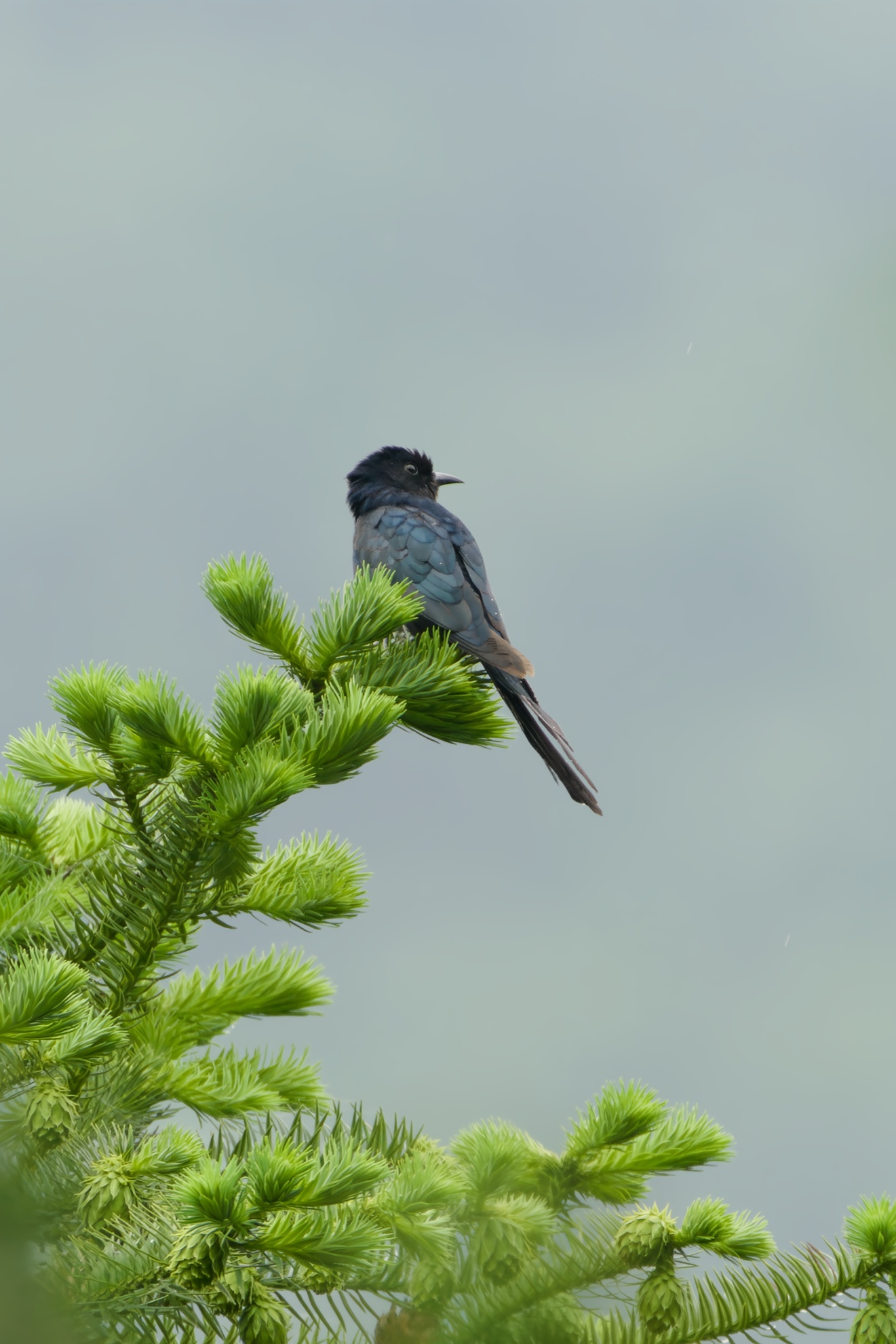
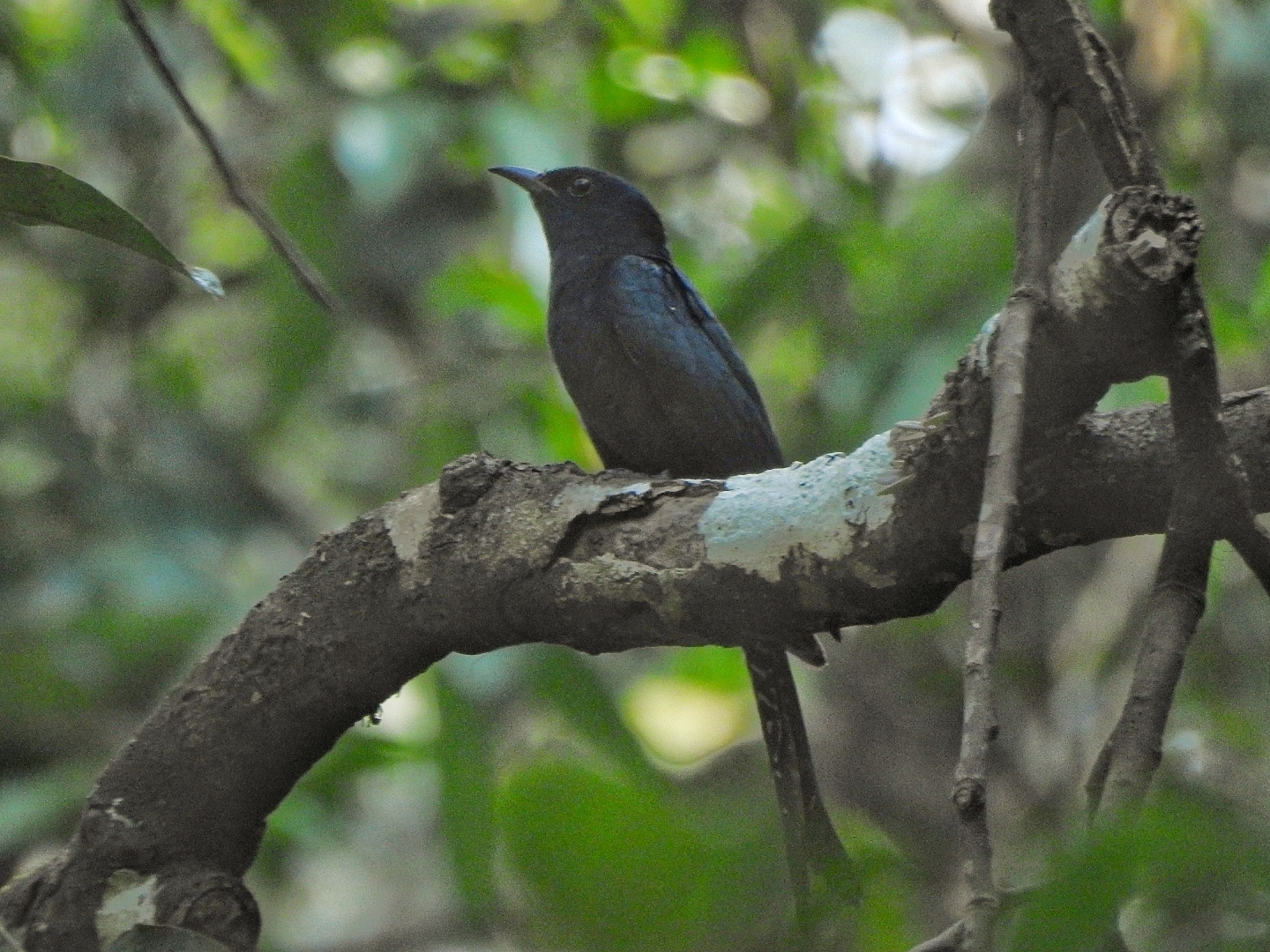
A cuckoo species (family Cuculidae) resembling the black drongo. Inhabits the Himalayas extending east through Southeast Asia. Distinguished by piercing, sharp whistle calls that rise in pitch but are delivered in a shrill, choppy series. Exhibits drongo-like plumage and morphology, a trait suspected to facilitate brood parasitism on small babbler species. Formerly considered conspecific with the fork-tailed drongo-cuckoo (together called the Asian drongo-cuckoo), but vocal and morphological differences warranted species-level split.
Description
Medium-sized cuckoo with entirely black plumage resembling a drongo. Characterized by a distinctive downcurved beak. The tail is only notched at the tip with slightly flared corners, lacking the deep fork of the fork-tailed drongo-cuckoo. Vent and outer undertail feathers show white barring. In flight, a white wing-stripe is visible from below. The drongo-like appearance is suspected to aid in brood parasitism, similar to how hawk-cuckoos resemble hawks.
Identification
Key识别 features包括向下弯曲的喙、带有白色条纹的尾下覆羽和外尾羽,以及略微分叉的尾部。与黑卷尾的区别在于喙形和尾部结构。与叉尾噪鹃的区别在于尾部形态:叉尾噪鹃尾部深叉,而本种尾部仅为微凹。与其他杜鹃科鸟类的区别在于其独特的黑色外形和drongo-like的轮廓。飞行时翼下的白色条纹是重要的识别特征。
Distribution & Habitat
分布于喜马拉雅山脉,向东延伸至东南亚地区。栖息于山地森林、林缘和开阔林地等生境。
Behavior & Ecology
寄生性繁殖,将卵产于小型噪鹃科鸟类的巢中。寄主主要包括小型噪鹃属鸟类。叫声为尖锐的哨音,音调逐渐上升,节奏断续。
Conservation
IUCN红色名录无危物种。
Culture
无相关文化信息。
Source: Wikipedia · CC BY-SA 3.0
Taxonomy
- Order
- Cuculiformes
- Family
- Cuculidae
- Genus
- Surniculus
- eBird Code
- asidrc3
Vocalizations
Subspecies (3)
-
Surniculus lugubris barussarum
breeds northeastern India through northern southeastern Asia and southeastern China, including Hainan; winters southward to Sumatra
-
Surniculus lugubris brachyurus
Himalayas from Kashmir eastward to northeastern India and Bangladesh, Myanmar, Thailand southward through the Malay Peninsula to Sumatra, Borneo, and Palawan
-
Surniculus lugubris lugubris
Java and Bali
Data Sources
Species description from Wikipedia, licensed under CC BY-SA 3.0.
Bird images and sounds sourced from GBIF, contributed by citizen scientists worldwide under Creative Commons licenses.
Taxonomy data from AviList 2025.