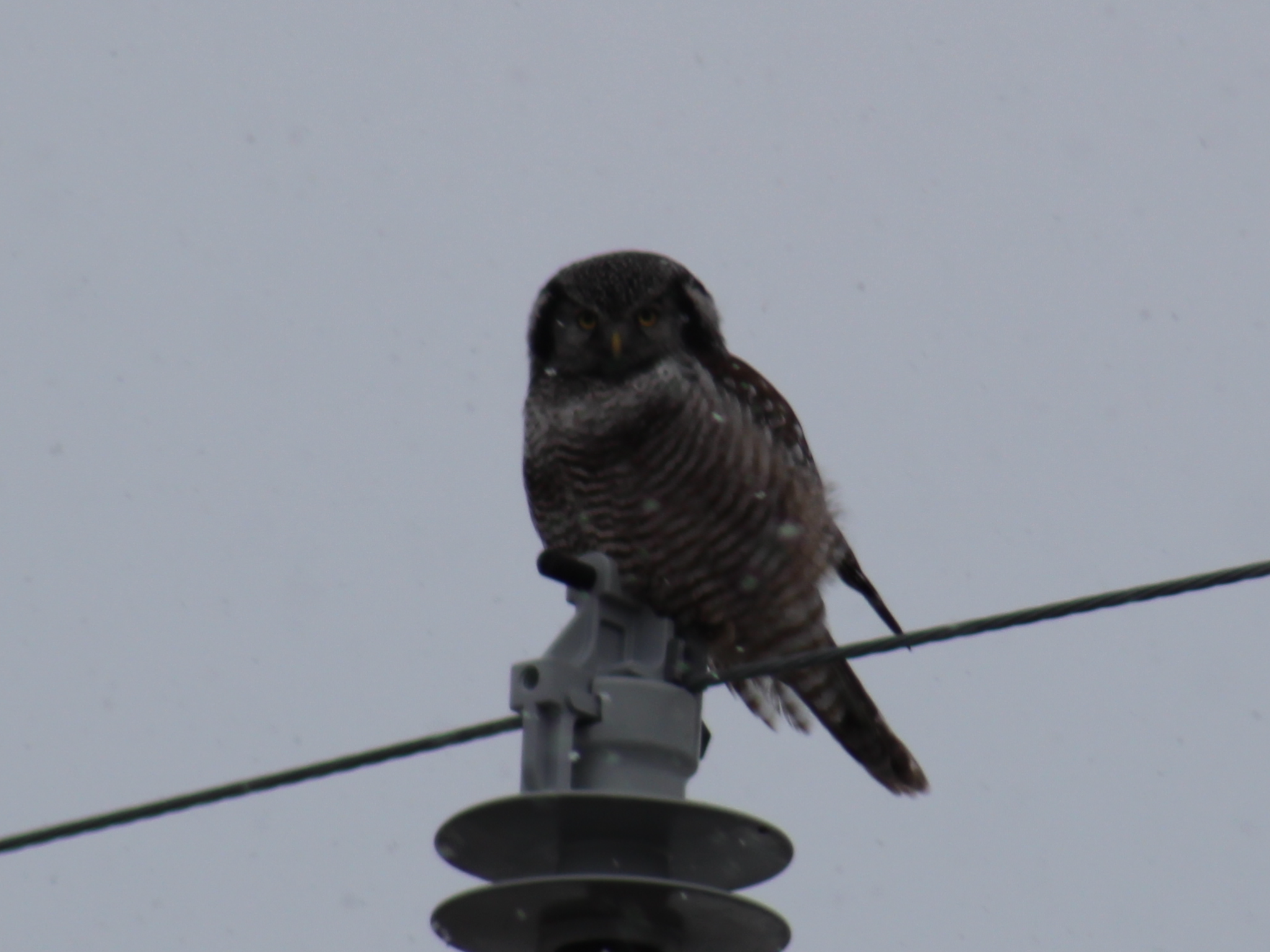
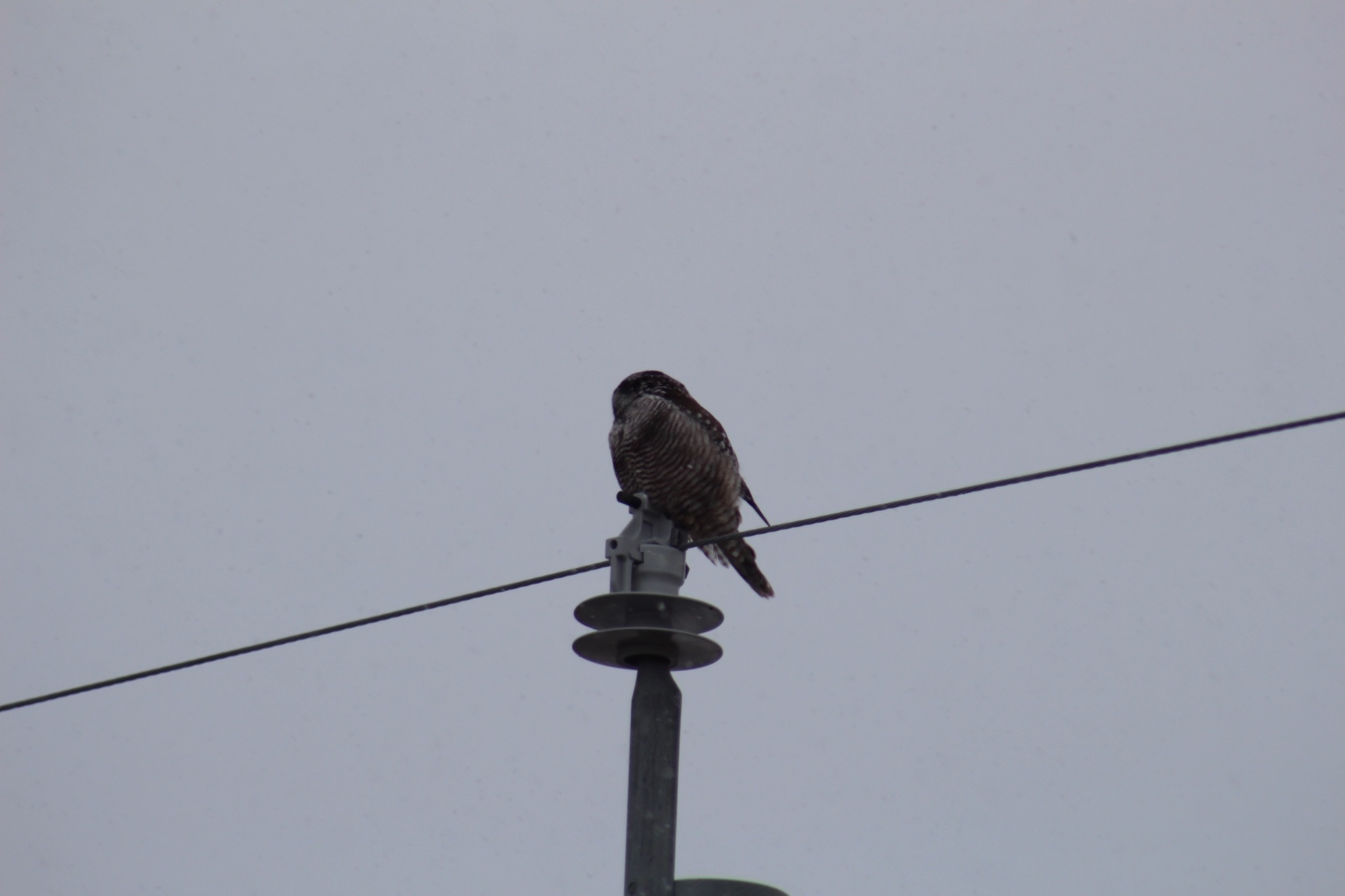
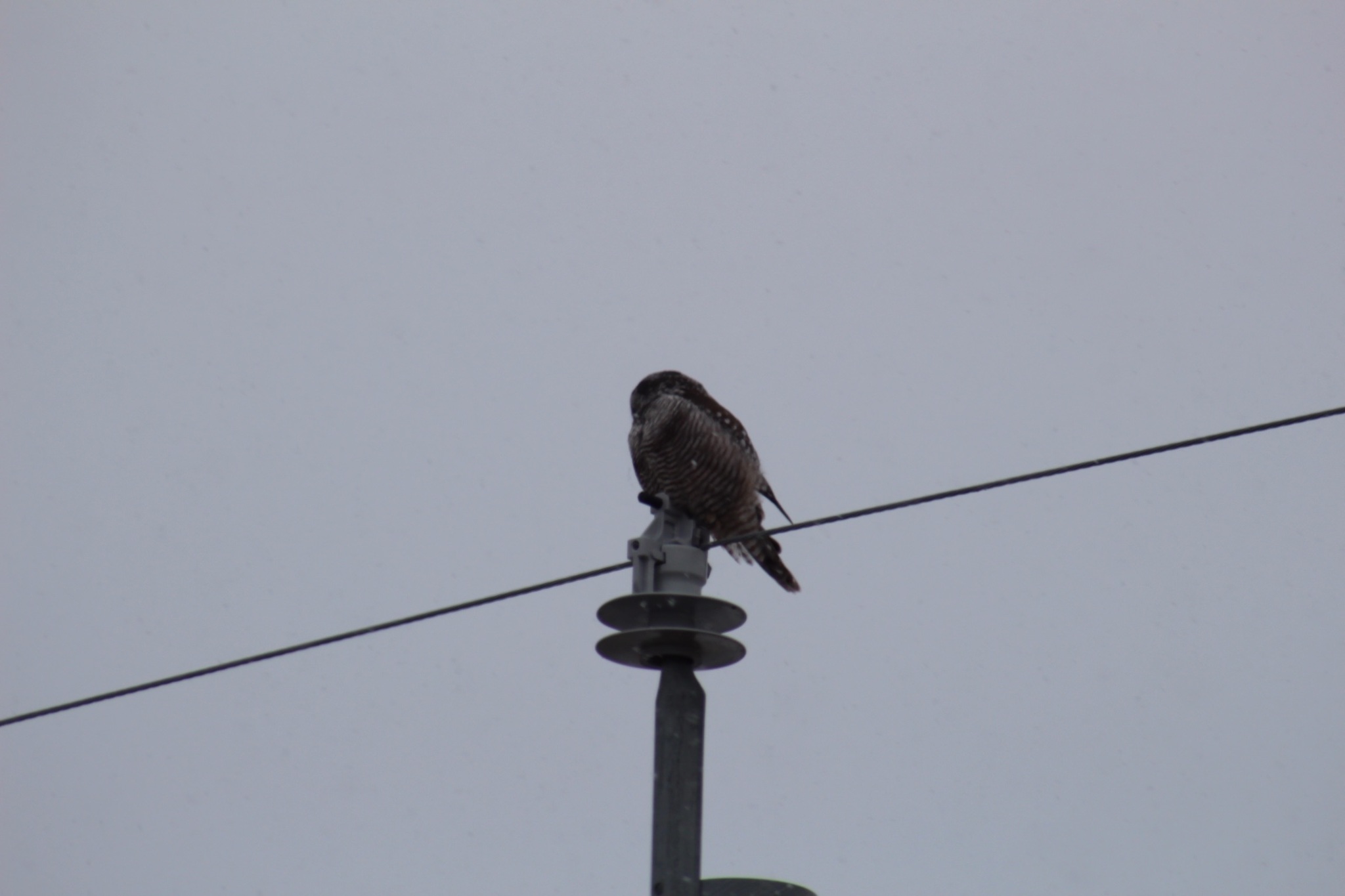
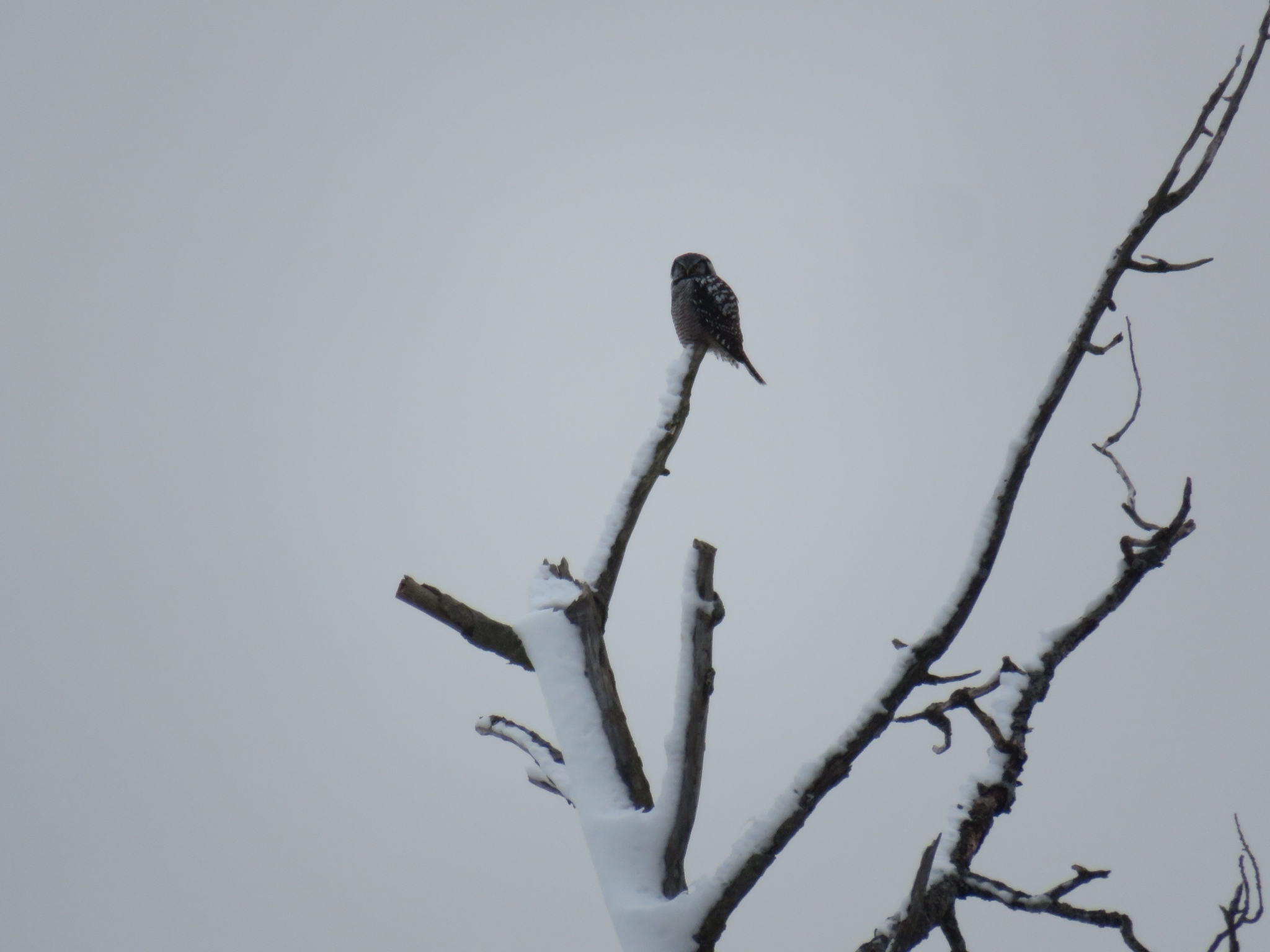
Northern Hawk-Owl
Surnia ulula
猛鸮
Introduction
Medium-sized true owl of the northern latitudes. Only living species in genus Surnia of family Strigidae. Non-migratory but occasionally irrupts southward during winter or following prey population explosions. One of few owls not strictly nocturnal or crepuscular; often active during day, partially filling diurnal niche similar to hawks. Ranges across northern Holarctic from Alaska through Canada to Newfoundland, northeastern Europe, and Siberia. Inhabits open coniferous forests, mixed woodlands, muskegs, clearings, and recently burnt areas. Conservation status uncertain; North American populations appear declining though no formal documentation exists.
Description
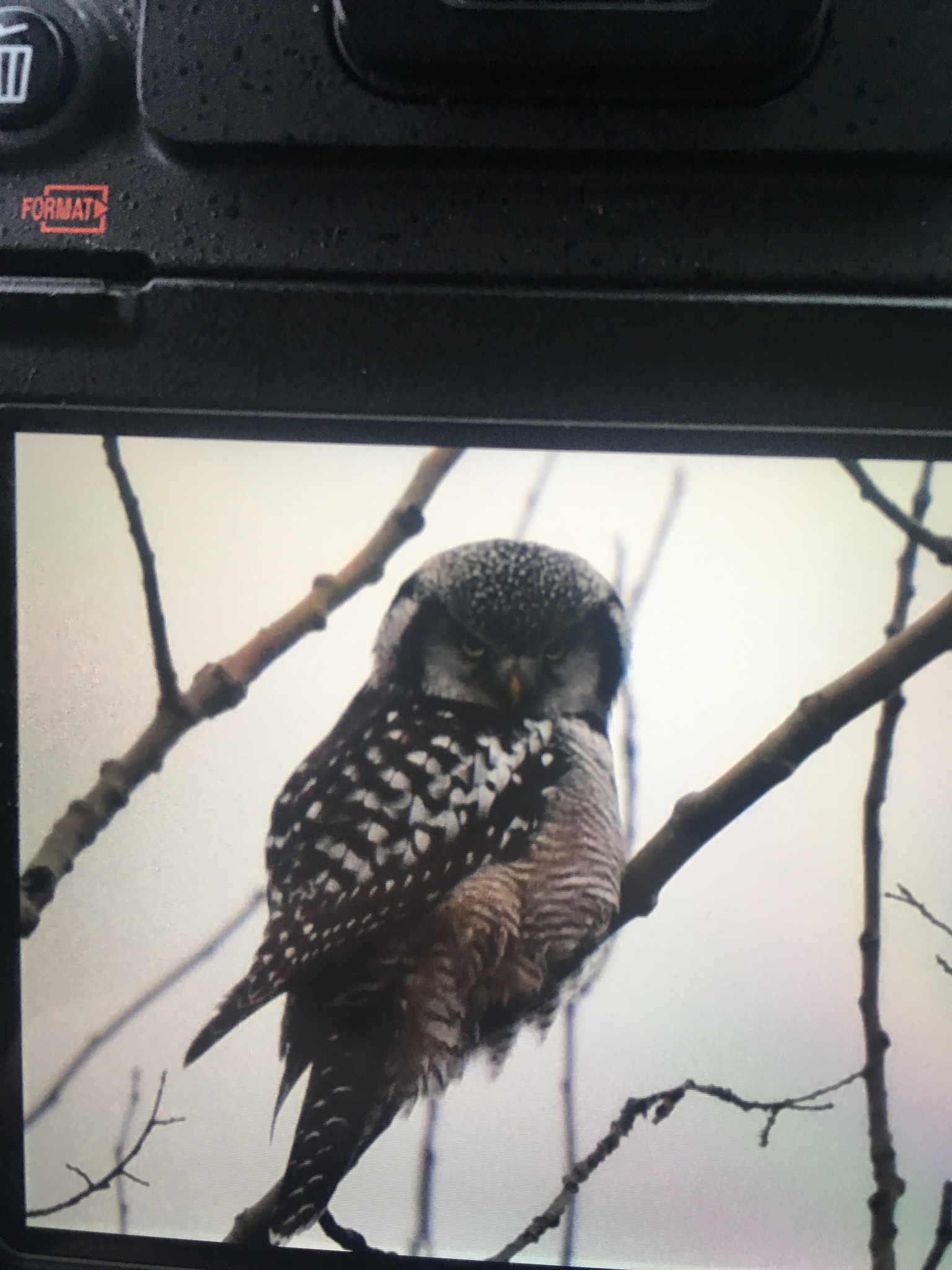
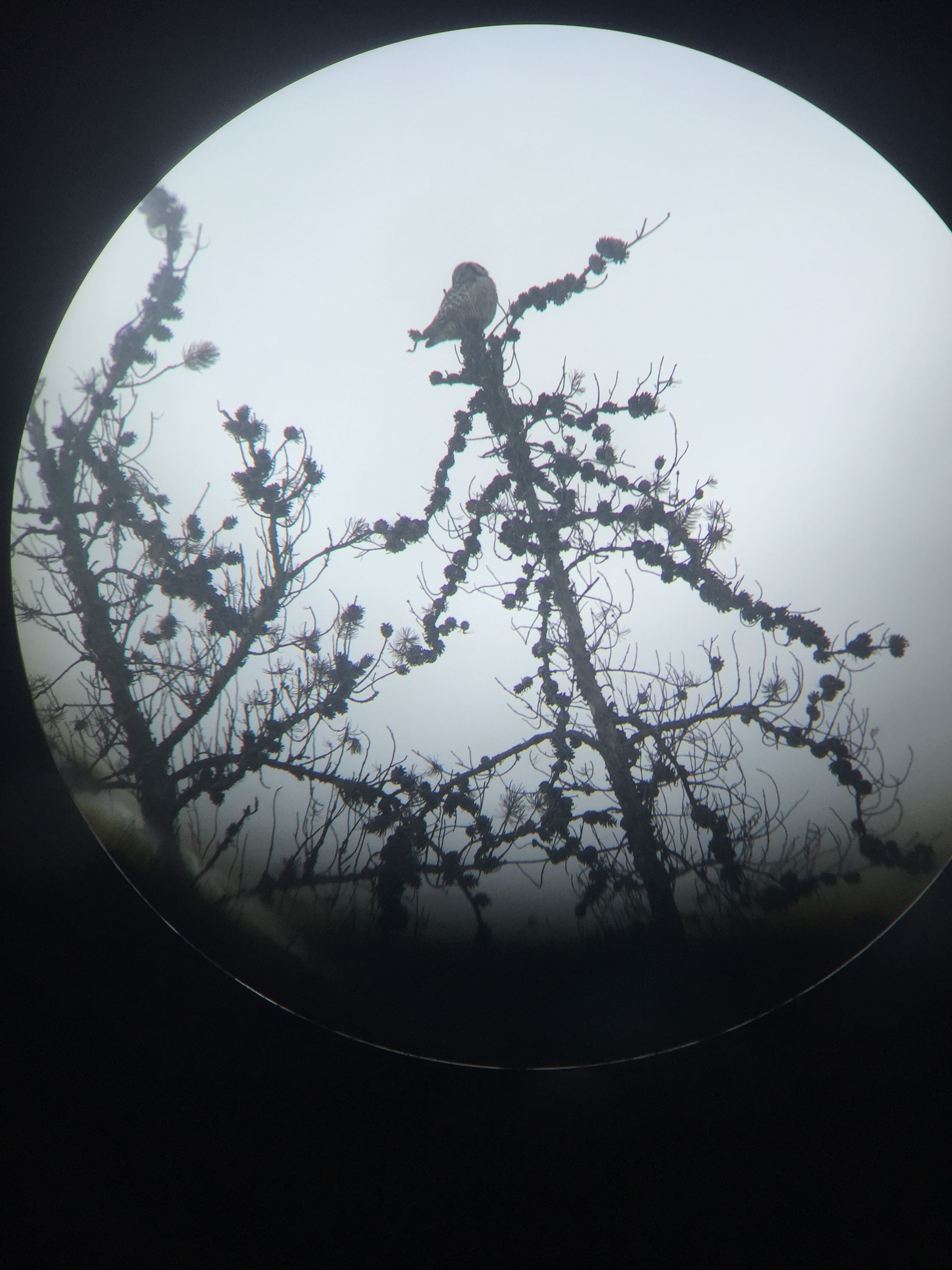
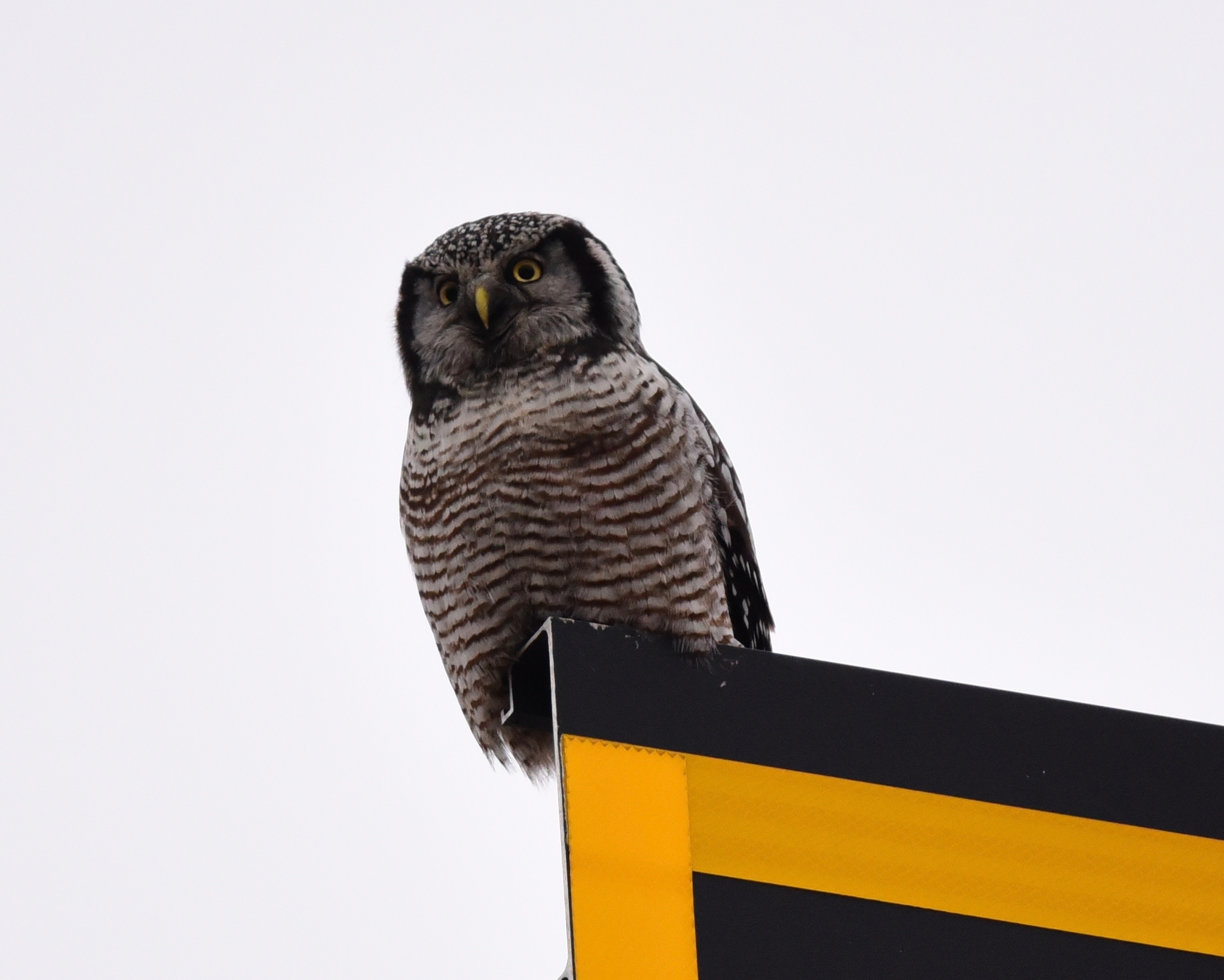
Males measure 35-42.5 cm and weigh approximately 300 g; females are slightly larger at 37.2-44.7 cm and 340 g. Wingspan ranges from 69-82 cm. Plumage is dark brown with off-white spotting on dorsal surfaces. Back of neck features distinctive black v-shaped pattern. Underbelly is white or off-white with brown barring on breast and stomach. Long tail has brown banding; tail feather tips are rounded in adults but pointed in first-year birds. Face is white with black border, head is rounded, eyes are yellow, and beak is curved yellow. Resembles a hawk in both appearance and flight profile.
Identification
Medium-sized owl with hawk-like silhouette and diurnal activity habits distinguish it from most other owls. In flight resembles Cooper's hawk. Long tail with banding and white face with black border are key features. Yellow eyes and curved yellow beak distinguish from many similar-sized owls. Three subspecies show slight variation: S. u. ulula has paler underparts with fine bars, S. u. caparoch is browner below with heavier barring, and S. u. tianschanica is largest with darker upperparts. Active daytime hunting and open forest habitat also aid identification.
Distribution & Habitat
Ranges across northern Holarctic with three subspecies. S. u. caparoch occupies North America from eastern Alaska through Canada to Newfoundland, occasionally south to northern United States including Minnesota, New York, and South Dakota. S. u. ulula occurs across Siberia to northeastern Europe. S. u. tianschanica breeds in Central Asia to northern China and Mongolia. Inhabits open coniferous forests, mixed deciduous-coniferous woodlands, muskegs, clearings, meadows, and recently burnt areas. Generally avoids dense spruce-fir forests. Winter habitat typically matches breeding habitat. Southern irruptions occur during winter or following prey population explosions.
Behavior & Ecology
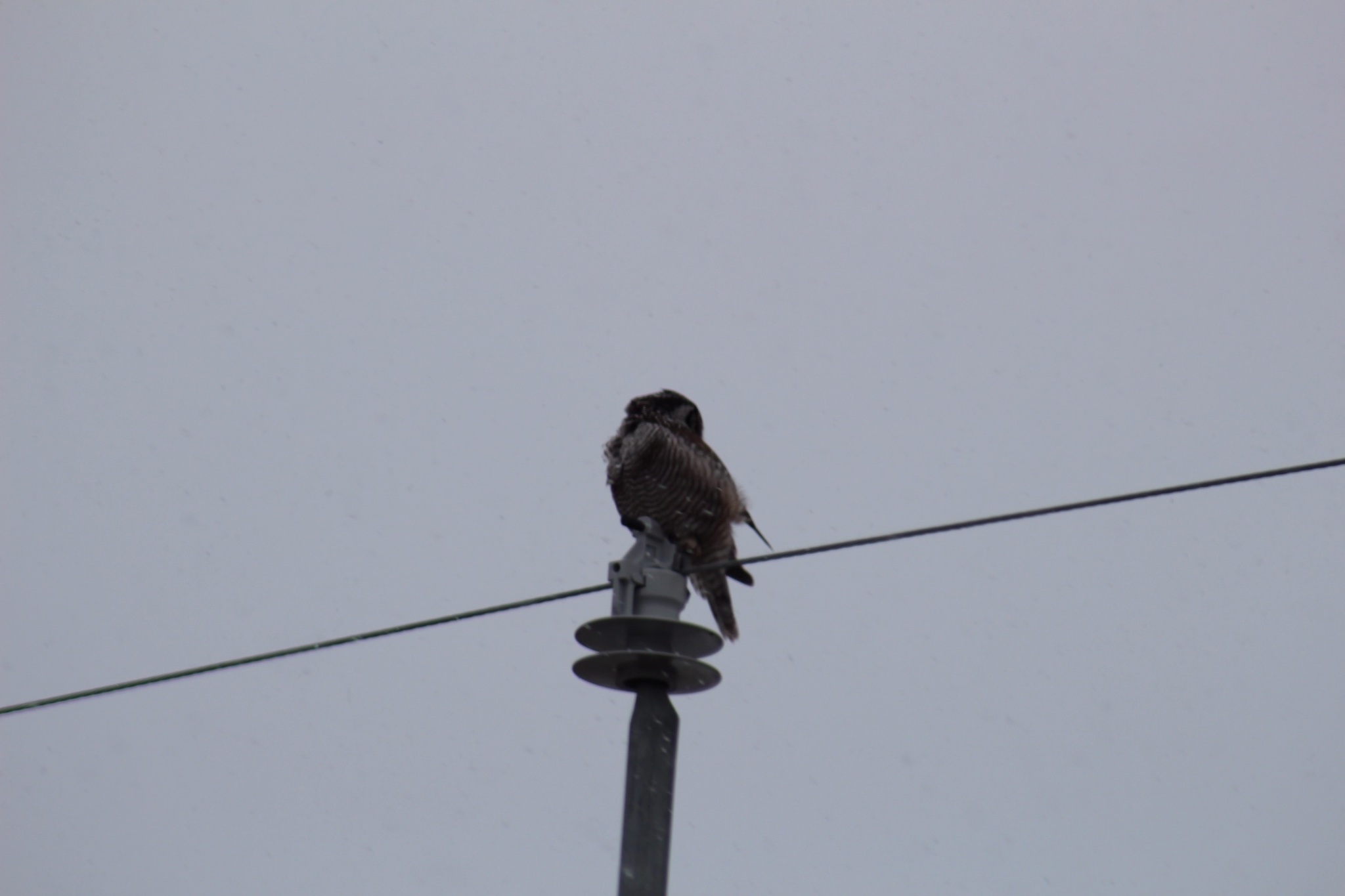
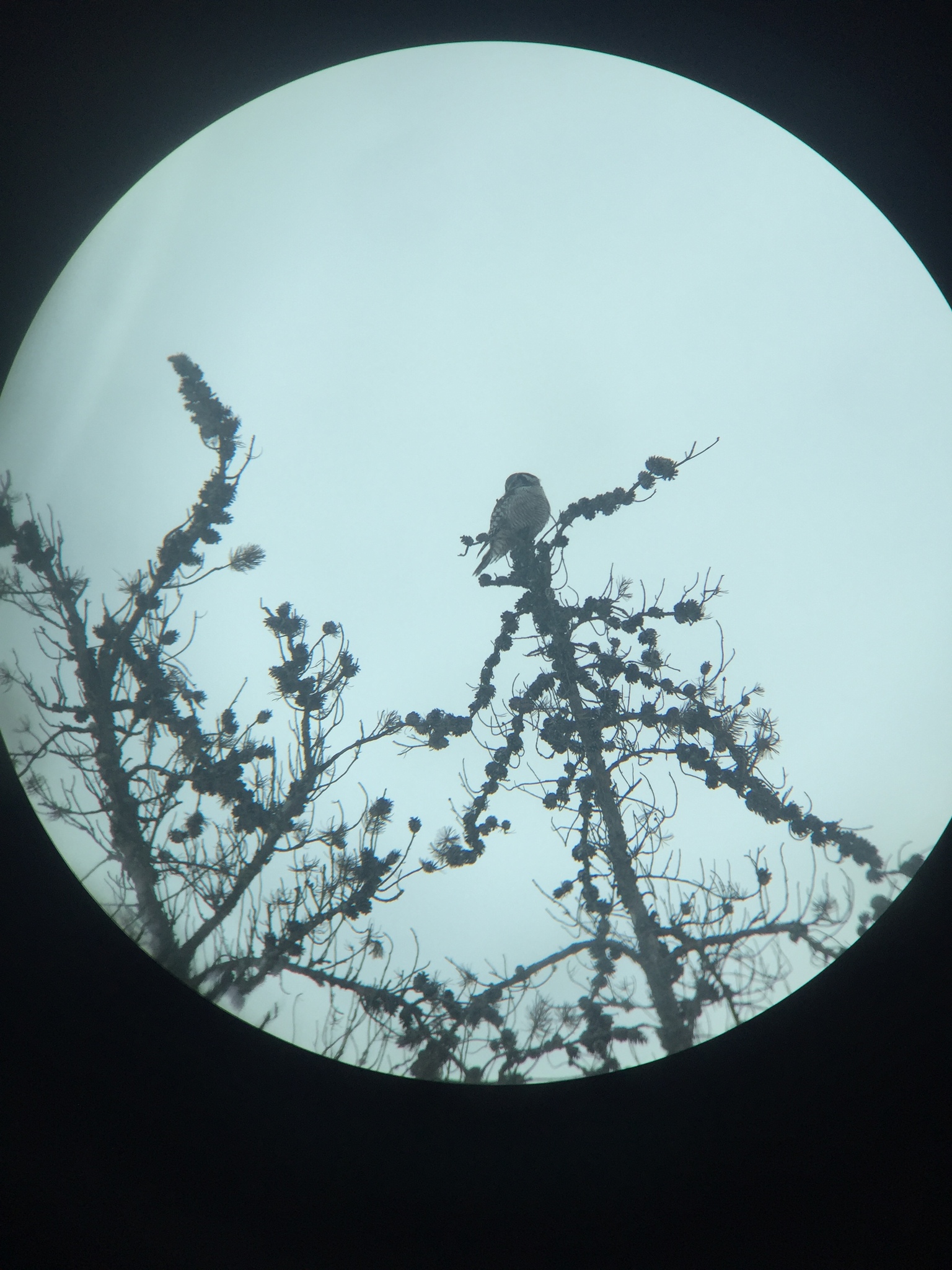
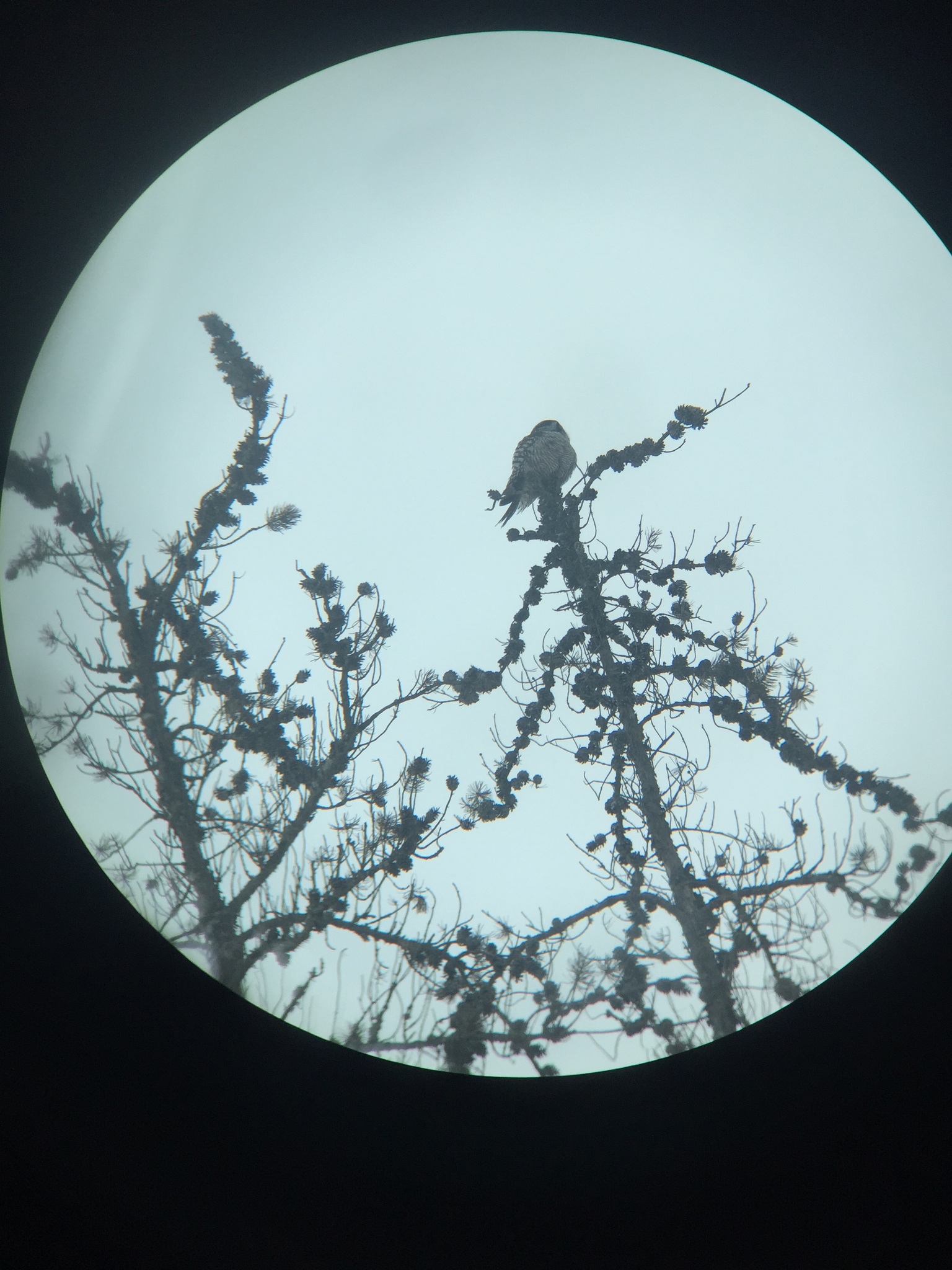
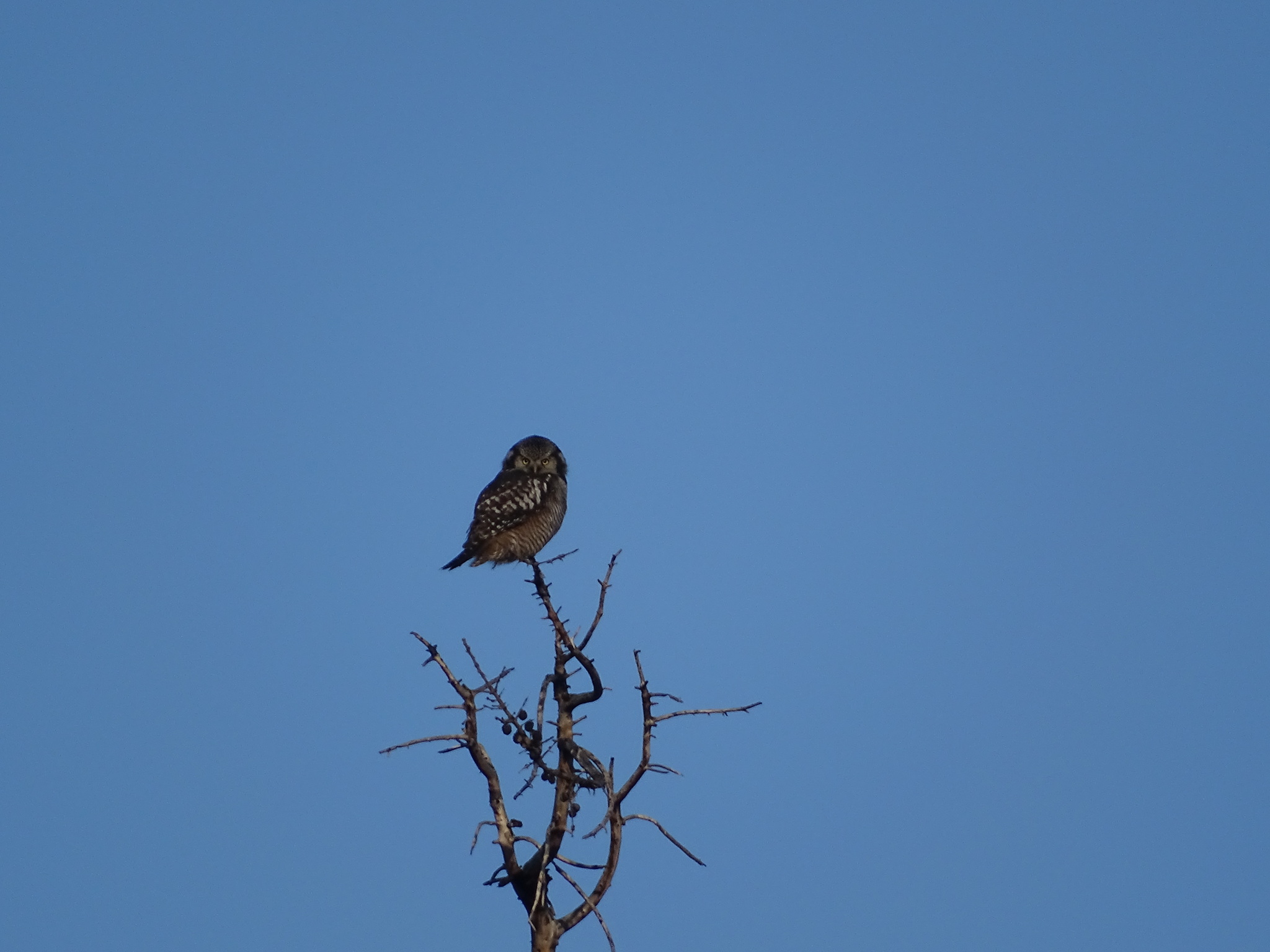
Partially diurnal hunter; perch-and-search strategy in open forest environments, preferring spruce trees. Exceptional hearing allows plunging into snow to capture rodents. Diet varies regionally: in Eurasia feeds primarily on voles (94% biomass), while in North America diet more varied with snowshoe hares (40-50%) and voles (as low as 20%). Also takes red squirrels, mice, lemmings, grouse, ptarmigan, and various birds. Breeds March-June; female incubates 3-11 eggs while male forages. Nests in tops of hollow spruce stumps or cliff ledges 2-10 m above ground. Fledglings leave nest around 21 days. Vocalizations include rolled whistles for mating, rike calls for danger, and high-pitched screams with yips near nest. Shows little fear of humans and will attack to defend young.
Conservation
Status uncertain due to remote breeding locations and low density occurrence. Yukon densities estimated at 0-6 pairs per 100 km². North American population estimated at 10,000-50,000 breeding pairs. Populations fluctuate with small mammal cycles. Fire suppression negatively affects habitat by reducing open hunting areas and dead wood for nesting. Modern forestry effects unknown; may decrease nesting sites while creating prey habitat. Southern irruptions have declined compared to nineteenth century. North American populations appear declining but lack formal documentation. COSEWIC assigned no designation; ranked 85th in Canada conservation priorities. Considered medium concern with high priority for improved monitoring.
Culture
Considered a falconry bird in Ontario and may be used to hunt small game with proper licensing.
Source: Wikipedia · CC BY-SA 3.0
Taxonomy
- Order
- Strigiformes
- Family
- Strigidae
- Genus
- Surnia
- eBird Code
- nohowl
Subspecies (3)
-
Surnia ulula caparoch
Alaska to Canada, Newfoundland, and far northern USA
-
Surnia ulula tianschanica
central Asia to northwestern and northeastern China and northern Mongolia
-
Surnia ulula ulula
northern Eurasia
Data Sources
Species description from Wikipedia, licensed under CC BY-SA 3.0.
Bird images and sounds sourced from GBIF, contributed by citizen scientists worldwide under Creative Commons licenses.
Taxonomy data from AviList 2025.