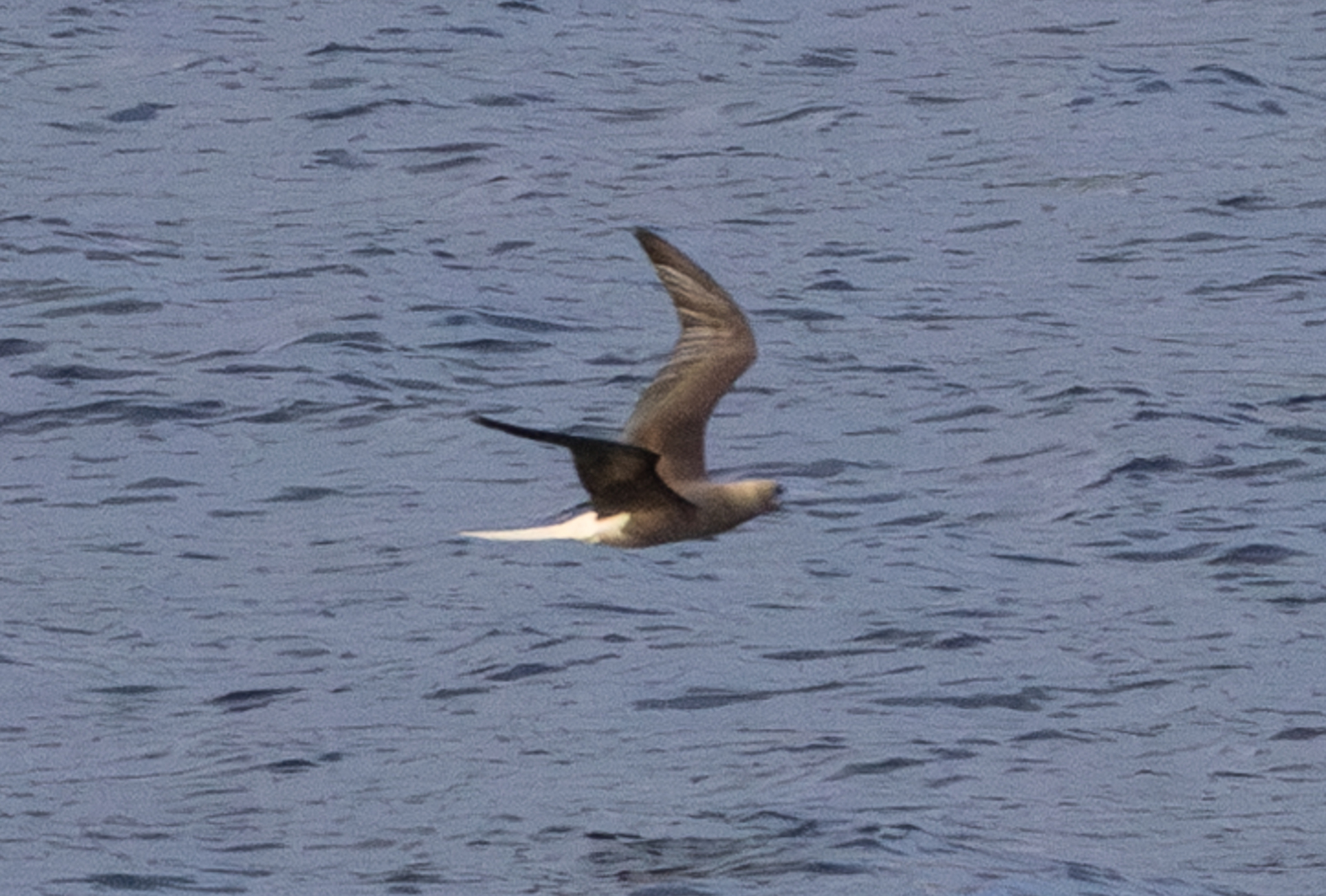
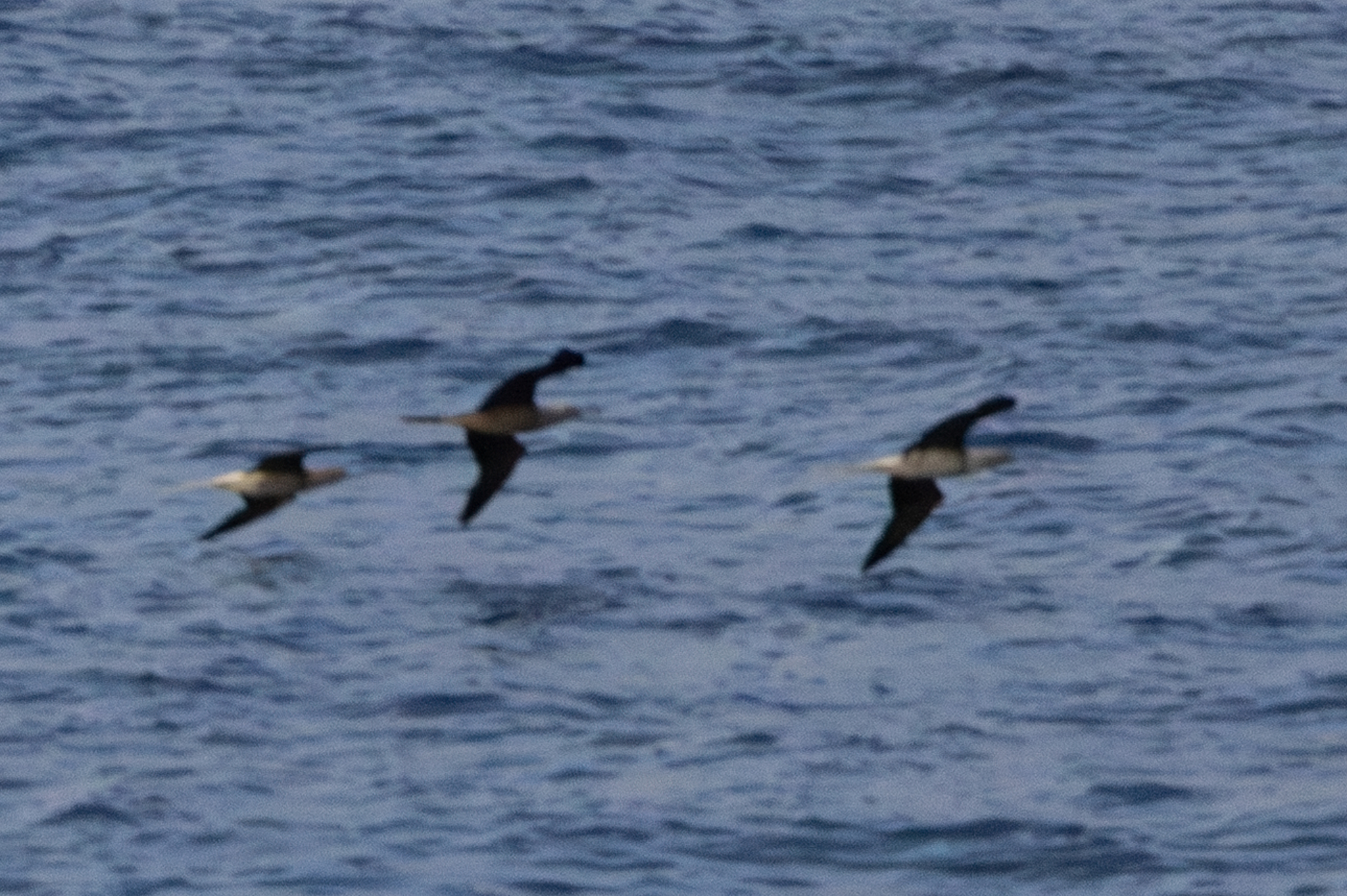
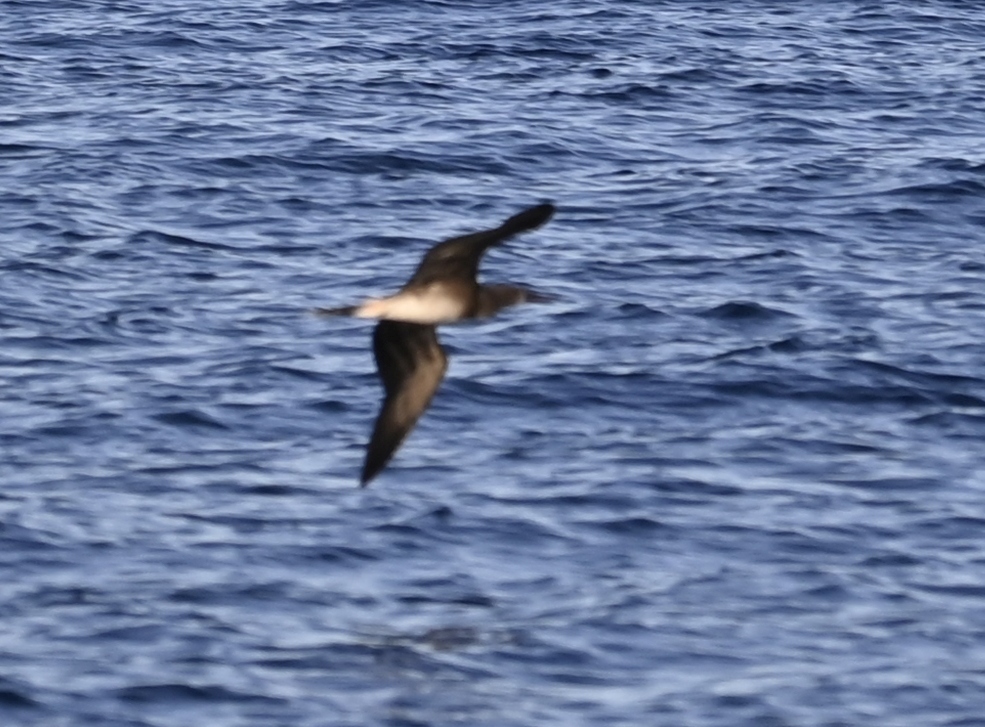
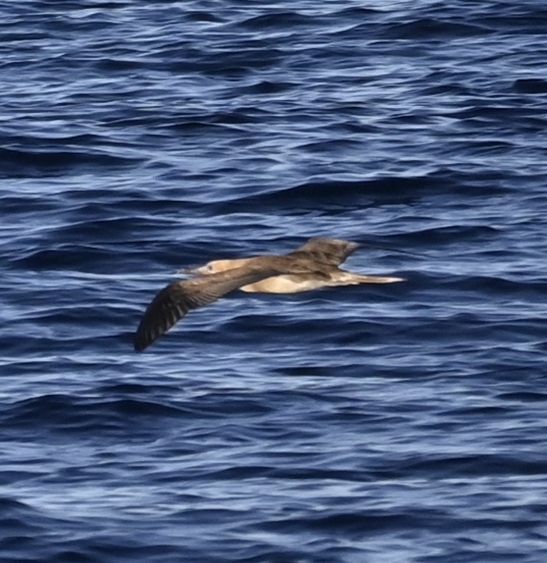
Red-footed Booby
Sula sula
红脚鲣鸟
Introduction
A seabird of the booby family Sulidae. Taxonomic position: genus Sula, species Sula sula. Found throughout tropical Atlantic, Pacific, and Indian Oceans. Adults always have red feet, but plumage varies considerably with multiple color morphs. Powerful and agile fliers that harness wind efficiently, though clumsy during takeoffs and landings. Forages by catching flying fish from above the ocean surface and performing shallow dives. Breeds colonially on isolated islands including St. Brandon, Mauritius (Cargados Carajos shoals), and the Chagos Archipelago. Classified as Least Concern by the IUCN, though global population is declining.
Description
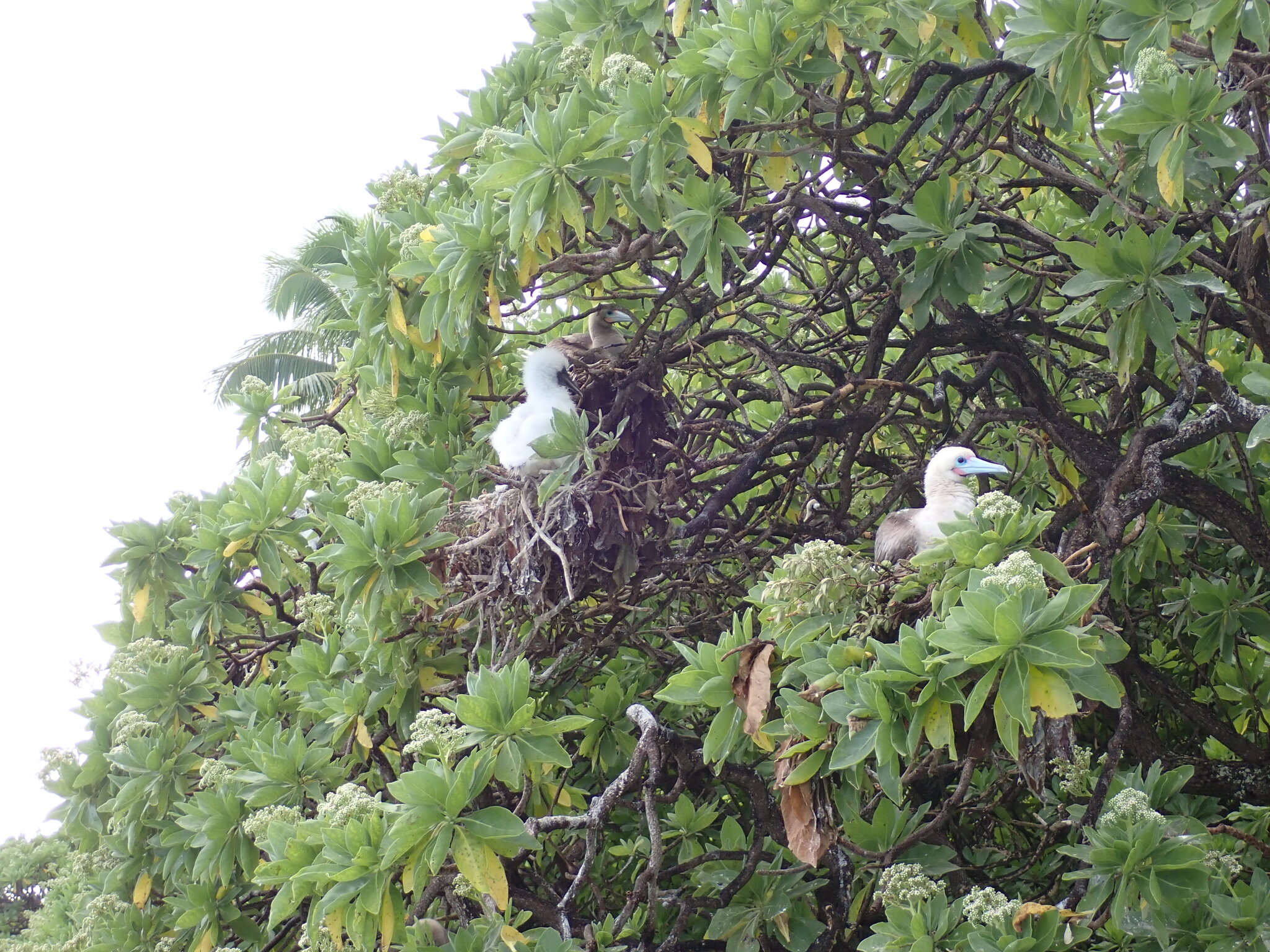
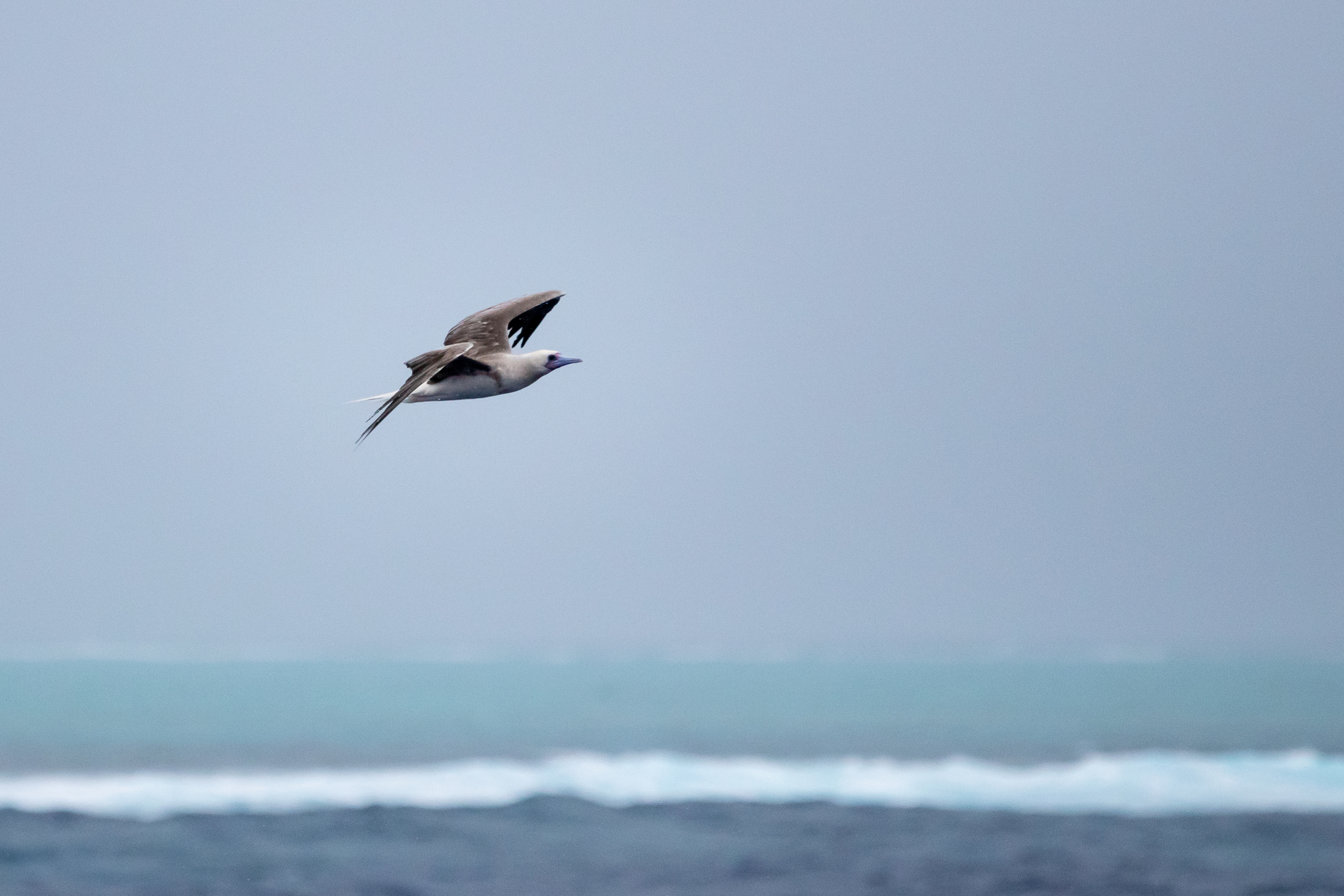
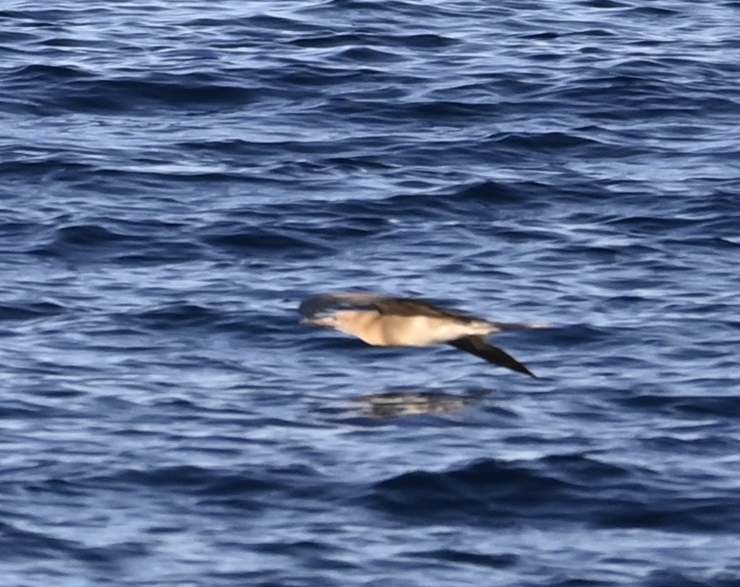
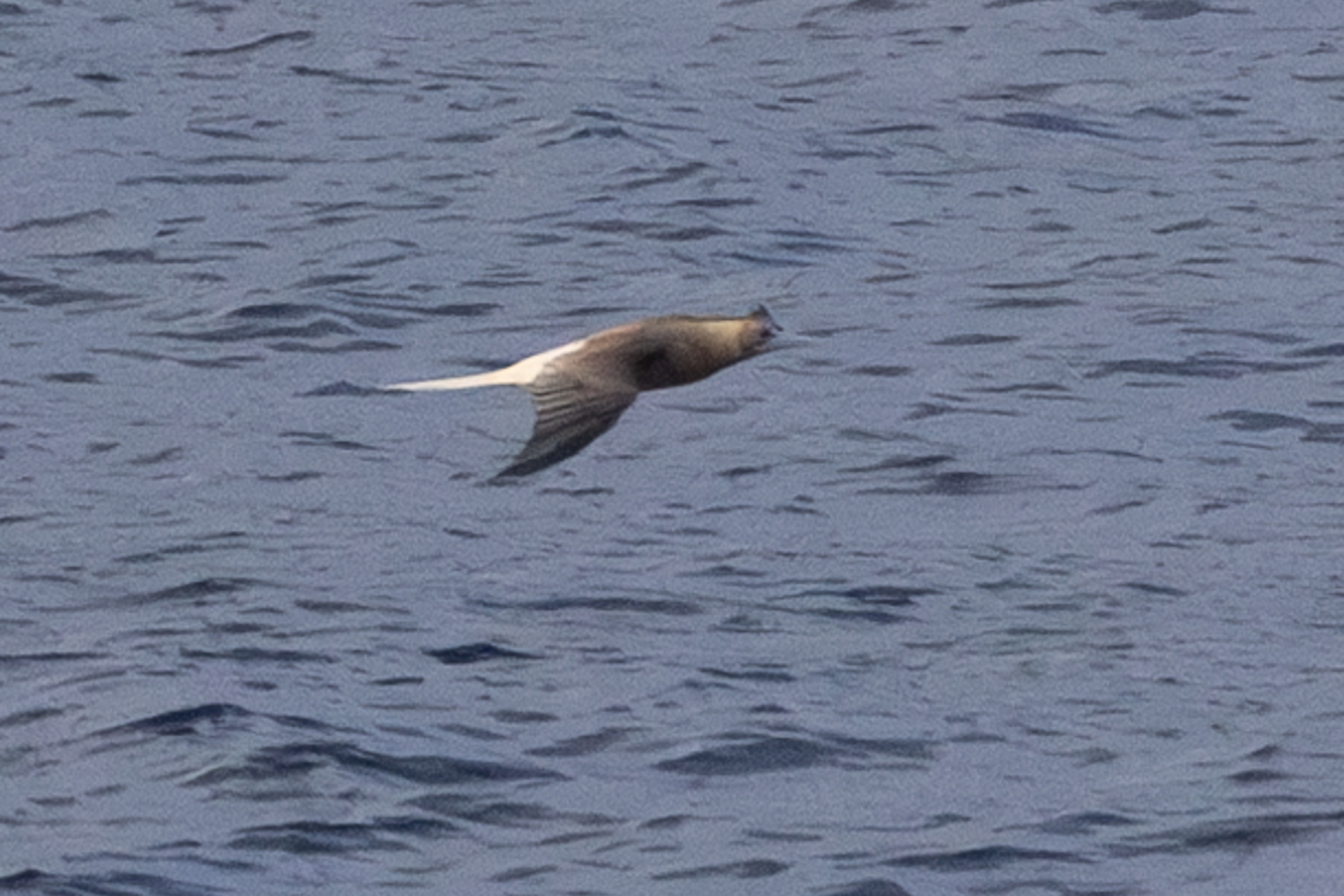
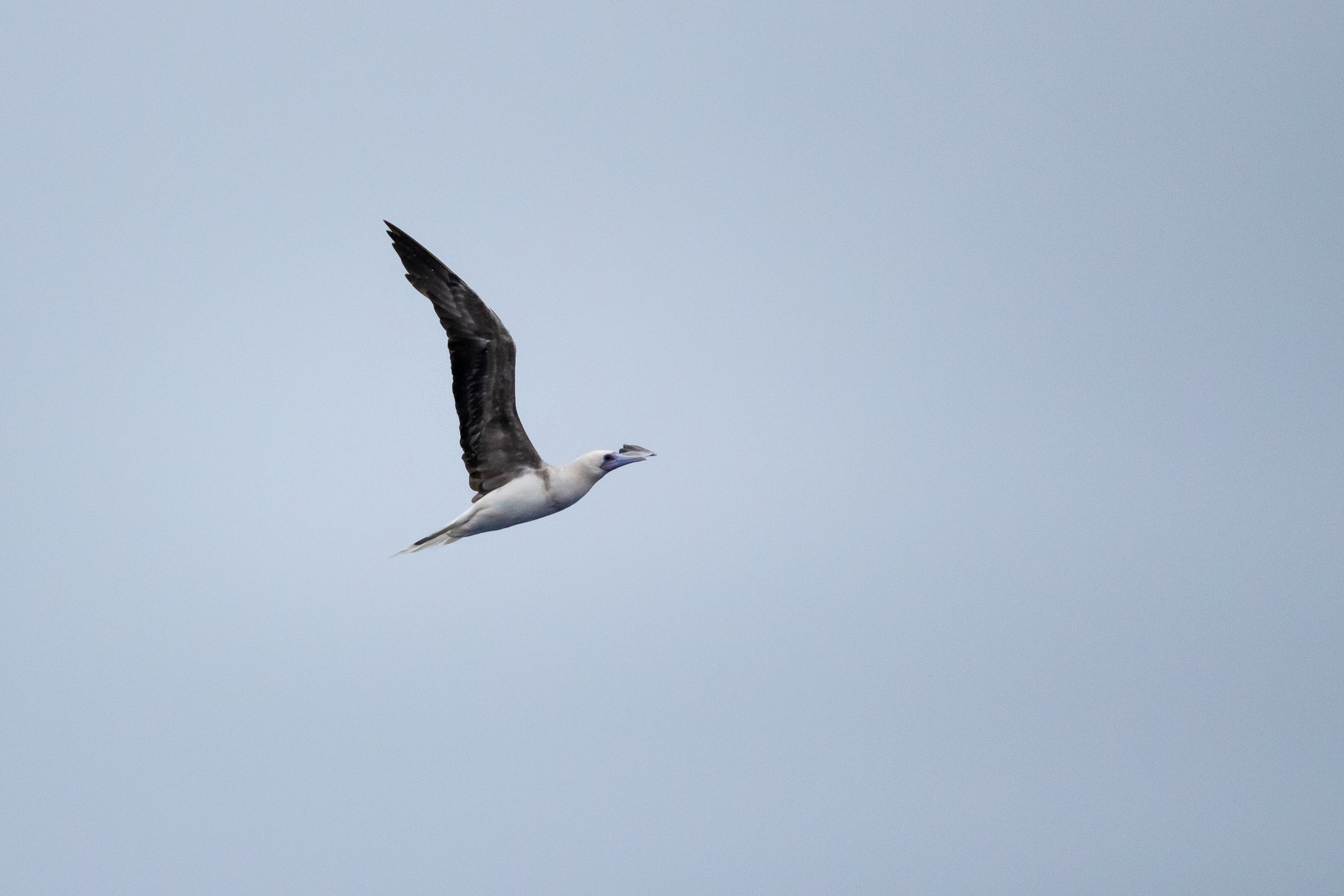
The smallest member of the booby and gannet family, reaching approximately 70 cm in length with a wingspan of up to 152 cm. Average weight from 490 adults on Christmas Island was 837 g. Adults have red legs, and pink and blue-colored bill and throat pouch. Exhibits multiple plumage morphs: white morph (mostly white plumage with black flight feathers), black-tailed white morph (white with black tail), brown morph (overall brown), white-tailed brown morph (brown with white belly, rump, and tail), and white-headed and white-tailed brown morph (white body, tail, and head with brown wings and back). Sexes appear similar. Juveniles are brownish with darker wings and pale pinkish legs. Chicks covered in dense white down.
Identification
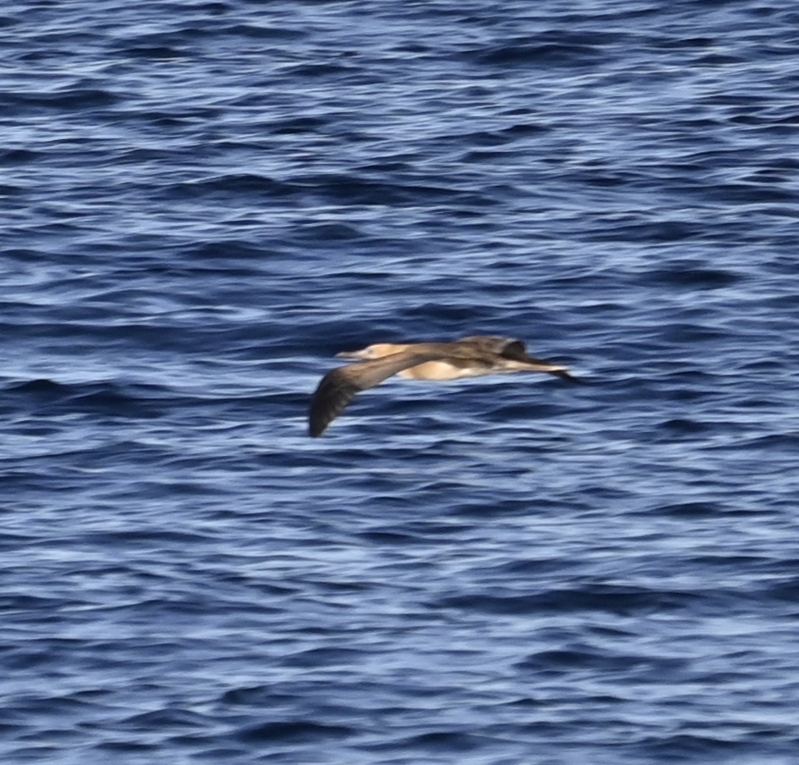
Smallest booby species, making it distinguishable from larger booby species. Adults always show red feet, a key field mark. Multiple color morphs can cause confusion; the black-tailed white morph closely resembles Nazca and masked boobies. Brown morphs are distinctive among boobies. Juveniles can be identified by brownish plumage with darker wings and pale pinkish legs.
Distribution & Habitat
Widespread throughout tropical Atlantic, Pacific, and Indian Oceans. Atlantic populations centered on Caribbean islands. Pacific populations include the Galapagos Islands (primarily Genovesa and San Cristobal) and Hawaii (Kauai). Indian Ocean populations found on Aldabra, Seychelles, Rodrigues, Maldives, Chagos Archipelago, Cocos (Keeling) Islands, and Christmas Island. Has been extirpated from numerous islands including Glorioso Islands, Assumption Island, Tikopia, Henderson Island, Marquesas Islands, Society Islands, and Desecheo Island due to introduced predators and human hunting. Vagrant records occur in Sri Lanka, New Zealand, and the United Kingdom, with increasing frequency in the United States and Canada.
Behavior & Ecology
Diet consists primarily of fish (particularly Exocoetidae flying fish and Gempylidae escolars) and squid. Fish prey typically measure 6–15 cm, with maximum 20 cm; squid measure 6–10 cm with maximum 15 cm. Catches prey by diving vertically from heights of 4–8 m, though flying fish may be taken in flight. Travels hundreds of kilometers from land when foraging, sometimes on multi-day trips. Breeds in large colonies on islands; nest is built from sticks and contains one chalky blue egg incubated by both parents for 44–46 days. Nest placed in tree or bush, rarely on ground. Young first fly at about three months and make extensive flights at five months. Pairs may remain together across multiple seasons, performing elaborate greeting rituals including harsh squawks and male displays of blue throat. Adult boobies are preyed upon by coconut crabs; nestlings and eggs face predation from rats, cats, pigs, raptors, and Micronesian starlings.
Conservation
IUCN Red List status: Least Concern. Global population declining. The 1982–1983 El Niño event severely impacted breeding on Christmas Island, where normally 6000 pairs nest; only 30 pairs nested in 1982 and approximately 60 pairs attempted breeding in 1983 due to reduced food supply from higher water temperatures. Threats include climate change impacts on ocean conditions, competition with fisheries, human disturbance at breeding colonies, and invasive species.
Culture
Humans hunt and consume both adult boobies and nestlings. Boobies will bite humans who attempt to catch them near their nests.
Source: Wikipedia · CC BY-SA 3.0
Taxonomy
- Order
- Suliformes
- Family
- Sulidae
- Genus
- Sula
- eBird Code
- refboo
Subspecies (3)
-
Sula sula rubripes
breeds islands in tropical Pacific and Indian oceans, from Seychelles and Malagasy region through Indian Ocean and Indonesian seas, northern Australasia, northward to southern Japanese islets, and eastward to Hawaiian Islands and Pitcairn group
-
Sula sula sula
breeds islands (including peripheral ones) in Caribbean, and Fernando de Noronha and Trindade (off Brazil), and Boatswain Bird Island (Ascension group, South Atlantic Ocean)
-
Sula sula websteri
breeds islands of far eastern Pacific, including Revillagigedo, Tres Marias, Isabel, and Clipperton (off Mexico), Violin and Cocos (off Costa Rica), Malpelo (off Colombia), and Galápagos
Data Sources
Species description from Wikipedia, licensed under CC BY-SA 3.0.
Bird images and sounds sourced from GBIF, contributed by citizen scientists worldwide under Creative Commons licenses.
Taxonomy data from AviList 2025.