Brown Booby
Sula leucogaster
褐鲣鸟
Introduction
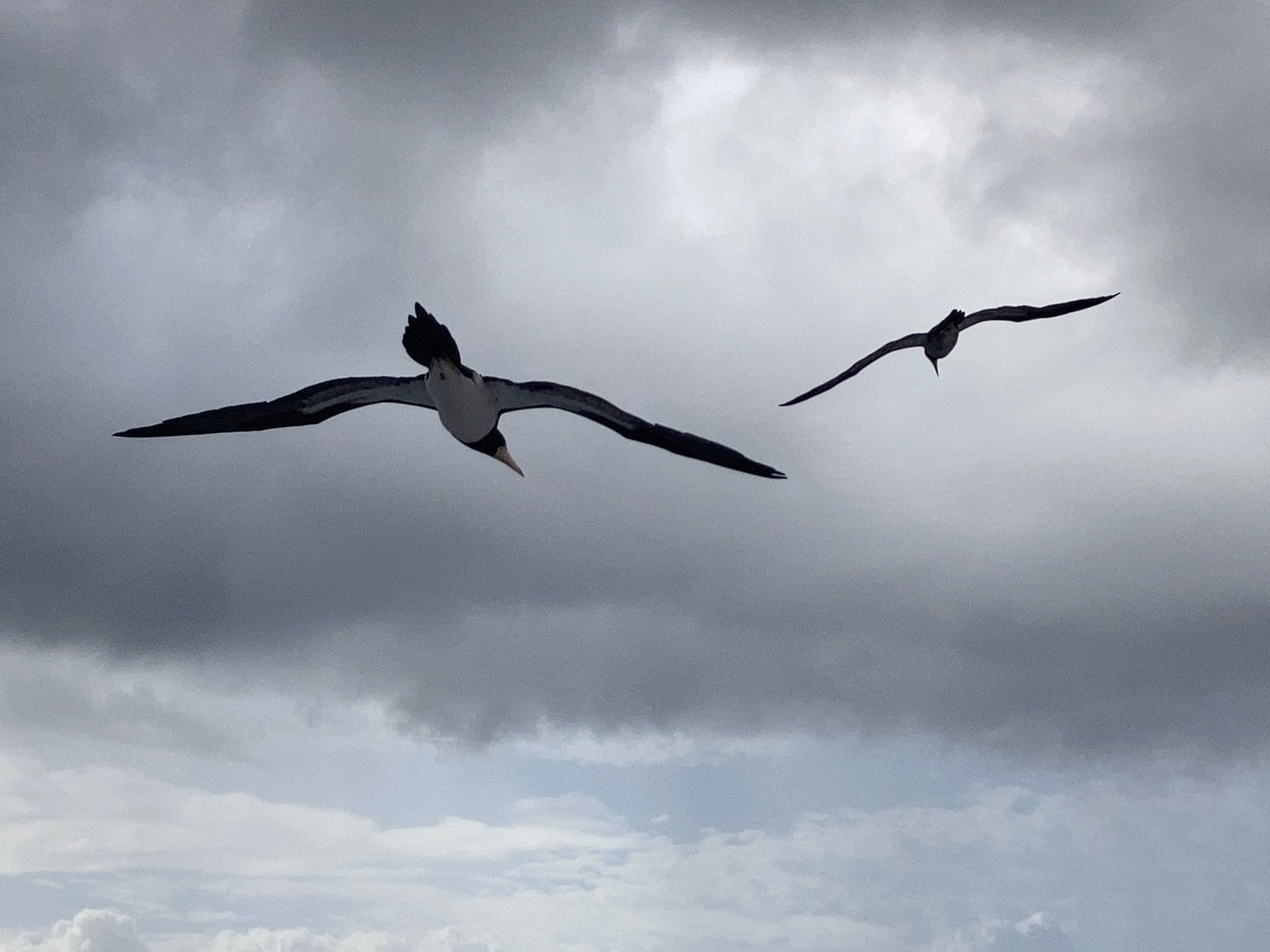
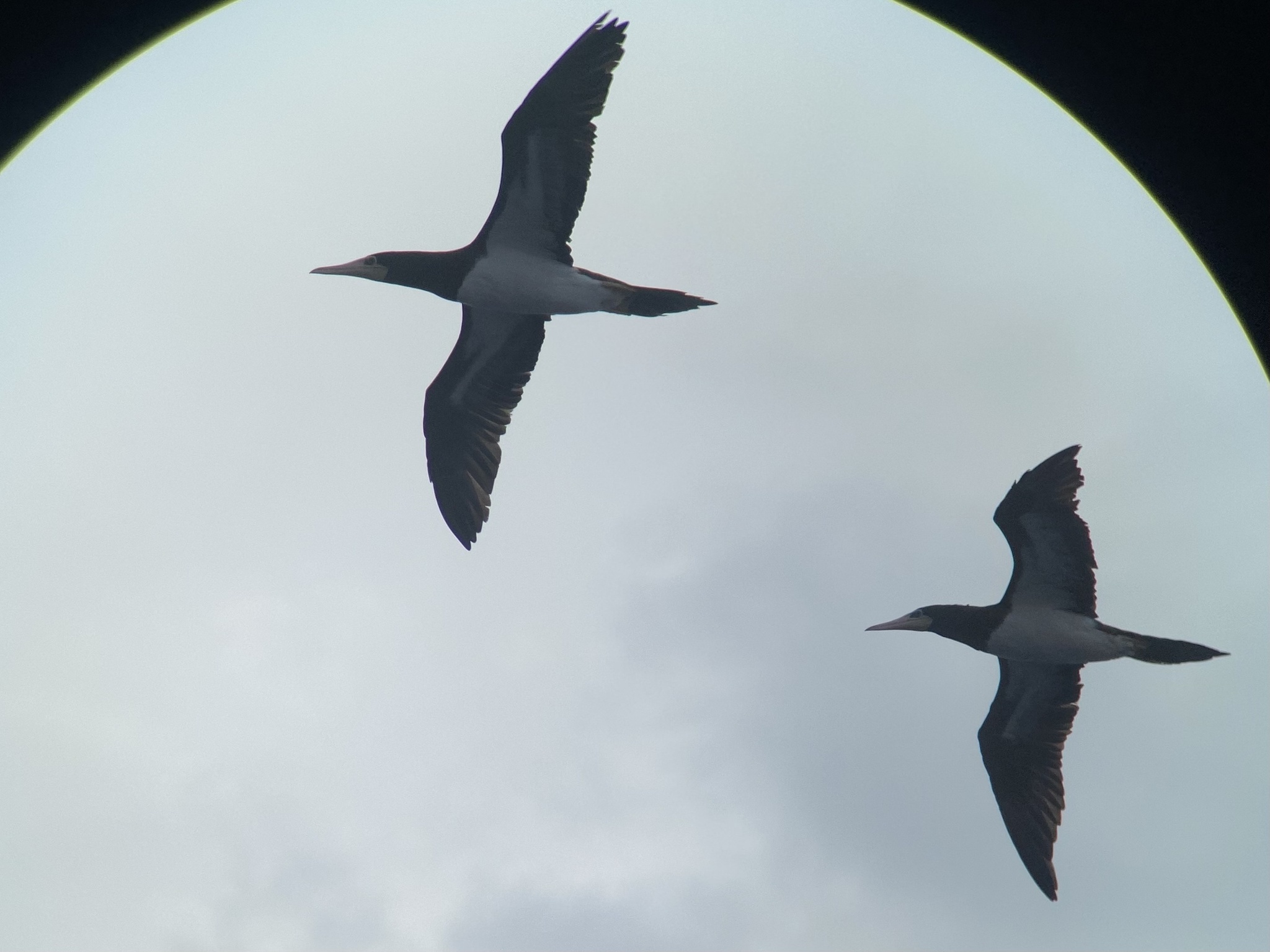
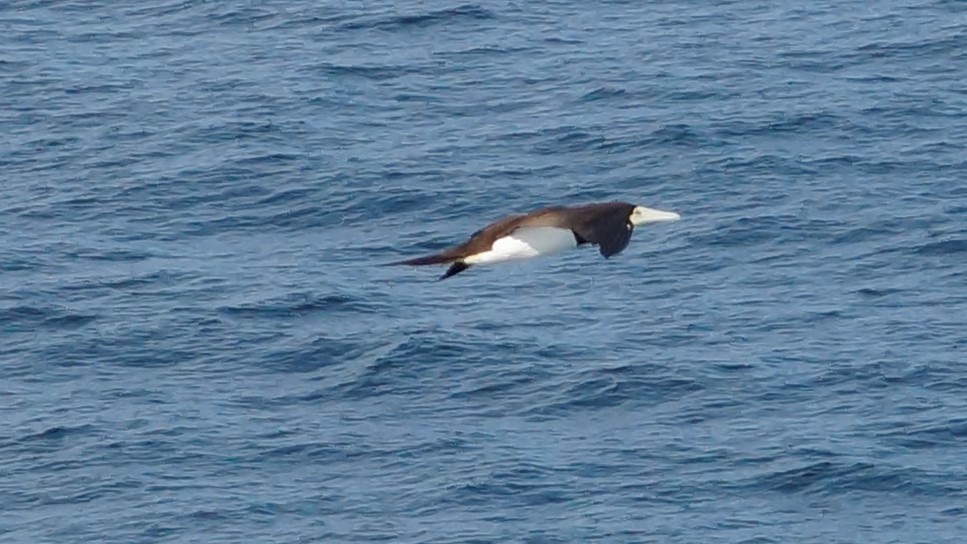
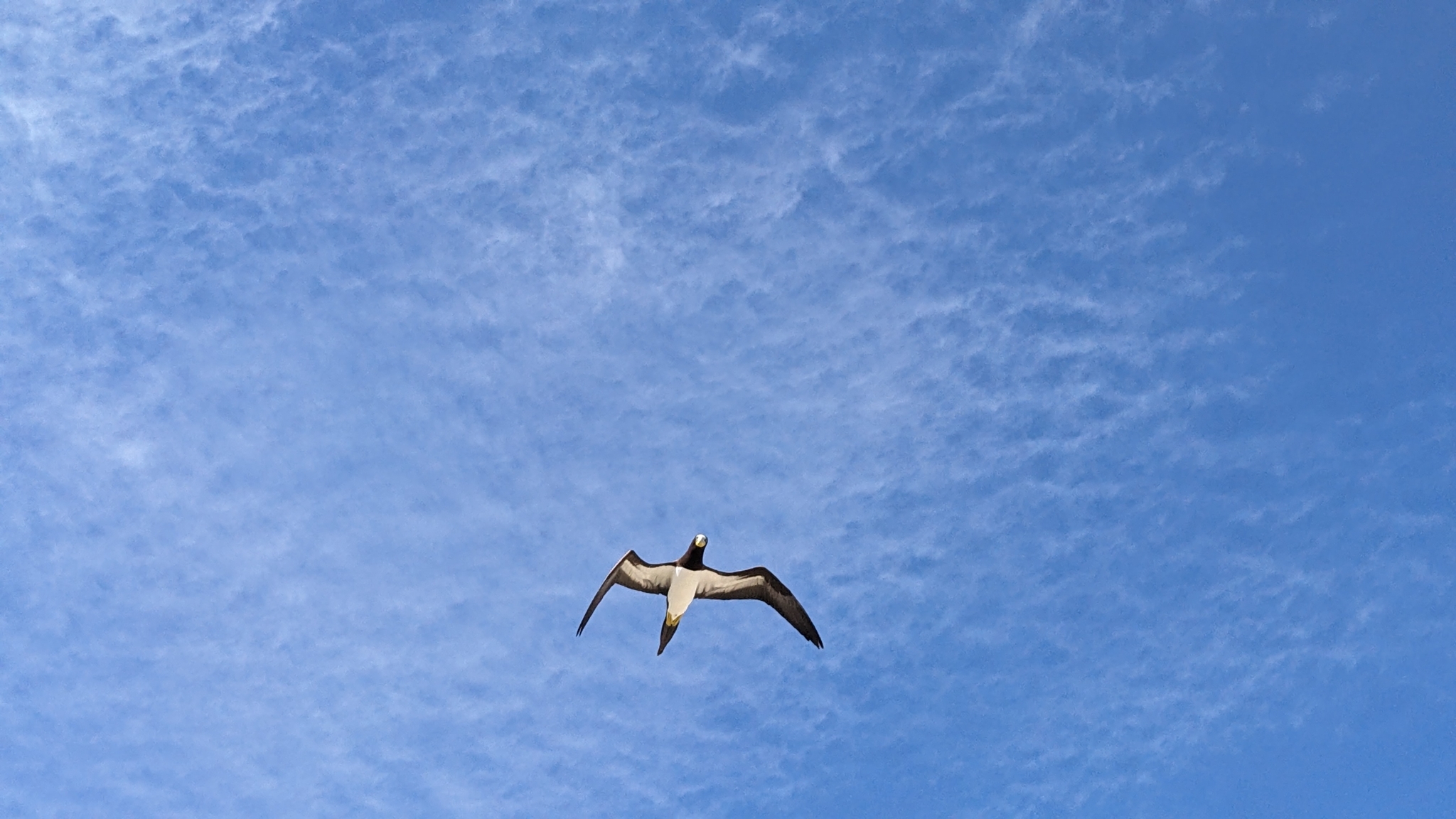
A large seabird in the booby and gannet family Sulidae. One of the most common and widespread booby species with a pantropical range across the Atlantic, Indian, and Pacific oceans. Gregarious species that commutes and forages at low height over inshore waters in flocks. Plunge-dives to take small fish, especially when prey are driven near the surface by predators. Nests exclusively on the ground and roosts on solid objects rather than the water surface.
Description
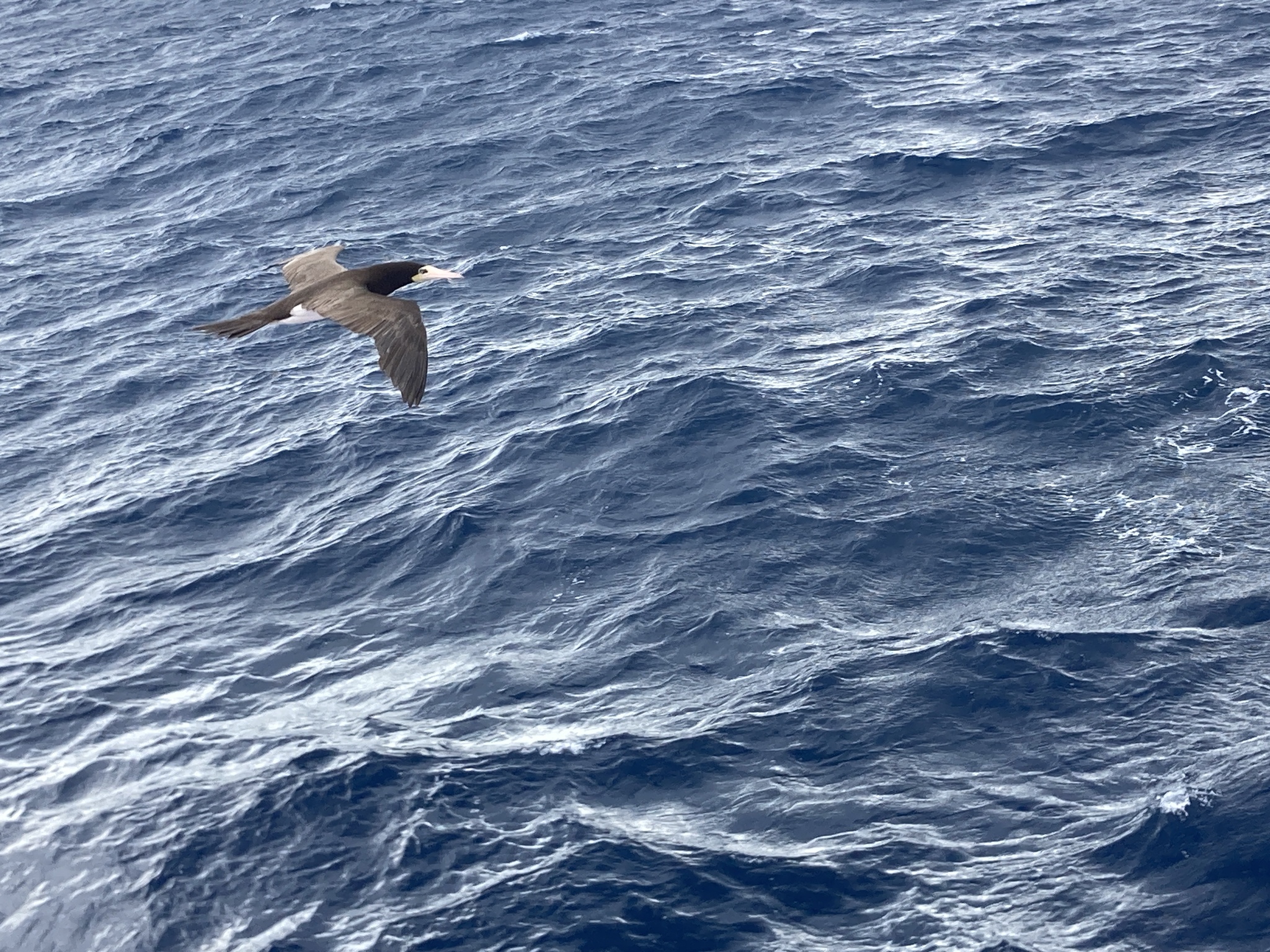
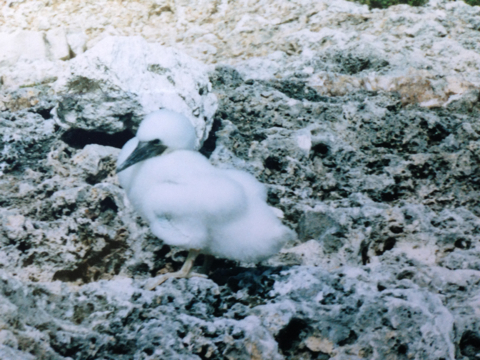
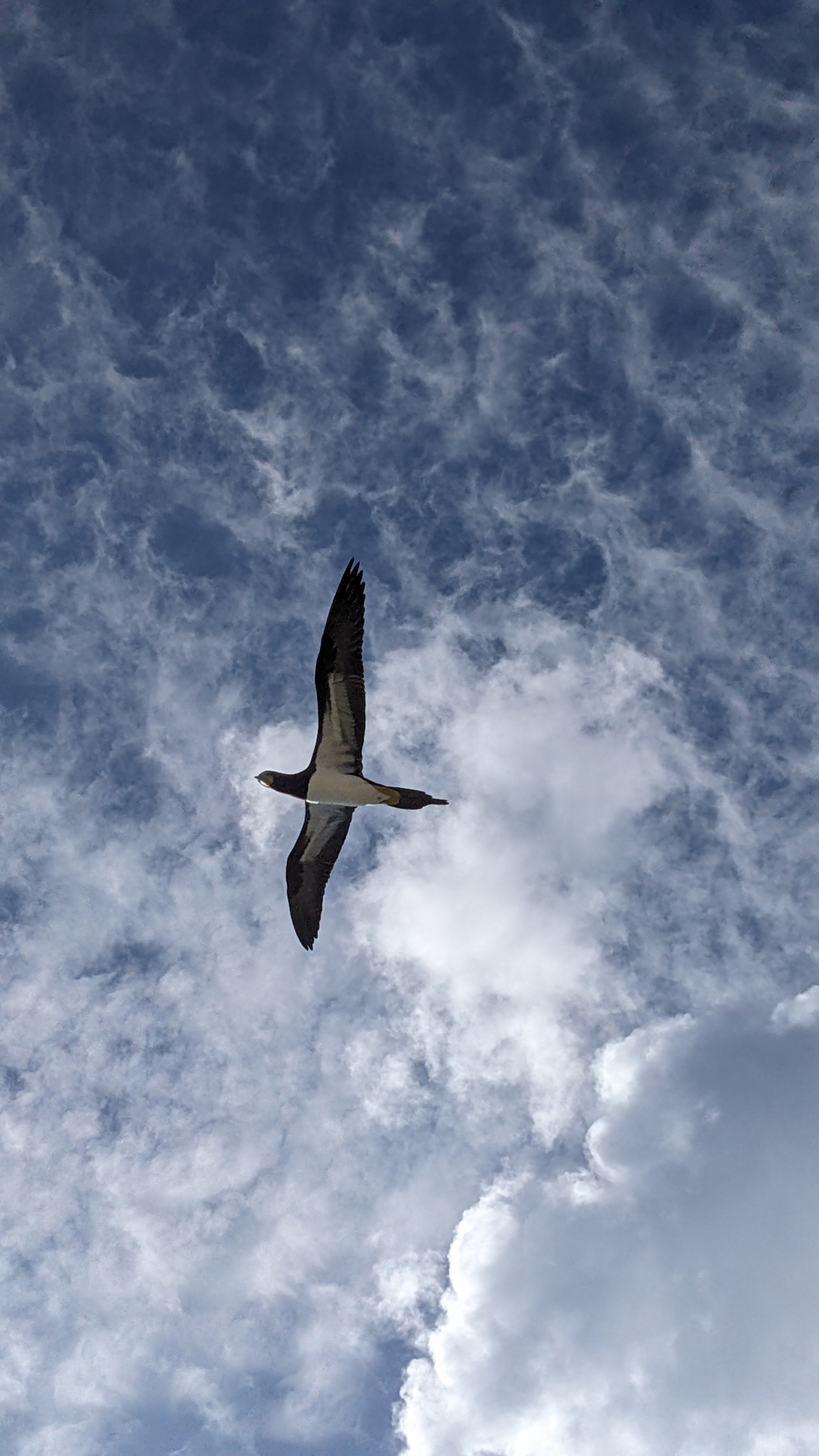
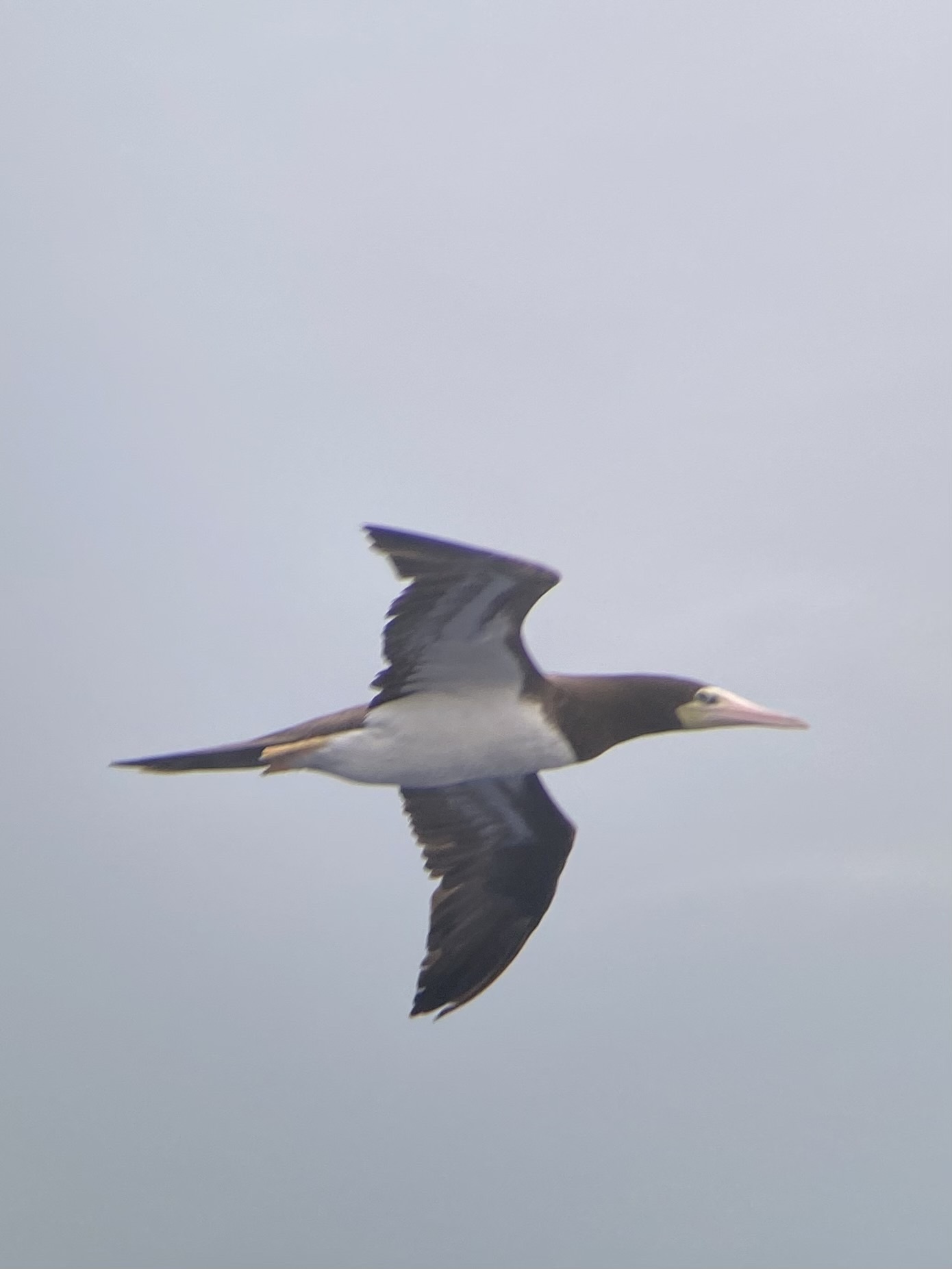
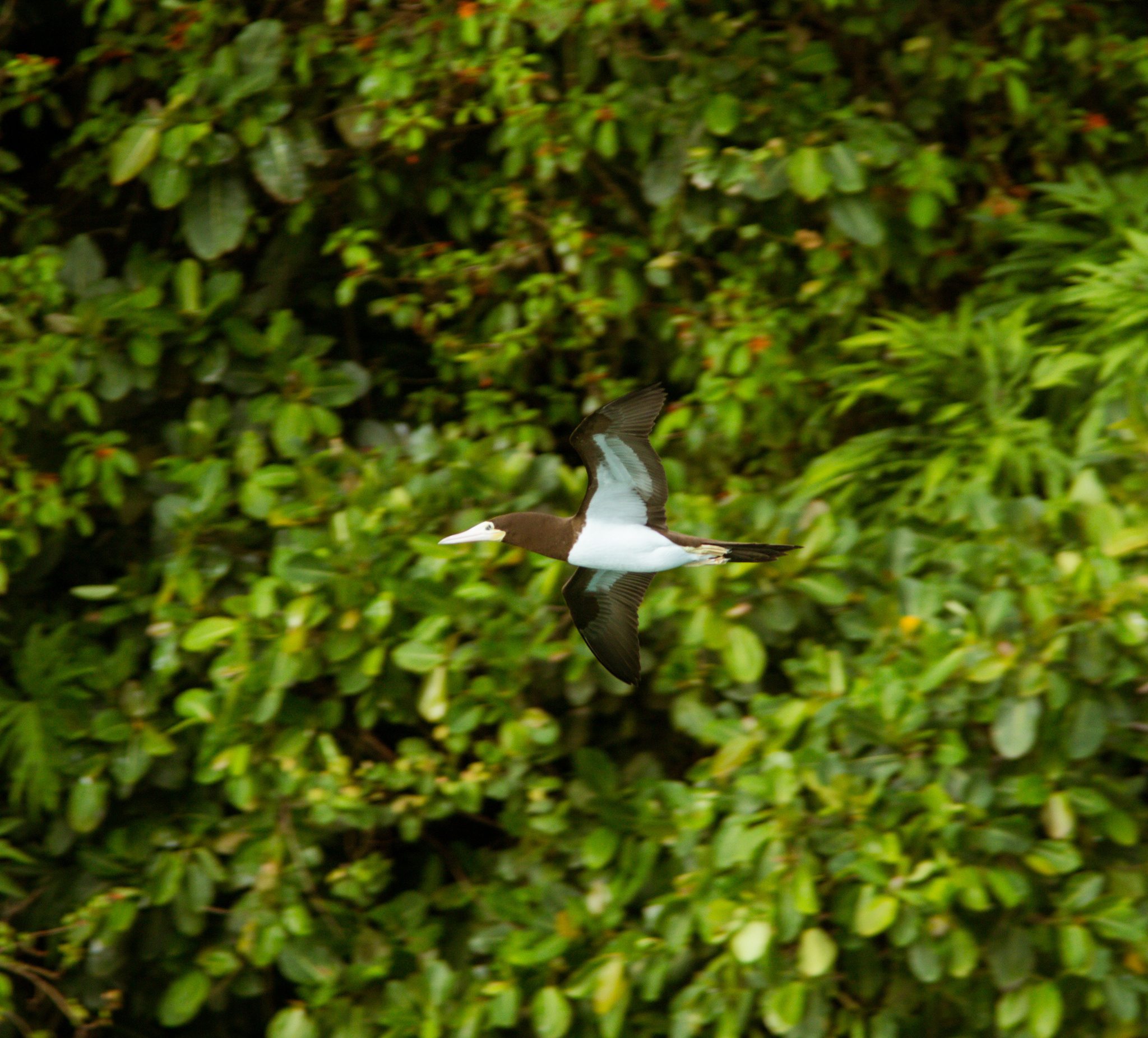
Adults have dark brown to blackish plumage on the head and upper body, contrasting with a white belly. Bare-part colors show geographic variation but no seasonal change. Females have a yellow orbital ring, while males have a blue orbital ring. Females reach approximately 80 cm in length with wingspans up to 150 cm and weights up to 1,300 g. Males are slightly smaller at approximately 75 cm length, 140 cm wingspan, and 1,000 g weight. Uniquely among sulids, juveniles resemble adults. Juveniles are grey-brown with darker coloration on the head, upper wing surfaces, and tail, while underparts show heavy brown flecking on white. The species has sharp, jagged-edged beaks, short wings producing a fast flap rate, and long tapered tails. Typically silent but occasionally makes grunting or quacking sounds.
Identification
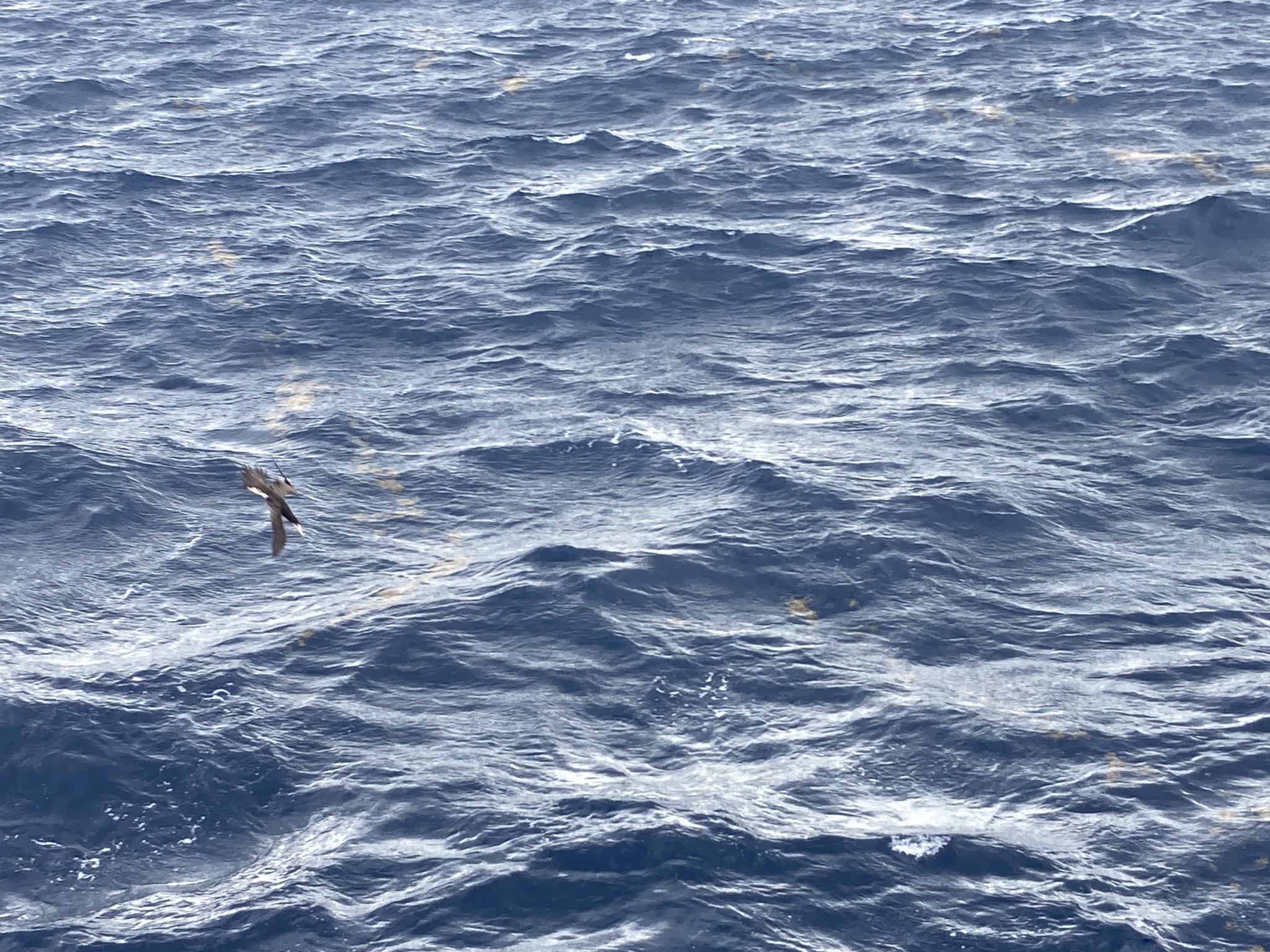
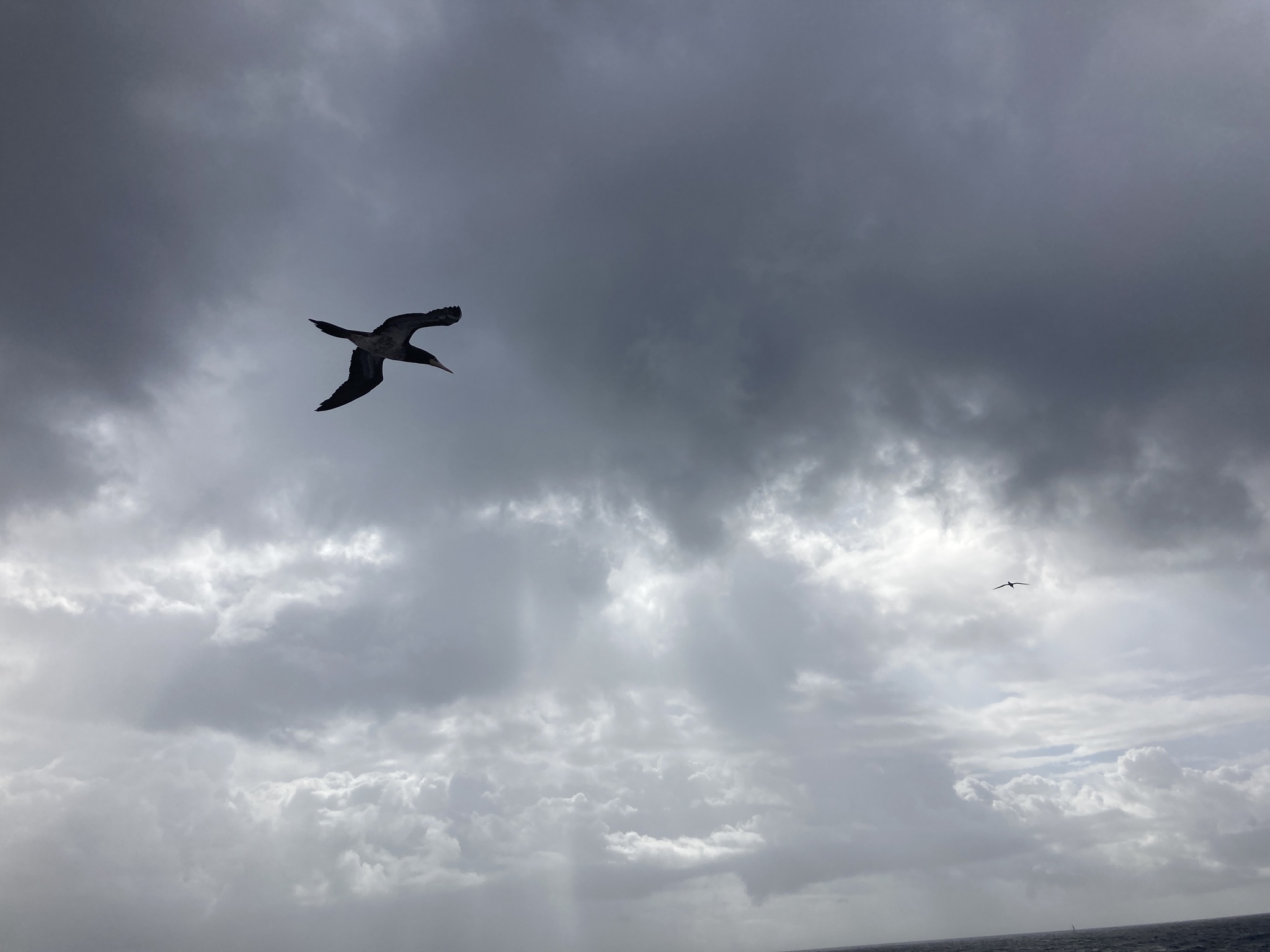
The dark brown to blackish upperparts contrasting with a white belly make this species distinctive. The orbital ring color provides reliable sexing: blue in males, yellow in females. Short wings combined with long tapered tails create a distinctive silhouette in flight. Juveniles resemble adults, unlike other sulid species where juvenile plumage differs significantly. The species appears clumsy during takeoff and landing, requiring strong winds and high perches to assist with departures. Kleptoparasitic behavior, including stealing from great frigatebirds, may occasionally be observed.
Distribution & Habitat
Breeds on islands and coasts throughout pantropical regions of the Atlantic, Indian, and Pacific oceans. Common in the Gulf of Mexico and Caribbean Sea breeding grounds. Winters at sea over a wider area than breeding range. Has shown increasing vagrancy northward due to global warming, with the first British record occurring in 2019 and 15 subsequent records by 2024, including individuals reaching 59°21'N at North Ronaldsay in Orkney.
Behavior & Ecology
Nests in large colonies on the ground, laying two chalky blue eggs in a mound of broken shells and vegetation. Typically raises only one chick due to competitive exclusion of the second-hatching juvenile. Pairs may remain together across multiple seasons and perform elaborate greeting rituals. Diet consists primarily of small fish including flying fish, mullets, halfbeaks, anchovies, goatfish, crowned squirrelfish, and Indian mackerels, plus squid and shrimp. Forages by plunge-diving at high speed and may catch leaping fish while skimming the surface. Both fledglings and adults practice kleptoparasitism, stealing prey from other seabirds including the normally more piratical great frigatebirds. Despite being powerful and agile fliers, the species is notably clumsy in takeoffs and landings.
Conservation
Not evaluated in the provided text.
Culture
Not mentioned in the provided text.
Source: Wikipedia · CC BY-SA 3.0
Taxonomy
- Order
- Suliformes
- Family
- Sulidae
- Genus
- Sula
Subspecies (2)
-
Sula leucogaster leucogaster
breeds islands of tropical Atlantic, from Fernando de Noronha (off Brazil), coastal islands off southeastern Brazil, Boatswain Bird Island (Ascension group, South Atlantic Ocean), Cape Verde Islands, Alcatraz Island (off Guinea), and Gulf of Guinea islands, and islands in Caribbean (including peripheral ones)
-
Sula leucogaster plotus
breeds on islands in the Red Sea, tropical Indian Ocean, Gulf of Carpentaria (northern Australia), and tropical western and central Pacific Ocean, from Somalia and Socotra southward through Malagasy region, northward to southern Japan, and eastward to Hawaii and Gambier Islands (Tuamotus)
Data Sources
Species description from Wikipedia, licensed under CC BY-SA 3.0.
Bird images and sounds sourced from GBIF, contributed by citizen scientists worldwide under Creative Commons licenses.
Taxonomy data from AviList 2025.