
Masked Booby
Sula dactylatra
蓝脸鲣鸟
Introduction
A large seabird of the family Sulidae, genus Sula. Ranges across tropical oceans between the 30th parallels north and south, absent from the eastern Atlantic and eastern Pacific (where replaced by the Nazca booby). Inhabits remote islands, atolls, and cays with flat, bare ground above high-tide level and access to deep water for foraging. Performs spectacular vertical plunge dives from 12-100 m height to catch flying fish. Lays two eggs, with the second chick typically killed by its elder sibling (siblicide). Classified as least concern by the IUCN, though the global population is decreasing.
Description
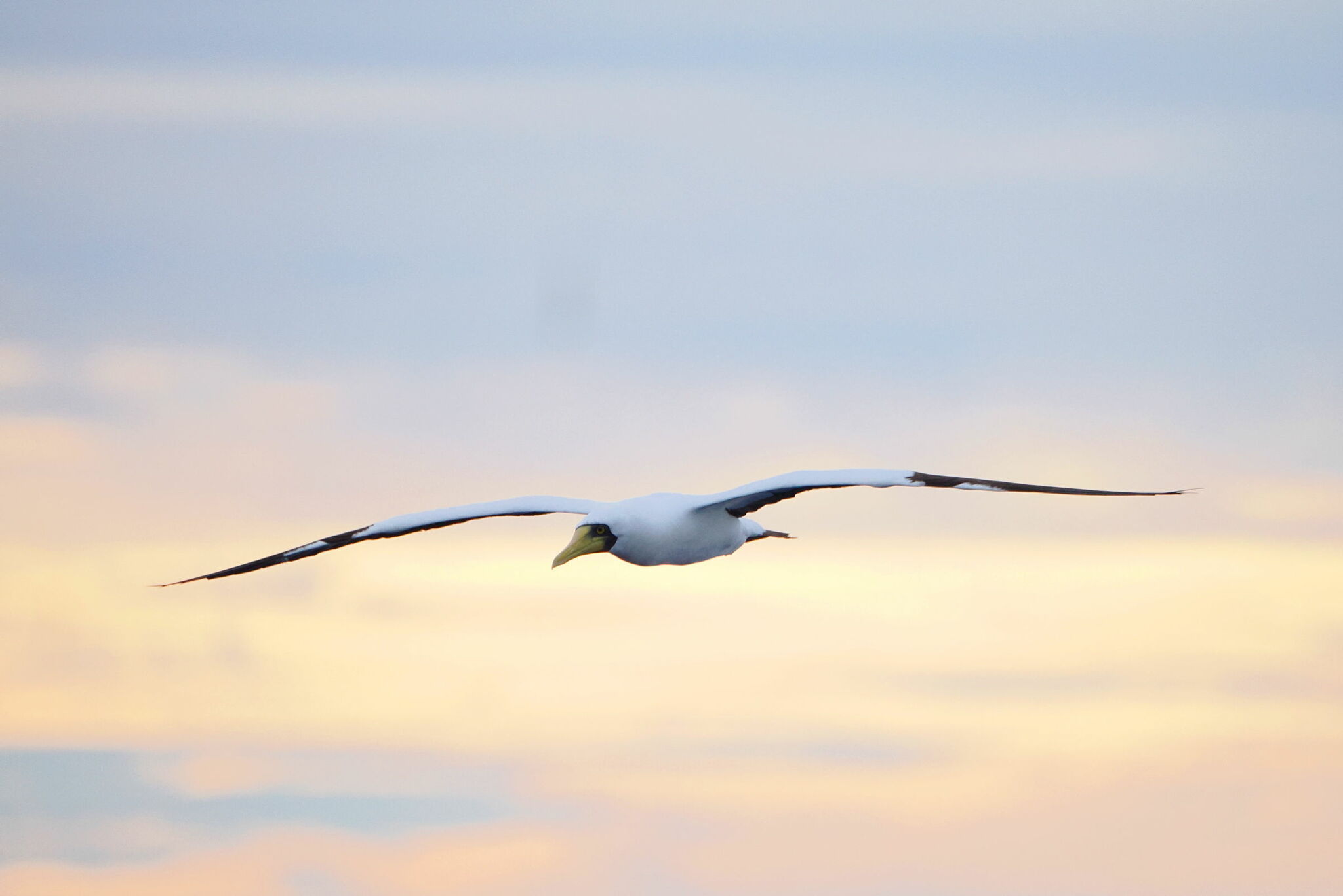
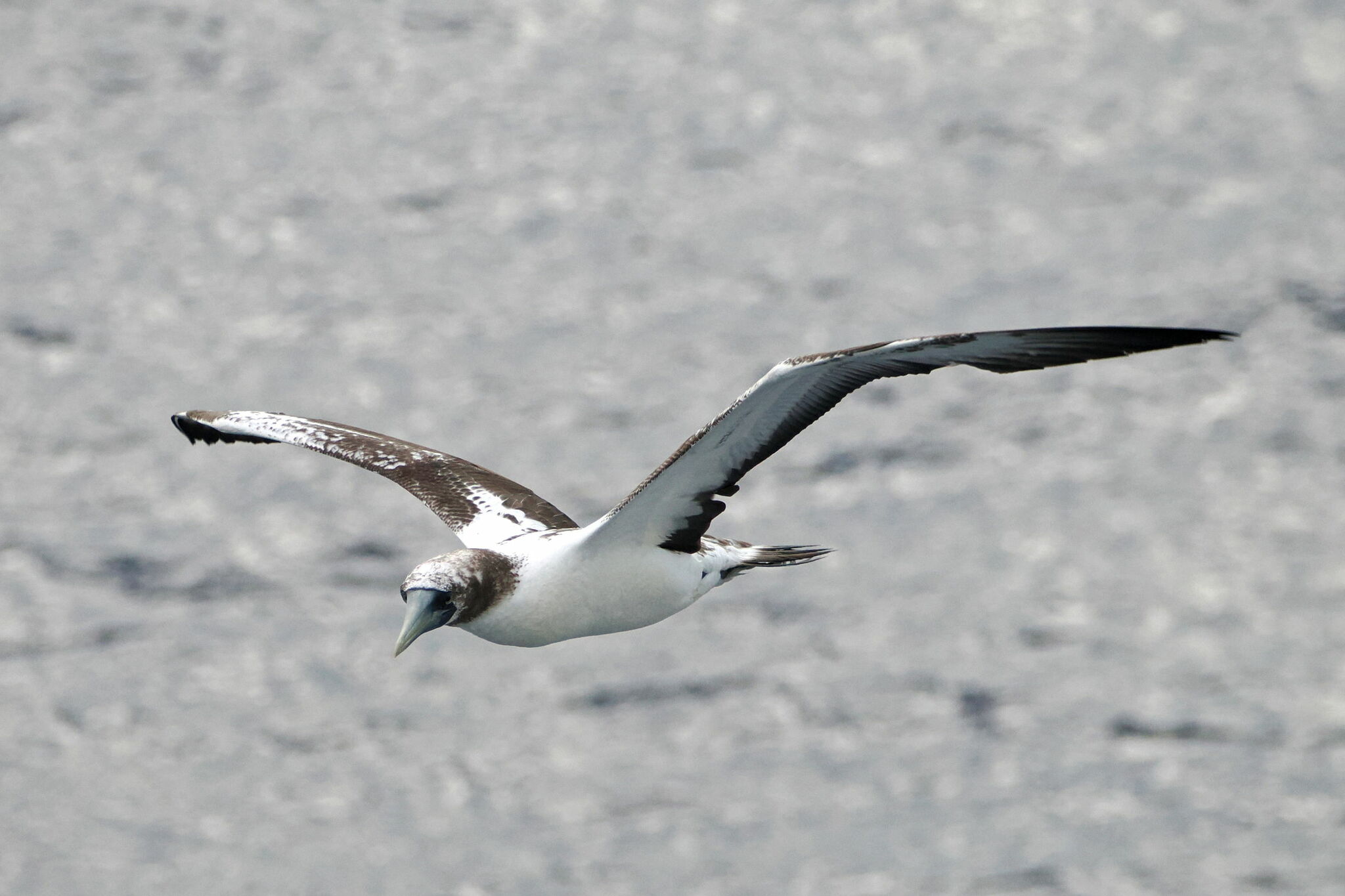
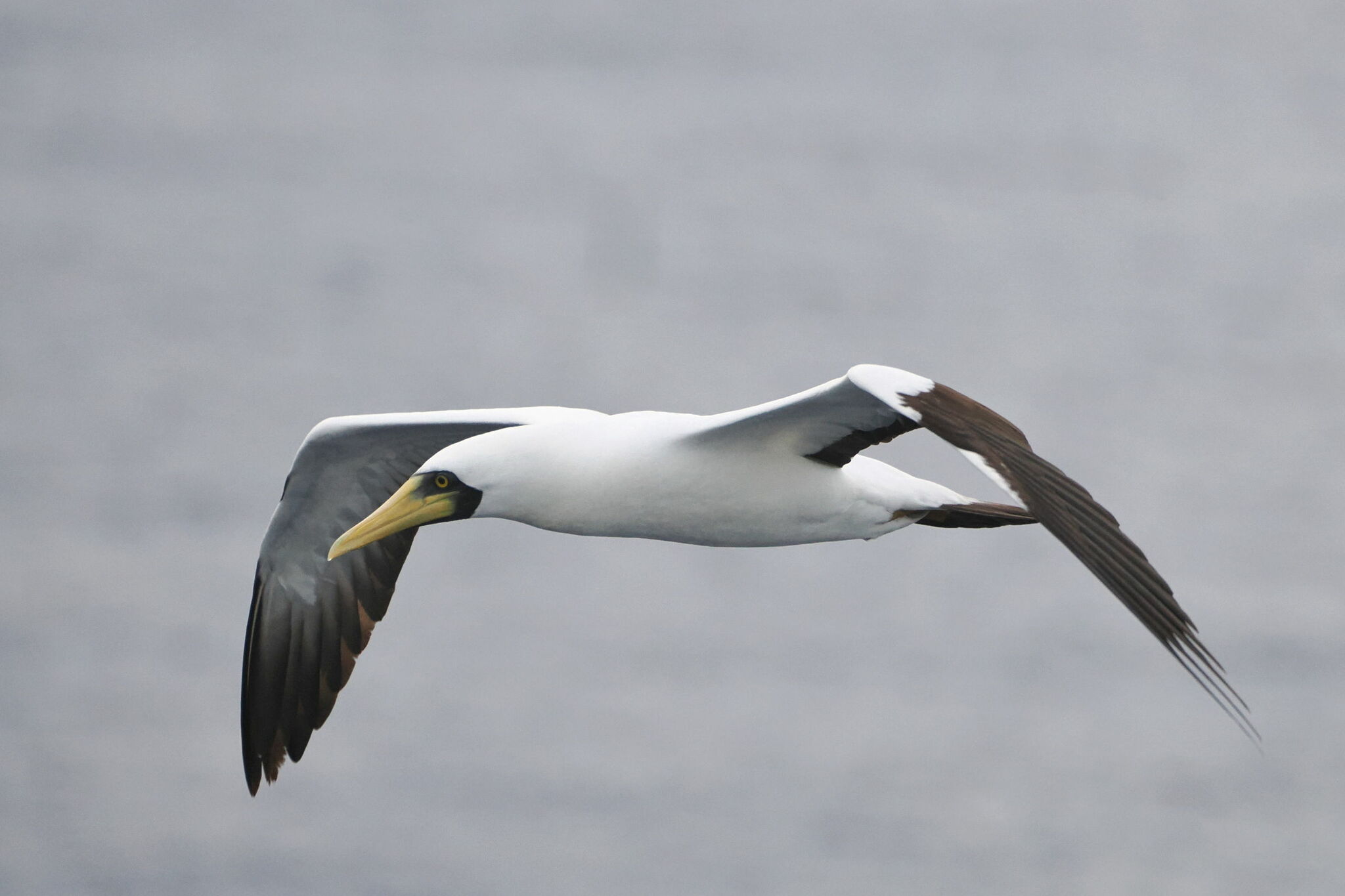
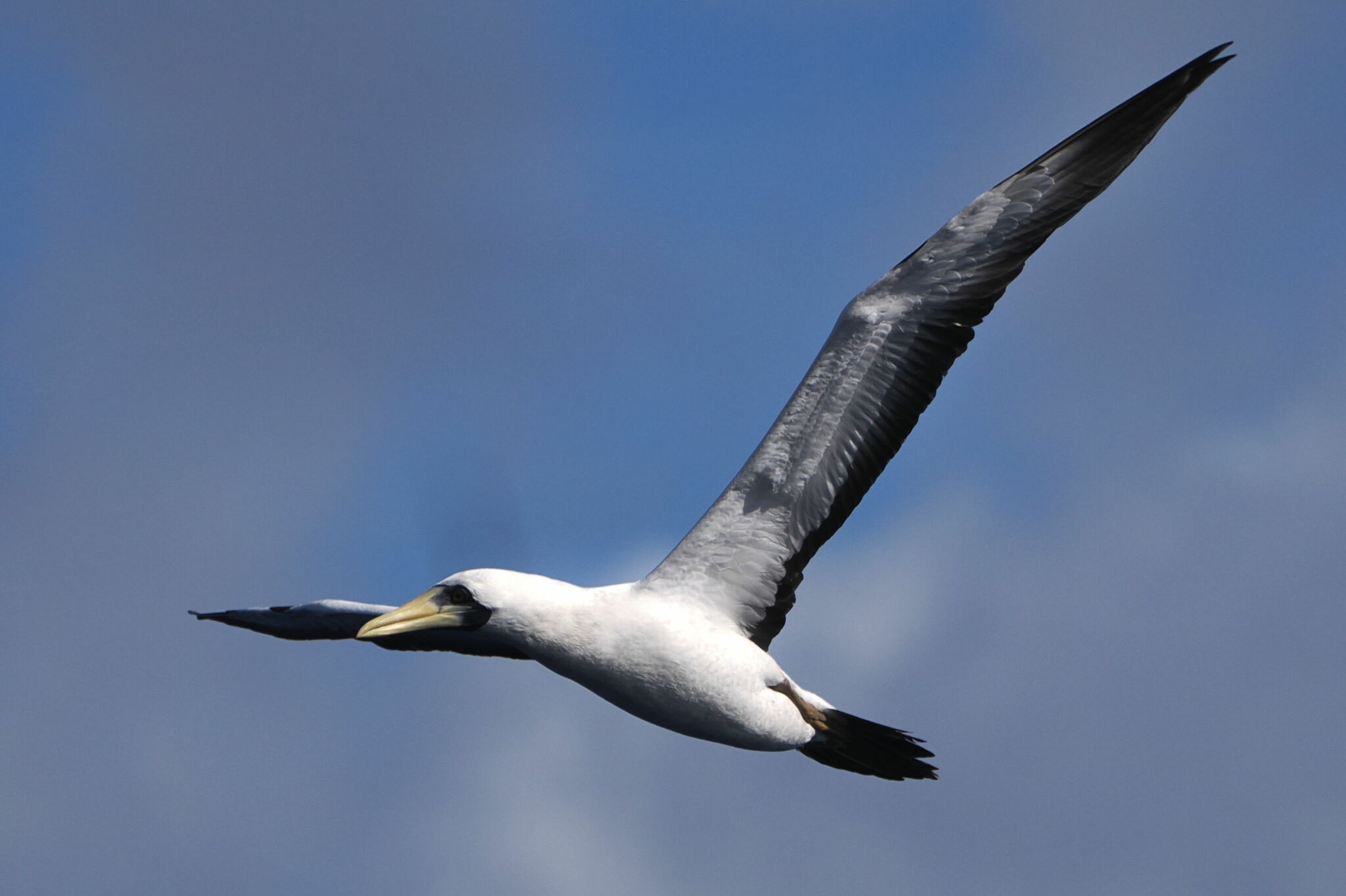
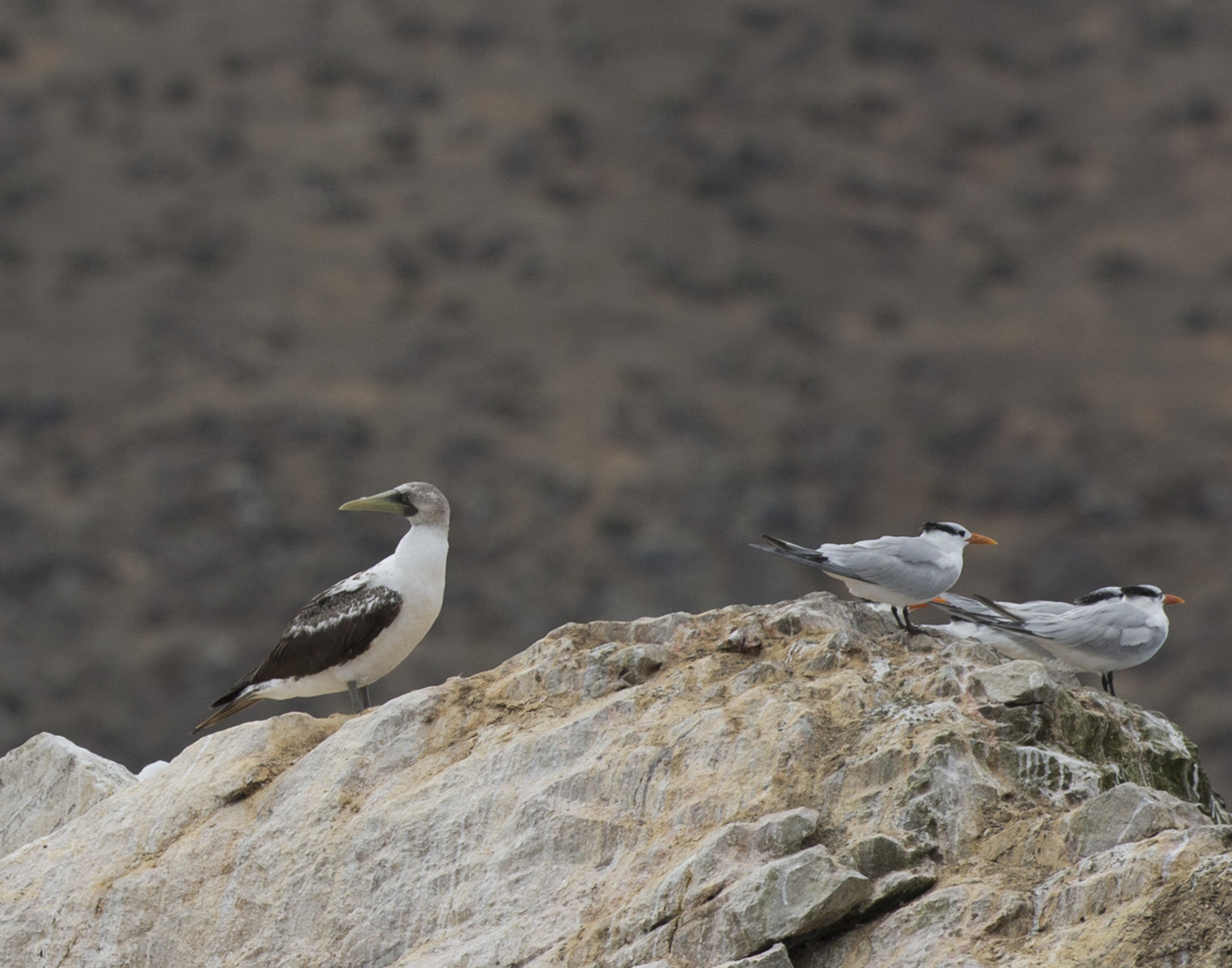
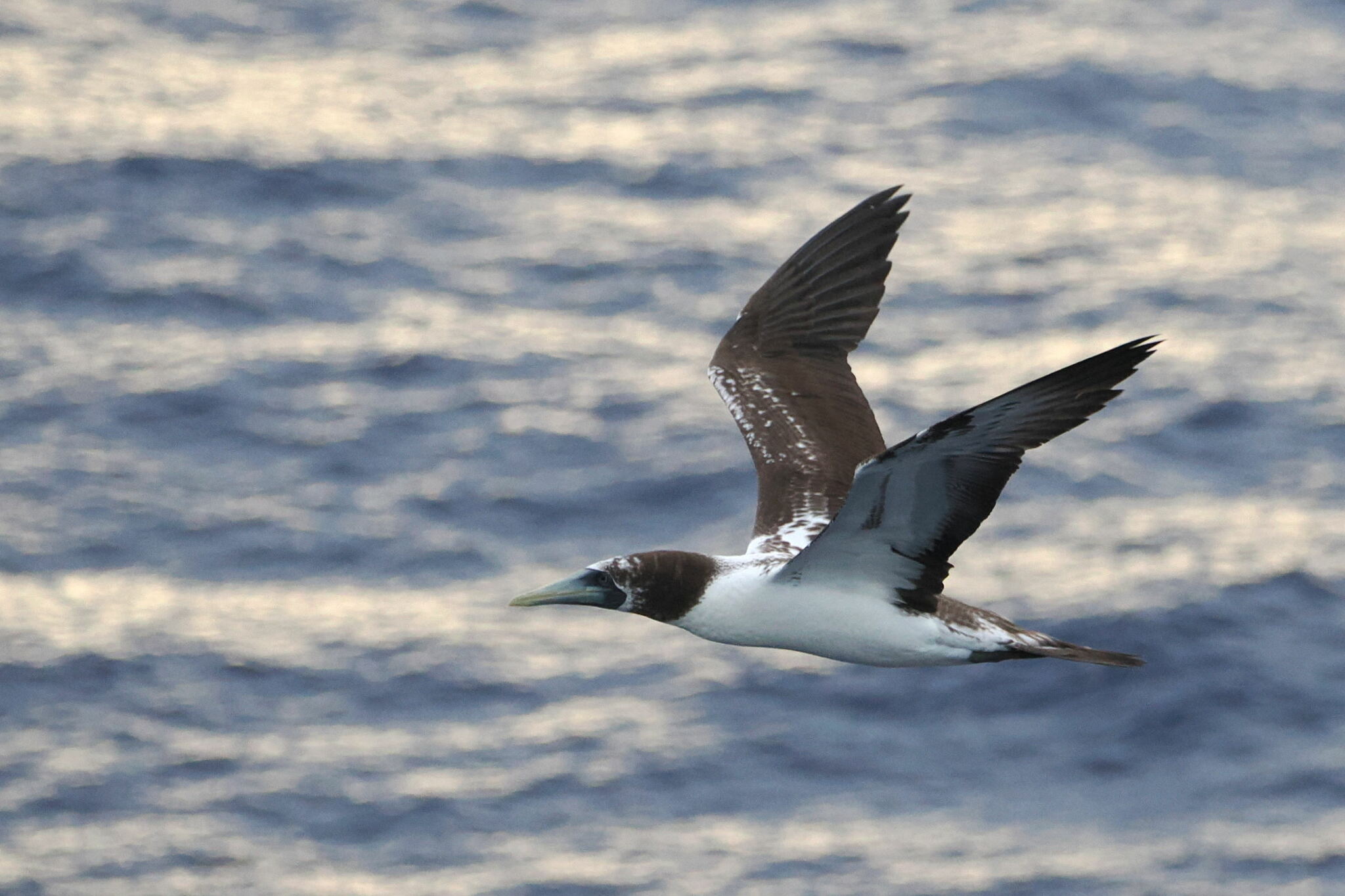
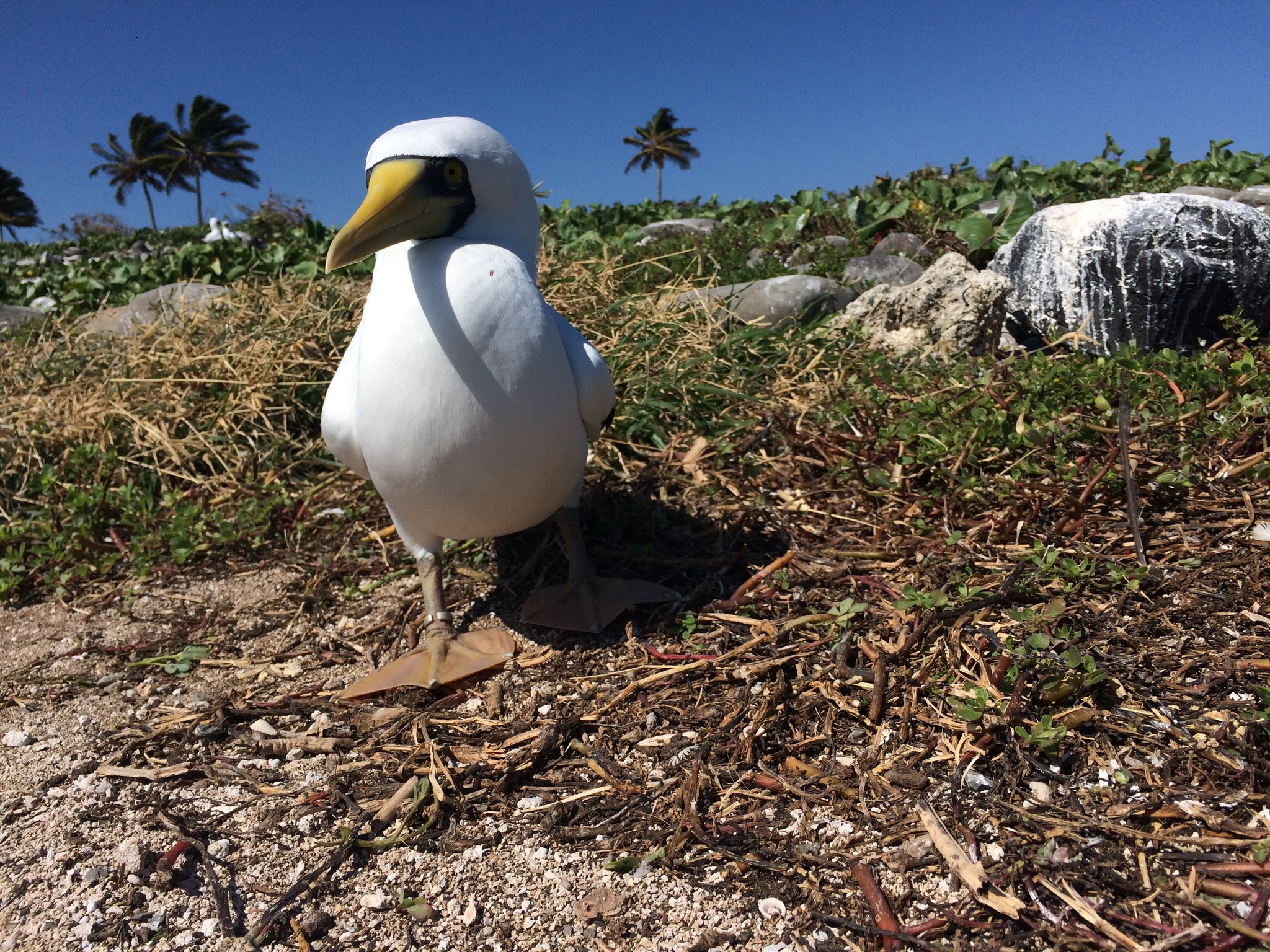
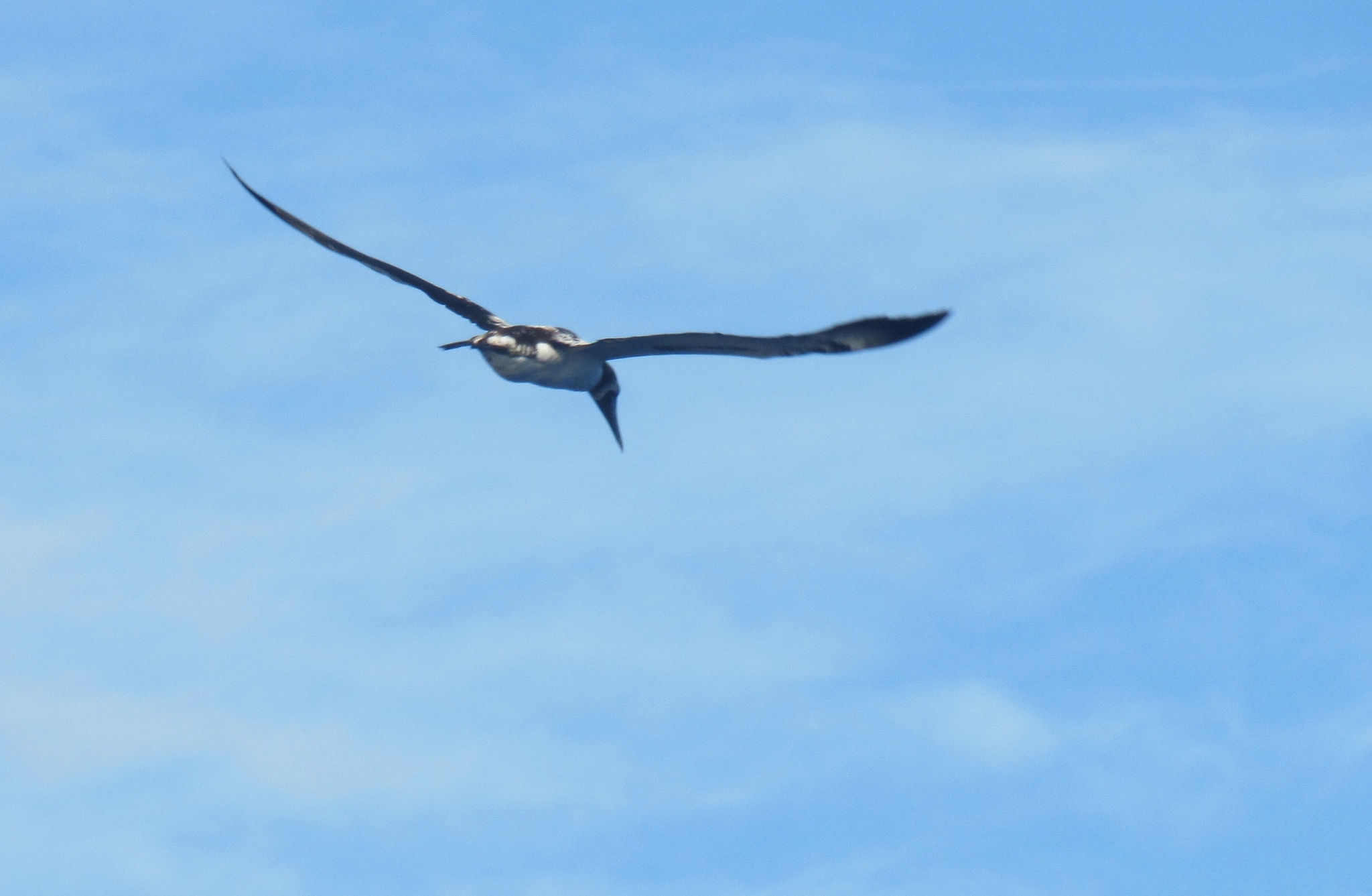
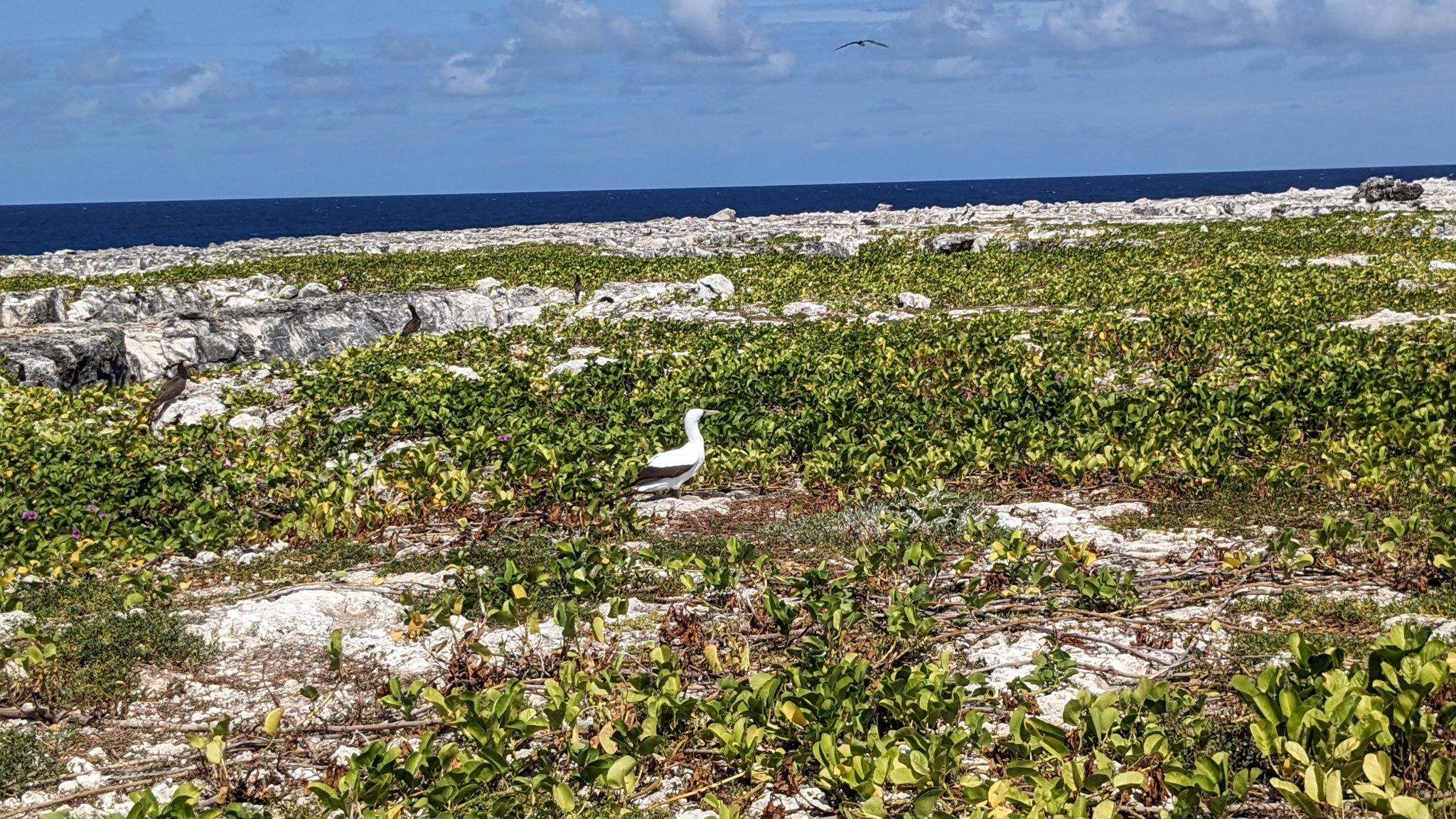
The largest booby species, measuring 75-85 cm in length with a 160-170 cm wingspan and weighing 1.2-2.2 kg. Has the typical sulid shape: long pointed yellowish bill, long neck, aerodynamic body, slender wings, and pointed tail. Adults are bright white with black wings, black tail, and dark blue-black face mask contrasting with white plumage. The bare facial skin is blue-black, giving a mask-like appearance. Legs are yellow-orange or olive, iris is yellow. Primaries, secondaries, humerals, and rectrices are brown-black; underwing is white except for brown-black flight-feathers. Females average slightly larger and heavier than males. Juveniles are grey-brown streaked and mottled on head and upperparts with white underparts, acquiring full adult plumage by three years of age.
Identification
Distinguished from the similar Nazca booby by its yellow (not orange) bill, larger size, and less pronounced sexual dimorphism. The Nazca booby also nests on steep cliffs rather than flat ground. The white morph of the red-footed booby is similar but smaller. Abbott's booby has a more wholly black upperwing, longer neck and tail, and larger head. Cape gannet and Australasian gannet have buff-yellow crowns, shorter tails, and grey (not yellowish) bills. Juvenile masked boobies resemble brown boobies, though brown booby adults have clearly demarcated brown and white plumage.
Distribution & Habitat
Occurs throughout tropical oceans between 30°N and 30°S latitude. In the Indian Ocean, ranges from the Arabian Peninsula and East Africa across to Sumatra and Western Australia, though absent from the Indian subcontinent. In the Pacific, extends from Brisbane eastwards. Found in the Caribbean and Atlantic south to Ascension Island. Breeds on remote islands, atolls, and cays with deep water nearby. The southernmost colony is Lord Howe Island. Deep water access is essential for foraging. Most birds return to breed at their natal colony annually. Some dispersal occurs outside breeding season, with juveniles and non-breeding adults wandering widely.
Behavior & Ecology
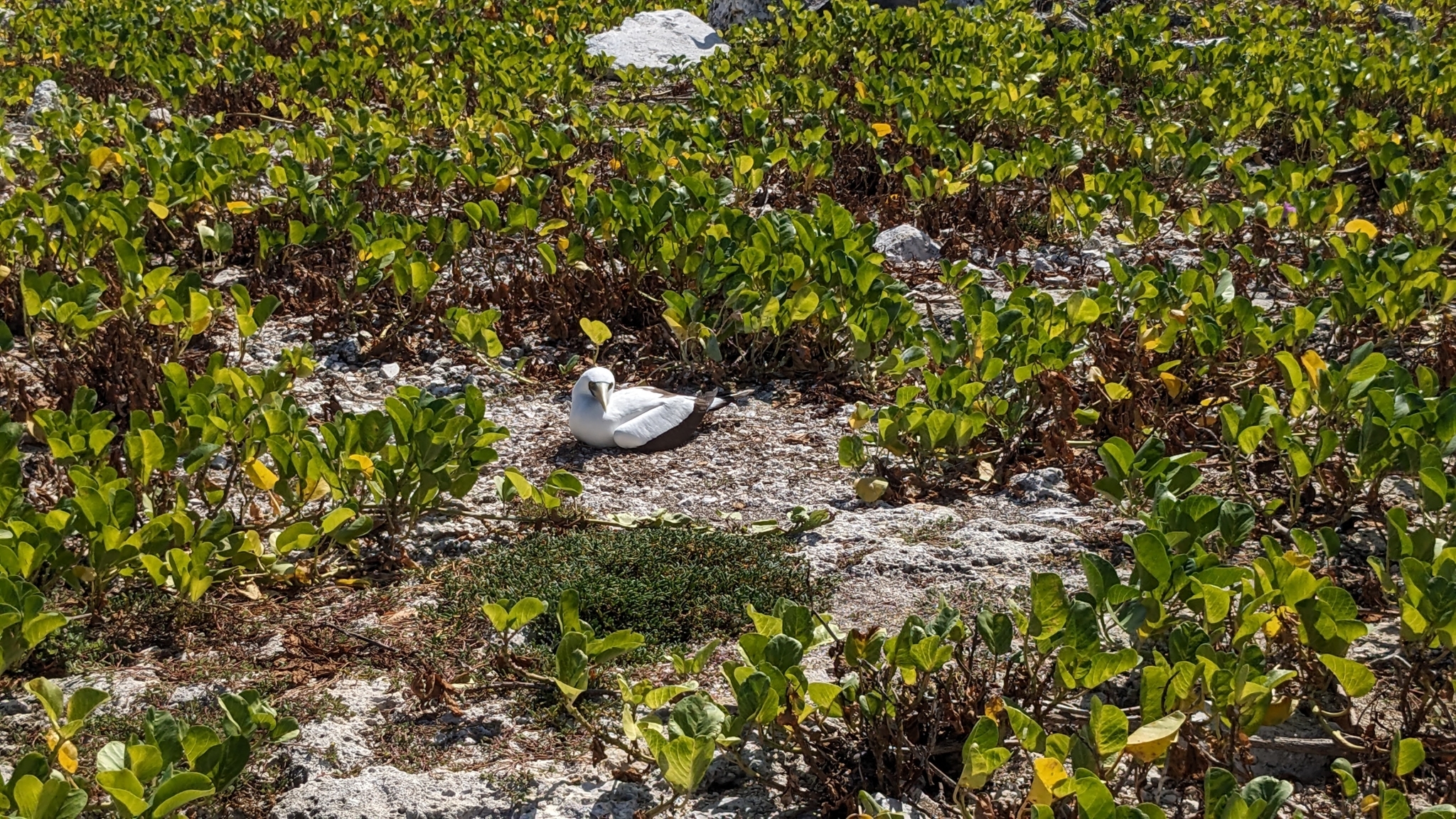
Performs spectacular plunge dives from heights of 12-100 m (commonly 15-35 m) at high speed, reaching depths of up to 3 m to catch prey. Diet consists mainly of flying fish up to 28 cm (rarely 41 cm), along with cephalopods. Forages an average of 103 km from colony, with maximum recorded range of 242 km. Flies at least 7 m in height at speeds up to 70 km/h, alternating between gliding and active wingbeats. Usually silent at sea but noisy at breeding colonies; males give a descending whistle, females a loud honk. Breeding begins at 4-5 years of age (occasionally 3 years). Monogamous pairs defend territories through agonistic displays including yes-no headshaking, jabbing, and the pelican posture. The nest is a shallow depression 25-30 cm wide within a cleared 0.75-1 m diameter area. Two chalky white eggs are laid 5-8 days apart and incubated for 45 days. Both parents share incubation and chick-rearing. Chicks fledge at around 120 days. The second-hatched chick almost always dies within days due to siblicide.
Conservation
Listed as least concern by the IUCN, though the global population is decreasing. Major threats include overfishing, which reduces food availability, and climate change affecting low-lying colonies through rising sea levels and sea temperatures. The 1982-1983 El Niño event negatively impacted breeding on Christmas Island, with no young observed despite 1,500 pairs normally nesting. In 2005, 508 chicks at Clipperton Island suffered from angel wing, a wing deformity linked to reduced tuna numbers and food availability. Australian subspecies are rated as vulnerable to climate change. Introduced predators (feral cats, rats) threaten eggs and young on some islands, though adult size provides some protection. The Clipperton Island colony recovered from 150 individuals in 1958 to 112,000 in 2003 following pig eradication.
Culture
The Taíno people consumed masked and red-footed boobies nesting on Grand Turk Island around 1000 years ago; these species subsequently vanished from the Turks and Caicos Islands. A single bird yielded approximately 1-2 kg of meat. European sailors in the area also caught and ate tame boobies. The crew of HMS Supply harvested masked booby young and eggs on Lord Howe Island.
Source: Wikipedia · CC BY-SA 3.0
Taxonomy
- Order
- Suliformes
- Family
- Sulidae
- Genus
- Sula
- eBird Code
- masboo
Subspecies (4)
-
Sula dactylatra dactylatra
breeds islands (including peripheral ones) in Caribbean, Fernando de Noronha, Abrolhos, and Trindade (off Brazil), and Ascension and St. Helena (South Atlantic)
-
Sula dactylatra melanops
breeds islands in Red Sea and northwestern Arabian Sea, including Socotra and islands off Somalia and southern Oman
-
Sula dactylatra personata
breeds islands from Seychelles and Malagasy region through Indian Ocean to Con Dao Island (off Vietnam) and Cocos (Keeling) Island and northern Australia, northward to islets of far southern Japan, and eastward in Pacific to Hawaii, Easter Islands, islands off western Mexico, Cocos Islands (off Costa Rica), Isla Malpelo (off Colombia), and Islas Desventuradas (off northern Chile)
-
Sula dactylatra tasmani
breeds Lord Howe and Norfolk islands (east of Australia), and Kermadec Islands (northeast of New Zealand)
Data Sources
Species description from Wikipedia, licensed under CC BY-SA 3.0.
Bird images and sounds sourced from GBIF, contributed by citizen scientists worldwide under Creative Commons licenses.
Taxonomy data from AviList 2025.